

When a water heater bursts, it can release the full contents of the storage tank in minutes, causing flooding, electrical or gas hazards and damage to floors, walls and belongings. The failure is often linked to internal corrosion, sediment buildup, excessive pressure, a faulty relief valve or an ageing tank.
This guide explains what happens when a water heater bursts, why tanks fail, the immediate steps you should take, and how to protect your NSW home from costly water damage. You’ll also learn when to call a licensed Sydney plumber (Antons Plumbing & Gas holds NSW Lic. 210933C), what repairs or replacements look like, and how same-day service can make all the difference in a crisis.
Key Takeaways
- A burst water heater can release 80–300 litres, causing rapid flooding and structural damage.
- Common causes include sediment buildup, internal corrosion, excessive pressure, and failed relief valves.
- Immediate action—shutting off water and power—reduces fire risk and limits damage spread.
- Professional diagnosis identifies root causes and ensures compliant, safe repairs or replacements under NSW plumbing rules.
- Regular maintenance and timely replacement prevent most catastrophic failures.
Quick Answer: When a water heater bursts, shut off the cold-water supply immediately and isolate the electricity or gas without touching switches or equipment while standing in water. Move people and belongings away from the affected area, contain the water where it is safe to do so and document the damage for insurance. Call a licensed plumber urgently because a ruptured storage tank normally requires safe disconnection and replacement rather than repair.
What Happens When a Water Heater Bursts in Your Home
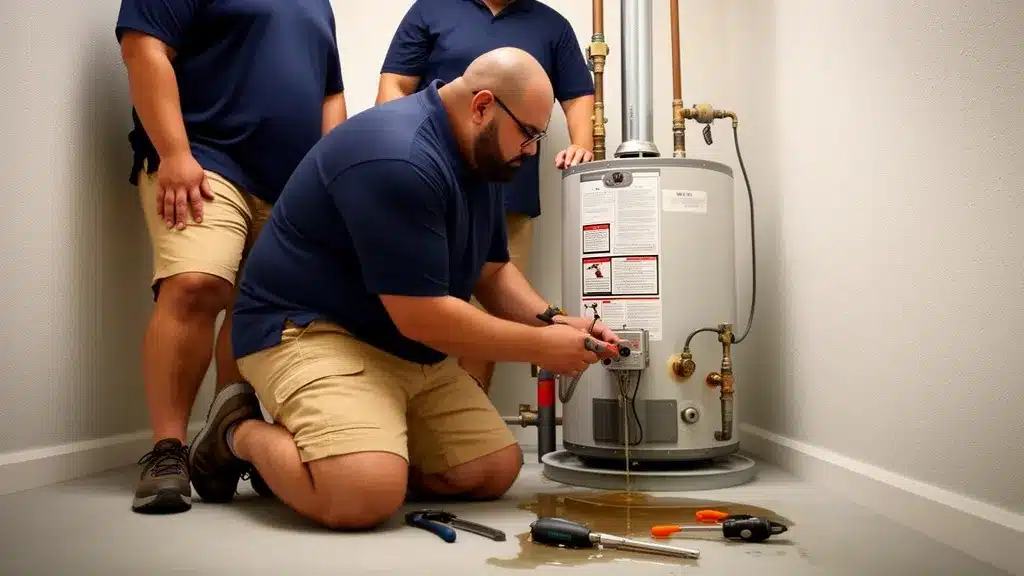
When a conventional or electric water heater tank ruptures, cold water continues flowing into the unit until someone turns off the supply valve. That incoming pressure forces hot water, sediment, and rust out through the breach—often a crack in the tank wall or a failed fitting. The result is a rapid, high-volume discharge that spreads across floors, seeps into subfloors, and migrates through walls and ceilings if the unit is installed above ground level.
In many Sydney homes, hot water systems are located in laundries, garages, or upstairs cupboards. A burst in an upper-level closet can saturate ceiling plaster, insulation, and timber framing, leading to sagging, staining, and even partial collapse. Water flows downward, damaging power points, cabinetry, flooring, and personal belongings on every level it reaches.
Beyond the flood itself, a ruptured electric hot water system poses electrical and fire hazards. If the heating elements continue operating without adequate water coverage, they can overheat and ignite nearby materials. Gas-fired units present additional risks if gas supply is not promptly isolated. The combination of water damage, safety hazards, and urgent repair needs makes a burst water heater one of the most stressful emergencies a homeowner will face.
Why Water Heaters Burst
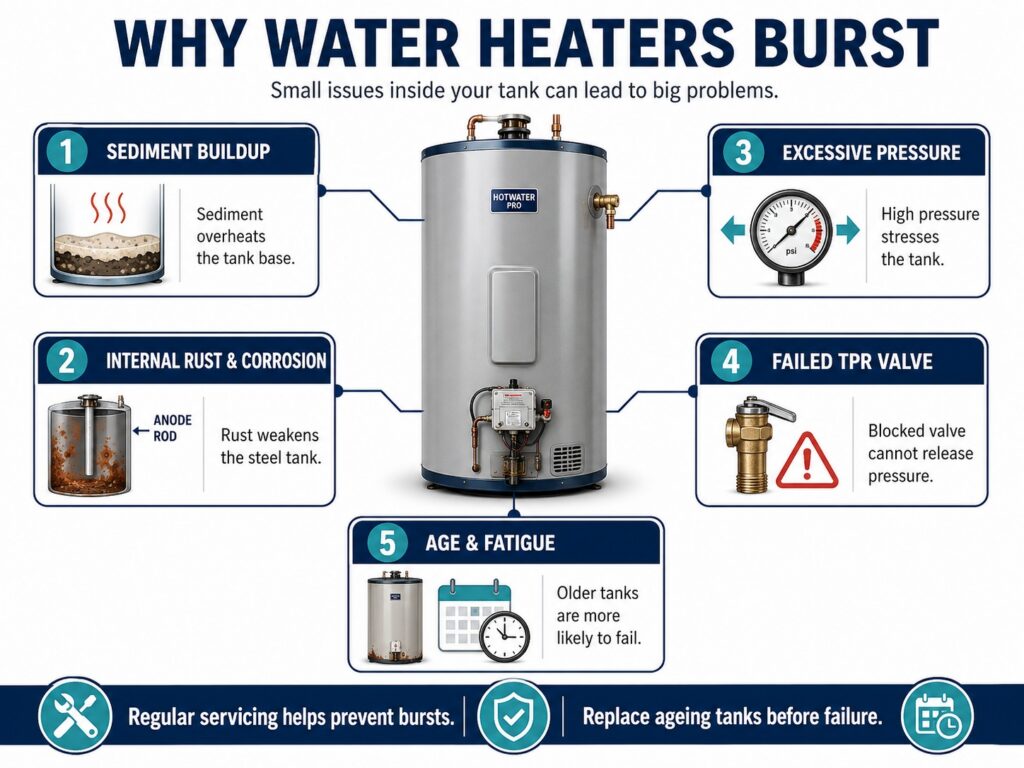
A water heater can burst when pressure, corrosion, sediment, or age weakens the storage tank beyond a safe limit. Many failures build up slowly over time, with early warning signs such as rust, leaks, unusual noises, or inconsistent hot water. Understanding the main causes can help homeowners arrange repairs or replacement before a burst causes major water damage.
1. Sediment Buildup and Overheating
Over time, minerals in Sydney’s mains water supply settle at the bottom of your storage tank. This sediment layer insulates the tank floor from the water above, causing localised overheating. The metal weakens, corrosion accelerates, and eventually the tank wall gives way under pressure.
2. Internal Rust and Corrosion
Every storage water heater contains a sacrificial anode rod designed to attract corrosive elements and protect the tank lining. Once that anode is consumed—typically after five to eight years—rust attacks the steel tank directly. Pitting and thinning follow, and a pinhole leak can rapidly expand into a full rupture.
3. Excessive Internal Pressure
High mains pressure (common in parts of Sydney), a thermostat set too high, or a malfunctioning expansion tank can all drive internal pressure beyond safe limits. If the temperature-and-pressure relief valve (TPR valve) is blocked, corroded, or undersized, that pressure has nowhere to vent. The weakest point in the tank—often a welded seam or corroded patch—fails first.
4. Failed Temperature-and-Pressure Relief Valve
The TPR valve is your water heater’s primary safety device. It opens automatically if temperature exceeds 99°C or pressure climbs too high. A valve that sticks shut or is clogged with mineral scale cannot release dangerous pressure, turning your tank into a pressurised vessel that may rupture or, in extreme cases, explode.
5. Age and Fatigue
Most storage electric hot water systems are designed for a service life of eight to twelve years. Beyond that, metal fatigue, cumulative thermal cycling, and corrosion combine to make catastrophic failure increasingly likely. If your unit is approaching or past its rated lifespan, replacement is far safer and more cost-effective than waiting for a burst.
Water heaters usually burst because several problems combine over time, such as corrosion, sediment, pressure, and ageing components. Regular inspections, tank flushing, anode rod checks, and TPR valve testing can help identify risks before the system fails. If your hot water unit is leaking, rusting, making unusual noises, or getting old, a licensed plumber can assess whether repair or replacement is the safer option.
Immediate Steps to Take When a Water Heater Bursts
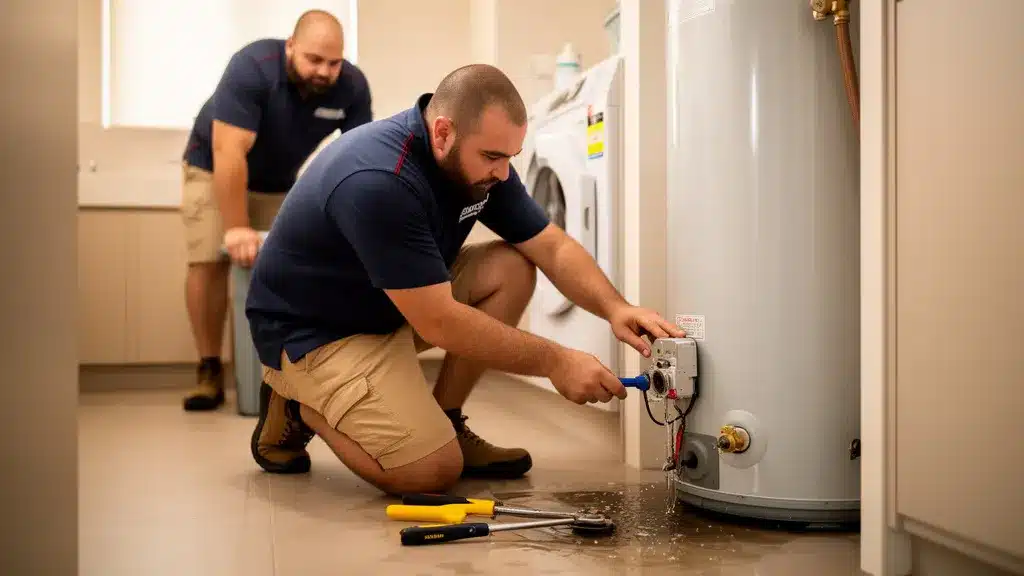
Speed and safety are your priorities the moment you discover water pooling around your hot water system. Taking the right steps in the first few minutes will limit damage, protect your family, and make repairs simpler. Here’s what to do, in order.
- Turn off the cold-water supply valve. Locate the isolation valve on the cold inlet pipe—usually a lever or tap on top of or beside the unit—and close it fully to stop fresh water entering the tank.
- Shut off electrical or gas power. For an electric water heater, switch off the dedicated circuit breaker at your switchboard. For gas units, turn the gas isolation valve to the off position. Do not touch electrical switches if you are standing in water.
- Evacuate if you smell gas. If you detect gas odour, leave the property immediately, call 000, and contact your gas distributor’s emergency line. Do not operate light switches, appliances, or mobile phones inside the building.
- Move belongings and furniture away from water. If safe to do so, lift items off wet floors and relocate them to dry areas. The faster you remove possessions from standing water, the less permanent damage they will suffer.
- Contain and divert water flow. Use towels, buckets, or a wet-dry vacuum to slow the spread. If water is flowing toward power points or into adjoining rooms, create barriers with towels or sandbags.
- Call a licensed Sydney plumber. Once immediate hazards are controlled, contact a professional. Antons Plumbing & Gas (NSW Lic. 210933C) provides same-day emergency service across Sydney—call 0493 824 176 any time, day or night, with no call-out fee from 7 am to 3 pm on weekdays (excluding public holidays).
- Document the damage for insurance. Take photos and videos of the water heater, the surrounding area, and any damaged property. Your insurer will need this evidence to process your claim.
A leaking hot water system can worsen quickly, especially if the tank continues filling or water reaches power points. Turning off the water and power, moving belongings, containing the leak, and calling a licensed plumber can reduce damage and improve safety. If the leak is severe, there is a gas smell, or water is near electrical fittings, treat the situation as urgent and get professional help immediately.
The Risks and Costs of a Burst Electric Hot Water System
A ruptured storage tank does more than flood your laundry. The water carries rust particles, sediment, and scale that stain carpets, timber, and grout. If the unit is located above ground level, water migrates through ceiling cavities, saturates insulation, and weakens plasterboard and timber framing. Ceiling collapses are not uncommon when large volumes accumulate in roof spaces or between floors.
According to industry data, water heater failures rank among the top five causes of residential water damage, with average insured losses around AU$4,400 per incident—and that figure excludes your excess and any uninsured items. Structural repairs, mould remediation, floor replacement, and re-painting can push total costs well beyond initial estimates, especially if the burst occurs overnight or while you are away.
| Damage Type | Typical Impact | Repair Complexity |
|---|---|---|
| Floor saturation | Warped timber, stained carpet, damaged tiles | Medium |
| Ceiling and wall water ingress | Sagging plaster, mould growth, structural weakening | High |
| Electrical hazard | Shock risk, potential fire from exposed elements | High |
| Contents loss | Furniture, electronics, clothing, stored goods | Variable |
| Mould and odour | Health risks, persistent smell, remediation required | Medium to High |
Beyond property damage, a burst electric hot water system poses electrical hazards. Heating elements exposed to air can glow red-hot and ignite nearby materials. Water pooling near power points creates shock and electrocution risks. These dangers make immediate power isolation and professional assessment non-negotiable.
How We Diagnose and Repair a Burst Water Heater
When you call Antons Plumbing & Gas after a water heater bursts, our licensed plumbers arrive with the tools, parts, and experience to assess the situation fast. We follow a clear, safety-first process that prioritises your family’s wellbeing, limits further damage, and delivers compliant, lasting solutions.
First, we confirm that water and power supplies are isolated. If not already done, we shut off the cold inlet valve and disconnect electrical or gas feeds. We then inspect the tank, fittings, relief valve, and surrounding pipework to identify the failure point and determine whether the unit can be repaired or must be replaced.
In most burst scenarios, the tank itself has failed—either through corrosion, pressure fracture, or weld failure. Tanks cannot be welded or patched to Australian Standards, so replacement is the only compliant option. We explain your choices clearly: repair ancillary components if the tank is sound, or install a new electric hot water system, heat pump water heater, or instantaneous unit that suits your household size, budget, and energy goals.
Our team provides upfront, fixed-rate pricing in AUD before any work begins. We source quality units from trusted brands, install to AS/NZS 3500 plumbing standards and AS/NZS 3000 electrical standards, test all safety devices, and back our workmanship with a lifetime labour warranty. Same-day installation is standard across the Sydney metro, so you’re not left without hot water for days.
Repair vs Replace: What Makes Sense After a Burst
If your water heater has burst, replacement is almost always the safest and most cost-effective path. A ruptured tank cannot be repaired to meet Australian Standards—welding or patching compromises structural integrity and voids any remaining warranty. Attempting a DIY fix or hiring an unlicensed repairer exposes you to liability, safety risks, and insurance claim rejection.
Replacement also offers an opportunity to upgrade. Older electric storage systems are energy-intensive and slow to recover. A modern heat pump water heater can cut running costs by up to 70 percent, while an instantaneous gas or electric unit delivers endless hot water on demand and frees up floor space. We help you compare options based on household size, usage patterns, installation location, and budget, so you choose the system that fits your needs.
In rare cases where a leak originates from a replaceable component—such as a TPR valve, inlet fitting, or thermostat—and the tank itself remains sound, a targeted repair may be appropriate. Our plumbers assess each situation individually, test all safety devices, and recommend the option that delivers the best long-term value and compliance.
Preventing Future Water Heater Bursts
Preventing a future water heater burst starts with regular maintenance and early attention to warning signs. Sediment build-up, corrosion, faulty pressure valves, ageing tanks, and high mains pressure can all increase the risk of failure. A simple maintenance routine can help extend the life of your hot water system and reduce the chance of sudden water damage.
- Schedule annual inspections. A licensed plumber can check your anode rod, test the TPR valve, flush sediment, and identify early signs of corrosion or pressure issues before they escalate.
- Flush the tank yearly. Draining a few litres from the drain valve removes settled sediment, reduces overheating, and extends tank life.
- Test the TPR valve every six months. Lift the lever briefly to ensure water discharges freely. If it drips continuously or fails to open, call a plumber for replacement.
- Replace your anode rod every five years. This inexpensive component protects your tank from corrosion. Once consumed, rust attacks the steel directly.
- Monitor the unit’s age. If your electric hot water system is over ten years old, start planning for replacement. Waiting for a burst is far more disruptive and costly than a scheduled upgrade.
- Install an expansion tank if required. High mains pressure or a closed plumbing system can drive internal pressure beyond safe limits. An expansion tank absorbs thermal expansion and protects your water heater.
- Set the thermostat correctly. Temperatures above 65°C increase pressure, accelerate corrosion, and waste energy. We recommend 60–65°C for most households, balancing safety and efficiency.
Preventing water heater bursts is much easier than dealing with the damage after a tank fails. Regular inspections, flushing, valve testing, anode rod replacement, and pressure control all help keep the system safer and more reliable. If your hot water system is ageing, leaking, or showing signs of corrosion, a licensed Sydney plumber can inspect it and recommend the right repair or replacement option.
What to Expect During a Water Heater Replacement
Replacing a burst water heater is straightforward when handled by licensed professionals. After isolating water and power, we disconnect the old unit, drain any remaining water, and carefully remove it from your property. If the tank is in a tight space—such as an upstairs cupboard or rooftop—we take extra care to avoid damaging walls, stairs, or fixtures.
Next, we prepare the installation site. We check that the base is level and structurally sound, verify that electrical or gas connections meet current standards, and install any required upgrades such as an expansion tank, upgraded TPR valve, or compliant tempering valve. We then position the new electric hot water system, heat pump water heater, or instantaneous unit, connect all pipework and electrical or gas feeds, and test operation thoroughly.
Before we leave, we demonstrate how to operate your new system, explain maintenance requirements, test all safety devices, and provide you with a compliance certificate (for gas work) and warranty documentation. Our lifetime labour warranty covers the installation, giving you confidence that the work is done right. Most replacements are completed within a few hours, and you’ll have hot water the same day.
Understanding Australian Standards and Sydney Water Compliance
All hot water system installations in New South Wales must comply with AS/NZS 3500 (plumbing and drainage) and AS/NZS 3000 (electrical installations). For gas work, AS/NZS 5601 governs safe installation and connection. These standards cover everything from pipe sizing and support to pressure relief, tempering valves, and electrical bonding.
In addition to these Australian Standards, any work that connects to the water main, alters backflow prevention arrangements, or affects the metered supply must also meet Sydney Water’s requirements for properties on the Sydney network. Only a licensed plumber can legally carry out this work and lodge any required notifications with Sydney Water on your behalf.
Only licensed plumbers and gasfitters may legally install, repair, or replace water heaters in NSW. Antons Plumbing & Gas holds current licensing (NSW Lic. 210933C) and insurance, and our work is inspected and certified to meet all relevant standards. We issue compliance certificates for gas installations and provide documentation you can share with insurers, building certifiers, or future buyers.
Compliance isn’t just paperwork—it’s your assurance that the installation is safe, that relief valves will operate correctly, that electrical connections won’t overheat, and that your insurance remains valid. Unlicensed or non-compliant work can void warranties, trigger insurance claim rejection, and create serious safety hazards. When you choose a licensed Sydney plumber, you’re protecting your family and your investment.
How to Recognise Warning Signs Before a Burst
Most water heaters give warning signs before they fail catastrophically. Recognising these early indicators and calling a plumber for inspection can prevent a burst and the costly damage that follows. Here’s what to watch for around your electric hot water system or heat pump water heater.
Puddles or damp patches near the base of the tank suggest a slow leak from corrosion or a failed fitting. Even a small drip can indicate internal rust that will worsen over time. Rusty or discoloured hot water points to advanced corrosion inside the tank—once rust particles appear at your taps, the tank lining is compromised.
Strange noises—popping, banging, or rumbling—during heating cycles signal sediment buildup. As water boils beneath the sediment layer, steam bubbles force their way through, creating noise and accelerating tank wear. A TPR valve that drips continuously or releases water frequently indicates excessive pressure or temperature, both of which stress the tank and increase rupture risk.
Reduced hot water supply, longer recovery times, or water that never gets quite hot enough can mean a failing heating element, thermostat, or heavy sediment layer. Age alone is a warning sign: if your unit is over ten years old, schedule an inspection and start planning for replacement before an emergency forces your hand.
Real-World Scenarios: What Sydney Homeowners Experience
A common situation we see across Sydney involves an older electric hot water system installed in an upstairs laundry or hallway cupboard. The homeowner notices a small puddle one morning, assumes it’s a minor drip, and places a towel underneath. Days later, they return home to find the ceiling below sagging, water pouring through light fittings, and the carpet soaked. The slow leak became a full rupture, and the delay turned a manageable repair into a major renovation.
Another frequent scenario involves a water heater in a garage or ground-level storage area. The tank bursts overnight, flooding the garage, seeping under internal walls, and damaging stored belongings, tools, and vehicles. Because the area isn’t checked daily, the flood continues for hours before discovery, and the cleanup involves not just plumbing repair but also mould treatment, floor replacement, and disposal of ruined goods.
In both cases, the root cause is similar: an ageing tank with accumulated sediment, a consumed anode rod, and no recent maintenance. The lesson is clear—proactive inspection and timely replacement are far less disruptive and costly than waiting for failure. When you call us for a routine check, we test all safety devices, assess tank condition, and give you an honest assessment of remaining service life, so you can plan ahead with confidence.
Why Choose Antons Plumbing & Gas for Water Heater Emergencies
When your water heater bursts, you need a licensed, experienced team that responds fast, works safely, and delivers compliant, lasting solutions. Antons Plumbing & Gas has served Sydney homeowners, strata managers, and local businesses for more than 25 years, and we understand the urgency and stress of a plumbing emergency.
We’re available 24/7 across the greater Sydney region—Inner West, Eastern Suburbs, North Shore, Northern Beaches, Hills District, Western Sydney, South-Western Sydney, and Sutherland Shire. Our same-day service means you’re not left waiting, and there’s no call-out fee from 7 am to 3 pm on weekdays (excluding public holidays). We arrive with a fully stocked van, assess the damage on-site, and provide upfront, fixed-rate pricing in AUD before any work begins.
Every job is completed to Australian Standards by fully qualified plumbers and gasfitters (NSW Lic. 210933C). We use quality parts from trusted brands, document our findings, and back our workmanship with a lifetime labour warranty. Whether you need emergency repairs, a straightforward replacement, or advice on upgrading to a heat pump water heater or instantaneous system, we diagnose the root cause, present clear options, and tailor our work to your home, timeline, and budget.
Our mission is simple: protect Sydney homes and businesses with workmanship you can trust—done right the first time, with clear communication, respect for your property, and no mess left behind. If you’re facing a burst water heater or want to prevent one, call 0493 824 176 or book online today.
Conclusion
A burst water heater is a serious emergency that demands immediate action and professional expertise. By understanding the causes, recognising warning signs, and knowing how to respond, you can limit damage and restore safety fast. Proactive maintenance and timely replacement remain your best defences against catastrophic failure and costly repairs.
Antons Plumbing & Gas provides emergency burst pipe repairs and hot water replacements across Sydney Metro, 24/7. Our licensed team (NSW Lic. 210933C) responds same-day with upfront AUD pricing and a lifetime warranty. Call 0493 824 176 to get started.
Get a Free Estimate for Your Burst Water Heater
A burst or heavily leaking water heater can quickly cause flooding, electrical hazards and costly damage, so the water and power or gas supply should be isolated before repairs begin. Use Anton’s free plumbing quote estimator to describe the hot water emergency, property type, access and urgency, then receive an initial price range for inspection, isolation or replacement. If water is still escaping, has reached electrical fittings or you smell gas, call Anton’s Plumbing & Gas immediately on 0493 824 176 for 24/7 emergency assistance.
Related Articles
- Pipes Clogged With Sediment? Why Your Water Flow May Be Slowing Down
- Sediment Buildup in Hot Water Systems: Signs a Technician Looks For
- Water Heater Burst in Apartment? What Tenants, Owners, and Strata Should Do First
FAQs
What Causes a Water Heater to Burst?
A water heater can burst due to several factors, including excessive pressure buildup, tank corrosion, sediment accumulation or a faulty temperature and pressure relief valve. Regular maintenance and professional inspections can help identify these issues before the tank fails. Homeowners concerned about an ageing system at a property in Lane Cove can ask a plumber in Lane Cove to inspect the tank, valves and associated pipework.
How Do You Know If Your Water Heater Is About to Burst?
Signs that your water heater may be about to burst include unusual noises such as rumbling or popping, water pooling around the base, fluctuating water temperatures, or visible rust and corrosion. If these warning signs appear at a property in Melrose Park, a local plumber in Melrose Park can assess the system and determine whether urgent repair or replacement is required.
What Should You Do If Your Water Heater Bursts?
If your water heater bursts, turn off the power and water supplies to the unit immediately, provided it is safe to do so. Move belongings away from the affected area and document any damage for insurance purposes. If the burst occurs at a property in Agnes Banks, an emergency plumber in Agnes Banks can isolate the system, assess the damage and recommend the appropriate next steps.
Is a Burst Water Heater Covered by Insurance?
Whether a burst water heater is covered by insurance depends on your policy and the cause of the failure. Damage caused by a sudden insured event may be treated differently from deterioration resulting from wear, corrosion or inadequate maintenance. Consult your insurance provider for advice about your specific coverage.
How Much Damage Can a Burst Water Heater Cause?
A burst water heater can cause significant water damage, including structural deterioration, mould growth and damage to personal belongings. The extent of the damage depends on the location of the system, the amount of water released and how quickly the supply is isolated. Prompt professional assistance can help limit further damage.
Do You Provide Emergency Burst Water Heater Service in Sydney?
Yes. Antons Plumbing & Gas is a licensed Sydney plumbing business, operating under NSW Licence 210933C, and offers 24/7 emergency assistance for burst water heaters across the greater Sydney region. Call 0493 824 176 to arrange urgent assistance.
How Quickly Can You Respond to a Burst Hot Water System?
We offer same-day emergency service across Sydney Metro, seven days a week. Once you call 0493 824 176, we can arrange for a licensed plumber to isolate the leak, assess the damage and begin the necessary repair or replacement work. Residents dealing with a burst system in Allambie Heights can contact a plumber servicing Allambie Heights for local assistance.
Is Antons Plumbing & Gas Licensed to Replace Water Heaters in NSW?
Yes. We hold NSW Licence 210933C and maintain appropriate insurance. Water heater installations are completed in accordance with the relevant plumbing, electrical and gas-fitting requirements, with compliance documentation provided where required.
Do You Charge a Call-Out Fee for Burst Water Heater Emergencies?
There is no call-out fee from 7 am to 3 pm on weekdays, excluding public holidays. We provide upfront, fixed-rate pricing in Australian dollars before work begins, so you can review and approve the cost first.
What Sydney Suburbs Do You Cover for Water Heater Emergencies?
We service the Inner West, Eastern Suburbs, North Shore, Northern Beaches, Hills District, Western Sydney, South-Western Sydney and Sutherland Shire. Call us to confirm coverage for your suburb and arrange a same-day visit.
Can You Replace My Burst Water Heater the Same Day?
In many cases, a burst water heater can be replaced on the same day, subject to unit availability, safe access and installation requirements. Call 0493 824 176 to check availability and arrange a suitable appointment.
Do You Offer a Warranty on Water Heater Replacement Work?
Yes. Our installation work is backed by a lifetime labour warranty, while the unit itself remains subject to the manufacturer’s warranty. Relevant warranty documentation and gas-work compliance certificates are provided upon completion where applicable.
How Do I Book an Emergency Plumber for a Burst Water Heater?
Call 0493 824 176 at any time, day or night, or book through our online contact page. Explain what you have observed, such as leaking water, a gas smell or a complete loss of hot water, so the job can be prioritised appropriately.
What Replacement Hot Water Systems Can You Install?
We supply and install electric storage systems, heat-pump water heaters and instantaneous gas or electric systems. We can help you compare suitable options based on household size, available space, budget and energy goals.
Will You Help With Insurance Documentation After a Burst Water Heater?
Yes. We can document the condition of the tank, the apparent failure point and the surrounding damage, and provide a written assessment for your insurance claim. You should also photograph the affected areas and damaged belongings before cleanup begins, when safe to do so.
Do I Need Sydney Water or Council Approval to Replace My Hot Water System?
Straightforward like-for-like replacements can generally be completed under the authority of a licensed plumber. Work affecting the water-main connection, backflow prevention, common property or other regulated infrastructure may require additional approval or notification. We can advise you about requirements that apply to the proposed work.
What Happens If My Water Heater Bursts Outside Business Hours?
We are available 24/7, including nights, weekends and public holidays, although call-out fees may apply outside 7 am to 3 pm on weekdays. Call 0493 824 176 immediately, as ongoing flooding and electrical hazards may worsen when a burst tank is left unattended.
Can You Install a Heat-Pump Water Heater as a Replacement?
Yes. A heat-pump water heater may be a suitable upgrade when replacing a burst electric storage system. We can assess the property, available installation space and household hot-water requirements before recommending an appropriate option.
How Much Does It Cost to Replace a Burst Water Heater in Sydney?
The cost depends on the type and capacity of the new unit, the condition of the existing connections and the complexity of the installation. We provide a fixed-rate quote in Australian dollars before starting the work.
Do You Service Strata Properties for Burst Water Heater Emergencies?
Yes. We work with strata managers, owners corporations, landlords and apartment owners on emergency hot water repairs and replacements. We can also provide relevant documentation for strata and insurance records.
What Should I Do While Waiting for the Plumber to Arrive?
Turn off the water and energy supplies to the unit when it is safe to do so. Move belongings away from the water and contain minor leakage with towels or buckets. If you smell gas, leave the property and call 000 before contacting us on 0493 824 176.
Can You Inspect My Current Hot Water System to Prevent a Future Burst?
Yes. Preventive inspections can include checks of the sacrificial anode, temperature and pressure relief valve, sediment levels, visible corrosion and the age of the tank. If you want to assess an older system at a property in Middle Cove, a licensed plumber in Middle Cove can inspect its condition and advise whether maintenance or planned replacement is appropriate.