

A leaking water heater supply line may come from a failed flexible connector, damaged washer, loose fitting, corroded threaded connection or nearby valve. Even a slow drip can damage surrounding flooring, cabinetry and walls in a Sydney home, so the water supply should be isolated as soon as it is safe to do so.
Homeowners can check where the water appears to be coming from and use the system’s normal isolation controls, but repairs to fixed water, gas or electrical connections should be handled by appropriately licensed tradespeople under NSW regulations. This guide explains the likely causes, the safe steps to take and when to contact Anton’s Plumbing & Gas (NSW Lic. 210933C) for licensed hot water repairs across Sydney.
Key Takeaways
- Always shut off the cold-water valve and power or gas supply before inspecting or repairing a leaking water heater supply line.
- Leaks at the top connections often stem from loose fittings, worn washers, or improperly sealed threads.
- Flexible braided supply lines typically seal with an internal washer and require only hand-tight plus a quarter-turn, no tape or compound on the connector side.
- Teflon tape or pipe joint compound should be applied clockwise to threaded nipples, not to compression or washer-style fittings.
- Temporary fixes like epoxy putty can stop minor drips until a permanent repair is completed.
- Persistent leaks, corroded fittings, or tank-body seepage require professional diagnosis to prevent water damage and ensure safe operation.
Quick answer: Turn off the accessible water isolation valve if it is safe, stop using the hot water system and contain the escaping water. Do not disconnect, tighten or reseal fixed plumbing connections unless you are appropriately licensed; contact Anton’s Plumbing & Gas (NSW Lic. 210933C) for inspection and repair.
Step-by-Step: How to Fix a Leaking Water Heater Supply Line Connection
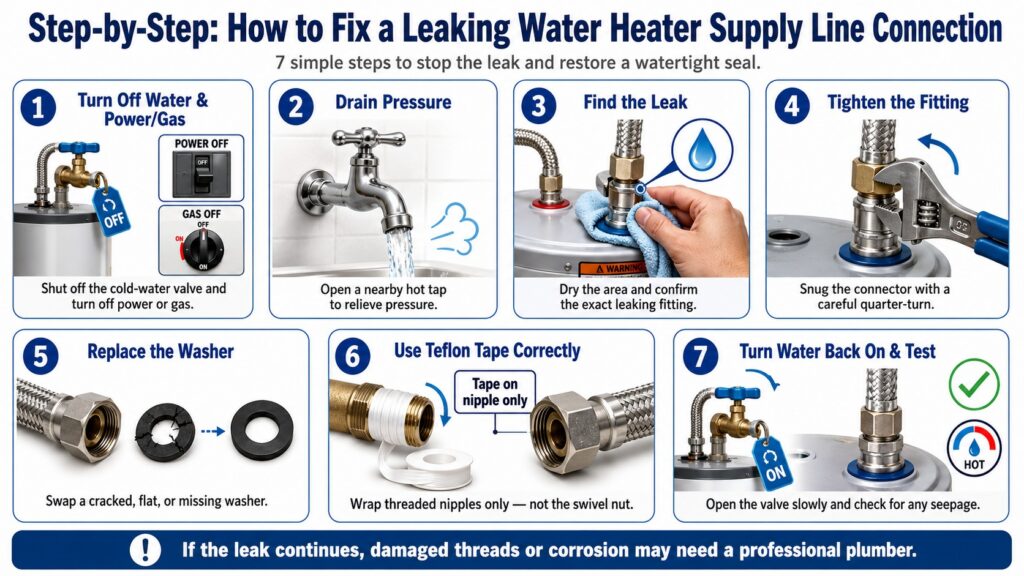
Fixing a leaking water heater supply line connection is straightforward when you follow a methodical approach. Each step builds on the last, so take your time and work safely. Below are the key actions to stop the leak and restore a watertight seal.
1. Turn Off the Water and Power or Gas
Locate the cold-water shut-off valve directly above or beside your water heater and turn it clockwise until it stops. This isolates the tank and prevents fresh water from feeding the leak. Next, switch off the circuit breaker for electric units or turn the gas control knob to the off position for gas models—never skip this safety step.
2. Drain Pressure From the System
Open a hot tap at a nearby sink or basin to release residual pressure inside the tank and supply lines. You’ll hear a brief hiss as air enters the system. This step makes it safer to disconnect fittings and reduces the chance of a sudden spray when you loosen a connector.
3. Identify the Leaking Connection
Dry the area with a cloth and watch closely to confirm which fitting is weeping. Is it the cold inlet, the hot outlet, or a valve? Knowing the exact spot lets you focus your repair effort and avoid unnecessary disassembly.
4. Tighten the Fitting First
Use an adjustable wrench or a pair of channel-lock pliers to gently snug the leaking connector. Turn it clockwise about a quarter-turn—most flexible supply lines only need hand-tight plus a small nudge. Over-tightening can crush the internal washer and make the leak worse, so apply firm but controlled force.
5. Inspect and Replace the Washer if Needed
If tightening doesn’t stop the drip, turn off the water again, relieve pressure, and disconnect the supply line. Check the rubber or fibre washer inside the swivel nut. A flattened, cracked, or missing washer is a common culprit. Replace it with a new one from your local hardware store, then reconnect the line hand-tight plus a quarter-turn.
6. Apply Teflon Tape to Threaded Nipples Only
Flexible braided hoses seal with a washer, so Teflon tape or pipe dope goes on the male threaded nipple screwed into the tank, not on the swivel nut. Wrap the tape clockwise three to four times, press it smooth, then thread the connector on by hand. This prevents cross-threading and ensures the washer seats properly against the nipple face.
7. Turn the Water Back On and Check for Leaks
Open the cold-water valve slowly and watch the connection for any seepage. If it stays dry, restore power or gas, wait for the tank to heat, and verify the repair holds under normal operating pressure. A persistent leak means the nipple threads are damaged or the tank port is corroded, both of which require professional attention from a licensed Sydney plumber.
Common Causes of a Leaking Water Heater Supply Line
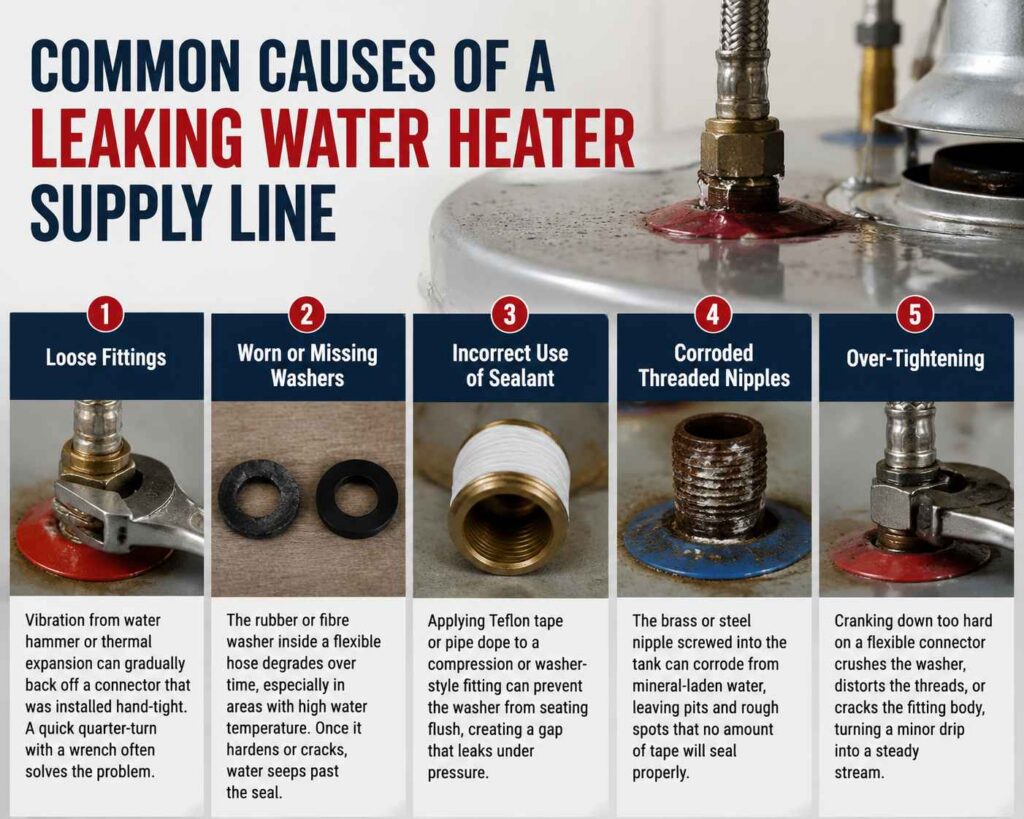
Understanding why supply line connections fail helps you prevent future leaks and know when a simple fix will suffice. Several factors contribute to drips and seepage at the inlet and outlet fittings. Below are the most frequent causes our team encounters across Sydney homes.
- Loose Fittings: Vibration from water hammer or thermal expansion can gradually back off a connector that was installed hand-tight. A quick quarter-turn with a wrench often solves the problem.
- Worn or Missing Washers: The rubber or fibre washer inside a flexible hose degrades over time, especially in areas with high water temperature. Once it hardens or cracks, water seeps past the seal.
- Incorrect Use of Sealant: Applying Teflon tape or pipe dope to a compression or washer-style fitting can prevent the washer from seating flush, creating a gap that leaks under pressure.
- Corroded Threaded Nipples: The brass or steel nipple screwed into the tank can corrode from mineral-laden water, leaving pits and rough spots that no amount of tape will seal properly.
- Over-Tightening: Cranking down too hard on a flexible connector crushes the washer, distorts the threads, or cracks the fitting body, turning a minor drip into a steady stream.
Each of these issues has a straightforward remedy when caught early. Routine inspection every six months lets you spot wear before it turns into water damage.
Preventing Future Leaks at Your Water Heater Supply Line
Prevention starts with proper installation and continues with regular checks. When a new water heater or supply line is fitted, using quality flexible braided hoses rated for hot water and high pressure reduces the chance of early failure. Cheap unbranded connectors from discount bins often use thinner washers and lower-grade materials that degrade faster.
Inspect your supply line connections every six months. Look for moisture, mineral deposits, or green verdigris on copper fittings. A quick visual check takes less than a minute and can catch a slow seep before it becomes a flood.
Maintain your water heater by flushing the tank annually to remove sediment that accelerates corrosion. Sediment buildup heats unevenly, stresses the tank lining, and can pit the threaded ports where your supply lines attach. Flushing also extends the life of your sacrificial anode rod, which protects the steel tank from rust.
If your home’s static water pressure exceeds 500 kPa—the maximum Sydney Water recommends for household connections—consider installing a pressure-limiting valve on your main supply. Excessive pressure strains every fitting in your plumbing system, including the small washers inside your water heater connectors. Keeping pressure within the recommended range reduces wear and prevents leaks, and it also protects your property against the kind of water damage claims Sydney insurers see after unregulated pressure spikes.
Gas Water Heater Supply Line Considerations
Gas water heaters add an extra layer of safety because you’re dealing with both water and gas connections. The water supply line repair steps are identical to those for electric units, but you must ensure the gas control is off and the pilot light is extinguished before you start any work on the tank.
Never use Teflon tape on gas fittings unless it’s specifically rated for gas—standard white tape can shred and clog gas orifices. Yellow gas-rated tape or approved pipe dope is the correct sealant for threaded gas connections. If you’re unsure which product to use, call a licensed gas fitter rather than risk a gas leak.
After repairing a water leak on a gas unit, check for gas odours when you turn the supply back on. If you smell gas, shut off the gas at the meter, ventilate the area, and contact a qualified professional immediately. Gas work in New South Wales must comply with AS/NZS 5601 and be carried out by a licensed gas fitter—our team holds both plumbing and gas-fitting credentials under NSW Lic. 210933C, so we handle the complete job safely and to code.
What to Expect When You Call Antons Plumbing & Gas

When you contact us about a leaking water heater supply line, we ask a few quick questions to understand the urgency and prepare the right parts. Is the leak a slow drip or a steady stream? Is the water hot or cold? Have you already turned off the supply? These details help our plumber arrive ready to fix the problem in one visit.
We offer same-day service across the Sydney metro, and there’s no call-out fee when you book between 7 am and 3 pm on weekdays, excluding public holidays. Our vans stock common flexible connectors, washers, Teflon tape, dielectric nipples, and thread sealant, so most supply line repairs are completed on the spot without waiting for parts.
On arrival, our licensed plumber will isolate the water and power or gas, inspect the connection under good light, and explain what’s causing the leak. We’ll show you the worn washer or corroded fitting, outline your options, and provide a fixed-price quote in AUD before we start work. No hidden fees, no surprises.
Once you approve the quote, we complete the repair to AS/NZS 3500 plumbing standards and in line with Sydney Water requirements, test the connection under full pressure, and clean up any water or debris. You receive a lifetime labour warranty on our workmanship, so if the same repair fails due to our installation, we’ll return and fix it at no charge.
Conclusion
A leaking water heater supply line connection is a common issue with a straightforward fix when you follow the right steps and use quality parts. Tighten fittings carefully, replace worn washers, and apply sealant only where it’s needed. For persistent leaks, corroded components, or gas-related concerns, trust a licensed Sydney professional to ensure safety, compliance with NSW regulations, and lasting results. Call us on 0493 824 176 anytime for same-day service across Sydney.
Antons Plumbing & Gas (NSW Lic. 210933C) specialises in hot water system repairs and leak detection across Sydney. Our licensed team diagnoses and fixes supply line issues fast, with upfront AUD pricing. Get started with a same-day service call today.
Related Articles
- Burst Hot Water Heater: Why This Happens and What to Do Next
- Air Bubbles in Hot Water Heater and Pipes: A Homeowner’s Guide
- DIY Plumbing Repair Mistakes Homeowners Should Check
FAQs
What Causes A Water Heater Supply Line To Leak?
A water heater supply line can leak due to several reasons, including loose connections, corrosion from age, damage to the pipe, or improper installation. Regular maintenance by a qualified plumber can help prevent these issues and ensure your water heater operates efficiently.
How Do You Fix A Leaking Water Heater Supply Line?
To fix a leaking water heater supply line, first, turn off the water supply and drain the water heater. Then, inspect the connection for loose fittings or signs of damage. Tighten any loose connections or replace damaged sections of the pipe. It’s advisable to consult a professional plumber for a thorough and safe repair.
Can A Leaking Water Heater Supply Line Be Repaired?
Yes, a leaking water heater supply line can often be repaired by tightening connections or replacing damaged sections. However, depending on the extent of the damage, sometimes a full replacement may be necessary. Our experienced team can assess the situation and recommend the best course of action.
How Much Does It Cost To Replace A Leaking Water Heater Supply Line?
The cost to replace a leaking water heater supply line can vary based on factors such as the extent of the damage, materials used, and labour. For an accurate estimate in AUD, it’s best to consult with a licensed Sydney plumber who can provide a tailored, fixed-price quote based on your specific situation.
What Should I Do If My Water Heater Supply Line Is Leaking?
If your water heater supply line is leaking, immediately turn off the water supply to prevent further damage. Contact a licensed plumber, like Antons Plumbing & Gas (NSW Lic. 210933C), for prompt assistance. Our team is available to address plumbing emergencies across Sydney and provide reliable solutions.
Do You Offer Same-Day Repairs For A Leaking Hot Water System In Sydney?
Yes. We run same-day service across the Sydney metro area for leaking water heater supply lines and other hot water faults. Call 0493 824 176 and we’ll arrange a licensed plumber to attend as soon as possible on the day you call.
Is Antons Plumbing & Gas Licensed To Work On Gas Hot Water Systems In NSW?
Yes, we hold NSW Lic. 210933C covering both plumbing and gas-fitting work, so we can legally and safely diagnose and repair leaks on gas hot water units in accordance with AS/NZS 5601.
What Sydney Suburbs Do You Service For Hot Water Repairs?
We service homes and businesses across the Sydney metro area, including the Hills District and surrounding suburbs. If you’re unsure whether we cover your address, call 0493 824 176 and we’ll confirm before booking.
Is There A Call-Out Fee For Booking A Plumber?
There’s no call-out fee when you book between 7 am and 3 pm on weekdays, excluding public holidays. Ask our team about current arrangements for after-hours or weekend calls when you book.
Do You Provide A Fixed-Price Quote Before Starting Work?
Yes. Once our licensed plumber inspects the leaking connection, we provide a fixed-price quote in AUD before any repair begins, so you know the cost upfront with no hidden fees.
What Warranty Do You Offer On Supply Line Repairs?
We back our workmanship with a lifetime labour warranty. If the same repair fails due to our installation, we return and fix it at no charge.
How Do I Book A Licensed Plumber For A Leaking Hot Water System?
Call 0493 824 176 or use our online booking form to arrange a same-day visit. Let us know whether the leak is a slow drip or steady stream so we bring the right parts.
Can I Get An Over-The-Phone Assessment Before You Arrive?
Yes. When you call, we’ll ask a few quick questions about the leak location and severity so we can advise on immediate safety steps and prepare our van with the likely parts needed.
Do You Handle Both The Plumbing And Gas Compliance Side Of The Repair?
Yes. As we hold both plumbing and gas-fitting credentials under NSW Lic. 210933C, we can manage the complete repair on gas or electric hot water systems, keeping the job compliant with AS/NZS 3500 and AS/NZS 5601.
What Should I Do While I Wait For The Plumber To Arrive?
Turn off the accessible water isolation valve if it’s safe, stop using the hot water system, and place towels or a container under the leak to limit water damage until our licensed plumber arrives.
Are Your Repairs Compliant With AS/NZS 3500 And Sydney Water Requirements?
Yes. All supply line and hot water repairs are carried out to AS/NZS 3500 plumbing standards and in line with Sydney Water requirements for household connections.
Will You Replace My Old Flexible Connectors As Part Of The Repair?
If your existing connector is worn, corroded, or an unbranded low-grade part, we’ll recommend replacing it with a quality braided connector rated for hot water and pressure, and include this in your fixed-price quote.
Can You Check My Whole Hot Water System While You’re Fixing The Leak?
Yes, our plumber can inspect the tank, valves, anode rod, and other connections while on site so you get a full picture of your hot water system’s condition, not just the leak you called about.
How Do I Know If I Need A Repair Or A Full Hot Water System Replacement?
If the leak is limited to the supply line connection and the tank itself is sound, a repair is usually sufficient. If there’s corrosion at the tank body or repeated failures, our licensed plumber will advise honestly whether replacement is the safer, more cost-effective option.
Do You Offer Emergency Plumbing Outside Business Hours?
Call 0493 824 176 to check current availability for urgent leaks outside standard hours. Where possible we’ll prioritise emergencies to limit water damage to your Sydney property.
How Do I Get Started With Antons Plumbing & Gas?
Simply call 0493 824 176 or book online. Tell us your suburb and describe the leak, and we’ll arrange a licensed plumber (NSW Lic. 210933C) for same-day service across Sydney with an upfront, fixed-price quote.