

Sediment buildup is one of the most overlooked causes of weak water pressure and slow drainage across Sydney homes. Fine particles of sand, silt, rust, and mineral scale gradually accumulate inside pipes, narrowing the internal diameter and restricting flow. Left unchecked, these deposits can lead to complete blockages, corroded fittings, and expensive emergency repairs.
In this article, you will learn how sediment enters your plumbing, the warning signs that point to a clog, practical steps you can take at home, and when to call a licensed plumber for inspection and repair. We will also explain how our team at Anton’s Plumbing & Gas (NSW Lic. 210933C) uses CCTV drain cameras, hydrojetting, and pipe relining to diagnose and resolve sediment issues across Sydney Metro.
Key Takeaways
- Sediment clogs form when sand, silt, rust flakes, and mineral scale accumulate inside plumbing pipes and reduce water flow.
- Common warning signs include weak pressure at taps, discoloured water, frequent aerator blockages, and localised clogs in narrow branches.
- Sediment typically enters through ageing pipes, soil intrusion, mineral-rich water, and disturbances in mains or well supplies.
- Homeowners can flush supply lines, clean aerators, and inspect cartridges, but a professional CCTV inspection identifies the root cause.
- Preventing future buildup relies on correct pipe grading, sediment filters, quality materials, and regular maintenance by a licensed Sydney plumber.
What Causes Pipes Clogged With Sediment in Sydney Homes
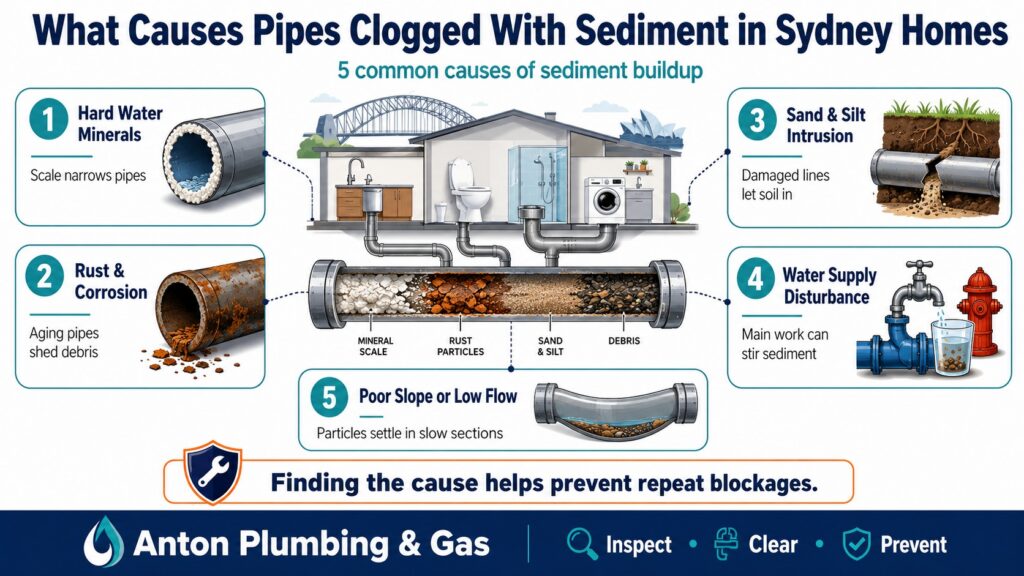
Pipes clogged with sediment can happen when minerals, rust, sand, silt, or disturbed particles enter and settle inside your plumbing system. Sydney homes may be more exposed to this issue because of older pipe materials, changing water pressure, sandy soils, and ageing drainage infrastructure in some suburbs. Understanding where the sediment comes from can help you choose the right repair method and prevent the blockage from returning.
Mineral Deposits From Hard Water
Hard water contains minerals such as calcium and magnesium that can build up inside pipes over time. When water heats or evaporates, these minerals may form scale around hot water pipes, tap aerators, shower heads, and fittings. As the buildup thickens, it can narrow the pipe opening and reduce water flow.
Rust and Corrosion in Ageing Plumbing Pipes
Older galvanised steel pipes can corrode from the inside and release rust flakes into the water stream. These flakes may combine with other particles and settle in bends, valves, cartridges, or low sections of the plumbing system. Cast-iron sewer pipes can also deteriorate over time, adding debris to drainage lines and increasing the risk of blockages.
Sandy Soil and Silt Intrusion
Sand and silt can enter damaged pipes through cracked joints, poorly sealed connections, or ageing drainage lines. This is more common where ground movement, reactive clay soils, or high water tables create gaps around underground pipework, which is not unusual in parts of Greater Sydney. Once inside the pipe, the sediment settles in areas where the slope or water velocity is not strong enough to carry it away.
Disturbances in the Water Supply
Water main repairs, hydrant flushing, and sudden pressure changes can disturb sediment sitting inside street mains. When that water enters your home, small particles may settle inside taps, filters, hot water systems, and pipe bends. You may notice temporary discoloured water, blocked aerators, or reduced flow after nearby Sydney Water main works.
Poor Pipe Slope or Low-Flow Sections
Sediment is more likely to collect where pipes have poor fall, sagging sections, or areas with slow water movement. Horizontal runs, bends, tees, and older drainage layouts can create places where particles settle instead of flushing through. Over time, this buildup can form a dense layer that restricts flow and causes recurring clogs.
Sediment blockages usually point to an underlying issue, not just a one-off plumbing problem. The best solution depends on whether the cause is hard water scale, pipe corrosion, soil intrusion, drainage defects, or disturbed supply water. Anton’s Plumbing & Gas can inspect your pipes, identify the source of sediment buildup, and recommend the most practical repair or prevention option for your Sydney home.
How to Recognize the Warning Signs of a Sediment-Clogged Drain
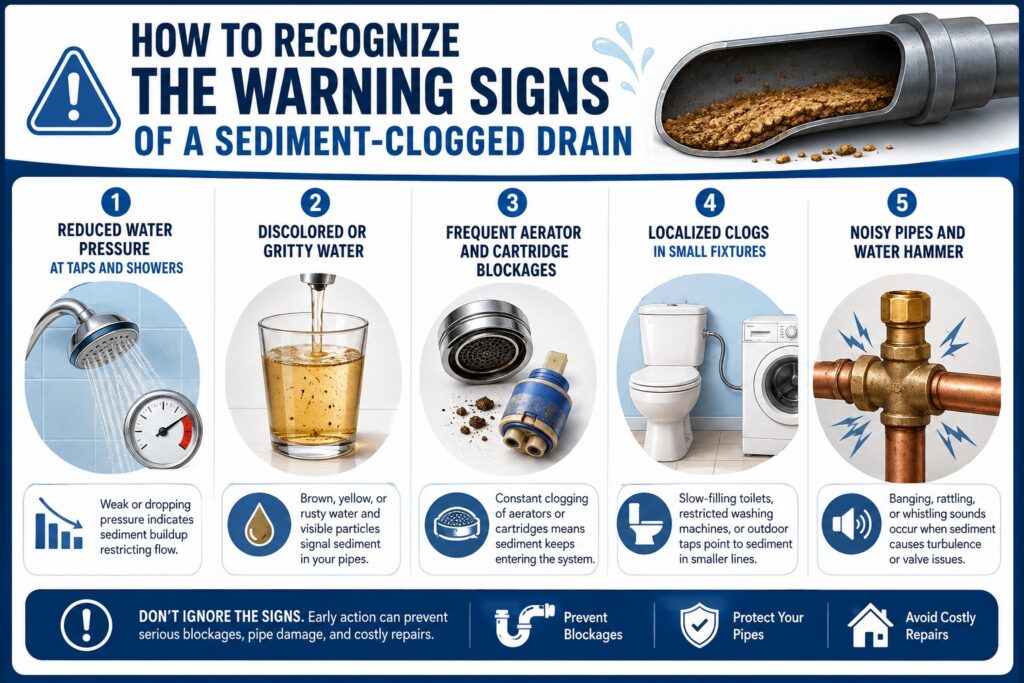
Early detection prevents minor sediment buildup from escalating into a full blockage or pipe failure. Most homeowners first notice changes in water pressure or quality at individual fixtures before the problem spreads. Recognising these signs helps you act before you face a burst pipe, flooded bathroom, or emergency call-out.
Below are the most common indicators that sediment is restricting flow in your plumbing pipes.
1. Reduced Water Pressure at Taps and Showers
If pressure drops at one fixture but remains normal elsewhere, sediment has likely clogged the aerator, cartridge, or supply branch serving that outlet. When multiple taps show weak flow, the issue may be upstream in the main supply line or hot water system. Pressure loss that worsens over weeks or months points to gradual sediment accumulation rather than a sudden blockage.
2. Discoloured or Gritty Water
Brown, yellow, or rust-tinted water indicates corrosion or sediment disturbance in your pipes. You may also see fine particles or flakes when you fill a glass or white sink. This discolouration often appears after the water has been off for several hours, as sediment settles and then flushes out when flow resumes.
3. Frequent Aerator and Cartridge Blockages
Tap aerators and shower screens trap sediment before it exits the fixture, so they clog first. If you find yourself cleaning or replacing aerators every few weeks, sediment is entering your system faster than normal. Cartridge valves in mixer taps also jam or leak when grit prevents the ceramic discs from sealing properly.
4. Localised Clogs in Small Fixtures
Narrow branches that supply toilets, washing machines, or outdoor taps clog before larger mains because lower velocity allows sediment to settle. A toilet cistern that fills slowly or a washing machine inlet that restricts flow may signal sediment buildup in the quarter-turn valve or flex hose.
5. Noisy Pipes and Water Hammer
Sediment can partially obstruct valves and cause turbulence, leading to rattling, banging, or whistling sounds when you turn taps on or off. Water hammer may worsen if scale or debris prevents a valve from closing smoothly, allowing pressure spikes to travel back through the system.
Effective Steps to Flush and Clean Sediment From Plumbing Pipes
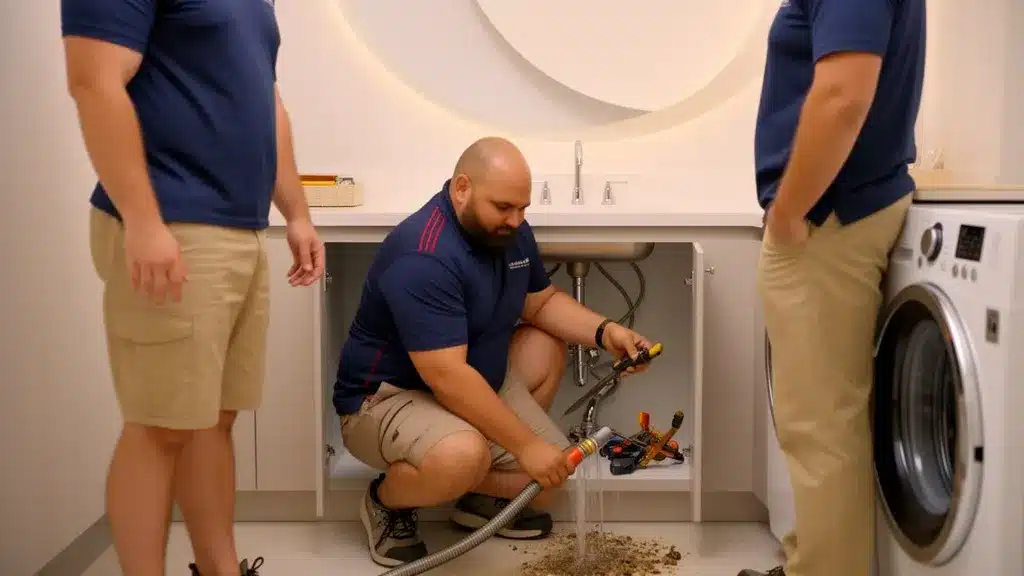
Homeowners can clear light sediment buildup using simple flushing and cleaning techniques. These methods work best for recent accumulation in accessible fixtures and short supply lines. For older homes with extensive corrosion or sediment deep in the system, professional inspection and mechanical cleaning deliver longer-lasting results.
Always turn off the water supply at the meter or isolation valve before starting any plumbing work. Wear gloves and safety glasses, and have a bucket and towels ready to catch water and debris.
Flush Hot and Cold Supply Lines
Close the main shut-off valve, then open every tap, shower, and outdoor tap in the house to drain the system. Once empty, close all fixtures except the lowest tap or outdoor tap connection. Turn the main valve back on and let water run at full pressure for several minutes to flush loose sediment out through the open outlet. Repeat for both hot and cold lines, starting from the hot water system drain valve if accessible.
Remove and Clean Tap Aerators
Unscrew the aerator from the end of each tap spout using a cloth or adjustable wrench to protect the finish. Disassemble the screen, washer, and flow restrictor, then rinse all parts under running water to remove trapped grit. Soak stubborn mineral scale in white vinegar for 30 minutes, scrub with an old toothbrush, and reassemble. This simple task often restores full pressure to a single fixture.
Inspect and Replace Cartridge Valves
If a mixer tap still runs weak after aerator cleaning, the cartridge may be jammed with sediment. Turn off the water, remove the handle and trim, then pull the cartridge straight out. Rinse it under a tap and check for grit between the ceramic discs or O-rings. Replace the cartridge if you see scoring, cracks, or persistent debris that will not rinse away.
Drain and Flush the Hot Water System
Sediment settles at the bottom of electric and gas storage tanks, reducing efficiency and shortening the unit’s life. Attach a hose to the drain valve at the base of the hot water system, run it to a floor drain or garden, and open the valve to flush several litres of water. Repeat until the discharge runs clear. For heavily silted tanks, a licensed plumber can perform a full drain-and-refill service and inspect the anode rod.
Use Vinegar or Descaling Solutions
For mineral scale in shower heads, taps, and exposed pipe sections, white vinegar dissolves calcium and magnesium deposits without harsh chemicals. Fill a plastic bag with vinegar, secure it over the fixture with a rubber band, and leave it overnight. Rinse and scrub in the morning. Commercial descaling products work faster but require careful handling and thorough rinsing to avoid pipe damage.
Why Professional CCTV Inspection Identifies Hidden Sediment Clogs
Basic flushing and fixture cleaning can help with surface-level issues, but they cannot show what is happening inside hidden pipework. A professional CCTV inspection gives plumbers a real-time view inside drains and sewer lines, making it easier to locate sediment buildup, damaged joints, corrosion, tree roots, or collapsed sections. This is especially useful in Sydney’s older suburbs, where slow drainage keeps returning or the blockage may sit under slabs, behind walls, or underground.
| Inspection Method | Best For | Limitations |
|---|---|---|
| Visual tap and fixture check | Checking aerators, cartridges, exposed pipes, and visible fittings | Cannot show what is happening inside walls, under slabs, or underground pipework |
| Acoustic leak detection | Helping locate leaks, water movement, and possible flow restrictions | Does not show the sediment type, buildup depth, or internal pipe condition |
| CCTV drain camera inspection | Providing a full internal view of drains and sewer pipes to locate sediment, cracks, roots, and defects | Requires a suitable access point and is generally used for drain or sewer lines, not pressurised supply pipes |
| Hydrostatic pressure test | Confirming pipe integrity after repair or checking whether a line can hold pressure | Does not identify the exact sediment location, blockage type, or internal pipe condition |
A CCTV drain camera inspection is a practical way to find hidden sediment clogs without unnecessary excavation. It helps confirm where the blockage is, how serious the buildup has become, and whether cleaning, repair, or replacement is the best option. Anton’s Plumbing & Gas uses professional CCTV inspection equipment to assess Sydney drains and provide clear advice before any major repair work begins.
Mechanical Cleaning and Hydrojetting for Stubborn Sediment Buildup
When sediment has hardened into a dense layer or mixed with grease and organic matter in sewer pipes, flushing alone will not clear the blockage. Mechanical cleaning methods use rotating cutters, high-pressure water jets, or both to scour the pipe interior and restore full diameter. These techniques are safe for most modern PVC, copper, and cast-iron pipes when performed by a licensed plumber with the correct equipment settings.
We assess pipe material, age, and condition before selecting the cleaning method, ensuring we remove the clog without damaging the pipe or fittings.
Cable Snaking and Auger Cleaning
A motorised drain snake or auger feeds a flexible cable tipped with a cutting head into the clogged pipe. The rotating head breaks up sediment, scale, and tree roots, allowing water to flush debris downstream. This method works well for localised blockages in branch drains, toilet connections, and short sewer runs. It is less effective for widespread sediment coating or hard mineral scale that requires abrasive force.
High-Pressure Hydrojetting
Hydrojetting uses a specialised nozzle that propels water at pressures up to 5,000 psi (roughly 34,000 kPa), scouring the pipe walls and flushing all debris to the outlet. The nozzle design creates forward thrust and rear-facing jets that scrub the interior as the hose advances. Hydrojetting removes grease, scale, sand, silt, and light root intrusion, leaving the pipe as clean as new. It is the preferred method for clearing sediment from long sewer pipes, stormwater drains, and heavily fouled plumbing lines.
Our hydrojetting service includes a post-clean CCTV inspection to confirm full clearance and identify any damage that may need repair. We back our work with a lifetime labour warranty, giving you confidence that the job is done right.
Preventing Future Sediment Clogs in Sewer Pipes and Plumbing Lines
Once your pipes are clean, the next step is to prevent sediment from returning. Prevention strategies vary depending on whether the source is external soil intrusion, internal corrosion, or mineral-laden water supply. A combination of correct pipe grading, quality materials, and regular maintenance keeps sediment moving through the system instead of settling and clogging.
Below are proven methods to reduce sediment buildup and extend the life of your plumbing and drainage.
Maintain Correct Pipe Grading and Velocity
Drainage and sewer pipes must slope at least 1 in 60 (approximately 17 mm per metre) to maintain enough velocity to carry sediment and solids to the outlet, in line with AS/NZS 3500 plumbing standards used across NSW. Flat or sagging sections allow particles to settle and form clogs. If CCTV inspection reveals poor grading, re-laying the affected pipe or installing a cleanout access point may be necessary to restore proper flow.
Install Sediment Filters and Screens
Whole-house sediment filters trap sand, silt, and rust before they enter your plumbing system. These filters mount on the main supply line after the water meter and require periodic cartridge replacement. For tank or bore water, a multi-stage filtration system with a sediment pre-filter and activated carbon post-filter protects both your pipes and your appliances.
Choose Sediment-Resistant Pipe Materials
PVC and HDPE pipes have smooth interiors that resist scale buildup and do not corrode, making them ideal for drainage and sewer applications. Copper supply pipes also resist sediment accumulation better than galvanised steel. When replacing old plumbing pipes, upgrading to modern materials reduces the risk of future clogs and extends service life.
Seal Joints and Repair Cracks Promptly
Soil intrusion occurs wherever joints are loose, cracked, or improperly sealed. Regular CCTV inspections identify these entry points before they allow significant sediment ingress. Any work that connects to the Sydney Water sewer main or water meter must be carried out by a licensed plumber and, where required, notified to Sydney Water. We repair minor cracks with epoxy lining or spot repairs, and recommend full pipe relining or replacement for severely damaged sections.
Schedule Regular Drain Maintenance
Annual or biennial hydrojetting and inspection prevent gradual sediment buildup from becoming a major blockage. Strata properties, commercial kitchens, and homes with older plumbing across Sydney benefit most from scheduled maintenance. Our team can design a maintenance plan tailored to your property, with reminders and fixed pricing in AUD to keep your drains flowing year-round.
How Antons Plumbing & Gas Clears and Repairs Sediment-Clogged Pipes
We follow a structured diagnostic and repair process that identifies the root cause, clears the blockage, and prevents recurrence. Our approach combines CCTV inspection, mechanical cleaning, and long-term solutions such as pipe relining or filtration, tailored to your property and budget. Every job is completed to Australian Standards, carried out by our NSW-licensed team (Lic. 210933C), with clear communication at every step and no hidden fees.
Here is what you can expect when you engage our team for sediment-related plumbing issues.
1. Same-Day Inspection and Diagnosis
We arrive at your property within hours of your call, equipped with CCTV cameras, pressure gauges, and leak detection tools. Our plumber inspects the affected fixtures, runs a camera through accessible drains, and tests water quality and pressure at multiple points. This diagnostic phase typically takes 30 to 60 minutes and provides a complete picture of sediment location, severity, and contributing factors.
2. Clear Options and Upfront Pricing
Once we understand the problem, we present you with repair options ranked by cost, durability, and disruption. For example, light sediment may only require hydrojetting and aerator replacement, while severe corrosion in old galvanised pipes may warrant a full re-pipe. We explain the pros and cons of each approach in plain English, provide a fixed-price quote in AUD, and wait for your approval before starting work.
3. Hydrojetting and Mechanical Cleaning
We use high-pressure hydrojetting to scour sediment from sewer pipes, stormwater drains, and accessible plumbing lines. For stubborn scale or root-invaded sections, we combine jetting with rotary cutting to restore full diameter. All debris is flushed to the outlet or extracted via vacuum truck, leaving your pipes clean and your property tidy.
4. Pipe Relining for Damaged or Corroded Sections
If CCTV inspection reveals cracks, corrosion, or joint failure that allowed sediment intrusion, we recommend trenchless pipe relining. This process inserts a resin-saturated liner into the damaged pipe, which hardens to form a new, seamless interior. Relining eliminates the need for excavation, preserves landscaping, and extends pipe life by 50 years or more.
5. Filtration and Maintenance Planning
For homes with persistent sediment issues due to hard water or sandy soil, we install whole-house filters or point-of-use cartridges. We also offer scheduled maintenance packages that include annual CCTV checks and hydrojetting, keeping your drains clear and reducing the risk of emergency blockages.
6. Post-Repair Inspection and Documentation
After cleaning or repair, we run a final CCTV inspection to confirm full clearance and pipe integrity. You receive a copy of the video, a written report, and a compliance certificate where required by your insurer, strata manager, or Sydney Water. Our lifetime labour warranty covers the workmanship, so if a problem arises from our installation or service, we return and fix it at no charge.
When to Call a Licensed Sydney Plumber
Some sediment issues are safe to handle yourself, such as cleaning an aerator or flushing a supply line. However, you should call a licensed Sydney plumber if you notice recurring blockages, discoloured water that does not clear, low pressure across the whole house, unusual noises in the walls, or any sign of a leak near the water meter or sewer connection. In NSW, work on the water meter, backflow devices, or the sewer main must be carried out by a licensed plumber and may need to be notified to Sydney Water. Anton’s Plumbing & Gas is fully licensed (NSW Lic. 210933C) and insured to carry out this work safely and to Australian Standards. Call +61 493 824 176 for a fast assessment.
Conclusion
Sediment buildup is a gradual problem that becomes urgent when ignored, leading to blocked drains, burst pipes, and costly emergency repairs. Recognising the warning signs early and acting with professional inspection and cleaning protects your plumbing investment and keeps your home running smoothly. Our team at Anton’s Plumbing & Gas combines advanced diagnostic tools, proven cleaning methods, and transparent AUD pricing to resolve sediment clogs quickly and prevent them from returning.
Anton’s Plumbing & Gas delivers expert leak detection and pipe repairs across Sydney Metro for sediment-related blockages. Our NSW-licensed team (Lic. 210933C) diagnoses root causes with CCTV inspections and upfront pricing. Call 0493 824 176 to learn more.
Related Articles
- Sediment Buildup in Hot Water Systems: Signs a Technician Looks For
- Water Hammer Pipes: Why Pipes Bang and What Can Be Done About It
- What Happens When a Water Heater Bursts? Practical Advice for Australian Homes
FAQs
What Causes Pipes To Clog With Sediment?
Pipes can clog with sediment due to a variety of factors, including hard water containing minerals like calcium and magnesium, rust from ageing pipes, and debris from deteriorating plumbing systems. Over time, these particles settle and accumulate, restricting water flow and leading to reduced efficiency. Our team at Anton’s Plumbing & Gas can assess your plumbing to identify the specific cause and recommend the best solution.
How Do You Unclog Pipes With Sediment?
Unclogging pipes with sediment typically involves techniques such as hydrojetting, which uses high-pressure water to clear blockages, or mechanical snaking to remove the buildup. Our experienced technicians are equipped to handle these methods safely and effectively, ensuring your plumbing is restored to optimal function.
What Are The Signs Of Sediment Buildup In Pipes?
Signs of sediment buildup in pipes include reduced water pressure, discoloured water, unusual noises when water is flowing, and frequent clogs. If you notice any of these issues, it’s important to contact a professional like Anton’s Plumbing & Gas, who can perform a thorough inspection and provide tailored solutions.
Can Sediment In Pipes Cause Damage?
Yes, sediment in pipes can lead to significant damage over time. It can cause corrosion, lead to leaks, and ultimately result in costly repairs. Regular maintenance and inspections by our qualified team can help prevent these issues and extend the lifespan of your plumbing system.
How Can I Prevent Sediment Buildup In My Pipes?
To prevent sediment buildup in your pipes, consider installing a sediment filter to reduce mineral content, regularly flushing your hot water system, and scheduling routine plumbing inspections. Our experts at Anton’s Plumbing & Gas can provide personalised recommendations to keep your plumbing system clean and efficient.
Is Anton’s Plumbing & Gas Licensed to Work in Sydney and NSW?
Yes. Anton’s Plumbing & Gas holds NSW Licence 210933C and our plumbers are fully insured to carry out water, drainage, and gas work across the Sydney Metro area in line with NSW Fair Trading requirements and AS/NZS 3500 standards.
Do You Offer Same-Day Sediment and Blocked Drain Callouts in Sydney?
We aim to attend most Sydney properties on the same day you call, especially where sediment is causing no water flow or a suspected leak. Call +61 493 824 176 and we will confirm the earliest available appointment for your suburb.
How Much Does It Cost to Clear a Sediment-Clogged Drain?
Cost depends on the severity of the blockage, the pipe material, and whether hydrojetting, snaking, or relining is required. We inspect the problem first and provide a fixed-price quote in AUD before any work begins, so there are no surprises on the invoice.
Do You Provide a Written Quote Before Starting Work?
Yes. After our diagnostic inspection, we explain the repair options in plain English and provide a fixed-price, obligation-free quote in AUD. Work only proceeds once you approve the price.
Which Sydney Suburbs Do You Service?
Anton’s Plumbing & Gas services homes and businesses across Sydney Metro, including suburbs such as Toongabbie, Colyton, Seaforth, Whalan, and Glendding, among others. Call us to confirm coverage for your address.
Will Clearing Sediment From My Drain Affect My Sydney Water Compliance?
Any plumbing work connected to the Sydney Water network, including the water meter or sewer main, must be carried out by a licensed plumber and may require notification to Sydney Water. Our licensed team handles this compliance for you and issues documentation where required.
Can Sediment Buildup Cause a Burst Pipe or Emergency Leak?
Yes, sediment can accelerate corrosion in ageing pipes and eventually contribute to a burst or leaking joint. If you notice sudden pressure loss, discoloured water, or dampness near a wall or slab, call us immediately for an emergency assessment.
Do I Need a Licensed Plumber for Sediment Issues, or Can I Fix It Myself?
Light surface cleaning, like rinsing an aerator, is safe for homeowners. However, any work involving the water meter, hot water system, or sewer connection should be left to a licensed plumber to remain compliant with NSW regulations and to avoid voiding warranties or insurance.
Do You Provide CCTV Footage After an Inspection?
Yes. Every CCTV drain inspection includes a copy of the video footage and a written report, so you can see exactly where the sediment or damage is located before agreeing to any repair.
What Warranty Do You Offer on Hydrojetting and Pipe Relining?
We back our hydrojetting, drain cleaning, and pipe relining work with a lifetime labour warranty, so if an issue arises from our workmanship, we return and fix it at no extra charge.
Is Hydrojetting Safe for Older Sydney Homes With Ageing Pipes?
We assess your pipe material, age, and condition before recommending hydrojetting. In most cases it is safe for PVC, copper, and sound cast-iron pipework, and we adjust pressure settings accordingly to avoid damaging older or fragile sections.
How Often Should I Have My Drains Professionally Cleaned to Prevent Sediment Buildup?
For most Sydney homes, an annual or biennial CCTV inspection and hydrojet clean is enough to prevent sediment from building up into a major blockage. Older homes, strata buildings, and properties with a history of blockages may benefit from more frequent servicing.
Can I Book a Plumber Online, or Do I Need to Call?
You can request a booking online or simply call +61 493 824 176 to speak with our team directly. Phone bookings are the fastest way to arrange a same-day inspection for sediment or blocked drain issues.
Are Your Plumbers Fully Insured as Well as Licensed?
Yes. Alongside our NSW Licence 210933C, our plumbers carry full insurance, so you are covered in the unlikely event of an issue during sediment removal, hydrojetting, or pipe repair work at your property.
What Should I Do Right Now If My Water Suddenly Turns Gritty or Brown?
Turn off the affected tap or the main isolation valve if flow does not clear after a short flush, avoid using the hot water system until it has been checked, and call a licensed Sydney plumber. This is often an early sign of sediment or corrosion that is best diagnosed before it worsens.
How Do I Get a Fixed-Price Quote for Sediment Removal at My Property?
Call Anton’s Plumbing & Gas on +61 493 824 176 or book online. We will arrange a CCTV inspection, explain what is causing the blockage, and provide a fixed, obligation-free quote in AUD before any work begins.