

Brown water coming from the hot tap usually means rust, sediment or mineral buildup is entering the water from the hot water system or hot-side pipework. When the cold water remains clear, the problem is more likely to involve a corroded tank, depleted sacrificial anode, sediment buildup or ageing pipes than the Sydney Water supply.
This guide explains the most common causes of brown hot water, the safety precautions to take and the checks you can perform before calling a plumber. It also covers when the system may need flushing, component replacement, pipe repairs or a complete hot water system upgrade.
Key Takeaways
- Brown or rusty hot water in your Sydney home usually points to rust, sediment, or mineral build-up inside your hot water system or pipework, not necessarily the Sydney Water mains.
- Avoid drinking or cooking with discoloured water until the source is confirmed and the issue is resolved.
- Flushing the system may give temporary relief, but recurring discolouration warrants a professional inspection.
- Corroded tanks, sacrificial anodes, and ageing pipes are common culprits in older Sydney and NSW homes.
- Licensed plumbers can diagnose the root cause, recommend repair or replacement, and make sure any work complies with Australian Standards and NSW Fair Trading requirements.
Quick Answer: Brown hot water is usually caused by rust or sediment inside the hot water tank, a depleted sacrificial anode or corroded hot-water pipes. Check whether the cold water is clear, run each hot tap briefly and avoid drinking or cooking with the discoloured water until the source is confirmed. Contact a licensed plumber if the water does not clear, keeps returning, smells unusual or appears alongside leaks, strange noises or visible corrosion.
Why Hot Water Coming Out Brown Is Different From Tap Water Coming Out Brown
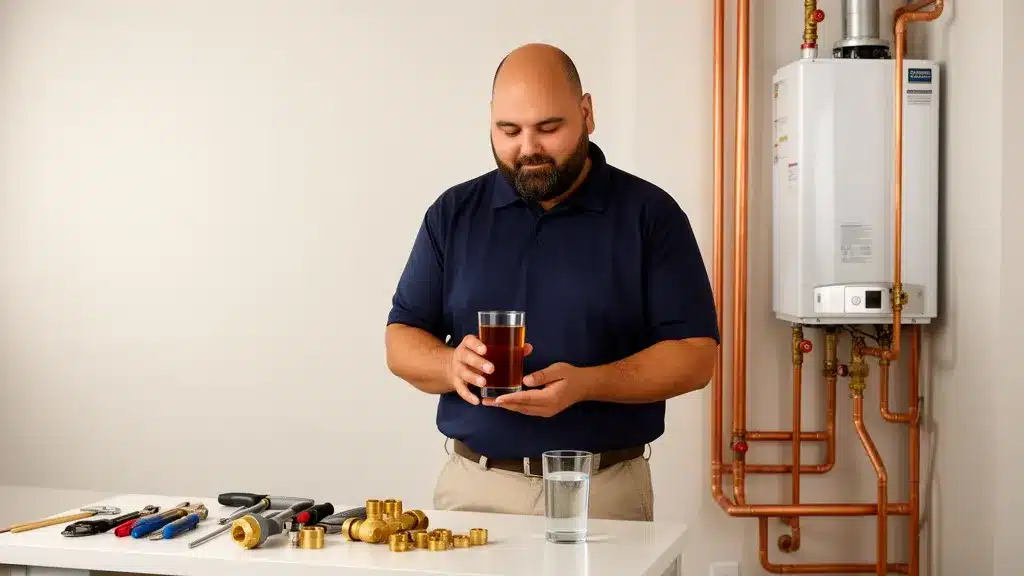
When both hot and cold taps run brown, the problem typically lies with the water main, the local Sydney Water supply network, or corroded metal pipes feeding your property. Sydney Water sometimes disturbs sediment during repairs or pressure changes, causing temporary discolouration across all taps. In these cases, running a cold tap for several minutes usually clears the water, and the issue resolves within 24 hours.
Brown water coming from your hot water tap only is a different story. It means the contamination originates inside your hot water system or the hot-side pipework, not the street main or cold supply.
Common reasons include rust flaking off the inside of a steel tank, sediment settling at the bottom of the heater and being stirred up during use, or corroded copper or galvanised pipes on the hot water circuit. Because the cold water stays clear, you can rule out supply-side issues and focus your attention on the heater itself and the pipes immediately downstream.
What Causes Brown Water Coming From the Hot Water Tap
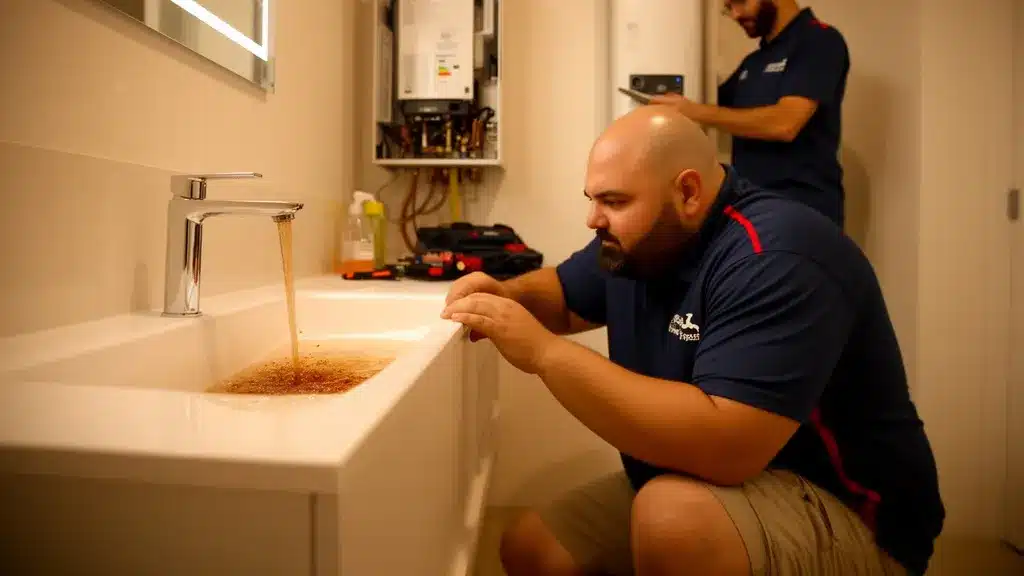
Several factors contribute to discoloured hot water. Understanding the root cause helps you decide whether a simple flush will solve the problem or whether you need a licensed plumber to inspect, repair, or replace components. Below are the most common culprits we see across Sydney homes.
1. Rust and Corrosion Inside the Tank
Most storage hot water systems use a steel tank lined with vitreous enamel or glass to prevent rust. Over time, that lining can crack or wear away, exposing bare steel to water and oxygen. The result is rust that flakes into the water, turning it brown or reddish. Older systems without a functioning sacrificial anode are especially vulnerable.
2. Failed or Depleted Sacrificial Anode
A sacrificial anode is a metal rod (usually magnesium or aluminium) installed inside the tank to attract corrosion and protect the steel. Once the anode is consumed, the tank wall begins to corrode. Many homeowners are unaware that anodes need inspection and replacement every few years, so a depleted anode is a common cause of brown hot water in systems older than five to seven years.
3. Sediment Build-up at the Bottom of the Heater
Minerals like calcium, magnesium, iron, and manganese naturally occur in Sydney’s water supply. When water is heated, these minerals precipitate and settle at the bottom of the tank as sediment. Over time, the layer thickens, insulating the heating element and reducing efficiency. When the element cycles on, it stirs the sediment, releasing brown or cloudy water into your taps.
4. Corroded Hot Water Pipes
Older Sydney homes with galvanised steel or corroded copper pipes on the hot water circuit can shed rust and scale into the water. Galvanised pipes are particularly prone to internal corrosion, especially after decades in service. If your cold water is clear but every hot tap in the house runs brown, suspect corroded hot-side pipework rather than the heater itself.
5. Recent Plumbing Work or Pressure Changes
Any work on the hot water system or sudden pressure changes can dislodge settled sediment or rust. If brown water appears immediately after a repair, installation, or Sydney Water main works in your street, the disturbance may have stirred up material that was previously sitting quietly at the bottom of the tank or in the pipes.
6. High Iron or Manganese in the Water Supply
Some regional NSW water supplies, particularly those drawing on mineral-rich groundwater, contain elevated levels of iron and manganese. While these minerals are not usually harmful, they can cause brown, orange, or black discolouration when concentrated by heating. If your cold water also shows slight discolouration, or you live in an area known for mineral-rich groundwater, the issue may be supply-related rather than equipment failure.
Health and Safety: The Disadvantages of Drinking Hot Water That Is Discoloured

Brown hot water is usually not an immediate health emergency when the cause is simple rust or mineral sediment. That said, you should avoid drinking or cooking with discoloured water until the source is confirmed. Rust particles and sediment can carry bacteria, especially if they have been sitting in a stagnant layer at the bottom of an old tank. Corroded pipes may also release lead or other metals, particularly in older homes with legacy plumbing materials.
There are also general disadvantages to drinking hot tap water, even when it appears clear. Hot water can scald mouth and throat tissue, worsen acid reflux or other gastrointestinal conditions, and leach higher concentrations of metals from pipes and fittings compared with cold water. For these reasons, most plumbing and health authorities recommend using cold water for drinking and cooking, then heating it in a kettle or on the stove if needed.
If you rely on tank water or a private bore, brown discolouration may indicate bacterial contamination or biofilm growth inside the system. In these cases, professional testing and disinfection are essential before the water is safe to consume.
Is Brown Hot Water Always a Sign of a Failing System?
Not always, but it is a strong warning sign that should prompt an inspection. A single episode of light discolouration after plumbing work or a Sydney Water main repair may clear within a few hours of flushing. Persistent or recurring brown water, especially in an older system, usually means the tank or pipework is corroding and will continue to deteriorate.
Many homeowners notice brown water on and off for months before the system fails completely. By the time the tank starts leaking or the element burns out, the damage is often extensive and replacement is the only safe option. Early diagnosis can sometimes extend the life of the system through anode replacement or a thorough flush, but only if the tank structure is still sound.
We recommend treating any episode of brown hot water as a prompt for professional assessment, especially if your system is more than ten years old or you have never had the anode inspected.
Simple Steps You Can Try Before Calling a Plumber

If brown water appears suddenly and you want to rule out temporary disturbances, try these steps. They are safe for most residential systems and may resolve minor issues without professional help.
- Run the hot tap for five to ten minutes: let the water flow at full pressure to flush out loose sediment or rust. Collect the water in a bucket so you can see whether it clears over time.
- Check all hot taps in the house: if every hot tap runs brown, the problem is likely in the heater or main hot water line. If only one tap is affected, suspect a corroded pipe or fixture on that branch.
- Inspect the cold water supply: run a cold tap for several minutes. If the cold water is also discoloured, contact Sydney Water and wait for the supply to clear before assessing your hot water system.
- Note the colour and consistency: reddish-brown water suggests iron or rust. Black or grey water may indicate manganese or degraded rubber hoses. Cloudy white water that clears as it cools is usually harmless air or mineral precipitation.
- Check for recent plumbing work: if a plumber or Sydney Water has worked on your system or the street main in the past few days, sediment disturbance is likely. Flushing should resolve the issue within 24 hours.
If the water does not clear after flushing, returns to brown within a day or two, or is accompanied by strange odours, a metallic taste, or reduced pressure, stop using the hot water for consumption and call a licensed Sydney plumber.
When to Call a Licensed Sydney Plumber for Hot Water Coming Out Brown
Professional diagnosis is necessary when flushing does not resolve the problem, when discolouration recurs, or when you suspect internal corrosion or component failure. Anton’s Plumbing & Gas is a licensed plumbing and gas fitting company (NSW Lic. 210933C), so we can inspect the hot water system, test the water, and identify whether the issue lies in the tank, anode, element, pipes, or the Sydney Water supply, all in line with NSW Fair Trading requirements.
What to Expect During a Hot Water System Inspection
Our team begins with a visual inspection of the heater, checking for external rust, leaks, or damaged fittings. We then test the temperature and pressure relief valve, inspect the sacrificial anode (if accessible), and assess the age and condition of the tank. If sediment build-up is suspected, we may drain a sample from the bottom drain valve to check for rust, scale, or sludge.
Where the tank cannot be easily inspected or the cause is unclear, we may recommend a water quality test to measure iron, manganese, lead, and bacterial contamination. This is especially important for homes on tank water, bores, or older supply networks outside the main Sydney Water grid.
Repair or Replace: How We Help You Decide
If the tank lining is intact and the anode is the only issue, replacing the anode rod can extend the system’s life by several years. If sediment build-up is moderate and the tank is relatively young, a professional flush may restore performance. These repairs are cost-effective and can usually be completed the same day.
When the tank is heavily corroded, leaking, or more than 12 years old, replacement is usually the safer and more economical choice. Continuing to run a failing system risks sudden failure, water damage, and higher energy bills due to poor efficiency. We provide clear options, upfront pricing in AUD, and detailed explanations so you can make an informed decision based on your budget and timeline.
All our hot water installations comply with Australian Standards and NSW Fair Trading requirements. We use quality brands, provide a lifetime labour warranty on our workmanship, and make sure your new system is correctly sized, safely installed, and ready for years of reliable service.
Understanding Fluoride in Drinking Water and Mineral Content
Sydney’s drinking water, supplied and treated by Sydney Water, is fluoridated to support dental health. Fluoride itself does not cause brown discolouration. Brown or orange water is typically the result of iron, manganese, or rust, not fluoride. Some regional NSW supplies, particularly those drawing on mineral-rich groundwater sources, contain higher levels of iron and manganese that can cause staining and discolouration when heated.
If you are concerned about mineral content or water quality, Sydney Water publishes regular water quality results and can provide specific data for your area. A licensed plumber can also arrange independent water testing to identify the exact minerals or contaminants present.
Why Sydney Homes Are Particularly Vulnerable to Hot Water Discolouration
Many Sydney properties were built with galvanised steel or early copper plumbing, some of it now 40 to 60 years old. Galvanised pipes corrode from the inside out, shedding rust and scale into the hot water circuit. Older hot water systems, especially those installed before modern anode and lining technologies became standard, are prone to internal corrosion.
Sydney’s water supply is generally of good quality, but localised pressure fluctuations, maintenance work, and ageing infrastructure in the Sydney Water network can disturb sediment. Homes in areas with older mains or frequent water main repairs may experience temporary discolouration more often than newer suburbs.
Tree root intrusion, ground movement, and soil conditions can also affect underground pipes, leading to leaks, corrosion, and sediment ingress. We see these issues regularly across the Inner West, Eastern Suburbs, North Shore, and Western Sydney, where housing stock varies widely in age and construction.
How Anton’s Plumbing & Gas Can Help With Brown Hot Water Issues
We provide same-day service across greater Sydney, including the Inner West, Eastern Suburbs, North Shore, Northern Beaches, Hills District, Western and South-Western Sydney, and Sutherland Shire. Our qualified plumbers carry diagnostic tools, spare parts, and the experience to assess your hot water system on the spot and recommend the most cost-effective solution.
Whether you need an anode replacement, a tank flush, pipe repairs, or a full system upgrade, we explain your options in plain English, provide upfront pricing in AUD, and complete the work to Australian Standards. We also offer 24/7 emergency response for burst tanks, leaks, or total hot water failure, with no call-out fee from 7am to 3pm on weekdays.
Our work is backed by a lifetime labour warranty, current licensing under NSW Fair Trading (Lic: 210933C), and full insurance. We respect your home, clean up after every job, and make sure you understand how to maintain your new or repaired system for maximum lifespan and efficiency.
If you are unsure whether your brown hot water is a minor inconvenience or a sign of serious damage, call us on +61 493 824 176 for a fast quote and same-day inspection. As a licensed Sydney plumber (NSW Lic. 210933C), we will diagnose the root cause, present clear options in AUD, and help you make the right decision for your home and budget.
Preventive Maintenance to Avoid Future Brown Water Problems
Regular maintenance can catch corrosion and sediment build-up before they cause discoloured water or system failure. We recommend annual inspections for hot water systems older than five years, including anode checks, tank flushing, and valve testing.
Replacing the sacrificial anode every three to five years is one of the most cost-effective ways to extend tank life. Flushing the tank annually removes sediment before it hardens and insulates the element. Testing the temperature and pressure relief valve ensures safe operation and prevents dangerous pressure build-up.
If you live in an area with hard water or high mineral content, consider installing a water softener or sediment filter on the cold water inlet to the heater. This reduces scale formation and protects both the tank and your household plumbing.
Conclusion
Brown hot water is a clear signal that something inside your hot water system or pipework needs attention. Early diagnosis and professional repair can save you money, protect your home from leaks and water damage, and ensure your family has access to safe, clean hot water. Call Anton’s Plumbing & Gas on +61 493 824 176 for same-day service, upfront AUD pricing, and workmanship you can trust.
Anton’s Plumbing & Gas delivers expert hot water system diagnostics and repairs across Sydney Metro suburbs for residential and commercial properties. Our licensed team (NSW Lic. 210933C) identifies discolouration causes fast, with same-day service and a lifetime labour warranty. Call +61 493 824 176 to get started today.
Get a Free Estimate for Your Brown Hot Water Issue
Brown or rusty water from your hot taps may indicate sediment buildup, a depleted sacrificial anode, corroded pipework or deterioration inside the hot water tank. Use Anton’s free plumbing quote estimator to describe the discolouration, property type and urgency, then receive an initial price range for inspection, flushing, repairs or system replacement. If the water keeps returning brown, smells unusual or appears alongside leaks, strange noises or visible corrosion, call Anton’s Plumbing & Gas on 0493 824 176 for prompt assistance.
Related Articles
- Water Heater Burst in Apartment? What Tenants, Owners, and Strata Should Do First
- What Happens When a Water Heater Bursts? Practical Advice for Australian Homes
FAQs
What Causes Hot Water to Come Out Brown?
Brown hot water is typically caused by rust or sediment build-up in your hot water system. This can occur when the water heater’s tank corrodes or if there are rusted pipes in your plumbing system. As a licensed plumbing and gas-fitting company (NSW Lic. 210933C), we can diagnose the root cause and provide reliable solutions to restore your water quality.
Is Brown Hot Water Safe to Drink?
Brown hot water is generally not safe to drink. The discolouration often indicates the presence of rust or contaminants, which can pose health risks. If you notice brown water, it’s best to avoid using it for drinking or cooking until it has been addressed by professionals like us at Anton’s Plumbing & Gas.
How Do I Fix Brown Water in My Hot Water Heater?
To fix brown water in your hot water heater, first flush the tank to remove sediment build-up. If the issue persists, it may indicate corrosion or another underlying problem that requires professional inspection. If you are experiencing brown hot water at a property in Auburn, a licensed plumber in Auburn can assess the system, identify the cause and recommend an effective solution.
Can Rusty Pipes Cause Brown Hot Water?
Yes, rusty pipes can cause brown hot water. As pipes corrode, they can release rust particles into the water supply, leading to discolouration. This issue can affect both the safety and quality of your water. At Anton’s Plumbing & Gas, we can inspect your pipes and provide tailored solutions to restore clean water flow.
What Should I Do If My Hot Water Is Brown?
If your hot water is brown, stop using it and contact a licensed Sydney plumber as soon as possible. Our team at Anton’s Plumbing & Gas (NSW Lic. 210933C) is available 24/7 to help diagnose the problem and carry out the necessary repairs, ensuring your water is safe and clean again.
Why Is My Hot Water Brown but My Cold Water Clear?
When cold water is clear but hot water is brown, the source is usually inside the hot water system or the hot-water pipework. Common causes include tank corrosion, a depleted sacrificial anode, sediment buildup or deteriorating hot-water pipes. Because the cold supply is unaffected, a problem with the street water main is less likely.
Will Running the Hot Tap Clear Brown Water?
Running the hot tap for five to ten minutes may clear loose sediment or rust caused by recent plumbing work or a temporary pressure change. However, if the water remains brown or the discolouration returns, flushing the tap will not address the underlying cause. If you are experiencing persistent brown hot water at a property in Silverwater, a local plumber in Silverwater can inspect the system and identify the source of the problem.
Why Does Brown Hot Water Keep Coming Back?
Recurring brown hot water generally indicates an ongoing problem rather than a temporary disturbance. The tank may be corroding, the sacrificial anode may be depleted or sediment may have accumulated at the bottom of the heater. Corroded hot-water pipes can also continue releasing rust particles until the affected section is repaired or replaced.
Can a Sacrificial Anode Cause Brown Hot Water?
A sacrificial anode does not normally cause brown water while it is functioning correctly. Its purpose is to corrode in place of the steel tank. Once the anode has been consumed, the tank itself can begin rusting, releasing reddish-brown particles into the hot water. Replacing the anode early may help extend the life of an otherwise sound system.
How Often Should a Hot Water Anode Be Replaced?
A sacrificial anode commonly requires inspection or replacement every three to five years, although the correct interval depends on the system, water quality and manufacturer recommendations. Systems in areas with higher mineral content may require more frequent checks. For homeowners in Epping whose systems are due for maintenance, a licensed plumber in Epping can inspect the anode and advise whether it needs to be replaced.
Does Brown Water Mean My Hot Water Tank Is Rusting?
Brown or reddish water can indicate internal tank corrosion, particularly when the system is older or has never had its sacrificial anode inspected. However, discolouration can also come from sediment or corroded pipes. A plumber may drain a sample from the tank and inspect the system to determine whether the tank itself is deteriorating.
Can Sediment Damage a Hot Water System?
Yes. A thick layer of sediment can reduce heating efficiency by insulating the heating element or burner from the water. It can also contribute to unusual noises, inconsistent temperatures and premature component failure. When sediment is disturbed, it may enter the hot-water supply and create brown, cloudy or gritty water at the taps. If you are experiencing these symptoms at a property in North Ryde, North Ryde plumbing services can help determine whether the system requires flushing, repair or replacement.
Can Brown Hot Water Damage Taps and Appliances?
Rust, mineral scale and sediment can accumulate inside tap aerators, showerheads, valves and appliances connected to the hot-water supply. This may restrict water flow, stain fixtures or affect appliance performance. Resolving the source of the discolouration early can help protect washing machines, dishwashers and other plumbing fixtures from further buildup.
Why Did My Hot Water Turn Brown After Plumbing Work?
Repairs, installations and changes in water pressure can disturb rust or sediment that has settled inside the tank or pipework. The water may clear after the affected hot-water taps are flushed. If the discolouration continues for more than 24 hours or repeatedly returns, there may be an underlying corrosion or sediment problem requiring inspection.
Can Galvanised Pipes Cause Brown Hot Water?
Yes. Older galvanised steel pipes can corrode internally and release rust and scale into the water. Hot water may accelerate deterioration, so the hot-water pipes can become affected even while the cold water remains clear. Replacing the corroded sections is often necessary when the pipe walls have significantly deteriorated.
How Can I Tell Whether the Tank or Pipes Are Causing the Problem?
Check every hot tap in the property. If all hot taps are brown, the hot water system or the main hot-water line may be responsible. If only one tap is affected, the problem may be limited to a nearby branch pipe, flexible hose or fixture. If you need help tracing the source at a property in Longueville, a trusted plumber in Longueville can isolate the affected section and determine whether the problem is coming from the tank, pipework or fixture.
Should I Turn Off My Hot Water System If the Water Is Brown?
Light discolouration without leaks may not require the system to be switched off immediately, but the water should not be used for drinking or cooking until the cause is confirmed. Turn the system off and arrange urgent assistance if there is a leak, visible tank corrosion, unusual noises, a burning smell or signs of electrical damage.
Will a Water Filter Fix Brown Hot Water?
A filter may capture some sediment or rust particles, but it will not repair a corroding tank, depleted anode or deteriorating pipe. Installing filtration without addressing the source can allow the underlying damage to worsen. The cause of the brown water should be diagnosed before filtration or water-treatment equipment is considered.
Is It Better to Repair or Replace a Rusty Hot Water System?
Repair may be appropriate when the system is relatively young, the tank remains structurally sound and the problem is limited to sediment or a depleted anode. Replacement is generally more practical when the tank is leaking, heavily corroded or more than approximately 12 years old. A plumber can compare repair costs, expected lifespan and efficiency.
How Can I Prevent Brown Hot Water From Returning?
Preventive maintenance should include periodic tank flushing, sacrificial-anode inspections and testing of the temperature and pressure relief valve. Older systems may benefit from annual professional inspections. Properties with high sediment or mineral levels may also require suitable inlet filtration or water-treatment advice to reduce future buildup. Homeowners in Kings Langley can ask a local Kings Langley plumber to assess the system and recommend a maintenance schedule suited to its age, condition and type.