

A pipe leaking under kitchen sink can start as a few drops and turn into a flood that damages cabinets, flooring, and walls. Most Sydney homeowners notice the problem when they open the cupboard door and see pooled water or catch a musty smell. Ignoring a leaking sink pipe means you risk mould growth, structural damage, and higher water bills — all avoidable if you act quickly.
This guide explains the common causes of a kitchen sink pipe leaking, the warning signs that tell you it’s time to call a professional, and how our licensed Sydney plumbers diagnose and repair leaks to Australian Standards. You’ll also learn when a DIY fix is enough and when you need expert help to protect your home and stay on the right side of NSW plumbing regulations.
A quick note on compliance: under NSW Fair Trading rules, any permanent alteration to pipework connected to the Sydney Water network must be carried out by a licensed plumber. Tightening a loose nut or swapping a worn washer is fine as a DIY job, but if you’re cutting, re-jointing, or replacing pipe, call a licensed Sydney plumber — Anton’s Plumbing & Gas holds NSW Lic. 210933C and can be reached on +61 493 824 176.
Key Takeaways
- A pipe leaking under your kitchen sink can cause cabinet rot, mould, and higher water bills if left untreated.
- Common leak sources include worn P-trap seals, corroded metal pipes, loose slip nuts, and failed supply-line connections.
- Visible water pooling, damp cupboards, musty odours, and dripping sounds are clear signs you need a plumber.
- DIY repairs work for simple seal replacements, but cracked pipes, hidden leaks, and recurring drips require a licensed plumber and may fall under Sydney Water and NSW Fair Trading compliance rules.
- Our team provides same-day leak detection, upfront fixed-rate pricing in AUD, and compliant repairs backed by a lifetime labour warranty across Sydney.
Pipe Leaking Under Kitchen Sink: Why It Happens
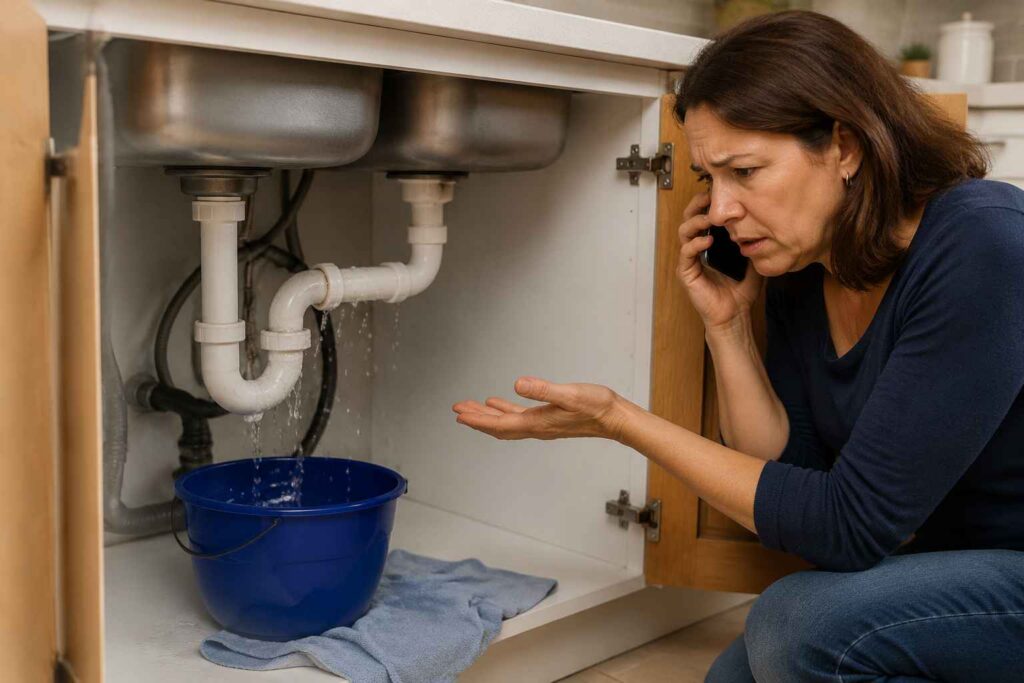
Most leaks under the kitchen sink happen at connection points where washers, slip nuts, or threaded joints fail over time. The P-trap — the curved pipe that holds a water seal to block sewer gas — is a common culprit because it sits directly under the drain and handles constant flow. Metal traps corrode, plastic ones crack, and rubber seals harden with age, letting water seep through even when the nut feels tight.
Supply lines that feed your taps are another frequent leak source. Braided stainless-steel hoses can fray at the crimp, compression fittings loosen from vibration, and shutoff valves develop slow drips when their internal washers wear out. In older Sydney homes you might also find galvanised steel pipes that have rusted through or PVC joins that were never glued properly during a past renovation.
Clogs make leaks worse. When food scraps, grease, or soap scum block the drain, water backs up and pushes against every joint in the waste line. That extra pressure finds the weakest seal and forces water out. If you’ve noticed slow drainage before the leak appeared, the two problems are likely connected.
Corroded or Damaged P-Trap
Metal P-traps rust from the inside out, especially in areas with acidic water or heavy detergent use. You might see green corrosion on brass fittings or flaky brown patches on chrome-plated steel. Once the metal thins, even hand-tightening the slip nut can crack the pipe wall.
Plastic P-traps last longer but still fail. Over-tightening during installation can stress the threads, and accidental impacts — like shoving a bin under the sink — can crack the curved section. We replace damaged traps with quality PVC or brass components that meet AS/NZS 3500 plumbing standards.
Worn or Missing Washers and Seals
Every threaded connection under your sink relies on a rubber or fibre washer to create a watertight seal. These washers compress over time, harden from heat, or perish from chemical cleaners. When they lose their shape, water finds a path between the nut and the pipe.
Missing washers are more common than you’d expect. DIY repairs sometimes skip the washer step, or the old one sticks inside the nut and gets discarded by mistake. Our plumbers carry a full range of replacement seals and always check that each joint has the correct washer before reassembly.
Loose Slip Nuts and Compression Fittings
Slip nuts secure the P-trap to the tailpiece and waste arm. They’re designed to be hand-tight, but many people reach for a wrench and over-torque them, which can strip the threads or crack the fitting. On the flip side, a nut that’s too loose will drip as soon as water flows.
Compression fittings on supply lines work the same way: a brass nut compresses a ferrule or olive onto the pipe to seal it. If the pipe wasn’t cut square or the ferrule is reused, the seal fails. We use fresh fittings and the correct torque to ensure every connection stays dry.
Cracked Sink Flange or Basket Strainer
The sink flange — the metal ring that sits in the drain hole — is sealed to the sink with plumber’s putty or a rubber gasket. Over years of use, the putty dries out and cracks, or the gasket compresses unevenly. Water then leaks down the outside of the tailpiece and drips onto the cabinet floor.
Basket strainers in double-bowl sinks face the same issue. If the locknut underneath loosens, the entire assembly shifts and breaks the seal. Tightening it back up can help temporarily, but a full reseal with fresh putty or a new gasket is the permanent fix.
Failed Supply-Line Hoses or Shutoff Valves
Flexible supply hoses connect your taps to the shutoff valves on the wall. Braided stainless-steel hoses are durable, but the rubber core can degrade, and the crimp at each end can weaken. A pinhole leak in the hose will spray water every time you turn on the tap, soaking the cabinet and anything stored inside.
Shutoff valves themselves develop slow drips from worn packing or a failed internal washer. You’ll see a bead of water forming at the valve stem or a puddle directly below the valve body. Replacing the valve is straightforward for a licensed plumber and prevents a sudden burst if the valve seizes.
Clear Signs You Need a Professional Plumber
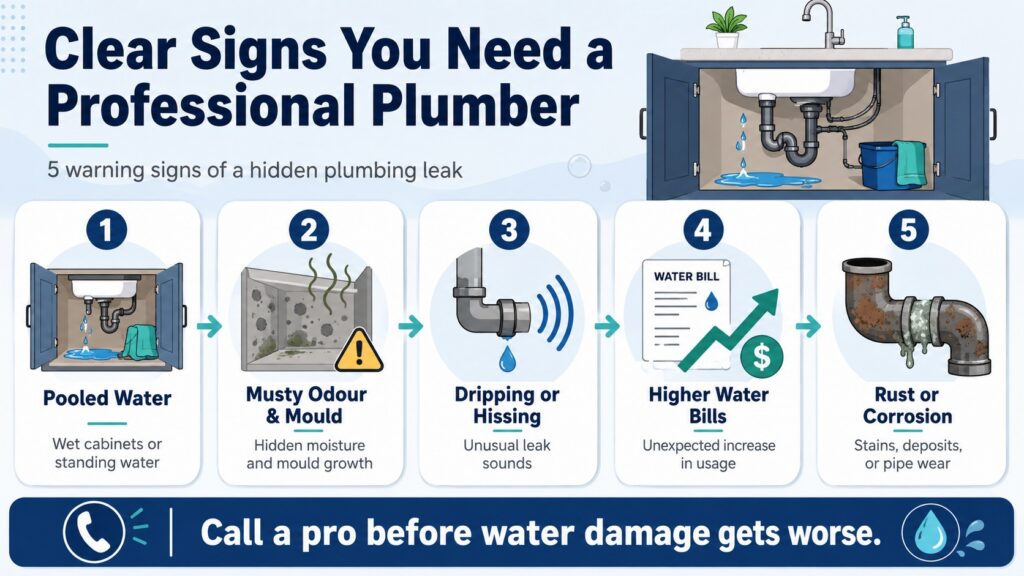
Some leaks announce themselves with a puddle on the cabinet floor, but others hide behind cleaning products or dish racks and only reveal themselves through secondary clues. Knowing what to look for helps you catch problems early, before water damage spreads to flooring or wall framing. If you spot any of the signs below, it’s time to call our team for same-day leak detection and repair.
Pooled Water or Damp Cabinets
Open the cupboard under your sink and check the base. If you see standing water, wet cardboard, or damp towels, you have an active leak. Even a small drip can pool overnight and soak into particleboard or MDF, causing the cabinet floor to swell, warp, and eventually rot.
Damp cabinet walls are just as serious. Water wicking up the side panels indicates a slow, steady leak that’s been running for days or weeks. Our plumbers use moisture meters to map the extent of water intrusion and identify the exact leak source, so you know whether you need a simple seal replacement or a full pipe section renewal.
Musty Odour or Visible Mould
A persistent musty smell near the sink is a red flag for hidden moisture. Mould spores thrive in dark, damp spaces, and the cupboard under your sink is the perfect environment once a leak starts. You might see black or green patches on the cabinet interior, or smell the distinctive earthy odour every time you open the door.
Mould isn’t just a cosmetic issue — it can trigger allergies, asthma, and other respiratory problems. Fixing the leak stops the moisture source, but you’ll also need to clean or replace affected materials. We identify the leak, repair it to code, and recommend next steps for mould remediation if the damage is extensive.
Dripping or Hissing Sounds
Listen carefully when you run the tap or drain the sink. A steady drip-drip-drip from under the cabinet means water is escaping at a connection point. A hissing sound suggests a pressurised leak in a supply line, which can spray water whenever the tap is on.
These sounds often disappear when the tap is off, making the leak easy to miss during a quick inspection. Our plumbers perform a full flow test — running hot and cold water, filling the sink, and draining it completely — to replicate normal use and pinpoint exactly where the leak occurs.
Higher Water Bills Without Explanation
A small, constant drip can waste a surprising amount of water per day, pushing your water bill higher even if your usage habits haven’t changed. If your latest Sydney Water bill shows an unexplained spike and you haven’t been watering the garden or filling a pool, check under every sink and toilet for hidden leaks.
Supply-line leaks are especially wasteful because they run under mains pressure. A pinhole in a braided hose can lose a large volume of water before you notice the puddle. We offer leak detection across your whole property, using acoustic sensors and thermal imaging to find leaks in walls, under floors, and behind cabinetry.
Rust Stains or Corrosion on Pipes
Visible rust, green verdigris, or white calcium deposits on your waste pipes or supply lines indicate that water has been leaking and evaporating on the surface. Even if the leak is slow, the corrosion will spread and eventually eat through the pipe wall.
Galvanised steel pipes common in older Sydney homes are prone to rust. Copper pipes develop pinhole leaks from acidic water or electrolysis. We assess the condition of your pipework, explain whether a repair or replacement is more cost-effective, and complete the work to AS/NZS 3500 standards with quality fittings and materials.
How We Fix a Leaking Kitchen Sink Pipe
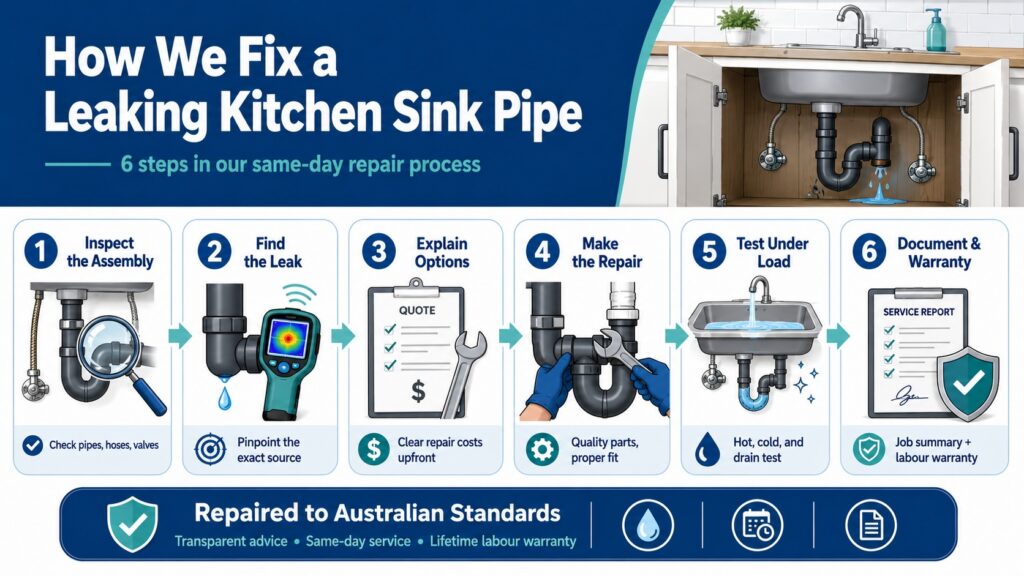
When you call our team, we arrive with the tools, parts, and experience to diagnose and repair your leak the same day. Our process is systematic: we don’t just tighten a nut and hope for the best — we trace the water source, test every connection, and ensure the entire waste and supply system is sound before we leave. Here’s what you can expect from start to finish.
1. Inspect the Entire Under-Sink Assembly
We start by checking every visible pipe, hose, and fitting under your sink. That includes the P-trap, tailpiece, waste arm, supply lines, shutoff valves, and the sink flange itself. We look for corrosion, cracks, loose nuts, and signs of past DIY repairs that may not have been completed to code.
If the leak isn’t obvious, we run water through the system and watch for drips while the tap is on, while the sink drains, and after the flow stops. This live test often reveals intermittent leaks that only occur under pressure or when the trap is full.
2. Identify the Leak Source With Precision
We use a combination of visual inspection, hand-feel for moisture, and sometimes a moisture meter or thermal camera to pinpoint exactly where water is escaping. A drip from the slip nut is different from a crack in the pipe body, and each requires a different repair approach.
If the leak is inside the wall or under the floor — rare for kitchen sinks but possible if your waste line runs through a concealed space — we use acoustic leak detection to locate it without demolition. Our goal is always to minimise disruption and cost while delivering a lasting fix.
3. Explain Your Repair Options and Costs
Before we touch a tool, we explain what’s wrong, why it’s leaking, and what we recommend. If a simple washer replacement will solve it, we tell you. If the entire P-trap is corroded and needs replacing, we explain why a repair won’t last and provide a fixed-rate quote in AUD for the new part and labour.
We don’t upsell. We present the options — repair versus replace, standard parts versus premium — and let you choose what fits your budget and timeline. All our pricing is transparent, and we never add hidden fees or surprise charges.
4. Complete the Repair to Australian Standards
Once you approve the quote, we get to work. We turn off the water, protect your cabinet and floor with drop sheets, and remove the faulty component. We clean all mating surfaces, fit new washers and seals, and reassemble the pipework with the correct torque and alignment.
Every repair meets AS/NZS 3500 plumbing standards and NSW Fair Trading licensing requirements. We use quality parts from trusted suppliers — brass, PVC, or stainless steel — and ensure every connection is watertight. If we need to replace a section of pipe, we measure and cut to fit, deburr the edges, and test the joint before we move on.
5. Test the System Under Full Load
After the repair, we run hot and cold water, fill the sink to the brim, and drain it completely while watching every joint for leaks. We check the shutoff valves, supply hoses, and waste connections. If everything stays dry, we clean up, dispose of old parts responsibly, and show you the completed work.
We also check for any secondary issues — slow drainage, loose tap handles, or worn washers in adjacent fixtures — and let you know if anything else needs attention. There’s no obligation to proceed with additional work, but we believe in giving you the full picture so you can plan ahead.
6. Document the Work and Provide a Warranty
You’ll receive a clear summary of what we found, what we repaired, and any recommendations for future maintenance. Our lifetime labour warranty covers the workmanship on every repair we complete, so if the same joint leaks again due to our installation, we’ll return and fix it at no charge.
We also keep records of every job, so if you call us back months or years later, we have the history and can diagnose recurring issues faster. That’s part of our commitment to long-term service and accountability as a licensed Sydney plumbing business.
Preventing Future Leaks Under Your Kitchen Sink
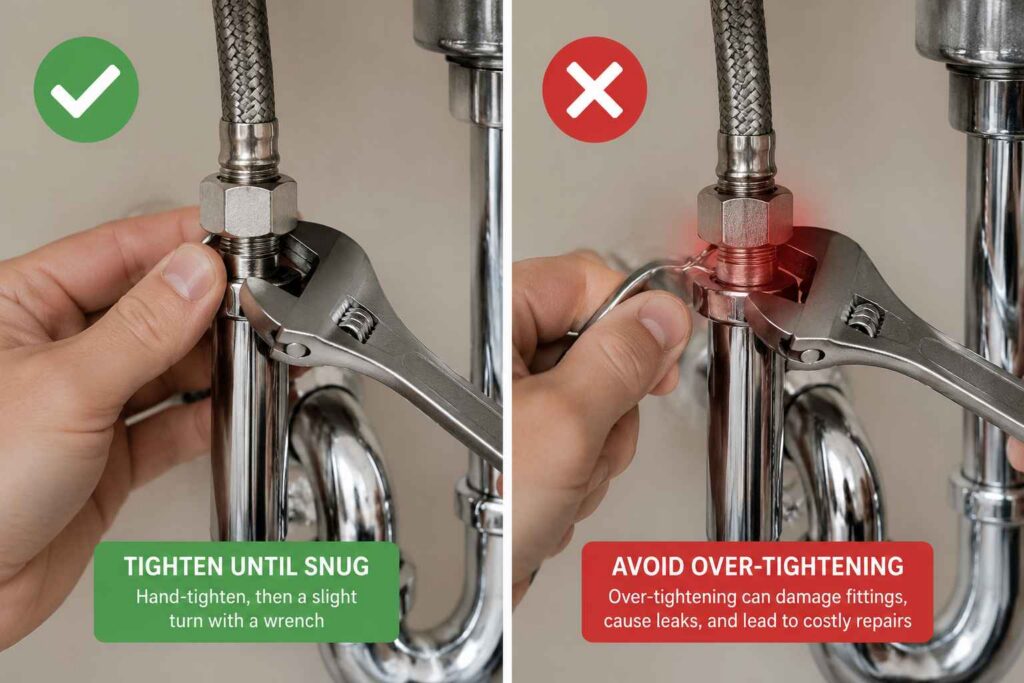
Once your leak is fixed, a few simple habits can keep your under-sink plumbing dry and trouble-free for years. Regular checks, mindful use, and timely part replacement go a long way toward avoiding emergency call-outs and water damage. Here’s what we recommend to every Sydney homeowner.
- Inspect under the sink every few months. Open the cupboard, wipe down the pipes, and look for moisture, corrosion, or loose fittings. Catching a slow drip early means a five-minute fix instead of a cabinet replacement.
- Avoid over-tightening slip nuts and compression fittings. Hand-tight is usually enough for plastic fittings. If you need a wrench, give it a quarter-turn and test. Over-torquing cracks the threads and guarantees a future leak.
- Replace supply hoses every five to seven years. Braided stainless-steel hoses don’t last forever. Swap them out before they fail, especially if you see fraying, kinks, or corrosion at the crimp.
- Keep the area under the sink dry and uncluttered. Storing wet sponges, leaking cleaning bottles, or damp towels creates a humid environment that accelerates corrosion and hides leaks. A dry, tidy cupboard makes inspections easier.
- Use a drain strainer to prevent clogs. Food scraps, coffee grounds, and grease build up in the P-trap and waste line, causing backups that stress every joint. A simple strainer catches debris before it enters the drain.
- Schedule a plumbing check-up during kitchen renovations. If you’re replacing benchtops, sinks, or taps, have a licensed plumber inspect and upgrade the waste and supply lines at the same time. Old pipes hidden behind new cabinetry can leak and cause costly damage, and any permanent alterations must be done by a licensed plumber under NSW regulations.
If you’re in an older Sydney home with galvanised steel or ageing PVC, consider a full under-sink pipework renewal. We can replace corroded traps, outdated fittings, and worn shutoff valves in a single visit, giving you peace of mind and code-compliant plumbing that won’t let you down.
Why Sydney Homeowners Choose Our Leak Repair Service

A leaking sink pipe might seem like a small problem, but it can escalate fast if the repair isn’t done properly. We’ve seen DIY fixes that used the wrong washer size, over-tightened fittings that cracked under pressure, and temporary tape solutions that failed within days. Our approach is different: we diagnose the root cause, use the right parts, and back every repair with a lifetime labour warranty.
We’re a licensed, family-owned Sydney plumbing company with more than 25 years of hands-on experience. Our plumbers carry NSW Lic: 210933C and work to NSW Fair Trading requirements, Sydney Water guidelines, and AS/NZS 3500 plumbing standards on every job. We provide same-day service across the Inner West, Eastern Suburbs, North Shore, Northern Beaches, Hills District, Western Sydney, South-Western Sydney, and Sutherland Shire — with 24/7 emergency response and no call-out fee from 7am to 3pm on weekdays.
We charge a fixed rate for our work in AUD, so you know the cost before we start. No hidden fees, no hourly rate creep, no surprises on the invoice. We arrive on time, protect your home with drop sheets, complete the repair with quality parts, and clean up before we leave. Whether you’re comparing local plumbers through Australian Directory or searching for help with a leaking kitchen sink, we provide clear pricing and practical repair options. Call us on +61 493 824 176 or book online today.
Conclusion
A pipe leaking under your kitchen sink won’t fix itself, and every day you wait increases the risk of mould, rot, and structural damage. Our licensed Sydney plumbers provide same-day leak detection and compliant repairs, backed by transparent AUD pricing and a lifetime labour warranty. Call +61 493 824 176 now or book online — we’re ready to help, day or night.
Anton’s Plumbing & Gas offers expert leak detection and burst pipe repairs across Sydney Metro. With 25+ years’ experience and same-day service, we fix kitchen leaks fast. Call +61 493 824 176 to get started today.
Related Articles
- PVC Pipe Under Sink Leaking at the Joint: Simple Repair Tips
- How to Fix Pipes Under Sink Leaking Before It Gets Worse
- How to Tell if a Pipe is Leaking in Your Wall: Simple Signs
FAQs
What Causes A Pipe To Leak Under The Kitchen Sink?
A pipe may leak under the kitchen sink due to several reasons, including loose or damaged fittings, corrosion, wear and tear, or a crack in the pipe itself. Over time, even minor issues can lead to significant leaks, so it’s essential to address them promptly. If you need a Chatswood plumber or a Penrith plumber, Anton’s Plumbing & Gas can inspect the leak and identify the cause before it worsens.
How Do You Fix A Leaking Pipe Under The Kitchen Sink?
To fix a leaking pipe under the kitchen sink, you should first turn off the water supply. Then, check for loose connections and tighten them as needed. If the pipe is cracked or damaged, replacement may be necessary. For a reliable repair, consider calling a licensed plumber like Anton’s Plumbing & Gas, who can diagnose the issue and ensure a proper fix. Homeowners looking for a North Shore plumber or an Emu Plains plumber can rely on our team for safe, long-lasting repairs.
Is It Safe To Use A Kitchen Sink With A Leaking Pipe?
Using a kitchen sink with a leaking pipe is not recommended, as it can lead to water damage, mould growth, and other safety hazards. It’s best to stop using the sink and contact a professional plumber to assess and repair the leak as soon as possible. A licensed Northbridge plumber can check the pipework, fittings, and surrounding cabinetry for signs of damage.
How Much Does It Cost To Repair A Leaking Pipe Under The Kitchen Sink?
The cost to repair a leaking pipe under the kitchen sink can vary based on the extent of the damage and the specific repairs needed. At Anton’s Plumbing & Gas, we provide upfront pricing in AUD and tailored solutions to fit your budget, ensuring you get the best value from our expert services. If you’re comparing options for a Hornsby plumber, clear pricing helps you understand the repair before work begins.
When Should I Call A Plumber For A Leaking Kitchen Sink?
You should call a plumber for a leaking kitchen sink as soon as you notice any signs of leakage, such as water pooling under the sink, dampness, or dripping sounds. Prompt attention can help prevent further damage and costly repairs, and our team at Anton’s Plumbing & Gas is available 24/7 to assist you. If you need an urgent Ryde plumber, our team can respond quickly and repair the leak properly.
Do You Offer Same-Day Repairs For A Leaking Kitchen Sink Pipe In Sydney?
Yes. Anton’s Plumbing & Gas provides same-day leak detection and repair across Sydney Metro. Call +61 493 824 176 and we’ll arrange a visit as soon as possible, often on the same day you call.
Is There A Call-Out Fee For Kitchen Sink Leak Repairs?
We don’t charge a call-out fee for visits between 7am and 3pm on weekdays. Ask our team when you book to confirm the current arrangement for your appointment time.
What Areas Of Sydney Do You Service For Sink Pipe Leak Repairs?
We cover the Inner West, Eastern Suburbs, North Shore, Northern Beaches, Hills District, Western Sydney, South-Western Sydney, and Sutherland Shire, with 24/7 emergency response available.
Do You Provide A Warranty On Kitchen Sink Pipe Repairs?
Yes. Every repair we complete is backed by a lifetime labour warranty, so if the same joint leaks again due to our workmanship, we’ll return and fix it at no charge.
Are Your Plumbers Licensed And Insured?
Yes. Anton’s Plumbing & Gas is a licensed, family-owned Sydney plumbing business (NSW Lic. 210933C) with more than 25 years of hands-on experience, working to NSW Fair Trading and AS/NZS 3500 standards on every job.
Can A Leaking Kitchen Sink Pipe Affect My Sydney Water Bill?
Yes. Even a small, constant drip can waste water continuously and push your bill higher. If you’ve noticed an unexplained increase, it’s worth having us check under your sink and other fixtures for hidden leaks.
Do I Need Sydney Water Or Council Approval To Fix A Leaking Pipe Under My Sink?
Simple repairs like tightening a nut or replacing a washer don’t require approval. However, permanent alterations to pipework connected to the Sydney Water network must be carried out by a licensed plumber under NSW Fair Trading regulations — our team handles this compliance for you.
What Happens If The Leak Has Caused Damage To My Cabinets Or Flooring?
We’ll assess the extent of water damage using moisture meters, complete the pipe repair, and let you know if the cabinet or flooring needs replacing so you can plan any follow-up work.
Do You Offer Emergency Plumbing Services After Hours In Sydney?
Yes. Our team is available 24/7 for urgent leaks, including after-hours and weekend call-outs across Sydney Metro.
Do You Provide Upfront, Fixed-Price Quotes For Sink Leak Repairs?
Yes. We explain the issue, the recommended fix, and provide a fixed-rate quote in AUD before we start any work — no hidden fees or surprise charges on the invoice.
How Do I Book A Plumber For A Leaking Sink Pipe?
You can call us on +61 493 824 176 or book online through our website. We’ll confirm a same-day or next available appointment depending on your location and the urgency of the leak.