

A sink that drains slowly or not at all is a common household problem that can quickly disrupt your daily routine. What may seem like a minor inconvenience often points to an underlying issue such as grease buildup, hair clogs, pipe damage, or poor drainage flow.
This guide explains the most common reasons sink water will not go down, the immediate steps you can take at home, and the warning signs that suggest a more serious plumbing issue. It also outlines when professional help is the best option and how Antons Plumbing & Gas can restore safe, reliable drainage across your Sydney property.
Key Takeaways
- Food scraps, grease, soap scum, hair, and foreign objects are some of the most common causes of a sink not draining properly.
- Simple DIY methods such as cleaning the drain stopper, checking the P-trap, plunging, or using bicarb soda and vinegar may help clear minor blockages.
- Problems like faulty pipe slope, corrosion, cracked drains, and tree root intrusion usually require a licensed NSW plumber for proper diagnosis and repair.
- Sydney homes can face added drainage challenges due to older clay pipes, coastal corrosion, shifting soil, and stormwater-related issues.
What Causes a Sink Not Draining Well
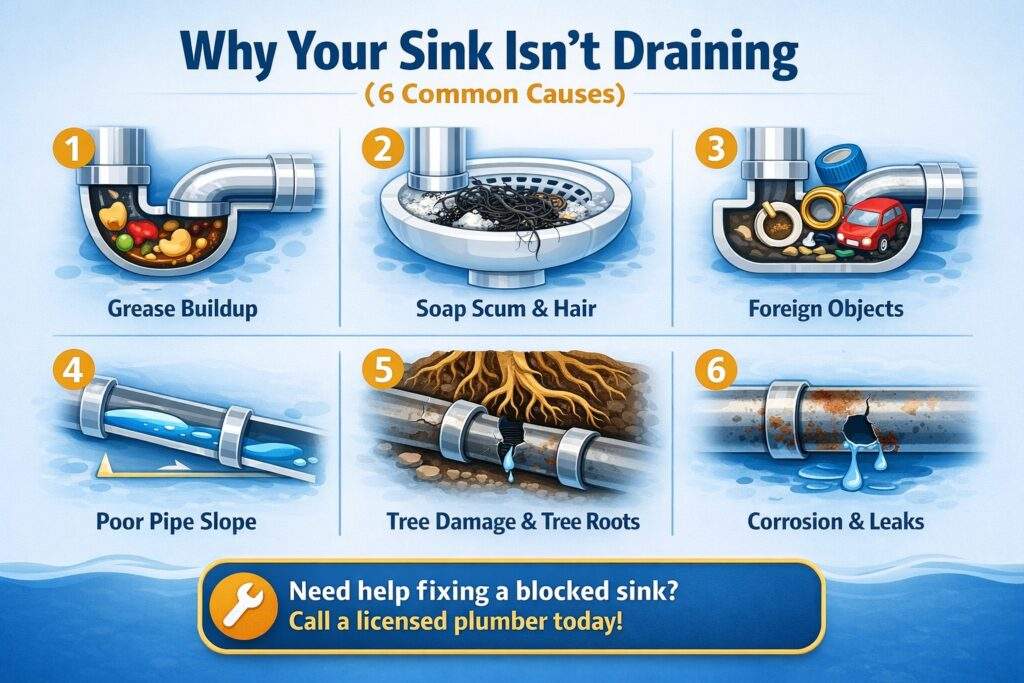
Understanding the root cause is the first step to fixing any plumbing issue. A slow-draining sink rarely happens overnight. It builds up over weeks or months as debris accumulates, pipes corrode, or drainage systems lose their proper slope.
Below are the most common reasons your sink is draining slowly or your wash basin sink refuses to empty at a normal pace. Each cause requires a slightly different approach, so identifying the right one saves you time and effort.
1. Food Particles and Grease Buildup
Food scraps, cooking oil, and fat are the main offenders in kitchen sinks. Even small amounts of grease solidify inside your pipes as they cool, creating a sticky layer that traps coffee grounds, vegetable peelings, and other debris. Over time, this buildup narrows the pipe diameter and slows water flow.
Grease is particularly stubborn because hot water alone won’t dissolve it once it hardens. You might notice the sink drains fine for a few seconds, then water starts pooling again as the narrow passage can’t handle the volume.
2. Soap Scum and Hair in Bathroom Sinks
Bathroom wash basin sinks face a different enemy: soap residue combined with hair. Bar soap contains fats that mix with minerals in Sydney’s mains water, forming a thick, chalky layer inside your pipes. When hair catches on the pop-up drain stopper or inside the P-trap, it acts like a net, snagging more soap scum and creating a dense clog.
This type of blockage often develops slowly, so you might not notice the problem until water takes several minutes to drain after brushing your teeth or washing your face.
3. Foreign Objects Lodged in the Drain
Small items like bottle caps, jewellery, twist ties, or children’s toys can slip past the drain cover and wedge themselves in the P-trap or further down the line. Once lodged, they create a partial blockage that catches other debris and accelerates the clog.
If your sink suddenly stopped draining after a specific event, a foreign object is a likely suspect. You might hear a rattling sound when water tries to pass, or the blockage might be completely silent.
4. Faulty Drainage System and Inadequate Slope
Plumbing standards require waste pipes to slope at a specific gradient so gravity can move water and debris toward the main sewer line. If your pipes were installed with insufficient slope, or if they’ve settled or shifted over time, water will pool in low spots instead of flowing freely. This stagnant water becomes a breeding ground for biofilm and mineral deposits, which further narrow the pipe.
Older Sydney homes, particularly those with clay pipes or DIY renovations, sometimes have drainage systems that don’t meet current Australian Standards. A licensed plumber can measure the slope and recommend corrections.
5. Pipe Damage, Corrosion, and Tree Root Intrusion
Metal pipes corrode from the inside out, developing rough patches and pinholes that snag debris. Clay pipes crack as soil shifts or tree roots probe for moisture. Once roots find a crack, they grow into the pipe, creating a dense mat that blocks water flow and traps everything from toilet paper to cooking grease.
Pipe damage is more common in properties with mature trees, older infrastructure, or a history of ground movement. You might notice multiple slow drains throughout your home, gurgling sounds, or even sewage odours in your yard.
Understanding Sydney-Specific Drainage Challenges

Sydney’s mix of heritage homes, modern apartments, and diverse soil conditions creates unique plumbing challenges. Clay pipes installed decades ago are still common in older suburbs, and they crack as tree roots seek moisture during dry spells. Coastal properties face corrosion from salt air, while homes built on reactive clay soil experience ground movement that shifts pipe slopes and breaks joints.
Stormwater systems in Sydney are separate from sewage lines, but cross-connections and illegal plumbing work can cause drainage problems that affect your sinks, toilets, and yard drains all at once. If you notice water pooling in multiple areas after rain, or if your sink drains slowly only during wet weather, you might have a stormwater issue that requires council involvement and licensed repair.
We’re familiar with Sydney’s plumbing history and local regulations. Our team holds current NSW Fair Trading licensing (Lic: 210933C) and stays up to date with changes to the Plumbing Code of Australia and AS/NZS 3500 standards. We also coordinate with Sydney Water and local councils when your repair requires permits, inspections, or utility shutdowns.
Preventing Future Drainage Problems in Your Sink Draining Slowly
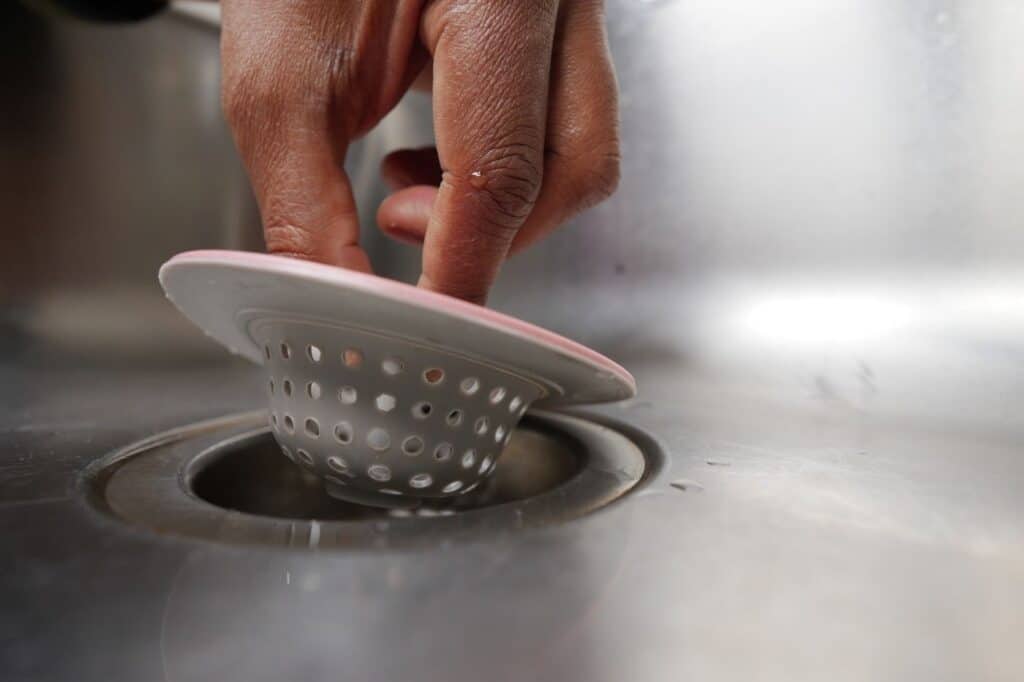
Prevention is always easier and cheaper than repair. Once your sink is flowing freely again, a few simple habits will keep it that way for years. These tips apply to kitchen sinks, wash basin sinks, small utility sinks, and even undermount sink draining boards that collect food scraps.
- Scrape plates before washing: Remove food scraps into the bin, not the sink. Even small particles add up over time.
- Never pour grease down the drain: Let cooking oil and fat cool in a container, then dispose of it in your rubbish bin. Grease is the number-one cause of kitchen blockages.
- Use sink strainers: A simple mesh or basket strainer catches hair, food, and debris before it enters your pipes. Empty it after each use.
- Flush with hot water weekly: Run hot tap water for 30 seconds after each use to keep grease moving and prevent buildup.
- Avoid chemical drain cleaners: These products corrode pipes, harm the environment, and often fail to clear blockages completely. Stick to mechanical methods or call a plumber.
- Schedule annual inspections: A quick CCTV check every year or two lets you catch small issues before they become emergencies, especially in older homes or properties with trees nearby.
If you have a draining board Belfast sink or undermount sink draining board, make sure the board itself slopes toward the sink so water doesn’t pool. Wipe it down after use to prevent soap scum and mineral deposits from building up around the drain.
When to Call a Licensed Sydney Plumber

IY methods have their limits. Some drainage problems stem from issues you can’t see or reach without professional tools and training. Recognising when to stop and call for help protects your pipes, your time, and your wallet.
Here are the clear signs that your sink not draining well requires expert diagnosis and repair from a licensed NSW plumber (Lic: 210933C). If you notice any of these, contact our team at Antons Plumbing & Gas for same-day service across Sydney.
- Multiple slow drains: If your kitchen sink draining slowly is accompanied by a sluggish bathroom basin or toilet, the blockage is likely in your main sewer line, not a single fixture.
- Sewage odours: Persistent bad smells suggest a partial blockage, broken vent pipe, or dry P-trap that’s allowing sewer gas into your home.
- Gurgling sounds: Air bubbles rising through water indicate a venting problem or deep blockage that’s disrupting normal pressure in your drainage system.
- Water backing up: If flushing the toilet causes water to rise in your sink, you have a serious blockage or collapsed pipe that needs immediate attention.
- Recurring clogs: A sink that drains well for a week after you clear it, then slows down again, has an underlying issue – corroded pipes, inadequate slope, or root intrusion.
- Visible pipe damage: Cracks, rust, or leaks around your waste pipes mean the problem isn’t just a blockage; the pipe itself needs repair or replacement.
Our licensed plumbers use CCTV drain cameras to inspect your pipes from the inside, pinpointing blockages, cracks, and root intrusion without guesswork. We provide clear footage and a written report, so you can see exactly what’s wrong and understand your options before any work begins.
How Antons Plumbing & Gas Solves Drainage Issues Across Sydney

When your sink not draining well disrupts your daily routine, you need a plumber who diagnoses the root cause, explains your options clearly, and completes the work to Australian Standards, especially for any blocked drain Western Sydney problem. That’s exactly what we do at Antons Plumbing & Gas, every job, every time.
Our process starts with a thorough assessment. We listen to your description of the problem, inspect the affected fixtures, and use CCTV or acoustic tools when needed to see what’s happening inside your pipes. We then present a fixed-rate quote in AUD that covers labour, materials, and clean-up – no hidden fees, no hourly surprises.
Once you approve the work, our licensed plumbers get started the same day in most cases. We protect your floors and fixtures, complete the repair with quality parts, test the system to confirm full flow, and leave your space clean. Every job is documented and backed by our lifetime labour warranty, so you can call us back if any issue arises from our workmanship.
We serve the entire Sydney Metro, including the Inner West, Eastern Suburbs, North Shore, Northern Beaches, Hills District, Western and South-Western Sydney, and Sutherland Shire. Same-day service and 24/7 emergency response mean you’re never waiting long, even on weekends or public holidays. Call 0493 824 176 or book online to get your sink draining properly again.
Conclusion
A sink not draining well is more than an inconvenience. It signals an underlying issue that won’t fix itself and often worsens over time. Whether it’s grease in your kitchen sink draining slowly, hair clogging your wash basin sink, or tree roots invading your main line, the right diagnosis and repair restore comfort and prevent costly damage. Call Antons Plumbing & Gas on 0493 824 176 for same-day service and upfront pricing across Sydney.
Antons Plumbing & Gas specialises in blocked drain solutions backed by 25 years of experience. We diagnose the root cause and fix it right the first time. Get started with same-day service today.
Related Articles
- What to Do When Sink Water Won’t Go Down
- Tips for Unclogging a Kitchen Sink
- How to Prevent a Fat Clogged Sink in Your Kitchen
FAQs
What Causes A Sink Not Draining Well?
A sink not draining well due to various reasons, including the buildup of food debris, grease, hair, or soap scum in the pipes. Additionally, foreign objects lodged in the drain or issues with venting or the plumbing system can contribute to slow drainage. Our team at Antons Plumbing & Gas can accurately diagnose the problem and provide effective solutions.
How Do You Fix A Sink That Is Draining Slowly?
To fix a sink that is draining slowly, you can start by clearing visible debris from the drain, using a plunger to dislodge clogs, or employing a mixture of bicarb soda and vinegar to break down buildup. However, if these methods do not resolve the issue, it may be best to contact a professional plumber, like those at Antons Plumbing & Gas, to ensure a thorough and safe repair.
Can A Clogged Sink Drain Itself?
A clogged sink may drain very slowly or not at all, which means it typically cannot drain itself effectively. In some cases, minor clogs may allow for slow drainage, but this can lead to further complications. If you’re facing drainage issues, our experienced team can assess and resolve the problem efficiently.
What Are Some Common Signs Of A Clogged Sink?
Common signs of a clogged sink include water pooling in the basin, slow drainage, gurgling sounds when water is draining, and unpleasant odours coming from the drain. If you notice any of these signs, it’s advisable to seek assistance from our skilled plumbers at Antons Plumbing & Gas for prompt and reliable service.
How Do You Unclog A Sink Without A Plumber?
To unclog a sink without a plumber, you can try using a plunger, a mixture of bicarb soda and vinegar, or a drain snake to remove the blockage. However, be cautious with harsh chemical drain cleaners, as they can damage pipes. If these methods fail, contacting Antons Plumbing & Gas is a smart choice for effective and safe solutions.
How Much Does It Cost To Fix A Blocked Sink In Sydney?
Costs vary depending on the cause and severity of the blockage. Rather than guess, we provide a fixed-rate, upfront quote in AUD before any work begins, so you know the total cost with no hidden fees or hourly surprises. Call 0493 824 176 for an obligation-free quote.
Do You Offer Same-Day Sink Drain Repairs In Sydney?
Yes. In most cases our licensed plumbers can attend your Sydney property the same day you call. We know a blocked or slow-draining sink can’t wait, so we prioritise fast response across Sydney Metro.
Are Your Plumbers Licensed To Work In NSW?
Yes. Antons Plumbing & Gas holds current NSW Fair Trading licensing (Lic: 210933C) and every job is completed in line with AS/NZS 3500 standards and the Plumbing Code of Australia.
Do You Provide Emergency Plumbing On Weekends And Public Holidays?
Yes, we offer 24/7 emergency response, including weekends and public holidays, so a slow or blocked sink doesn’t have to wait until Monday.
Which Sydney Suburbs Do You Service For Blocked Sink Drains?
We service the entire Sydney Metro area, including the Inner West, Eastern Suburbs, North Shore, Northern Beaches, Hills District, Western and South-Western Sydney, and Sutherland Shire.
Can I Book A CCTV Drain Camera Inspection?
Yes. We use CCTV drain cameras to inspect the inside of your pipes and provide footage and a written report, so you know exactly what’s causing your sink not to drain before we recommend a repair.
Do You Offer A Warranty On Drain Repairs?
Yes. All our workmanship is backed by a lifetime labour warranty, so if an issue arises from our repair, you can call us back with confidence.
What Happens If My Sink Is Connected To A Larger Sewer Blockage?
If our inspection shows the problem extends beyond your sink into the main sewer line, we’ll explain what’s involved, coordinate with Sydney Water where required, and provide a fixed-rate quote for the full repair before proceeding.
Do I Need Council Approval For Pipe Replacement Work?
Some pipe replacement or stormwater-related repairs require council notification or approval. As a licensed NSW plumber, we handle the necessary permits and coordination with Sydney Water and your local council on your behalf.
How Quickly Can A Plumber Arrive If My Sink Is Completely Blocked?
For urgent cases where a sink is completely blocked or overflowing, call 0493 824 176 and we’ll prioritise your job for same-day or emergency attendance across Sydney.
Can You Fix My Sink Drainage Issue On The Same Visit As The Diagnosis?
In most cases, yes. Our plumbers arrive with the tools and parts needed to diagnose and repair common sink drainage issues in a single visit, saving you time and a second call-out.
Do You Provide Fixed-Price Quotes Or Charge By The Hour?
We provide fixed-rate, upfront quotes in AUD before starting any work, rather than charging by the hour. This means you know the total cost in advance with no surprises on your invoice.
Is It Safe To Use Chemical Drain Cleaners Before You Arrive?
We recommend avoiding harsh chemical drain cleaners, as they can corrode pipes and make diagnosis harder for our plumbers. A plunger or bicarb soda and vinegar is a safer first step while you wait for us.
What Should I Do While Waiting For A Plumber To Arrive?
Avoid running more water into the affected sink, remove any visible debris from the drain opening, and if you notice sewage odours or water backing up elsewhere, avoid using other fixtures until our licensed plumber arrives.
How Do I Book A Plumber With Antons Plumbing & Gas?
Simply call 0493 824 176 or book online through our website. Let us know your suburb and describe the issue, and we’ll arrange a same-day appointment with one of our licensed Sydney plumbers (Lic: 210933C).