

A PVC pipe under sink leaking at the joint can start as a small drip and quickly turn into water pooling under your kitchen or bathroom cabinet. That puddle might seem harmless at first, but left unchecked it can rot timber, damage flooring, and invite mould into your home. The good news is that many joint leaks in PVC drain pipes are straightforward to diagnose and repair, especially if you catch them early.
In this guide you’ll learn the most common reasons a sink pipe leaking occurs, step-by-step instructions to tighten or replace faulty fittings, and when it’s time to call a licensed plumber. We’ll also share practical tips to prevent future leaks and explain how our team at Antons Plumbing & Gas can help Sydney homeowners fix the problem quickly and to Australian Standards.
Key Takeaways
- Most leaking sink pipe joints result from loose slip nuts, worn gaskets, or cracked PVC fittings.
- Hand-tighten first, then use a wrench gently to avoid cross-threading or cracking the plastic.
- Replacing a gasket or P-trap is often cheaper and faster than temporary sealants like epoxy putty.
- Always shut off the water supply and dry the pipe completely before attempting any repair.
- If the leak persists or you spot corrosion, call a licensed plumber to inspect the entire drain assembly.
- Any plumbing repair in NSW should be carried out by a licensed practitioner — Antons Plumbing & Gas holds NSW Lic. 210933C and works to AS/NZS 3500 standards.
Why Your PVC Pipe Under Sink Leaking at the Joint Happens
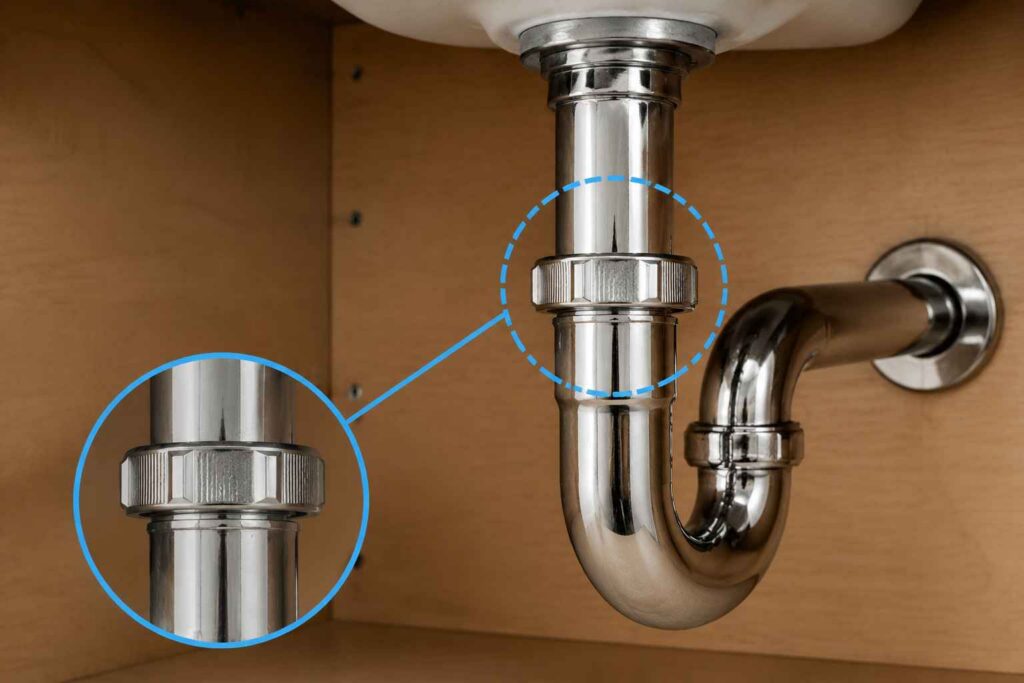
PVC drain pipes rely on compression fittings and rubber gaskets to create a watertight seal at each joint. Over time, vibration from daily use, thermal expansion, and general wear can loosen those connections or degrade the rubber. When that happens, water escapes at the slip nut or tailpiece connection. Understanding the root cause helps you choose the right fix and avoid repeat failures.
Below are the most frequent culprits behind a water pipe leaking under your sink.
Loose Slip Nuts
The slip nut is the large threaded ring that holds the P-trap or tailpiece against the sink drain or wall stub-out. If it wasn’t tightened properly during installation or has worked itself loose over months of use, water will seep out at the joint. A quarter-turn with a wrench is often all it takes to stop the drip.
Worn or Missing Gaskets
Every compression joint uses a rubber or nylon washer to seal the gap between the pipe and the fitting. These gaskets can harden, crack, or slip out of position, especially in older installations. Once the seal fails, water finds the path of least resistance and leaks onto your cabinet floor.
Cracked PVC Fittings
PVC is durable but not indestructible. Overtightening a slip nut, dropping a heavy object into the cabinet, or using incompatible cleaning chemicals can crack the fitting. Even a hairline fracture will allow water to escape, and no amount of tightening will fix a broken pipe.
Misaligned Pipes
If the tailpiece or P-trap isn’t aligned correctly with the drain outlet, the joint sits at an angle and the gasket can’t seat evenly. This misalignment creates a gap where water leaks out, even if the nut feels tight. Realigning the pipes and re-seating the gasket usually solves the problem.
Corrosion or Buildup
Although PVC itself doesn’t corrode, metal slip nuts or chrome tailpieces can rust over time, especially under a leaking tap that drips mineral-rich water. Corrosion roughens the sealing surface and prevents the gasket from forming a proper seal. In these cases, replacing the corroded component is the only reliable fix.
How to Diagnose a Leaking Sink Pipe Joint
Before you grab a wrench, you need to pinpoint exactly where the water is coming from. A leak at the slip nut looks different from a crack in the P-trap, and the repair steps vary. Start by clearing out everything stored under the sink so you have a clear view and dry workspace.
Follow these steps to identify the source of your PVC pipe under sink leaking issue.
- Turn on the tap and watch for drips. Run water for 30 seconds and look for droplets forming at the slip nuts, gasket seams, or along the pipe body. Use a dry towel to wipe each joint, then check for fresh moisture.
- Inspect the P-trap closely. The curved section of pipe catches debris and is a common leak point. Look for cracks, especially near the bend, and check that both slip nuts are snug.
- Check the tailpiece connection. The tailpiece is the straight pipe that drops from the sink basket strainer. If the gasket at the top has shifted or the slip nut is loose, water will pool at the base of the sink.
- Examine the wall stub-out. Where the drain pipe enters the wall, there’s another slip nut and gasket. Leaks here can be mistaken for a problem higher up, so dry the joint and run water again to confirm.
- Feel for wet spots along the pipe. Run your hand along the entire length of exposed PVC. A crack or pinhole leak may not drip visibly but will leave a damp patch on the pipe surface.
Once you’ve located the leak, you can decide whether a simple tightening job will do or if you need to replace a gasket or fitting. If you’re unsure or the leak is in a hard-to-reach spot, our team can perform a thorough inspection and provide a clear diagnosis on the same day you call.
Simple Repair Tips for a PVC Pipe Under Sink Leaking at the Joint
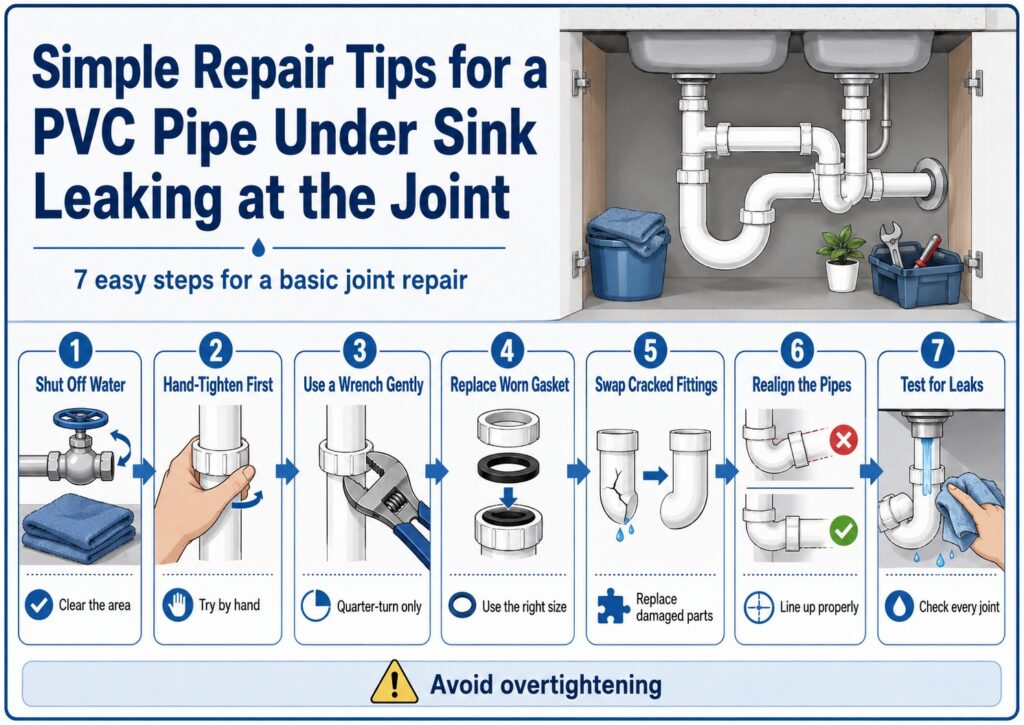
Most homeowners can handle basic joint repairs with a few hand tools and a replacement gasket from the hardware store. The key is to work methodically, avoid overtightening, and ensure every surface is clean and dry before reassembly. Rushing the job or using the wrong size washer will leave you with the same leak, or worse, a cracked fitting.
Here’s a step-by-step approach to fixing a leaking sink pipe joint.
1. Shut Off the Water and Clear the Area
Turn off the water supply to the sink if you’re working on the supply lines, or simply avoid running the tap if the leak is in the drain assembly. Remove all items from the cabinet and lay down a towel to catch any residual water. This gives you room to work and prevents a bigger mess.
2. Hand-Tighten the Slip Nut First
Before reaching for a wrench, try tightening the slip nut by hand. PVC threads are soft, and you’d be surprised how often a firm hand-turn stops the drip. If the nut spins freely without resistance, the threads may be stripped and you’ll need a new fitting.
3. Use a Wrench Gently
If hand pressure isn’t enough, use slip-joint pliers or a pipe wrench to snug the nut another quarter-turn. Apply steady, even pressure and stop as soon as you feel resistance. Overtightening will crack the PVC or deform the gasket, creating a new leak.
4. Replace Worn Gaskets
Loosen the slip nut completely and slide it up the pipe to expose the gasket. Pull out the old washer and compare it to a new one from your local hardware store. Slide the new gasket into place, ensuring it sits flat against the pipe end, then hand-thread the slip nut back on and tighten gently.
5. Swap Out Cracked Fittings
If you spot a crack in the P-trap or tailpiece, replacement is the only safe option. Measure the pipe diameter (usually 32 mm or 40 mm in Australian homes) and buy a matching PVC fitting. Disconnect the old piece, clean the mating surfaces, and install the new fitting with fresh gaskets at both ends.
6. Realign Misaligned Pipes
Loosen all the slip nuts in the drain assembly and gently reposition the pipes so they line up straight. The tailpiece should drop vertically from the sink, and the P-trap should sit level. Once everything is aligned, tighten each nut in sequence, working from the sink down to the wall stub-out.
7. Test for Leaks
Run water for a full minute and watch every joint closely. Wipe each connection dry with a towel, then check again for fresh moisture. If the leak has stopped, you’re done. If water still appears, double-check gasket placement and nut tightness, or consider calling a licensed plumber to inspect for hidden damage.
When to Skip DIY and Call a Licensed Plumber
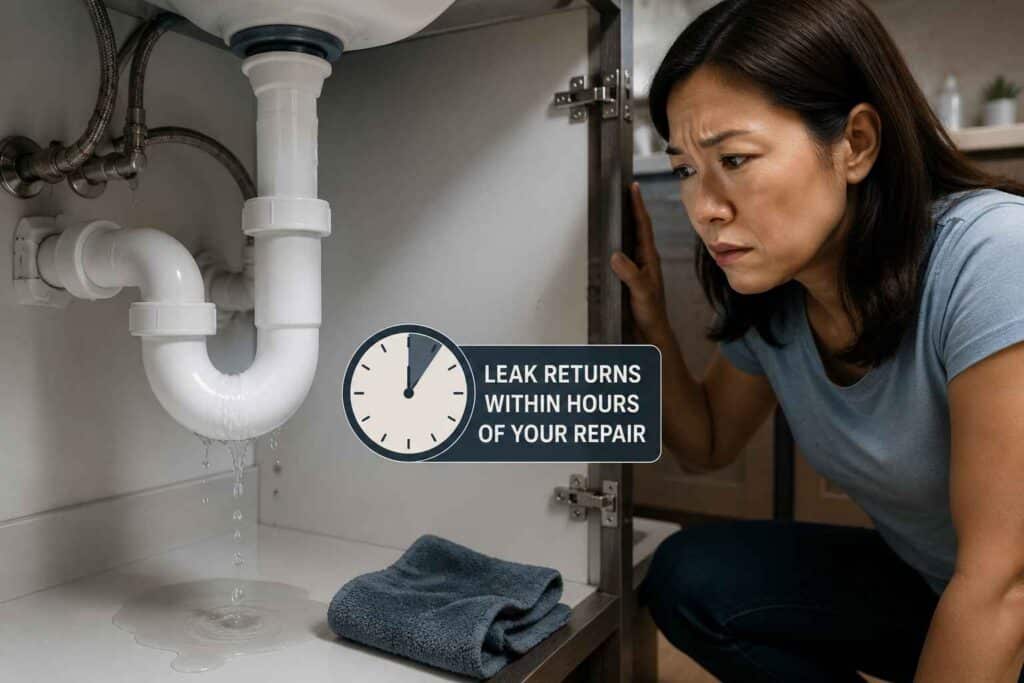
Not every sink pipe leaking issue is a quick home fix. If you’ve tightened the nuts, replaced the gaskets, and the water keeps coming, there’s likely a deeper problem that needs professional diagnosis. Cracked pipes hidden inside the wall, corroded metal fittings, or improper venting can all cause persistent leaks that won’t respond to surface repairs.
Here are clear signs it’s time to call our team at Antons Plumbing & Gas.
- The leak returns within hours of your repair. This suggests the gasket isn’t seating properly, the threads are damaged, or the pipe itself is cracked in a spot you can’t see.
- You see water stains on the cabinet floor or wall. Staining indicates the leak has been active for a while, and there may be rot or mould growth that needs assessment.
- The P-trap or tailpiece is corroded or pitted. Metal components that show rust or green oxidation won’t seal reliably, even with a new gasket.
- You’re uncomfortable working under the sink. Tight spaces, awkward angles, and limited lighting make some repairs frustrating for homeowners. A licensed plumber has the tools and experience to work efficiently in confined areas.
- You need the job done to Australian Standards. If you’re preparing for a property inspection, strata audit, or insurance claim, a compliant repair with documentation is essential. While internal under-sink pipework sits outside Sydney Water’s mains network, any alterations still need to meet AS/NZS 3500 and be carried out by an NSW-licensed plumber — Antons Plumbing & Gas holds NSW Lic. 210933C.
We respond the same day across Sydney, diagnose the root cause with CCTV or visual inspection if needed, and present clear options with upfront pricing in AUD. Our repairs are backed by a lifetime labour warranty, so you won’t face the same leak again in six months.
Preventing Future Leaks in Your Outdoor Sink and Indoor Drains
Once you’ve fixed the immediate problem, a few simple habits will keep your PVC pipe under sink leaking issues from coming back. Regular checks, careful use, and timely part replacement can add years to your drain assembly and save you from emergency call-outs.
Try these practical prevention tips.
Inspect Joints Every Six Months
Open the cabinet door and run your hand along each slip nut and gasket. Look for moisture, corrosion, or white mineral deposits that signal a slow drip. Catching a leak early means a five-minute tightening job instead of a full P-trap replacement.
Avoid Harsh Chemical Cleaners
Liquid drain cleaners can soften PVC over time and degrade rubber gaskets. If you have a slow drain, use a plunger or call us for a CCTV inspection and professional clearing. Mechanical methods are safer for your pipes and more effective in the long run.
Don’t Overtighten During Installation
When you replace a fitting or gasket, snug the slip nut until it’s firm, then stop. PVC threads strip easily, and a cracked nut will leak no matter how tight you crank it. Hand-tight plus a quarter-turn with a wrench is the sweet spot.
Replace Gaskets Every Few Years
Rubber washers harden and lose flexibility over time, even if they haven’t failed yet. If your drain assembly is more than five years old and you’ve never changed the gaskets, consider swapping them out during your next inspection. New washers cost just a few Australian dollars and can prevent a midnight leak emergency.
Fix Leaking Taps Promptly
A dripping tap under the sink keeps the cabinet damp and accelerates corrosion on metal slip nuts. It also wastes water and drives up your bill. We can replace tap washers or cartridges quickly, often on the same visit as a drain repair.
Keep the Cabinet Dry
Wipe up spills immediately and ensure the cabinet has good ventilation. Excess moisture encourages mould growth and speeds up the deterioration of both PVC and metal fittings. If you notice persistent dampness, check for a slow leak or condensation on cold-water pipes.
How Antons Plumbing & Gas Fixes Leaking Sink Pipes to Australian Standards

When you call us for a PVC pipe under sink leaking repair, our licensed plumbers arrive with the tools, parts, and know-how to solve the problem on the first visit. We don’t patch leaks with temporary sealants or leave you guessing about the cause. Instead, we diagnose the root issue, explain your options in plain English, and complete the work to AS/NZS 3500 plumbing standards, under NSW Lic. 210933C.
| Service | What We Do | Typical Response Time |
|---|---|---|
| Leaking sink pipe repair | Inspect, tighten, or replace joints and gaskets | Same day |
| P-trap replacement | Remove cracked or corroded trap, install new PVC fitting | Same day |
| Leaking tap repair | Replace washers, cartridges, or tap body | Same day |
| CCTV drain inspection | Camera survey to locate hidden leaks or blockages | Same day |
| Emergency call-out | 24/7 response for burst pipes or major leaks | Within hours |
Whether you’re in the Inner West, Eastern Suburbs, North Shore, or further out in Western Sydney, our qualified team is ready to help. Call 0493 824 176 or book online for fast, reliable service.
| Service | What We Do | Typical Response Time |
|---|---|---|
| Leaking sink pipe repair | Inspect, tighten, or replace joints and gaskets | Same day |
| P-trap replacement | Remove cracked or corroded trap, install new PVC fitting | Same day |
| Leaking tap repair | Replace washers, cartridges, or tap body | Same day |
| CCTV drain inspection | Camera survey to locate hidden leaks or blockages | Same day |
| Emergency call-out | 24/7 response for burst pipes or major leaks | Within hours |
Whether you’re in the Inner West, Eastern Suburbs, North Shore, or further out in Western Sydney, our qualified team is ready to help. Call 0493 824 176 or book online for fast, reliable service.
Common Mistakes to Avoid When Fixing a Water Pipe Leaking Under the Sink
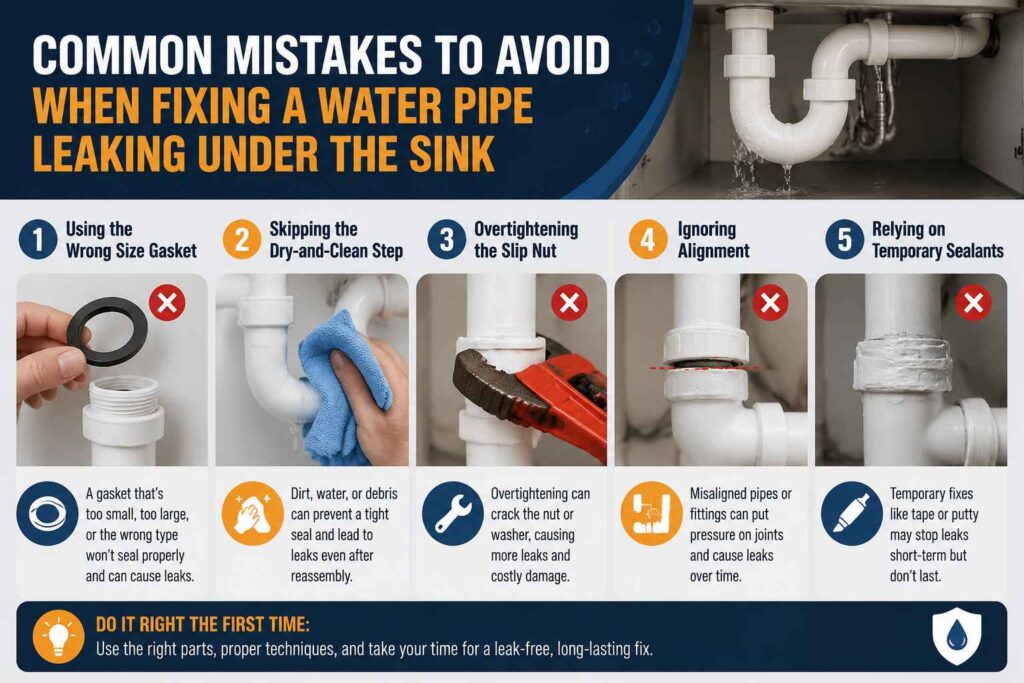
Even a simple repair can go wrong if you skip steps or use the wrong technique. We’ve seen plenty of DIY attempts that turned a minor drip into a cracked fitting or flooded cabinet. Learning from these common errors will save you time, money, and frustration.
Using the Wrong Size Gasket
Not all washers fit all pipes. A 32 mm gasket won’t seal a 40 mm joint, and forcing it in place will leave gaps. Measure your pipe diameter before heading to the hardware store, or bring the old gasket with you to match the size.
Skipping the Dry-and-Clean Step
Gaskets and slip nuts won’t seat properly on wet or greasy surfaces. Wipe down every mating surface with a dry cloth, and use a little detergent if there’s built-up grime. This simple step dramatically improves seal quality.
Overtightening the Slip Nut
PVC threads are soft and easy to strip. If you crank the nut too hard, you’ll crack the fitting or deform the gasket, creating a new leak. Tighten until snug, then stop.
Ignoring Alignment
If the pipes are crooked, no amount of tightening will stop the leak. Loosen all the joints, straighten the assembly, and tighten in sequence from top to bottom. Proper alignment ensures even pressure on every gasket.
Relying on Temporary Sealants
Epoxy putty and repair tape are marketed as quick fixes, but they rarely last more than a few weeks on a drain pipe. Water flow, vibration, and temperature changes break down the bond, and you’re back to square one. Replace the damaged part instead.
If you’ve made any of these mistakes or you’re not confident in your repair, give us a call. We’ll assess the damage, fix it properly, and show you what went wrong so you can avoid it next time.
Why Early Repairs Save Money and Prevent Water Damage
A small drip under the sink might not seem urgent, but water damage compounds quickly. Particle-board cabinet floors swell and crumble when exposed to moisture. Timber frames rot, inviting termites and structural issues. Mould spores spread through the air, triggering allergies and respiratory problems. What starts as an AU$5 gasket replacement can escalate into an AU$2,000 cabinet rebuild if you wait too long.
Early intervention protects your home and your wallet. Tightening a loose slip nut takes five minutes and costs nothing. Replacing a cracked P-trap is roughly an AU$20 part and half an hour of work. Ignoring the problem until water stains the ceiling below or the floor starts to buckle means a much bigger repair bill and potential insurance headaches.
We’ve seen homeowners delay repairs because the leak was slow or the cabinet still looked okay. By the time they called us, the damage had spread to the wall framing and the floor joists. Don’t let a minor PVC pipe under sink leaking issue turn into a major renovation. Book a same-day inspection and get it sorted before the problem grows.
Conclusion
A PVC pipe under sink leaking at the joint is one of the most common household plumbing issues, and in most cases it’s also one of the easiest to fix. Tightening a slip nut, replacing a worn gasket, or swapping out a cracked P-trap can stop the drip and prevent costly water damage. The key is to act quickly, work carefully, and know when to call a licensed professional.
Antons Plumbing & Gas specialises in leak detection and pipe repairs across Sydney Metro. Our licensed team (NSW Lic. 210933C) fixes PVC joint leaks fast with upfront AUD pricing. Get started with a same-day service call today.
Related Articles
- How to Fix Pipes Under Sink Leaking Before It Gets Worse
- Why Do Pipes Burst?
- Pipe Leaking Under Kitchen Sink? Signs You Need a Plumber
FAQs
What Causes PVC Pipe To Leak Under Sink?
PVC pipes under sinks can leak due to a variety of reasons, including loose fittings, damaged seals, or cracks in the pipe itself. Over time, wear and tear, temperature fluctuations, and improper installation can also contribute to leaks. At Antons Plumbing & Gas, we have over 25 years of experience diagnosing these issues effectively. If you need a Chatswood plumber or Penrith plumber, our team can inspect the under-sink pipework and recommend the right repair.
How Do You Fix A Leaking PVC Pipe Under The Sink?
To fix a leaking PVC pipe under the sink, first turn off the water supply. Inspect the joint or section of the pipe for visible damage. If it’s a loose fitting, simply tighten it. For damaged sections, you may need to cut out the affected area and replace it with a new piece, using PVC cement to secure the joints. For more complex repairs, a licensed North Shore plumber or Emu Plains plumber from Antons Plumbing & Gas can provide a precise, long-lasting solution.
Can You Use PVC Glue On A Leaking Pipe?
Yes, PVC glue can be used to repair leaking pipes, but it is most effective on clean, dry surfaces and is not a permanent solution for significant leaks. If the leak is due to a structural issue, it’s best to consult with a professional like Antons Plumbing & Gas for a long-lasting repair. A trusted Northbridge plumber can assess whether PVC glue is suitable or if the damaged section needs replacement.
Is It Safe To Use Duct Tape On A Leaking PVC Pipe?
While duct tape may provide a temporary fix for a leaking PVC pipe, it is not a reliable long-term solution. It can help manage leaks until a proper repair is made. For a durable fix, we recommend reaching out to our experienced team to ensure your plumbing is secure and compliant. If you’re looking for a dependable Hornsby plumber, Antons Plumbing & Gas can help repair the leak properly.
How Do You Stop A PVC Pipe From Leaking?
To stop a PVC pipe from leaking, identify the source of the leak and assess the damage. Tightening fittings, replacing damaged sections, or applying PVC glue can help, depending on the cause. For comprehensive and reliable repairs, trust the experts at Antons Plumbing & Gas, who are dedicated to providing safe plumbing solutions. Homeowners needing a professional Ryde plumber can contact our team for under-sink leak repairs and preventative advice.
How Much Does It Cost To Fix A Leaking Pipe Under The Sink In Sydney?
Costs vary depending on whether the fix is a simple slip nut tightening, a gasket swap, or a full P-trap replacement. Rather than guess, we provide upfront, obligation-free pricing in AUD before any work begins. Call 0493 824 176 for a same-day quote on your under-sink leak.
Do You Offer Same-Day Plumbing Repairs In Sydney?
Yes, we respond the same day across Sydney Metro for leaking sink pipes, blocked drains, and other urgent plumbing issues. Book online or call our team directly to arrange a visit that suits your schedule.
Is Antons Plumbing & Gas Licensed To Work In NSW?
Yes, we hold NSW Lic. 210933C, meaning every repair we complete meets AS/NZS 3500 plumbing standards and NSW Fair Trading requirements. Always confirm a plumber’s licence number before letting them work on your home.
Do You Provide Emergency Plumbing Services After Hours?
Yes, our emergency call-out service covers burst pipes and major leaks, typically responding within hours, any time of day. If your under-sink leak is flooding the cabinet, call us straight away rather than waiting until morning.
What Sydney Suburbs Do You Service?
We service Sydney Metro broadly, including areas such as Chatswood, Ryde, Hornsby, Penrith, Emu Plains, Northbridge, North Shore, Kings Park, Willmot, Woodcroft, Ropes Crossing, and Huntleys Cove. If you’re unsure whether we cover your suburb, give us a call and we’ll confirm.
Do I Need A Licensed Plumber For A Leaking Sink Pipe, Or Can I Fix It Myself?
Simple fixes like hand-tightening a slip nut or replacing a gasket are safe for most homeowners to attempt. However, if the leak persists, involves cracked pipework, or you need the repair certified to Australian Standards for a strata report or insurance claim, a licensed plumber should take over.
Will My Repair Be Backed By A Warranty?
Yes, our sink pipe and drain repairs are backed by a lifetime labour warranty, so if the same joint leaks again, we’ll come back and fix it at no extra labour cost.
Do You Charge A Call-Out Fee For Quotes Or Inspections?
We provide clear, upfront pricing in AUD before any work begins so there are no surprises. Contact our team on 0493 824 176 to discuss your leaking sink pipe and get a straightforward quote.
How Quickly Can A Plumber Get To My House?
We aim to respond the same day for most Sydney Metro requests, and within hours for emergency call-outs involving major leaks or burst pipes. Book online or call us to check availability in your suburb.
Can You Fix A Leaking Sink Pipe Without Damaging My Cabinetry?
In most cases, yes. Slip nut, gasket, and P-trap repairs are done entirely within the existing drain assembly and don’t require cutting into cabinetry. If the leak has already caused water damage to the cabinet floor, we’ll let you know before starting any further work.
Do You Work On Strata Properties And Pre-Sale Inspections?
Yes, we regularly carry out plumbing repairs and compliance-ready documentation for strata buildings, rental properties, and pre-sale inspections across Sydney. Ask our team about a written report when you book.
What Payment Methods Do You Accept?
We keep the booking and payment process simple for Sydney homeowners. Speak with our team when you call on 0493 824 176 to confirm the payment options available for your job.
How Do I Book A Plumber For A Leaking Sink Pipe?
Call us on 0493 824 176 or book a plumber online through our website. Let us know the symptoms you’re seeing under the sink and we’ll arrange a same-day visit where possible.
Do You Handle Both Drain And Gas Plumbing Issues?
Yes, Antons Plumbing & Gas is licensed for both plumbing and gas work across Sydney, so if your leaking sink pipe repair uncovers a related gas or drainage issue, our team can handle it in the one visit.
What Should I Do While Waiting For The Plumber To Arrive?
Turn off the water supply to the sink if you can, place a bucket or towels under the leak, and clear out anything stored in the cabinet that could be damaged by moisture. This limits water damage until our licensed plumber arrives.