

A blocked kitchen sink can quickly turn into a messy, inconvenient problem—especially in Sydney homes and units where greasy buildup or food scraps start restricting the drain. Most clogs begin gradually, which is why slow drainage, gurgling, or lingering odours are worth paying attention to early. The good news is that many common blockages can be cleared safely with a few practical methods and basic household items you’ll already have in the pantry.
This guide shares tips for unclogging a kitchen sink, starting with the easiest options and moving to stronger solutions when needed. You’ll learn which methods work best for grease versus debris, how to avoid damaging your pipes, and when it’s time to bring in a licensed plumber for a proper inspection. As a Sydney-based, NSW-licensed plumbing business (Lic. 210933C), Anton’s Plumbing & Gas deals with these exact blockages across Sydney Metro every week.
Key Takeaways
- Hot water and dish soap can effectively dissolve minor grease clogs in kitchen sinks.
- The bicarb soda and vinegar method breaks down organic materials causing sink drain blockages.
- Proper plunging technique requires sealing the overflow drain and using steady pressure.
- P-trap cleaning removes debris that accumulates in the curved pipe section under your sink.
- Professional CCTV drain inspection identifies root causes when DIY methods fail repeatedly.
- Same-day plumber service prevents water damage from persistent kitchen sink backing-up issues.
- Under NSW law, altering fixed plumbing (not just clearing a trap) is regulated work that should be carried out by a licensed plumber.
What Are the Best Methods for Unclogging a Kitchen Sink?

The best methods for unclogging a kitchen sink include using boiling water, a plunger, or a natural mixture of bicarbonate soda and vinegar. For tougher blockages caused by grease, food scraps, or soap buildup, cleaning the P-trap or using a drain snake may help. If the sink remains blocked, a licensed plumber can inspect and clear the drain safely without damaging the pipes.
Using Simple Hot Water Method for Kitchen Sink Draining Slowly
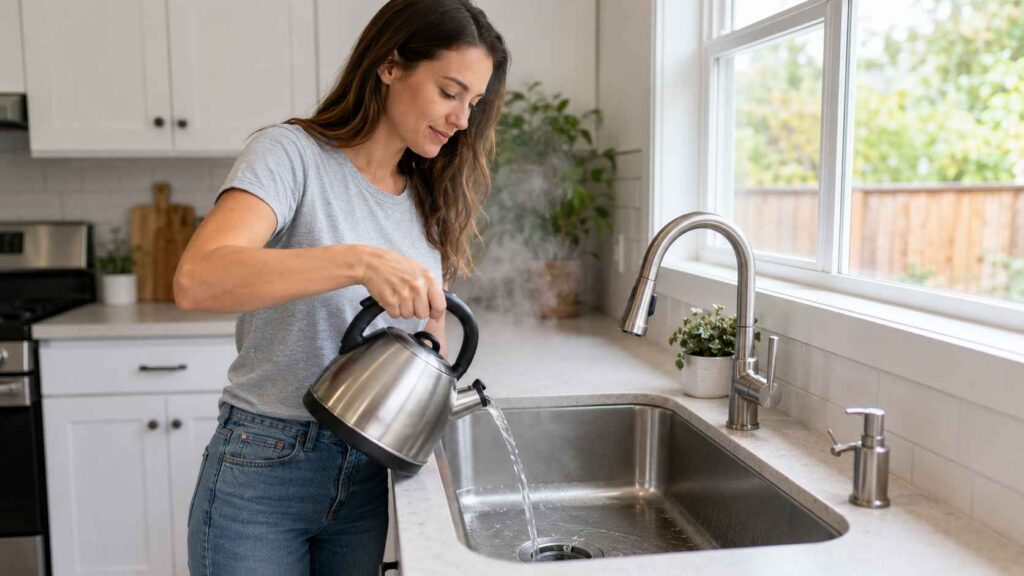
If your sink is slow after washing dishes, grease buildup is often the reason—common in Sydney apartments with older galvanised or narrow-bore pipework. Hot water softens the fatty deposits so they can move through the pipe more easily. Adding dish soap helps break the grease apart so it doesn’t re-solidify further down the line.
Procedure:
- Remove any standing water from the sink using a cup or bowl.
- Add several drops of grease-cutting dish soap into the drain.
- Pour hot water down the drain in 2–3 stages, pausing 10–15 seconds between pours.
- Test drainage by running cold water for a few seconds.
- Repeat once if needed, then run hot water briefly after sink use to reduce future grease buildup.
If the water improves but still drains slowly, the clog may be partly loosened rather than fully cleared. Avoid boiling water if you have PVC pipes, as extreme heat can soften joints over time. Move to the bicarb soda and vinegar method next if the sink still isn’t flowing properly. If the sink backs up again within a few days, the clog may be deeper in the line.
Using a Natural Bicarb Soda and Vinegar Solution for a Sink Full of Water That Won’t Drain
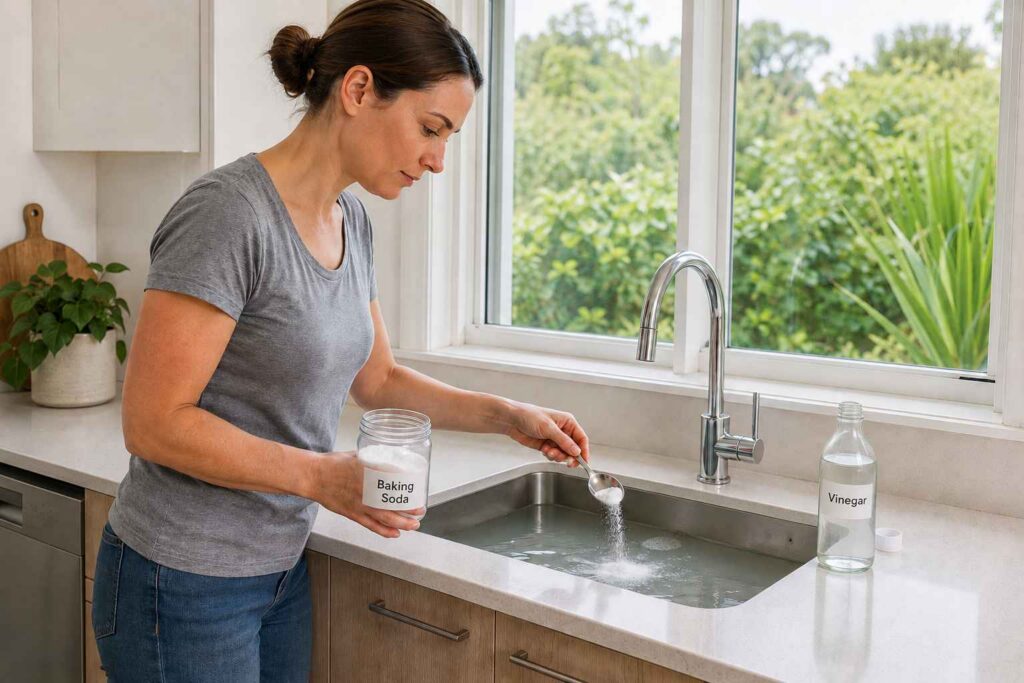
When hot water doesn’t fix the issue, bicarb soda and vinegar can help loosen soft buildup like food residue and soap film. The fizzing reaction works best when the clog is organic material rather than a solid object. It’s also a good option if the drain smells unpleasant or feels “gunky.”
Procedure:
- Pour ½–1 cup (roughly 125–250 mL) of bicarb soda into the drain (push it down gently with a spoon if needed).
- Pour ½–1 cup (roughly 125–250 mL) of white vinegar into the drain immediately after.
- Cover the drain with a plug or damp cloth to keep the reaction working inside the pipe.
- Wait 15–30 minutes while it foams and breaks down debris.
- Flush with hot water, then run the hot tap for 1–2 minutes to test drainage.
If the drain is still slow, repeat the process once more. Don’t combine this method with commercial drain chemicals, as reactions can be unsafe and may damage pipework. If there’s little to no change after two attempts, switch to plunging or mechanical clearing.ging or mechanical clearing.e pipes. If there’s no improvement after two rounds, use a mechanical method next.
Using Proper Plunging Technique When Kitchen Sink Is Clogged
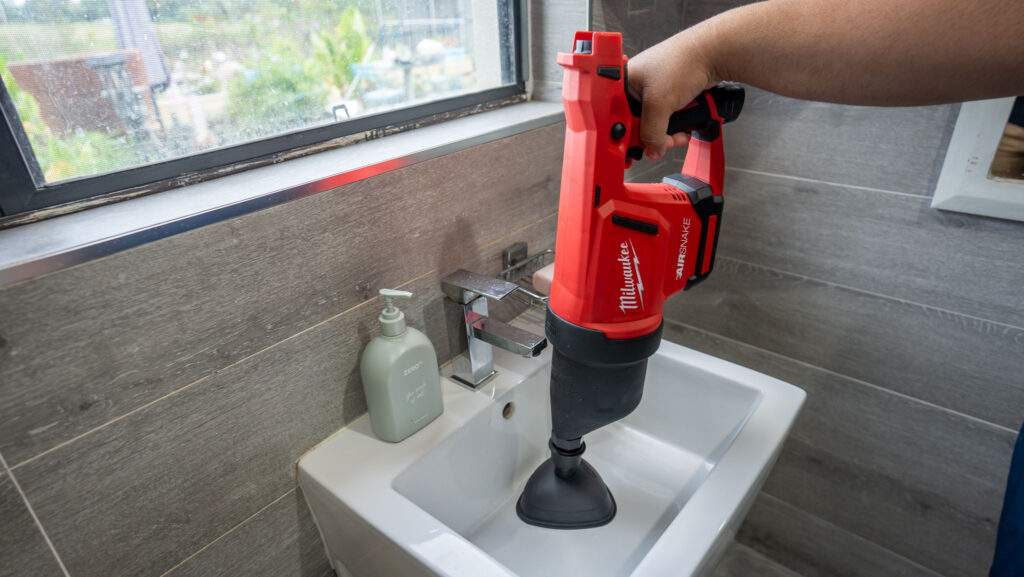
Plunging is one of the fastest ways to dislodge debris sitting in the trap or just beyond it. The method only works well when you create a strong seal and force pressure into the drain line. Double-bowl sinks, common in older Sydney terraces and renovated kitchens, can be tricky because air escapes through the second drain unless you block it properly.
Procedure:
- Use a cup plunger (not a toilet plunger) and fill the sink until the plunger cup is fully covered.
- Block the overflow opening with a wet rag.
- If you have a double sink, plug the other drain (and the dishwasher line if connected).
- Position the plunger over the drain and pump firmly for 15–20 seconds with a steady rhythm.
- Lift the plunger to check drainage and repeat if needed.
If water suddenly starts moving, keep running water to confirm the line is clearing fully. If plunging does nothing after a couple of rounds, the clog may be too solid or too far down the pipe. At that point, the P-trap is usually the next place to check.g may be too solid or too far down the pipe. At that point, the P-trap is usually the next place to check.
P-Trap Cleaning for Persistent Blocked Kitchen Sink Issues
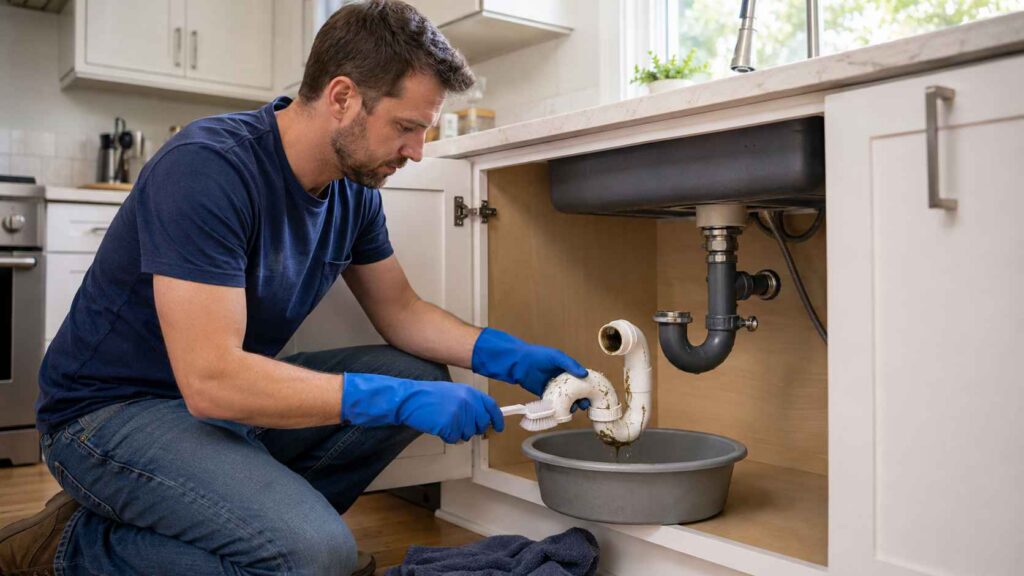
The P-trap is theThe P-trap is the curved pipe under the sink, and it’s a common place for sludge, grease, and food debris to collect. Cleaning it is often the most reliable fix when DIY flushing and plunging don’t work. It’s also where small objects can get trapped and cause repeated clogs. Note that in NSW, any work beyond removing and cleaning your own accessible trap—such as replacing pipework or fittings—is regulated plumbing work that should be done by a licensed plumber.
Procedure:
- Turn off the water and place a bucket and towels under the P-trap.
- Loosen the slip nuts on both ends of the U-shaped trap (by hand or with adjustable pliers).
- Remove the trap carefully and let trapped water and debris fall into the bucket.
- Clean the trap with hot water and a brush, removing all sludge or trapped objects.
- Reassemble the trap, tighten the connections, then run hot water and check for leaks.
If the P-trap is clean but the sink still won’t drain, the blockage is likely in the wall line. Remove the trap again and feed a small hand snake into the wall pipe until you feel resistance, twist to break up the clog, then reassemble and test. If the clog keeps returning or you suspect pipe damage, a licensed plumber can inspect the line and clear it properly.
When to Call a Professional Plumber for Clogged Sink

If the sink clogs repeatedly or multiple fixtures start backing up, the issue may be beyond a simple kitchen blockage. Warning signs like sewage odours, gurgling from other drains, or dishwasher backflow can point to a deeper drainage or main line problem. In these cases, continuing DIY attempts can waste time and sometimes make the blockage worse. It’s also worth knowing that if the blockage is in the section of sewer main that Sydney Water owns and maintains, it’s Sydney Water’s responsibility, not yours—a licensed plumber can help determine whose side of the boundary the fault sits on.
- Stop DIY if the clog returns within days or doesn’t improve after 2–3 methods.
- Note whether other drains are affected (bathroom, laundry, floor wastes, dishwasher).
- Watch for sewage smells, gurgling, or water backing up from other fixtures.
- Call a licensed plumber if you suspect a main line issue, damaged pipework, or tree roots.
- Request CCTV inspection if the problem is recurring or the cause isn’t obvious.
A plumber can pinpoint the cause quickly using CCTV drain cameras and clear severe buildup using professional equipment like hydro-jetting. This helps remove years of grime safely and restores proper pipe capacity without guesswork. If you’re anywhere across Sydney Metro, Anton’s Plumbing & Gas (NSW Lic. 210933C) can diagnose the root cause and provide a compliant, long-lasting fix—especially when the blockage is deeper than the sink trap or involves work Sydney Water regulations require a licensed plumber to carry out.
Conclusion
These proven methods can resolve most common kitchen sink drainage problems using safe household materials. Regular maintenance and proper usage habits prevent recurring blockages and extend your plumbing system’s lifespan. Professional help ensures complex issues receive proper diagnosis and lasting solutions when DIY approaches aren’t sufficient.
When kitchen sink clogs persist, Anton’s Plumbing & Gas offers professional blocked drain services across Sydney Metro. Our 25+ years of experience ensures safe, reliable solutions with upfront pricing in AUD, no surprises. Learn more about our comprehensive drain clearing services or call us direct.
Related Articles
- What Is Pipe Relining?
- How to Clear a Blocked Drain
- Top 5 Signs Your Bathroom Sink Is Clogged and Needs Fixing
FAQs
What Causes A Sink To Clog?
Sinks commonly clog due to a buildup of food particles, grease, soap scum, hair, and other debris. Over time, these materials can accumulate, leading to blockages. Additionally, improper disposal of items like coffee grounds and fibrous foods can exacerbate the issue. Regular maintenance and awareness of what goes down your sink can help prevent clogs.
How Do You Unclog A Sink Naturally?
To unclog a sink naturally, you can try pouring a mixture of bicarb soda and vinegar down the drain. Let it sit for about 15 minutes, then flush with hot water. This method can help break down minor clogs without harsh chemicals. However, for persistent issues, our experienced team at Anton’s Plumbing & Gas is just a call away to provide professional assistance.
What Is The Best Way To Unclog A Kitchen Sink?
The most effective way to unclog a kitchen sink is to use a plunger specifically designed for sinks. Make sure to create a tight seal around the drain and plunge vigorously. If this doesn’t work, using a plumber’s snake can help remove deeper blockages. For complex clogs, consider reaching out to our expert team for a thorough inspection and reliable solutions.
Can You Use Bicarb Soda And Vinegar To Unclog A Sink?
Yes, using bicarb soda and vinegar can be an effective natural remedy for minor clogs. The combination produces a fizzy reaction that can help dislodge debris. However, if the clog persists, it’s wise to consult with professionals like Anton’s Plumbing & Gas, who can safely and effectively tackle more stubborn blockages.
When Should You Call A Plumber For A Clogged Sink?
You should call a plumber if you experience recurring clogs, if the clog doesn’t respond to basic unclogging methods, or if there are signs of leaks or water damage. Our licensed team at Anton’s Plumbing & Gas (NSW Lic. 210933C) is available to address plumbing emergencies across Sydney, ensuring your issues are resolved quickly and efficiently.
How Much Does It Cost To Unclog A Kitchen Sink In Sydney?
Costs vary depending on how severe the blockage is and whether it’s a simple trap clean or a deeper drain issue requiring CCTV inspection or hydro-jetting. We provide upfront pricing in AUD before any work begins, so call our team on +61 493 824 176 for an obligation-free quote for your Sydney address.
Do You Offer Same-Day Plumber Service Across Sydney?
Yes, Anton’s Plumbing & Gas offers same-day service for blocked kitchen sinks across Sydney Metro wherever possible, helping prevent water damage from a backed-up sink. Book online or call us directly to check availability in your suburb today.
Is Anton’s Plumbing & Gas A Licensed Plumber In NSW?
Yes, we operate under NSW Licence 210933C, meaning our work meets NSW Fair Trading plumbing standards and relevant Sydney Water requirements. You can ask to see our licence details before any job begins.
What Sydney Suburbs Do You Service For Blocked Sinks?
We service homes and businesses across Sydney Metro. If you’re unsure whether your suburb is covered, give us a call on +61 493 824 176 and we’ll confirm availability and the fastest arrival time for your area.
Can A Blocked Kitchen Sink Affect A Strata Or Rental Property?
Yes—blockages in shared stacks or common pipework in strata buildings can affect multiple units, and repeated backups in a rental should be reported to the landlord or agent promptly. A licensed plumber can identify whether the fault is inside your unit or in shared infrastructure, which matters for who’s responsible for the repair.
Do You Provide CCTV Drain Inspection Reports For Sydney Properties?
Yes, we offer CCTV drain camera inspections that let us show you exactly where a blockage sits and what’s causing it, whether that’s grease, tree roots, or a damaged pipe. This is especially useful for Sydney homes with ageing clay or earthenware pipework. Book an inspection through our team to get a clear diagnosis before any work starts.
What Payment Methods Do You Accept?
We provide upfront pricing in AUD before starting any job, so there are no surprises on the invoice. Speak with our team when booking to confirm accepted payment options for your job.
How Quickly Can A Plumber Reach My Sydney Home?
Response times depend on your location within Sydney Metro and current job bookings, but we prioritise urgent blocked drain calls. Phone +61 493 824 176 directly for the fastest available appointment.
Do You Offer Upfront, No-Obligation Pricing?
Yes, we always confirm pricing in AUD before commencing work so you know exactly what you’re paying for a blocked kitchen sink repair, with no hidden costs.
Is It Legal To Clear My Own Kitchen Sink Drain In NSW?
Clearing an accessible trap or using a plunger on your own sink is fine as a homeowner. However, altering pipework, replacing fittings, or working on anything connected to the main drainage system is regulated plumbing work under NSW law and should be carried out by a licensed plumber to stay compliant.
What If My Blockage Turns Out To Be Sydney Water’s Responsibility?
If the blockage is found in the section of the sewer main owned by Sydney Water, rather than your private pipework, it’s not something you’re required to pay to fix. A licensed plumber can confirm where the boundary sits and advise you on the right next step, including liaising with Sydney Water if needed.
Do You Guarantee Your Blocked Drain Work?
We stand behind our workmanship and aim to fully resolve the blockage, not just mask the symptoms. If an issue returns shortly after a professional clear, get in touch with our team to discuss next steps.
How Do I Book A Plumber In Sydney Right Now?
You can book online through our booking page or call us directly on +61 493 824 176 for a faster response if your kitchen sink is currently backed up.
Can I Get A Free Quote Before Committing To A Repair?
Yes, we’re happy to talk through the issue over the phone and provide an obligation-free quote in AUD before any work is booked in, so you know the cost upfront.