

Knowing how to tell if pipe is leaking in wall can help you act before serious damage occurs. A hidden leak can destroy plasterboard, rot timber framing, and flood your ceiling cavity before the first stain appears. Many Sydney homeowners only notice bubbling paint, damp carpet, or musty odours after the damage has already begun spreading.
This guide walks you through how to tell if a pipe is leaking in a wall, the early warning signs of a hidden pipe leak, practical checks you can do yourself, and when to call a licensed plumber for acoustic leak detection and repair. You’ll learn how to protect your Sydney property before a small drip turns into a costly insurance claim.
Key Takeaways
- Water stains, peeling paint, and warped walls often signal a hidden pipe leak behind your plasterboard.
- A musty smell or visible mould growth means water has been sitting inside your wall cavity for days or weeks.
- Running your water meter test with all taps off confirms whether you have an active leak somewhere in your plumbing.
- Acoustic leak detection and thermal imaging help licensed plumbers pinpoint the exact location without demolishing walls.
- Early professional repair prevents structural damage, mould remediation costs, and potential insurance exclusions.
- If you’re unsure whether a leak needs professional attention, it’s always worth calling a licensed Sydney plumber (NSW Lic. 210933C) rather than guessing.
Why Hidden Wall Leaks Are So Dangerous in Sydney Homes
Most Sydney properties were built with timber framing and plasterboard lining. When a copper or PEX pipe starts leaking behind that wall, the water soaks into the timber studs and insulation. You won’t see it until the plasterboard starts to sag or the paint blisters. By that stage, mould spores are already colonising the damp cavity, and the timber may need replacing to meet structural standards.
Older homes in the Inner West and Eastern Suburbs often have galvanised steel or even lead pipes that corrode from the inside. Tree roots can crack underground sections, pushing water back up into wall cavities through capillary action. Strata units across Sydney face an extra risk because a leak in one apartment can travel through shared walls and damage neighbouring properties before anyone notices — and strata schemes have their own obligations under NSW strata regulations to act on reported water damage.
Insurance policies typically exclude damage caused by gradual leaks or poor maintenance. If you ignore early signs and the insurer decides the leak has been active for months, you may be left covering the full repair bill yourself, in AUD, out of your own pocket. That’s why early detection matters.
How to Tell If Pipe Is Leaking in Your Wall: Visual Signs
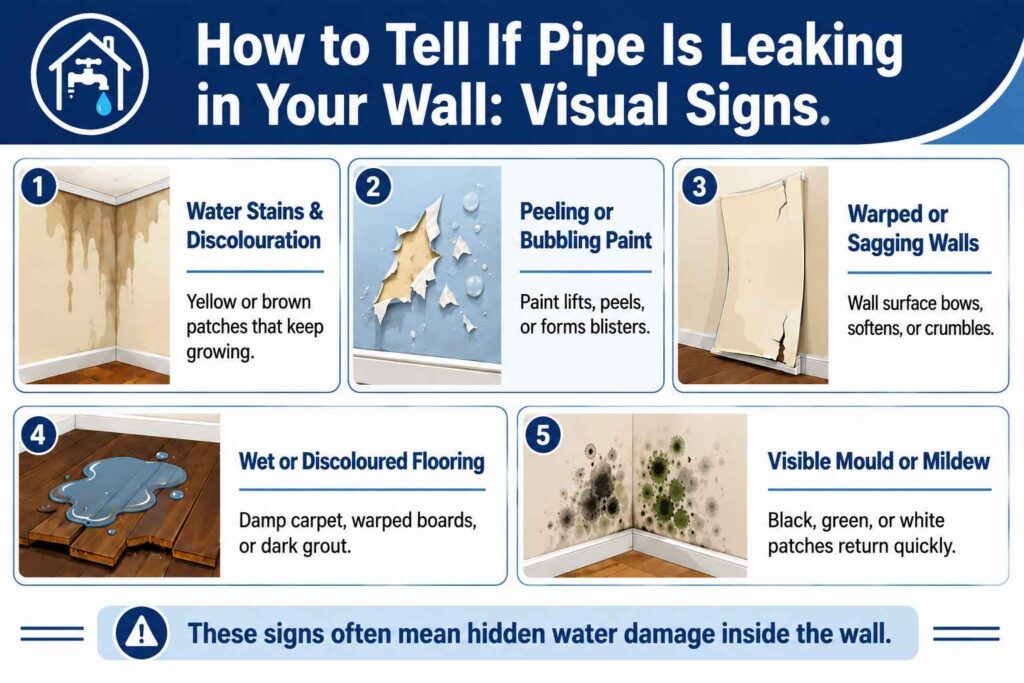
Your eyes are the first line of defence. Walk through your home and look for these changes on walls, ceilings, and floors. Some appear suddenly after a pipe bursts, but most develop slowly as a small leak grows.
Water Stains and Discolouration
Yellow, brown, or rust-coloured patches on your ceiling or wall usually mean water has been seeping through for a while. The stain often appears circular or irregular, with darker edges where the water evaporates and leaves mineral deposits behind. If the stain keeps growing even when it hasn’t rained, the source is inside your plumbing.
Peeling or Bubbling Paint
Paint is designed to stick to dry surfaces. When moisture builds up behind the plasterboard, the paint loses adhesion and starts to peel away in sheets or bubble up like blisters. You might also see wallpaper curling at the seams or lifting away from the wall. Press gently on the bubbled area — if it feels soft or spongy, water is sitting behind it.
Warped or Sagging Walls
Plasterboard absorbs water like a sponge. Once saturated, it loses rigidity and starts to bow outward or sag downward. You might notice the wall surface looks uneven or the skirting board has pulled away from the base. In severe cases, the plasterboard can crumble when you touch it. This level of damage means the leak has been active for weeks or months.
Wet or Discoloured Flooring
If the leak is low in the wall or travels down inside the cavity, water will eventually reach your floor. Carpet may feel damp or develop dark patches that won’t dry. Timber floorboards can warp, cup, or turn black from mould. Tiles might feel cold to the touch, and grout lines can darken or grow mildew. Vinyl and laminate floors often lift at the edges when water gets underneath.
Visible Mould or Mildew Growth
Black, green, or white fuzzy patches on your wall surface mean mould has taken hold. Mould needs moisture, warmth, and organic material — all of which are present inside a wet wall cavity. Even if you wipe it off, it will return within days unless you fix the leak and dry out the space. Mould exposure can trigger respiratory issues, so don’t ignore it.
How to Use Your Senses to Detect a Leaking Pipe
Sometimes the leak is too small to show visible damage right away. Your nose and ears can pick up clues before your eyes do. These sensory checks take only a few minutes and can save you thousands of dollars in repairs.
Musty or Damp Smell
A persistent musty odour in a room — especially one that gets worse when you close the door — often means hidden moisture. The smell comes from mould spores, bacteria, and decomposing building materials. If the odour is strongest near a particular wall or corner, that’s your likely leak zone. Open the window and see if the smell fades. If it returns within hours, you have an active moisture source.
Sound of Running Water
Stand quietly near the wall and listen for a faint hissing, dripping, or trickling sound. You might only hear it when other household noise stops — late at night or early morning. Turn off all taps, appliances, and toilets, then press your ear to the wall. A steady drip or rush of water means a pipe is leaking or a valve is stuck open. Some leaks are silent, so don’t rely on sound alone.
Temperature Changes on the Wall Surface
Run your hand slowly across the wall. A cold, damp patch in an otherwise warm room suggests water is evaporating behind the plasterboard and cooling the surface. Hot water pipes can do the opposite — if part of the wall feels warmer than the rest, a hot water line may be leaking inside. This test works best in climate-controlled rooms where temperature should be uniform.
Simple DIY Tests to Confirm You Have a Leak

Once you suspect a leak, these quick checks will help you confirm it and narrow down the location. You don’t need special tools for most of them, and they take less than 30 minutes.
The Water Meter Test
This is the most reliable way to prove you have a leak somewhere in your home. Turn off every tap, appliance, and toilet. Don’t use any water for two hours. Go outside and check your Sydney Water meter — most meters have a small red or silver test dial that spins when water flows. If that dial is moving, water is escaping somewhere in your system. Write down the meter reading, wait another hour, and check again. If the numbers have changed, you have an active leak.
Moisture Meter Scan
A handheld moisture meter costs around $50 AUD from Sydney hardware stores and measures water content inside walls without drilling holes. Hold the sensor flat against the wall and move it slowly across the surface. The meter will beep or flash when it detects elevated moisture. Compare readings from different walls — your bathroom wall will naturally read higher than a bedroom wall, but a sudden spike in an unexpected area points to a leak. Keep in mind that moisture meters can give false positives near metal studs or electrical wiring.
Tapping Test
Knock gently on the wall with your knuckles. A dry, hollow sound is normal. A dull thud or spongy feel means the plasterboard is waterlogged. Move along the wall and tap every 30 centimetres to map the wet zone. This method won’t tell you exactly where the pipe is, but it shows how far the water has spread.
Toilet Dye Test
A leaking toilet cistern can send water into the wall cavity if the overflow pipe is cracked or the pan collar seal has failed. Drop a few drops of food colouring into the cistern (not the bowl). Wait 15 minutes without flushing. If coloured water appears in the bowl or around the base, the cistern is leaking. Check the wall behind the toilet for dampness — many Sydney homes have the water supply and waste pipes running inside that wall.
When to Call a Licensed Plumber for Leak Detection
DIY checks are useful, but they can’t pinpoint the exact pipe or measure the extent of hidden damage. Once you’ve confirmed a leak, a licensed Sydney plumber uses specialised equipment to locate it fast and plan the repair with minimal disruption. Antons Plumbing & Gas holds NSW Licence 210933C, so all diagnostic work and repairs are carried out to Sydney Water and NSW Fair Trading requirements. If you’ve done the checks above and still aren’t sure, that’s exactly when it’s time to call a licensed Sydney plumber rather than opening up the wall yourself.
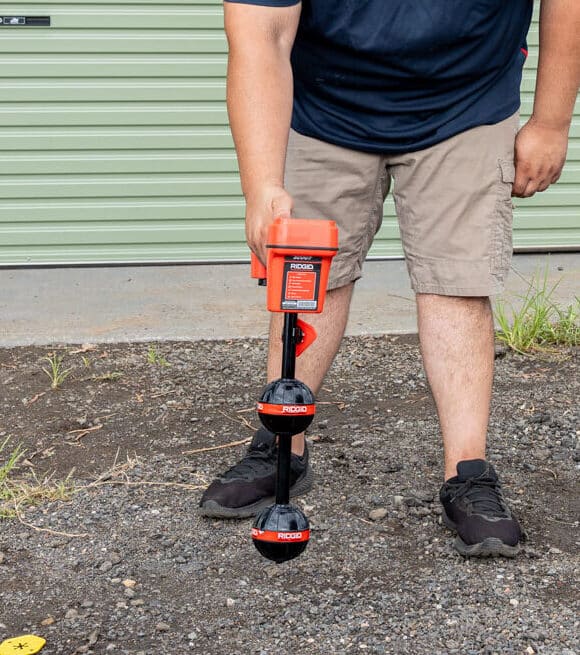
Acoustic Leak Detection
We use sensitive microphones and ground sensors to listen for the sound of water escaping under pressure. Even a pinhole leak in a copper pipe creates a distinct frequency that the equipment picks up through walls, floors, and concrete slabs. This method works on pressurised water lines — it won’t detect a slow drip from a waste pipe. Acoustic detection usually takes 30 to 60 minutes and can locate a leak to within a few centimetres, so we only need to open a small access hole instead of demolishing entire walls.
Thermal Imaging Camera
Leaking water changes the temperature of surrounding materials. A thermal camera shows these temperature differences as colour gradients on a screen. Cold spots indicate evaporating water or a cold water leak. Warm spots can reveal a hot water line that’s dripping inside the wall. Thermal imaging is non-invasive and works through plasterboard, tiles, and some types of insulation. We often combine it with acoustic detection for the most accurate result.
CCTV Drain Inspection
If the leak is in a waste or stormwater pipe inside your wall, a CCTV camera can travel through the line and show us cracks, blockages, or joint failures in real time. We insert a flexible camera head through an access point — usually a floor waste or inspection opening — and record the footage. You’ll see exactly what’s wrong and where, which helps us quote the repair accurately. CCTV inspection is standard practice for diagnosing leaks in older clay or cast-iron waste pipes common in Sydney’s heritage homes, and any notifiable work connecting to the Sydney Water network must be carried out by a licensed plumber and lodged accordingly.
How We Fix a Leaking Pipe Inside Your Wall
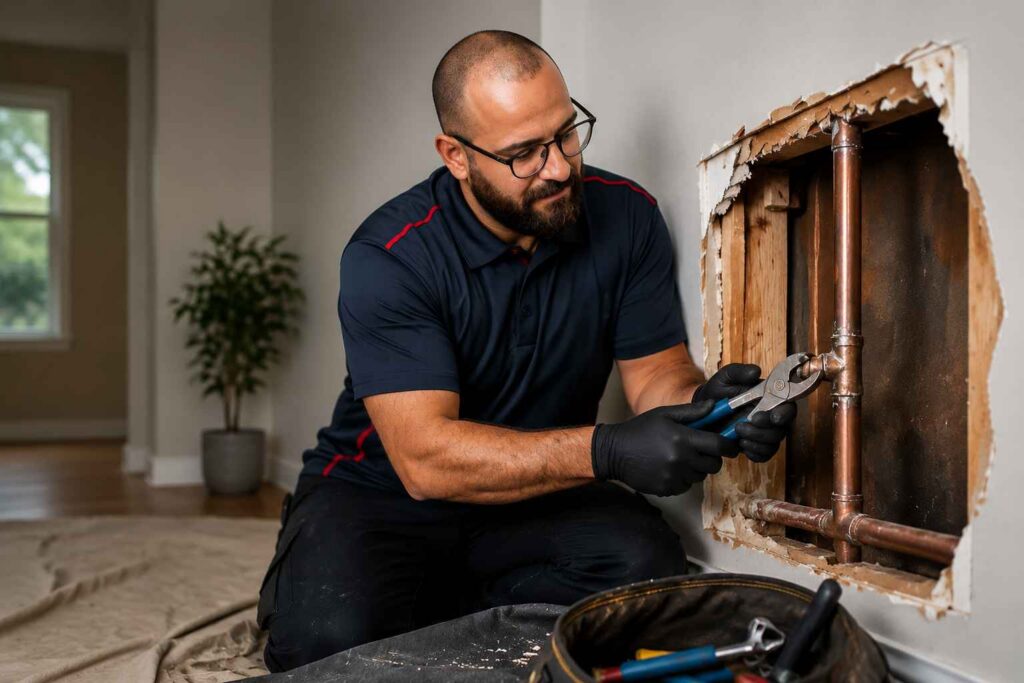
Once we’ve located the leak, the repair method depends on the pipe material, location, and extent of damage. We’ll explain your options, provide a fixed-rate quote in AUD, and complete the work to Australian Standards AS/NZS 3500, in line with NSW plumbing regulations and Sydney Water requirements.
Access and Pipe Repair
For copper or PEX supply lines, we cut a small access hole in the plasterboard to reach the damaged section. If the leak is at a joint or fitting, we can often tighten or replace the fitting without cutting the pipe. Corroded or split pipes need a section cut out and a new piece soldered or crimped in place. We pressure-test the repair before closing the wall to confirm it’s watertight. The access hole is patched with new plasterboard, taped, and prepared for painting — we don’t leave rough edges or gaps.
Pipe Relining for Waste Lines
If the leak is in a waste or stormwater pipe buried inside the wall or under the slab, pipe relining can fix it without demolition. We insert a resin-coated liner into the damaged pipe and inflate it to press against the inside surface. Once cured, the liner forms a new, watertight pipe within the old one. Relining works on cracks, root intrusion, and joint failures. It’s faster and less disruptive than digging up floors or removing walls, and it’s backed by our lifetime labour warranty.
How to Fix a Leaking Tap or Toilet That’s Damaging Your Wall
Sometimes the leak isn’t in the wall at all — it’s a leaking tap or toilet that’s dripping down inside the cavity. A worn tap washer or loose tap body can let water run behind the basin or vanity and soak into the wall. We’ll dismantle the tap, replace the washer or cartridge, and seal the tap body to the benchtop or wall. If your toilet is leaking at the pan collar or cistern inlet, we’ll remove the pan, replace the seals, and reinstall it to AS/NZS 3500 standards. Fixing the source stops the leak and prevents further water damage.
What Happens If You Ignore a Wall Leak
Delaying repair might seem like a way to save money, but hidden leaks get worse over time. Here’s what you’re risking if you wait.
Structural Damage to Timber Framing
Water-soaked timber loses strength and can rot within weeks. If the leak is near a load-bearing stud or lintel, the structural integrity of your wall is compromised. You might need a builder to sister new timber alongside the damaged section or install temporary bracing while repairs are done. Structural work costs far more than fixing the pipe early.
Mould Remediation and Health Risks
Mould spreads quickly in damp, dark wall cavities. Once established, it releases spores into your indoor air, which can trigger asthma, allergies, and respiratory infections. Professional mould remediation involves sealing off the area, removing contaminated materials, treating surfaces with antimicrobial agents, and running air scrubbers. The process can take several days and cost thousands of dollars — far more than the original plumbing repair.
Electrical Hazards
Water and electricity don’t mix. If your wall contains power points, light switches, or wiring, a leak can cause short circuits, sparks, or even electrical fires. You might notice lights flickering, switches that feel warm, or a burning smell near the wall. If you see any of these signs, turn off power to that circuit at the switchboard and call a licensed electrician and plumber immediately.
Insurance Exclusions and Claim Denials
Most home insurance policies cover sudden, accidental damage — like a burst pipe — but exclude gradual damage from leaks you should have noticed and fixed. If the insurer finds evidence that the leak has been active for months, they may deny your claim entirely. You’ll be left paying for water damage repairs, mould treatment, and any consequential damage to furniture or belongings, out of your own pocket in AUD.
Why Sydney Homeowners Choose Our Leak Detection Service
We’ve been diagnosing and repairing hidden pipe leaks across Sydney for over 25 years. Our approach combines licensed expertise, modern detection technology, and clear communication so you understand exactly what’s happening and what it will cost to fix. Antons Plumbing & Gas is fully licensed under NSW Lic. 210933C, so every leak diagnosis and repair meets Sydney Water and NSW Fair Trading obligations.
When you call us on +61 493 824 176 for a suspected wall leak, we arrive the same day with acoustic leak detection equipment, a thermal camera, and the tools to repair most leaks on the spot. We’ll run a full diagnostic, show you the footage or readings, and provide a fixed-rate quote in AUD before we start any work. No call-out fee from 7 am to 3 pm on weekdays, and our 24/7 emergency service means you’re never waiting days for help when water is pouring into your home.
Every repair is completed to AS/NZS 3500 plumbing standards and backed by our lifetime labour warranty. We document our findings, take photos of the damage and the completed repair, and leave your property clean and compliant. Whether it’s a pinhole leak in a copper pipe, a cracked waste line, or a leaking tap that’s been dripping into your wall for months, we’ll fix it right the first time.
How to Prevent Future Pipe Leaks in Your Walls
Once the leak is fixed, a few simple habits can reduce the risk of it happening again. Prevention is always cheaper than repair.
Schedule Regular Plumbing Inspections
Have a licensed plumber inspect your home every two to three years, especially if your property is more than 20 years old. We’ll check pipe condition, test water pressure, and look for early signs of corrosion or joint failure. Catching a problem early means a simple washer replacement instead of a full pipe section cut-out.
Monitor Your Water Pressure
Sydney’s water pressure can spike during off-peak hours, putting stress on older pipes and fittings. High pressure accelerates wear and can cause joints to weep or burst. We can install a pressure-limiting valve on your main line to keep pressure within safe limits — typically 500 kilopascals, in line with Sydney Water guidelines. This protects your pipes, appliances, and fixtures from unnecessary strain.
Replace Aging Pipes Before They Fail
Galvanised steel pipes corrode from the inside and typically last 40 to 50 years. Copper pipes can last 70 years or more, but joints and fittings often fail sooner. If your home still has original plumbing from the 1970s or earlier, consider repiping high-risk areas like bathrooms, laundries, and kitchens. Modern PEX or copper installations are more reliable and come with long warranties.
Protect Pipes from Tree Roots
Tree roots seek out moisture and can crack underground pipes or push into joints. If you have large trees near your house, ask us to run a CCTV inspection of your stormwater and sewer lines every few years. We can apply root-cutting treatments or recommend pipe relining to seal vulnerable sections before roots cause a leak.
Fix Small Leaks Immediately
A dripping tap or a toilet that runs after flushing might seem minor, but over time that water can find its way into wall cavities, under floors, or into ceiling spaces. We can fix a leaking tap in under an hour, and the cost is a fraction of what you’d pay to repair water-damaged walls and treat mould. Don’t wait until the problem grows.
What to Do Right Now If You Suspect a Wall Leak
If you’ve noticed any of the signs we’ve covered, don’t wait for the problem to get worse. Turn off the water supply to the affected area if you can, move furniture and belongings away from damp walls, and call us on 0493 824 176. We’ll send a licensed plumber (NSW Lic. 210933C) to your property the same day, locate the leak with professional equipment, and provide a fixed-rate quote in AUD for the repair.
Our team serves the entire Sydney Metro — Inner West, Eastern Suburbs, North Shore, Northern Beaches, Hills District, Western and South-Western Sydney, and Sutherland Shire. We’re available 24/7 for emergencies, with no call-out fee from 7 am to 3 pm on weekdays. Every job is completed to Australian Standards, backed by our lifetime labour warranty, and finished with respect for your home and your time.
Conclusion
A hidden pipe leak won’t fix itself, and the longer you wait, the more damage it causes. By recognising the early warning signs and acting fast, you can avoid structural repairs, mould treatment, and insurance headaches. We’re here to help Sydney homeowners protect their properties with fast, reliable leak detection and repair — done right the first time.
Antons Plumbing & Gas offers expert leak detection across Sydney with 25 years of trusted experience. Our licensed team (NSW Lic. 210933C) pinpoints hidden leaks fast, protecting your home from costly damage. Contact us today to get started.
Related Articles
- Pipe Leaking Under Kitchen Sink? Signs You Need a Plumber
- PVC Pipe Under Sink Leaking at the Joint: Simple Repair Tips
- Why Your Faucet Drips When Turned Off and What to Do
FAQs
What Are The Signs Of A Leaking Pipe In A Wall?
Common signs of a leaking pipe in a wall include water stains, peeling paint or wallpaper, mould growth, and the sound of dripping water. You may also notice an increase in your water bill or a damp smell in the area. If you observe any of these signs, it’s advisable to contact a plumbing expert at Antons Plumbing & Gas for a thorough inspection. Whether you need a Chatswood plumber or a Penrith plumber, our team can help locate the leak before it causes further damage.
How Can I Detect A Hidden Leak In My Wall?
To detect a hidden leak, look for unusual dampness or discolouration on walls. You can also listen for sounds of water running when no taps are in use. Using a moisture meter can provide more precise readings. If you suspect a hidden leak, our experienced team can conduct a detailed assessment using advanced techniques, including thermal imaging. Homeowners looking for a North Shore plumber or an Emu Plains plumber can rely on Antons Plumbing & Gas for accurate leak detection.
What Should I Do If I Suspect A Pipe Is Leaking In My Wall?
If you suspect a leak, turn off your water supply to prevent further damage and contact Antons Plumbing & Gas immediately. Our licensed team can quickly identify the source of the leak and recommend appropriate repairs, ensuring your home remains safe and dry. A reliable Northbridge plumber can inspect the affected wall area and help minimise water damage.
How Do I Find A Leak Behind Drywall?
To find a leak behind plasterboard, start by checking for signs of water damage, such as stains or mould. You can also press on the plasterboard; if it feels soft or bulges, there may be a leak. For a thorough and accurate diagnosis, consider calling in our qualified plumbers, who can use specialised tools to locate leaks without causing unnecessary damage. If you need a dependable Hornsby plumber, our team can provide careful leak detection and repair support.
Can A Leaking Pipe Cause Mould In Walls?
Yes, a leaking pipe can lead to mould growth in walls. The presence of moisture creates an ideal environment for mould, which can pose health risks. If you discover a leak, it’s essential to address it promptly. Our team at Antons Plumbing & Gas not only fixes leaks but also ensures your space is safe and compliant, helping prevent future mould issues. For urgent leak repairs, a professional Ryde plumber can respond quickly and restore your plumbing safely.
Is Antons Plumbing & Gas Licensed To Work In NSW?
Yes. Antons Plumbing & Gas holds NSW Licence 210933C, so every leak detection job and repair is carried out to Australian Standards AS/NZS 3500 and meets Sydney Water and NSW Fair Trading requirements. You can ask to see our licence details before any work begins.
How Quickly Can You Respond To A Suspected Wall Leak In Sydney?
We offer same-day service across Sydney Metro for suspected wall leaks, plus 24/7 emergency callouts if water is actively damaging your home. Call +61 493 824 176 and we’ll organise a licensed plumber to attend as soon as possible.
Do You Charge A Call-Out Fee For Leak Detection?
There’s no call-out fee for jobs booked between 7 am and 3 pm on weekdays. Outside those hours, our 24/7 emergency service is still available when you need urgent leak detection or repair.
Will I Get A Fixed-Price Quote Before Any Work Starts?
Yes. Once we’ve located the leak using acoustic detection, thermal imaging, or CCTV inspection, we’ll explain what we’ve found and provide a fixed-rate quote in AUD before starting any repair. There are no surprise charges once work is underway.
Which Sydney Suburbs Do You Service For Wall Leak Detection?
We cover the entire Sydney Metro area, including the Inner West, Eastern Suburbs, North Shore, Northern Beaches, Hills District, Western and South-Western Sydney, and the Sutherland Shire. If you’re unsure whether we service your suburb, give us a call and we’ll confirm.
Can You Help With An Insurance Claim For Water Damage?
We document every leak diagnosis with photos and, where relevant, thermal imaging or CCTV footage, which can support your insurance claim. We recommend contacting your insurer as soon as you suspect a leak, since most policies exclude damage from leaks left unaddressed for an extended period.
Do You Offer A Warranty On Leak Repairs?
Yes, all our plumbing repairs, including wall leak repairs and pipe relining, are backed by our lifetime labour warranty and completed to AS/NZS 3500 standards.
Do You Work On Strata And Apartment Buildings As Well As Houses?
Yes, we regularly diagnose and repair hidden pipe leaks in strata units and apartment buildings across Sydney, including leaks that travel through shared walls between properties.
What Happens During Your First Visit For A Suspected Leak?
Our licensed plumber will run a full diagnostic using acoustic leak detection and a thermal imaging camera, show you the readings or footage, confirm the source of the leak, and provide a fixed-rate quote before any repair work begins.
Do You Repair The Wall As Well As The Plumbing Fault?
Yes. Once the pipe is repaired and pressure-tested, we patch the access hole with new plasterboard, tape it, and prepare it for painting, so you’re not left arranging a separate tradesperson for wall repairs.
Do I Need Sydney Water Or Council Approval For Pipe Repairs?
Most internal pipe repairs don’t require separate council approval, but certain works connecting to the Sydney Water network are classed as notifiable and must be carried out and lodged by a licensed plumber. As a licensed provider, we handle any required notifications as part of the job.
How Do I Book A Licensed Plumber For A Wall Leak Inspection Today?
Simply call +61 493 824 176 or use our online booking form to arrange a same-day inspection. We’ll ask a few questions about what you’ve noticed, then send a licensed plumber with the right equipment to your property.
Can You Detect A Leak Without Cutting Open My Walls?
In most cases, yes. Acoustic leak detection and thermal imaging let us pinpoint the leak location without demolition, so we generally only need to open a small, targeted access hole rather than cutting into multiple sections of wall.
Is Emergency Plumbing Available On Weekends And Public Holidays In Sydney?
Yes, our emergency plumbing service operates 24/7, including weekends and public holidays, for urgent issues like active wall leaks, burst pipes, or water pouring into your home.
What Payment Options Do You Accept?
We provide a fixed-rate quote in AUD before starting work so you know the cost upfront. Speak with our team when booking to confirm the payment options available for your job.