

Understanding the plumbing pipes in your home helps you spot problems early, plan upgrades, and communicate clearly with your plumber. Different pipe materials serve different purposes, and knowing which type you have can prevent costly surprises when leaks, corrosion, or blockages appear. Whether you are dealing with supply lines, drainage pipes, or ageing infrastructure, household plumbing pipe identification gives you the confidence to make informed decisions about repairs and replacements.
This guide walks you through the most common pipe types found in Sydney homes, how to recognise them by sight and touch, and when to call a licensed plumber for inspection or replacement. You will learn practical tips for identifying copper, PVC, PEX, galvanised steel, cast iron, and other materials, plus what each pipe type means for your home’s safety and performance.
Key Takeaways
- Copper pipes are durable and corrosion-resistant, commonly used for hot and cold water supply in Sydney homes.
- PVC and CPVC pipes are lightweight plastic options for drainage and cold or hot water supply, marked with ratings and diameters.
- PEX tubing offers flexible, freeze-resistant installation for modern water supply systems.
- Galvanised steel and cast iron are older materials prone to rust and blockages, often requiring replacement or relining.
- Visual cues like colour, stamping, magnet tests, and scratch tests help you identify pipe materials quickly.
- Licensed plumbers use CCTV inspections and leak detection tools to assess pipe condition and recommend compliant upgrades.
Why Household Plumbing Pipe Identification Matters for Sydney Homeowners
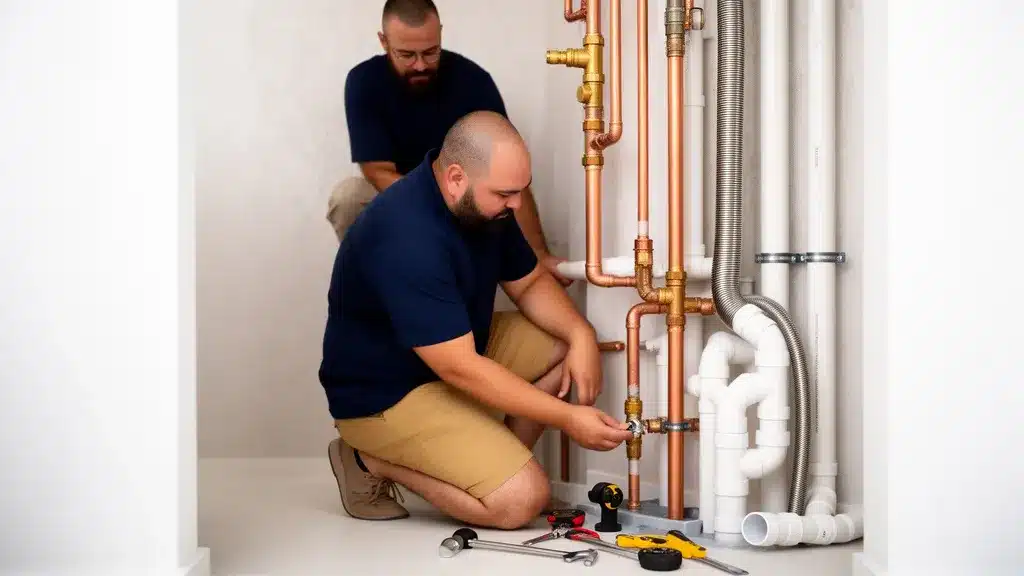
Knowing your pipe materials helps you understand the age, expected lifespan, and potential weak points in your plumbing system. Older homes in the Inner West, North Shore, and Western Sydney often contain a mix of copper, galvanised steel, and clay pipes, each with different maintenance needs. When you can identify what is behind your walls or under your slab, you can prioritise inspections, budget for upgrades, and avoid emergency failures.
Pipe identification also matters for compliance and safety. Some materials, like polybutylene, are no longer approved for new installations due to failure rates. Others, such as lead service lines, pose health risks and require immediate replacement. A clear understanding of your household plumbing pipe types ensures you meet Australian Standards (AS/NZS 3500) and protect your family from water quality issues. In Sydney, drainage and sewer pipes also ultimately connect into the Sydney Water network, so any work near the boundary trap, sewer main, or water main should be assessed by a licensed plumber to make sure it satisfies Sydney Water’s requirements as well as AS/NZS 3500.
When you call a plumber for a leak, blockage, or renovation, being able to describe your pipe type speeds up diagnosis and quoting. Our team at Antons Plumbing & Gas uses CCTV drain inspections and acoustic leak detection to confirm pipe materials and condition, then presents clear options for repair, relining, or replacement—backed by upfront pricing and a lifetime labour warranty. If you spot rust, discolouration, or a leak and you’re not confident identifying the pipe yourself, call a licensed Sydney plumber (Antons Plumbing & Gas, NSW Lic. 210933C) rather than guessing—misdiagnosing pipe material can lead to non-compliant repairs.
Common Household Plumbing Pipe Types and How to Identify Them
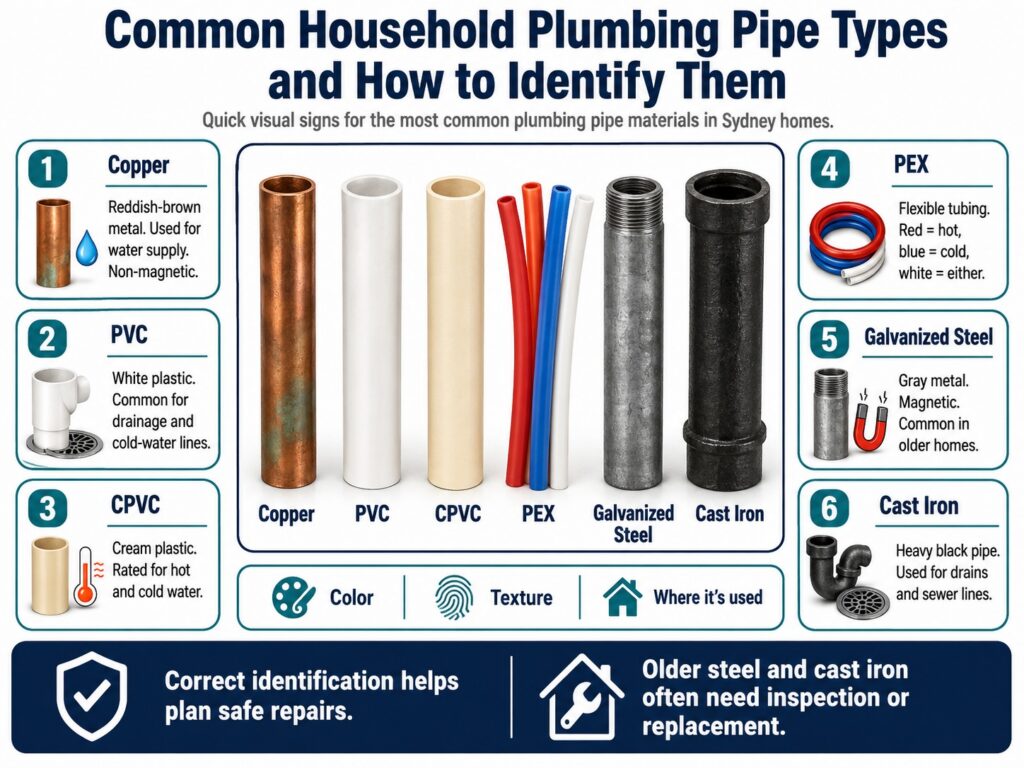
Sydney homes use a range of pipe materials, each suited to specific applications like water supply, drainage, or gas fitting. The most common types include copper, PVC, CPVC, PEX, galvanised steel, and cast iron. Each has distinct visual and physical characteristics that make identification straightforward once you know what to look for.
1. Copper Pipes
Copper is the gold standard for water supply lines in Australian homes. It resists corrosion, handles high pressure, and lasts 50 years or more when properly installed. Copper pipes have a distinctive reddish-brown colour that may develop a green patina over time. They feel smooth and solid, and a magnet will not stick to them.
You will find copper pipes running from your water meter to taps, showers, and hot water systems. They come in rigid lengths joined by soldered fittings or compression joints. If you see shiny metallic pipes with soldered joints near your hot water unit or under sinks, you are looking at copper.
2. PVC (Polyvinyl Chloride) Pipes
PVC is a white or cream-coloured plastic pipe used primarily for cold water supply and drainage. It is lightweight, affordable, and resistant to chemicals and corrosion. PVC pipes are stamped with ratings, diameter measurements, and standards information, making identification easy. They feel hard and smooth, and a scratch test with a coin will not leave a mark.
In Sydney homes, PVC is the go-to material for stormwater drains, sewer lines, and irrigation. It cannot handle hot water, so you will not see it connected to hot water taps or heaters. If you spot white plastic pipes under your house or in your garden, they are likely PVC.
3. CPVC (Chlorinated Polyvinyl Chloride) Pipes
CPVC looks similar to PVC but is rated for hot water use. It is typically cream, beige, or light yellow, and the pipe will be stamped with temperature and pressure ratings. CPVC is common in newer homes and renovations where copper is too expensive or difficult to install. It resists scale buildup and corrosion, and it is approved for potable water supply under Australian Standards.
You will find CPVC running to hot water taps, showers, and appliances. It is joined with solvent cement fittings, creating permanent bonds. If you see beige or cream plastic pipes near your hot water system, check the stamping—if it says CPVC and includes a hot water rating, you have identified it correctly.
4. PEX (Cross-Linked Polyethylene) Tubing
PEX is a flexible, coloured plastic tubing used for modern water supply installations. It comes in red (hot water), blue (cold water), and white (either), making household plumbing pipe identification simple. PEX resists freezing, corrosion, and scale, and it is easy to snake through walls and ceilings without joints. It is connected with crimp, clamp, or push-fit fittings.
PEX is popular in bathroom renovations, under-slab installations, and retrofit projects across Sydney. If you see flexible, brightly coloured tubing behind your walls or in your roof space, it is likely PEX. Many plumbers prefer PEX for its speed of installation and reliability, and it meets AS/NZS 3500 requirements for potable water.
5. Galvanised Steel Pipes
Galvanised steel pipes are grey, rigid, and magnetic. They were widely used for water supply until the 1970s but are prone to rust and internal corrosion, which reduces water pressure and causes discolouration. You can identify galvanised steel by running a magnet along the pipe—it will stick. A scratch test with a coin will reveal a dull grey metal underneath any paint or rust.
In older Sydney homes, galvanised steel often runs from the water meter to taps and toilets. Over time, rust buildup narrows the pipe bore, leading to low pressure, brown water, and leaks at threaded joints. If you have galvanised pipes, plan for replacement—our team can upgrade to copper or PEX with minimal disruption.
6. Cast Iron Pipes
Cast iron is a heavy, dark grey or black metal pipe used for drainage and sewer lines, especially in homes built before 1980. It is durable but brittle, and it corrodes from the inside out, leading to blockages, leaks, and tree root intrusion. Cast iron pipes are magnetic, rough to the touch, and often covered in rust or flaking paint.
You will find cast iron under houses, in basements, or buried in the ground. If you hear gurgling drains, smell sewage, or see rust stains near floor drains, cast iron corrosion may be the cause. CCTV drain inspections reveal the exact condition, and pipe relining offers a no-dig repair option that extends the life of your drainage system.
7. ABS (Acrylonitrile Butadiene Styrene) Pipes
ABS is a black plastic pipe similar to PVC but used mainly for drainage, waste, and vent lines. It is lightweight, durable, and resistant to impact and cold temperatures. ABS pipes are stamped with ratings and joined with solvent cement. They feel smooth and rigid, and they do not carry potable water.
In Sydney, ABS is less common than PVC for drainage, but you may see it in older renovations or specific applications. If you spot black plastic pipes connected to your toilet, shower waste, or vent stack, it is likely ABS.
Simple Tests for Household Plumbing Pipe Identification
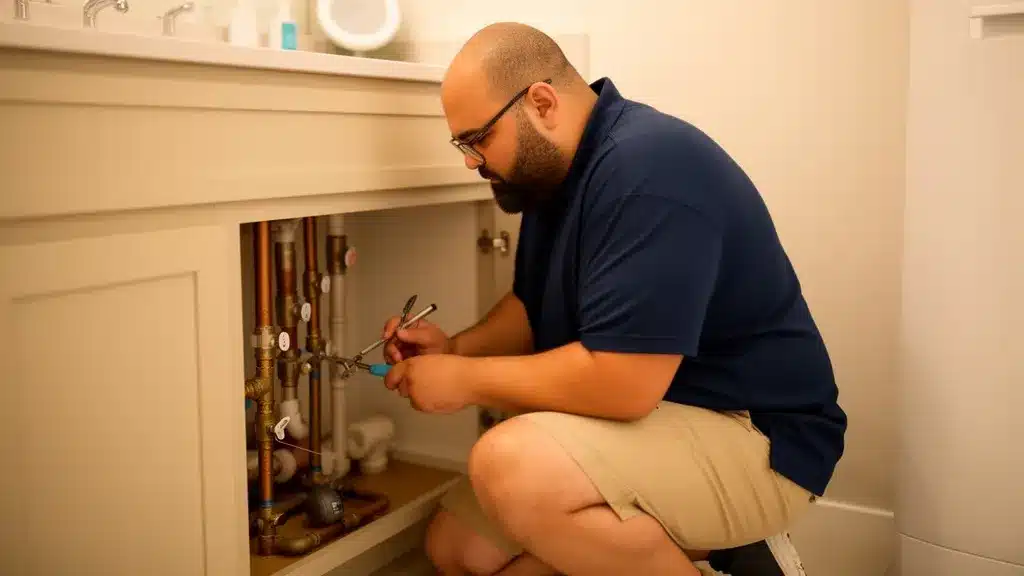
When you cannot rely on colour alone, a few quick tests help confirm pipe materials. These methods work for exposed pipes under sinks, in basements, or near your water meter. Always turn off water and wear gloves if you are inspecting old or corroded pipes.
Visual Inspection
Start by looking at the pipe colour, surface texture, and any stamped markings. Copper is reddish-brown, PVC is white, CPVC is cream, PEX is coloured, galvanised steel is grey, and cast iron is black. Check for manufacturer stamps, diameter measurements, and standard certifications printed on the pipe. Most modern plastic pipes will show the material type, pressure rating, and AS/NZS compliance.
Magnet Test
Hold a magnet against the pipe. If it sticks, you have a ferrous metal—either galvanised steel or cast iron. If it does not stick, the pipe is copper, plastic (PVC, CPVC, PEX, ABS), or another non-magnetic material. This test is the fastest way to distinguish metal from plastic and identify older steel pipes that may need replacement.
Scratch Test
Use a coin or key to gently scratch an inconspicuous spot on the pipe. Copper will show a bright, shiny copper colour underneath any patina. Galvanised steel reveals dull grey metal. Plastic pipes (PVC, CPVC, PEX) will not scratch easily, and you will see the same colour through the surface. Lead pipes, though rare in Sydney, are soft and will show a dull grey streak when scratched.
Flexibility Test
PEX tubing is flexible and can bend without kinking. Rigid pipes like copper, PVC, CPVC, galvanised steel, and cast iron do not flex. If you can gently bend the pipe by hand, it is PEX. This test is useful when inspecting supply lines in tight spaces or behind walls during renovations.
When to Call a Licensed Plumber for Pipe Inspection and Replacement
Household plumbing pipe identification is a useful skill, but professional inspection ensures accurate diagnosis and compliant repairs. If you notice low water pressure, discoloured water, leaks, corrosion, or recurring blockages, our licensed plumbers use CCTV drain cameras, acoustic leak detection, and pressure testing to assess pipe condition and recommend the best solution.
Older pipe materials like galvanised steel, polybutylene, and deteriorating cast iron often require replacement to restore safety and performance. We provide clear options—repair, reline, or replace—with upfront pricing in AUD and same-day service across Sydney. Every job meets NSW Fair Trading licensing requirements and AS/NZS 3500 standards—our team holds NSW Lic. 210933C—backed by our lifetime labour warranty.
If you are planning a bathroom renovation, hot water upgrade, or drainage repair, knowing your pipe types helps us tailor the scope and materials. Whether you need copper repiping, PEX installation, or pipe relining for tree root damage, our team delivers clean, compliant workmanship with no call-out fee from 7am to 3pm on weekdays.
How Pipe Material Affects Plumbing Performance and Maintenance
Different pipe materials have different lifespans, pressure ratings, and failure modes. Understanding these differences helps you plan maintenance, budget for upgrades, and avoid emergency breakdowns. The table below compares common household plumbing pipe types by key performance factors.
| Pipe Material | Typical Lifespan | Common Use | Corrosion Risk | Replacement Priority |
|---|---|---|---|---|
| Copper | 50+ years | Hot and cold water supply | Low | Low |
| PVC | 50+ years | Cold water, drainage | None | Low |
| CPVC | 40+ years | Hot and cold water supply | None | Low |
| PEX | 50+ years | Hot and cold water supply | None | Low |
| Galvanised Steel | 40–50 years | Water supply (pre-1970s) | High | High |
| Cast Iron | 50–80 years | Drainage, sewer | High | Medium to High |
| ABS | 50+ years | Drainage, waste, vent | None | Low |
Copper and modern plastic pipes (PVC, CPVC, PEX) offer long service lives with minimal maintenance. Galvanised steel and cast iron require closer monitoring and eventual replacement due to corrosion and blockage risks. If your home was built before 1980, schedule a plumbing inspection to identify ageing pipes and plan upgrades before leaks or failures occur.
Pipe Identification During Renovations and Upgrades
Bathroom renovations, kitchen remodels, and hot water system replacements often expose hidden pipes and reveal their condition. This is the ideal time to upgrade outdated materials, reroute supply lines, and install compliant fittings. Our team assesses existing pipe types, tests water pressure, and recommends upgrades that improve performance and meet current standards.
When you replace a hot water system, we check the supply and relief valve pipes for corrosion, leaks, and correct sizing. If you are renovating a bathroom, we can replace old galvanised steel with copper or PEX, install new shut-off valves, and ensure all work complies with AS/NZS 3500. Clear communication and upfront pricing mean you know exactly what is involved before work begins.
Renovations also provide access for pipe relining, where we insert a resin-lined sleeve into damaged drainage pipes without digging. This method is ideal for cast iron or clay pipes with cracks, tree root damage, or corrosion. CCTV inspection confirms the pipe condition, and relining restores flow and structural integrity with minimal disruption to your property.
Understanding Supply Lines vs Drainage Lines in Household Plumbing Pipe Identification
Household plumbing systems have two main categories: supply lines and drainage lines. Supply lines carry pressurised water from your meter to taps, showers, toilets, and appliances. Drainage lines remove wastewater and sewage by gravity. Each category uses different pipe materials and sizes.
Supply lines are typically copper, CPVC, or PEX, ranging from 15mm to 25mm in diameter. They must withstand pressure up to 500 kPa or more and meet potable water standards. Drainage lines are usually PVC, ABS, or cast iron, ranging from 40mm to 100mm or larger. They do not carry pressure but must slope correctly to ensure flow.
In NSW, the point where your private drainage connects to the Sydney Water sewer main is generally at or near your boundary trap. Work beyond this point, or any reconnection to the water main, usually requires Sydney Water approval as well as a compliance certificate from a licensed plumber, so it pays to have a professional confirm exactly where your responsibility ends.
When identifying pipes, note the diameter and location. Small-diameter pipes near taps and appliances are supply lines. Large-diameter pipes under sinks, toilets, and floor drains are drainage lines. If you are unsure, our plumbers can trace lines, test pressure, and label pipes during inspections or repairs.
Common Pipe Problems by Material Type
Each pipe material has characteristic failure modes that help with household plumbing pipe identification and troubleshooting. Recognising these issues early allows you to call a plumber before minor leaks become major damage.
Copper Pipe Issues
Copper pipes can develop pinhole leaks due to water chemistry, electrolysis, or high chlorine levels. Green or blue stains around joints indicate corrosion or leaks. Copper is also vulnerable to freeze damage if not insulated. Regular inspections and prompt repairs prevent water damage and preserve pipe lifespan.
PVC and CPVC Problems
PVC and CPVC pipes can crack if exposed to impact, UV light, or extreme cold. Solvent-welded joints may fail if not assembled correctly. CPVC can become brittle over time if exposed to high temperatures beyond its rating. Leaks at fittings are the most common issue, and replacement is straightforward with proper materials and technique.
PEX Tubing Concerns
PEX is highly reliable, but crimp fittings can fail if not installed correctly. Rodents may chew through exposed PEX in roof spaces or under houses. PEX is also sensitive to UV light and must be protected from direct sunlight. When installed by a licensed plumber, PEX offers decades of trouble-free service.
Galvanised Steel Failures
Galvanised steel pipes rust from the inside, causing low water pressure, brown or red water, and frequent leaks at threaded joints. Corrosion cannot be reversed, and patching leaks is a temporary fix. Replacement with copper or PEX is the only long-term solution. If you have galvanised pipes, budget for repiping within the next few years.
Cast Iron Deterioration
Cast iron drainage pipes corrode and crack over time, leading to blockages, slow drains, and sewage odours. Tree roots exploit cracks and joints, causing major blockages. CCTV inspections reveal the extent of damage, and pipe relining offers a cost-effective, no-dig repair that restores flow and prevents further root intrusion.
How Antons Plumbing & Gas Helps with Pipe Identification and Upgrades
Our licensed plumbers bring 25 years of experience in diagnosing and upgrading household plumbing systems across Sydney. We use CCTV drain cameras to inspect drainage pipes, acoustic leak detection to locate hidden leaks, and pressure testing to assess supply line condition. Every inspection includes clear documentation, photos, and a written report outlining findings and options.
When pipe replacement or relining is required, we provide upfront fixed-rate pricing in AUD, explain the scope and timeline, and complete work to Australian Standards with quality materials from trusted brands. Our lifetime labour warranty covers workmanship, giving you confidence long after we leave. We serve the Inner West, Eastern Suburbs, North Shore, Northern Beaches, Hills District, Western Sydney, South-Western Sydney, and Sutherland Shire with same-day service and 24/7 emergency response.
Whether you need a simple leak repair, a full repipe, or pipe relining for tree root damage, our team diagnoses the root cause, presents clear options, and tailors our work to your home, timeline, and budget. Call 0493 824 176 or book online for a fast, compliant solution backed by our Lic: 210933C and lifetime labour warranty.
Pipe Identification Tips for Common Sydney Plumbing Scenarios
Sydney homes present unique challenges due to clay soils, tree roots, heritage construction, and ageing infrastructure. Knowing your pipe types helps you anticipate issues and plan proactive maintenance. Here are practical tips for common scenarios.
Heritage Homes with Mixed Pipe Materials
Older homes in the Inner West and North Shore often contain a mix of copper, galvanised steel, and cast iron. Inspect exposed pipes in basements, under houses, and near the water meter. Look for rust, green corrosion, and leaks at joints. Schedule a plumbing inspection to map your system and prioritise upgrades.
Homes with Tree Root Problems
Clay and cast iron drainage pipes are vulnerable to tree root intrusion, especially in Western Sydney and the Hills District. If you have large trees near your sewer line, request a CCTV drain inspection every few years. Early detection allows for root cutting or pipe relining before major blockages occur.
Renovations and Extensions
When adding a bathroom, kitchen, or laundry, identify existing pipe materials to ensure compatible fittings and transitions. Our team assesses supply and drainage lines, recommends upgrades if needed, and installs new pipes to code. Clear documentation ensures future plumbers understand your system.
Low Water Pressure Issues
If you have low pressure at taps and showers, galvanised steel pipes may be corroded internally. A pressure test and visual inspection confirm the cause. Repiping with copper or PEX restores full flow and eliminates rust-related water quality issues.
Recurring Blockages and Slow Drains
Frequent blockages in toilets, showers, or floor drains often indicate cast iron pipe corrosion or tree root damage. CCTV inspection pinpoints the problem, and pipe relining offers a permanent, no-dig solution. Regular maintenance and hydro jetting keep drains clear and extend pipe life.
Choosing the Right Pipe Material for Repairs and Replacements
When replacing or upgrading pipes, material selection depends on application, budget, water chemistry, and local conditions. Copper remains the premium choice for supply lines due to its durability and proven track record. PEX offers cost savings, faster installation, and freeze resistance, making it ideal for retrofits and tight spaces.
For drainage, PVC is the standard for new installations, offering long life, chemical resistance, and easy joining. Cast iron replacement often uses PVC or pipe relining, depending on access and budget. Our plumbers assess your specific situation, explain the pros and cons of each material, and recommend the best option for your home and timeline.
All materials we install meet AS/NZS 3500 requirements, and we source quality fittings and pipes from trusted suppliers. Every job includes pressure testing, leak checks, and a clean, compliant finish. You receive a written summary of work completed, materials used, and warranty coverage for your records.
Conclusion
Household plumbing pipe identification empowers you to understand your system, spot problems early, and make informed decisions about repairs and upgrades. Whether you have copper, PVC, PEX, galvanised steel, or cast iron, knowing your pipe types helps you communicate clearly with plumbers and plan proactive maintenance. For expert inspections, compliant repairs, and reliable pipe upgrades across Sydney, call Antons Plumbing & Gas on 0493 824 176 or book online today.
Antons Plumbing & Gas delivers expert pipe repairs and replacements across Sydney Metro with 25 years’ trusted experience. Our licensed team (NSW Lic. 210933C) identifies and fixes any household pipe issue—fast, upfront pricing in AUD guaranteed. Call 0493 824 176 to learn more today.
Related Articles
- Chlorinated Water and Copper PEX Pipes: What Homeowners Should Know
- How to Tell if a Pipe is Leaking in Your Wall: Simple Signs
- ProPress Fitting Has Play: Is It Normal or a Plumbing Problem?
FAQs
What Are The Different Types Of Plumbing Pipes Used In Households?
Households typically use a variety of plumbing pipes, including PVC (Polyvinyl Chloride), CPVC (Chlorinated Polyvinyl Chloride), PEX (Cross-Linked Polyethylene), copper, and galvanised steel. Each type serves a different purpose, such as water supply, drainage, and venting. Our team at Antons Plumbing & Gas is well-versed in handling all these pipe types with precision and care.
How Can I Identify Plumbing Pipes In My Home?
To identify plumbing pipes in your home, start by checking their colour, material, and feel. For instance, PVC pipes are usually white, while copper pipes have a metallic shine. PEX pipes are often red or blue to indicate hot and cold water lines. If you’re unsure, our experienced professionals can help you identify and assess your plumbing systems effectively.
What Is The Most Common Type Of Plumbing Pipe?
The most common type of plumbing pipe used in Sydney households today is PVC, particularly for drainage and venting. PEX is also gaining popularity for water supply lines due to its flexibility and resistance to corrosion. At Antons Plumbing & Gas, we have over 25 years of experience working with all types of plumbing pipes, ensuring you receive reliable solutions tailored to your needs.
How Do I Know If My Plumbing Pipes Are PVC Or CPVC?
You can tell PVC from CPVC by colour and temperature rating. PVC pipes are typically white and used for cold water, while CPVC pipes are beige or yellow and can handle hot water too. If you need help identifying your pipes or have concerns about their condition, our team is ready to provide professional guidance and service.
What Colour Are Different Types Of Plumbing Pipes?
Different plumbing pipes come in different colours: PVC pipes are usually white, CPVC pipes are beige or yellow, PEX pipes are red for hot water and blue for cold water, while copper pipes have a natural metallic colour. If you’re unsure about the types of pipes in your home, reach out to Antons Plumbing & Gas, and we’ll help you identify and assess them accurately.
Do I Need A Licensed Plumber To Identify Or Replace Pipes In My Sydney Home?
Yes. Under NSW law, plumbing work—including replacing supply or drainage pipes—must be carried out by a licensed plumber. Antons Plumbing & Gas holds NSW Lic. 210933C, so any inspection, repair, or repipe we carry out is compliant with NSW Fair Trading requirements and AS/NZS 3500. If you’re not confident identifying your pipes yourself, it’s safest to book a licensed inspection rather than guess.
How Much Does A Pipe Inspection Cost In Sydney?
Pricing depends on your property, the pipe materials involved, and access. We provide upfront, fixed-rate pricing in AUD before any work begins, so you know the full cost before we start—no surprises on the invoice. Call 0493 824 176 or book online and we’ll talk you through pricing for your situation.
Do You Offer Same-Day Pipe Inspections Or Repairs In Sydney?
Yes, we offer same-day service across Sydney Metro, plus 24/7 emergency response for urgent issues like burst pipes or major leaks. Book online or call 0493 824 176 to arrange a time that suits you.
What Suburbs Do You Service For Pipe Identification And Repairs?
We service the Inner West, Eastern Suburbs, North Shore, Northern Beaches, Hills District, Western Sydney, South-Western Sydney, and Sutherland Shire. If you’re unsure whether we cover your suburb, give us a call on 0493 824 176 and we’ll confirm.
Can You Replace Old Galvanised Steel Pipes With Copper Or PEX?
Yes. Repiping from galvanised steel to copper or PEX is one of our most common jobs, especially in older Sydney homes built before the 1970s. We assess your existing pipework, explain your options, and complete the upgrade to AS/NZS 3500 standards with minimal disruption to your home.
Do You Provide CCTV Drain Inspections To Confirm Pipe Condition?
Yes. We use CCTV drain cameras and acoustic leak detection to confirm pipe material and condition without unnecessary digging. You’ll receive a clear report with findings and photos before we recommend any repair, relining, or replacement.
Is Pipe Relining Cheaper Than A Full Pipe Replacement?
Relining is generally a less invasive, no-dig alternative to full replacement and can be cost-effective for cracked or root-affected cast iron or clay pipes, depending on the extent of damage. We inspect your pipes with CCTV first and give you upfront pricing for both relining and replacement so you can compare and decide what suits your budget.
How Do I Book A Plumber For A Pipe Inspection In Sydney?
You can book online through our website or call us directly on 0493 824 176. We offer no call-out fee from 7am to 3pm on weekdays, and same-day appointments are available across most of Sydney.
Do You Offer Emergency Plumbing For Burst Or Leaking Pipes?
Yes, we provide 24/7 emergency response for burst pipes, major leaks, and sudden loss of water pressure. If you notice water pooling, an unexplained spike in your water bill, or a hissing sound near a wall or slab, call us straight away on 0493 824 176.
Do You Guarantee Your Pipe Repair And Replacement Work?
Yes. All workmanship carried out by Antons Plumbing & Gas is backed by our lifetime labour warranty, and every job is completed to AS/NZS 3500 standards under NSW Lic. 210933C.
Can You Identify My Pipe Material Without Digging Up My Yard?
In many cases, yes. CCTV drain inspections, acoustic leak detection, and visual checks at accessible points (like the water meter, under-sink, or roof space) usually let us identify pipe material and condition without excavation. We’ll only recommend digging or relining if it’s genuinely needed.
What Happens During A Pipe Inspection Appointment?
Our licensed plumber will check accessible pipework, run CCTV drain inspections where needed, test water pressure, and look for signs of corrosion, leaks, or blockages. You’ll get a plain-English explanation of what we found, photos where relevant, and upfront pricing for any recommended repair or replacement before we proceed.
How Do I Know If I Need Pipe Relining Or A Full Pipe Replacement?
The right option depends on the pipe material, the extent of damage, and access to the pipe. Our team assesses this with a CCTV inspection and talks you through the pros and cons of relining versus replacement for your specific situation, so you can make an informed decision.
Do You Work On Weekends For Pipe Emergencies?
Yes, our emergency plumbing service operates 24/7, including weekends, for urgent issues like burst pipes and major leaks. Call 0493 824 176 any time.
What Payment Options Do You Accept?
We provide upfront, fixed-rate pricing in AUD before starting any job, so you can see the total cost before you commit. Ask our team about available payment options when you book on 0493 824 176.
Does Sydney Water Need To Be Involved If I Replace My Drainage Pipes?
If the work affects the connection point to the Sydney Water sewer or water main, approval or a compliance certificate may be required. As a licensed plumbing business, Antons Plumbing & Gas manages this side of the process for you, so your pipe replacement or reline meets both AS/NZS 3500 and Sydney Water requirements.
Why Should I Call A Licensed Sydney Plumber Instead Of Doing Pipe Identification Myself?
DIY checks (colour, magnet test, scratch test) are a good starting point, but they can’t confirm hidden corrosion, incorrect fittings, or compliance issues. A licensed plumber (Antons Plumbing & Gas, NSW Lic. 210933C) can confirm pipe condition with the right tools and make sure any repair or replacement is done safely and to code—call 0493 824 176 to book an inspection.