

Your hot water system works quietly behind the scenes every day, delivering warm showers, clean dishes, and comfortable living. Inside the tank, a small but critical component called the anode rod protects the steel lining from rust and corrosion. When that rod wears out, the tank itself begins to corrode, leading to leaks, poor performance, and costly water heater replacement. Timely water heater anode rod replacement is one of the simplest ways to extend the life of your hot water system and avoid emergency repairs.
This guide explains what an anode rod does, when it needs replacing, and how regular maintenance can save you time and money. You will learn the warning signs, the replacement process, and how our team at Antons Plumbing & Gas helps Sydney homeowners keep their hot water systems running safely and efficiently.
Key Takeaways
- The anode rod is a sacrificial component that corrodes so your tank does not, preventing internal rust and premature failure.
- Inspect the anode rod every three to five years and replace it when more than 15 cm of core wire is visible or the rod is less than half a centimetre thick.
- Replacement involves shutting off water and power, draining the tank, and removing the old rod with a socket wrench.
- Professional installation by a licensed plumber ensures the job complies with Australian Standards and Sydney Water requirements, and protects your warranty.
- Regular anode rod replacement can double the lifespan of your hot water system and prevent expensive emergency repairs.
What Is an Anode Rod and Why Does It Matter?
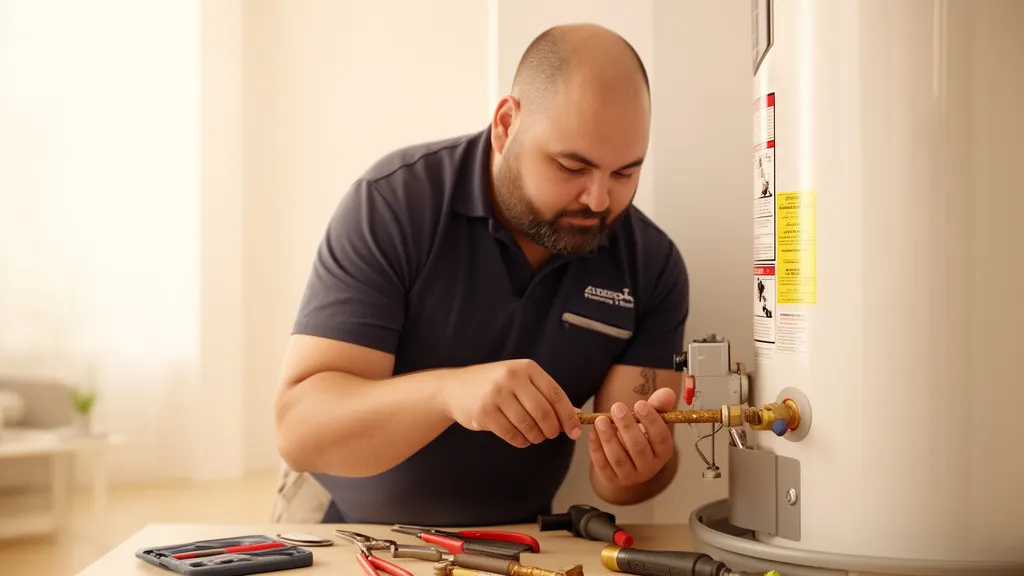
The anode rod is a long metal rod installed inside your hot water tank, typically made from magnesium, aluminium, or a zinc-aluminium alloy. Its sole purpose is to attract corrosive elements in the water, sacrificing itself to protect the steel tank lining. Without this protection, oxygen and minerals in the water would attack the tank walls directly, leading to rust, holes and leaks within a few years.
Most homeowners never see the anode rod because it sits at the top of the tank under a hex-head cap. Over time, the rod corrodes away, leaving only a thin wire core. Once the rod is consumed, the tank begins to rust from the inside out. Replacing the anode rod before it fails is the single most effective way to prevent internal corrosion and extend the life of your hot water system.
Many Sydney homes rely on Rheem hot water systems, Rinnai units, or Dux tanks, all of which use anode rods as standard protection. Whether you have a gas hot water system or a Rheem electric unit, the anode rod plays the same vital role. Regular inspection and replacement keep your system compliant with NSW plumbing regulations, efficient, and safe.
When Should You Replace Your Water Heater Anode Rod?
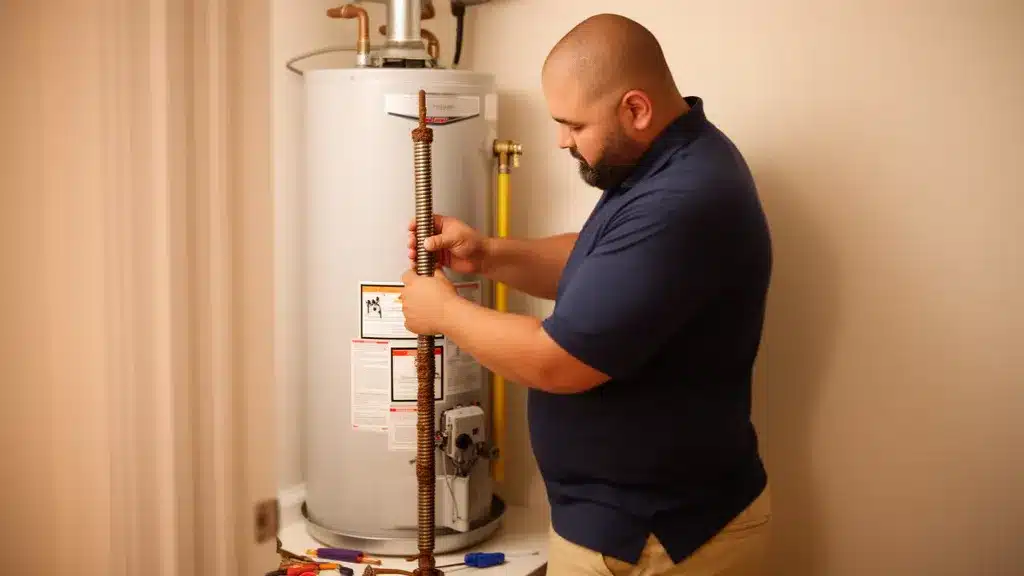
Most manufacturers recommend inspecting the anode rod every three to five years. The replacement interval depends on water hardness, tank size, and how much hot water you use. Sydney’s tap water is generally moderate in hardness, but properties on tank or bore supply, or homes with older galvanised pipework, may see faster corrosion. If your water supply comes from a bore or has high calcium or magnesium levels, the rod will wear out faster.
You should replace the anode rod when more than 15 centimetres of the steel core wire is exposed or when the rod diameter is less than half a centimetre. At this point, the rod has done its job and can no longer protect the tank. Waiting too long means the tank itself starts to corrode, and once that happens, no amount of maintenance will save it.
Common signs that your anode rod needs attention include rusty or discoloured hot water, a metallic smell, reduced water temperature, or visible leaks around the tank. If you notice any of these symptoms, call our team for a same-day inspection anywhere across Sydney. We will check the rod, assess the tank condition, and provide clear options for repair or replacement.
How Water Heater Anode Rod Replacement Works
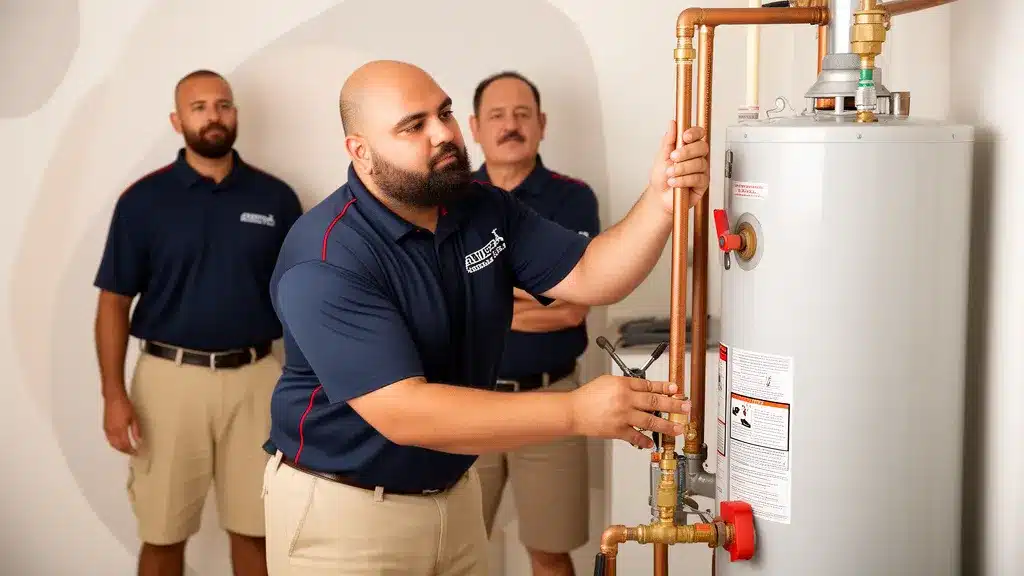
Replacing an anode rod is straightforward when done by a licensed plumber, but it requires care to avoid damaging the tank or voiding your warranty. The process involves shutting off the water supply and power or gas, draining the tank to below the anode rod level, and removing the old rod with a socket wrench. A 27mm (1-1/16 inch) socket is commonly used, though some models require a different size.
Once the old rod is out, we inspect the threads and tank opening for damage or corrosion. The new rod is wrapped with thread tape, inserted, and tightened to the manufacturer’s torque specification. We then refill the tank, purge air from the system, and restore power or gas. The entire job typically takes one to two hours, depending on tank access and whether the rod has seized due to corrosion.
For units with limited overhead clearance — common in Sydney apartments and townhouses — we may recommend a flexible or segmented anode rod that bends or folds during installation. Our plumbers carry a range of rod types and sizes to suit Rheem, Rinnai, Dux, Aquamax and other brands commonly installed across Sydney. Every replacement is completed to AS/NZS 3500 plumbing standards, in line with Sydney Water’s requirements for work connected to the water supply network, and backed by our lifetime labour warranty.
Signs Your Hot Water System Needs Anode Rod Replacement
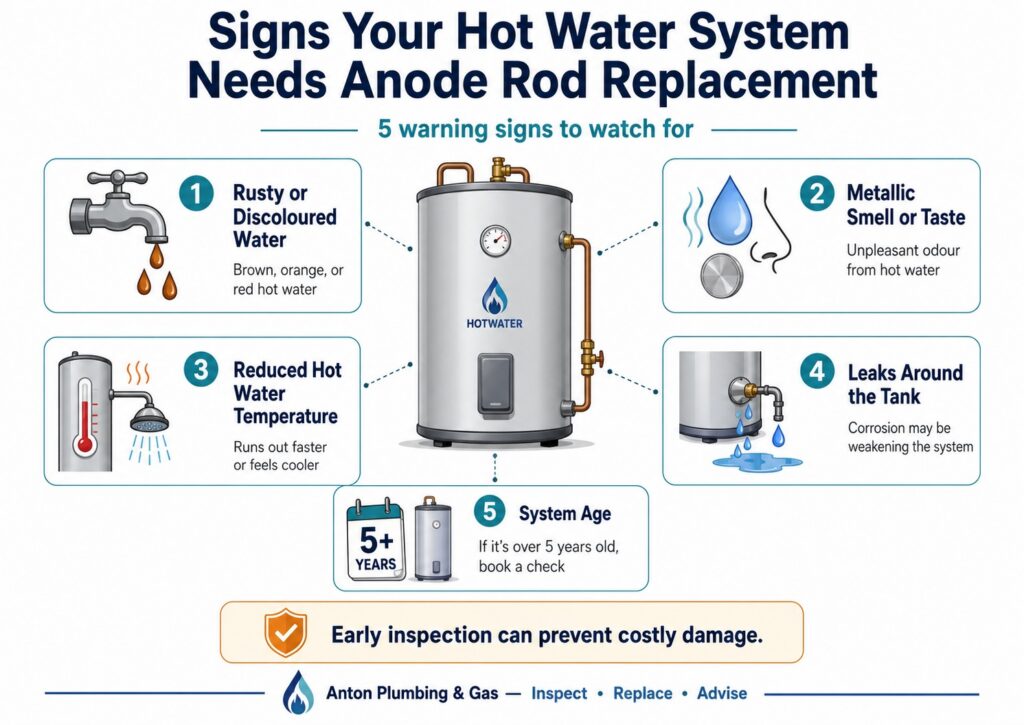
Hot water systems often show warning signs before the tank develops serious corrosion or fails completely. The anode rod is designed to protect the inside of the tank, but once it wears down, rust, odours, temperature issues and leaks may start to appear. Knowing these signs early can help you arrange an inspection before the damage becomes more expensive to repair.
1. Rusty or Discoloured Hot Water
When the anode rod is fully corroded, rust begins to form inside the tank. You may notice brown, orange or red water coming from your hot taps, especially first thing in the morning. This is a clear sign that the tank lining is corroding and the anode rod is no longer providing protection.
2. Metallic Smell or Taste
A worn anode rod can cause a metallic or sulphur-like smell in your hot water. This odour is often caused by bacteria reacting with the rod material or by corrosion products entering the water supply. Replacing the rod and flushing the tank usually resolves the issue.
3. Reduced Hot Water Temperature
Sediment buildup and internal corrosion reduce heating efficiency. If your hot water runs out faster than usual or the temperature drops unexpectedly, the tank may be compromised. An anode rod inspection can reveal whether corrosion is affecting performance.
4. Leaks Around the Tank or Fittings
Small leaks near the top of the tank or around the anode rod cap suggest that corrosion has weakened the tank walls. While a new anode rod may slow the damage, advanced corrosion often requires water heater replacement. Our plumbers will assess the tank condition and recommend the most cost-effective solution.
5. Age of the Hot Water System
If your hot water system is more than five years old and the anode rod has never been inspected, it is time to schedule a check. Proactive replacement can add years to your tank’s lifespan and prevent emergency failures during the cooler months, when demand is highest.
Regular anode rod inspections are a practical way to protect your hot water system from internal corrosion. If you notice rusty water, odours, temperature changes or leaks, it is best to have the unit checked before the issue worsens. Antons Plumbing & Gas can inspect your hot water system, replace worn anode rods, and advise whether repair or replacement is the most cost-effective option for your Sydney property.
Benefits of Regular Water Heater Anode Rod Replacement
Regular water heater anode rod replacement is one of the simplest ways to protect your hot water system from internal corrosion. The anode rod helps preserve the tank by attracting corrosive elements before they damage the metal lining. Keeping it in good condition can improve system performance, water quality and long-term reliability.
- Extended Tank Lifespan: Replacing the anode rod every few years can double the life of your hot water system, delaying the need for a costly new unit.
- Prevents Leaks and Water Damage: A corroded tank can leak hundreds of litres onto your property, damaging floors, walls and belongings. Regular maintenance helps you avoid emergency repairs and insurance claims.
- Maintains Water Quality: A fresh anode rod keeps rust and sediment out of your hot water, ensuring clean, safe water for bathing, cooking and cleaning.
- Improves Energy Efficiency: Corrosion and sediment buildup force your heater to work harder, increasing energy bills. A well-maintained tank heats water faster and uses less gas or electricity.
- Protects Your Warranty: Many manufacturers require proof of regular maintenance, including anode rod inspection, to honour warranty claims. Skipping this step may void your cover.
- Peace of Mind: Knowing your hot water system is in good condition means fewer surprises and more confidence in your home’s essential services.
Replacing the anode rod at the right time can save you money, protect your property, and help your hot water system last longer. It is a small maintenance step that can prevent bigger problems such as leaks, rust and poor water quality. Antons Plumbing & Gas can inspect your hot water system, replace worn anode rods, and recommend the best maintenance schedule for your unit.
DIY vs Professional Anode Rod Replacement
Some homeowners attempt to replace the anode rod themselves to save money. While the task is technically simple, it carries risks if you lack the right tools, experience or clearance space. Seized rods can be extremely difficult to remove without damaging the tank threads or causing leaks. Electric systems require safe isolation of power, and gas hot water systems involve shutting off the gas supply and relighting the pilot correctly.
Professional replacement ensures the job is done safely, complies with Australian Standards and Sydney Water’s plumbing requirements, and protects your warranty. Our plumbers carry the correct socket sizes, thread tape, and replacement rods for all major brands. We also inspect the tank interior, check for sediment buildup, and test the pressure relief valve during the same visit, giving you a complete picture of your system’s health.
When to Call a Licensed Sydney Plumber
If your anode rod has seized, your hot water system is leaking, or you are simply not confident working around gas or electrical connections, stop and call a licensed plumber rather than risk voiding your warranty or causing water damage. Antons Plumbing & Gas is fully licensed under NSW Lic. 210933C, meaning all anode rod and hot water work is carried out to Australian Standards and NSW Fair Trading requirements. Call us on +61 493 824 176 for same-day help anywhere in Sydney.
The typical cost for professional anode rod replacement in Sydney ranges from $150 to $300 AUD, depending on tank access, rod type and travel distance. This investment is far less than the cost of a new hot water system, which can run from $1,200 to $3,500 AUD or more for supply and installation. If you are unsure whether your rod needs replacing, we offer same-day inspections with upfront pricing and clear recommendations.
Choosing the Right Anode Rod for Your Hot Water System
Anode rods come in three main types: magnesium, aluminium, and powered or electronic rods. Magnesium rods are the most common and provide excellent protection in soft to moderately hard water. They corrode quickly in very hard water, so replacement intervals may be shorter. Aluminium rods last longer in hard water but can leave white deposits in the tank.
Powered anode rods use a small electric current to protect the tank and do not corrode over time. They are ideal for homes with very hard water or where frequent replacement is impractical. However, they require a power connection and are more expensive upfront. Our plumbers will recommend the best rod type based on your water quality, tank brand and budget.
For Rheem electric hot water systems and Rheem gas models, we stock genuine Rheem anode rods to ensure compatibility and warranty compliance. We also carry universal rods that fit Rinnai, Dux, Aquamax and other brands common across NSW. Every rod we install meets Australian Standards and is backed by our lifetime labour warranty, so you can trust the work long after we leave.
How Often Should You Service Your Hot Water System?
Beyond anode rod replacement, your hot water system benefits from regular servicing every 12 to 24 months. A full service includes inspecting the anode rod, flushing sediment from the tank, testing the pressure relief valve, checking gas connections or electrical elements, and verifying that all safety devices are working correctly. This proactive approach catches small issues before they become expensive failures.
Many Sydney homeowners schedule hot water system servicing alongside their annual gas appliance safety check or backflow testing, which is a requirement under Sydney Water regulations for many properties. Bundling services saves time and ensures all critical systems are maintained to Australian Standards. Our team provides clear service reports, photographs of any issues, and recommendations for repairs or upgrades, so you can make informed decisions about your property.
If you manage a strata building, café or rental property, regular hot water system maintenance is part of your duty of care. We offer tailored maintenance plans for commercial and multi-unit properties across Sydney, with scheduled inspections, priority service and detailed compliance records. Call us on +61 493 824 176 to discuss a plan that suits your needs.
Why Choose Antons Plumbing & Gas for Hot Water System Maintenance
AAntons Plumbing & Gas (NSW Lic. 210933C) is a licensed, family-owned plumbing and gas-fitting company delivering safe, reliable solutions across the Sydney Metro. Guided by more than 25 years of hands-on experience, our mission is simple: protect homes and businesses with workmanship you can trust, done right the first time, with upfront pricing in AUD and no call-out fee from 7am to 3pm weekdays, excluding public holidays.
| Service | Typical Response Time | Warranty |
|---|---|---|
| Anode Rod Inspection | Same Day | Lifetime Labour |
| Anode Rod Replacement | Same Day | Lifetime Labour |
| Hot Water System Service | Same Day | Lifetime Labour |
| Water Heater Replacement | Same Day | Lifetime Labour |
Under the leadership of our fully qualified team, we provide end-to-end services including blocked drains and CCTV inspections, leak detection, burst pipe repairs, hot water system supply and installation, gas fitting and appliance connections, backflow testing, pipe relining, toilet and tap repairs, and bathroom renovations. Every job is approached with precision, clear communication, and a commitment to leaving your space clean and compliant with NSW plumbing regulations.
We proudly serve the greater Sydney region, including the Inner West, Eastern Suburbs, North Shore, Northern Beaches, Hills District, Western and South-Western Sydney, and Sutherland Shire. Same-day service and 24/7 emergency response mean help is always a phone call away at +61 493 824 176. Your safety comes first. Our work complies with NSW Fair Trading licensing requirements, Sydney Water regulations, and relevant Australian Standards, including AS/NZS plumbing and gas-fitting standards. We use quality parts from trusted brands, document our findings, and back our workmanship with a lifetime labour warranty, so you can feel confident long after we leave.
What to Expect During Your Anode Rod Replacement Appointment
When you book an anode rod replacement with us, our plumber will arrive at the scheduled time with all necessary tools and replacement rods. We begin by shutting off the water supply and power or gas to the hot water system. Next, we drain the tank to a level below the anode rod, which also flushes out sediment that has settled at the bottom.
Using a socket wrench, we remove the old anode rod and inspect it for corrosion. If the rod is heavily corroded or the core wire is exposed, we show you the condition and explain why replacement is needed. We then install a new rod, apply thread tape to ensure a watertight seal, and tighten it to the correct torque. The tank is refilled, air is purged from the hot water lines, and power or gas is restored. We test the system to confirm it heats correctly and check for leaks around the new rod.
Before we leave, we provide a written report with photographs, the date of replacement, and a recommended inspection schedule. We also answer any questions you have about hot water system maintenance, water quality, or energy efficiency. The entire process is transparent, respectful of your property, and completed to Australian Standards and Sydney Water requirements.
How Much Does Water Heater Anode Rod Replacement Cost in Sydney?
The cost of anode rod replacement varies based on tank size, rod type, accessibility, and whether additional repairs are needed. Typical parts cost for a standard anode rod ranges from $20 to $50 AUD, with professional installation adding labour and service fees. In Sydney, you can expect to pay between $150 and $300 AUD for a complete replacement, including inspection, new rod and testing.
If the tank is difficult to access, the rod has seized, or you require a powered anode rod, the cost may be higher. We provide upfront pricing in AUD before starting work, so you know exactly what to expect. There are no hidden fees, and our lifetime labour warranty protects your investment for years to come. When you compare this cost to a full water heater replacement, which can exceed $2,000 AUD, regular anode rod maintenance is a smart financial decision.
Our team also offers bundled maintenance packages that include anode rod inspection, tank flushing, pressure relief valve testing, and safety checks. These packages provide better value and ensure your entire hot water system is in top condition. Call us on +61 493 824 176 or book online to request a fast quote and schedule your service.
Protecting Your Investment with Preventive Maintenance
Your hot water system is one of the hardest-working appliances in your home. Preventive maintenance, including regular anode rod replacement, protects your investment and ensures reliable performance year after year. A well-maintained Rheem hot water system or gas hot water system can last 12 to 15 years or more, while a neglected unit may fail in half that time.
Preventive care also reduces the risk of emergency breakdowns during colder months, when hot water demand is highest and replacement units may be in short supply. By scheduling regular inspections and addressing small issues early, you avoid the stress, inconvenience and expense of unexpected failures. Our team makes maintenance easy with flexible appointment times, same-day service, and clear communication at every step.
We believe great plumbing is about more than pipes and parts. It is about people, trust, and doing the job right. That is why we turn up when we say we will, respect your home, and communicate in plain English. If you need a dependable, licensed Sydney plumber for hot water system maintenance, anode rod replacement, or any plumbing or gas-fitting service, we are ready to help.
Conclusion
Water heater anode rod replacement is a simple, cost-effective way to extend the life of your hot water system and prevent costly repairs. Regular inspection and timely replacement protect your tank from corrosion, maintain water quality, and keep your system running efficiently and compliant with NSW regulations. If you are unsure when your anode rod was last checked, or if you are experiencing any warning signs, contact Antons Plumbing & Gas (NSW Lic. 210933C) today for a same-day inspection and upfront AUD pricing across Sydney.
Antons Plumbing & Gas provides expert hot water system repairs across Sydney Metro, including anode rod replacement and full diagnostics. Our licensed team delivers same-day service with upfront pricing and lifetime labour warranty. Get started today by calling +61 493 824 176.
Related Articles
- Water Hammer Pipes: Why Pipes Bang and What Can Be Done About It
- Water Heater Leaking Rusty Water From Top? A Hot Water Specialist Explains Why
- Pressure Relief Valve Types: What They Mean for Australian Hot Water Systems
FAQs
What Is A Water Heater Anode Rod?
A water heater anode rod is a sacrificial metal rod, typically made of magnesium, aluminium, or zinc, that is installed inside your hot water tank. Its primary function is to attract corrosive elements in the water, thereby protecting the tank from rust and extending its lifespan. Replacing the anode rod regularly is essential for maintaining the integrity of your hot water system.
How Often Should You Replace The Anode Rod In A Water Heater?
It is generally recommended to replace the anode rod in your water heater every 3 to 5 years, depending on water quality and usage. Regular inspection can help identify when it’s time for a replacement, ensuring your system remains efficient and free from corrosion.
What Are The Signs That An Anode Rod Needs To Be Replaced?
Signs that an anode rod needs replacement include a metallic taste or odour in your hot water, visible corrosion on the rod itself, or the presence of rust in the hot water tank. If you notice these signs, it’s time to call a professional to assess and replace the anode rod to protect your water heater.
Can You Replace A Water Heater Anode Rod Yourself?
While it is possible to replace a water heater anode rod yourself if you have the right tools and knowledge, we recommend hiring a licensed professional. At Antons Plumbing & Gas, our experienced team can ensure the job is done correctly and safely, preventing any potential damage to your hot water system.
What Happens If You Don’t Replace The Anode Rod?
If you neglect to replace the anode rod, your water heater may suffer from corrosion, leading to leaks, reduced efficiency, and eventually the need for a complete replacement of the unit. Protect your investment by scheduling regular maintenance with our trusted experts at Antons Plumbing & Gas.
How Do I Book An Anode Rod Replacement In Sydney?
You can book online through our website or call us directly on +61 493 824 176. We offer same-day appointments across Sydney Metro and will confirm upfront AUD pricing before any work begins.
Do You Offer Same-Day Anode Rod Replacement Across Sydney?
Yes, Antons Plumbing & Gas offers same-day service for anode rod inspection and replacement across the greater Sydney area, including the Inner West, Eastern Suburbs, North Shore, Northern Beaches, Hills District, Western and South-Western Sydney, and Sutherland Shire.
Are You A Licensed Plumber In NSW?
Yes, Antons Plumbing & Gas holds NSW Lic. 210933C. All anode rod replacement and hot water system work is carried out by fully qualified, licensed plumbers in compliance with NSW Fair Trading requirements and AS/NZS 3500 standards.
Do You Charge A Call-Out Fee For Anode Rod Inspections?
We do not charge a call-out fee between 7am and 3pm on weekdays, excluding public holidays. We will always confirm pricing upfront before starting any work on your hot water system.
How Much Does Anode Rod Replacement Cost In Sydney?
Professional anode rod replacement in Sydney typically costs between $150 and $300 AUD, including inspection, the new rod, and testing. The exact price depends on tank access, rod type, and whether additional repairs are needed. We provide a fixed quote before any work starts.
Do You Provide A Warranty On Anode Rod Replacement Work?
Yes, all anode rod replacements completed by our team are backed by a lifetime labour warranty, giving you confidence in the workmanship long after we leave your property.
Can You Replace Anode Rods In Rheem, Rinnai, Dux, And Aquamax Systems?
Yes, our plumbers carry genuine and compatible anode rods for all major brands installed across Sydney homes, including Rheem, Rinnai, Dux and Aquamax hot water systems.
Do You Offer Emergency Hot Water System Repairs In Sydney?
Yes, we provide 24/7 emergency response for burst tanks, leaks, and complete loss of hot water. Call +61 493 824 176 at any time and our team will arrange urgent attendance.
Do You Service Strata Buildings And Rental Properties In Sydney?
Yes, we offer tailored maintenance plans for strata buildings, cafés, and rental properties, including scheduled anode rod inspections, priority service, and detailed compliance records for owners and managing agents.
What Happens If My Anode Rod Has Seized?
Seized anode rods can be difficult to remove without the right tools and can damage the tank threads if forced. Our licensed plumbers carry specialised equipment to safely remove seized rods and will discuss options if the tank itself shows signs of damage.
Is Anode Rod Replacement Compliant With Sydney Water Requirements?
Yes, all work we carry out on hot water systems connected to the water supply network complies with Sydney Water’s requirements and AS/NZS 3500 plumbing standards, and is completed by a licensed plumber under NSW Lic. 210933C.
Will You Give Me A Fixed Price Before You Start Work?
Yes, we provide upfront pricing in AUD before any work begins, so there are no surprises on your invoice. You will know the exact cost of inspection, parts and labour before we touch your hot water system.
What If My Hot Water System Needs Full Replacement Instead Of A New Anode Rod?
If our inspection shows the tank is too corroded to save, we will explain why and provide a clear, upfront quote for a full hot water system replacement, including supply and installation, backed by our lifetime labour warranty.
Do You Cover My Suburb In Sydney?
We service the greater Sydney Metro area, including the Inner West, Eastern Suburbs, North Shore, Northern Beaches, Hills District, Western and South-Western Sydney, and Sutherland Shire. Call +61 493 824 176 to confirm coverage for your address.
How Quickly Can A Plumber Attend My Property?
In most cases we can offer same-day attendance for anode rod inspections and replacements across Sydney. For urgent leaks or no hot water, call our emergency line on +61 493 824 176 for priority scheduling.
What Payment Options Do You Accept?
We accept standard payment methods and will confirm accepted options when you book. All pricing is provided in AUD with no hidden fees.