

Vinegar is a popular natural cleaner that many Sydney homeowners reach for when tackling stubborn toilet stains or blockages. You might be wondering whether pouring vinegar into your bowl will actually dissolve toilet paper and clear a clog, or if it’s just another internet myth. The short answer is that vinegar does not dissolve toilet paper in the way chemical drain cleaners attack organic matter, but it can help soften mineral deposits and assist the paper in breaking down naturally over time.
This article answers the question “Will Vinegar Dissolve Toilet Paper?”, how the acetic acid in vinegar works, and when a DIY approach is enough versus when you need professional help. You’ll also learn safe alternatives, common mistakes to avoid, and how our licensed Sydney team at Antons Plumbing & Gas (NSW Lic. 210933C) can diagnose and fix persistent blockages with CCTV inspections, hydro jetting, and pipe relining across the Sydney Metro.
Key Takeaways
- Vinegar’s acetic acid breaks down mineral deposits and grime but does not chemically dissolve cellulose fibres in toilet paper.
- Toilet paper is designed to disintegrate in water over time, and vinegar may speed up the process slightly by softening buildup around the paper.
- Pouring vinegar into a blocked toilet is a low-risk first step, but it won’t clear heavy clogs caused by foreign objects or tree roots.
- Combining vinegar with hot water or bicarb soda can improve results for minor blockages, though patience is required.
- Persistent or recurring clogs need professional diagnosis with a CCTV drain inspection to identify root causes like pipe damage or incorrect pipe falls.
- NSW plumbing guidance and Sydney Water both recommend flushing only the “3 Ps” – pee, poo and (toilet) paper – as wipes and sanitary items are a leading cause of blockages in Sydney’s sewer network.
- Antons Plumbing & Gas (NSW Lic. 210933C) offers same-day service, fixed-rate pricing, and a lifetime labour warranty for all blocked drain work across Sydney.
Will Vinegar Dissolve Toilet Paper?
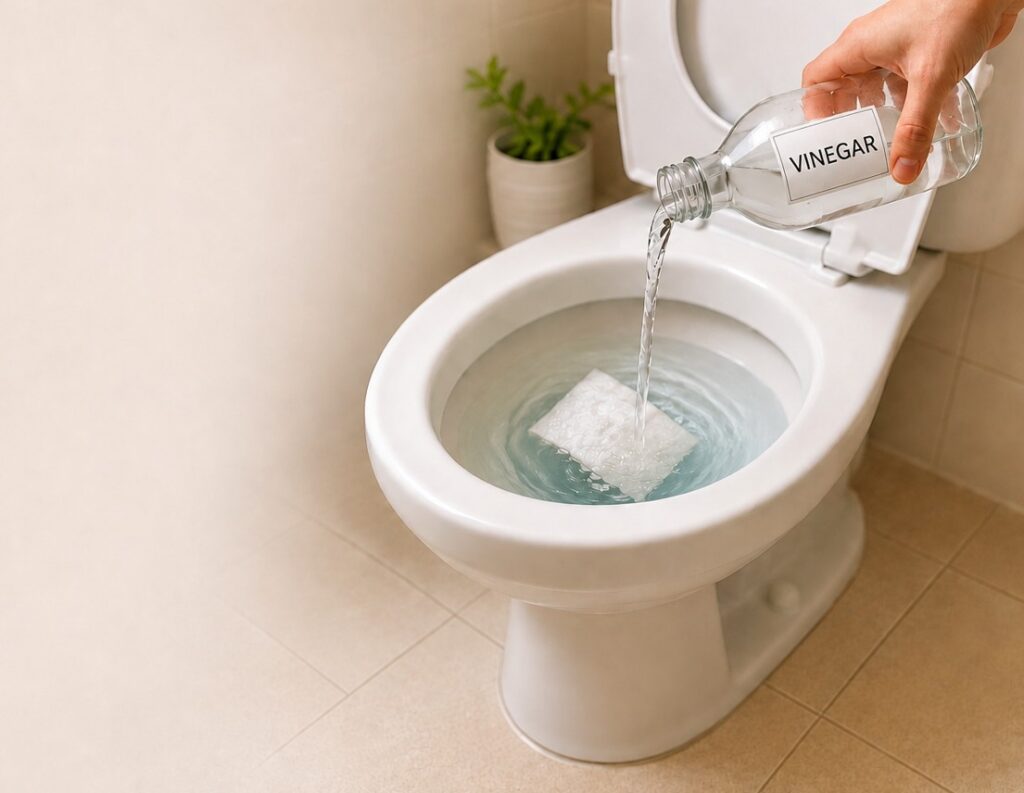
Toilet paper is made from cellulose fibres that are designed to break apart when saturated with water. Vinegar contains acetic acid, which is effective at cutting through mineral deposits, soap scum, and light organic buildup, but it does not chemically dissolve cellulose the way caustic drain cleaners dissolve hair or grease. When you pour vinegar into a toilet bowl, the acid works on the surrounding grime and scale, which may help the paper move more freely and disintegrate faster in water.
The process is gradual. If you have a minor blockage caused by too much toilet paper, vinegar can help soften the mass and reduce friction against the pipe walls. Most standard toilet paper brands sold in Australia meet AS/NZS standards for flushability, meaning they are engineered to break down within minutes of contact with water. Sydney Water’s own guidance echoes this standard, reminding residents that wipes marketed as “flushable” and other debris are a major contributor to blockages across the Sydney Metro sewer network, regardless of what the packaging claims.
Vinegar alone will not clear a serious clog. If the blockage is caused by foreign objects, wet wipes marketed as “flushable,” sanitary products, or tree roots invading your sewer line, you need mechanical intervention or professional drain clearing. Our licensed team uses high-pressure hydro jetting and CCTV drain inspection to locate and remove stubborn obstructions without damaging your pipes.
Does Vinegar Dissolve Toilet Paper? The Science Behind It
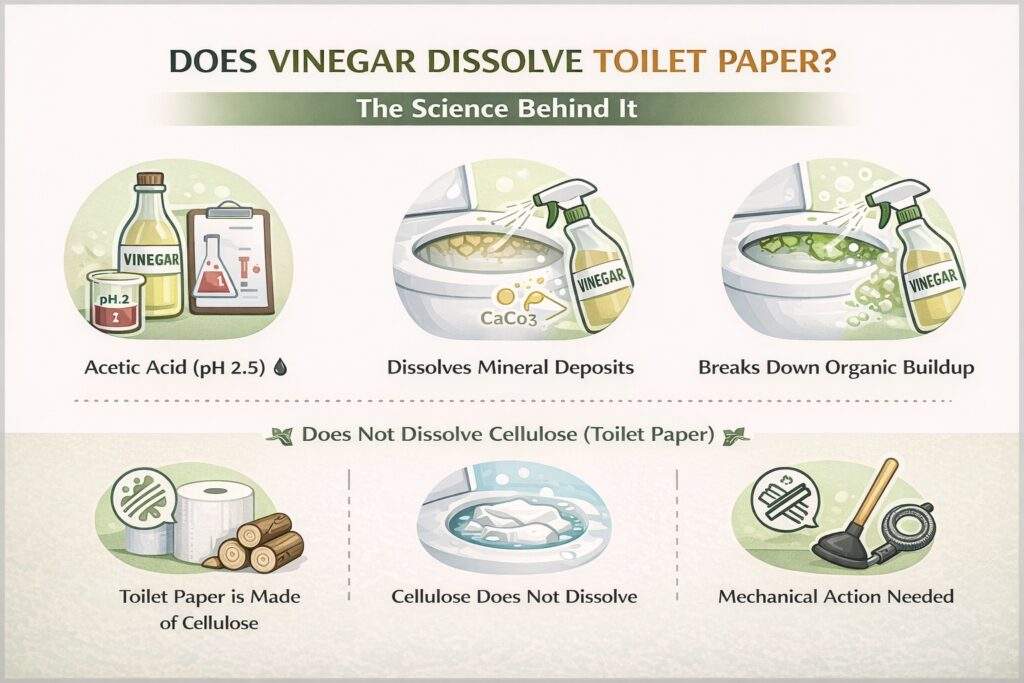
Vinegar’s active ingredient is acetic acid, which has a pH of around 2.5. This makes it acidic enough to dissolve mineral deposits like calcium carbonate (limescale) and to break down light organic matter such as soap scum and bacteria. A study published in the Journal of Environmental Health confirmed that vinegar can kill common bacteria including E. coli and Salmonella, which are often found in toilet environments.
Cellulose, the main component of toilet paper, is a polysaccharide that does not readily dissolve in weak acids like vinegar. Chemical pulping processes used in paper manufacturing involve much stronger acids and alkalis at high temperatures. At room temperature, vinegar has minimal effect on cellulose fibres themselves.
What vinegar does do is soften and dissolve the mineral deposits and organic buildup that can bind toilet paper into a solid mass. By reducing friction and breaking down the surrounding grime, vinegar allows the paper to disperse more easily in water. This is why soaking a toilet paper roll in vinegar and placing it under the rim can help with cleaning, but it won’t dissolve the paper itself.
For serious clogs, mechanical action is required. Plungers, augers, and hydro jetting physically break apart or remove the obstruction. Chemical drain cleaners use strong bases (like sodium hydroxide) or acids (like sulphuric acid) to dissolve organic matter, but these products are hazardous and can damage pipes if used incorrectly.
Comparing Vinegar to Other DIY Drain Solutions
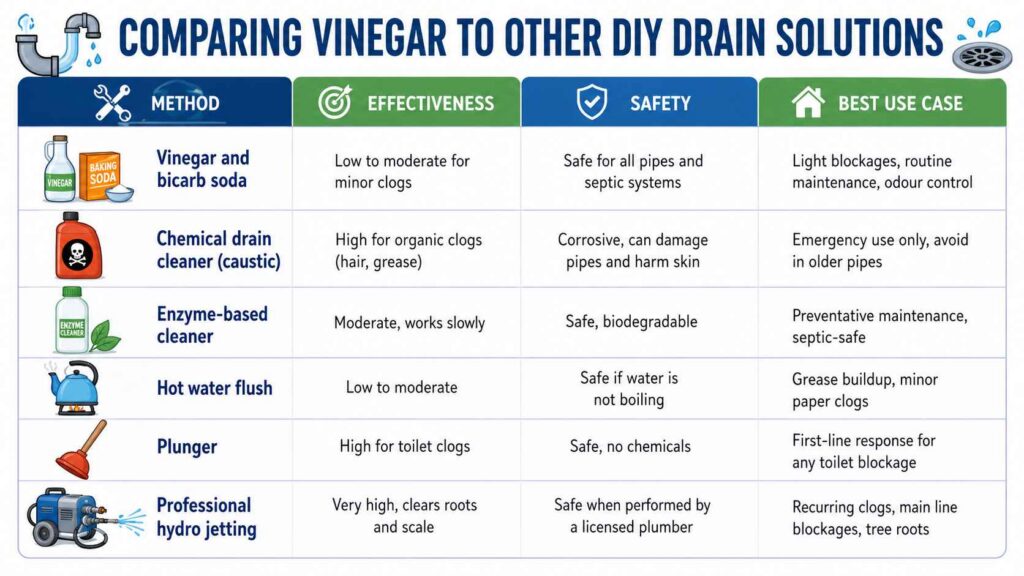
Homeowners often ask whether vinegar is better than commercial drain cleaners, bicarb soda, or other home remedies. Each method has pros and cons, and understanding the differences can help you choose the safest and most effective approach.
| Method | Effectiveness | Safety | Best Use Case |
|---|---|---|---|
| Vinegar and baking soda | Low to moderate for minor clogs | Safe for all pipes and septic systems | Light blockages, routine maintenance, odour control |
| Chemical drain cleaner (caustic) | High for organic clogs (hair, grease) | Corrosive, can damage pipes and harm skin | Emergency use only, avoid in older pipes |
| Enzyme-based cleaner | Moderate, works slowly | Safe, biodegradable | Preventative maintenance, septic-safe |
| Hot water flush | Low to moderate | Safe if water is not boiling | Grease buildup, minor paper clogs |
| Plunger | High for toilet clogs | Safe, no chemicals | First-line response for any toilet blockage |
| Professional hydro jetting | Very high, clears roots and scale | Safe when performed by licensed plumber | Recurring clogs, main line blockages, tree roots |
Vinegar is one of the safest options because it won’t corrode your pipes, harm your septic system, or create toxic fumes. It’s also inexpensive and readily available. The downside is that it’s not powerful enough for serious blockages, and it requires time to work.
Common Mistakes When Using Vinegar for Toilet Clogs
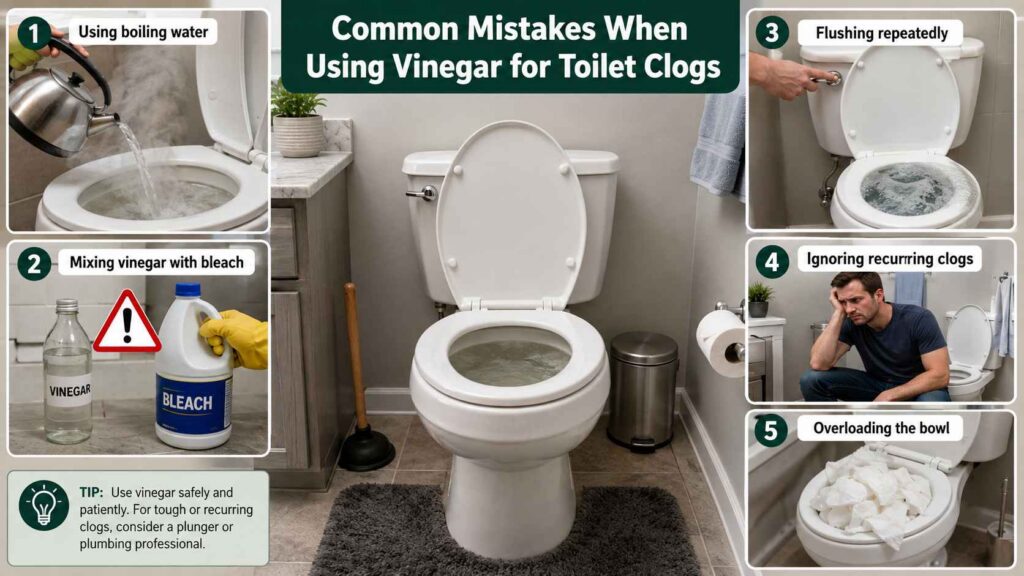
Vinegar can help with minor toilet clogs, but it’s easy to use it in ways that reduce its effectiveness or create avoidable risks. Small mistakes – like using the wrong water temperature or combining products – can turn a simple blockage into damage or a safety issue. Knowing what to avoid helps you clear clogs more safely and decide when it’s time to use a better method.
- Using boiling water: Boiling water can crack porcelain from thermal shock, especially if the bowl is cool. Use hot water below 80°C to reduce risk while still helping soften minor buildup.
- Mixing vinegar with bleach: Vinegar and bleach can release toxic chlorine gas when combined. Never mix cleaners, and keep the bathroom ventilated when using any product.
- Flushing repeatedly: Repeated flushing on a blocked toilet often causes overflow and water damage. Stop flushing and switch to a plunger, auger, or professional help if needed.
- Ignoring recurring clogs: Frequent blockages usually indicate a deeper issue like poor pipe gradient, a blocked vent, or root intrusion – not the vinegar or paper. Book a CCTV drain inspection to identify the root cause and prevent repeat problems.
- Overloading the bowl: Using too much vinegar, bicarb soda, or other substances can worsen the blockage by creating extra sludge. Stick to recommended quantities and allow enough time for the method to work.
Vinegar is best treated as a light, low-risk option – not a guaranteed fix for stubborn blockages. If the toilet is still blocked after one careful attempt, it’s safer to move to mechanical methods instead of adding more products. When clogs keep coming back, a licensed Sydney plumber can diagnose what’s happening in the line and provide a long-term solution.hat’s happening in the line and provide a long-term solution.
When to Call a Licensed Sydney Plumber
DIY methods like vinegar and hot water can help with minor, surface-level clogs, but they won’t fix deeper drainage faults. When blockages keep returning or multiple fixtures start acting up, the cause is usually in the main line, venting, or damaged pipework. In these situations, calling a licensed plumber early can prevent bigger repairs and reduce the risk of overflow damage. Antons Plumbing & Gas is a fully licensed NSW plumbing business (Lic. 210933C), so all blocked drain work is carried out to NSW plumbing standards and, where relevant, in line with Sydney Water requirements.
- Recurring toilet blockages: If the same toilet blocks repeatedly, it can indicate low water pressure, incorrect pipe fall, or a partial obstruction that needs professional diagnosis.
- Multiple fixtures draining slowly: When the toilet, shower, and sink all drain poorly, the restriction is usually downstream in the main line or caused by a blocked vent stack.
- Backflow symptoms: Water rising in the shower when the toilet flushes often points to a shared drain blockage or venting issue that needs immediate attention.
- Older-home risk factors: Tree roots, cracked or collapsed clay pipes, and poor pipe alignment are common in older Sydney suburbs, particularly the Inner West and Eastern Suburbs.
- Need for accurate diagnosis: A CCTV drain inspection helps locate the exact obstruction and confirm whether hydro jetting, pipe relining, or targeted repair is the most cost-effective fix.
- Choose a trusted local team: Antons Plumbing & Gas provides same-day service, fixed-rate quotes, and licensed blocked-drain solutions across Sydney – so you get a clear diagnosis and a long-term repair plan, not guesswork.
If your plumbing symptoms match any of the above, it’s a sign the problem is beyond a simple DIY fix. Antons Plumbing & Gas can identify the root cause quickly using the right tools and restore proper flow without unnecessary trial-and-error. For fast, compliant help across Sydney – especially when the issue is recurring – contact our licensed team for a straightforward solution and lasting results. With the right inspection and repair approach, you avoid repeat clogs, reduce property damage risk, and protect your home’s drainage system long-term.
Conclusion
Vinegar does not dissolve toilet paper in the chemical sense, but it can help soften mineral deposits and assist the paper in breaking down naturally. For minor clogs, a combination of vinegar, hot water, and a plunger may be enough. Persistent or recurring blockages require professional diagnosis and clearing. Our licensed team at Antons Plumbing & Gas (NSW Lic. 210933C) is ready to help with same-day service, fixed-rate pricing, and a lifetime labour warranty across all Sydney Metro areas. Call 0493 824 176 anytime, day or night.
Antons Plumbing & Gas offers expert blocked drain solutions across Sydney with same-day service. Our licensed team uses CCTV inspections to diagnose and clear stubborn blockages safely. Get started with a no call-out fee quote today.
Related Articles
- What You Need to Know: Does Drano Dissolve Toilet Paper?
- How Enzyme Cleaners Work for Eco-Friendly Drain Cleaning
- How to Clear Toilet Drain Safely and Prevent Future Clogs
FAQs
Does Vinegar Dissolve Toilet Paper?
Vinegar can help break down toilet paper to some extent, as its acidity may soften the fibres. However, it is not a guaranteed solution for dissolving toilet paper completely, especially if it has already formed a blockage.
How Long Does It Take For Vinegar To Dissolve Toilet Paper?
The time it takes for vinegar to work on toilet paper can vary. Generally, it may take several hours or longer to see any noticeable effect. For immediate issues, it’s often better to contact a licensed Sydney plumber for effective solutions rather than wait it out.
What Happens When You Mix Vinegar And Toilet Paper?
When vinegar comes into contact with toilet paper, it may begin to soften the fibres, but this process is slow. If you’re facing a clog, relying solely on vinegar is not advisable. It’s best to consult a licensed plumber who can provide tailored solutions for your Sydney home.
Can Vinegar Break Down Toilet Paper In Pipes?
While vinegar can help soften toilet paper in pipes, it is not a foolproof method for clearing clogs. If you’re dealing with a significant blockage, our experienced, licensed team at Antons Plumbing & Gas can diagnose and resolve the issue efficiently.
Is Vinegar Safe To Use For Unclogging Toilet Paper?
Using vinegar can be safe for minor issues, but it may not be effective for severe clogs. For reliable and lasting results, it’s best to call a licensed plumber who can ensure your plumbing system is treated correctly and safely, in line with NSW plumbing standards.
Do I need a licensed plumber to fix a blocked toilet in Sydney?
For a minor, one-off clog, a plunger or vinegar and hot water may be enough. But for anything recurring, or if you suspect the issue is in the main line, NSW regulations require licensed tradespeople to carry out plumbing repairs. Antons Plumbing & Gas (NSW Lic. 210933C) can send a licensed plumber to your Sydney property to diagnose and fix the problem safely.
Is Antons Plumbing & Gas licensed in NSW?
Yes. Antons Plumbing & Gas holds NSW Lic. 210933C, so every blocked drain job, gas job, or plumbing repair is carried out by fully qualified, licensed tradespeople who meet NSW compliance requirements.
Does Antons Plumbing & Gas offer same-day blocked drain service in Sydney?
Yes, same-day service is available across the Sydney Metro area for blocked toilets and drains. Call 0493 824 176 to book and our team will arrange an appointment as quickly as possible.
How much does it cost to clear a blocked toilet in Sydney?
Cost depends on the cause and severity of the blockage, which is why Antons Plumbing & Gas provides fixed-rate pricing so you know the cost upfront before any work begins. Call 0493 824 176 for an accurate, obligation-free quote for your Sydney address.
Do you charge a call-out fee?
No. Antons Plumbing & Gas offers a no call-out fee quote, so you can find out exactly what’s involved and what it will cost before committing to any work.
Is there a warranty on blocked drain repairs?
Yes, all blocked drain work carried out by Antons Plumbing & Gas is backed by a lifetime labour warranty, giving Sydney homeowners confidence that the job is done right the first time.
What suburbs across Sydney does Antons Plumbing & Gas service?
Antons Plumbing & Gas services the greater Sydney Metro area, including suburbs such as Wentworth Point and the Inner West and Eastern Suburbs. Call 0493 824 176 to confirm coverage for your address and book a licensed plumber.
Can “flushable” wipes cause blockages in Sydney sewer pipes?
Yes. Despite the packaging, most wipes do not break down like toilet paper and are a common cause of blockages in Sydney’s sewer network. Sydney Water and NSW guidance recommend flushing only toilet paper and human waste. If wipes have already caused a blockage, a licensed plumber can safely clear the line.
What is a CCTV drain inspection and do I need one?
A CCTV drain inspection uses a waterproof camera to look inside your pipes and pinpoint the exact cause and location of a blockage, whether it’s tree roots, a collapsed pipe, or built-up debris. If your toilet or drains block repeatedly, this is the fastest way to get an accurate diagnosis instead of guessing. Book one with Antons Plumbing & Gas for a clear picture of what’s happening underground.
Is hydro jetting safe for older Sydney homes and terraces?
Yes, when carried out by a licensed plumber, hydro jetting is a safe and effective way to clear roots, grease, and scale from ageing pipework common in older Sydney terraces and homes. Our team assesses your pipes first, often using CCTV inspection, to confirm hydro jetting is the right approach before proceeding.
Who is responsible for a blocked sewer line – me or Sydney Water?
Generally, Sydney Water owns and maintains the sewer main up to your property boundary, while the homeowner is responsible for the pipework within their property. If you’re unsure where a blockage sits, a licensed plumber can inspect the line, confirm whether it’s on your side of the boundary, and liaise with Sydney Water if needed.
Can tree roots cause toilet blockages in older Sydney suburbs?
Yes, tree roots are a common cause of recurring blockages in older Sydney suburbs, particularly where clay pipes are still in use. Vinegar and plunging won’t shift root intrusion. A CCTV inspection followed by hydro jetting or pipe relining is usually the long-term fix – call Antons Plumbing & Gas to arrange an assessment.
How quickly can a plumber attend a blocked toilet emergency?
Antons Plumbing & Gas offers same-day service across Sydney for blocked toilets and drains. Call 0493 824 176 and our licensed team will aim to get to you as quickly as possible, day or night.
What should I do if my toilet is overflowing right now?
Stop flushing immediately, and if you can access the isolation valve behind the toilet, turn off the water supply. Avoid adding more vinegar or chemicals. Then call a licensed plumber straight away – Antons Plumbing & Gas offers same-day emergency response across Sydney to prevent further water damage.
How do I book Antons Plumbing & Gas for a blocked drain repair?
You can call 0493 824 176 anytime, day or night, or book online through our website. Our licensed Sydney team (NSW Lic. 210933C) will arrange a same-day appointment with fixed-rate pricing and no call-out fee for the initial quote.