
When your toilet refuses to flush and water starts rising, panic sets in fast. Many homeowners reach for a bottle of Drano or a similar chemical drain cleaner, hoping for a quick fix. But does Drano dissolve toilet paper—and is it safe to use in a toilet? The short answer is: Drano can break down toilet paper chemically, but it’s unreliable in toilets and generally not recommended because the risks often outweigh any benefit.
This guide explains what happens when Drano meets toilet paper, why plumbers across Sydney advise against using chemical drain cleaners in toilets, and what to do instead when a blockage won’t clear. You’ll learn how these products react inside plumbing, the real risks to pipes and fixtures, and safer alternatives that reduce damage and protect your home. Prices below are shown in AUD.
Key Takeaways
- Drano can break down toilet paper chemically, but it’s unreliable in toilets and poses significant risks to pipes, fixtures, and personal safety.
- Chemical drain cleaners can generate intense heat and caustic reactions that may crack porcelain and weaken some pipe materials over time.
- Many toilet clogs sit beyond the trap where chemicals don’t reach effectively, so results are often poor even when the product is “working.”
- Safer alternatives include proper plunging, using a toilet auger, and professional CCTV drain inspection to identify the root cause without damaging your system.
- When blockages keep returning, licensed Sydney plumbers can provide long-term solutions such as drain repairs or pipe relining where suitable.
Does Drano Dissolve Toilet Paper and How Does It Work?
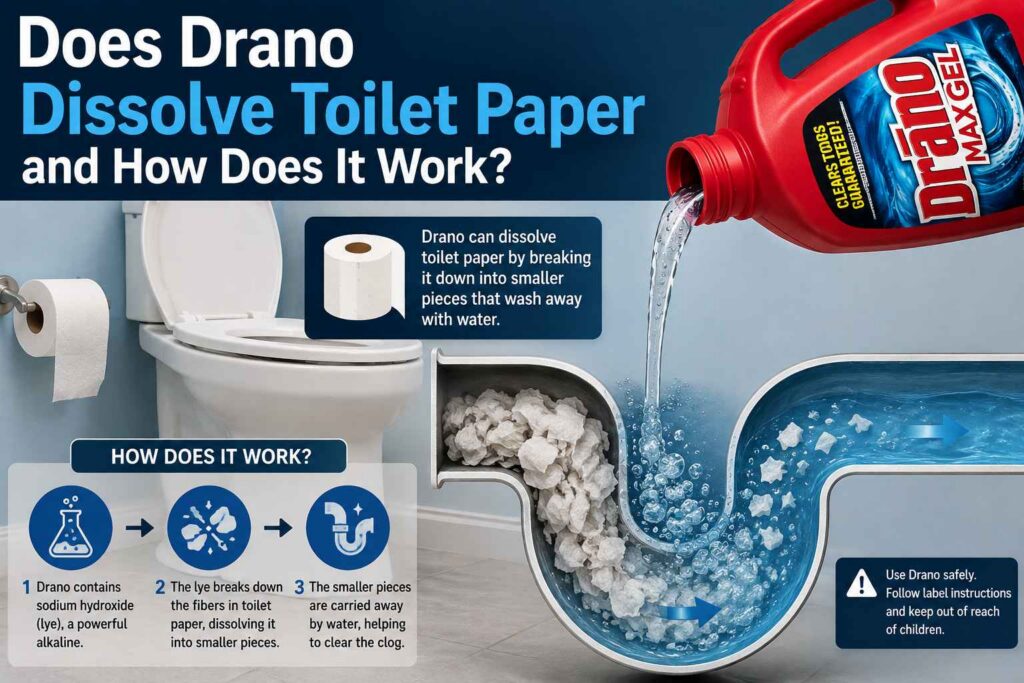
Drano and similar chemical drain cleaners do dissolve toilet paper through a chemical reaction. These products contain sodium hydroxide (lye), sodium hypochlorite (bleach), and aluminium chips that work together to break down organic materials. When you pour Drano into water, the aluminium reacts with the lye to create heat—sometimes reaching temperatures above 90°C. This intense heat, combined with the caustic chemicals, breaks apart the cellulose fibres in toilet paper, hair, soap scum, and other organic blockages.
The process sounds effective on paper. The sodium hydroxide works by saponifying fats and oils, turning them into soap-like substances that wash away. It also hydrolyses proteins and cellulose, which is why it can technically dissolve toilet paper. The heat accelerates these reactions, making the breakdown happen faster than it would at room temperature.
But here’s where theory diverges from real-world application. Toilets have a different trap design than sinks. The S-bend in your toilet holds several litres of water, and most clogs form beyond this trap in the waste line. When you pour Drano into a toilet bowl, it has to travel through that standing water before reaching the blockage. The chemical gets diluted, loses heat, and often settles in the trap rather than reaching the actual clog. In many cases, you end up with a bowl full of caustic chemicals sitting on top of your blockage rather than clearing it.
Why Sydney Plumbers Warn Against Using Drano in Toilets
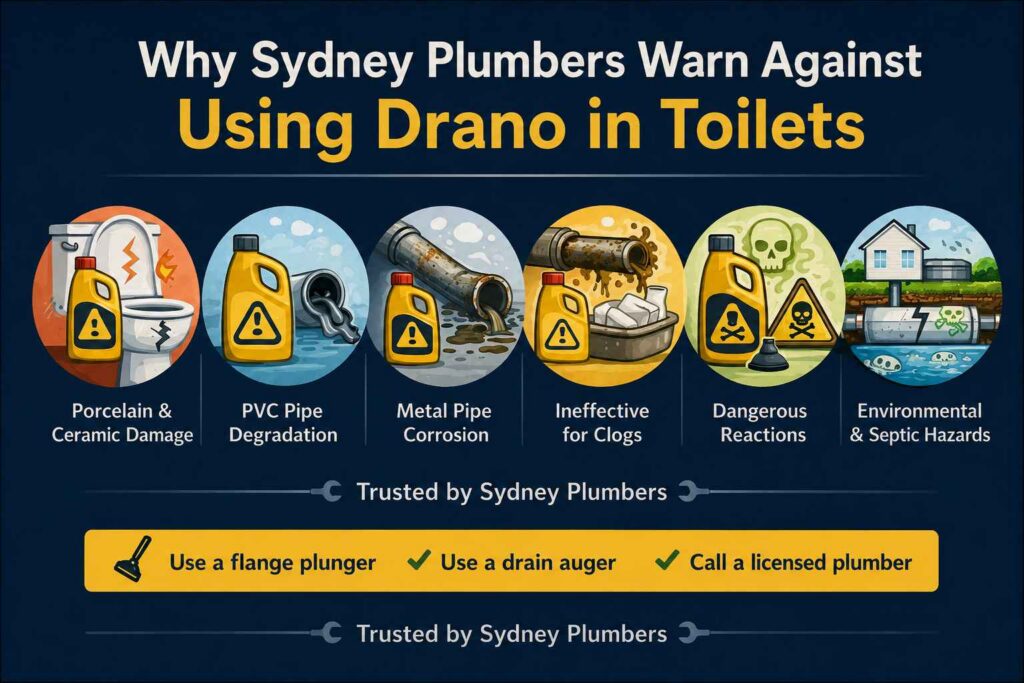
Professional plumbers across Sydney see the aftermath of chemical drain cleaner use regularly. The damage isn’t always immediate, but it’s cumulative and can lead to expensive repairs. Our team at Antons Plumbing & Gas (NSW Lic. 210933C) has responded to countless emergency calls where homeowners made a simple clog much worse by adding chemicals to the mix. The risks fall into several categories, each with real consequences for your plumbing system and your safety.
1. Porcelain and Ceramic Damage
The extreme heat generated by Drano can crack porcelain toilets, especially older models common in Sydney’s older Federation and post-war homes, or those with existing hairline fractures. We’ve seen toilets develop visible cracks within hours of chemical application. Once porcelain cracks, the toilet needs replacement—there’s no reliable repair. This turns a $150 (AUD) blockage clearance into a $500-plus (AUD) toilet replacement job.
2. PVC Pipe Degradation
Many Sydney homes built from the 1970s onward use PVC waste pipes. While PVC resists many chemicals, repeated exposure to the heat and caustic nature of drain cleaners causes the plastic to soften, warp, and eventually fail. The damage happens inside the pipe where you can’t see it until a leak develops. We’ve used CCTV drain inspection cameras to document pipe damage directly linked to chemical cleaner use, showing warped sections and weakened joints that leak sewage into walls and foundations.
3. Metal Pipe Corrosion
Older homes in the Inner West and Eastern Suburbs often have cast iron or galvanised steel waste pipes. Sodium hydroxide accelerates corrosion in these metals, eating through the protective oxide layer and creating pinholes that leak. The corrosion continues even after you flush the chemicals away because residue clings to pipe walls. Over time, this leads to burst pipes and water damage that costs thousands of dollars to repair.
4. Ineffective for Typical Toilet Clogs
Most toilet blockages aren’t caused by toilet paper alone. They’re caused by excessive paper combined with other items—wet wipes labelled “flushable” but which don’t break down, sanitary products, cotton buds, or even children’s toys. Drano can’t dissolve these items. You end up with a partial blockage soaked in caustic chemicals, making it dangerous for a plumber to clear manually. We’ve had to take extra safety precautions—protective gear, ventilation, chemical neutralisation—before we can even start working on these clogs, which adds time and complexity to what should be a straightforward job.
5. Dangerous Chemical Reactions
If Drano doesn’t clear your clog and you call a plumber, those chemicals are still sitting in your toilet. When our team uses mechanical tools like drain snakes or high-pressure water jets, the chemicals can splash back, causing chemical burns. Mixing Drano with other cleaning products or acids can create toxic fumes. We’ve responded to calls where homeowners tried multiple products in sequence, creating hazardous chemical mixtures in their plumbing that required specialist hazardous-materials handling.
6. Environmental and Sydney Water Impact
If your Sydney property uses an on-site septic system rather than connecting to the Sydney Water sewer network, chemical drain cleaners kill the beneficial bacteria that break down waste in your tank. This disrupts the entire system, leading to backups and requiring expensive tank pumping or system repairs. Even in homes connected to Sydney Water’s sewerage, these chemicals enter the wastewater system and can create environmental problems downstream. Australian Standards and NSW regulations encourage environmentally responsible plumbing practices, and chemical cleaners don’t align with that approach.
If you’re dealing with a toilet blockage, safer methods and proper tools are usually the best first step. When a clog won’t clear, calling a licensed Sydney plumber early can prevent damage to pipes, fixtures, and surrounding areas. Antons Plumbing & Gas (NSW Lic. 210933C) provides Sydney-wide support to clear blockages safely and restore proper flow without risking your home or health. If you’ve already tried a chemical cleaner and it hasn’t worked, stop adding more product and call us on 0493 824 176.
Comparing Drano to Other Toilet Paper Disposal Methods
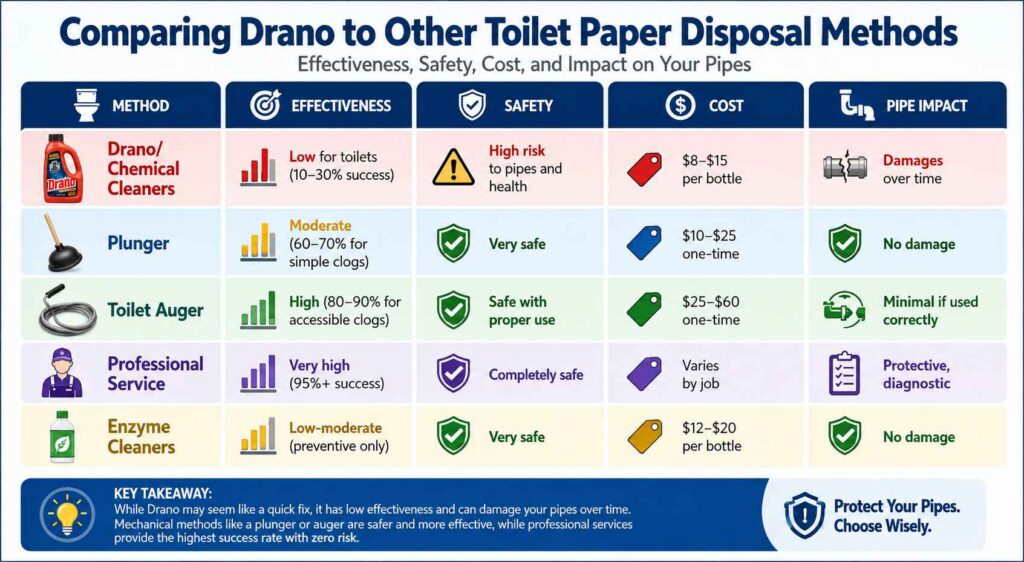
Understanding your options helps you make informed decisions when dealing with blocked toilets. Different approaches carry different risks, costs, and success rates. This comparison shows how chemical cleaners stack up against safer alternatives (all costs in AUD).
| Method | Effectiveness | Safety | Cost | Pipe Impact |
|---|---|---|---|---|
| Drano/Chemical Cleaners | Low for toilets (10-30% success) | High risk to pipes and health | $8-$15 per bottle | Damages over time |
| Plunger | Moderate (60-70% for simple clogs) | Very safe | $10-$25 one-time | No damage |
| Toilet Auger | High (80-90% for accessible clogs) | Safe with proper use | $25-$60 one-time | Minimal if used correctly |
| Professional Service | Very high (95%+ success) | Completely safe | Varies by job | Protective, diagnostic |
| Enzyme Cleaners | Low-moderate (preventive only) | Very safe | $12-$20 per bottle | No damage |
The table makes clear that chemical cleaners offer poor value. They’re less effective than mechanical methods, more dangerous than any alternative, and potentially more expensive when you factor in the damage they cause. A $15 (AUD) bottle of Drano that cracks your toilet creates a $500-plus (AUD) problem. A $30 (AUD) toilet auger you can use indefinitely solves most clogs without any risk.
When to Choose Professional Pipe Relining Over Repeated Repairs

If you’re clearing toilet clogs more than once or twice a year, it’s usually a sign you’re dealing with more than a one-off blockage. Repeat clogs often point to underlying pipe issues like root intrusion, cracked sections, joint separation, or older lines that have shifted over time—problems that simple drain clearing won’t permanently solve. At that stage, the smartest move is to stop guessing and get the drainage system properly assessed by a licensed Sydney plumber.
That’s where Antons Plumbing & Gas makes the difference. We start with a CCTV drain inspection to pinpoint the exact cause and location of the restriction, then recommend the most effective fix—whether that’s targeted clearing, repair, or trenchless pipe relining where suitable. If relining is the right option, we can restore the pipe internally without excavation by cleaning the line, inserting a resin liner, and curing it into a smooth “pipe within a pipe” that improves flow and helps prevent future blockages.
If the inspection shows relining isn’t suitable (such as collapsed or severely misaligned pipes), we’ll explain why and provide a clear plan for the next best solution. Our team is licensed (NSW Lic. 210933C), insured, and works to NSW Fair Trading requirements and AS/NZS 3500 standards, as well as Sydney Water’s plumbing and drainage requirements for connections to the sewer network. For recurring toilet clogs and blocked drains anywhere across Sydney and NSW, contact Antons Plumbing & Gas for a proper diagnosis and a long-term fix—call +61 493 824 176 for 24/7 support or book online for same-day service.
Conclusion
Drano can dissolve toilet paper chemically, but using it in your toilet creates more problems than it solves. The risks to your pipes, your safety, and your wallet far outweigh any convenience. Mechanical methods like plungers and augers work better, cost less, and protect your plumbing system. When those methods aren’t enough, professional diagnosis and repair solve the root cause rather than masking symptoms. Your home’s plumbing is too important to risk with shortcuts that don’t work.
Antons Plumbing & Gas offers expert blocked drain solutions across Sydney and NSW with same-day service available. Our licensed team (NSW Lic. 210933C) uses CCTV inspections to diagnose and clear stubborn blockages safely. Call +61 493 824 176 or book online today for a no call-out fee consultation.
Related Articles
- How to Dissolve Toilet Paper Clogs Fast
- Can Too Much Toilet Paper Clog a Toilet? Here’s What You Should Know
- What You Need to Know: Will Vinegar Dissolve Toilet Paper?
FAQs
Can Drano Really Dissolve Toilet Paper In A Clogged Toilet?
Drano may break down some toilet paper chemically, but it is not a reliable fix for toilet clogs. Toilet water can dilute the product, and many blockages sit past the toilet trap where chemicals may not reach properly. A plunger or toilet auger is usually a safer and more effective first option, and Antons Plumbing & Gas can clear stubborn blockages without leaving harsh chemicals in the bowl.
What Happens If You Put Drano Down The Toilet?
If you put Drano in the toilet and the clog does not clear, the chemical can sit in the bowl or toilet trap and create a splash risk when someone tries to plunge or clear it. This can make the blockage more dangerous to handle, especially in a small bathroom. If Drano has already been used, stop adding more products and call Antons Plumbing & Gas so the toilet can be cleared safely.
Is It Safe To Use Drano In A Toilet At Home?
Using Drano in a toilet is generally not recommended because it can create safety risks and may not work well with toilet trap design. It can also be harsh on older plumbing, toilet seals, and fixtures if used repeatedly, particularly in older Sydney homes with cast iron or galvanised pipework. For most toilet blockages, a toilet plunger, toilet auger, or professional drain-clearing service is the safer choice.
How Long Should I Wait For Drano To Work In A Toilet?
Some drain cleaners claim to work within 15 to 30 minutes, but that does not mean they will clear a toilet blockage. If the toilet water is not draining or the clog is still there after the product’s recommended time, do not keep adding more chemicals. It is safer to switch to mechanical clearing or contact Antons Plumbing & Gas for help.
What Should I Do If Drano Does Not Clear My Toilet Clog?
If Drano does not clear the clog, stop using chemical products and avoid mixing it with anything else. Keep the bathroom ventilated and do not plunge aggressively if chemical liquid is still sitting in the bowl, as it may splash. Antons Plumbing & Gas can clear the blockage safely and check whether the problem is caused by toilet paper, wipes, roots, or a deeper drain issue.
How Quickly Can A Plumber Get To Me In Sydney For A Blocked Toilet?
Antons Plumbing & Gas offers 24/7 support and same-day service across Sydney for blocked toilets, including emergency callouts when water is overflowing. Call +61 493 824 176 to check availability in your suburb and get a plumber on the way as soon as possible.
Do You Charge A Call-Out Fee To Clear A Blocked Toilet?
Antons Plumbing & Gas offers a no call-out fee consultation, so you can get a licensed plumber to assess a blocked toilet without an upfront inspection charge. Call or book online to arrange a visit and get a clear quote before any work begins.
Is Antons Plumbing & Gas Licensed To Work On Toilets And Drains In NSW?
Yes. Antons Plumbing & Gas holds NSW Lic. 210933C and works to NSW Fair Trading requirements and AS/NZS 3500 plumbing standards. Every blocked toilet job, drain clearing, and pipe relining project is carried out by fully licensed and insured tradespeople.
Can You Fix A Blocked Toilet The Same Day I Call?
In most cases, yes. Antons Plumbing & Gas provides same-day service across Sydney for blocked toilets and blocked drains, subject to availability. Call +61 493 824 176 to check same-day booking slots in your area.
What Suburbs In Sydney Do You Service For Blocked Toilet Repairs?
Antons Plumbing & Gas services homes and businesses right across Sydney, including the Inner West, Eastern Suburbs, and Hills District suburbs such as Kellyville Ridge. If you’re unsure whether your suburb is covered, call us and we’ll confirm straight away.
Do You Offer 24/7 Emergency Service For An Overflowing Toilet?
Yes, Antons Plumbing & Gas provides 24/7 emergency plumbing support for overflowing or badly blocked toilets. If your toilet is overflowing right now, turn off the water at the isolation valve if it’s safe to do so and call +61 493 824 176 immediately.
How Much Does It Cost To Have A Plumber Clear A Blocked Toilet In Sydney?
Costs vary depending on the cause and severity of the blockage, whether a CCTV inspection is needed, and whether the toilet requires repair or replacement. Antons Plumbing & Gas provides a clear, upfront quote before starting any work, so there are no surprises on the invoice.
Will You Use CCTV Inspection To Check My Toilet Drain Before Quoting?
For recurring or unclear blockages, Antons Plumbing & Gas can use CCTV drain inspection to see exactly what’s happening inside the pipe before recommending a fix. This helps avoid unnecessary digging and ensures you only pay for the repair that’s actually needed.
Can I Find Out Over The Phone If I Need A Plumber Or Can Fix It Myself?
Yes, our team can talk you through what’s likely happening based on your symptoms and let you know whether a plunger or auger is worth trying first, or whether a licensed plumber should attend. Call +61 493 824 176 for quick advice before you spend money on products that may not help.
Do You Offer Pipe Relining If My Toilet Keeps Blocking?
Yes. If a CCTV inspection shows the toilet keeps blocking because of a damaged or root-affected pipe, Antons Plumbing & Gas can carry out trenchless pipe relining where suitable, restoring the pipe without excavation. We’ll confirm suitability before recommending this option.
What Payment Methods Do You Accept For Plumbing Services?
Antons Plumbing & Gas aims to make payment straightforward for Sydney customers. Ask our team about accepted payment methods when you book, and we’ll confirm everything before work starts so there are no surprises.
Is Your Work Guaranteed If You Clear My Toilet Blockage?
Our licensed plumbers carry out all work to AS/NZS 3500 standards and NSW Fair Trading requirements, using proper diagnostic tools rather than guesswork. Ask our team about workmanship coverage on your specific job when you book.
Can I Book A Plumber Online Instead Of Calling?
Yes, you can book a plumber online through our website for a same-day or scheduled visit, or call +61 493 824 176 if you’d prefer to speak with someone directly, especially for urgent blocked toilet issues.
What Should I Do Right Now If Drano Is Already In My Toilet And It’s Not Working?
Stop adding any more chemicals or products, keep the bathroom ventilated, and avoid plunging vigorously since the liquid may splash. Call Antons Plumbing & Gas on +61 493 824 176 and let us know chemicals have been used so our plumber can take the right safety precautions on arrival.
Do You Service Strata And Apartment Buildings In Sydney For Blocked Toilets?
Yes, Antons Plumbing & Gas works with strata managers, landlords, and tenants across Sydney apartment buildings to diagnose and clear blocked toilets and shared drain lines. Call us to discuss access arrangements and get a licensed plumber booked in.