


A blocked toilet can bring your household to a standstill. Water rises when you flush, panic sets in, and you’re left wondering whether to grab a plunger or call for help. Most blockages respond to simple techniques, but knowing when a clog requires professional attention can save you from water damage, unpleasant odours, and costly repairs down the track — especially in Sydney, where ageing clay pipework and thirsty tree roots are common culprits.
In this guide, we’ll walk you through safe, proven methods to clear toilet drains yourself, explain what causes recurring blockages, and show you how to prevent future problems. You’ll also learn when it’s time to contact our team at Antons Plumbing & Gas (NSW Lic. 210933C) for same-day service across Sydney.
Key Takeaways
- A flanged plunger and hot water are your first line of defence against most toilet blockages.
- Dishwashing liquid, bicarb soda, and vinegar can help dissolve organic clogs without harsh chemicals.
- Turning off the water supply prevents overflow and makes inspection easier.
- Recurring blockages often signal deeper issues like tree roots or damaged pipes, common in older Sydney homes.
- Professional CCTV drain inspection identifies root causes and guides lasting repairs.
- Any plumbing work beyond your property boundary is Sydney Water’s responsibility — everything on your side, including your toilet drain, is yours to maintain.
Understanding How to Clear Toilet Drain Blockages
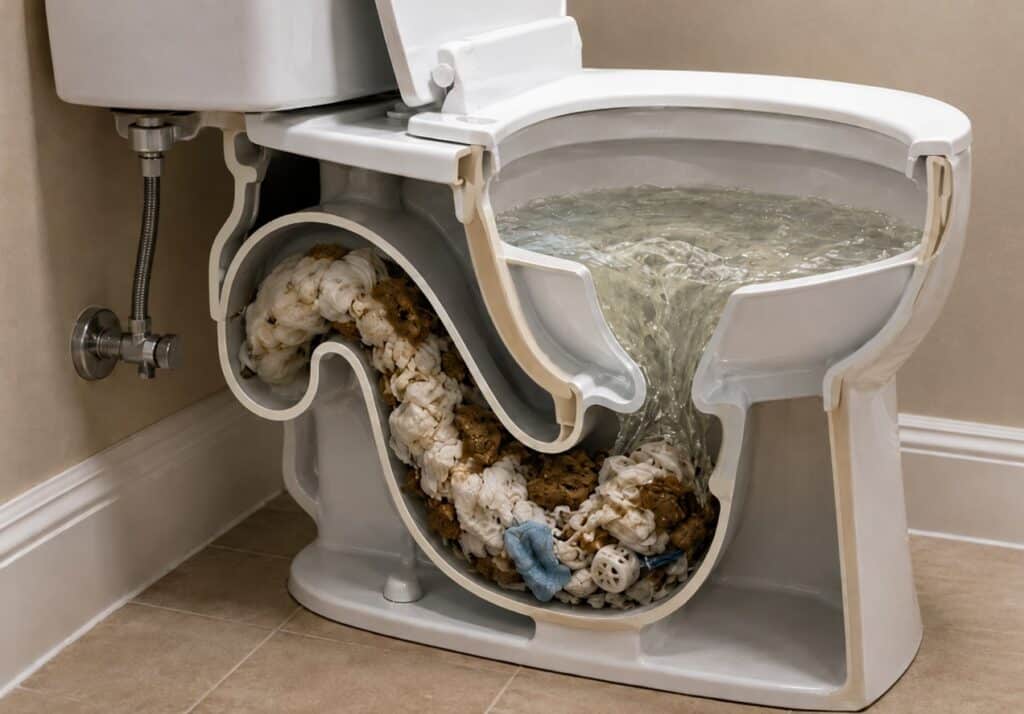
Toilet drains clog when foreign objects, excessive paper, or waste accumulate in the trapway. The trapway is the curved section inside your toilet bowl that prevents sewer gases from entering your home. When something gets stuck there, water can’t flow freely, and you’ll notice slow draining or a complete backup.
Most household clogs form gradually. You might flush a little extra toilet paper one day, then a wet wipe the next, and eventually the trapway narrows enough to stop water passing through. Hair, sanitary products, and even small toys can lodge in the bend and create a barrier.
Understanding the anatomy of your toilet helps you choose the right clearing method. The bowl connects to a soil pipe that runs through your walls or floor, eventually joining your main sewer line, which in most Sydney suburbs ties into the Sydney Water network at your property boundary. If the blockage sits in the trapway, you can usually fix it from above. If it’s deeper in the soil pipe or main drain, you’ll need longer tools or professional equipment.
Step-by-Step Methods to Unclog Toilet Drains
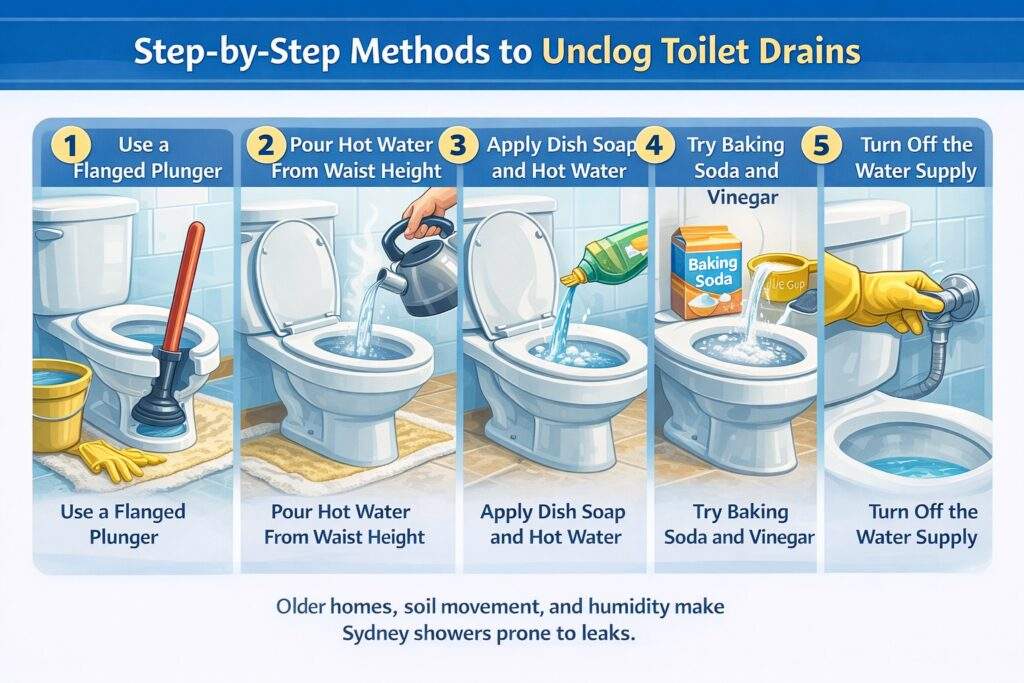
Before you start, gather your supplies and protect the floor with old towels or plastic sheeting. Wear rubber gloves and keep a bucket nearby for any spills. These steps assume the water level in your bowl is stable and not rising.
1. Use a Flanged Plunger
A plunger with a flange—the rubber extension that folds out from the cup—creates a better seal inside the toilet drain. Place the flanged head into the drain opening, making sure it’s fully submerged in water. Push down gently at first to expel air, then plunge vigorously in an up-and-down motion for 15 to 20 strokes. Pull the plunger away sharply on the final stroke to break the blockage free.
2. Pour Hot Water From Waist Height
If plunging doesn’t work, try pouring half a cup of hot water—not boiling, as extreme heat can crack porcelain—from waist height into the bowl. The force and temperature create pressure on the blockage and may help soften organic material. Repeat two to three times, waiting about ten minutes between pours. You can add a squirt of dishwashing liquid to help dissolve grease or residue.
3. Apply Dishwashing Liquid and Hot Water
Drop a few tablespoons of dishwashing liquid into the toilet bowl, then follow with hot water. Let the mixture sit for 15 minutes. The liquid acts as a lubricant, allowing the clog to slide through the trapway more easily. Flush once to see if the blockage has cleared. This method works well for clogs caused by excess toilet paper or light organic matter.
4. Try Bicarb Soda and Vinegar
Combine half a cup of white vinegar with half a cup of bicarbonate (baking) soda and pour the mixture into the bowl. Close the lid to contain the fizzing reaction, which helps break down blockages. Wait 30 minutes, then flush. This natural approach is gentler on your pipes than chemical drain cleaners and won’t harm septic systems.
5. Turn Off the Water Supply
If water is rising dangerously high or you need to inspect the bowl, locate the shut-off valve behind or to the side of your toilet. Turn it clockwise to cut off the water supply, then flush once to empty the bowl as much as possible. Use a sponge or cup to remove any remaining water. This step is essential before attempting more invasive clearing methods or calling a plumber.
If the toilet keeps clogging, drains slowly after several attempts, or you notice gurgling and backup in nearby fixtures, the blockage is likely deeper in the line. Repeated DIY attempts can turn into temporary fixes while the underlying cause continues to build up. At that point, a licensed plumber can confirm what’s happening and clear the drain properly without guesswork.
Comparing DIY Clearing Methods
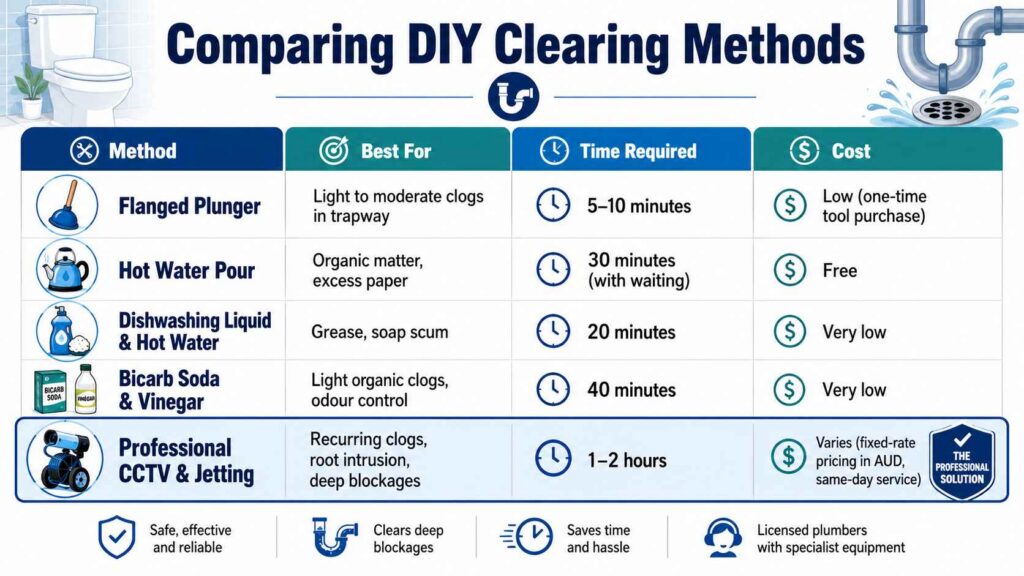
Most minor toilet clogs are caused by a buildup in the trapway, too much paper, or slow-forming organic residue that restricts flow over time. DIY clearing methods can work well when the blockage is shallow and you catch it early, especially if you already have the right basic tools at home. The key is matching the method to the type of clog so you don’t waste time—or accidentally make the problem worse.
| Method | Best For | Time Required | Cost |
|---|---|---|---|
| Flanged Plunger | Light to moderate clogs in trapway | 5–10 minutes | Low (one-time tool purchase) |
| Hot Water Pour | Organic matter, excess paper | 30 minutes (with waiting) | Free |
| Dishwashing Liquid & Hot Water | Grease, soap scum | 20 minutes | Very low |
| Bicarb Soda & Vinegar | Light organic clogs, odour control | 40 minutes | Very low |
| Professional CCTV & Jetting | Recurring clogs, root intrusion, deep blockages | 1–2 hours | Varies (fixed-rate pricing in AUD, same-day service) |
If your toilet is repeatedly clogging, gurgling, backing up into other fixtures, or draining slowly even after multiple attempts, the issue is usually deeper than the bowl or trapway. In those cases, DIY methods can become trial-and-error and may only provide temporary relief while the underlying blockage keeps building. A professional CCTV inspection and high-pressure jetting can pinpoint the cause and clear the line properly, especially when the obstruction is in the main drain.etting can pinpoint the cause and clear the line properly, especially when the obstruction is in the main drain.
When DIY Methods for Clearing a Toilet Blockage Aren’t Enough
Sometimes a clog resists every home remedy. You’ve plunged, poured, and waited, yet the water still won’t drain. That’s when you need to recognise the limits of DIY and reach out for professional help.
Persistent blockages often mean the obstruction sits deeper in your soil pipe or main drain. Tree roots are a common culprit in Sydney, especially if your property has older clay pipes typical of homes in the Inner West, North Shore, and Eastern Suburbs. Roots grow toward moisture, crack the joints, and invade the pipe, creating a mesh that traps waste and paper.
Another sign you need a plumber is when multiple fixtures back up at once. If your toilet gurgles when you run the kitchen sink, or your shower drains slowly after flushing, the blockage is likely in your main sewer line. Our team uses CCTV drain inspection—a camera inserted into your pipe—to pinpoint the exact location and cause.
We then present clear options: high-pressure water jetting to clear roots and debris, pipe relining to seal cracks without digging, or, in severe cases, excavation and replacement. Every job is priced upfront in AUD, with no hidden fees, so you can make an informed decision. If the blockage turns out to be in the section Sydney Water is responsible for (generally the main beyond your boundary trap), we’ll let you know so you can report it to Sydney Water directly.
Why Choose Professional Drain Clearing in Sydney

DIY methods work for simple clogs, but they can’t diagnose structural problems or clear obstructions deep in your sewer line. That’s where professional equipment and experience make the difference.
Our CCTV drain inspection service inserts a high-resolution camera into your pipes, transmitting live footage to a monitor. We can see cracks, root intrusion, collapsed sections, and foreign objects in real time. This diagnostic step takes the guesswork out of repairs and ensures we target the actual problem, not just the symptoms.
High-pressure water jetting uses a specialised nozzle to blast away tree roots, grease, and mineral deposits. The jet spins as it travels through the pipe, scouring the walls clean and restoring full flow. For damaged pipes, pipe relining offers a trenchless solution: we insert a resin-soaked liner into the existing pipe, inflate it, and let it cure. The result is a new pipe within the old one, with a smooth interior that resists future blockages.
Every repair is completed to AS/NZS 3500 plumbing standards and NSW Fair Trading licensing requirements, and we back our workmanship with a lifetime labour warranty. As a fully licensed Sydney plumber (NSW Lic. 210933C), we’re qualified to carry out work on your private plumbing right up to the Sydney Water connection point. Same-day service is available across the Inner West, Eastern Suburbs, North Shore, Northern Beaches, Hills District, and Western Sydney. Call 0493 824 176 or book online—no call-out fee, ever.
Real-World Example: Clearing a Stubborn Blockage in the Inner West
Last month, we received a call from Sarah, a homeowner in the Inner West. Her toilet had been slow to drain for weeks, and that morning it overflowed onto the bathroom floor. She’d tried plunging and pouring hot water, but nothing worked.
We arrived within two hours and ran a CCTV inspection. The footage showed a dense tangle of tree roots about three metres down the soil pipe, right where an old clay joint had cracked. We explained the options: high-pressure jetting to clear the roots temporarily, or pipe relining to seal the crack and prevent regrowth. Sarah chose relining for a lasting fix.
We completed the job the same day. The resin liner cured in four hours, and we ran a final camera check to confirm a smooth, root-free interior. Sarah hasn’t had a blockage since, and she appreciated the upfront pricing and clean work site. That’s the Antons Plumbing & Gas approach: diagnose the root cause, present clear options, and deliver compliant, reliable repairs.
When to Call Antons Plumbing & Gas for Toilet Drain Issues

You should reach out to our team if you notice any of these warning signs:
- Water backs up into your shower or sink when you flush the toilet.
- Multiple toilets in your home are slow or blocked at the same time.
- You hear gurgling sounds from drains after flushing.
- DIY methods clear the clog temporarily, but it returns within days.
- You see wet patches in your yard or smell sewage near your property.
- Your toilet is old, cracked, or leaking at the base.
We’re available 24/7 for emergencies, and same-day service is standard across Sydney. As a licensed plumber (NSW Lic. 210933C), any work we do on your toilet drain, main line, or connection to Sydney Water’s network is carried out to code and properly certified. Our fixed-rate pricing in AUD means you’ll know the cost before we start work—no surprises, no hourly charges. Whether it’s a simple repair, a full drain inspection, or a bathroom renovation, we treat your home with respect and leave it cleaner than we found it.
Final Thoughts
Clearing a toilet drain doesn’t have to be stressful. Start with a flanged plunger, try hot water or natural cleaners, and know when to step back and call a professional. Recurring clogs signal deeper issues that only CCTV inspection and expert repairs can solve. Our team is ready to help—same day, no call-out fee, and backed by a lifetime labour warranty.
Antons Plumbing & Gas offers expert blocked drain solutions backed by 25 years of experience. Our licensed team (NSW Lic. 210933C) uses CCTV inspections to diagnose and clear toilet clogs safely across Sydney. Get started with same-day service today.
Related Articles
- What You Need to Know: Will Vinegar Dissolve Toilet Paper?
- What You Need to Know: Does Drano Dissolve Toilet Paper?
- Toilet Drain Cleaning Services: What’s Included & Why It Matters
FAQs
What Is The Best Way To Clear A Toilet Drain That Is Clogged?
The best first step is to use a toilet plunger, not a flat sink plunger, because it creates a better seal inside the bowl. Use slow, firm pressure and avoid flushing repeatedly, as this can cause the toilet to overflow. If the water stays high or the blockage keeps coming back, Antons Plumbing & Gas can inspect and clear the toilet drain safely.
How Do You Unclog A Toilet If You Do Not Have A Plunger?
If you do not have a plunger, you can try adding dishwashing liquid to the bowl and letting it sit for several minutes to help loosen the blockage. You may also carefully add hot water, but avoid boiling water because it can crack the toilet bowl. If the toilet still will not drain, it is safer to stop and call Antons Plumbing & Gas before the blockage gets worse.
Can Vinegar And Bicarb Soda Really Clear A Toilet Drain?
Vinegar and bicarb soda may help with very minor toilet clogs or odours, but they are not reliable for a serious blockage. If the clog is caused by too much toilet paper, wipes, or something stuck deeper in the drain, the mixture may not move it. For stubborn clogs, Antons Plumbing & Gas can use the right equipment to clear the line properly.
What Household Items Can I Use To Unclog A Toilet Safely?
Household items like dishwashing liquid, warm water, and bicarb soda with vinegar may help with small clogs. However, avoid harsh chemical drain cleaners, wire objects, or repeated flushing, as these can damage the toilet or push the blockage deeper. If simple methods do not work, a licensed Sydney plumber can clear the blockage without damaging your plumbing.
How Do I Know If My Toilet Drain Is Actually Clogged?
Your toilet drain may be clogged if the bowl fills higher than normal, drains slowly, gurgles, smells bad, or water backs up into nearby drains. If the same toilet keeps blocking, the issue may be further down the drain line rather than just inside the bowl. Antons Plumbing & Gas can inspect the problem and confirm whether it is a simple clog or a deeper drainage issue.
How Much Does It Cost To Unblock A Toilet In Sydney?
Costs vary depending on whether the blockage is a simple clear or requires CCTV inspection, jetting, or relining. We provide a fixed-rate quote in AUD before any work begins, so you always know the cost upfront with no hidden fees or surprise call-out charges.
Do You Charge A Call-Out Fee For Blocked Toilet Callouts?
No. Antons Plumbing & Gas does not charge a call-out fee for blocked toilet or blocked drain jobs anywhere in our Sydney service area, whether it’s a routine repair or a same-day emergency.
Is Antons Plumbing & Gas Licensed To Work On Toilets And Drains In NSW?
Yes. We hold NSW Lic. 210933C and all our plumbers are qualified to carry out toilet, drain, and gas work in line with NSW Fair Trading requirements and AS/NZS 3500 plumbing standards.
Do You Offer Same-Day Emergency Plumbing For Blocked Toilets In Sydney?
Yes. We offer 24/7 emergency response and same-day service for blocked toilets and overflowing drains across the Sydney metro area.
What Sydney Suburbs Do You Service For Blocked Toilet Repairs?
We service the Inner West, Eastern Suburbs, North Shore, Northern Beaches, Hills District, Western Sydney, and surrounding suburbs, including areas like Ryde and East Gordon.
Is A Blocked Toilet My Responsibility Or Sydney Water’s?
Generally, plumbing on your side of the property boundary, including your toilet, internal pipework, and the drain up to the boundary trap, is your responsibility as the homeowner. Sydney Water is responsible for the main sewer beyond that point. If we find the blockage is in Sydney Water’s section, we’ll let you know so it can be reported correctly.
What Happens During A CCTV Drain Inspection?
We insert a waterproof camera into your toilet drain or sewer line and view live footage on a monitor to identify cracks, root intrusion, collapsed sections, or blockages. This lets us recommend the right fix instead of guessing.
Can Tree Roots Really Cause A Blocked Toilet In Older Sydney Homes?
Yes. Older Sydney properties with clay pipework are especially prone to root intrusion, as roots seek out moisture and force their way into cracked joints, creating blockages that recur if not properly treated.
How Quickly Can A Sydney Plumber Arrive For A Blocked Toilet Emergency?
We aim to reach urgent blocked toilet callouts the same day, and often within a couple of hours, across our Sydney service areas.
Do You Provide Upfront Quotes Before Starting Work?
Yes. Every job is quoted in AUD at a fixed rate before work begins, so there are no hourly charges or hidden fees once we’re on site.
Is There A Warranty On Toilet Drain Repairs?
Yes. All workmanship, including drain jetting, relining, and toilet drain repairs, is backed by a lifetime labour warranty.
Can I Book Antons Plumbing & Gas Online For A Blocked Toilet?
Yes. You can book online through our website or call 0493 824 176 directly to arrange a same-day appointment for a blocked toilet or drain.
Do You Handle Blocked Toilets In Strata And Apartment Buildings?
Yes. We regularly work on blocked toilets and drains in Sydney strata properties and apartment blocks, coordinating with building managers where required.
Do You Work On Weekends And Public Holidays?
Yes. Blocked toilets don’t wait for business hours, so we offer 24/7 availability, including weekends and public holidays, for emergency callouts.
What Number Do I Call For An Emergency Blocked Toilet In Sydney?
Call Antons Plumbing & Gas on 0493 824 176 for a same-day emergency response to a blocked toilet anywhere in our Sydney service area.
Can A Blocked Toilet Cause Water Damage To My Home?
Yes. An overflowing toilet can damage flooring, subfloors, and ceilings below if left unattended. If your toilet is rising or overflowing, turn off the water supply and call Antons Plumbing & Gas straight away to limit the damage.