


A garbage disposal that won’t drain properly can leave standing water in your sink and food scraps trapped inside the unit. In Australia this fitting is sometimes called a food waste disposal unit, waste disposer, or by the popular brand name InSinkErator — we’ll use “garbage disposal” throughout this guide since it’s the term most Sydney homeowners search for, but it’s the same appliance. The most common cause of poor drainage is a disposal outlet positioned too high relative to the wall drain stub-out, which prevents gravity from moving wastewater downhill. When the drain connection sits lower than the disposal outlet, water and ground food cannot flow away, leading to slow drainage, odours, and repeated clogs.
This article explains why a low drain creates plumbing problems, what professional fixes involve, and when you should call a licensed plumber instead of attempting workarounds. You’ll learn the typical drain heights required by Australian Standards, the risks of DIY adjustments, and how our team diagnoses and corrects these issues across Sydney homes.
Key Takeaways
- Disposal outlets sit about 150–165 mm below the sink; if the wall drain is lower, gravity drainage fails.
- Professional repair usually involves lowering the wall drain inside the stud cavity and re-piping to the correct height.
- Workarounds like extra bends or deeper traps trap food and cause odours rather than solving the root problem.
- Correct drain centreline height is typically 300–400 mm above finished floor for kitchen waste lines.
- Licensed plumbers ensure compliance with AS/NZS 3500 and Sydney Water’s connection requirements, leaving your kitchen safe and code-compliant.
Why a Garbage Disposal Drain That Is Too Low Causes Problems
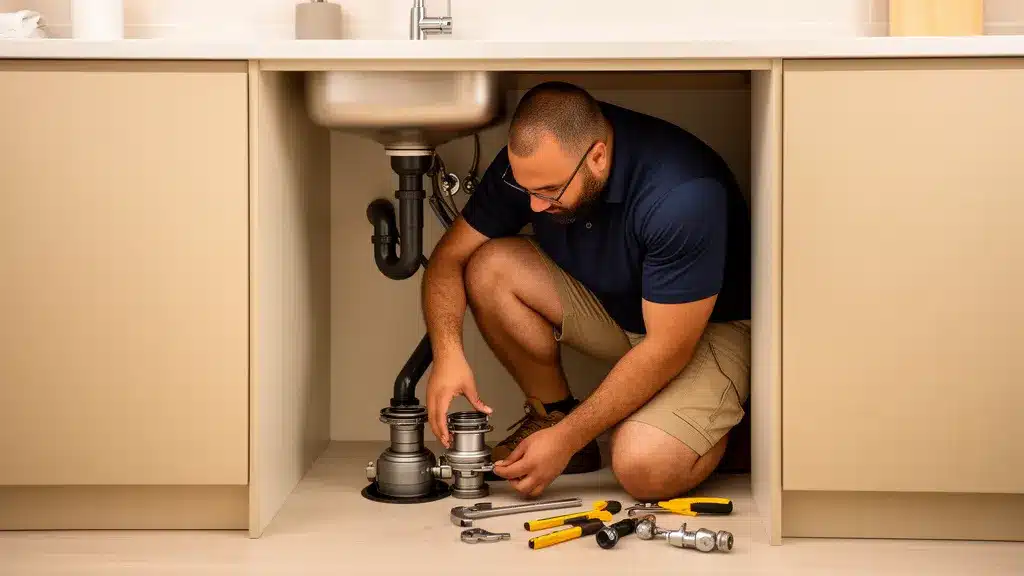
Gravity is the driving force behind every drainage system in your home. When you install a garbage disposal, the unit’s outlet must sit higher than the highest point of the waste pipe so that ground food and wastewater flow downhill into the drain. Disposal outlets generally sit about 150–165 mm below the underside of the sink basin. If your wall drain stub-out emerges from the wall at a point lower than that outlet, the wastewater has nowhere to go except back into the disposal chamber.
Standing water inside the disposal creates several immediate issues. Food particles settle and decompose, producing foul odours that rise through the sink drain. The trapped moisture also encourages bacterial growth and can corrode the disposal’s internal components over time. You may notice that the sink drains slowly or not at all, even when the disposal motor runs correctly.
Many homeowners mistakenly assume the problem lies with a clogged P-trap or a weak disposal motor. In reality, the issue is purely geometric. No amount of flushing, plunging, or chemical cleaner will overcome a drain line that sits below the disposal outlet. The only permanent solution is to reposition the drain connection or replace the disposal with a model that has a lower outlet profile, though the latter rarely provides enough clearance to solve a significant height mismatch.
How Professional Plumbers Fix a Low Garbage Disposal Drain
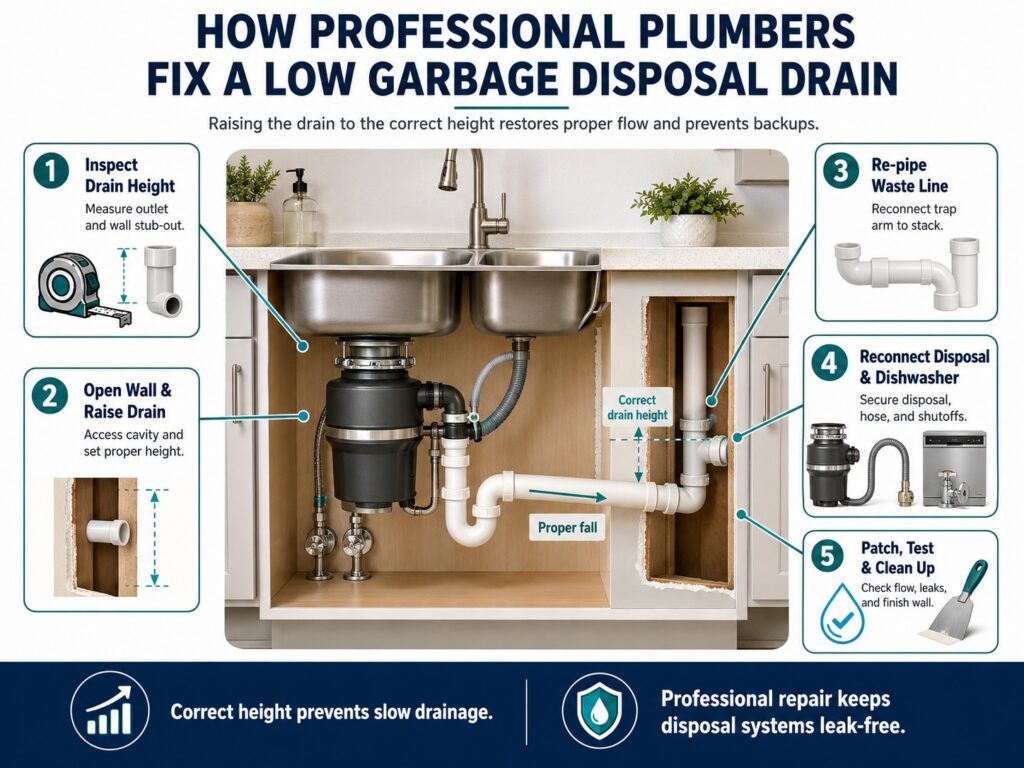
Fixing a low garbage disposal drain requires more than simply adjusting the pipe under the sink. If the wall drain sits too low, the disposal outlet may not drain properly, which can cause slow drainage, standing water, leaks, or repeated blockages. Professional plumbers correct the drain height, reconnect the waste line, and test the system so the kitchen sink and disposal work safely and efficiently.
1. Inspect the Wall Drain Height and Pipe Material
Our plumbers begin by measuring the centreline of the existing wall drain stub-out relative to the finished floor and the disposal outlet. The target centreline for a kitchen waste line is typically 300–400 mm above the floor, which allows the disposal outlet to sit comfortably above the trap and drain. We also identify whether the drain is cast iron, galvanised steel, PVC, or ABS, since older materials may require different cutting and joining techniques.
2. Open the Wall Cavity and Lower the Drain Connection
If the wall drain is too low, we cut an access panel in the plasterboard or tile backer to expose the drain pipe inside the stud cavity. We then cut the existing stub-out and install a new fitting at the correct height, ensuring the new connection slopes downward at the minimum 1:100 gradient required by AS/NZS 3500. This step often involves cutting into cast-iron stacks or re-routing PVC sections to meet the new elevation.
3. Re-Pipe the Waste Line to the Stack
Once the new stub-out is secured, we run a fresh section of PVC or ABS pipe from the disposal P-trap to the main waste stack. We use solvent-weld joints for plastic pipe or no-hub couplings for cast iron, depending on your home’s existing plumbing. Every joint is tested for leaks, and we confirm that the trap arm slope meets code before closing the wall.
4. Reconnect the Disposal, Dishwasher, and Shutoffs
With the drain at the correct height, we reconnect the disposal outlet to the P-trap using a slip-joint tailpiece and compression fittings. If your dishwasher drains into the disposal, we reattach the dishwasher drain hose to the disposal inlet and secure it with a hose clamp. We also check that the hot and cold isolation valves remain accessible and that no supply lines were disturbed during the drain work.
5. Patch Plasterboard, Test for Leaks, and Clean Up
After the plumbing is complete, we patch the access hole with new plasterboard or cement board, tape and set the joints, and leave the surface ready for paint or tile. We run water through the disposal and dishwasher to verify that drainage is fast and leak-free. Our team vacuums debris, wipes down the cabinet, and hauls away any old pipe sections, leaving your kitchen clean and compliant.
A low garbage disposal drain should be corrected properly to prevent ongoing drainage problems and hidden leaks. Professional repair ensures the drain height, trap, waste line, dishwasher connection, and pipe slope all work together correctly. If your disposal drains slowly or the pipework under the sink does not line up, a licensed plumber can inspect the setup and recommend the safest fix.
Common Workarounds and Why They Fail
Homeowners sometimes try to solve a low drain problem without opening the wall. The most popular workaround is adding extra 90-degree elbows or a deeper P-trap to raise the drain connection above the disposal outlet. While this approach may appear to restore gravity flow, it introduces new problems that often make the situation worse.
Extra bends create pockets where food particles and grease accumulate. Each additional elbow reduces flow velocity and increases the risk of clogs. Deeper traps can also violate the maximum trap-arm length allowed by plumbing codes, which in turn affects the trap seal and allows sewer gases to enter your kitchen. Plumbers warn that any configuration leaving the disposal outlet below the highest point of the waste line will trap food, require heavy flushing, and cause odours or repeated clogs.
Flexible couplings and accordion-style drain hoses are another common DIY fix. These fittings can sag and create low spots that hold water and debris. They are also more prone to leaks and are not approved for permanent installation under most plumbing codes. If you notice that your disposal drains only when you run large volumes of water, or if you smell rotting food even after cleaning the unit, the drain geometry is almost certainly the root cause.
When to Call a Licensed Plumber for Garbage Disposal Drain Issues
You should contact a licensed plumber as soon as you notice standing water in the disposal or slow drainage that persists after clearing the P-trap. Delaying the repair allows food waste to build up inside the unit, which can damage the motor and create a health hazard in your kitchen. A professional inspection will confirm whether the drain is too low, whether the disposal is undersized for your household, or whether tree roots or other blockages are affecting the main waste line.
Our team uses CCTV drain cameras to inspect the waste pipe beyond the disposal, especially in older Sydney homes with clay or cast-iron drains. If we find root intrusion or collapsed sections, we can recommend pipe relining or excavation before reconnecting the disposal. We also check that your dishwasher drain loop is installed correctly and that the disposal’s internal baffle and impellers are free of foreign objects.
Because kitchen drain work often involves cutting into walls and working near electrical outlets and gas lines, it must comply with NSW Fair Trading licensing requirements, AS/NZS 3500 plumbing standards, and Sydney Water’s requirements for any alterations that tie into the sewer network. Our plumbers hold a current licence (Lic: 210933C) and carry public liability insurance, so you can be confident that the work is safe, compliant, and backed by a lifetime labour warranty. We offer same-day service across the Sydney Metro, from the Inner West and Eastern Suburbs to the North Shore, Northern Beaches, Hills District, and Western Sydney, with no call-out fee for jobs booked between 7 am and 3 pm on weekdays.
Garbage Disposal Drain Height Standards and Code Requirements
Australian plumbing standards specify minimum slopes and maximum trap-arm lengths to ensure reliable drainage and trap seal protection. For kitchen waste lines, the drain centreline is typically positioned 300–400 mm above the finished floor, measured at the point where the stub-out exits the wall. This height accommodates a standard P-trap and allows the disposal outlet to sit comfortably above the trap weir.
The trap arm, which is the horizontal section of pipe between the trap and the wall drain, must slope downward at a minimum gradient of 1:100 (one unit of vertical drop for every 100 units of horizontal run). If the trap arm is too long or too flat, the trap seal can siphon during drainage, allowing sewer gases to enter your home. If the trap arm slopes too steeply, water rushes through and leaves the trap dry.
Garbage disposals add complexity because the outlet sits lower than a standard sink tailpiece. The disposal body extends downward into the cabinet, so the outlet may be 150–165 mm below the sink flange. If your wall drain was roughed in for a sink without a disposal, the stub-out may be too low to accept the disposal’s P-trap. In these cases, the only code-compliant solution is to raise the drain connection inside the wall, and any work connecting to the Sydney Water network should be carried out or checked by a licensed plumber.
Comparing Garbage Disposal Repairs Across Sydney Homes
Sydney’s housing stock ranges from modern apartments with PVC waste lines to heritage homes with cast-iron stacks and clay drains. The approach to fixing a low disposal drain varies depending on the age and construction of your property. In newer builds, the wall cavity is typically framed with steel or timber studs, and the waste pipe is schedule 40 PVC that can be cut and re-fitted with solvent-weld couplings.
Older homes in the Inner West and Eastern Suburbs often have cast-iron drain stacks that were installed decades ago. Cutting into cast iron requires specialised tools and no-hub couplings, and we must take care not to disturb the stack’s structural support. In some cases, we run a new PVC branch line from a higher point on the stack and abandon the old stub-out, which avoids the need to cut the cast iron.
| Property Type | Common Drain Material | Typical Repair Approach |
|---|---|---|
| Modern house (post-2000) | PVC schedule 40 | Cut and re-pipe with solvent-weld fittings |
| Heritage home (pre-1980) | Cast iron or galvanized steel | No-hub couplings or new PVC branch from stack |
| Apartment or strata unit | PVC or ABS shared stack | Strata approval, isolated branch line, compliance certificate |
Strata properties and apartment buildings present additional challenges. The waste stack may be shared with other units, and any modification requires strata approval and coordination with neighbouring residents. Our team prepares detailed scope-of-work documents and compliance certificates for strata managers, ensuring that the repair meets building code and Sydney Water requirements without affecting other units’ drainage.
How Garbage Collection and Waste Disposal Affect Your Kitchen Plumbing
While garbage disposals grind food waste for drainage, they are only one part of your home’s overall waste management system. In Sydney, council garbage collection handles most household refuse, and many residents also participate in recycling and organics programs to reduce landfill. Proper use of your disposal helps keep food scraps out of your kerbside bin, which can reduce odours and pest problems between collection days.
Some homeowners confuse the disposal’s role with broader waste disposal processes. For example, a notice of disposal in NSW is a legal form used to register the sale or scrapping of a vehicle or regulated item, not a plumbing fixture. Similarly, Reverse Garbage is a Brisbane-based not-for-profit that diverts industrial offcuts and reusable materials from landfill, offering creative reuse options instead of kerbside garbage collection. These services are unrelated to kitchen plumbing, but they reflect the same principle: responsible waste management starts with understanding what belongs in each disposal stream.
In your kitchen, that means scraping plates into the bin or compost before rinsing dishes, running cold water during disposal operation, and avoiding fibrous or starchy foods that can clog the unit. Even a correctly installed disposal will struggle if you overload it with potato peelings, celery strings, or coffee grounds. By combining good disposal habits with a properly positioned drain, you protect both your plumbing and the broader Sydney Water sewer network.
Preventing Future Garbage Disposal Drain Problems
Preventing garbage disposal drain problems starts with proper installation, careful use, and routine maintenance. Even when the drain height is correct, clogs, poor grinding performance, and older pipe issues can still affect how well the system drains. Simple habits can help protect the disposal, reduce blockages, and keep the kitchen sink working smoothly.
- Measure drain height before installing a new disposal. If you are replacing a sink or adding a disposal for the first time, confirm that the wall drain stub-out sits at the correct elevation relative to the disposal outlet.
- Avoid overloading the disposal with fibrous or starchy waste. Celery, corn husks, potato peelings, and pasta expand in water and can form clogs even when the drain is correctly positioned.
- Run cold water for 15–20 seconds after grinding food. Cold water solidifies grease and helps flush ground particles through the trap and into the main waste line.
- Schedule annual CCTV inspections if you have older drains. Tree roots and pipe corrosion can reduce flow capacity and make your disposal more prone to backups, even when the drain height is correct.
- Replace ageing disposals before they fail. Most units last 8–12 years; a worn motor or corroded chamber can cause leaks and poor grinding performance, which compounds drainage issues.
Good disposal habits and proper installation can make a major difference in preventing future kitchen drain issues. By checking drain height, avoiding problem foods, running cold water, and inspecting older pipes, homeowners can reduce clogs and extend the life of the system. If your disposal keeps backing up or draining slowly, a licensed plumber can inspect the setup and recommend the right repair or replacement option.oblem foods, running cold water, and inspecting older pipes, homeowners can reduce clogs and extend the life of the system. If your disposal keeps backing up or draining slowly, a licensed plumber can inspect the setup and recommend the right repair or replacement option.
Why Choose Our Team for Garbage Disposal and Kitchen Drain Repairs
We diagnose the root cause of disposal drainage problems rather than applying temporary fixes that fail within weeks. Our plumbers carry CCTV cameras, acoustic leak detectors, and pipe-cutting tools on every van, so we can assess your drain height, inspect the waste line, and complete the repair in a single visit. We explain your options in plain English, provide upfront fixed-rate pricing, and never charge a call-out fee for jobs booked between 7 am and 3 pm on weekdays.
Every repair complies with AS/NZS 3500, Sydney Water requirements, and NSW Fair Trading licensing requirements. We use quality PVC, ABS, and no-hub fittings from trusted suppliers, and we back our workmanship with a lifetime labour warranty. Whether you need a simple P-trap adjustment or a full wall-cavity drain relocation, we leave your kitchen clean, compliant, and ready for daily use. Our same-day service covers the entire Sydney Metro, including the Inner West, Eastern Suburbs, North Shore, Northern Beaches, Hills District, Western Sydney, South-Western Sydney, and Sutherland Shire.
If you are unsure whether your disposal drain is too low or whether another issue is causing slow drainage, call us on 0493 824 176 for a fast quote and same-day inspection. We are available 24/7 for emergency plumbing, and our team will walk you through the repair process, timeline, and costs before starting work.
Conclusion
A garbage disposal drain that is too low prevents gravity from moving wastewater and ground food into your waste line, causing standing water, odours, and repeated clogs. The only permanent fix is to reposition the wall drain at the correct height or replace the disposal with a compatible model. Licensed Sydney plumbers ensure that the repair meets AS/NZS 3500 standards and Sydney Water’s requirements, protects your trap seal, and leaves your kitchen safe and compliant for years to come.
Antons Plumbing & Gas (NSW Lic. 210933C) fixes garbage disposal drain issues across Sydney Metro with expert leak detection and pipe repairs. Our licensed team diagnoses low drain problems and delivers compliant, lasting solutions. Call 0493 824 176 for same-day service and learn more today.
Related Articles
- Sink Only Drains When Garbage Disposal Runs? Here’s Why
- Shower Leaks When Switching to Handheld Wand: Causes and Fixes
- Under Sink Sump Pump Head Height: What It Means and Why It Matters
FAQs
What Should I Do If My Garbage Disposal Drain Is Too Low?
If your garbage disposal drain is too low, it’s best to consult with a licensed plumber. At Antons Plumbing & Gas (NSW Lic. 210933C), we can assess the situation and provide tailored solutions to ensure your disposal operates efficiently and safely.
How Can I Raise My Garbage Disposal Drain?
To raise your garbage disposal drain, you may need to adjust the plumbing setup or install a new drain line. Our experienced team at Antons Plumbing & Gas can handle the modifications needed to ensure proper alignment and functionality.
Is It Safe to Use a Garbage Disposal with a Low Drain?
Using a garbage disposal with a low drain can lead to potential plumbing issues, including leaks and clogs. We recommend contacting Antons Plumbing & Gas for an inspection to determine the best course of action to maintain safety and functionality.
What Are the Consequences of a Low Garbage Disposal Drain?
A low garbage disposal drain can result in improper drainage, increased risk of clogs, and potential damage to your plumbing system. Our skilled plumbers can evaluate your setup and recommend solutions to prevent these issues.
Can a Low Garbage Disposal Drain Cause Clogs?
Yes, a low garbage disposal drain can contribute to clogs due to improper water flow and accumulation of waste. To avoid this, it’s advisable to consult with Antons Plumbing & Gas for professional advice and reliable plumbing solutions.
How Quickly Can You Fix a Low Garbage Disposal Drain in Sydney?
Most low drain repairs can be diagnosed and completed in a single visit. Call 0493 824 176 and we’ll arrange a same-day inspection wherever possible across the Sydney Metro.
Do You Offer Same-Day Garbage Disposal Drain Repairs?
Yes, we offer same-day service across Sydney Metro, including the Inner West, Eastern Suburbs, North Shore, Northern Beaches, Hills District, and Western Sydney. Book online or call us to check availability for your suburb.
Is There a Call-Out Fee for Garbage Disposal Drain Repairs?
We don’t charge a call-out fee for jobs booked between 7 am and 3 pm on weekdays. Give our team a call to confirm the details for your booking time.
Are Your Plumbers Licensed to Work on Garbage Disposal Drains in NSW?
Yes. Antons Plumbing & Gas holds a current NSW licence (Lic. 210933C) and public liability insurance, so any drain relocation or re-piping work is carried out to AS/NZS 3500 and NSW Fair Trading standards.
Will I Get a Quote Before Any Work Starts?
Yes, we provide upfront fixed-rate pricing after inspecting your drain, so you know the cost before we begin any repair.
Which Sydney Suburbs Do You Service for Garbage Disposal Drain Repairs?
We service the entire Sydney Metro, including the Inner West, Eastern Suburbs, North Shore, Northern Beaches, Hills District, Western Sydney, South-Western Sydney, and Sutherland Shire. Call us to confirm coverage for your address.
Do You Provide Emergency Plumbing for a Blocked Garbage Disposal?
Yes, we’re available 24/7 for emergency plumbing, including standing water or persistent blockages caused by a low garbage disposal drain.
Is the Repair Covered by a Warranty?
All our garbage disposal drain repairs are backed by a lifetime labour warranty, giving you peace of mind that the fix is permanent.
Do I Need Sydney Water or Council Approval to Fix My Drain?
Any alterations that tie into the sewer network need to meet Sydney Water’s requirements as well as AS/NZS 3500. Our licensed plumbers handle this compliance for you as part of the repair.
Can You Repair Garbage Disposal Drains in Strata Apartments?
Yes, we regularly work on strata properties and can prepare the scope-of-work documents and compliance certificates your strata manager will need for approval.
How Do I Book a Garbage Disposal Drain Inspection?
Simply call 0493 824 176 or use our online booking form. We’ll arrange a same-day inspection where possible and confirm pricing before starting any work.
What Should I Do Before the Plumber Arrives?
Clear the cabinet under the sink so our plumber has easy access to the disposal, trap, and wall drain. Avoid running the disposal until the inspection is complete.
Can You Work on Older Sydney Homes with Cast-Iron Pipes?
Yes, our plumbers carry the specialised tools needed to cut and join cast-iron stacks safely, which is common in heritage homes across the Inner West and Eastern Suburbs.
Can a Low Garbage Disposal Drain Affect My Dishwasher Too?
Yes, if your dishwasher drains into the disposal, a low drain can cause the dishwasher to back up as well. We check and reconnect the dishwasher drain hose as part of the repair.
What Payment Methods Do You Accept?
We accept standard payment methods on the day of the job. Ask our team when you book if you’d like details on the options available for your repair.