

Coconut oil has become a kitchen staple across Sydney homes, prized for cooking and health benefits. But when it goes down the drain, it transforms from liquid to solid below 24°C, coating pipe walls and trapping debris like hair and soap. Grease is one of the most common causes of household sewer blockages, and coconut oil is one of the worst offenders because it hardens quickly in your plumbing, particularly during Sydney’s cooler winter months.
This guide walks you through practical methods on how to unclog coconut oil from your drain, explains why chemical drain cleaners often fail, and shows when professional help is the smarter choice. You’ll learn step-by-step techniques, prevention tips, and how to protect your Sydney home from costly pipe damage and breaches of Sydney Water’s guidelines on fats, oils and greases (FOG).
Key Takeaways
- Coconut oil solidifies below 24°C and coats pipe walls, trapping debris and causing stubborn clogs.
- Hot water and dish soap can dissolve fresh coconut oil blockages when used correctly.
- Chemical drain cleaners don’t dissolve hardened coconut oil and may damage your pipes.
- Hydro-jetting removes built-up grease and restores full pipe flow without excavation.
- Professional CCTV inspection identifies blockage location and severity for targeted repair.
- If DIY methods fail after a few attempts, call a licensed Sydney plumber (Antons Plumbing & Gas, NSW Lic. 210933C) on 0493 824 176 rather than risk damaging your pipes.
Why Coconut Oil Clogs Drains
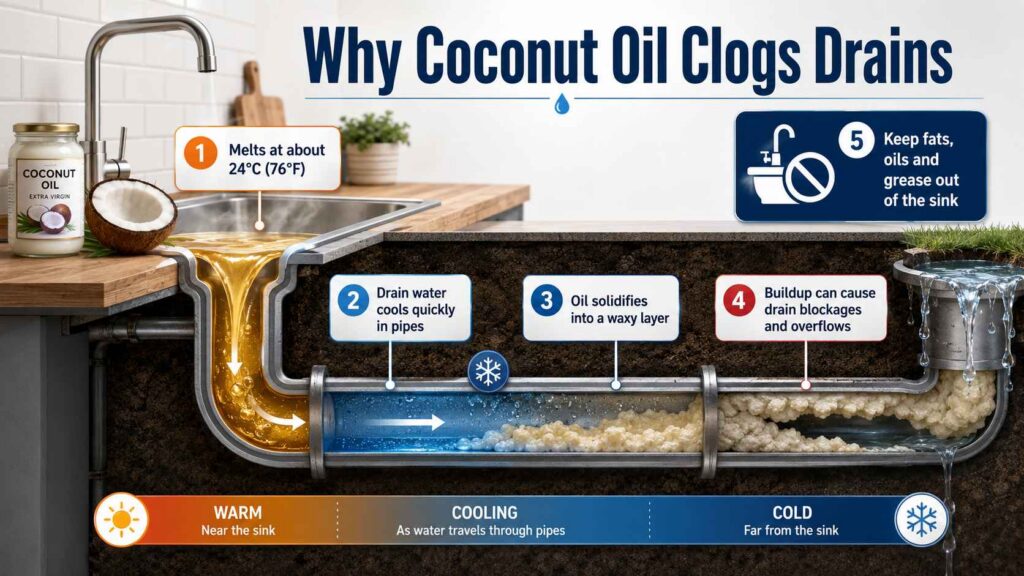
Coconut oil melts at around 76°F (24°C), which sounds harmless until you consider Sydney’s pipe temperatures. Your drain water cools rapidly as it travels through underground pipes, especially in winter or when pipes run through unheated spaces. The oil solidifies within minutes, clinging to pipe walls in a waxy layer that builds up over time.
Sydney Water actively discourages residents and businesses from pouring fats, oils and greases (FOG) down household or commercial drains, as this buildup contributes to blockages and overflows across the wider sewer network, not just your own pipes. Keeping coconut oil out of the sink is a simple way to do your part.
| Type of Oil or Fat | How It Behaves in Drains | Drain Risk Level | Common Issue |
|---|---|---|---|
| Coconut Oil | Solidifies quickly as it cools | High | Forms blockages inside household pipes |
| Olive Oil | Stays liquid longer at room temperature | Moderate | Flows further before combining with debris |
| Vegetable Oil | Remains liquid longer than coconut oil | Moderate | Can coat pipes and trap food particles over time |
| Canola Oil | Flows easily when fresh | Moderate | Builds residue that may contribute to slow drains |
| Bacon Grease | Hardens quickly after cooling | High | Creates thick grease buildup in pipes |
| Butter | Solidifies as temperature drops | High | Sticks to pipe walls and traps waste |
| Other Animal Fats | Cools into a dense, sticky mass | High | Causes severe grease blockages and |
This coating acts like flypaper for other waste. Hair, soap scum, food particles, and mineral deposits stick to the greasy surface, narrowing the pipe diameter with every use. What starts as a slow drain becomes a complete blockage, often deep in your plumbing where DIY methods can’t reach.
Tree roots in older Sydney clay pipes make the problem worse, particularly in heritage suburbs across the Inner West and North Shore. Roots penetrate joints searching for water, and coconut oil gives them a nutrient-rich surface to cling to. The combination creates rock-hard blockages that require professional equipment to remove.
How to Unclog Coconut Oil from Drain Using Hot Water
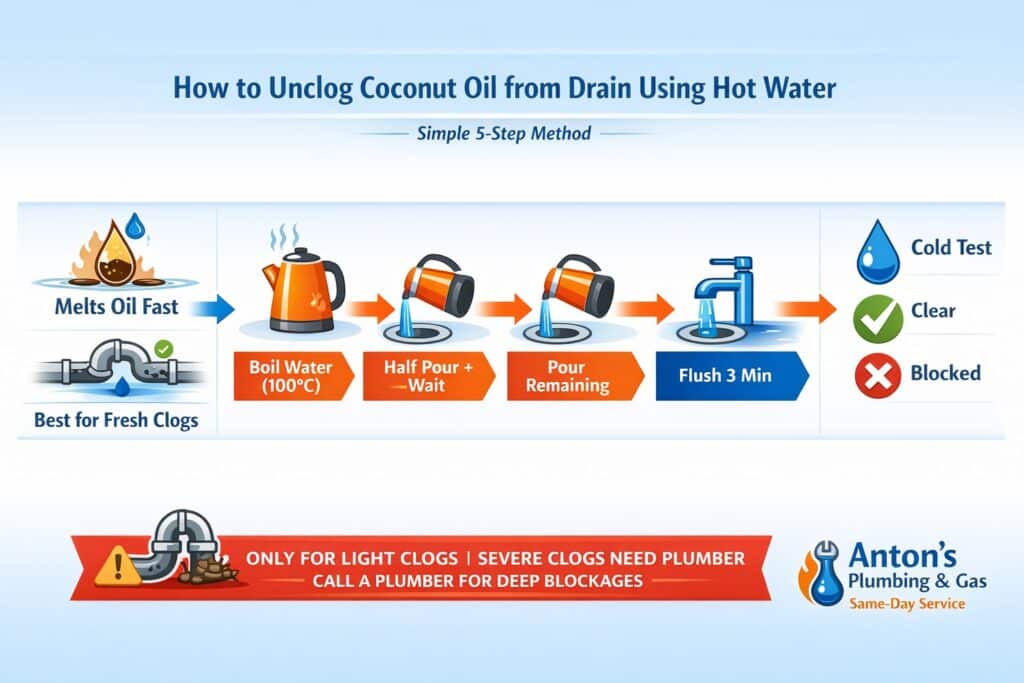
Hot water is your first line of defence because coconut oil’s low melting point makes it vulnerable to heat. This method works best on fresh spills or light buildup, not on blockages that have hardened over weeks. You’ll need boiling water, patience, and realistic expectations about what heat alone can achieve.
Start by removing any standing water from your sink or tub. Pour half a kettle of boiling water directly down the drain, aiming for the centre to maximise heat transfer. Wait two minutes for the oil to soften, then follow with another half kettle. The goal is to melt the coconut oil enough that it flows further down the pipe, ideally into larger sewer lines where it can disperse.
1. Boil a Full Kettle of Water
Use freshly boiled water, not just hot tap water. Tap water in Sydney rarely exceeds 60°C, which isn’t hot enough to fully melt coconut oil. Boiling water at 100°C gives you a much better chance of dissolving the waxy buildup.
2. Pour Slowly in Two Stages
Don’t dump the entire kettle at once. Pour half, wait two minutes, then pour the rest. This staged approach maintains high temperature in the pipe longer, giving the oil more time to liquefy and move.
3. Run Hot Tap Water for Three Minutes
After the boiling water, turn on your hot tap at full pressure. Let it run for at least three minutes to flush dissolved oil further into the sewer system. This step prevents the oil from re-solidifying in your pipes as it cools.
4. Repeat Daily for Three Days
One treatment rarely clears significant buildup. Repeat the process once daily for three days, monitoring drainage speed. If water still pools or drains slowly after three attempts, the blockage is too severe for hot water alone.
5. Test with Cold Water
After your final hot water treatment, run cold water for 30 seconds. If the drain handles cold water without slowing, you’ve cleared the clog. If it backs up again, you’re dealing with a deeper or more stubborn blockage that needs a different approach.
Dish Soap Method for Coconut Oil Blockages
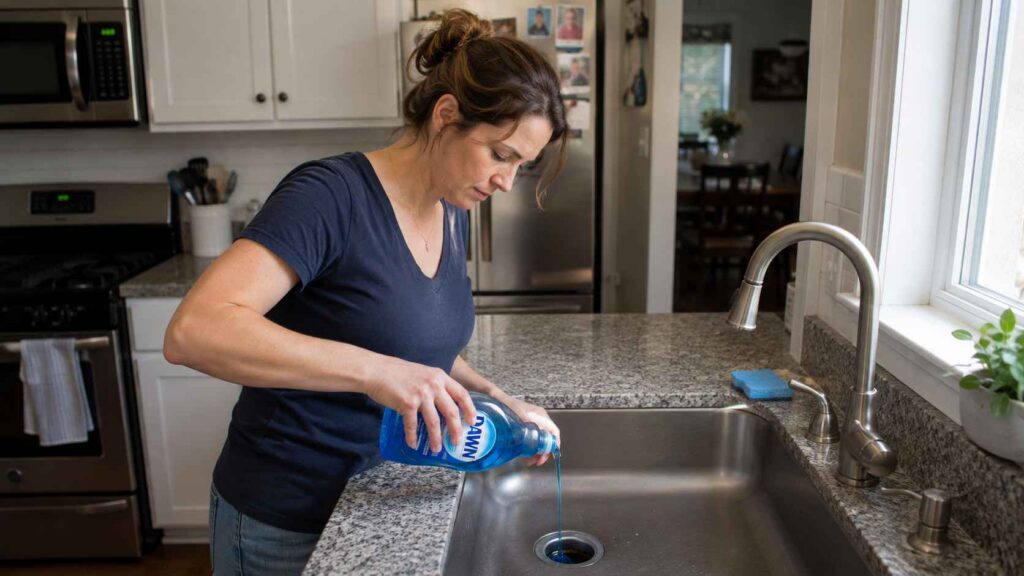
Dish soap breaks down grease at a molecular level, making it more effective than hot water alone. The surfactants in dish soap surround oil particles and allow water to wash them away, similar to how it cleans your dishes. This method works well for moderate buildup in kitchen sinks and bathroom drains.
You’ll need a quality dish soap, not a cheap generic brand. Products designed to cut grease contain higher concentrations of active ingredients. Pour half a cup of dish soap directly down the drain, then let it sit for 10 minutes without running any water.
The soap needs time to penetrate the oil layer and start breaking it down. After 10 minutes, plug your sink and fill it with the hottest tap water available, creating as much volume as possible. When the sink is full, pull the plug and let the water rush down the drain. The force and heat combine with the soap to flush dissolved oil through your pipes.
Follow immediately with two to three minutes of hot tap water to rinse any remaining soap and oil residue. This method often succeeds where hot water alone fails, but it still struggles with blockages older than a few weeks or located more than two metres down your drain line.
When Drain Cleaners Fail on Coconut Oil
Chemical drain cleaners from Bunnings or supermarkets promise fast results, but they’re designed for hair and organic matter, not solidified fats. The active ingredients in most drain cleaners, sodium hydroxide or sulfuric acid, generate heat to dissolve clogs. That heat isn’t concentrated or sustained enough to melt coconut oil that’s hardened into a thick layer.
| Method | Effectiveness on Coconut Oil | Pipe Safety | Time Required |
|---|---|---|---|
| Hot Water | Good for fresh spills | Safe for all pipes | 15 minutes |
| Dish Soap + Hot Water | Good for light buildup | Safe for all pipes | 30 minutes |
| Chemical Drain Cleaner | Poor, may not dissolve oil | Risk to PVC and metal pipes | 30 minutes |
| Plunger | Limited, moves but doesn’t dissolve oil | Safe for all pipes | 10 minutes |
| Professional Hydro-Jetting | Excellent, removes all buildup | Safe when done correctly | 1-2 hours |
Worse, these chemicals can damage your pipes. PVC pipes soften under prolonged chemical exposure, and older metal pipes corrode. If the cleaner fails to clear the blockage, you’re left with caustic liquid sitting in your drain, creating a safety hazard when you attempt other methods. We see this scenario regularly across Sydney homes where homeowners try multiple products before calling for help.
The best drain cleaner for coconut oil isn’t a chemical product at all. Enzyme-based cleaners work slowly to digest organic buildup, but they take days and don’t address the immediate problem. If hot water and dish soap haven’t worked after three attempts, chemical products won’t either. You’re better off moving to mechanical removal or professional service.
Professional Solutions for Stubborn Coconut Oil Clogs
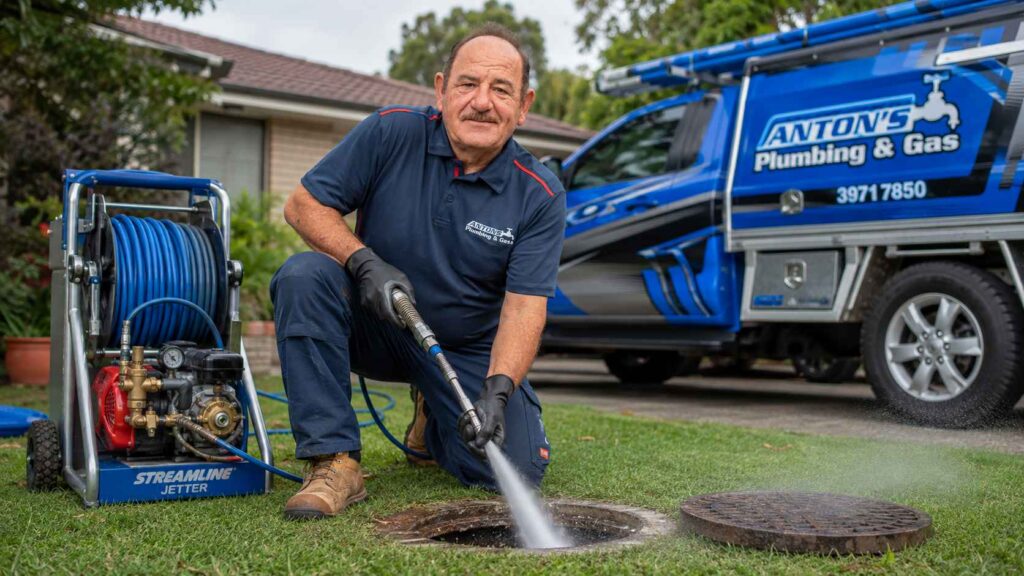
When DIY methods fail, you’re dealing with hardened buildup that requires mechanical removal. We use CCTV drain inspection to locate the blockage and assess its severity before choosing a clearing method. A camera inside your pipe shows us exactly where the coconut oil has accumulated, how thick the layer is, and whether tree roots or other damage complicate the situation.
Hydro-jetting is the most effective solution for grease and oil clogs. This process uses high-pressure water, up to 5000 PSI (roughly 34,500 kPa), to scour pipe walls clean. The jet nozzle spins as it travels through your drain, cutting through coconut oil, soap scum, and mineral deposits. Unlike snaking, which punches a hole through blockages, hydro-jetting restores your pipe to near-original diameter.
Our team across Sydney uses hydro-jetting equipment calibrated for residential pipes, so there’s no risk of damage when the work is carried out to Australian Standards by our licensed plumbers. We start with a CCTV inspection to confirm your pipes can handle the pressure, then clear the blockage from the nearest access point. Same-day service means we can often resolve your issue within hours of your call to 0493 824 176.
How Antons Plumbing & Gas Handles Coconut Oil Blockages
We approach every blocked drain with diagnostic precision, not guesswork. Our process starts with understanding what went down your drain and how long the problem has existed. For coconut oil clogs, we typically recommend CCTV inspection first, especially if you’ve already tried DIY methods without success.
The camera shows us whether you’re dealing with localised buildup near the drain opening or a more extensive blockage deeper in your system. We’ve cleared coconut oil clogs in everything from modern PVC kitchen drains to 80-year-old cast iron pipes in heritage Inner West homes. Each situation requires a tailored approach based on pipe material, blockage location, and your property layout.
Our hydro-jetting equipment clears the blockage and cleans the entire pipe run, reducing the chance of quick re-blockage. We follow Australian Standards for drain cleaning and use equipment calibrated for residential pipes. After clearing, we run the camera again to confirm complete removal and check for any pipe damage that might need attention.
Same-day service across the Sydney Metro means you don’t wait days with a blocked sink. Call 0493 824 176 and we’ll typically arrive within hours, diagnose the issue, provide upfront pricing in AUD, and clear the blockage the same day. Our fixed-rate pricing means you know the cost before we start, with no call-out fee from 7am to 3pm on weekdays.
Comparing DIY Methods and Professional Drain Clearing
DIY methods work well for fresh, minor blockages but have clear limitations. Hot water and dish soap can clear coconut oil that went down your drain yesterday or last week. But if you’ve been rinsing oily pans for months, the buildup is too thick and too far into your pipes for home remedies to reach.
Professional clearing costs more upfront but saves money when DIY fails. We see homeowners who’ve spent $50 to $100 (AUD) on drain cleaners, plungers, and drain snakes before calling us. That money is wasted if the blockage requires hydro-jetting anyway, and chemical cleaners can make our job harder by leaving caustic residue in your pipes.
Time is another factor. A DIY attempt might take an hour, but if it fails, you’re back where you started. Our team completes most coconut oil blockages in one to two hours, including inspection and confirmation that the drain is fully clear. For busy households or commercial kitchens, that efficiency is worth the investment.
The real value of professional service is diagnosis. We don’t just clear the immediate blockage, we identify why it happened and what you can do to prevent recurrence. If your pipes have rough interiors, damage, or poor slope, we’ll explain those issues and offer solutions like relining or section replacement.
Preventing Coconut Oil Drain Clogs
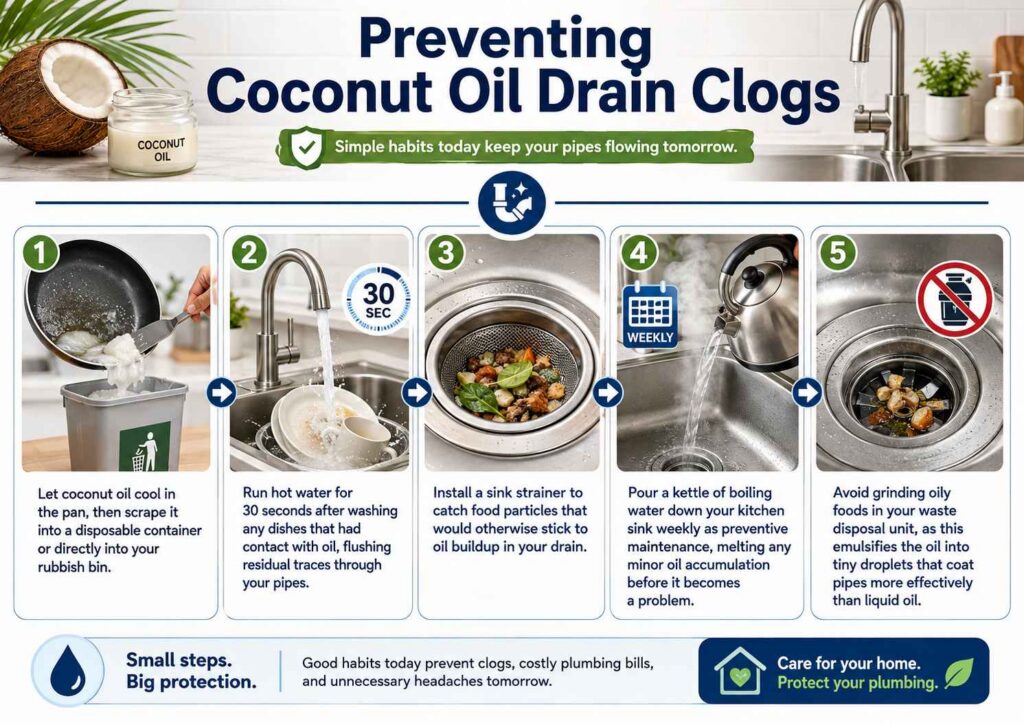
Prevention is simpler and cheaper than clearing blockages. The key is keeping coconut oil out of your drains entirely, which requires small changes to your kitchen habits and helps you stay on the right side of Sydney Water’s FOG guidelines. Once you understand how easily oil solidifies in pipes, these precautions become second nature.
Scrape cookware and dishes into your bin before washing. Even small amounts of coconut oil add up over time, especially if multiple people in your household cook with it daily. Use paper towel to wipe pans while they’re still warm, capturing oil before it reaches your sink.
- Let coconut oil cool in the pan, then scrape it into a disposable container or directly into your rubbish bin.
- Run hot water for 30 seconds after washing any dishes that had contact with oil, flushing residual traces through your pipes.
- Install a sink strainer to catch food particles that would otherwise stick to oil buildup in your drain.
- Pour a kettle of boiling water down your kitchen sink weekly as preventive maintenance, melting any minor oil accumulation before it becomes a problem.
- Avoid grinding oily foods in your waste disposal unit, as this emulsifies the oil into tiny droplets that coat pipes more effectively than liquid oil.
If you cook with coconut oil frequently, consider keeping a dedicated container near your stove for oil disposal. A small jar with a lid works well and can go straight into the bin when full. This simple habit eliminates the temptation to rinse oily residue down the sink, and keeps you compliant with Sydney Water’s guidance on household FOG disposal.
When to Call a Sydney Plumber for Drain Blockages

Some situations require professional help from the start. If you have multiple drains backing up simultaneously, the blockage is in your main sewer line, not a single fixture. Attempting to clear a main line blockage with DIY methods wastes time and can worsen the problem by pushing debris deeper into your system, potentially affecting Sydney Water’s shared infrastructure.
Recurring blockages signal an underlying issue. If your kitchen sink clogs every few weeks despite careful use, there’s likely damage, poor pipe slope, or accumulated buildup that needs mechanical removal. We diagnose these patterns with CCTV and provide permanent solutions, not temporary fixes.
Foul odours from your drain indicate organic buildup or sewer gas escaping through a partial blockage. Coconut oil traps food particles and creates an environment for bacterial growth, producing unpleasant smells. Chemical drain cleaners mask odours temporarily but don’t remove the source. Hydro-jetting eliminates the buildup and the smell.
If you’ve tried hot water and dish soap three times without improvement, call us. Continuing with DIY methods at that point delays the inevitable and risks overflow or pipe damage. Under NSW Fair Trading rules, plumbing and gas work must be carried out by a licensed practitioner, so always confirm you’re dealing with a properly licensed operator. Antons Plumbing & Gas holds NSW Lic. 210933C and is available 24/7 for emergencies, with same-day service across the Inner West, Eastern Suburbs, North Shore, Northern Beaches, Hills District, and Western Sydney. Call 0493 824 176 to book.
Conclusion
Coconut oil clogs form when oil solidifies below 24°C and coats your pipe walls, trapping debris and restricting flow. Hot water and dish soap clear fresh blockages, but stubborn buildup requires professional hydro-jetting. Prevent future clogs by disposing of coconut oil in your bin and running hot water after washing oily cookware, in line with Sydney Water’s guidance on fats, oils and greases. For persistent drainage issues across Sydney, our licensed team (NSW Lic. 210933C) provides same-day CCTV inspection and clearing with upfront pricing in AUD and a lifetime labour warranty on all work.
Antons Plumbing & Gas specialises in blocked drain solutions backed by 25 years of experience. Our licensed team uses CCTV inspections to clear stubborn clogs fast. Get started with same-day service today by calling 0493 824 176.
Related Articles
- How to Get Oil Out of Sink Drain Without Damaging Pipes
- 5 Common Mistakes When Dealing with Oil in Sink Drains
- How to Drain a Kitchen Sink That Won’t Empty
FAQs
What Should I Do If Coconut Oil Is Stuck In My Drain?
If coconut oil is stuck in your drain, the first step is to stop using the sink to avoid further clogging. You can try flushing the drain with hot water to melt the oil, but if this doesn’t work, it’s best to contact a licensed Sydney plumber like Antons Plumbing & Gas (NSW Lic. 210933C) to safely remove the blockage without damaging your pipes.
Can Coconut Oil Clog My Drain?
Yes, coconut oil can clog your drain, especially when it cools and solidifies. This can lead to blockages over time, particularly in pipes that are not designed to handle grease or oils. Regular maintenance and prompt attention to clogs can help prevent serious issues.
How Do I Remove Coconut Oil From Pipes?
To remove coconut oil from pipes, you can try boiling water to melt the oil and flush it down. However, for more stubborn clogs, it’s advisable to call a licensed plumber from Antons Plumbing & Gas, who can use professional tools and techniques to effectively clear the blockage without damaging your plumbing system.
Is It Safe To Pour Hot Water Down The Drain To Unclog Coconut Oil?
Pouring hot water down the drain can help dissolve coconut oil and may assist in clearing a minor clog. However, if the blockage persists, it’s best to consult with a professional plumber to avoid any risk of damaging your pipes or creating further issues.
What Are Some Natural Methods To Unclog Coconut Oil From A Drain?
Some natural methods to unclog coconut oil from a drain include using a mixture of bicarb soda and vinegar, followed by hot water. This can help break down the oil. If the clog is severe, our experienced team at Antons Plumbing & Gas can provide more effective solutions tailored to your plumbing needs.
Do You Offer Emergency Blocked Drain Plumbing In Sydney?
Yes, we’re available 24/7 for emergency callouts across Sydney Metro for blocked drains, including coconut oil and grease clogs. Call 0493 824 176 and our licensed team can typically attend the same day.
Is Antons Plumbing & Gas A Licensed Sydney Plumber?
Yes. Antons Plumbing & Gas is a fully licensed and insured NSW plumbing business, NSW Lic. 210933C, meeting NSW Fair Trading requirements for all plumbing and gas work carried out.
Which Sydney Suburbs Do You Service?
We service the Inner West, Eastern Suburbs, North Shore, Northern Beaches, Hills District and Western Sydney, with same-day appointments available for blocked drain callouts.
How Quickly Can A Plumber Come Out For A Blocked Drain?
For most Sydney suburbs we offer same-day service and can often attend within hours of your call to 0493 824 176, depending on scheduling on the day.
Do You Provide Upfront Pricing Before Starting Work?
Yes, we provide fixed-rate, upfront pricing in AUD before any work begins, so you know the cost before we start clearing your blocked drain.
Is There A Call-Out Fee For Blocked Drain Jobs?
There is no call-out fee for bookings between 7am and 3pm on weekdays. Call 0493 824 176 to confirm availability and pricing for your suburb.
Do You Use CCTV Drain Cameras To Diagnose Blockages?
Yes, we use CCTV drain camera inspections to pinpoint the exact location and severity of coconut oil and grease blockages before recommending a clearing method.
Is Hydro-Jetting Safe For Older Sydney Homes?
Yes, when carried out by a licensed plumber using equipment calibrated for residential pipes and following Australian Standards. We always run a CCTV inspection first to confirm your pipes, including older terrace or heritage plumbing, can handle the pressure.
Can Pouring Oil Down The Drain Breach Sydney Water Regulations?
Sydney Water guidelines discourage pouring fats, oils and greases down household or commercial drains, as this contributes to sewer blockages and overflows across the network. Disposing of coconut oil in the bin instead helps protect your home plumbing and the wider Sydney sewer system.
Do You Offer A Warranty On Drain Clearing Work?
Yes, we back our drain clearing work with a lifetime labour warranty, giving Sydney homeowners confidence the blockage has been properly resolved.
What Happens If My Blockage Is In The Shared Sewer Main?
If multiple fixtures are backing up at once, the blockage is likely in your main line rather than a single drain. Our licensed plumbers use CCTV inspection to confirm this and advise on next steps, including where Sydney Water’s shared infrastructure may be involved.
How Do I Book A Plumber For A Blocked Kitchen Drain?
Simply call 0493 824 176 or book online. We’ll confirm a same-day appointment across Sydney Metro, diagnose the blockage on arrival, and provide upfront pricing in AUD before any work begins.
Do You Work Weekends And Public Holidays?
Yes, we’re available 24/7 for emergencies, including weekends and public holidays, across the Sydney Metro area.
What Payment Methods Do You Accept?
We accept standard payment methods and always confirm fixed-rate pricing in AUD before starting work, so there are no surprises on your invoice.
Should I Try DIY Methods Before Calling A Plumber?
Hot water and dish soap are worth trying for fresh coconut oil spills. But if you’ve attempted these methods three times without success, stop and call a licensed Sydney plumber (NSW Lic. 210933C) on 0493 824 176 to avoid pipe damage or overflow, and to get the blockage cleared properly the first time.