

You turn on the tap, and water pools in your sink. The moment you flick the garbage disposal switch, everything drains away. When a sink only drains when garbage disposal runs, it usually points to a partial blockage or venting issue in the kitchen plumbing. Ignoring it can lead to backups, slow drainage, and water damage under your cabinets—a common call-out for Sydney kitchens, from Bondi units to Hills District family homes.
In this guide, we’ll walk you through the common reasons your sink only drains when the garbage disposal runs, how to troubleshoot the problem safely, and when it’s time to call a licensed Sydney plumber. You’ll learn practical steps to protect your home and keep your kitchen running smoothly, in line with NSW plumbing rules and Sydney Water requirements.
Key Takeaways
- A sink that drains only when the disposal runs usually signals a partial blockage in the P-trap or drain line.
- The spinning action of the disposal can push water past a clog, masking the real issue.
- Venting problems may cause slow drainage and gurgling sounds in your kitchen sink.
- DIY fixes like plunging or cleaning the P-trap can help, but persistent issues need professional diagnosis.
- Antons Plumbing & Gas (NSW Lic. 210933C) offers same-day service, CCTV drain inspections, and clear, upfront pricing across Sydney.
Sink Only Drains When Garbage Disposal Runs: Why It Happens
When water sits in your sink but disappears the moment you turn on the disposal, the unit is acting like a pump. The blades and motor create enough force to push water past a partial blockage. Without that extra pressure, gravity alone can’t clear the standing water.
This behaviour tells you the drain isn’t completely blocked. A full clog would stop water flow even with the disposal running. Instead, you’re dealing with a restriction that slows drainage to a crawl.
Three main culprits cause this pattern: a buildup in the P-trap, a blockage further down the drain line, or a venting issue that prevents air from entering the system. Each requires a different approach to fix.
How Partial Blockages Create This Problem
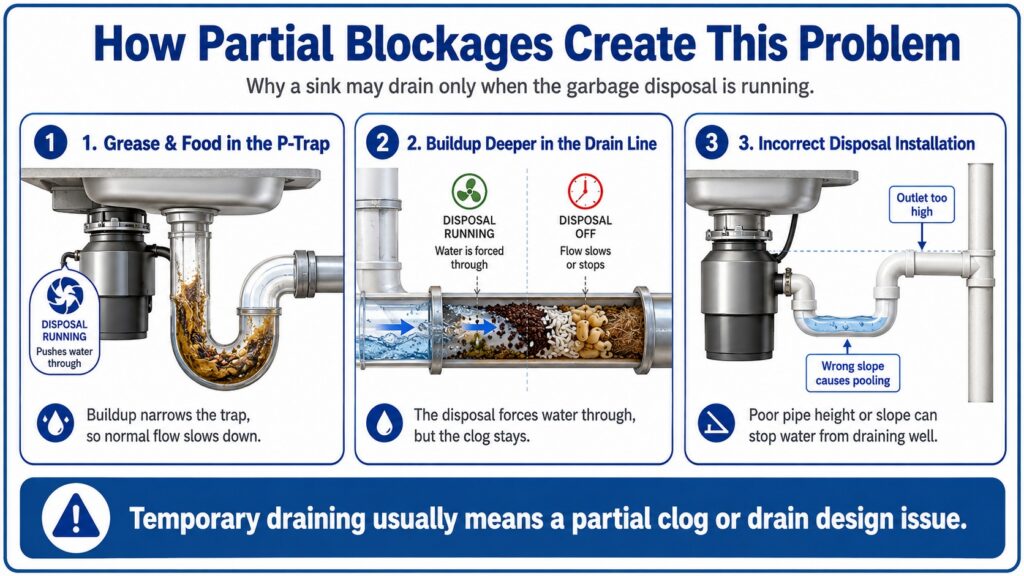
A sink that only drains properly when the garbage disposal (also known in Australia as a waste disposal unit or by the brand name InSinkErator) is running usually points to a partial blockage somewhere in the drain system. The pipe is not fully blocked, but the passage has narrowed enough that normal water flow is no longer strong enough to move waste through efficiently. Understanding how partial blockages create this problem helps explain why the sink seems to work temporarily with the disposal but slows down again soon after.
Grease and Food Debris in the P-Trap
The P-trap is the curved pipe section under your sink. It holds a small amount of water to block sewer gases. Over time, grease, soap scum, and food particles coat the inside of the trap, narrowing the passage.
When you run the disposal, the spinning blades and water flow create enough turbulence to push waste through the restricted area. Without that mechanical help, water just sits there. This is one of the most common reasons we see on service calls across the Inner West and Eastern Suburbs.
Buildup in the Drain Line Beyond the Trap
Sometimes the blockage sits further down the line, past the P-trap. Coffee grounds, rice, pasta, and fibrous vegetable scraps can accumulate in the horizontal section of pipe that connects to your main stack. The disposal’s action temporarily forces water through, but the clog remains.
You might notice the sink drains fine for a few minutes after running the disposal, then slows down again. That’s a sign the blockage is deeper in the system.
Incorrect Disposal Installation
If your garbage disposal was installed incorrectly, the drain outlet might sit too high or the discharge pipe might have an improper slope. Water can’t flow downhill easily, so it pools until the disposal’s mechanical action pushes it along. Under NSW plumbing rules, disposal units and their drain connections must be installed by a licensed plumber, so this issue is less common in properly certified work, but worth checking if your unit is new, secondhand, or recently replaced.
Partial blockages often create misleading symptoms because the sink may appear to drain normally for a few minutes before slowing down again. This temporary improvement can make it harder to tell whether the problem is a clog, a pipe design issue, or an installation fault. By understanding how these blockages affect drainage, homeowners can better identify the cause and decide whether cleaning, adjustment, or professional repair is needed.
Venting Issues That Affect Drainage
Your kitchen drain relies on a vent pipe to allow air into the system. Without proper venting, a vacuum forms as water tries to flow down the pipe. This vacuum slows drainage and can cause gurgling sounds.
When the disposal runs, it introduces air and turbulence that temporarily breaks the vacuum, allowing water to drain. Once you turn it off, the vacuum returns and drainage stalls. Venting problems often show up in older Sydney homes with clay pipes or poorly designed plumbing extensions, particularly in older suburbs across the Inner West and North Shore.
Signs of a Venting Problem
- Gurgling or bubbling noises when the sink drains
- Slow drainage in multiple fixtures, not just the kitchen sink
- Foul odours coming from the drain, especially after running water
- Water backing up into nearby fixtures when you use the sink
If you notice these symptoms, the issue might not be a simple clog. Our team uses CCTV drain inspections to pinpoint venting faults and recommend compliant repairs that meet AS/NZS 3500 standards, the plumbing code that applies across NSW.
Step-by-Step Fixes You Can Try at Home
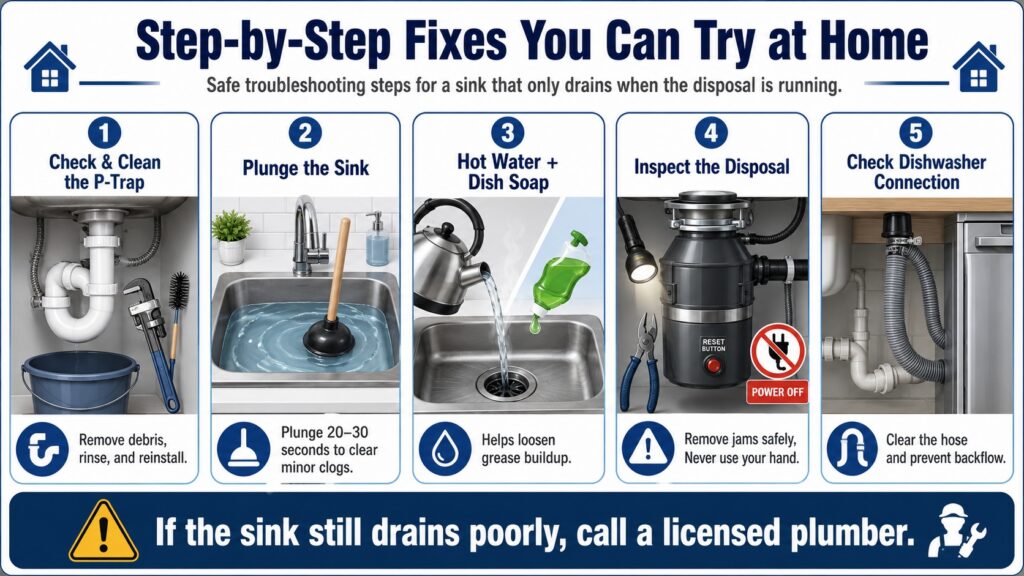
Before calling a plumber, you can attempt a few safe troubleshooting steps. These methods work for minor blockages and can save you time. If the problem persists, a licensed plumber should take over to avoid damaging your pipes or disposal unit.
1. Check and Clean the P-Trap
Turn off the water supply and place a bucket under the P-trap. Use a wrench to loosen the slip nuts on either side of the trap, then remove the curved section. Clear out any debris with your fingers or a small brush, rinse the trap, and reinstall it. Test the sink without running the disposal to see if water drains freely.
2. Plunge the Sink Properly
Fill the sink with a few centimetres of water to create a seal. Use a flat-bottomed plunger, not a toilet plunger, and cover the drain opening completely. Pump vigorously for 20 to 30 seconds, then pull the plunger away quickly. Repeat two or three times. If the water drains without the disposal running, the blockage has cleared.
3. Run Hot Water and Dish Soap
Boil a kettle of water and add a generous squirt of dish soap to the sink. Pour the hot water slowly down the drain. The heat can melt grease, and the soap helps break down oily residue. Let it sit for a few minutes, then test the drain. This method works best for grease-related clogs.
4. Inspect the Disposal for Jams
Turn off the power to the disposal at the circuit breaker (switchboard). Shine a torch into the unit and look for foreign objects like bottle caps, utensils, or large food chunks. Use tongs or pliers to remove anything you find. Never put your hand inside the disposal chamber. Reset the unit using the red button on the bottom, restore power, and test again.
5. Check the Dishwasher Connection
If your dishwasher drains into the garbage disposal, a blockage in the dishwasher hose or disposal inlet can affect sink drainage. Disconnect the hose, clear any debris, and reconnect it. Make sure the hose has a high loop or air gap to prevent backflow, as required under NSW plumbing regulations.
Garbage Disposal Maintenance Tips
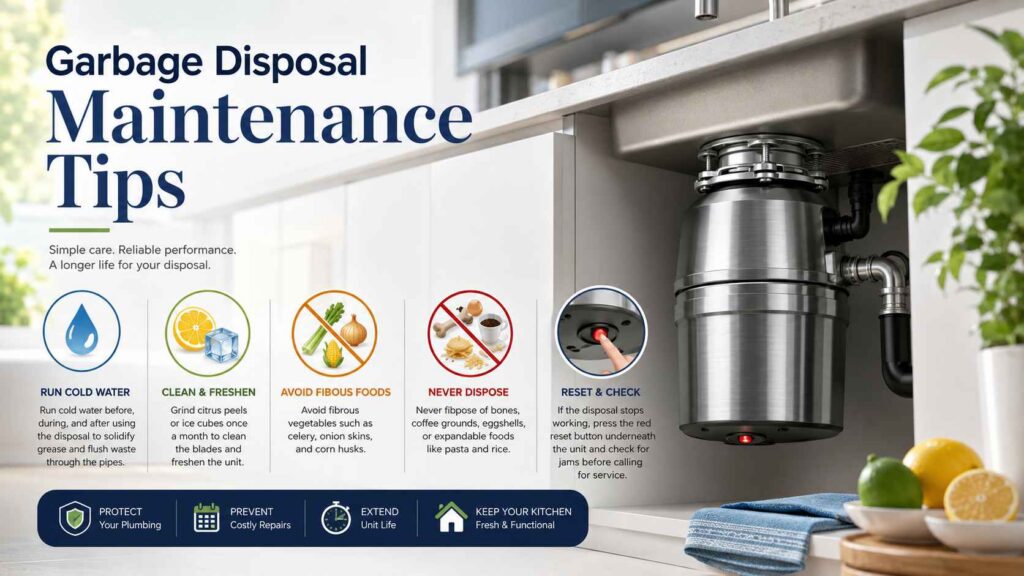
Your garbage disposal works hard, and a little care goes a long way. These habits keep the unit running smoothly and reduce the chance of clogs.
- Run cold water before, during, and after using the disposal to solidify grease and flush waste through the pipes
- Grind citrus peels or ice cubes once a month to clean the blades and freshen the unit
- Avoid putting fibrous vegetables like celery, onion skins, or corn husks into the disposal
- Never dispose of bones, coffee grounds, eggshells, or expandable foods like pasta and rice
- Reset the unit using the red button on the bottom if it stops working, and check for jams before calling for service
If your disposal is more than ten years old and frequently jams or leaks, replacement might be more cost-effective than repeated repairs. We install quality units from trusted brands and ensure all connections meet Australian Standards and Sydney Water’s plumbing and drainage requirements.
How Drainage Issues Affect Your Home
A sink that only drains when the disposal runs might seem like a minor annoyance, but it can lead to bigger problems. Standing water in the sink creates a breeding ground for bacteria and mould. Leaks under the cabinet can damage cabinetry, flooring, and even the structural framing of your home.
Slow drainage also puts extra strain on your garbage disposal motor, shortening its lifespan. If the blockage moves further down the line, it can affect other fixtures and cause backups in bathrooms or laundries.
Addressing the issue early protects your home, saves money, and keeps your kitchen functional. Our team can inspect your entire drain system and recommend preventive measures tailored to your Sydney property.
When to Call a Licensed Sydney Plumber
DIY fixes handle surface-level issues, but some problems need professional tools and expertise. If you’ve tried the steps above and your sink still only drains when the disposal runs, it’s time to bring in a plumber licensed to work in NSW.
Under NSW law, only a licensed plumber can carry out drain and disposal repairs connected to the sewer, and Sydney Water requires certain drainage work to be reported or inspected. Antons Plumbing & Gas holds NSW Lic. 210933C, so all our work is compliant and traceable if you ever need proof for a strata report or property sale. Our team uses CCTV drain cameras to inspect the entire line from your sink to the main sewer. We can spot tree root intrusion, collapsed pipes, or hidden blockages that aren’t visible from the surface. Same-day service means we can diagnose and fix the issue without disrupting your routine.
Warning Signs You Need Professional Help
- Water backing up into other sinks, showers, or toilets when you use the kitchen sink
- Persistent foul smells even after cleaning the disposal and trap
- Multiple slow drains throughout your home, suggesting a main line blockage
- Visible leaks under the sink or around pipe connections
- Repeated clogs within days or weeks of clearing the drain
Ignoring these symptoms can lead to burst pipes, water damage, and costly repairs. We provide upfront pricing in AUD, clear options, and a lifetime labour warranty on all workmanship, so you know exactly what you’re paying for before we start.
How We Diagnose and Fix the Root Cause
When you call 0493 824 176, we’ll ask a few questions about your symptoms and schedule a same-day visit anywhere in Sydney. Our plumbers arrive with CCTV equipment, drain snakes, and hydro-jetting tools to handle any blockage or venting issue on the spot.
CCTV Drain Inspection
We insert a camera into your drain line to see exactly what’s causing the problem. Tree roots, grease buildup, collapsed sections, or foreign objects all show up clearly on the monitor. You’ll see the footage yourself, and we’ll explain the issue in plain English.
Hydro-Jetting for Stubborn Blockages
If the blockage is deep or widespread, we use high-pressure water jetting to scour the inside of the pipe. This method removes grease, scale, and debris without damaging the pipe walls. It’s safe for most residential drain lines and leaves your pipes cleaner than chemical cleaners ever could.
Pipe Relining for Damaged Lines
If the camera reveals cracks, root intrusion, or corrosion, we may recommend pipe relining. This trenchless method inserts a resin-lined sleeve into the damaged section, creating a new pipe inside the old one. No digging, less mess, and a faster turnaround than traditional excavation — useful for older Sydney terraces and homes with established trees.
Venting Repairs and Compliance Checks
For venting issues, we’ll inspect the vent stack and ensure it meets AS/NZS 3500 requirements. We can install air admittance valves or extend vent pipes to restore proper airflow. All work is documented and compliant with NSW Fair Trading regulations and Sydney Water plumbing standards.
Preventing Future Drainage Problems
Once we’ve cleared the blockage or repaired the vent, you can take simple steps to keep your sink draining smoothly. Prevention is easier and cheaper than emergency repairs.
- Scrape plates into the bin before rinsing them in the sink
- Avoid pouring grease, oil, or coffee grounds down the drain
- Run cold water for 15 seconds before and after using the disposal
- Use the disposal regularly to prevent rust and keep the blades sharp
- Schedule annual CCTV inspections if you have older clay pipes or large trees near your property, common across many established Sydney suburbs
We offer maintenance plans for strata managers and commercial clients who want to stay ahead of drain issues. Regular inspections catch small problems before they turn into expensive emergencies.
Common Mistakes That Make the Problem Worse
Homeowners often try quick fixes that seem logical but can damage pipes or the disposal unit. Here are the mistakes we see most often on service calls across the North Shore and Western Sydney.
Using Chemical Drain Cleaners
Liquid drain cleaners contain harsh acids or bases that can corrode metal pipes, damage rubber seals, and harm your garbage disposal’s internal components. They rarely clear the entire blockage and can make future plumbing work more dangerous for the next plumber. We recommend mechanical methods or professional hydro-jetting instead.
Running the Disposal Continuously
If your sink only drains when the disposal runs, you might be tempted to leave it on longer. This puts extra strain on the motor and can overheat the unit. It also pushes the blockage further down the line, making it harder to clear later.
Ignoring Gurgling Sounds
Gurgling is your plumbing’s way of saying air isn’t flowing properly. Ignoring it can lead to sewer gas entering your home or a full blockage that floods your kitchen. If you hear gurgling, call a plumber to inspect the vent system.
Pouring Boiling Water Into a Garbage Disposal
Boiling water can crack the disposal’s plastic components or loosen pipe joints sealed with PVC cement. Use hot tap water instead, or let boiling water cool for a minute before pouring it down the drain.
Why Choose Antons Plumbing & Gas for Kitchen Drain Issues

We’ve spent more than 25 years solving blocked drains, burst pipes, and venting problems across Sydney. Our team holds NSW Lic: 210933C and complies with all NSW Fair Trading and Sydney Water requirements. Every job is backed by a lifetime labour warranty, so you can trust the work will last.
We charge a fixed rate for each service, quoted upfront in AUD, with no hidden fees or surprises. Same-day service and 24/7 emergency response mean you won’t wait days for relief. We serve the Inner West, Eastern Suburbs, North Shore, Northern Beaches, Hills District, Western and South-Western Sydney, and Sutherland Shire.
Our CCTV inspections provide clear evidence of the problem, and we present all options before starting work. Whether you need a simple P-trap clean-out or a full pipe reline, we’ll explain the process, timeline, and cost upfront. Call 0493 824 176 or book online to schedule your inspection.
Real-World Example: Inner West Kitchen Drain Repair
We received a call from Sarah, a homeowner in the Inner West, who noticed her sink only drained when the garbage disposal ran. She’d tried plunging and pouring hot water down the drain, but the problem kept coming back.
Our plumber arrived the same day and ran a CCTV camera through the drain line. The footage showed a thick layer of grease coating the pipe about two meters past the P-trap. Tree roots from a nearby fig tree had also started to infiltrate a small crack in the clay pipe.
We used hydro-jetting to clear the grease and debris, then recommended pipe relining to seal the crack and prevent future root intrusion. Sarah chose the relining option, and we completed the work within four hours. Her sink now drains freely, and she hasn’t had a single issue since.
Conclusion
A sink that only drains when the garbage disposal runs signals a partial blockage or venting issue that won’t fix itself. Plunging, cleaning the P-trap, and avoiding grease can help, but persistent problems need professional diagnosis. Our team provides same-day CCTV inspections, hydro-jetting, and pipe relining across Sydney, backed by clear pricing and a lifetime labour warranty. Call 0493 824 176 to schedule your inspection and protect your home from costly drain failures.
Antons Plumbing & Gas specialises in blocked drain solutions and CCTV inspections across Sydney Metro. Our licensed team diagnoses disposal and drain issues fast, with same-day service available. Get started with a call today.
Related Articles
- DIY Plumbing Repair Mistakes Homeowners Should Check
- Simple Solutions for How to Unclog Sink Hair Effectively
- How to Remove a Stuck Shower Faucet Plastic Insert Safely
FAQs
Why Does My Sink Only Drain When The Garbage Disposal Is Running?
Your sink may only drain when the garbage disposal is running because the disposal creates a suction effect that helps pull water through the drain. If there are clogs or blockages in the plumbing, this suction might be the only way for water to flow, indicating a potential plumbing issue that requires professional attention.
What Causes A Sink To Drain Only With The Garbage Disposal On?
This situation is commonly caused by a blockage in the sink’s drain line. Food particles, grease, or debris may have accumulated, restricting water flow. It’s important to address this promptly to avoid further plumbing issues, and our experienced team at Antons Plumbing & Gas can help diagnose and resolve the problem efficiently.
Is It Normal For A Sink To Drain Only When The Garbage Disposal Is Used?
No, it is not normal for a sink to drain only when the garbage disposal is used. This behaviour often indicates a clog or partial blockage in the drain system. If you experience this issue, it’s advisable to contact a professional plumber to assess the situation and provide a suitable solution.
How Can I Fix A Sink That Only Drains When The Garbage Disposal Is Running?
To fix this issue, start by checking for visible clogs in the disposal and sink trap. If these areas are clear and the problem persists, it’s best to consult with a licensed plumber. Our team at Antons Plumbing & Gas specialises in drain cleaning and can ensure that your plumbing system is functioning properly.
What Are The Signs Of A Clogged Sink Drain?
Signs of a clogged sink drain include slow drainage, gurgling noises when water is running, unpleasant odours, or water backing up into the sink. If you notice any of these symptoms, it’s essential to address them quickly. Our experts are here to provide effective solutions to keep your plumbing in top shape.
Do You Offer Same-Day Sink And Garbage Disposal Repairs In Sydney?
Yes, we offer same-day service across Sydney Metro for blocked kitchen sinks and garbage disposal issues. Call 0493 824 176 and we’ll arrange a visit as soon as possible, often the same day you call.
How Much Does It Cost To Fix A Blocked Kitchen Sink In Sydney?
Every job is different depending on what our CCTV inspection finds, so we provide a fixed, upfront price in AUD before any work begins. There are no hidden fees, and you’ll approve the cost before we start.
Are You A Licensed Plumber In NSW?
Yes, Antons Plumbing & Gas holds NSW Lic. 210933C. All drain and disposal work is carried out in line with NSW Fair Trading requirements, AS/NZS 3500 plumbing standards, and Sydney Water regulations.
Do You Service My Suburb In Sydney?
We cover the Inner West, Eastern Suburbs, North Shore, Northern Beaches, Hills District, Western and South-Western Sydney, and the Sutherland Shire. Call us or check our suburb pages to confirm coverage for your address.
Do I Need Council Or Sydney Water Approval To Install A Garbage Disposal Unit?
Some councils and strata schemes have rules around garbage disposal units, and connections must be installed by a licensed plumber to meet Sydney Water and NSW plumbing standards. We can check your property and advise before installation or replacement.
Can A Blocked Drain Be Treated As An Emergency Plumbing Issue?
Yes. If water is backing up into multiple fixtures, overflowing, or causing damage, treat it as an emergency. We offer 24/7 emergency response across Sydney for exactly this kind of situation.
Do You Provide CCTV Drain Inspections Before Quoting?
Yes, we use CCTV drain cameras to see the actual cause of the blockage before recommending a fix. You’ll see the footage and understand exactly what you’re paying for before we proceed.
What Is Pipe Relining And Is It Cheaper Than Digging Up My Yard?
Pipe relining is a trenchless repair that inserts a resin-lined sleeve inside the damaged pipe, avoiding excavation. It’s often faster and less disruptive than digging, particularly for older Sydney properties with established gardens or driveways over the pipe run.
How Quickly Can A Plumber Come To My Home In Sydney?
We offer same-day appointments across our Sydney service areas, plus 24/7 emergency response for urgent blockages and backups. Call 0493 824 176 to check availability for your suburb today.
Do You Offer A Warranty On Drain Repairs?
Yes, all our workmanship is backed by a lifetime labour warranty, so you have peace of mind that the repair, whether it’s hydro-jetting or pipe relining, is built to last.
What Should I Do Right Now If My Sink Is Backed Up?
Turn off the disposal and avoid running more water. Try clearing visible debris from the disposal and plunging the sink. If the problem persists or water backs up into other fixtures, call us on 0493 824 176 for same-day assistance.
Can I Book A Plumber Online Or Do I Need To Call?
You can book online through our website or call 0493 824 176 directly. Both options let you arrange a same-day visit from a licensed Sydney plumber.
Do You Handle Both Plumbing And Gas Issues?
Yes, Antons Plumbing & Gas is licensed for both plumbing and gas work in NSW, so we can address related issues, such as a gas hot water system, during the same visit if needed.
What Happens During A Same-Day Service Visit?
Our licensed plumber will inspect the sink, disposal, and drain line, often using a CCTV camera to confirm the cause. We’ll explain the findings, provide a fixed upfront quote in AUD, and complete the repair on the spot where possible.
Is It Safe To Keep Using My Garbage Disposal While The Sink Only Drains When It’s Running?
It’s best to stop using it and get it checked. Continuing to run the disposal to force drainage can push the blockage further down the line, strain the motor, and turn a simple fix into a bigger, more expensive repair.