


A kitchen sink that refuses to drain is one of the most frustrating household problems. Water pools around dirty dishes, meal prep grinds to a halt, and the smell of stagnant grease starts creeping through your home. Most blockages in Sydney kitchens stem from fat, food scraps, or objects lodged in the trap—issues you can often tackle yourself with simple tools and a clear plan.
This guide walks you through proven methods on how to drain a kitchen sink, from quick DIY fixes to when it makes sense to call a licensed Sydney plumber. You’ll also learn how we diagnose stubborn or recurring blockages using CCTV drain inspection and hydro jetting, ensuring the problem doesn’t come back next month.
Key Takeaways
- Start by checking the waste disposal unit and removing any visible debris from the drain opening.
- Use a plunger with a tight seal and rapid up-and-down strokes to dislodge soft blockages.
- Try a bicarb soda and vinegar flush followed by boiling water for grease and soap buildup.
- Remove and clean the P-trap if plunging fails, then use a plumber’s snake for deeper obstructions.
- Call a licensed plumber for recurring clogs, foul odours, or water backing up into other fixtures.
Why Your Kitchen Sink Won’t Drain
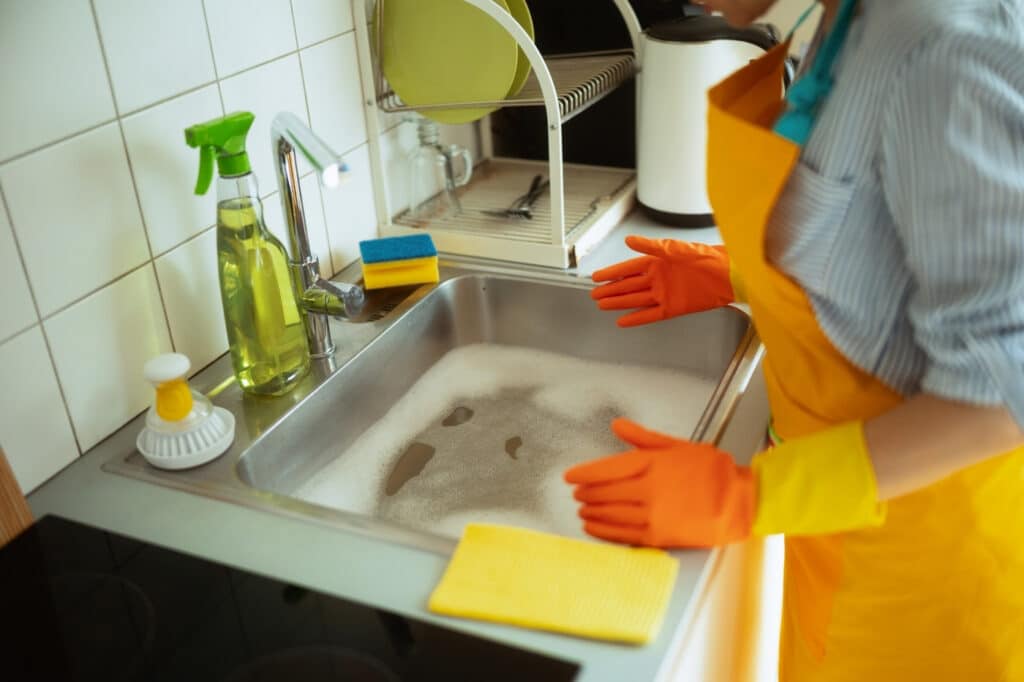
Understanding the root cause helps you choose the right fix. Kitchen drains handle fat, oil, detergent, and food particles every day. Over time these materials coat the inside of your pipes, narrowing the passage until water can barely squeeze through. In older Sydney homes with clay or galvanised steel pipes, tree roots and corrosion add another layer of complexity.
Grease is the most common culprit. When hot fat washes down the drain it cools and solidifies, trapping coffee grounds, rice, and other debris. Soap scum binds everything together into a sticky mass that grows thicker each week.
Sometimes the blockage sits right in the P-trap—the curved section of pipe under your sink designed to hold water and prevent sewer gas from entering your home. Because the trap bends back on itself, heavier objects and sediment settle there. Other times the clog has travelled further into the wall pipe or even the main drain line connecting to the Sydney Water sewer main, requiring a snake or professional hydro jetting to clear.
Under NSW regulations, any plumbing work that connects to or affects the Sydney Water network—such as sewer mains or metered supply—must be carried out by a licensed practitioner. Simple in-home fixes like plunging your own sink are fine to do yourself, but anything involving the sewer connection, pipe replacement, or gas fittings must be handled by a licensed plumber under NSW Fair Trading rules.
Ways on How to Drain a Kitchen Sink
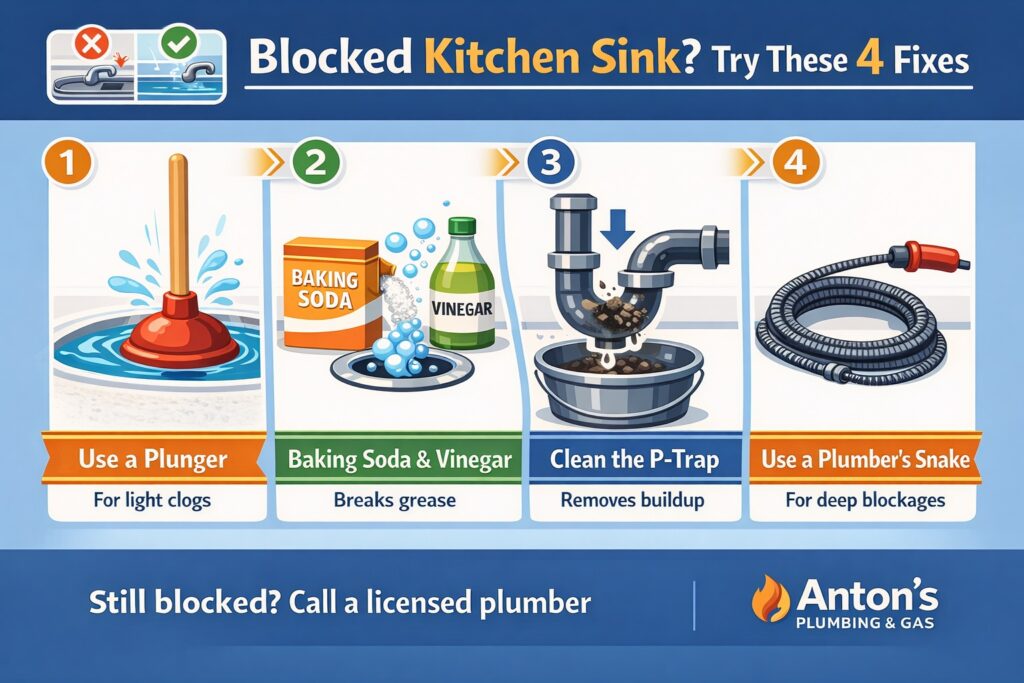
A blocked kitchen sink can interrupt your routine and make even simple tasks like washing dishes more difficult. The right method depends on the type of blockage, how deep it sits in the pipe, and whether the clog is caused by grease, food scraps, or trapped debris. Starting with the simplest option and working toward more hands-on solutions can help you clear the drain safely and effectively.
Use a Plunger
A plunger can help loosen a blockage by creating pressure that pushes and pulls against the clog. To make this method work, seal any overflow hole or second basin, keep enough water in the sink to cover the plunger cup, and plunge firmly until the water starts to drain.
Try Bicarb Soda and Vinegar
Bicarb soda (bicarbonate of soda) and vinegar can help break down soft grease and soap buildup inside the drain. After removing standing water, pour the bicarb soda into the drain, follow it with white vinegar, let the mixture fizz and sit, then flush with hot water to help restore flow.
Remove and Clean the P-Trap
The P-trap is the curved pipe under the sink where grease, food particles, and sludge often collect. By placing a bucket underneath, loosening the slip nuts, removing the trap, and cleaning out the buildup, you can often clear a blockage that is close to the sink.
Use a Plumber’s Snake
A plumber’s snake is useful when the blockage sits deeper in the pipe and cannot be reached by plunging or cleaning the P-trap. The flexible cable is fed into the pipe, rotated to break up or catch the clog, and then pulled back out before the trap is reassembled and the drain is flushed.
These methods give you a practical step-by-step way to deal with many common kitchen sink blockages at home. Simple clogs caused by grease or food residue may clear with plunging or natural cleaning methods, while deeper obstructions may need trap removal or a drain snake. If the sink still will not drain after trying these options, the problem may be further down the line and best handled by a licensed plumber.
Preventing Future Kitchen Sink Blockages
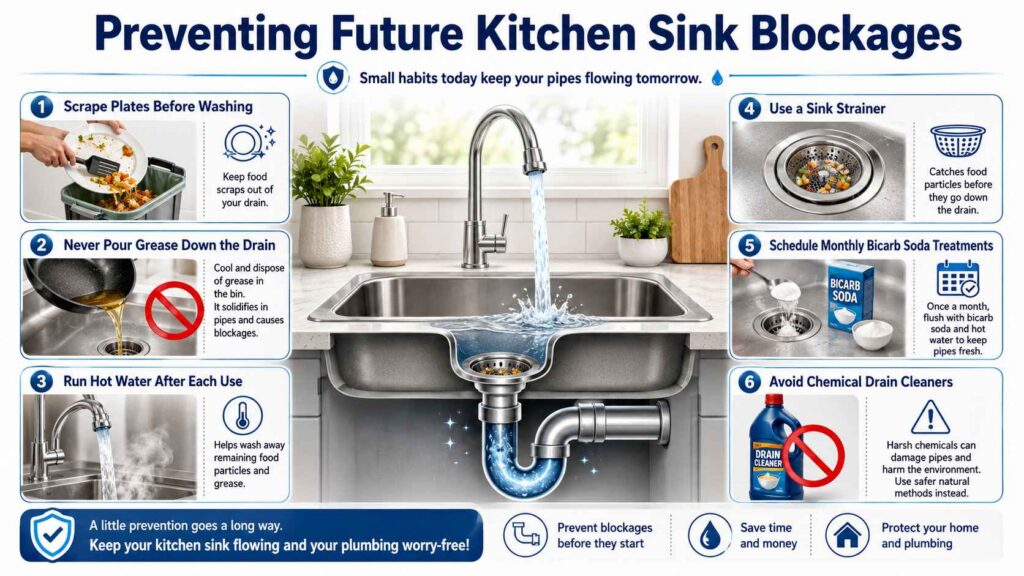
Prevention saves you time, money, and the frustration of a flooded sink. Small changes to your daily routine can keep drains clear for years, and help you stay on the right side of Sydney Water’s trade waste guidelines if you ever run a home business from your kitchen.
Scrape Plates Before Washing
Even if you have a waste disposal unit, scrape food scraps into the bin first. Disposal units chop waste into smaller pieces, but they don’t dissolve fat or fibrous vegetables, which can tangle and clog further down the line.
Never Pour Grease Down the Drain
Let cooking oil and fat cool in the pan, then scrape it into a container and throw it in the bin. Grease solidifies as it cools, coating your pipes and trapping other debris—and it’s one of the biggest causes of blockages in the Sydney Water sewer network too.
Run Hot Water After Each Use
A thirty-second flush of hot water helps dissolve soap and pushes small particles through the system before they settle. It’s a simple habit that makes a real difference.
Use a Sink Strainer
A stainless steel or silicone strainer catches food scraps, tea leaves, and other solids before they enter the drain. Empty it into the bin after each meal and rinse it clean.
Schedule Monthly Bicarb Soda Treatments
Pour a quarter cup of bicarb soda and a quarter cup of vinegar down the drain once a month, let it sit for thirty minutes, then flush with hot water. This keeps grease and soap from building up into a hard layer.
Avoid Chemical Drain Cleaners
Caustic liquids can corrode old pipes, especially if you have galvanised steel or PVC joints, both common in older Sydney and NSW homes. They also pose a safety risk if they splash or if you need to snake the drain later—residual chemicals can burn skin and damage tools.
When to Call a Licensed Sydney Plumber

DIY methods work for straightforward clogs, but some situations need specialist tools and knowledge. Recurring blockages mean there’s an underlying issue—corrosion, poor pipe slope, or invasive tree roots. Foul smells that don’t clear after cleaning suggest a venting problem or a crack in the sewer line. Water backing up into other fixtures (like your dishwasher or laundry tub) points to a blockage in the main drain, not just the kitchen branch.
Anton’s Plumbing & Gas is fully licensed under NSW Fair Trading (Licence No. 210933C), which means any work touching your sewer connection, water supply, or gas fittings is completed lawfully and to AS/NZS 3500 standard. If you’re ever unsure whether a job is DIY-safe or needs a licensed tradesperson, give us a call on 0493 824 176 and we’ll talk you through it.
Our team uses CCTV drain inspection to see inside your pipes without digging. A tiny waterproof camera travels through the line, sending live video to a monitor above ground. We can identify grease buildup, foreign objects, root intrusion, or structural damage, then recommend the most cost-effective repair—whether that’s hydro jetting, pipe relining, or a targeted excavation.
Hydro jetting clears even the toughest blockages by blasting high-pressure water through the pipe. It scours away years of grease, scale, and sludge, restoring full flow and reducing the chance of another clog. We back our work with a lifetime labour warranty, so if a problem reoccurs due to our workmanship, we’ll return and fix it at no extra charge.
Why Choose Antons Plumbing & Gas for Blocked Drains
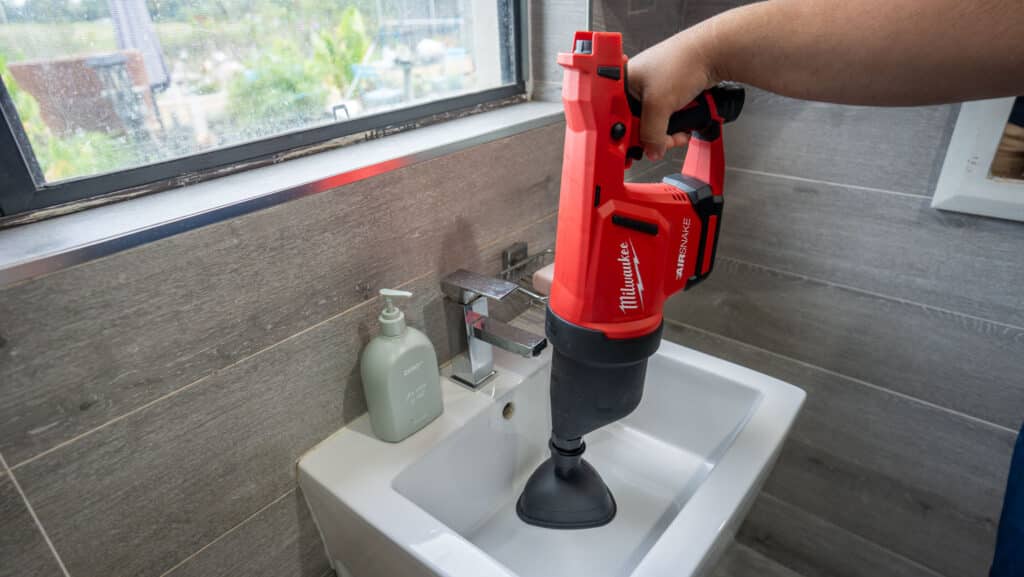
We’ve spent more than 25 years diagnosing and clearing blocked drains across Sydney. Our team holds full licensing under NSW Fair Trading (Lic: 210933C) and complies with AS/NZS 3500 plumbing standards on every job. That means safe work practices, quality parts, and clear documentation you can trust—including compliance with Sydney Water requirements where your drain connects to the main sewer.
When you call us for a blocked kitchen sink, we start with a thorough assessment. Is the blockage in the trap, the branch line, or the main sewer? Is there damage to the pipe, or just a buildup of grease? We explain what we find in plain English, give you upfront pricing in AUD, and present your options—repair, replace, or reline—with the pros and cons of each.
| Service | What We Do | Typical Response Time |
|---|---|---|
| CCTV Drain Inspection | Camera survey to locate blockages, cracks, or root intrusion | Same day |
| Hydro Jetting | High-pressure water cleaning to remove grease, scale, and debris | Same day |
| Pipe Relining | Trenchless repair using epoxy liner to seal cracks and restore flow | 1–2 days |
| P-Trap Replacement | Remove and install new trap, check for leaks | Same day |
| Emergency Drain Clearing | 24/7 response for urgent blockages or overflows | Within hours |
Our CCTV drain inspection service takes the guesswork out of hidden blockages. You’ll see exactly what’s inside your pipes, and we’ll provide a digital recording and written report for your records or strata manager. If hydro jetting is the best solution, we’ll schedule it at a time that suits you, complete the work efficiently, and clean up any mess. Same-day service is standard across the Inner West, Eastern Suburbs, North Shore, Northern Beaches, Hills District, and Western Sydney, and our 24/7 emergency line means help is always available when a burst pipe or major blockage can’t wait until morning.
We charge a fixed rate for our work, quoted upfront in AUD, so you know the cost before we start. There’s no call-out fee from 7am to 3pm on weekdays (excluding public holidays), and we back every job with a lifetime labour warranty. If something goes wrong because of our workmanship, we’ll return and fix it at no charge.
What to Expect When We Arrive

Our process is designed to be transparent, respectful, and efficient. When you book a blocked drain service, here’s what happens from start to finish.
We confirm your appointment time and send a text reminder. Our plumber arrives in a clearly marked van with all the tools and parts needed for most jobs. We’ll introduce ourselves, put on shoe covers, and ask a few questions about the symptoms—when the blockage started, what you’ve tried already, and whether other fixtures are affected.
Next we inspect the sink and drain. We’ll remove the trap if needed, check for visible obstructions, and test the flow. If the problem isn’t obvious, we’ll recommend a CCTV inspection to see inside the pipes. You’ll watch the footage with us and we’ll explain what we find—grease buildup, tree roots, a collapsed section, or something else.
Once we’ve identified the cause, we’ll give you a fixed-price quote in AUD that covers labour, parts, and cleanup. If you approve, we start work immediately. For a simple blockage we might clear it with a hand snake or hydro jetter within the hour. For pipe damage we’ll discuss options like relining or excavation, and schedule a follow-up visit if needed.
When the job is done we test the drain, clean the work area, and show you the before-and-after results. You’ll receive a written invoice, a compliance certificate if required, and our contact details for any questions. We don’t leave until you’re confident the problem is solved.
Conclusion
A blocked kitchen sink disrupts your entire household, but you don’t have to live with slow drains or foul smells. Start with the simple fixes—plunging, bicarb soda, and trap removal—and move to professional help if the problem persists. Our licensed team is ready to diagnose the root cause, clear the blockage, and prevent it from coming back, all with upfront pricing and same-day service across Sydney. Call 0493 824 176 or book online, and we’ll have your sink flowing again before the day is done.
Anton’s Plumbing & Gas specialises in blocked drains and CCTV inspections across Sydney Metro. Our licensed team (NSW Lic. 210933C) diagnoses and clears stubborn kitchen blockages fast. Get started with same-day service today.
Related Articles
- Top Tips for How to Unclog Coconut Oil from Your Drain
- How to Get Oil Out of Sink Drain Without Damaging Pipes
- How to Unclog Oil in Sink Quickly and Safely
FAQs
What Is The Best Way To Unclog A Kitchen Sink?
The best way to unclog a kitchen sink is to start with a plunger to create pressure and dislodge the blockage. If that doesn’t work, using a mixture of vinegar and bicarb soda can help break down grease. For persistent clogs, it may be best to call a professional like Anton’s Plumbing & Gas, where our experienced team can diagnose and resolve the issue effectively.
How Do You Drain A Sink Without A Plunger?
If you don’t have a plunger, try pouring boiling water down the drain to help dissolve any grease or debris. Alternatively, a mixture of bicarb soda and vinegar can also work. If these methods fail, our skilled plumbers can provide prompt assistance to clear your sink efficiently.
Can You Use Vinegar And Bicarb Soda To Unclog A Kitchen Sink?
Yes, using vinegar and bicarb soda is an effective natural method to unclog a kitchen sink. Pour half a cup of bicarb soda followed by half a cup of vinegar down the drain, let it sit for about 30 minutes, then flush with hot water. If the clog persists, Anton’s Plumbing & Gas is here to help with our professional services.
What Tools Do I Need To Drain A Kitchen Sink?
To drain a kitchen sink, you may need a plunger, a bucket, and a spanner for any plumbing connections. A drain snake can also be useful for deeper clogs. If you prefer a hassle-free solution, our expert team at Anton’s Plumbing & Gas is well-equipped to handle any drainage issues.
How Do You Fix A Kitchen Sink That Won’t Drain?
To fix a kitchen sink that won’t drain, start by checking for visible blockages and clearing them. If that doesn’t work, use a plunger or a drain snake. For more complex issues, it’s best to contact Anton’s Plumbing & Gas, where our qualified technicians can efficiently diagnose and repair the problem.
How Much Does It Cost To Unblock A Kitchen Sink In Sydney?
Costs vary depending on whether the blockage is a simple trap clean or needs hydro jetting or pipe relining. We provide a fixed, upfront quote in AUD before any work begins, so there are no surprises. Call 0493 824 176 for an accurate quote for your specific situation.
Do I Need A Licensed Plumber For A Blocked Kitchen Sink In NSW?
Simple DIY clearing (plunging, cleaning the trap) doesn’t require a licence, but any work touching your sewer connection or water supply must be carried out by a licensed plumber under NSW Fair Trading rules. Anton’s Plumbing & Gas holds Licence No. 210933C, so you can book us with confidence for anything beyond a basic DIY fix.
How Quickly Can Anton’s Plumbing & Gas Attend A Blocked Drain In Sydney?
We offer same-day service across most of Sydney, including the Inner West, Eastern Suburbs, North Shore, Northern Beaches, Hills District, and Western Sydney, plus a 24/7 emergency line for urgent overflows. Book online or call now to check availability in your suburb.
Is A Blocked Kitchen Sink Covered By My Landlord Or Strata In NSW?
It depends on your tenancy agreement or strata by-laws and whether the blockage is inside your unit or in shared infrastructure. We provide detailed written reports and invoices that you can pass on to your landlord, real estate agent, or strata manager to support any claim.
Can A Blocked Kitchen Sink Affect Sydney Water Infrastructure?
If a blockage in your internal pipework travels far enough, it can affect the connection point to the Sydney Water sewer main. Our CCTV inspections confirm exactly where the blockage sits so we only quote for work that’s actually needed, and we handle any Sydney Water compliance requirements for you.
What Suburbs Does Anton’s Plumbing & Gas Service For Blocked Drains?
We service the greater Sydney metro area, including the Inner West, Eastern Suburbs, North Shore, Northern Beaches, Hills District, Parramatta, Chatswood, Carlingford, Hornsby, and Western Sydney. Not sure if we cover your suburb? Call 0493 824 176 and we’ll confirm straight away.
Do You Offer Emergency Plumbing For Blocked Kitchen Sinks After Hours?
Yes, we run a 24/7 emergency line for urgent blockages, overflows, and backups that can’t wait until business hours. If your kitchen sink is overflowing or backing up into other fixtures, call us straight away rather than waiting overnight.
Will You Provide A Written Quote Before Starting Work?
Always. We inspect the problem first, explain what we’ve found in plain English, and give you a fixed-price quote in AUD covering labour, parts, and cleanup before any work begins, so you can decide with full information.
What Happens If The Blockage Returns After Your Repair?
All our work is backed by a lifetime labour warranty. If a blockage recurs because of our workmanship, we’ll return and fix it at no extra charge. Just call our office and quote your invoice number.
Can You Inspect My Drain With A Camera Before Quoting?
Yes, CCTV drain inspection is available same day in most cases. It lets us see exactly what’s causing the blockage—grease, roots, or a cracked pipe—so we can quote accurately rather than guessing, and you’ll get a digital recording for your records.
What Is The Licence Number Of Anton’s Plumbing & Gas?
We are fully licensed under NSW Fair Trading, Licence No. 210933C. This licence covers plumbing, drainage, and gas fitting work across the Sydney metro area, and you’re welcome to verify it before booking.
Do You Charge A Call-Out Fee For Blocked Sink Repairs?
There’s no call-out fee from 7am to 3pm on weekdays, excluding public holidays. Outside these hours, including our 24/7 emergency service, different rates may apply. Ask our team for details when you book.
Can Hydro Jetting Damage Old Sydney Pipes?
Hydro jetting is safe for the vast majority of pipe materials when performed by a licensed technician who checks pipe condition first. For older, fragile, or already-cracked pipes we may recommend a gentler approach or pipe relining instead—our CCTV inspection helps us make that call before we start.
How Do I Book A Plumber For A Blocked Kitchen Sink?
You can call us directly on 0493 824 176 or book online through our website. Let us know your suburb and a brief description of the problem, and we’ll organise a same-day appointment where possible.
Are Your Repairs Guaranteed?
Yes, every job we complete is backed by a lifetime labour warranty and carried out under our NSW Fair Trading licence (210933C) to AS/NZS 3500 standards, so you can book with confidence.