


You flush the toilet, and the valve handle in your apartment shifts slightly. Or you notice the main shut-off valve trembling whenever your neighbour runs their shower. It’s unsettling — and you’re right to wonder what’s happening inside your building’s plumbing. In multi-unit buildings across Sydney, shared water lines and interconnected supply networks can create surprising reactions when one unit draws water while another watches a valve respond in real time.
This article explains why your apartment valve moves when a neighbour uses water, what it reveals about your building’s plumbing configuration, and when movement signals a problem worth investigating. You’ll also learn how licensed plumbers diagnose shared-pipe issues, what repairs may be needed, and how to protect your unit from pressure fluctuations and unauthorised shutoffs.
Key Takeaways
- Valve movement in your apartment when neighbours use water usually means you share a common supply line or water tank feed.
- Pressure changes, partially open valves, and water hammer can all cause handles to shift or vibrate.
- Unauthorised shut-off valves installed by neighbours may affect your water supply and violate strata bylaws under NSW law.
- A licensed Sydney plumber can trace pipe routes, test pressure, and confirm compliance with AS/NZS 3500 plumbing standards.
- Same-day inspections and clear diagnostic reports help strata managers and owners across NSW resolve shared-plumbing disputes quickly.
Why Your Apartment Valve Moves When Neighbor Uses Water
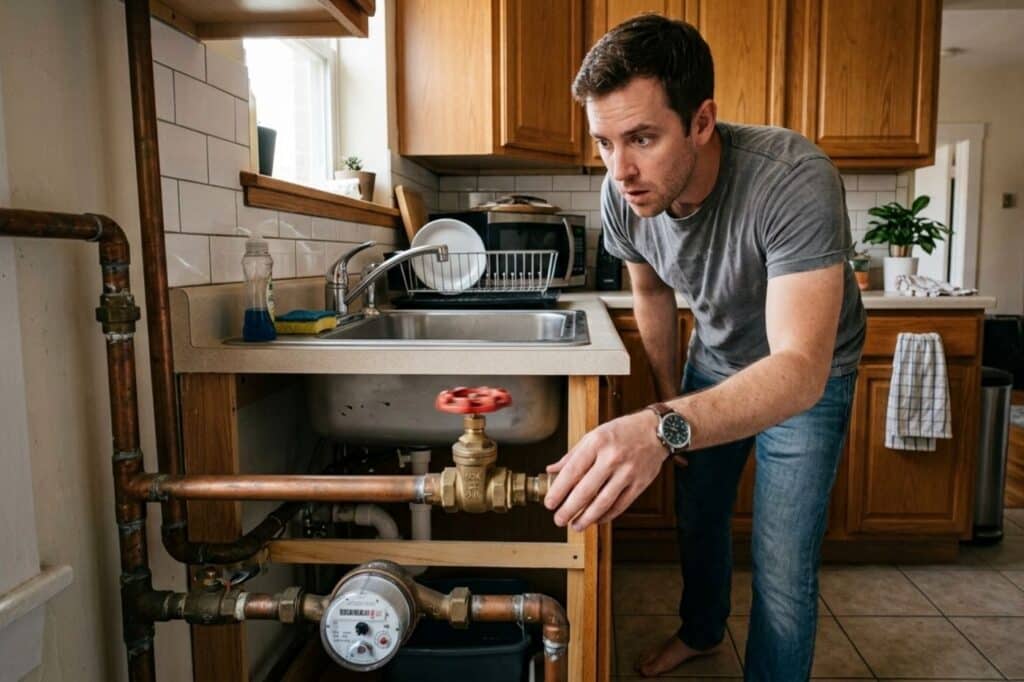
When you see a valve handle rotate or wobble as someone else turns on a tap, the most common reason is shared supply piping. Many Sydney apartment blocks — especially older walk-ups and newer strata developments — route a single cold-water main through multiple units before branching to individual fixtures. Opening a tap downstream changes the flow rate and pressure upstream, and that shift can nudge a gate valve or ball valve that isn’t fully seated.
Pressure drop is the second driver. Water flowing past a tee or junction creates a localised vacuum or pressure wave. If your isolation valve sits close to that junction, even a small change in dynamic pressure can push the valve stem or disc slightly, causing the handle to move. This is more noticeable with older brass gate valves, which have looser tolerances than modern quarter-turn ball valves.
A third cause is water hammer — the shock wave that travels through pipes when a tap closes abruptly. If your building lacks air chambers or water-hammer arrestors, that energy can rattle valve bodies and spin handles. You might hear a bang or thud at the same time the valve jumps. Buildings with galvanised steel or copper risers are especially prone to hammer because metal transmits vibration efficiently.
How Shared Plumbing Systems Work in Sydney Apartments
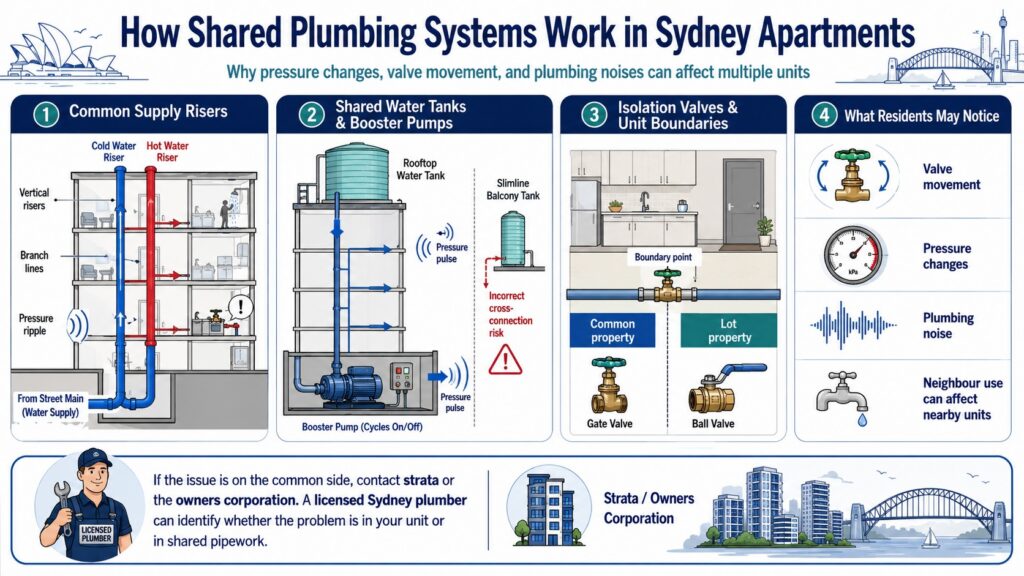
Shared plumbing systems in Sydney apartments rely on connected pipes, valves, pumps, and water supply lines that serve multiple units within the same building. Because these systems are interconnected, pressure changes in one area can sometimes affect nearby apartments. Understanding how these shared components work helps explain why valve movement, water pressure changes, or unusual plumbing noises may happen even when your own fixtures are not being used.
Common Supply Risers
Most multi-storey apartment buildings use vertical risers — large-diameter pipes that carry cold and hot water from a basement pump or street main up through each floor. Branch lines split off at every level to feed individual units. Your isolation valve may sit on one of those branches, but the riser itself continues upward to serve neighbours above you. When someone on the fourth floor opens a shower, water accelerates through the riser, and the pressure wave ripples back down to your second-floor valve.
Shared Water Tanks and Booster Pumps
Buildings with rooftop water tanks or basement booster pumps introduce another variable. The pump cycles on and off to maintain pressure, and each start-stop event sends a pulse through the system. If your valve is connected directly to the pump discharge line, you’ll feel every cycle. Slimline water tanks installed on balconies for rainwater harvesting are usually isolated from mains supply, but if a neighbour has plumbed one incorrectly into the common system, cross-connections can cause unexpected pressure swings.
Isolation Valves and Unit Boundaries
Strata plumbing law in New South Wales defines where common property ends and lot property begins. Your isolation valve — often a gate valve or ball valve just inside your front door or under the kitchen sink — marks that boundary. Everything upstream is common property, maintained by the owners corporation. Everything downstream belongs to you. Sydney Water typically owns and maintains the main up to the property boundary or water meter; everything inside the building, including shared risers and internal valves, is the responsibility of the owners corporation and must comply with NSW plumbing regulations. When a valve on the common side moves, it’s a sign that building-wide hydraulics are at play, not just your unit’s fixtures.
Shared apartment plumbing can make simple water pressure changes feel more complex because several units rely on the same supply network. If the issue appears to come from the common plumbing side, it may need to be reviewed by the strata manager or owners corporation. A licensed Sydney plumber can inspect the system, identify whether the cause is inside the unit or part of the shared pipework, and recommend the right repair approach.
What Valve Movement Tells You About Your Plumbing
A valve that shifts slightly when a neighbour uses water is usually benign — it confirms shared supply and normal pressure variation. But certain patterns demand attention. If the handle spins freely or the valve closes on its own, the stem threads may be stripped, or someone has installed a motorised actuator without authorisation. If you lose water pressure or flow stops entirely when the valve moves, a neighbour’s shut-off may be upstream of yours, giving them control over your supply.
Vibration or chattering in the valve body often points to turbulent flow. Partially open gate valves create eddies that shake the disc and stem. Fully opening the valve usually stops the vibration. If it doesn’t, you may have a worn washer, a cracked valve seat, or debris caught in the throat. Persistent chatter can fatigue the valve body and lead to leaks at the packing nut or bonnet.
Noise is another clue. A sharp click when the valve moves suggests the handle is loose on the stem. A deep thud or bang indicates water hammer. A hissing or whistling sound means high velocity through a restriction — perhaps the valve is only half open, or scale has narrowed the bore. Each symptom maps to a specific root cause, and a licensed plumber can decode them during a same-day inspection.
Pressure Fluctuations and Water Hammer in Multi-Unit Buildings
Pressure fluctuations and water hammer are common issues in multi-unit buildings because several apartments often share the same supply lines, risers, pumps, and shut-off points. When a neighbour turns a tap on or off, the sudden change in water flow can create pressure movement through the shared plumbing system. These changes may cause valve movement, vibration, banging noises, or temporary water loss inside your unit.
| Symptom | Likely Cause | Recommended Action |
|---|---|---|
| Valve handle rotates slightly | Shared supply line or pressure drop | Confirm the valve is fully open and monitor for leaks |
| Valve vibrates or chatters | Turbulent flow, partially open valve, or worn seat | Fully open the valve and replace it if the chatter continues |
| Loud bang when neighbour closes tap | Water hammer or missing arrestors | Install hammer arrestors on common risers |
| Valve closes on its own | Stripped threads or unauthorised actuator | Inspect the valve and check for neighbour-installed controls |
| Loss of water when valve moves | Upstream shut-off controlled by neighbour | Trace the pipe route and verify strata compliance |
These symptoms should not be ignored, especially when they happen repeatedly or affect your water supply. In apartment buildings, the cause may come from either your own unit plumbing or the shared strata-controlled system. A licensed plumber can inspect the valve, trace the pipework, and confirm whether the issue needs a private repair or strata involvement.
Unauthorized Shut-Off Valves and Strata Compliance Issues
Unauthorised Shut-Off Valves and Strata Compliance Issues
One of the more troubling scenarios reported in plumbing forums involves a neighbour installing a shut-off valve on a shared supply line to control another unit’s water. This is illegal under strata law and violates the Plumbing and Drainage Act 2011 in New South Wales. Only licensed plumbers may alter common-property plumbing, and any work must be notified to NSW Fair Trading and comply with AS/NZS 3500.
If you suspect a neighbour has installed a valve that affects your supply, document the issue with photos and timestamps. Note when your water pressure drops or stops, and correlate it with the neighbour’s activity. Contact your strata manager and request a licensed plumber inspect the common pipework. We can use acoustic leak detection and pipe-tracing equipment to map the supply route, identify unauthorised fittings, and provide a compliance report for the owners corporation.
Strata committees have the authority to order removal of non-compliant work and recover costs from the responsible owner. In some cases, a building’s as-built drawings will show the original valve locations, making it easier to spot additions. If drawings are missing, a CCTV drain inspection camera can sometimes be adapted to inspect larger water lines, though this is less common than drain surveys.
When to Call a Licensed Sydney Plumber for Valve Movement
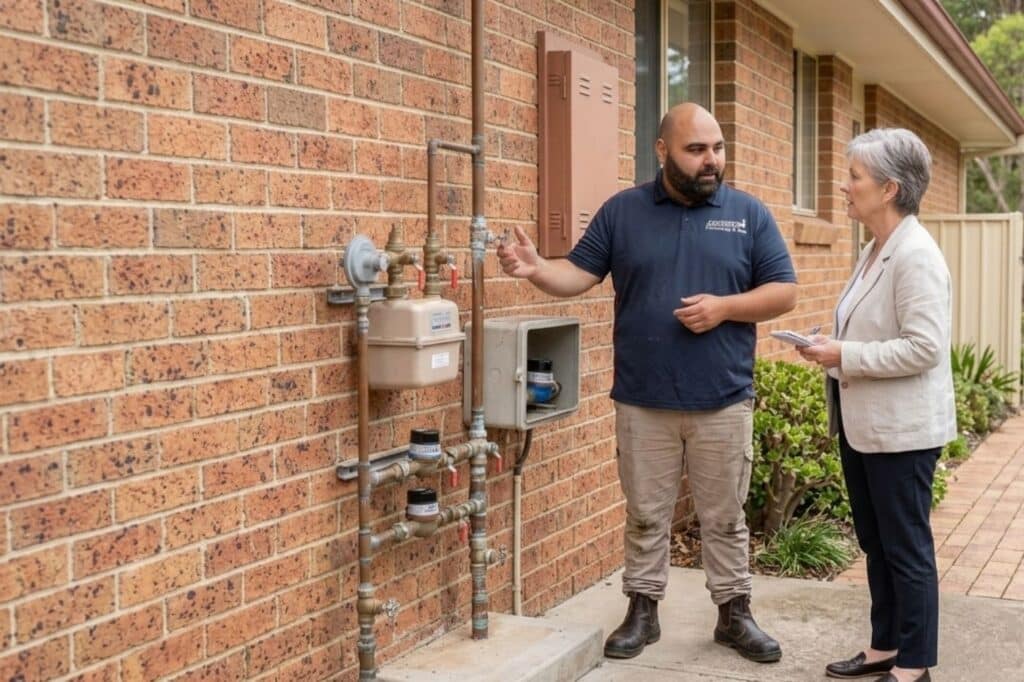
You should contact a licensed Sydney plumber if your apartment valve moves when a neighbour uses water and you also experience any of the following. Loss of pressure or intermittent flow suggests an upstream valve is being manipulated or a pipe is partially blocked. Leaks at the valve packing nut or bonnet indicate the valve body is stressed by vibration or pressure spikes. Persistent noise — banging, hissing, or whistling — means the system is operating outside normal parameters and may damage fixtures or pipes over time.
If the valve handle spins without resistance, the stem is likely disconnected from the disc, and the valve can no longer isolate your unit in an emergency. If you notice rust stains, corrosion, or water pooling near the valve, the body may be cracked or the threads compromised. Any of these signs warrant a same-day inspection to prevent a burst pipe or flood. Because this work involves shared, common-property pipework, it should only be carried out by a licensed plumber — Antons Plumbing & Gas holds NSW Lic. 210933C and is fully insured for strata and residential work across Sydney.
Our team at Antons Plumbing & Gas responds to shared-plumbing issues across Sydney’s Inner West, Eastern Suburbs, North Shore, and beyond. We arrive with diagnostic tools — pressure gauges, flow meters, and acoustic sensors — to measure what’s happening in real time. We’ll test your isolation valve, trace the supply route, check for water hammer, and provide a written report with photos. If repairs are needed, we present clear options with upfront pricing, so you and your strata committee can decide the best path forward.
Diagnosing Shared Plumbing Problems: What Our Plumbers Do
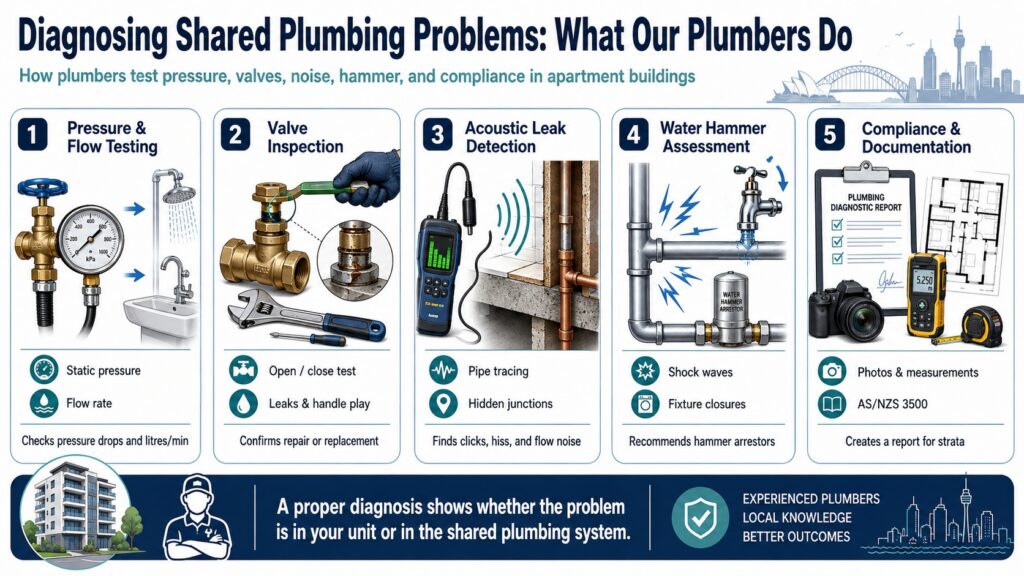
Diagnosing shared plumbing problems in apartments requires more than checking a single tap or valve. Because multiple units may be connected to the same risers, pumps, and supply lines, our plumbers look at how pressure, flow, vibration, and valve movement behave across the system. This helps identify whether the issue is inside your apartment, part of the shared plumbing network, or something that needs strata involvement.
1. Pressure and Flow Testing
We connect a calibrated pressure gauge to a hose tap or isolation valve outlet and record static pressure. Then we ask a neighbour to open a fixture while we monitor the gauge. A drop of more than 100 kPa suggests undersized supply pipes or a restriction. We also measure flow rate in litres per minute to confirm the system meets AS/NZS 3500 minimums for fixture units.
2. Valve Inspection and Operation Test
We fully close and open your isolation valve while checking for smooth operation, leaks, and handle play. A valve that binds or requires excessive force may have a corroded stem or seized packing. We’ll disassemble the valve if safe to do so, inspect the disc and seat, and determine whether repair or replacement is more cost-effective.
3. Acoustic Leak Detection and Pipe Tracing
Using sensitive microphones and correlating software, we listen for flow noise inside walls and floors. This helps us map the route of shared supply lines and identify hidden junctions where pressure changes originate. If a neighbour has installed an unauthorised valve, we can often hear the distinct click or hiss when it operates.
4. Water Hammer Assessment
We observe fixture closures throughout the building and listen for shock waves. If hammer is present, we recommend installing diaphragm arrestors at key points — typically near washing machine valves, dishwasher connections, and main risers. Arrestors are compact, require no maintenance, and can eliminate 90 percent of hammer energy.
5. Compliance and Documentation
We photograph existing valve installations, measure pipe sizes, and compare the layout to AS/NZS 3500 requirements. Our written report includes a site plan, test results, and a list of non-compliant items. Strata managers use this documentation to enforce bylaws and plan remedial work.
A proper diagnosis gives you clear evidence instead of guesswork. If the problem comes from your unit, our plumbers can recommend a targeted repair; if it comes from the common plumbing system, the findings can support a strata request. With the right testing and documentation, shared plumbing problems can be resolved more safely, fairly, and efficiently.
Preventing Valve Issues and Pressure Problems in Your Apartment
You can reduce the likelihood of valve movement and pressure fluctuations by keeping your isolation valve fully open at all times unless you’re performing maintenance. A partially open gate valve creates turbulence and vibration. Mark the valve handle with a paint pen or label to show the fully open position, so anyone who touches it knows the correct setting.
Inspect the valve and surrounding pipework every six months for signs of corrosion, leaks, or loose fittings. Tighten the packing nut if you see drips around the stem. If the handle feels stiff, apply a small amount of silicone-based lubricant to the threads — never use petroleum-based grease, which can degrade rubber seals.
If your building has a rooftop water tank or basement pump, ask your strata manager to schedule annual maintenance. Pumps should be checked for correct pressure settings, and tanks inspected for sediment and liner condition. A well-maintained water tank and pump system delivers stable pressure and reduces the shock loads that cause valve movement.
Consider installing a pressure-limiting valve (PLV) at your unit’s entry point if street pressure exceeds 500 kPa, which is common in parts of Sydney due to Sydney Water’s mains pressure. A PLV reduces downstream pressure to a safe, consistent level — typically 350 kPa — which protects fixtures, hoses, and appliances. We can supply and fit a PLV during a same-day service visit, and it often pays for itself by extending the life of taps, water dispensers, and water pumps.
Real-World Example: Resolving a Shared-Valve Dispute in an Inner West Apartment Block
Last year, we were called to a 1980s walk-up in Sydney’s Inner West where a ground-floor tenant reported her kitchen tap losing pressure whenever the upstairs neighbour ran a bath. She also noticed her under-sink isolation valve handle rotating slightly during those events. The strata manager suspected an unauthorised valve but had no as-built drawings to confirm pipe routes.
Our plumber used an acoustic sensor to trace the cold-water supply from the street main. We discovered that the original builder had run a single 25-millimetre copper riser through both units, with a tee and isolation valve for each. The upstairs tenant had recently renovated and installed a second isolation valve on the common riser — inside their own unit — so they could shut off water to the lower apartment during their bathroom work. This was a clear breach of strata bylaws and NSW plumbing regulations.
We documented the unauthorised valve with photos and pressure-test data, showing a 150 kPa drop at the lower unit’s tap when the upper valve was partially closed. The strata committee ordered the upper tenant to remove the valve and restore the original configuration. We completed the remedial work, pressure-tested the system, and provided a compliance certificate. The ground-floor tenant’s tap pressure returned to normal, and her isolation valve no longer moved when the neighbour used water.
How Antons Plumbing & Gas Supports Strata Managers and Apartment Owners

Shared plumbing issues require clear communication, accurate diagnosis, and compliant repairs. We work closely with strata managers across Sydney to deliver detailed inspection reports, transparent quotes, and same-day service when emergencies arise. Our team understands the legal boundaries between common and lot property, and we document every finding so committees can make informed decisions.
We also support individual apartment owners who need independent advice before approaching their strata committee. If you’re concerned about valve movement, pressure loss, or a neighbour’s plumbing work, we can inspect your unit, test the system, and provide a written opinion on compliance and safety. You can then present that report to your strata manager or use it to request remedial action.
All our work is backed by a lifetime labour warranty, giving you confidence that repairs will last. We use quality components from trusted brands, comply with AS/NZS 3500 plumbing standards, and carry full NSW licensing and insurance (Lic: 210933C). Whether you need a single valve replaced or a building-wide hydraulic audit, we’re ready to help — 24/7, with no call-out fee from 7am to 3pm on weekdays.
Conclusion
Valve movement is one of many clues that your apartment’s plumbing is part of a larger, interconnected system. Understanding how shared supply lines, water tanks, and booster pumps interact helps you spot problems early and advocate for proper maintenance. When you know what’s normal and what’s not, you can act quickly to prevent leaks, pressure loss, and costly water damage — keeping your home safe and your strata community running smoothly.
Antons Plumbing & Gas specialises in leak detection and pressure diagnostics for apartment buildings across Sydney Metro. Our licensed team (NSW Lic. 210933C) diagnoses shared plumbing issues with CCTV inspections and upfront pricing. Call 0493 824 176 for same-day service and learn more today.
Related Articles
- Why Is My Hose Bib Leaking from Wall? Causes and Repair Options
- What Is a Tempering Valve?
- Unknown Plumbing Part Identification for Homeowners and DIY Beginners
FAQs
What Causes Apartment Valves To Move When Neighbours Use Water?
The movement of apartment valves when neighbours use water is typically caused by fluctuations in water pressure within the plumbing system. When someone uses water, it can create pressure changes that affect your valve. Our experienced team at Antons Plumbing & Gas can help diagnose the issue and provide effective solutions to stabilise your plumbing.
Is It Normal For Water Valves To Move In An Apartment?
While some minor movement in water valves can occur due to pressure changes, excessive movement is not considered normal. It may indicate an underlying issue with the plumbing system. If you notice significant movement, it’s best to consult a licensed plumber like those at Antons Plumbing & Gas to assess the situation.
How Can I Stop My Apartment Valve From Moving When Neighbours Use Water?
To mitigate valve movement, it’s important to ensure your plumbing system is properly pressurised and free from leaks. Installing pressure regulators or stabilising fittings may also help. Our qualified team can evaluate your plumbing and recommend the best course of action to address this issue effectively.
Can Water Pressure Affect My Apartment’s Plumbing?
Yes, water pressure can significantly affect your apartment’s plumbing. High pressure can lead to leaks and damage, while low pressure can cause inadequate water flow. At Antons Plumbing & Gas, we understand the importance of maintaining optimal water pressure and can assist you in finding the right balance for your plumbing needs.
What Should I Do If My Apartment Valve Is Moving Excessively?
If your apartment valve is moving excessively, it’s crucial to address the issue promptly to prevent potential damage. Contact a licensed plumber like Antons Plumbing & Gas to conduct a thorough inspection and provide tailored solutions to stabilise your plumbing system and ensure your safety.
How Quickly Can Antons Plumbing & Gas Attend My Sydney Apartment?
We offer same-day service across Sydney Metro for valve movement, pressure loss, and shared-plumbing concerns. Call 0493 824 176 and our team will arrange a visit as soon as possible, often on the same day you call.
Do You Charge A Call-Out Fee For Valve Inspections?
No — there’s no call-out fee for visits between 7am and 3pm on weekdays. We provide upfront pricing before any work begins, so you know exactly what’s involved before we start.
Are You Licensed To Work On Shared Strata Plumbing In NSW?
Yes. Antons Plumbing & Gas holds NSW Licence 210933C and is fully insured to carry out work on both common property and individual lot plumbing, in line with the Plumbing and Drainage Act 2011 and AS/NZS 3500.
Can You Provide A Written Report For My Strata Manager?
Yes. After every inspection we provide a written report with photos, pressure-test results, and clear findings that you or your strata manager can use to support maintenance decisions or bylaw enforcement.
What Areas Of Sydney Do You Service For Apartment Plumbing Issues?
We service apartment buildings across Sydney’s Inner West, Eastern Suburbs, North Shore, and greater Sydney Metro. If you’re unsure whether we cover your suburb, call 0493 824 176 and we’ll confirm straight away.
Do You Offer Same-Day Or Emergency Appointments?
Yes, we operate 24/7 for urgent plumbing issues, including valve failures, water hammer, and sudden pressure loss, with same-day appointments available across Sydney.
How Much Does It Cost To Inspect An Isolation Valve?
Every job is priced individually depending on access, valve condition, and whether common property is involved. We always confirm pricing upfront before starting any work, so there are no surprises.
Is There A Warranty On Valve Repairs Or Replacements?
Yes. All repairs and replacements carried out by our team are backed by a lifetime labour warranty, giving you confidence the work will last.
Can You Install A Pressure-Limiting Valve During The Same Visit?
In most cases, yes. If our inspection shows your street pressure exceeds safe levels, we can supply and fit a pressure-limiting valve during the same same-day visit.
What Should I Do Before You Arrive?
If possible, note when the valve movement, noise, or pressure loss occurs and whether it correlates with a neighbour using water. Photos or short videos help us diagnose the issue faster once we’re on site.
Do You Work With Owners Corporations And Strata Committees Directly?
Yes. We regularly liaise directly with strata managers and owners corporations across Sydney, providing the documentation and compliance advice they need to approve remedial work.
How Do I Book An Inspection With Antons Plumbing & Gas?
Simply call 0493 824 176 or use our online booking form. Let us know about the valve movement and any related symptoms, and we’ll arrange a licensed plumber to inspect your unit, often the same day.
Can You Detect Unauthorised Valves Installed By A Neighbour?
Yes. Using acoustic leak detection and pipe-tracing equipment, we can identify unauthorised valves or fittings on shared supply lines and document them for your strata committee.
Do You Service Both Common Property And Individual Units?
Yes. As a licensed plumbing business, we can inspect and repair plumbing on both sides of the boundary — inside your unit and on shared common-property pipework — with the appropriate strata authorisation.
What Happens If The Problem Is Confirmed As Common Property?
If our inspection confirms the issue is on the common-property side, we provide a written report your strata manager can use to authorise repairs. We’re happy to liaise directly with the owners corporation to get the work approved and completed quickly.