


A tempering valve is a temperature-activated mixing device that combines hot water from your storage tank with cold water to deliver safe, consistent water temperature at your taps. This critical safety component prevents A tempering valve is a temperature-activated mixing device that combines hot water from your storage tank with cold water to deliver safe, consistent water temperature at your taps. This critical safety component prevents scalding by automatically reducing water temperature to around 50°C while allowing your hot water storage tank to maintain 60°C+ for Legionella bacteria control. Understanding how your domestic hot water tempering valve works can help protect your Sydney family from dangerous burns and ensure your hot water system meets NSW plumbing standards and Sydney Water requirements.
This guide covers everything you need to know about water tempering valves, including how they function, installation requirements, maintenance needs, and when replacement becomes necessary. We’ll also explain the different types available and why NSW regulations mandate their use in most residential hot water systems.
Key Takeaways
- Tempering valves automatically mix hot and cold water to prevent scalding while maintaining safe storage temperatures.
- NSW plumbing codes require tempering valve installation on most domestic hot water systems.
- Different valve types suit specific heater systems including electric, gas, solar, and heat pump units.
- Regular maintenance and testing ensure optimal performance and compliance with safety standards.
- Professional installation by a licensed Sydney plumber guarantees proper operation and meets NSW Fair Trading licensing requirements.
Let’s explore the essential role of tempering valves in your Sydney home’s hot water safety system.
Understanding What Is a Tempering Valve

A hot water tempering valve functions as your home’s primary defence against scalding injuries by automatically regulating water temperature at the point of delivery. The device features a thermostatic element that responds to temperature changes, adjusting the mixing ratio of hot and cold water to maintain consistent output temperatures. This mixing valve for hot water operates independently of water pressure fluctuations or supply temperature variations.
The valve contains several key components that work together seamlessly. Hot and cold water inlets connect to your existing plumbing lines, while the mixed outlet delivers tempered water to your taps and fixtures.
Inside the valve housing, a thermostatic sensor continuously monitors output temperature and adjusts an internal mixing mechanism accordingly. An adjustment spindle allows licensed plumbers to calibrate the desired output temperature during installation or maintenance visits.
Unlike basic mixing taps that rely on manual adjustment, a thermostatic mixing valve (TMV) provides automatic temperature control regardless of supply pressure changes. When someone flushes a toilet or starts the washing machine, your tempering valve compensates for pressure drops to maintain safe water temperatures. This protection proves especially important for children, elderly residents, and anyone with reduced sensitivity to heat.
Types of Domestic Hot Water Tempering Valves

Different hot water systems require specific tempering valve types to ensure optimal performance and compliance with Australian standards. Each valve type features colour-coded caps that indicate their intended application and operating temperature range. Selecting the correct valve type prevents system inefficiencies and potential safety issues.
| Valve Type | Application | Temperature Range | Best For |
|---|---|---|---|
| Blue Cap | Electric Storage | 65-75°C | Standard electric heaters |
| Green Cap | Gas/Continuous | Variable | Gas systems |
| Orange Cap | Heat Pump/Solar | 50-65°C | Renewable systems |
| Black Cap | Large/Low Pressure | Variable | Complex installations |
1. Blue Cap Tempering Valves for Electric Systems
Blue cap valves suit electric storage water heaters operating between 65-75°C. These valves handle the higher storage temperatures common in electric systems while delivering safe 50°C water to fixtures.
2. Green Cap Valves for Gas and Continuous Flow
Green cap tempering valves work with gas storage heaters and continuous flow systems. They accommodate the variable temperature outputs typical of gas-fired water heating equipment.
3. Orange Cap Valves for Heat Pumps and Solar
Orange cap valves are designed for heat pump and solar hot water systems. These systems often operate at different temperature ranges and require specialised mixing valve calibration.
4. Black Cap Valves for Large or Low-Pressure Systems
Black cap valves suit larger residential systems or installations with lower water pressure, which is a common issue in some older Sydney terraces and units. They feature modified internals to maintain mixing performance under challenging conditions.
5. Electronic Tempering Valves for Precision Control
Electronic tempering valves offer digital temperature control and monitoring capabilities. These advanced units provide precise temperature regulation and can integrate with smart home systems.
How 3-Way Tempering Valve Installation Works

A 3-way tempering valve connects directly to your hot and cold water supply lines, typically installed on the outlet side of your hot water storage tank. The installation process requires careful attention to water flow directions, pipe sizing, and compliance with AS/NZS 3500 plumbing standards. Professional installation ensures optimal performance and meets licensing requirements under NSW Fair Trading and Sydney Water regulations.
Our licensed plumbers begin by shutting off water supply and draining the relevant sections of your hot water distribution system. We then identify the optimal installation location, usually within 1.5 metres of your storage tank to minimise heat loss.
The valve body mounts securely to prevent movement during operation, with hot water inlet connected to the tank outlet and cold water inlet tied into your cold supply line. The mixed outlet connects to your existing hot water distribution network, delivering tempered water throughout your home.
Proper commissioning involves calibrating the output temperature using precision thermometers and adjusting the valve spindle to achieve 50°C delivery temperature. We test the system under various flow conditions to ensure consistent performance and document all settings for future reference. Our team provides you with compliance certificates and operating instructions upon completion, in line with NSW requirements.
When to Call a Licensed Sydney Plumber
Under NSW Fair Trading rules, any work altering your hot water system’s plumbing or gas fitting — including tempering valve installation, replacement, or recalibration — must be carried out by a licensed plumber. Sydney Water also has requirements around backflow prevention and hot water compliance for connected properties. If you notice inconsistent temperatures, no hot water, or any sign of a failing valve, call a licensed Sydney plumber rather than attempting a DIY fix. Anton’s Plumbing & Gas (NSW Lic. 210933C) can be reached on +61 493 824 176 for compliant, insured tempering valve work anywhere across Sydney.
Benefits of Hot Water Tempering Valve Systems
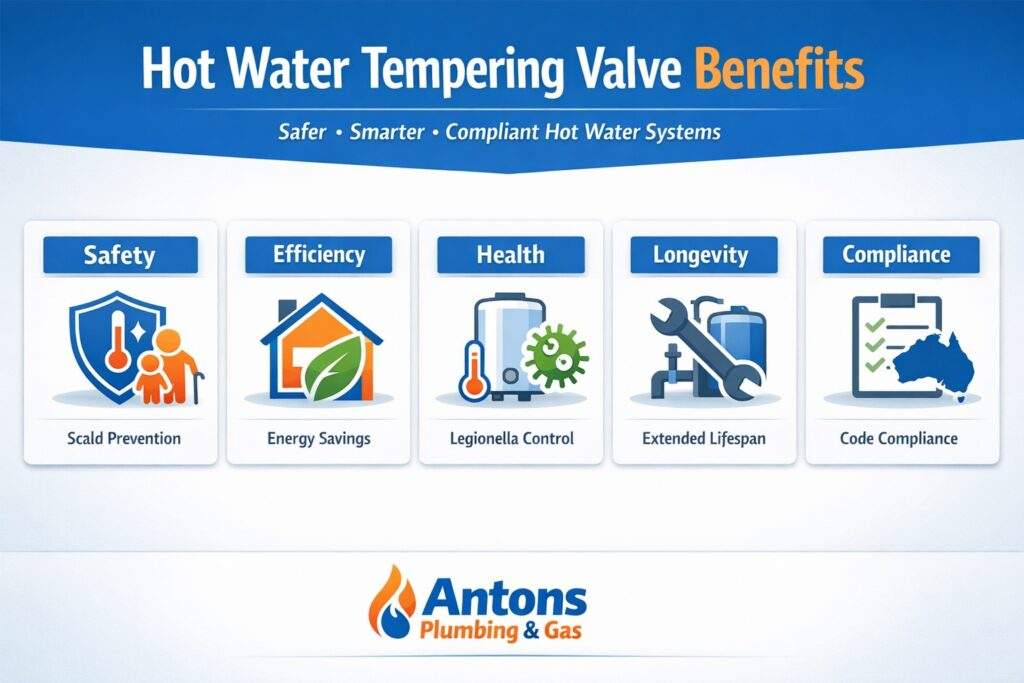
Installing a domestic hot water tempering valve delivers multiple advantages beyond basic scald prevention, including improved energy efficiency and enhanced system longevity. These devices help optimise your entire hot water distribution system while ensuring compliance with current Australian building codes. Understanding these benefits helps Sydney homeowners appreciate the value of proper tempering valve installation and maintenance.
Scald Prevention and Family Safety
Tempering valves eliminate the risk of accidental scalding by maintaining consistent safe water temperatures. This protection proves especially critical for households with young children or elderly residents who may have slower reaction times.
Energy Efficiency Through Reduced Waste
By delivering water at the desired temperature immediately, tempering valves reduce the mixing and adjustment time at fixtures. This efficiency translates to lower water heating costs and reduced water waste — a plus given Sydney Water’s ongoing focus on household water efficiency.
Legionella Bacteria Control
Tempering valves allow storage tanks to maintain 60°C+ temperatures that inhibit Legionella growth while delivering safe temperatures at taps. This dual-temperature approach provides both safety and health protection.
Extended Hot Water System Lifespan
Consistent temperature delivery reduces thermal stress on fixtures and fittings throughout your hot water distribution system. This protection helps extend the life of taps, shower mixers, and appliance connections.
Regulatory Compliance Assurance
Professional tempering valve installation ensures your hot water system meets current NSW plumbing standards and Sydney Water requirements. This compliance protects your insurance coverage and property value while avoiding potential penalties.
At Antons Plumbing & Gas, we install and service all types of tempering valves across Sydney, ensuring your system delivers optimal safety and efficiency. Our licensed team provides same-day service with upfront pricing in AUD and lifetime labour warranties on all installations.
Centralized Hot Water System Requirements

Centralised hot water systems serving multiple fixtures or units require specialised tempering valve configurations to ensure consistent temperature delivery throughout the distribution network. These systems typically feature larger capacity valves and may include multiple mixing points to maintain performance across varying demand patterns. NSW standards mandate specific installation requirements for centralised systems to protect all users, and Sydney Water may need to be notified for larger multi-unit installations.
Large residential properties and multi-unit developments across Sydney often utilise centralised systems with dedicated tempering valve installations. The valve sizing must accommodate peak demand periods while maintaining stable output temperatures during low-flow conditions.
Installation locations require careful consideration of heat loss, maintenance access, and system balancing requirements. Professional design ensures adequate mixing performance while minimising energy waste and installation complexity.
Our team regularly services centralised hot water systems across Sydney’s strata properties and commercial buildings, providing comprehensive maintenance programs that keep these complex systems operating safely and efficiently.
Maintenance and Replacement of Water Tempering Valves

Regular maintenance ensures your tempering valve continues delivering safe water temperatures and meets ongoing compliance requirements under NSW plumbing standards. Most valves require annual testing and calibration to verify proper operation, with replacement typically needed every 5-8 years depending on water quality and usage patterns. Recognising early warning signs helps prevent system failures that could compromise safety or efficiency.
Annual Testing and Calibration
Licensed plumbers should test tempering valve output temperatures annually using calibrated thermometers. This testing verifies the valve maintains 50°C delivery temperature under various flow conditions and adjusts calibration as needed.
Internal Component Inspection
Regular inspection of thermostatic elements, seals, and adjustment mechanisms helps identify wear before failures occur. Professional servicing includes cleaning mineral deposits and replacing worn components to maintain optimal performance.
Water Quality Impact Assessment
Some Sydney suburbs with harder water may require more frequent maintenance due to mineral buildup affecting valve operation. Our team assesses local water conditions and recommends appropriate service intervals for your specific installation.
Replacement Timing Indicators
Temperature inconsistency, reduced flow rates, or visible leakage indicate potential valve failure requiring replacement. Professional diagnosis determines whether repair or replacement provides the most cost-effective solution.
Compliance Documentation Updates
Maintenance visits include updating compliance records and providing certification for insurance and regulatory purposes. This documentation proves ongoing system safety and proper maintenance practices under NSW requirements.
We provide comprehensive tempering valve maintenance across Sydney with same-day service availability and clear, upfront pricing in AUD for all work performed. Our licensed plumbers carry common replacement parts to minimise service disruptions and restore safe operation quickly.
Common Tempering Valve Problems and Solutions

Tempering valve problems often show up as sudden temperature changes, weak hot water pressure, or leaks around the valve body and fittings. These faults are usually caused by mineral scale buildup, worn internal components, or a failing thermostatic element, and they can quickly become a safety risk if ignored. Spotting the early signs helps you prevent scalding hazards, avoid water damage, and keep your hot water system running reliably and compliant with NSW standards.
Temperature Fluctuations or Inconsistent Hot Water
This is commonly caused by a degraded thermostatic element, calibration drift, or scale interfering with the valve’s mixing action; the solution is to have a licensed plumber test the outlet temperature, clean internal strainers/screens, and recalibrate or replace the thermostatic cartridge if performance doesn’t stabilise.
Water Too Hot (Scalding Risk)
Overheating usually points to valve failure, incorrect set-point, or a stuck mixing mechanism; the solution is to reduce use immediately, verify the set temperature against NSW requirements, and replace the tempering valve or cartridge if it cannot reliably control outlet temperature.
Reduced Hot Water Flow
Restricted flow typically comes from mineral buildup, debris in the valve, or a damaged mixing chamber; the solution is to isolate the unit, flush the line, clean/replace inlet strainers, and descale or replace the valve if flow can’t be restored to normal.
No Hot Water or Complete Flow Stoppage
A full blockage, failed internal components, or a seized valve can stop tempered water delivery entirely; the solution is emergency assessment to restore supply safely — often involving clearing the blockage, replacing the valve assembly, and checking system pressure and isolation valves for related faults.
Leaks Around the Valve or Connections
Leaks near the spindle or fittings usually indicate worn seals, loose connections, or excess pressure; the solution is to tighten and reseal fittings where appropriate, replace O-rings/seals, and test for pressure issues (including PRV/expansion control problems) that could be causing recurring leaks.
When tempering valve issues affect temperature safety or stop hot water supply, it’s best to act quickly before the problem escalates. Anton’s Plumbing & Gas (NSW Lic. 210933C) provides 24/7 emergency support across Sydney with $0 call-out fee, fast diagnosis, and reliable repairs to restore safe, consistent hot water. With common replacement valves on hand, most tempering valve problems can be resolved promptly to minimise disruption and risk. Call +61 493 824 176 any time.
Professional Tempering Valve Installation Services
Professional installation ensures your tempering valve operates safely and complies with NSW plumbing standards while protecting your warranty coverage and insurance requirements. Licensed plumbers possess the training and equipment necessary to properly size, install, and commission these critical safety devices. DIY installation attempts often result in non-compliant systems that may fail when needed most, and unlicensed hot water work is not permitted under NSW Fair Trading rules.
Our installation process begins with system assessment to determine the correct valve type and sizing for your specific hot water system. We evaluate water pressure, flow rates, and temperature requirements to ensure optimal performance under all operating conditions.
Installation includes proper pipe sizing, secure mounting, and precise calibration to deliver consistent 50°C water temperatures. We test the system thoroughly and provide compliance certification documenting proper installation and commissioning.
At Antons Plumbing & Gas (NSW Lic: 210933C), we install tempering valves throughout Sydney with same-day service availability and lifetime labour warranties on all work. Our upfront pricing in AUD eliminates surprises while our licensed team ensures your installation meets all current NSW standards and regulations.
Conclusion
Tempering valves provide essential safety protection by automatically mixing hot and cold water to prevent scalding while maintaining proper storage temperatures for bacterial control. Professional installation and regular maintenance ensure these devices continue protecting your family while meeting NSW compliance requirements. Contact our licensed Sydney plumbers for expert tempering valve services that prioritise safety and reliability.
Antons Plumbing & Gas specialises in professional hot water system installations including tempering valve setup. Our licensed technicians (NSW Lic. 210933C) ensure your system meets safety standards and operates efficiently. Learn more about our comprehensive plumbing services today.
Related Articles
- Storm Plumbing Emergencies: How to Avoid Costly Repairs
- Tips for Unclogging a Kitchen Sink
- Apartment Valve Moves When Neighbor Uses Water: What It Means
FAQs
What Is A Tempering Valve Used For?
A tempering valve is used to regulate the temperature of hot water, ensuring it is delivered at a safe level, typically around 50°C. This is especially important in preventing scalding injuries, making it a vital component in Sydney homes and businesses. At Antons Plumbing & Gas, we ensure your hot water systems are installed with the right safety measures in place.
How Does A Tempering Valve Work?
A tempering valve works by mixing hot water from the hot water system with cold water to achieve a pre-set safe temperature. It automatically adjusts the flow of hot and cold water, providing consistent temperature control at the tap while preventing the risk of burns. Our experienced team can help you understand and maintain your tempering valve for optimal safety.
What Is The Difference Between A Mixing Valve And A Tempering Valve?
The primary difference between a mixing valve and a tempering valve lies in their functions. A mixing valve typically combines hot and cold water to achieve the desired temperature for various applications, while a tempering valve specifically limits the maximum temperature of hot water for safety reasons. Our qualified plumbers can advise on the best option for your needs.
Are Tempering Valves Required By Code?
Yes, tempering valves are required under NSW plumbing regulations and AS/NZS 3500 to enhance safety in residential and commercial properties. Compliance with these regulations is crucial, and at Antons Plumbing & Gas, we ensure all installations meet the necessary NSW standards for your peace of mind.
How Do You Install A Tempering Valve?
Installing a tempering valve involves locating it near the hot water system and connecting it to both the hot and cold water lines. This process requires a thorough understanding of plumbing systems to ensure proper functionality and compliance with NSW regulations. Our licensed plumbers at Antons Plumbing & Gas have the expertise to handle installations safely and efficiently.
Can I Install Or Replace A Tempering Valve Myself?
No. Tempering valve work involves altering your hot water plumbing, and under NSW Fair Trading rules this must be carried out by a licensed plumber. DIY attempts risk non-compliance, voided insurance, and scalding hazards. Book a licensed Sydney plumber to have it installed or replaced safely and correctly the first time.
Do I Need A Licensed Plumber To Work On A Tempering Valve In NSW?
Yes. Any installation, repair, or recalibration of a tempering valve must be performed by a licensed plumber in NSW. Antons Plumbing & Gas holds NSW Lic. 210933C and our licensed team can carry out compliant work anywhere across Sydney.
How Much Does A Tempering Valve Installation Cost In Sydney?
Cost depends on your valve type, hot water system, and installation complexity. We provide upfront, obligation-free pricing in AUD after assessing your system, so there are no hidden surprises. Book a job online or call us for a personalised quote.
How Quickly Can Antons Plumbing & Gas Install A Tempering Valve?
We offer same-day service across Sydney in most cases, subject to availability. If your tempering valve has failed or is causing scalding-hot water, call us straight away and we’ll prioritise an urgent visit.
Do You Offer Same-Day Tempering Valve Repairs In Sydney?
Yes, same-day repairs are available across our Sydney service area, and our licensed plumbers carry common replacement valves and parts to fix most issues in a single visit.
Is There A Call-Out Fee?
For emergency tempering valve and hot water issues, Antons Plumbing & Gas offers a $0 call-out fee, with clear upfront pricing provided before any work begins.
What Suburbs Does Antons Plumbing & Gas Service?
We service homes and businesses across Sydney, including areas such as Carlingford and Mosman. Contact us to confirm coverage for your suburb.
Do You Provide Compliance Certificates After Installation?
Yes. Every tempering valve installation or replacement we complete includes compliance certification and documentation showing your system meets AS/NZS 3500 and NSW requirements, which is useful for insurance and future property sale purposes.
What Warranty Do You Offer On Tempering Valve Work?
All installations carried out by Antons Plumbing & Gas come with a lifetime labour warranty, giving you confidence in the quality of the work performed by our licensed team.
How Do I Know If My Tempering Valve Needs Replacing?
Signs include inconsistent water temperature, reduced hot water flow, or visible leaks around the valve body. If you notice any of these, book an inspection with a licensed plumber so it can be assessed and, if needed, replaced before it becomes a safety issue.
Is A Faulty Tempering Valve An Emergency?
If your tempering valve is delivering scalding-hot water or you’ve lost hot water entirely, treat it as an emergency. Antons Plumbing & Gas offers 24/7 emergency support across Sydney with a $0 call-out fee, so help is available any time day or night.
How Often Should A Tempering Valve Be Tested Or Serviced?
We recommend annual testing and calibration by a licensed plumber to confirm the valve is still delivering safe temperatures, with replacement typically needed every 5-8 years depending on water quality and usage.
Do You Service Tempering Valves In Strata And Multi-Unit Buildings?
Yes, we regularly service centralised hot water systems and tempering valves for strata properties and commercial buildings across Sydney, including scheduled maintenance programs for building managers.
Does My Home Insurance Require A Compliant Tempering Valve?
Many insurance policies expect hot water systems to meet current plumbing standards, and a non-compliant or unlicensed installation can affect a claim. Having a licensed plumber install and certify your tempering valve helps protect your cover.
How Do I Book A Tempering Valve Service With Antons Plumbing & Gas?
You can book online through our plumber booking page or call us directly on +61 493 824 176. Our licensed Sydney team (NSW Lic. 210933C) will confirm details, provide upfront pricing, and arrange a same-day visit where possible.