

Water pooling around your outdoor tap—also called a hose bib or garden tap—or dripping from the wall behind it is more than a nuisance. A hose bib leaking from wall connections can indicate damaged pipework, frost cracks or failed seals that waste water and put your home at risk of structural damage. Ignoring the leak can turn a simple washer replacement into a costly wall-cavity repair, while wasted mains water can quickly increase your Sydney water bill.
This guide explains the root causes of wall leaks at your outdoor tap, when DIY fixes work, and when you need a licensed Sydney plumber. You’ll learn how to diagnose the leak point, what repair options exist, and how to prevent future problems ahead of Sydney’s winter cold snaps.
Key Takeaways
- Leaks at the wall usually mean the outdoor tap body, pipe threads, or wall flange has failed, not just a worn washer.
- Frost damage is the most common cause during Sydney’s occasional cold snaps, cracking internal valve seats or pipe connections.
- Diagnosing where water appears — spout, handle, or wall joint — determines whether you repair or replace the entire unit.
- Modern frost-proof outdoor taps with backflow prevention reduce long-term leak risk and protect your drinking water supply, in line with Sydney Water requirements.
- Professional replacement ensures correct pipe sealing, wall re-flashing, and compliance with AS/NZS 3500 plumbing standards.
Why Your Hose Bib Leaks from the Wall Instead of the Spout
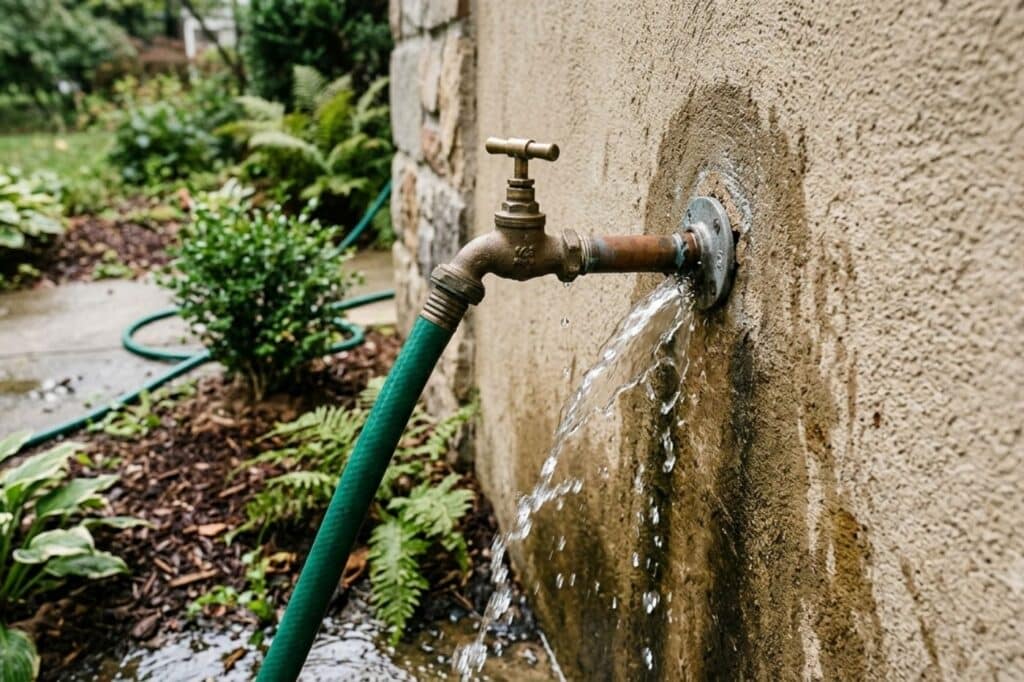
Most homeowners expect drips from the spout when a tap wears out. When water seeps from the wall connection or runs down the cladding, the fault lies further back in the assembly. The outdoor tap body threads into a pipe elbow inside the wall cavity, sealed by Teflon tape, pipe dope, or a rubber gasket depending on the fitting type.
Over time, thermal expansion, vibration from overtightening garden hose reels, or corrosion can break that seal. You might see a slow weep during use or a steady drip even when the handle is closed.
Frost is the silent culprit in many Sydney properties, particularly in the Hills District and parts of Western Sydney where overnight temperatures can dip low in winter. Water left in the pipe expands when it freezes, cracking the valve body or pushing the threaded connection apart. Even a hairline fracture lets pressurised water escape into the wall every time you turn on the tap.
Damaged Threads or Cracked Valve Body
If the brass or plastic threads inside the wall have stripped or cross-threaded during installation, no amount of tightening will seal the joint. Likewise, a cracked outdoor tap body — often invisible from the outside — allows water to bypass the valve seat and leak at the mounting flange. Replacement is the only reliable fix.
Loose or Missing Wall Flange Seal
The decorative escutcheon plate that covers the hole in your wall cladding should sit flush and be caulked. When that seal fails or the plate loosens, water tracks along the pipe shank and drips out at the wall. This looks like a pipe leak but may only need re-caulking if the threads themselves are sound.
Worn Packing Nut or Stem O-Ring
Water leaking from around the handle stem when the tap is open points to a failed packing nut or O-ring. While this is technically a handle leak, it can run down the body and appear at the wall joint. Tightening the packing nut or replacing the stem seal often stops the drip without removing the entire outdoor tap.
Backflow Preventer Failure
Many modern outdoor taps include an integral vacuum breaker or backflow device, required under Sydney Water’s cross-connection control rules whenever a tap connects to a hose reel or irrigation system. If the internal diaphragm cracks, water can weep from the breather vent or the connection between the valve and the breaker body. This type of leak usually requires replacing the entire assembly to stay compliant.
Common Causes of Hose Bib Leaking from Wall
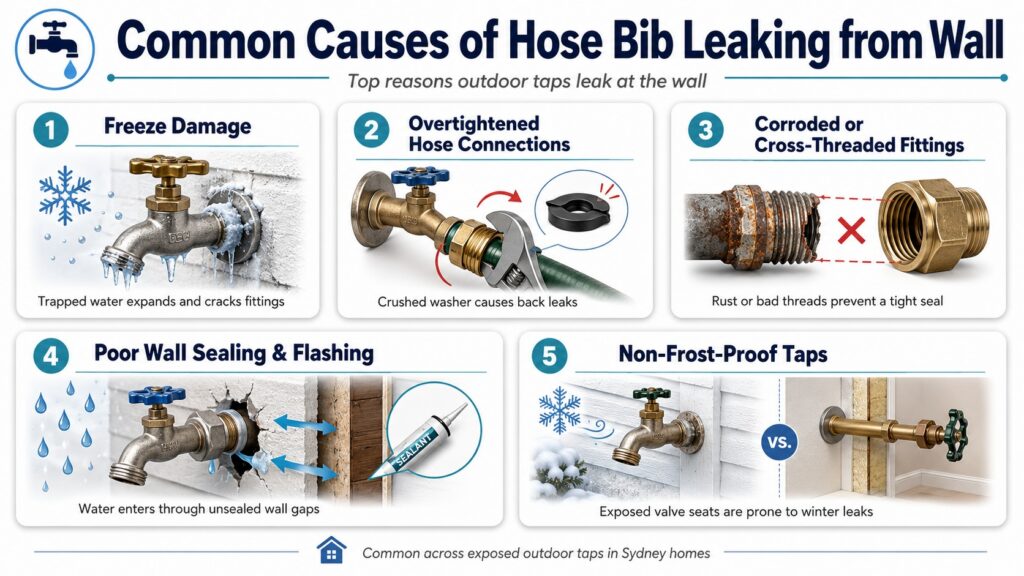
Understanding what triggers a wall leak helps you prevent repeat failures. Most issues trace back to installation quality, seasonal stress, or accessory misuse. Here are the top culprits we see across Sydney homes.
1. Freeze Damage from Winter Cold Snaps
Sydney’s winter nights occasionally dip below freezing, especially in the Hills District and Western Sydney. If you leave a garden hose reel connected or forget to drain the pipe, trapped water expands and cracks the valve seat or pipe threads. The damage may not show until spring when you turn the tap back on and find water inside the wall cavity.
2. Overtightened Hose Connections Deforming Gaskets
Cranking down a garden hose reel coupling too hard crushes the rubber washer inside the tap spout. That deformed gasket no longer seals properly, letting water backtrack through the threads and emerge at the wall joint. Always hand-tighten hose fittings and check for drips before adding extra torque.
3. Corroded or Cross-Threaded Pipe Fittings
Older homes with galvanised steel supply lines can develop rust that weakens the threads. During an outdoor tap replacement, cross-threading the new brass fitting into a corroded elbow creates an imperfect seal. We often find this in Sydney’s heritage properties, where original plumbing has been patched over decades without upgrading the supply stub.
4. Improper Wall Penetration and Flashing
If the installer didn’t seal the wall hole correctly or skipped the flashing step, rainwater can enter the cavity and mix with any minor seepage from the tap. This makes a small leak look catastrophic and accelerates timber rot. Proper re-sealing with silicone or polyurethane caulk is essential during any outdoor tap service.
5. Using Non-Frost-Proof Taps in Exposed Locations
Standard outdoor taps have the valve seat close to the outside wall, right where cold air hits. Frost-proof models extend the valve stem so the seat sits inside the heated wall cavity, protecting it from freezing. Installing a basic tap on an exterior wall without insulation almost guarantees winter leaks.
How to Diagnose Where the Leak Starts
Before you grab a wrench, pinpoint the exact leak source. This saves time and prevents unnecessary disassembly. Turn on the outdoor tap and watch carefully as pressure builds.
If water drips only from the spout when the handle is closed, you have a worn stem washer or valve seat — a straightforward internal repair. If water seeps from around the handle while the tap runs, the packing nut or stem O-ring needs attention. But if you see moisture at the wall flange, behind the escutcheon, or running down the cladding, the problem lies in the pipe connection or valve body.
| Leak Location | Likely Cause | Typical Repair |
|---|---|---|
| Spout drip when closed | Worn stem washer or valve seat | Replace washer and re-seat valve |
| Handle stem weep during use | Loose packing nut or failed O-ring | Tighten nut or replace packing |
| Wall flange or cladding drip | Cracked body, bad threads, or loose seal | Replace outdoor tap and re-seal wall |
| Backflow vent drip | Failed vacuum breaker diaphragm | Replace entire backflow assembly |
Dry the area completely and run the tap again. Use a torch to trace the water path. Sometimes what looks like a wall leak is actually a leaking shower hose or weeper hose connection nearby, with runoff pooling at the outdoor tap.
Repair Options for a Hose Bib Leaking from Wall
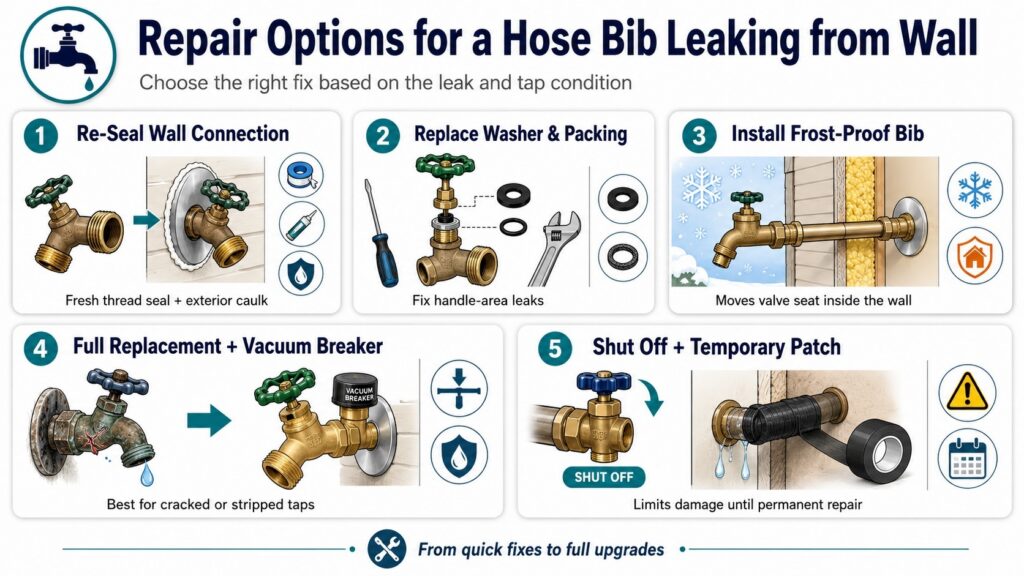
Once you’ve identified the leak point, you can choose between a quick fix and a full replacement. Your decision depends on the age of the tap, the extent of damage, and whether you want a frost-proof upgrade.
Tighten or Re-Seal the Wall Connection
If the threads are sound but the seal has failed, you can sometimes shut off the water, unscrew the outdoor tap from inside (or outside if accessible), clean the threads, apply fresh Teflon tape or pipe sealant, and re-install. This works best on newer installations where corrosion hasn’t set in. Don’t forget to re-caulk the escutcheon plate against the wall to keep moisture out.
Replace the Stem Washer and Packing
For leaks that appear to start at the handle but drip down to the wall, replacing the internal washer and packing can stop the flow. Shut off the supply, remove the handle screw and stem assembly, swap the rubber washer at the tip, and replace the packing string or O-ring around the stem. Reassemble and test. This is a low-cost fix if the valve body itself is intact.
Install a Frost-Proof Outdoor Tap
Upgrading to a frost-proof model moves the valve seat 150–300 mm inside the wall, where it stays warm. These units cost more upfront but eliminate freeze damage and reduce the chance of wall leaks. Installation requires cutting back the supply pipe and may involve opening the wall, so it’s a job best handled by a licensed plumber to ensure correct pitch and drainage.
Full Outdoor Tap Replacement with Backflow Prevention
When the body is cracked, threads are stripped, or you’re dealing with multiple leak points, replacement is the safest choice. Modern code-compliant outdoor taps include an integral vacuum breaker to prevent garden hose reel contaminants from siphoning back into your drinking water, satisfying Sydney Water’s backflow prevention requirements. We remove the old unit, inspect the supply stub for corrosion, fit a new brass or stainless outdoor tap with proper thread sealant, and re-flash the wall penetration. Same-day service means your outdoor tap is back in action without the wait.
Emergency Shut-Off and Temporary Patch
If the leak is severe and you can’t get a plumber immediately, locate the isolation valve for that line — often in the garage, laundry, or under the house — and turn it off. Wrap the leaking joint with self-fusing silicone tape as a temporary measure. This won’t hold under full mains pressure but can minimise water damage until a permanent repair is completed.
Preventing Future Hose Bib Leaks at the Wall
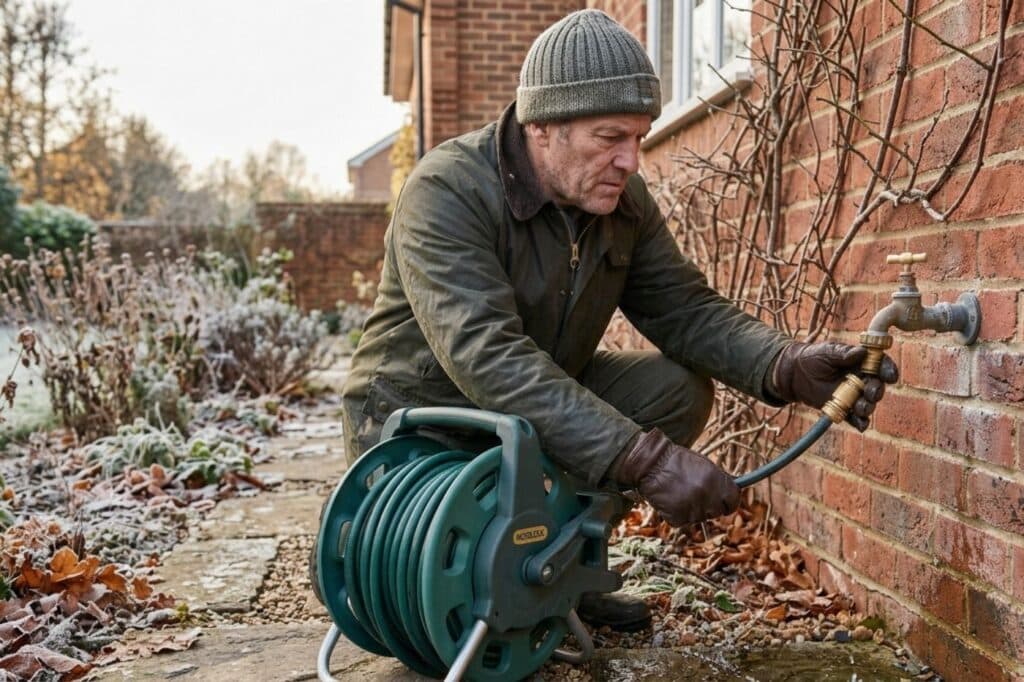
A little seasonal maintenance goes a long way. Most wall leaks are preventable if you protect your outdoor taps ahead of winter and use accessories correctly. Here’s what we recommend to every Sydney homeowner.
- Disconnect garden hose reels before winter. Trapped water in the hose backfills the tap and freezes, cracking the valve.
- Shut off the indoor isolation valve and open the outdoor tap to drain. Even a small amount of trapped water can cause damage when it turns to ice.
- Insulate exposed pipes and add a foam tap cover. Pipe lagging and a simple polystyrene cap provide extra protection during cold snaps.
- Avoid overtightening hose fittings. Hand-tight plus a quarter turn is usually enough. Over-torquing deforms gaskets and stresses threads.
- Check the wall seal and caulking annually. Cracked caulk lets moisture in, accelerating corrosion and rot around the penetration.
- Upgrade to a frost-proof or anti-siphon outdoor tap if you’re in a cold-prone Sydney suburb. The extra cost pays off in avoided repairs and peace of mind.
If you use a weeper hose or soaker hose system for garden beds, install a separate shutoff and backflow preventer. These low-flow devices can create vacuum conditions that pull soil and fertiliser back through the outdoor tap, contaminating your water supply and damaging internal seals — exactly the scenario Sydney Water’s backflow rules are designed to prevent.
When to Call a Licensed Sydney Plumber for an Outdoor Tap Leaking from Wall
DIY repairs work well for simple washer swaps and packing adjustments. But when water appears at the wall joint, you’re often dealing with hidden damage that requires proper tools, parts, and compliance knowledge. In NSW, any work that involves cutting or joining water supply pipes must be carried out by a licensed plumber — Anton’s Plumbing & Gas holds NSW Lic. 210933C. Here’s when professional help makes sense.
If you see water staining on the interior wall or ceiling below the outdoor tap, the leak has been active long enough to soak timber framing or plasterboard. That means potential mould growth and structural weakening. Our team uses moisture meters and thermal imaging to map the extent of water intrusion, then coordinates the plumbing repair with any necessary building work.
Cracked valve bodies and stripped threads can’t be patched reliably. Trying to seal a fractured casting with epoxy or overtightening a damaged fitting usually makes the problem worse. We replace the unit with a quality brass or stainless outdoor tap, verify the supply pipe condition, and ensure the new installation meets AS/NZS 3500 standards for backflow prevention and wall penetration sealing.
Frost-proof outdoor tap installation involves cutting and re-routing the supply line so the valve seat sits inside the wall cavity. This requires soldering or push-fit connections, correct pipe slope for drainage, and sometimes opening the wall lining. Our licensed plumbers complete the job in a few hours, test for leaks under full pressure, and leave your wall neatly patched and painted if required.
Same-day service across Sydney means you don’t wait days for a quote or weeks for a repair slot. Call us on 0493 824 176 and we’ll send a qualified plumber to diagnose the leak, explain your options with upfront pricing in AUD, and complete the work on the spot whenever possible. No call-out fee from 7 am to 3 pm on weekdays, and our lifetime labour warranty backs every installation.
Real-World Example: Inner West Homeowner Saves Wall from Frost Damage
Sarah in Sydney’s Inner West noticed a damp patch on her laundry wall one winter morning. The outdoor tap on the other side had been dripping for weeks, but she assumed it was just a worn washer. When a cold snap hit, the trapped water in the connected garden hose reel froze overnight, cracking the tap body and pushing water into the wall cavity.
Our plumber arrived the same day, shut off the supply, and removed the failed tap. Inspection revealed the original fitting was a basic non-frost-proof model installed 15 years earlier with minimal thread sealant. We replaced it with a brass frost-proof outdoor tap featuring an integral vacuum breaker, re-sealed the wall penetration with marine-grade silicone, and advised Sarah to disconnect hoses before winter and drain the line.
The damp patch dried out over the following week with no mould development, and Sarah now protects her outdoor taps every May ahead of winter. The new tap has performed flawlessly through two winters, and she’s confident her wall is protected. Total time on site was under two hours, with a fixed-rate quote in AUD provided before work began.
How Outdoor Tap Leaks Relate to Other Plumbing Issues
A leaking shower hose inside the bathroom and an outdoor tap leaking from the wall share common failure modes: worn washers, cracked fittings, and poor thread seals. Both benefit from the same preventive steps — regular inspection, gentle handling, and timely replacement of rubber components.
If your shower hose is leaking at the handset connection, the internal cone washer has likely perished. Swapping it takes minutes and costs very little. But if water seeps from the hose itself or the wall bracket, you’re looking at a split hose or a failed wall elbow, much like the outdoor tap scenario. We carry a range of quality hoses and fittings on every van, so repairs happen on the first visit.
Weeper hoses and soaker hoses used in garden beds can also cause confusion. These intentionally leak water along their length, but if you see pooling at the tap connection, check that the washer isn’t deformed and that you haven’t overtightened the coupling. A dripping connection wastes water and can backfill the outdoor tap with soil particles, damaging the valve seat over time.
Compliance and Safety Considerations for Outdoor Tap Replacement
Any work that involves cutting or joining water supply pipes in New South Wales requires a licensed plumber. Installing or replacing an outdoor tap falls under this rule, especially when backflow prevention devices are involved. Our team holds current licensing under NSW Fair Trading (Lic: 210933C) and follows AS/NZS 3500 plumbing standards for all installations across the Sydney Water network area.
Backflow prevention is critical when outdoor taps connect to garden hose reels, sprinkler systems, or weeper hoses. Without a vacuum breaker or non-return valve, a sudden drop in mains pressure can siphon contaminated water back into your drinking supply, which is exactly what Sydney Water’s cross-connection control requirements are designed to prevent. Modern outdoor taps include an integral atmospheric vacuum breaker that opens to admit air if back-siphonage starts, protecting your household and the wider water network.
Wall penetrations must be sealed to prevent water ingress and pest entry. We use flexible sealants that accommodate thermal movement and won’t crack over time. If the outdoor tap passes through brick veneer or weatherboard, we install a proper flashing sleeve and ensure the escutcheon plate sits flat against the finished surface.
Our work is documented with photos before and after, and we provide a compliance statement for any new backflow device installation. You receive a lifetime labour warranty on our workmanship, so if a joint we’ve made ever leaks due to faulty installation, we’ll return and fix it at no charge.
Cost and Timing for Outdoor Tap Leak Repairs
Repair costs vary depending on whether you need a simple washer swap or a full frost-proof replacement with wall re-sealing. We provide upfront fixed-rate pricing in AUD after diagnosing the issue, so you know the total before we start. No hidden fees, no hourly rate surprises.
A basic washer and packing replacement on an accessible outdoor tap typically takes 30–45 minutes. If we need to replace the entire unit, allow 1–2 hours including shutoff, removal, thread preparation, installation, testing, and wall sealing. Frost-proof outdoor tap upgrades that require cutting the supply pipe and opening the wall may take 2–3 hours, with additional time if building repairs are needed.
Same-day service is our standard across the Inner West, Eastern Suburbs, North Shore, Northern Beaches, Hills District, and Western Sydney. Call us before 3 pm on a weekday and we’ll aim to have a plumber at your door within hours, with no call-out fee. For after-hours or weekend emergencies, our 24/7 team is ready on 0493 824 176, with transparent AUD pricing for out-of-hours work.
We use quality brass and stainless fittings from trusted suppliers, not cheap imports that corrode in months. Parts are included in our fixed quote, and we carry common sizes on every van to avoid delays. If your outdoor tap is an unusual thread size or you want a specific finish to match your home’s exterior, we’ll source it and schedule a return visit, keeping you informed every step of the way.
Why Choose Our Team for Outdoor Tap Repairs and Replacement

We’ve spent over 25 years diagnosing and fixing leaks across Sydney, from simple tap washers to complex pipe relining projects. An outdoor tap leaking from the wall might seem minor, but it can signal bigger issues — frost damage, corroded supply lines, or inadequate backflow protection. We don’t just swap parts; we investigate the root cause and recommend solutions that prevent repeat failures.
Every job is completed to Australian Standards, with licensed plumbers who understand Sydney’s building codes, Sydney Water requirements, mains pressure variations, and seasonal challenges. We explain your options in plain English, provide fixed-rate quotes in AUD before starting work, and respect your property by cleaning up thoroughly. Our lifetime labour warranty means you’re covered long after we leave, giving you confidence in the repair.
From blocked drains and CCTV inspections to hot water installations and bathroom renovations, we’re a one-stop solution for residential and commercial plumbing. Whether you manage a strata block on the North Shore or own a café in the Eastern Suburbs, we deliver the same prompt, professional service. Same-day response, upfront pricing, and no call-out fee from 7 am to 3 pm weekdays make it easy to get help when you need it.
If your outdoor tap is leaking from the wall, don’t wait for the problem to spread. Call us on 0493 824 176 or book online for a fast quote and expert repair. We’ll protect your home, save you water, and give you peace of mind with work that’s done right the first time.
Conclusion
An outdoor tap leaking from the wall is a clear sign that the pipe connection, valve body, or wall seal has failed. Frost damage, worn threads, and improper installation are the usual culprits. Professional diagnosis and replacement ensure your outdoor tap works reliably and your home stays dry.
Anton’s Plumbing & Gas fixes outdoor tap leaks across Sydney Metro with expert leak detection and tap repairs. Our licensed team (NSW Lic. 210933C) provides same-day service with upfront AUD pricing and a lifetime labour warranty. Get started today on 0493 824 176.
Related Articles
- Garbage Disposal in Shower Drains: Common Myths and Facts
- How to Remove a Stuck Shower Faucet Plastic Insert Safely
- Apartment Valve Moves When Neighbor Uses Water: What It Means
FAQs
What Causes An Outdoor Tap To Leak From The Wall?
An outdoor tap can leak from the wall due to various reasons, including worn washers, loose connections, or corrosion within the plumbing. Over time, temperature changes can also cause materials to expand and contract, leading to leaks. At Anton’s Plumbing & Gas, our 25 years of experience enables us to accurately diagnose and address these issues across Sydney.
How Do You Fix A Leaking Outdoor Tap From The Wall?
To fix a leaking outdoor tap, you may need to tighten loose connections, replace worn washers, or, in more severe cases, replace the entire tap. It’s best to consult a licensed plumber like those at Anton’s Plumbing & Gas, who can ensure the repair is done correctly and safely.
Can An Outdoor Tap Leak Cause Water Damage?
Yes, a leaking outdoor tap can cause water damage if left unaddressed. Continuous leaks can lead to mould growth, structural damage, and increased water bills. Our team at Anton’s Plumbing & Gas can quickly assess the situation and provide reliable solutions to prevent further damage.
Is It Normal For An Outdoor Tap To Leak?
While some minor dripping may occur, it’s not normal for an outdoor tap to leak continuously. Persistent leaks indicate an underlying issue that needs attention. With our expertise, we can identify the cause and provide effective repairs to ensure your outdoor tap operates properly.
How Do You Replace An Outdoor Tap That Is Leaking?
Replacing a leaking outdoor tap typically involves shutting off the water supply, removing the old tap, and installing a new one. This process can be complex, and we recommend seeking assistance from Anton’s Plumbing & Gas to ensure the replacement is done safely and up to NSW code.
Do I Need A Licensed Plumber To Fix A Leaking Outdoor Tap In NSW?
Yes. Under NSW law, any work involving cutting or joining water supply pipes, including outdoor tap replacement and backflow devices, must be carried out by a licensed plumber. Anton’s Plumbing & Gas holds NSW Lic. 210933C, so you can book with confidence that the work is compliant and covered by warranty.
How Much Does It Cost To Repair Or Replace A Leaking Outdoor Tap In Sydney?
Costs depend on whether it’s a simple washer swap or a full frost-proof replacement with wall re-sealing. We inspect the leak first and then provide a fixed-rate quote in AUD before any work begins, so there are no surprises on the invoice. Call 0493 824 176 for a quote.
Do You Offer Same-Day Repairs For Leaking Outdoor Taps In Sydney?
Yes, same-day service is our standard across Sydney, including the Inner West, Eastern Suburbs, North Shore, Northern Beaches, Hills District, and Western Sydney. Call before 3 pm on a weekday and we’ll aim to have a plumber at your door within hours.
Is There A Call-Out Fee For Outdoor Tap Repairs?
We don’t charge a call-out fee for standard appointments between 7 am and 3 pm on weekdays. After-hours and weekend visits have transparent AUD pricing, which we’ll confirm with you before we attend.
Which Sydney Suburbs Do You Service For Outdoor Tap Repairs?
We cover the Inner West, Eastern Suburbs, North Shore, Northern Beaches, Hills District, and Western Sydney. If you’re unsure whether we service your suburb, call 0493 824 176 and we’ll confirm straight away.
Can You Install A Backflow Prevention Device To Meet Sydney Water Requirements?
Yes. We fit and test integral vacuum breakers and backflow prevention devices on outdoor taps connected to hose reels, irrigation, or weeper systems, in line with Sydney Water’s cross-connection control requirements and AS/NZS 3500 standards.
Do You Provide A Warranty On Outdoor Tap Replacements?
Yes, every outdoor tap replacement we complete is backed by a lifetime labour warranty. If a joint we’ve made ever leaks due to faulty installation, we’ll return and fix it at no charge.
Can You Fix An Outdoor Tap Leak On Weekends Or After Hours?
Yes, our team is available 24/7 for emergency callouts, including weekends and after hours, with transparent AUD pricing explained before we start. Call 0493 824 176 any time.
What Should I Do Right Now If My Outdoor Tap Is Leaking From The Wall?
Shut off the isolation valve for that line (often in the garage, laundry, or under the house) if you can locate it, then call us on 0493 824 176. We’ll talk you through any temporary steps and arrange same-day attendance where possible.
Will You Provide An Upfront Quote Before Starting The Repair?
Always. We diagnose the leak, explain your options in plain English, and give you a fixed-rate quote in AUD before any work begins, so you can decide with full information.
Do You Repair Outdoor Taps For Strata And Commercial Properties, Not Just Homes?
Yes, we service residential, strata, and commercial properties across Sydney, including cafés and apartment blocks, with the same prompt, licensed service and upfront pricing.
How Quickly Can A Sydney Plumber Attend An Emergency Outdoor Tap Leak?
For urgent leaks causing wall or property damage, we prioritise same-day attendance across our Sydney service areas. Call 0493 824 176 and describe the issue so we can dispatch the right plumber and parts.
Can An Outdoor Tap Leak Increase My Water Bill?
Yes, a continuously dripping or leaking outdoor tap wastes mains water around the clock, which shows up on your water bill over time. Fixing the leak promptly stops the waste and protects your wall from ongoing damage.
Do You Replace Old Outdoor Taps With Frost-Proof Models Suitable For Sydney’s Climate?
Yes, we regularly upgrade older, non-frost-proof taps to frost-proof models with integral backflow prevention, which suit Sydney’s occasional cold snaps in areas like the Hills District and Western Sydney and reduce the risk of future wall leaks.
How Do I Book A Plumber For An Outdoor Tap Repair?
Call us on 0493 824 176 or book online through our website. Tell us what you’re seeing at the wall, and we’ll arrange a licensed plumber to diagnose the leak, quote in AUD upfront, and complete the repair, often on the same visit.