

Toilet paper is made to break apart in water, but some thicker multi-ply rolls break down more slowly and can clump in the trap or bend of the pipe. In Sydney homes—especially with low-flow toilets or older, rougher pipework common in many older suburbs—those clumps can turn into repeat blockages. That’s why many homeowners search for what dissolves toilet paper safely without risking damage to plumbing or their connection to the Sydney Water sewer network.
In this guide, you’ll learn what affects how fast toilet paper breaks down, which safe household methods help loosen minor blockages, and when it’s time to call a licensed Sydney plumber. We’ll also explain how CCTV drain inspections identify recurring causes like partial restrictions, tree root intrusion, or a damaged section of pipe. If DIY steps don’t work, Anton’s Plumbing & Gas (NSW Lic. 210933C) can clear the blockage and fix the cause with same-day service across Sydney.
Key Takeaways
- Toilet paper breaks down faster when it’s thinner, uses shorter fibres, and the flush has enough flow to carry it through.
- Thick “ultra-soft” multi-ply paper can hold together longer and clump in low-flow toilets or older, rough pipes common in many Sydney homes.
- Safe DIY methods focus on loosening paper with hot (not boiling) water, dish soap, bicarb soda + vinegar, or Epsom salt.
- Enzyme digesters and toilet-safe paper dissolvers are better for maintenance (and septic or caravan/motorhome systems) because they need time to work.
- If blockages keep coming back, or you notice gurgling, multiple slow drains, or backflow, a CCTV inspection and professional drain clearing is usually the next step—and it’s a job for a licensed plumber under NSW Fair Trading rules.
How Does Toilet Paper Dissolve in Water?
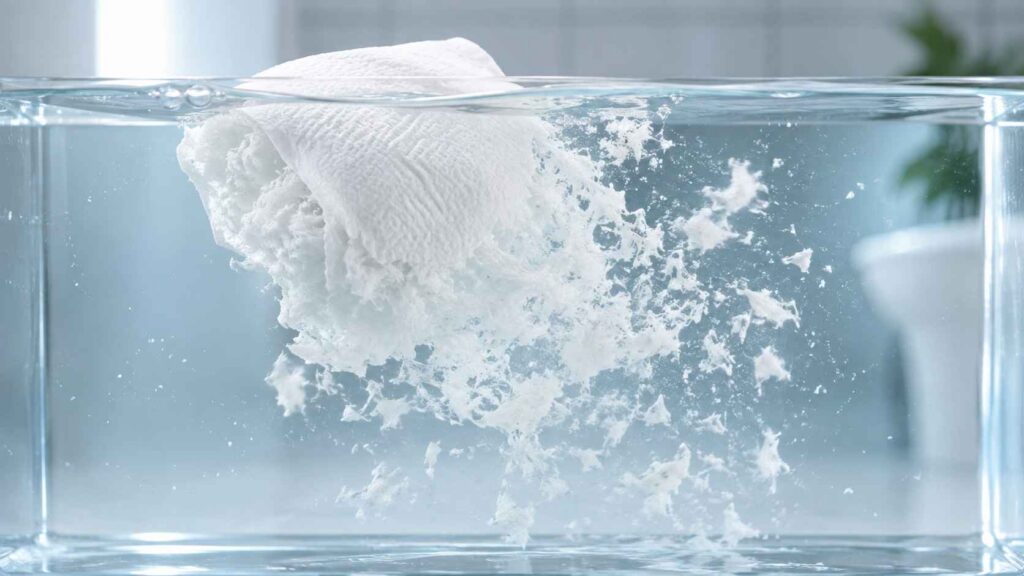
Toilet paper is made from short wood fibres that weaken quickly when wet. Most standard toilet paper starts breaking apart quickly once it’s saturated, which helps it move through household pipes without forming a dense clump. When it dissolves properly, it reduces the chance of paper build-up that leads to slow flushing and blocked toilets. Most Sydney properties are connected to Sydney Water’s sewer mains rather than a septic system, so a toilet that repeatedly clogs is usually a sign of an issue in your internal pipework, not the wastewater network itself.
| Factor | What It Means | How It Affects Dissolving |
|---|---|---|
| Fibre length | Short vs long wood fibres | Short fibres break apart faster; long fibres hold together longer |
| Ply thickness | 1-ply, 2-ply, 3-ply | More plies = more material to break down before clearing the trap and drain |
| Bonding agents | Adhesives used to boost softness/strength | More bonding agents can slow down disintegration |
| Amount used | Small vs large wads per flush | Larger amounts can clump before fully breaking down |
| Water flow rate | Strong vs weak flush | Low flow may not push paper through before it swells and gathers |
| Pipe condition/diameter | Smooth/wide vs rough/narrow pipes | Rough or narrow pipes—common in older Sydney homes—can catch fibres and cause build-up faster |
| Water temperature | Cooler vs warmer water | Warmer water can speed softening; cooler water may slow breakdown |
If you use thick, multi-ply paper and your toilet often needs a second flush, the issue is usually paper strength combined with low flow or older plumbing. Rough, narrow, or ageing pipes are more likely to catch fibres, especially when large amounts are flushed at once. Choosing a faster-dissolving paper and using smaller amounts per flush can immediately reduce the risk of blockages.
What Makes Some Toilet Paper Dissolve Faster?
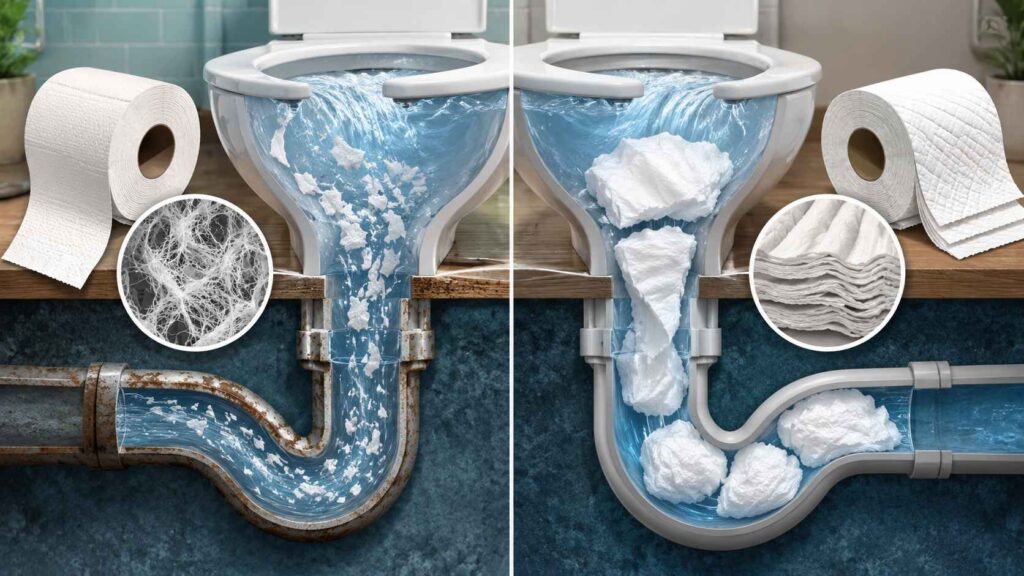
Some toilet paper dissolves faster because it uses shorter fibres and fewer binding agents to hold the sheet together. They’re made to break apart faster once wet, while still being absorbent enough for everyday use. In homes with older pipes or septic systems, faster breakdown helps prevent paper from gathering in bends and junctions.
| Type / Feature | Typically Found In | Dissolve Speed | Best For |
|---|---|---|---|
| Short-fibre paper | Many standard “septic-safe” rolls | Fast | Older plumbing, septic systems, frequent clog issues |
| Minimal bonding agents | Less “ultra-soft” formulations | Fast | Low-flow toilets and narrower pipes |
| Higher ply / extra-thick paper | Premium 3-ply and quilted styles | Slower | Comfort-first use (but needs smaller amounts per flush) |
| More layers + denser sheet | Plush, highly absorbent rolls | Slower | Homes with strong flush + newer, wider pipes |
Thicker, softer toilet paper usually dissolves more slowly because there is simply more material that must break down. If you prefer premium rolls, the safest approach is to use less per flush and never combine it with items that do not dissolve well (like wipes or tissues). When dissolving speed matches your pipe conditions and flush strength, you’ll notice fewer slow drains and fewer surprise blockages.
What Dissolves Toilet Paper? Safe and Effective Methods That Actually Work
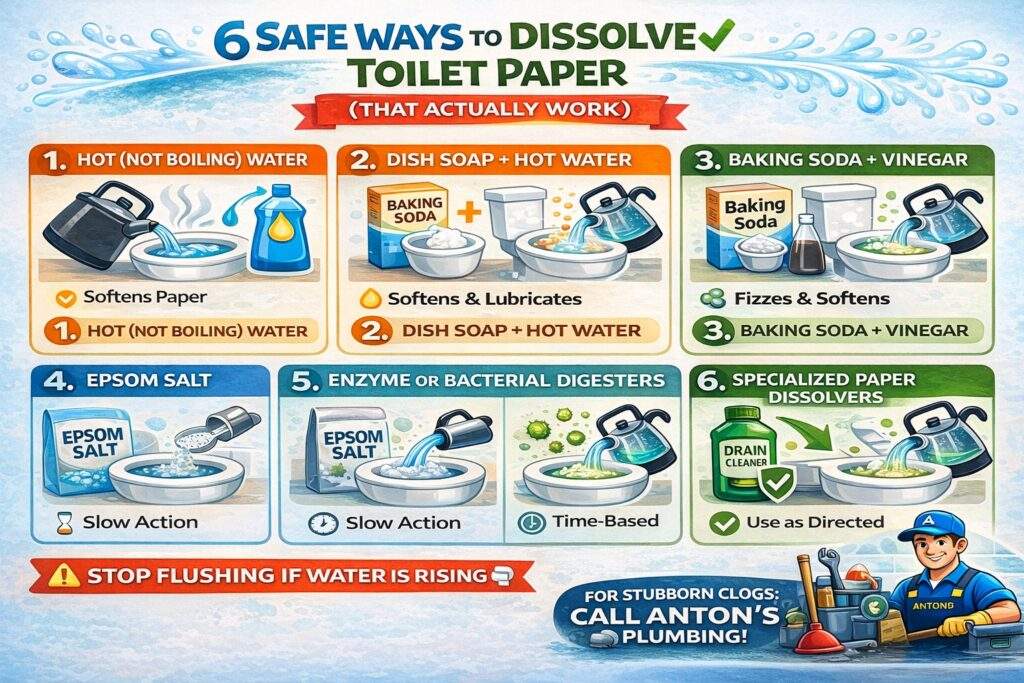
Toilet paper is designed to break down in water, but thick wads or repeated flushing can still create clumps that block the trap or drain line. When people ask what dissolves toilet paper, they usually mean safe ways to soften and loosen it so it can flush through properly. The safest options rely on heat, lubrication, and a bit of time—rather than harsh chemicals.
1. Hot (Not Boiling) Water
Hot water softens toilet paper so it separates and moves more easily through the trap. Avoid boiling water to reduce the risk of cracking porcelain.
2. Dish Soap + Hot Water
Dish soap acts as a lubricant and helps fibres slide apart instead of sticking together. Let it sit briefly, then follow with hot (not boiling) water and a careful flush.
3. Bicarb Soda + Vinegar
The fizzing action can help loosen compacted paper and light organic buildup. Follow with hot water to help carry the softened paper through the line.
4. Epsom Salt
Epsom salt dissolved in hot water can help break down paper and waste as it sits. Leave it for 30 minutes or longer before attempting to flush.
5. Enzyme or Bacterial Digesters
Enzyme and bacterial products break down organic material, including toilet paper, over time. They are best for septic systems, caravans and motorhomes, or preventative maintenance—not urgent overflow situations.
6. Specialised Paper Dissolvers
Some drain products are formulated to break down toilet paper and other organic blockages more effectively than DIY methods. Use only toilet-safe options and follow the label instructions closely.
If the toilet bowl is close to overflowing, stop flushing and give the method time to work before trying again. A plunger or toilet auger (sometimes called a toilet snake) is still the fastest safe solution for stubborn blockages when water-based methods aren’t enough. If blockages keep happening, it may point to low flush power, too-thick paper, or a developing blockage further down the line.
When to Call a Licensed Plumber for Toilet Paper Clogs
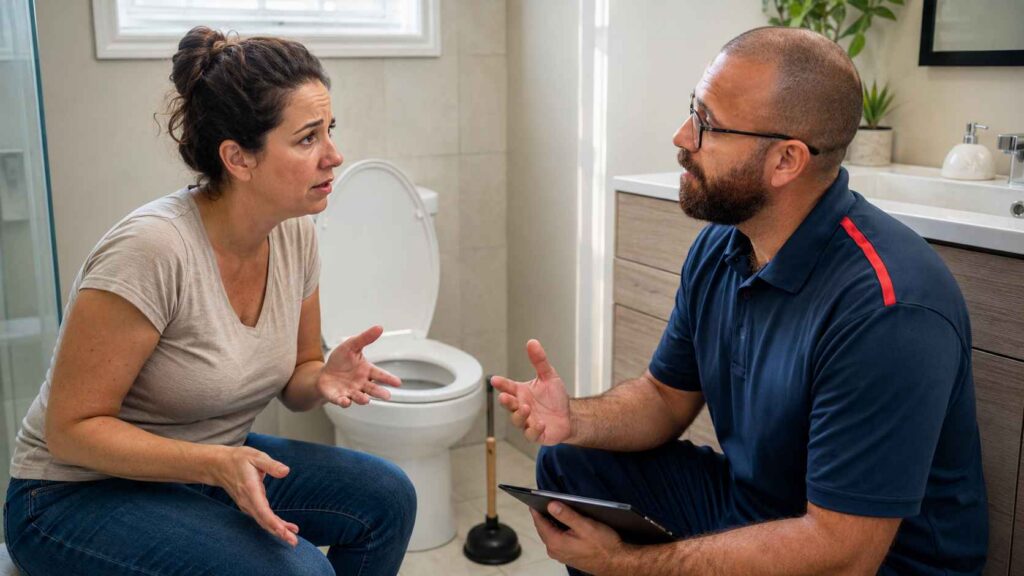
If hot water, dish soap, and plunging have not worked, the blockage may be deeper in your drain line or caused by something other than toilet paper. Repeat blockages in the same toilet usually point to an underlying issue that keeps catching paper and waste. Continuing to flush can push the blockage further, increase overflow risk, and make the repair more expensive. Under NSW Fair Trading rules, any work on your sewer or drainage pipework should be carried out by a licensed plumber—it’s also worth knowing that Sydney Water is generally responsible for the sewer main under the street, while the pipework from your house to the boundary is your responsibility.
- Toilet clears after plunging but blocks again within days — There’s likely a partial blockage further down the line, so a CCTV inspection helps locate it and clear it properly.
- Multiple fixtures drain slowly (toilet, shower, sink) — This often points to a main drain restriction that needs professional clearing (and sometimes high-pressure jetting).
- Gurgling sounds when flushing — This is commonly caused by a partial blockage or venting issue that needs inspection and clearing.
- Water backs up into the shower or laundry when the toilet flushes — This usually means a shared drain line blockage and should be treated as urgent.
Anton’s Plumbing & Gas uses CCTV drain inspections to pinpoint the exact location and cause of stubborn blockages, so you are not relying on guesswork. We provide same-day service across Sydney, including the Inner West, Eastern Suburbs, North Shore, Northern Beaches, Hills District, Western and South-Western Sydney, and Sutherland Shire. If these warning signs keep showing up, calling a licensed Sydney plumber early is usually the fastest way to stop repeat blockages and protect your home.hore, Northern Beaches, Hills District, Western and South-Western Sydney, and Sutherland Shire. If these warning signs keep showing up, calling a licensed plumber early is usually the fastest way to stop repeat clogs and protect your home.
Why Anton’s Plumbing & Gas Is Your Best Choice for Blocked Drains in Sydney
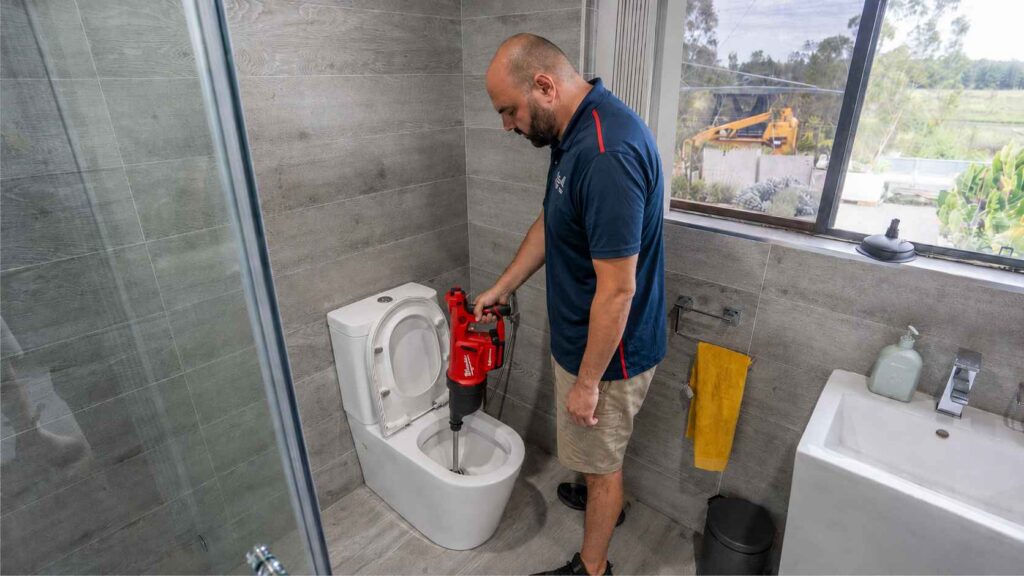
Anton’s Plumbing & Gas has been clearing blocked drains across Sydney for more than 25 years. We’re fully licensed (NSW Lic: 210933C) and follow NSW Fair Trading requirements and relevant Australian Standards. All drain clearing work includes a lifetime labour warranty for peace of mind.
We don’t use scare tactics or push unnecessary services. When you call us, we’ll ask questions to understand the problem, then send a licensed plumber to inspect your drains and provide clear options. If a simple flush and plunge will do the job, we’ll tell you. If you need pipe relining or root removal, we’ll explain why, show you the CCTV footage, and give you a fixed-rate quote in AUD before we start.
Our same-day service and 24/7 availability mean you’re never left waiting when a toilet overflows or a drain backs up. We serve the entire Sydney metro area—Inner West, Eastern Suburbs, North Shore, Northern Beaches, Hills District, Western and South-Western Sydney, Sutherland Shire, and beyond. We arrive on time, work cleanly, and leave your home as tidy as we found it.
Conclusion
Toilet paper dissolves naturally in water, but thicker brands and older pipework can slow breakdown and cause clumps to form in the trap or drain line. Hot water, dish soap, and gentle plunging can clear many minor blockages, but recurring blockages often point to a deeper restriction that needs proper inspection. If the same toilet keeps blocking or you notice gurgling, slow drainage, or backflow, it’s usually time for professional drain clearing from a licensed Sydney plumber.
Anton’s Plumbing & Gas offers expert blocked drain solutions across Sydney with same-day service available. Our licensed team (NSW Lic. 210933C) clears stubborn blockages safely using proven techniques and professional equipment. Contact us today on +61 4 9382 4176 to get started.
Related Articles
- Can Too Much Toilet Paper Clog a Toilet? Here’s What You Should Know
- Will Toilet Paper dissolve in Clogged Toilet?
- 5 Reasons Why Toilet Paper Can Clog Your Toilet
FAQs
Does Vinegar Dissolve Toilet Paper?
Vinegar has mild acidic properties that can help break down toilet paper over time, but it may not be as effective as hot water or other solutions. If you have persistent issues with toilet paper blockages, don’t hesitate to call us for professional assistance.
What Should I Do If Toilet Paper Has Blocked My Toilet?
If toilet paper has blocked your toilet, stop flushing straight away because repeated flushing can make the bowl overflow. You can try letting the toilet sit for a while, then use a plunger to gently shift the blockage. If the water still rises or drains slowly, Anton’s Plumbing & Gas can clear the blockage safely before it causes a bigger plumbing issue.
Can Hot Water Dissolve Toilet Paper In A Toilet?
Warm water may help soften toilet paper, but boiling water should not be poured into the toilet because it can crack the porcelain or damage seals. If the blockage is only minor, warm water and time may help loosen it. For stubborn blockages, it is safer to have a licensed plumber inspect the toilet and drain line properly.
How Long Should I Wait For Toilet Paper To Dissolve?
Some toilet paper can start breaking down within 30 minutes, but thicker or excessive toilet paper may take much longer and still remain lodged in the pipe. If the toilet is draining very slowly, gurgling, or filling higher than normal, waiting may not solve the problem. Anton’s Plumbing & Gas can identify the cause and clear the line before it affects other fixtures.
When Should I Call A Plumber For A Toilet Paper Blockage?
Call a plumber if plunging does not work, the toilet keeps blocking, water backs up into the shower or floor drain, or the toilet makes gurgling sounds. These signs may mean the blockage is not just toilet paper but a deeper issue in the drain or sewer line. Anton’s Plumbing & Gas can provide professional blocked toilet and drain clearing services to restore proper flow.
Is Anton’s Plumbing & Gas Licensed To Work On Sydney Homes?
Yes. Anton’s Plumbing & Gas holds NSW Lic. 210933C and complies with NSW Fair Trading licensing requirements, so all our drain and toilet work is carried out legally and to Australian Standards.
Do You Offer Same-Day Service For Blocked Toilets In Sydney?
Yes, we offer same-day service across the Sydney metro area, including the Inner West, Eastern Suburbs, North Shore, Northern Beaches, Hills District, Western and South-Western Sydney, and Sutherland Shire. Call us and we’ll organise a licensed plumber to attend as quickly as possible.
Do You Provide Emergency Plumbing Outside Business Hours?
Yes, we’re available 24/7 for urgent issues like overflowing toilets or backed-up drains. If your toilet is at risk of flooding, call us straight away rather than waiting until normal business hours.
How Much Does It Cost To Clear A Blocked Toilet In Sydney?
Costs depend on the cause and severity of the blockage, which is why we always inspect the problem first and provide a fixed-rate quote in AUD before any work begins. There are no surprise charges once you’ve accepted the quote.
Will You Use A CCTV Camera To Find The Cause Of My Blockage?
Yes, we use CCTV drain inspections to see exactly what’s causing a recurring blockage, whether it’s compacted paper, root intrusion, or a damaged pipe, so we can recommend the right fix rather than guessing.
Do You Offer A Warranty On Drain Clearing Work?
Yes, all our drain clearing work comes with a lifetime labour warranty, giving Sydney homeowners confidence that the job has been done properly.
Is My Blocked Toilet My Responsibility Or Sydney Water’s?
Generally, Sydney Water is responsible for the sewer main under the street, while pipework from your house to the property boundary is your responsibility. A licensed plumber can confirm which side of the boundary a blockage sits on and advise your next step.
How Quickly Can A Plumber Get To My Home?
We aim to reach Sydney customers the same day they call, especially for urgent blocked toilets. Response times can vary by suburb and time of day, so call us directly for the most accurate estimate.
Can I Book A Plumber Online?
Yes, you can request a booking through our online booking page, or call us directly on +61 4 9382 4176 for faster same-day scheduling.
Do You Clear Blocked Drains For Showers And Sinks As Well As Toilets?
Yes, our licensed plumbers clear blockages in toilets, showers, sinks, and main drain lines across Sydney, and can identify if multiple fixtures are affected by the same underlying issue.
What Happens If The Blockage Is Found To Be On Sydney Water’s Side?
If our CCTV inspection shows the blockage is in the Sydney Water main rather than your private pipework, we’ll advise you accordingly, as this generally needs to be reported to Sydney Water rather than repaired privately.
Do You Give Upfront Pricing Before Starting Work?
Yes, we always provide a clear, fixed-rate quote in AUD after inspecting the problem, and we explain exactly what the work involves before we start—no obligation, no pressure.
Can You Fix Repeat Blockages Instead Of Just Clearing Them Each Time?
Yes, by using CCTV drain inspections we can identify the underlying cause of repeat blockages, such as root intrusion or a damaged pipe, and recommend a permanent fix like pipe relining rather than a temporary clear.
How Do I Book Anton’s Plumbing & Gas For A Blocked Toilet?
Simply call us on +61 4 9382 4176 or use our contact page to book a licensed Sydney plumber. We’ll ask a few quick questions about the issue and arrange same-day service wherever possible.