

Can toilet paper clog a toilet? The short answer is yes — toilet paper can clog your toilet even though it is designed to dissolve in water. Certain conditions can turn a routine flush into a recurring blockage. Across Sydney homes, we see the same patterns—too much paper at once, older plumbing, low-flow fixtures, or the wrong type of tissue—all combining to create frustrating and sometimes costly clogs.
In this article, you will learn the five most common reasons toilet paper can clog a toilet, how to spot warning signs early, and when to call in professional help. We will also cover practical prevention tips and explain how our team diagnoses and clears stubborn toilet clogs using CCTV drain inspections and proven techniques.
Key Takeaways
- Using too much toilet paper at once can overwhelm your flush and cause blockages in the trap or drainpipe.
- Older or low-flow toilets may lack the flushing power needed to clear standard amounts of paper.
- Thick, quilted, or non-standard tissue types break down more slowly and increase clog risk.
- Hair, debris, and mineral buildup inside pipes can catch toilet paper and trigger recurring clogs.
- Professional CCTV inspections reveal hidden pipe issues that home remedies cannot fix.
1. How Too Much Toilet Paper Can Clog Your Toilet
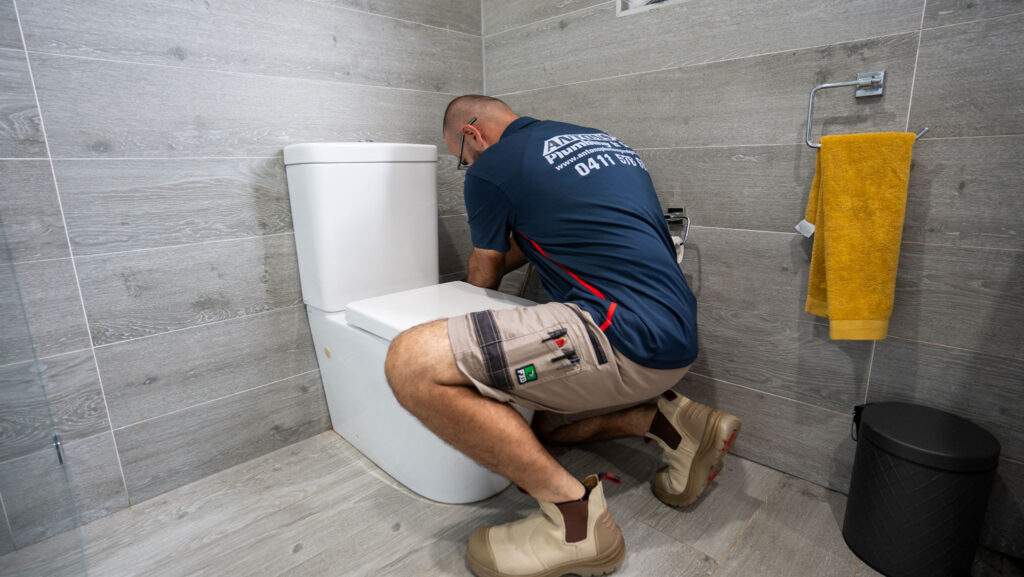
One of the most frequent causes we see is simply using too much paper in a single flush. While toilet paper is designed to break down, an excessive wad can overwhelm your toilet’s flushing capacity and create a dense mass that refuses to move through the trap. This is particularly common in households with kids or guests who may not realise how much paper they are using.
When you flush a large volume of paper, it does not have enough time or water contact to start disintegrating before it enters the drainpipe. Instead, it forms a plug—often right at the base of the toilet or in the first bend of the waste line. You might notice the water level rising slowly or the bowl draining more sluggishly than usual.
2. Older or Low-Flow Toilets Lack Flushing Power
Will tissue paper block a toilet more easily in an older home? Often, yes. Toilets installed before the mid-1990s typically used 11 to 13 litres per flush, providing strong water volume and turbulence. Modern water-efficient toilets, which meet current Sydney Water and WELS scheme requirements, use as little as 4.5 litres, which is better for water bills but can struggle to push paper through older, rougher pipes.
Low-flow fixtures rely on improved bowl design and gravity to compensate for reduced water. When those toilets are paired with ageing clay or cast-iron drains—common in Sydney’s heritage suburbs—the combination can create chronic blockage issues. The paper might clear the bowl but stall further down the line, especially if there is any scale, root intrusion, or misalignment.
3. Thick, Quilted, or Non-Standard Tissue Types
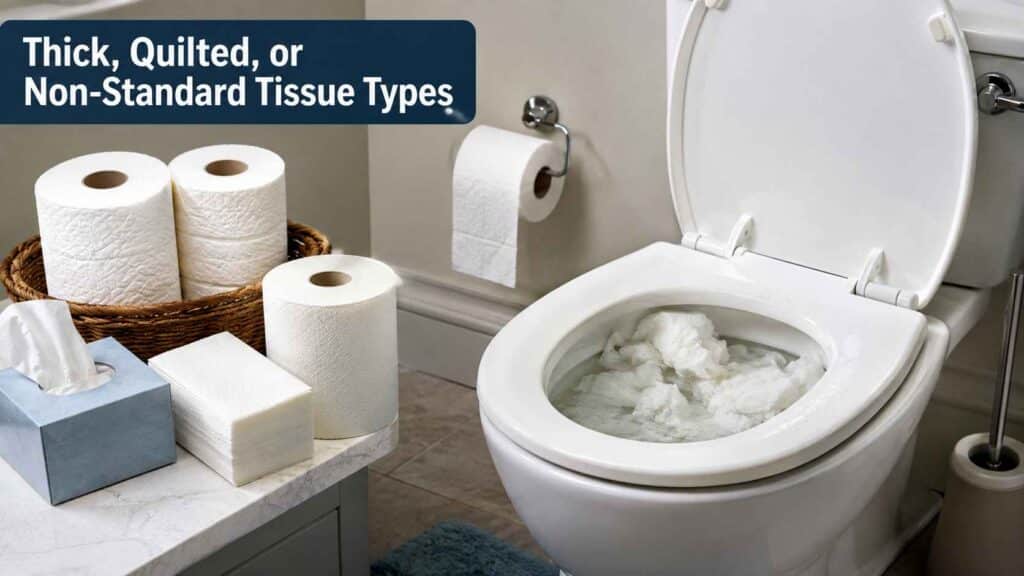
Not all toilet paper is created equal. Thick, quilted, or ultra-soft varieties feel luxurious but take longer to break apart in water. Some premium brands use multiple plies bonded with lotions or embossing, which slows disintegration. If your household prefers these products, you may be increasing your blockage risk without realising it.
Will a toilet paper clog eventually dissolve? In most cases, yes—but it can take hours or even days, during which time your toilet remains out of service. If the blockage is deep in the drainpipe or combined with hair and debris, it may never clear on its own. That is when homeowners reach for a plunger, then a drain snake, and finally call us for a professional clear-out.
4. Hair, Debris, and Mineral Buildup Trap Paper
Can you flush hair down the toilet? Technically, yes—but you should not. Hair does not dissolve like toilet paper. Instead, it tangles around any rough edge, joint, or existing buildup inside your pipes, creating a net that catches passing paper and other waste. Over time, this mat grows until it forms a full blockage.
Will hair block a toilet on its own? Rarely in a single flush, but repeated flushing of hair—combined with soap scum, mineral deposits, and toilet paper—builds up gradually. In parts of Sydney, hard water can leave calcium and lime scale on pipe walls, giving hair and paper more surface area to cling to. This is especially common in older homes with galvanised steel or clay drains.
5. Underlying Pipe Damage or Poor Installation
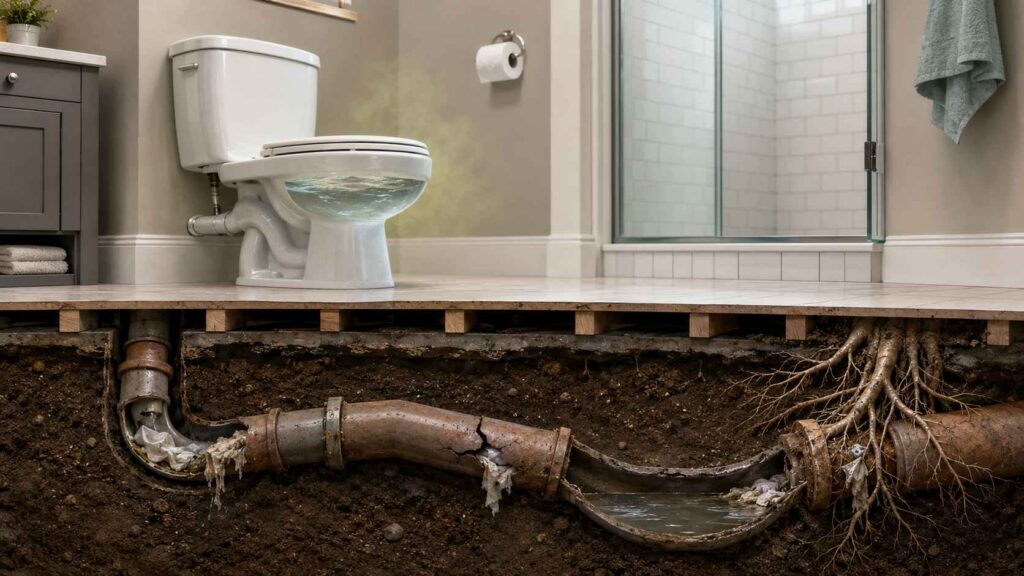
Sometimes the real culprit is not the toilet paper at all—it is the condition of your drainpipes. Cracks, collapses, bellied sections, or incorrect fall angles can all cause paper to snag and accumulate. Tree roots are a major issue across Sydney, particularly in suburbs with mature gum trees. Roots seek moisture and nutrients, infiltrating clay pipe joints and creating dense blockages that trap everything from paper to solid waste.
Does flushing toilet paper block a damaged pipe more easily? Absolutely. Even a small crack or offset joint creates turbulence and a catch point. Over weeks or months, paper and debris build up at that spot until water can no longer pass. You might notice gurgling sounds, slow drains in multiple fixtures, or foul odours—all signs that the problem extends beyond a single toilet and may involve your Sydney Water sewer connection.
Warning Signs Your Toilet Is at Risk of Clogging
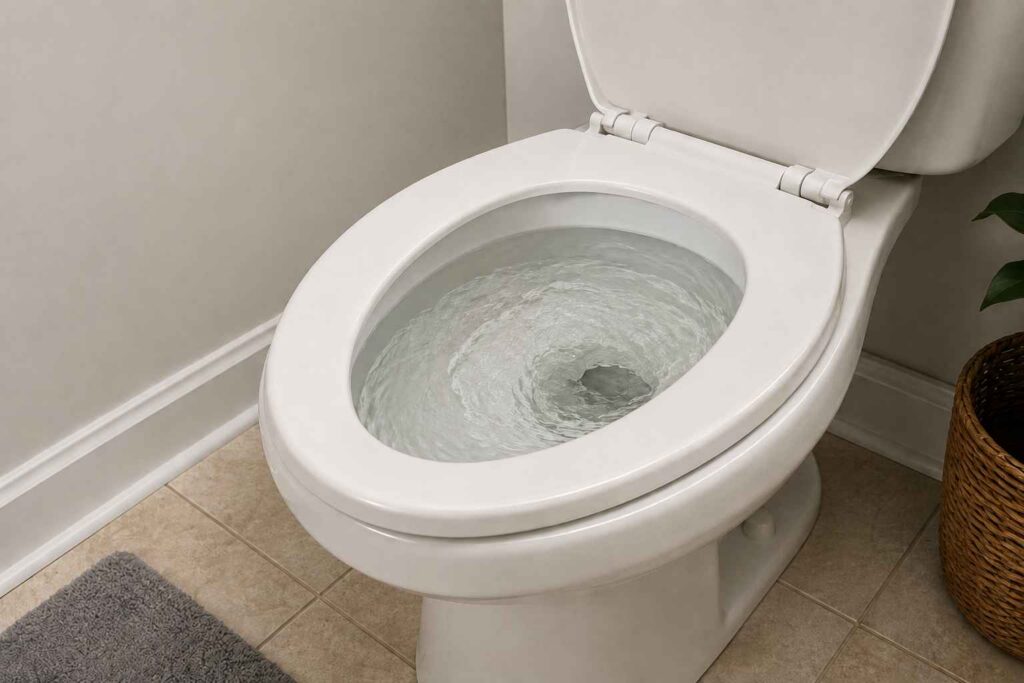
Catching a blockage early can save you time, money, and the inconvenience of an overflowing toilet. Watch for these warning signs, especially if you have older plumbing or a household that uses a lot of paper.
- Slow drainage: Water takes longer than usual to clear the bowl after flushing.
- Gurgling sounds: Air trapped by a partial blockage causes bubbling or gurgling in the toilet or nearby drains.
- Frequent plunging: If you reach for the plunger more than once a month, there is likely an underlying issue.
- Water level changes: The bowl water sits higher or lower than normal between flushes.
- Foul odours: Persistent sewer smells suggest a blockage or venting problem.
- Multiple fixture backups: When flushing the toilet causes your shower or basin to gurgle, the blockage is likely in your main drain line.
If you notice any of these symptoms, do not wait for a full blockage. Our team offers same-day service across Sydney—Inner West, Eastern Suburbs, North Shore, Northern Beaches, Hills District, Western and South-Western Sydney, and Sutherland Shire. We arrive with CCTV equipment, high-pressure jetters, and the experience to diagnose and clear the problem on the spot. There is no call-out fee, and we provide upfront, fixed-rate pricing in AUD before we start work.
How to Prevent Toilet Paper Clogs in Your Home
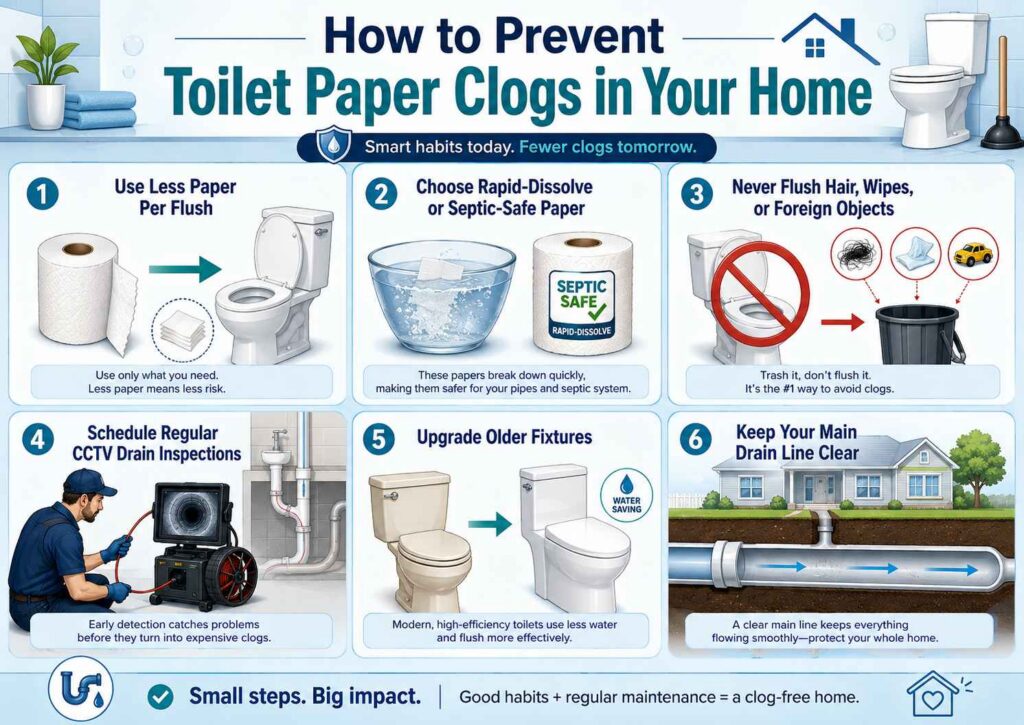
Prevention is always easier and cheaper than emergency repairs. Here are practical steps you can take today to reduce your risk of toilet paper blockages.
1. Use Less Paper Per Flush
Teach everyone in your household to use only what they need and to flush twice if necessary. A second flush uses a few extra litres of water but is far less disruptive than a blocked toilet.
2. Choose Rapid-Dissolve or Septic-Safe Paper
Look for brands labelled as quick-dissolving or septic-safe. These products break apart faster and are less likely to clump in your pipes.
3. Never Flush Hair, Wipes, or Foreign Objects
Even products labelled “flushable” can cause blockages. Hair, cotton buds, dental floss, and sanitary items should always go in the bin, not the toilet—this also helps protect the wider Sydney Water sewer network.
4. Schedule Regular CCTV Drain Inspections
An annual camera inspection can catch early signs of root intrusion, scale buildup, or pipe damage before they cause a full blockage. We offer this service as part of routine maintenance or as a standalone diagnostic visit.
5. Upgrade Older Fixtures
If your toilet is more than 20 years old, consider replacing it with a modern, WELS-rated dual-flush model that balances water efficiency with strong flushing performance. We can recommend and install fixtures suited to your home and plumbing system.
6. Keep Your Main Drain Line Clear
High-pressure water jetting removes grease, scale, and debris from your drainpipes, restoring full flow and reducing the chance of paper blockages. We recommend jetting every few years for older homes or properties with large trees nearby.
When to Call a Professional Plumber
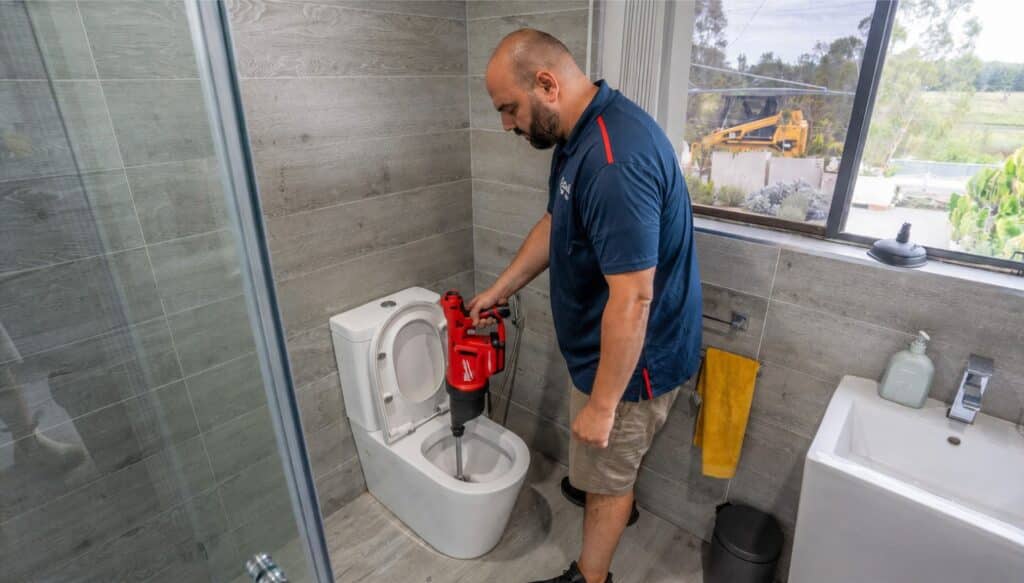
A plunger can handle simple, surface-level blockages, but recurring or stubborn blockages require professional diagnosis. If you have tried plunging and the problem returns within days, there is likely a deeper issue—pipe damage, root intrusion, or heavy buildup—that only a CCTV inspection can reveal. Any repair that touches the sewer main or requires reconnection to the Sydney Water network legally must be carried out by a licensed plumber, not a DIY job.
Our team responds same-day across Sydney, with 24/7 emergency availability for urgent blockages. We bring CCTV cameras, high-pressure jetters, and electric drain snakes to every job, so we can diagnose and clear most blockages on the first visit. If we find structural damage, we explain your options clearly—repair, replace, or reline—and provide fixed-rate pricing in AUD before we proceed. There are no hidden fees, no call-out charges, and no pressure to choose the most expensive solution.
We operate under NSW Fair Trading licensing (Lic: 210933C) and comply with AS/NZS 3500 plumbing standards and Sydney Water requirements. Every repair and installation is backed by our lifetime labour warranty, giving you confidence that the work will last. Whether you are a homeowner in the Inner West, a strata manager on the North Shore, or a café owner in the Eastern Suburbs, we tailor our approach to your needs, timeline, and budget. If you’re unsure whether a job needs a licensed plumber, call us on +61 493 824 176 and we’ll advise you honestly.
Conclusion
Toilet paper blockages are common, but they are not inevitable. By understanding the five main causes—excessive use, weak flushing power, thick paper, hidden debris, and pipe damage—you can take steps to prevent blockages and protect your plumbing. When blockages do occur, professional diagnosis and clearing ensure the problem does not return. Call us on +61 493 824 176 for same-day service across Sydney, CCTV inspections, and long-term solutions backed by our lifetime labour warranty.
Anton’s Plumbing & Gas (NSW Lic. 210933C) specialises in blocked drain repairs across Sydney Metro. Our licensed team clears toilet blockages fast with upfront, fixed-rate pricing in AUD. Contact us today to get started.
Related Articles
- 5 Proven Solutions for a Toilet Clogged with Toilet Paper
- 5 Common Clogged Toilet Fixes for Sydney Homeowners
- 5 Simple Ways to Unclog Toilet Without a Plunger
FAQs
Can Toilet Paper Really Block A Toilet If You Use Too Much?
Yes, toilet paper can block a toilet if too much is flushed at once, especially in older toilets, low-flow toilets, or drains that already have partial buildup. Toilet paper is designed to break down in water, but large amounts can bunch together and get stuck in the toilet trap or pipe. If your toilet keeps blocking from toilet paper, Anton’s Plumbing & Gas can check whether there is a deeper drain issue causing it.
What Happens If You Accidentally Flush Too Much Toilet Paper?
Flushing too much toilet paper can cause the toilet water to rise, drain slowly, or stop flushing altogether. The paper may also catch on an existing blockage further down the pipe, which can make the problem worse. If plunging does not clear it or the toilet blocks again soon after, Anton’s Plumbing & Gas can inspect and clear the line properly.
How Much Toilet Paper Is Safe To Flush At Once?
There is no exact amount that works for every toilet, but it is safer to flush smaller amounts instead of one large bundle. If you need to use more toilet paper, flushing in stages can help reduce the chance of a blockage. If normal toilet paper use still causes blockages, the issue may be with the toilet, water flow, or drain line rather than the paper itself.
Is It Ever Safe To Flush Paper Towels Down The Toilet?
No, paper towels should not be flushed down the toilet because they are made to stay strong when wet and do not break down like toilet paper. Even one or two sheets can get stuck in the toilet or further along the drain. Paper towels should always go in the bin to help prevent blocked toilet and sewer line problems.
What Should You Do If Your Toilet Is Blocked With Toilet Paper?
If your toilet is blocked with toilet paper, stop flushing first so the bowl does not overflow. Try using a proper toilet plunger with slow, steady pressure to loosen the blockage. If the water stays high, drains slowly, or the blockage keeps returning, Anton’s Plumbing & Gas can clear the toilet safely and check for any underlying plumbing problems.
Do You Offer Same-Day Blocked Toilet Repairs In Sydney?
Yes, we offer same-day service across Sydney Metro, including the Inner West, Eastern Suburbs, North Shore, Northern Beaches, Hills District, Western and South-Western Sydney, and Sutherland Shire. Call us on +61 493 824 176 to book a same-day slot for a blocked toilet.
Are You A Licensed Plumber In NSW?
Yes, Anton’s Plumbing & Gas holds NSW Fair Trading Licence No. 210933C and all our work complies with AS/NZS 3500 plumbing standards and Sydney Water requirements. Ask to see our licence details before any job begins.
How Quickly Can A Sydney Plumber Get To Me For A Blocked Toilet?
We provide 24/7 emergency availability for urgent blockages and aim to reach most Sydney suburbs the same day you call. Contact us on +61 493 824 176 and we’ll give you a realistic arrival window based on your location.
Do You Charge A Call-Out Fee To Inspect A Blocked Toilet?
No, we do not charge a call-out fee. We provide upfront, fixed-rate pricing in AUD before any work starts, so you know the cost before you commit.
Can You Use A CCTV Camera To Check Why My Toilet Keeps Blocking?
Yes, our vans carry CCTV drain inspection equipment so we can see exactly what is happening inside your pipes—whether it’s root intrusion, scale, or a damaged joint—rather than guessing. This lets us recommend the right fix the first time.
What If My Blocked Toilet Turns Out To Be A Sewer Main Issue?
If our inspection shows the blockage is in the sewer main rather than your internal pipework, we’ll explain whether the fix falls under your responsibility or Sydney Water’s, and advise on the next steps as a licensed plumber.
Do You Provide A Warranty On Blocked Toilet Repairs?
Yes, every repair and installation we carry out is backed by our lifetime labour warranty, giving you long-term confidence in the work.
Can You Fix A Blocked Toilet Without Digging Up My Yard?
In many cases, yes. High-pressure jetting and CCTV-guided clearing can resolve blockages without excavation. If relining or pipe replacement is needed, we’ll discuss trenchless options with you before recommending any digging.
Do You Service Strata Properties And Units In Sydney?
Yes, we regularly work with strata managers and body corporates across Sydney apartment blocks, including blocked toilets and shared drain lines. We provide fixed-rate quotes suited to strata approval processes.
What Areas Of Sydney Do You Cover For Blocked Toilets?
We cover Sydney Metro broadly, including the Inner West, Eastern Suburbs, North Shore, Northern Beaches, Hills District, Western and South-Western Sydney, and Sutherland Shire. Check our suburb pages or call us to confirm coverage for your address.
Can I Book A Plumber Online For A Blocked Toilet?
Yes, you can book a plumber through our online booking page or by calling +61 493 824 176 directly for faster same-day scheduling.
Will You Give Me A Fixed Price Before Starting Work On My Toilet?
Yes, we always provide fixed-rate pricing in AUD upfront, once we’ve assessed the blockage, so there are no surprises on the invoice.
Is It Worth Getting An Annual Drain Inspection To Avoid Future Toilet Blockages?
Yes, an annual CCTV drain inspection can catch early signs of root intrusion, scale, or pipe damage before they cause a full blockage, which is especially worthwhile for older homes or properties with large trees nearby. We can schedule this as part of routine maintenance.
Should I Try To Fix A Recurring Blocked Toilet Myself?
Simple, one-off clogs can often be cleared with a plunger, but recurring blockages usually point to a deeper issue that needs a licensed plumber with CCTV equipment to diagnose properly, rather than repeated DIY attempts.
How Do I Get A Quote For A Blocked Toilet Repair In Sydney?
Call us on +61 493 824 176 or use our online booking form, describe the symptoms, and we’ll arrange a same-day visit with upfront, fixed-rate pricing before any work begins.