

Toilet paper is designed to break down in water, but it can still clog a toilet when too much is flushed at once or when the drain line is already restricted. If you’re wondering will toilet paper dissolve in clogged toilet conditions, it usually will soften over time, but existing restrictions and non-dissolving items can prevent it from clearing properly. In Sydney homes, “flushable” wipes, tissues, and paper towels can hold their shape and trap toilet paper behind them. The most reliable way to avoid repeat blockages is understanding what dissolves, choosing faster-breaking paper for clog-prone toilets, and using preventative habits that keep the drain line clear.
This article answers the question “Will toilet paper dissolve in a clogged toilet?”, how it behaves when flow is restricted, and the practical steps that can clear minor blockages safely. It also breaks down why other materials cause stubborn clogs, what to look for in toilet paper that dissolves quickly, and the habits that prevent recurring backups in Sydney households. You will also learn when persistent symptoms point to deeper drain problems, plus how Anton’s Plumbing & Gas (NSW Lic. 210933C) helps diagnose root causes with CCTV inspections, restore flow quickly, and prevent repeat issues with compliant, upfront-priced solutions across Sydney.
Key Takeaways
- Standard toilet paper is designed to dissolve in water, but excessive amounts can overwhelm your drainage system and create a blockage.
- Hot water, dishwashing liquid, bicarb soda, and vinegar offer effective DIY methods for breaking down minor toilet paper clogs.
- A plunger remains the most reliable first-response tool for clearing toilet paper obstructions in the bowl trap.
- Persistent or recurring clogs often signal deeper drain issues that require CCTV inspection and professional diagnosis.
- Under Sydney Water guidance, only the “3 Ps” — pee, poo and (toilet) paper — should ever be flushed; everything else belongs in the bin.
- Anton’s Plumbing & Gas (NSW Lic. 210933C) provides same-day, fixed-rate toilet repairs and drain clearing across Sydney, with no call-out fee and a lifetime labour warranty.
Will Toilet Paper Dissolve in a Clogged Toilet?
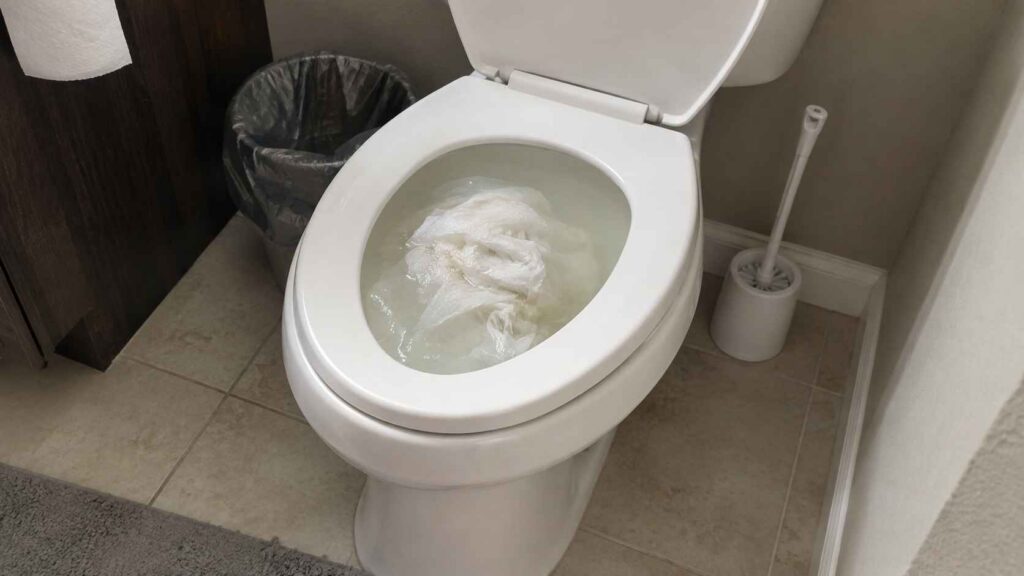
Yes, most standard toilet paper will eventually dissolve in water because manufacturers design it to break apart when wet. The fibres absorb moisture and lose their bond, allowing the paper to disintegrate into smaller fragments that can pass through your drain. That process takes time, and when a large wad of paper sits in your toilet trap, the water flow slows or stops altogether, preventing the dissolving action from working efficiently.
If the clog is fresh and consists only of toilet paper, waiting a few hours might allow the paper to soften enough for a second flush to clear it. Pouring warm water into the bowl can accelerate breakdown by raising the temperature and increasing fibre saturation. Many Sydney homeowners find that a combination of patience and gentle plunging resolves the issue without needing harsh chemicals or professional help.
Problems arise when the blockage includes other materials such as wet wipes, sanitary products, or excessive hair, which do not dissolve like toilet paper. In those cases, the paper acts as a binder, holding the non-dissolvable items in place and creating a more stubborn obstruction. You might also face complications if your drain line already has scale buildup, tree root intrusion, or a collapsed section — common in Sydney’s older clay-pipe suburbs — because even a small amount of paper can catch on rough edges and accumulate.
Understanding the Difference Between Toilet Paper and Other Materials
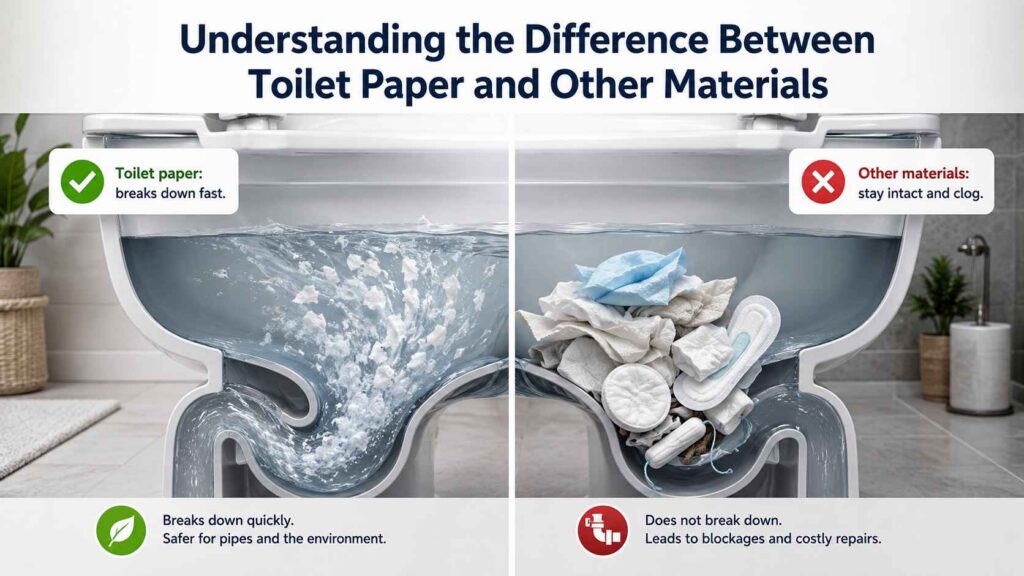
Standard toilet paper is designed to break down fast in water, which helps it move safely through household plumbing and the Sydney Water sewer network. By contrast, many other “paper-like” products are manufactured to stay strong when wet, so they hold their shape and build up in drains. Understanding what dissolves versus what stays intact is one of the simplest ways to prevent stubborn toilet clogs and expensive blockages — and it’s also what Sydney Water asks every household to follow.
| Material | Designed to Break Down in Water? | What Typically Happens in Drains | Best Disposal Method |
|---|---|---|---|
| Standard toilet paper | Yes | Softens quickly and disperses, reducing clog risk when used normally | Flush in reasonable amounts |
| Wet wipes (even “flushable”) | No / very slow | Stays intact, snags on joints/roots, combines with grease/hair into dense blockages | Bin |
| Facial tissues | No | Fibres bind together when wet and can form clumps in traps and bends | Bin |
| Paper towels | No | Highly absorbent and tough; expands and resists breaking apart | Bin |
| Sanitary products | No | Swells and blocks traps and pipes; can cause major backups | Bin |
| Cotton buds (Q-tips) | No | Sticks in bends and catches debris, gradually forming a blockage point | Bin |
| Dental floss | No | Tangles and “nets” other debris, creating long-lasting obstructions | Bin |
| Cat litter | No | Clumps/expands with water and can harden inside pipes | Bin (follow local waste guidance) |
Flushing only what truly breaks down — mainly toilet paper and human waste — keeps your plumbing system flowing as intended and keeps you compliant with Sydney Water’s trade waste and household guidelines. Items that stay strong when wet tend to snag, accumulate, and form blockages that plungers often can’t clear. A simple rule helps: if it’s not toilet paper, it belongs in the bin, not the bowl.
Toilet Papers That Dissolve Quickly
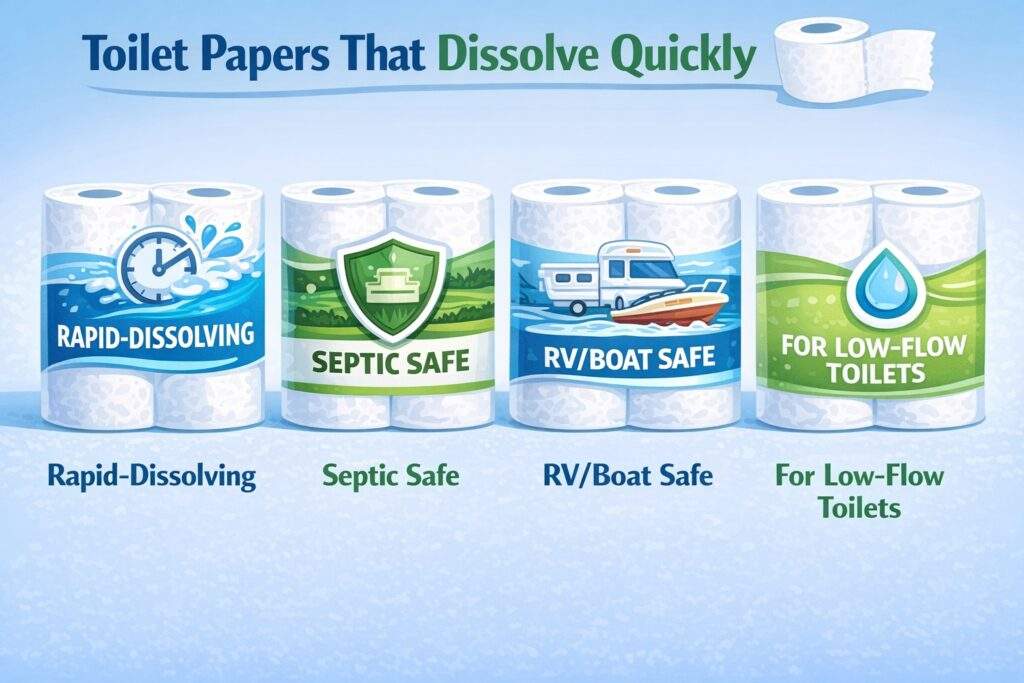
Toilet paper that dissolves quickly is a smart choice for clog-prone toilets, older Sydney terraces with original pipework, septic systems (common in rural NSW and outer Sydney properties), and low-flow toilets. Thicker, ultra-soft, heavily textured rolls tend to break down more slowly, which can increase the chance of paper buildup in traps and drain lines. Choosing a fast-dissolving option is a simple preventative step that often reduces recurring blockages.
1. “Rapid-Dissolving”
This label is recommended when the priority is faster breakdown after flushing, especially in toilets that clog easily. It typically indicates the paper is designed to disintegrate quickly in water and move through the plumbing more easily.
2. “Septic Safe”
This option is recommended for homes with septic systems because it is formulated to dissolve efficiently and reduce the risk of buildup in the tank and drain field. It supports smoother waste breakdown and helps protect septic performance over time, which matters for NSW properties not connected to the Sydney Water sewer main.
3. “Caravan/Boat Safe”
This label is recommended for sensitive plumbing setups and holding-tank conditions where fast disintegration is essential — useful if you’re stocking up for a caravan trip along the NSW coast. These products are usually thinner and designed to break apart quickly even with minimal water flow.
4. “For Low-Flow Toilets”
This phrase is recommended for modern water-efficient toilets that use less flushing power, which is increasingly common under NSW water-efficiency requirements. Faster-dissolving paper helps prevent clumping and improves the chance of waste clearing properly with reduced water volume.
For best results, 1-ply or light 2-ply toilet paper is generally the safer choice in clog-prone systems compared to thick, quilted varieties. The goal is quicker disintegration, not maximum softness. Matching the toilet paper type to the plumbing setup is an easy way to reduce clogs and protect the drain line long-term.
Preventing Future Toilet Paper Clogs in Your Sydney Home
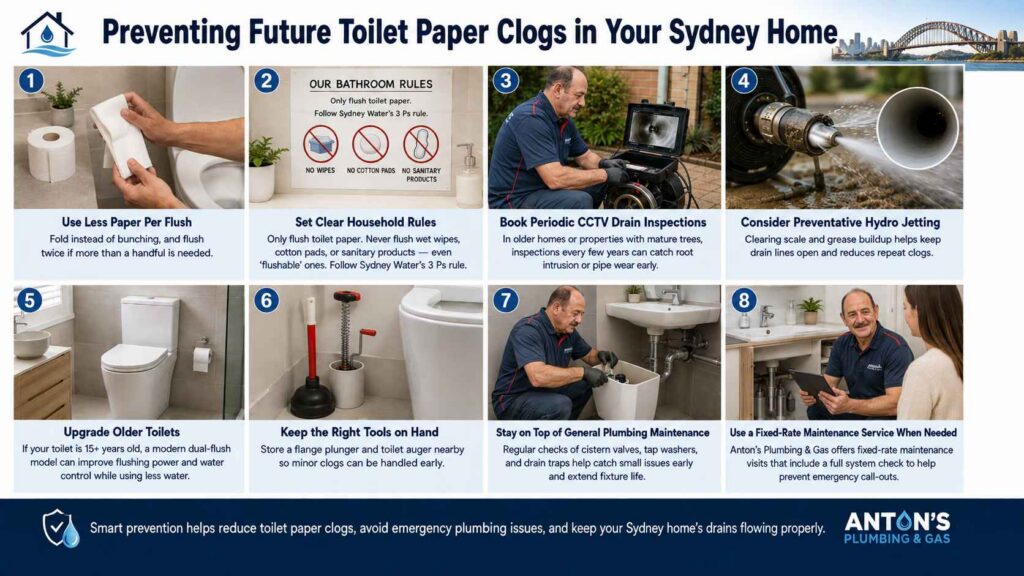
Preventing toilet paper clogs comes down to using the right flushing habits and addressing small plumbing issues before they turn into major blockages. Many recurring clogs are caused by using too much paper at once, flushing the wrong materials, or dealing with older drains that are already partially restricted — a common issue in Sydney’s heritage suburbs with ageing terracotta pipework. With a few practical changes and occasional preventative checks, most Sydney households can dramatically reduce the risk of toilet backups.
- Use less paper per flush: Fold instead of bunching, and flush twice if more than a handful is needed.
- Set clear household rules: Teach kids and remind guests to only flush toilet paper — never wet wipes, cotton pads, or sanitary products (even “flushable” ones), in line with Sydney Water’s 3 Ps rule.
- Book periodic CCTV drain inspections: Every few years is a smart preventative step in older homes or properties with mature trees to detect root intrusion or pipe wear early.
- Consider preventative hydro jetting: Clearing scale and grease buildup helps keep the drain line open and lowers the chance of repeat clogs.
- Upgrade older toilets: If your toilet is 15+ years old, a modern dual-flush model can improve flushing power and water control for different waste types, and typically uses less water.
- Keep the right tools on hand: Store a flange plunger and toilet auger nearby to deal with minor clogs early before they worsen.
- Stay on top of general plumbing maintenance: Regular checks of cistern valves, tap washers, and drain traps help catch small issues early and extend fixture life.
- Use a fixed-rate maintenance service when needed: Anton’s Plumbing & Gas offers fixed-rate maintenance visits that include a full system check to help prevent emergency call-outs.
Small habits make the biggest difference — especially avoiding excess paper and never flushing non-dissolving items. Preventative inspections and drain cleaning can also stop hidden issues like roots or pipe wear from turning into sudden sewage backups. If clogs keep returning, getting the system checked early by a licensed Sydney plumber is far cheaper than dealing with an emergency overflow later.ning can also stop hidden issues like roots or pipe wear from turning into sudden sewage backups. If clogs keep returning, getting the system checked early is far cheaper than dealing with an emergency overflow later.
When to Call a Professional Plumber for a Clogged Toilet
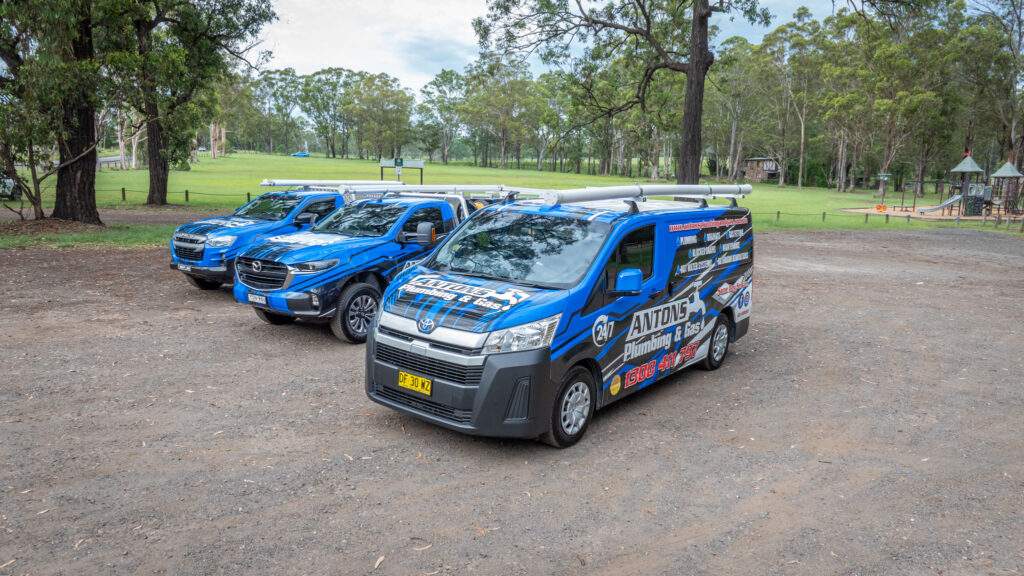
If you have tried plunging, hot water, and bicarb soda without success, the blockage likely sits beyond the toilet trap in your main drain line. Persistent clogs that return within days of clearing suggest a deeper issue such as root intrusion, pipe damage, or a foreign object lodged in the line. Continuing to flush and plunge can worsen the problem by compacting the material further or causing a sewage backup into other fixtures.
You should also call a plumber if you notice slow drainage in multiple fixtures, gurgling sounds from your shower or sink when you flush the toilet, or foul odours rising from your drains. These symptoms indicate a blockage in your main sewer line rather than a localised toilet issue, and under NSW regulations only a licensed plumber can legally carry out repairs on your sewer connection. A CCTV drain inspection allows our team to pinpoint the exact location and cause of the obstruction, whether it is tree roots, a collapsed pipe, or accumulated grease and debris.
Anton’s Plumbing & Gas (NSW Lic. 210933C) responds same-day across Sydney, with no call-out fee and fixed-rate pricing for toilet repairs and drain clearing. Our licensed plumbers use high-pressure water jetting to break apart stubborn clogs, and we can perform trenchless pipe relining if your drain line has cracks or root damage. Every job is completed to Australian Standards and NSW plumbing regulations, and we back our workmanship with a lifetime labour warranty so you can trust the repair will last.
Conclusion
Toilet paper will dissolve in a clogged toilet given enough time and water, but waiting is not always practical or effective when the blockage includes other materials or sits beyond the trap. Simple methods like plunging, hot water, and bicarb soda can clear minor clogs, yet persistent or recurring issues demand professional diagnosis to identify root causes such as pipe damage or tree roots. Anton’s Plumbing & Gas (NSW Lic. 210933C) delivers same-day, fixed-rate toilet repairs and CCTV drain inspections across Sydney, with compliant workmanship, upfront pricing, and a lifetime labour warranty. Call 0493 824 176 or book online for reliable service that restores flow and prevents future blockages.
Anton’s Plumbing & Gas specialises in blocked drain solutions across Sydney Metro. Our licensed team uses CCTV inspections to diagnose and clear stubborn clogs fast. Call 0493 824 176 to get started today.
Related Articles
- 5 Reasons Why Toilet Paper Can Clog Your Toilet
- 5 Proven Solutions for a Toilet Clogged with Toilet Paper
- 5 Common Clogged Toilet Fixes for Sydney Homeowners
FAQs
What Happens To Toilet Paper When It Gets Stuck In A Clogged Toilet?
When toilet paper gets stuck in a clogged toilet, it can bunch together and block water from moving through the toilet trap or drain line. This may cause the bowl to fill higher than normal, drain slowly, or overflow if you keep flushing. If plunging does not clear it, Anton’s Plumbing & Gas can remove the blockage safely and check whether there is a deeper drain issue.
Can Toilet Paper Really Dissolve In Water?
Yes, toilet paper is designed to break down in water, but it does not always dissolve fast enough if too much is flushed at once. Thick toilet paper, low water flow, or an existing partial blockage can make the paper clump together instead of moving through the pipe. If this keeps happening, the problem may be with the toilet, drain line, or flushing power.
How Long Does It Usually Take For Toilet Paper To Dissolve?
Toilet paper can start softening within minutes, but the full breakdown time depends on the type of paper, the amount flushed, and how much water is moving through the toilet. If the toilet is already clogged, the paper may stay packed in place instead of dissolving properly. If the water is still high or draining slowly after waiting, it is better to stop flushing and get the blockage checked.
What Should I Do If My Toilet Is Clogged With Toilet Paper?
If your toilet is clogged with toilet paper, stop flushing first to avoid overflowing the bowl. Try using a toilet plunger with slow, steady pressure to help move the blockage. If the clog does not clear or the toilet keeps blocking again, Anton’s Plumbing & Gas can clear it properly without damaging your toilet or pipework.
Is It Safe To Flush Toilet Paper Down The Toilet Every Day?
Yes, it is safe to flush toilet paper down the toilet when it is used in normal amounts. Problems usually happen when too much is flushed at once, the toilet has weak flushing power, or items like wipes, paper towels, or sanitary products are flushed with it. If normal toilet paper use still causes clogs, a plumber can inspect the toilet and drain to find the real cause.
How Quickly Can Anton’s Plumbing & Gas Attend A Clogged Toilet In Sydney?
We offer same-day response across Sydney Metro for blocked toilets, with no call-out fee. If you’re dealing with an overflowing bowl right now, call 0493 824 176 and we’ll get a licensed plumber to you as soon as possible.
Is Anton’s Plumbing & Gas A Licensed Plumber In NSW?
Yes, Anton’s Plumbing & Gas holds NSW Lic. 210933C, meaning our plumbers are fully qualified and authorised to carry out toilet, drain, and sewer repairs in compliance with NSW plumbing regulations and Sydney Water requirements.
Do You Charge A Call-Out Fee For A Blocked Toilet In Sydney?
No, we don’t charge a call-out fee. We provide fixed-rate, upfront pricing before any work begins, so you know exactly what the job involves before we start clearing your blocked toilet or drain.
What Suburbs Across Sydney Do You Service For Blocked Toilets And Drains?
We service Sydney Metro broadly, including suburbs such as Epping and Agnes Banks, with same-day availability. If you’re unsure whether we cover your area, call 0493 824 176 and our team can confirm straight away.
Can You Provide A CCTV Drain Inspection For A Recurring Toilet Clog?
Yes, our licensed plumbers use CCTV drain cameras to inspect the full length of your drain line, identifying root intrusion, cracked pipes, or buildup that a plunger can’t fix. This gives you a clear diagnosis before any repair work is booked in.
Do You Offer Fixed-Rate Pricing For Toilet And Drain Clearing?
Yes, all our toilet repair and drain clearing work is quoted at a fixed rate before we start, with no surprise charges. You’ll always know the cost upfront when you book with Anton’s Plumbing & Gas.
What Happens If My Blocked Toilet Is Linked To Sydney Water’s Sewer Main Rather Than My Private Pipes?
If a CCTV inspection shows the blockage is on Sydney Water’s side of the network rather than your private drain, we can advise you accordingly and help coordinate next steps, since work on the sewer main itself falls under Sydney Water’s jurisdiction.
Can Hydro Jetting Damage Older Sydney Homes’ Pipework?
When carried out by a licensed plumber, hydro jetting is calibrated to suit your pipe material and condition, making it safe for most older Sydney properties. Our team assesses your drain line first, often via CCTV, before recommending jetting.
Do You Offer Emergency Plumbing Outside Business Hours?
Yes, we understand a blocked or overflowing toilet can’t always wait. Call 0493 824 176 to discuss availability for urgent same-day attendance across Sydney.
What Warranty Do You Provide On Toilet And Drain Repairs?
Anton’s Plumbing & Gas backs all workmanship with a lifetime labour warranty, so if an issue relating to our repair arises, we’ll come back and make it right.
Should I Try DIY Chemicals Before Calling A Plumber?
Mild methods like hot water, bicarb soda, and vinegar are fine for minor clogs, but harsh chemical drain cleaners can damage older pipework and are best avoided. If a couple of gentle attempts don’t clear it, it’s safer to call a licensed plumber than risk pipe damage.
Can A Blocked Toilet Cause Damage To My Sydney Home If Left Untreated?
Yes, an unresolved blockage can lead to overflow, water damage to flooring and subfloor, and even sewage backing up into other fixtures. Getting it inspected and cleared promptly by a licensed plumber helps avoid costlier repairs later.
How Do I Book A Plumber Online With Anton’s Plumbing & Gas?
You can book online in a few minutes, or call 0493 824 176 directly for same-day service across Sydney Metro.
Do You Handle Both Residential And Strata/Commercial Toilet Blockages?
Yes, we handle blocked toilets and drains for homeowners, landlords, strata properties, and commercial premises across Sydney, with fixed-rate pricing and licensed compliance for every job type.
What Should I Check Before Calling A Plumber For A Clogged Toilet?
Check whether other fixtures like your shower or sink are also draining slowly or gurgling, as this can indicate a main drain issue rather than a simple toilet clog. Note how long the blockage has persisted and what may have been flushed, then call 0493 824 176 so our licensed plumbers can diagnose it accurately on arrival.