

Yes, too much toilet paper can absolutely clog a toilet—especially when a large wad is flushed in one go. This is a common call-out for us across Sydney and the greater NSW area, from older Federation homes in the Inner West to newer builds in the Hills District. Toilet paper needs time and turbulence to break down, but thick multi-ply or quilted tissue can clump into a dense mass that gets stuck in the S-bend/P-trap or further down the drain line. The problem gets worse when the flush is weak or the pipes are older, rough, or partially restricted—which describes a lot of Sydney’s ageing housing stock.
In this article, you’ll learn exactly why too much toilet paper clogs a toilet, what household habits reduce clog risk, and how to prevent repeat issues with smarter paper choices and simple maintenance. You’ll also discover practical upgrades like bidet attachments and why “flushable” wipes should never go into the bowl. And if clogs keep coming back, we’ll explain how Antons Plumbing & Gas uses CCTV drain inspections to find the real cause and deliver same-day fixes across Sydney—without mess or guesswork.
Key Takeaways
- Toilet paper clogs happen when big wads don’t break down fast enough and form dense clumps that lodge in the S-bend/P-trap or drain line.
- Thicker multi-ply and quilted toilet paper increases clog risk because it disintegrates more slowly, especially when used in large amounts.
- Weak flush force (low water pressure, worn valves, or incomplete cistern fill) makes it harder to push paper through the trap and into the main line.
- Older or damaged pipes—common in many Sydney homes, particularly period properties in suburbs like Balmain, Paddington and Newtown—can have rough interiors, cracks, or root intrusion that snag paper and cause recurring blockages.
- The most effective prevention combines smaller paper loads, fast-dissolving paper, “bin-only” rules for wipes/tissues, and upgrades like bidets to reduce paper use.
- If clogs keep happening, a CCTV drain inspection helps pinpoint hidden obstructions and prevents repeat emergencies by treating the root cause, not just the symptom.
- Work on your internal plumbing must be carried out by a licensed plumber under NSW regulations—Antons Plumbing & Gas holds NSW Lic. 210933C.
How Toilet Paper Breaks Down in Water
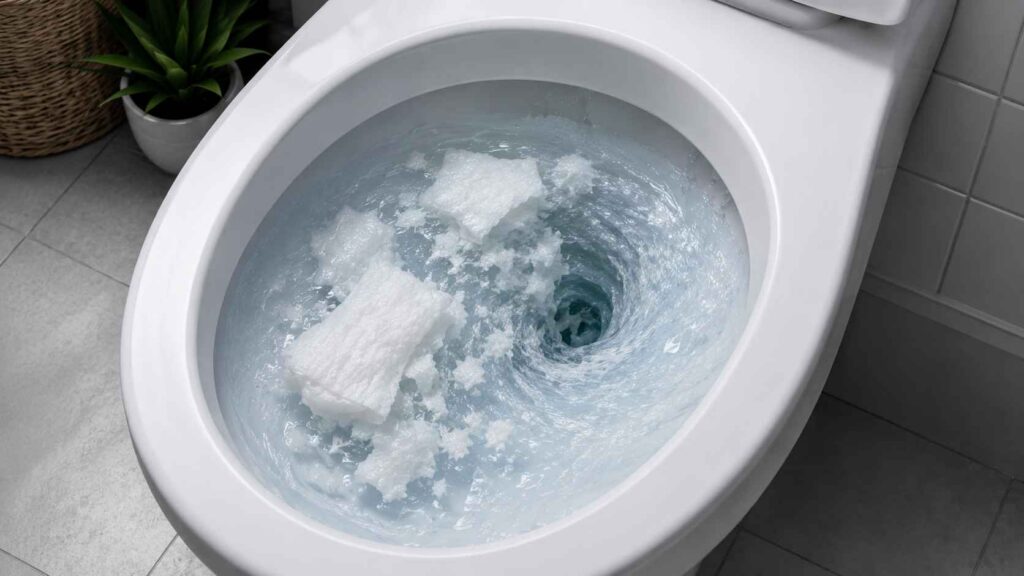
In the toilet bowl, toilet paper begins breaking down almost immediately after it touches water. The paper absorbs moisture quickly, which weakens the bonds between its short cellulose fibres and reduces its overall strength. This is why dry toilet paper feels sturdy in your hand but becomes fragile once wet.
As you flush, the surge and swirling motion of water fully saturate the sheets and lift them off the porcelain surface. The agitation helps separate the layers and pull the fibres apart, turning the paper into smaller, softer fragments. The combination of water absorption and mechanical movement is what drives the breakdown process.
Standard toilet paper is specifically manufactured to disintegrate rapidly in water. Within seconds to a couple of minutes, it loses most of its structural integrity and becomes much weaker than it was when dry. This controlled breakdown allows it to move through the plumbing system efficiently under normal conditions.
Why Too Much Toilet Paper Clogs a Toilet
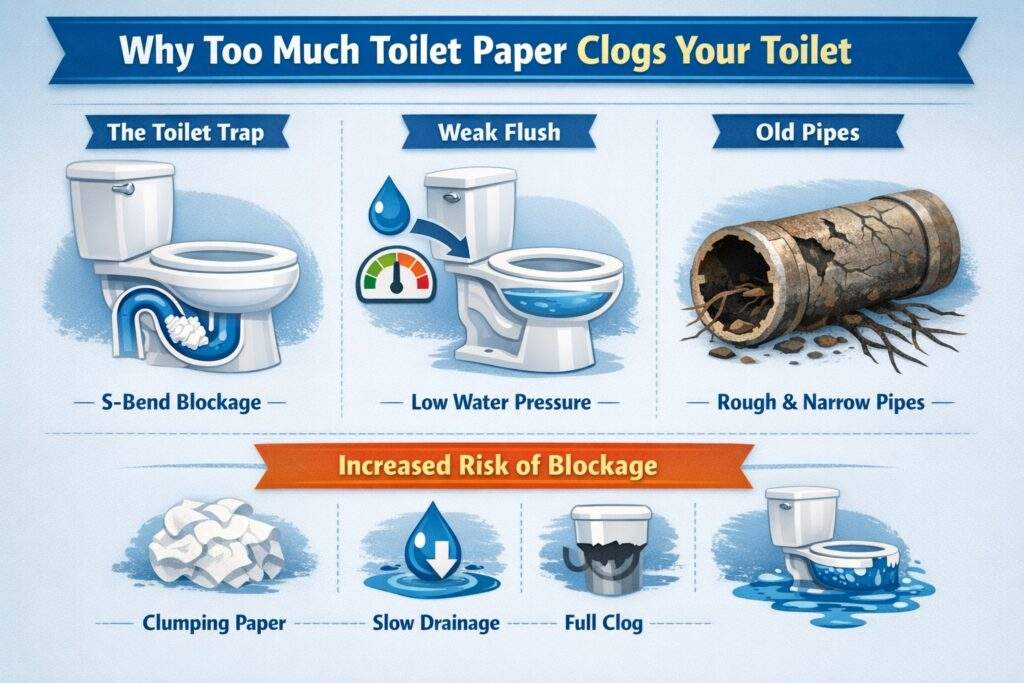
Too much toilet paper clogs toilets because it needs time and turbulence to break down properly, and a large wad flushed all at once doesn’t get either. The fibres clump together into a dense mass that can lodge in the curved trap beneath the bowl or farther along the drain line—especially if water flow is already weak or partially restricted. Thicker multi-ply and quilted brands slow the breakdown process even more, increasing the risk of blockage.
1. The Toilet Trap (S-Bend or P-Trap)
The trap is a narrow, water-filled curve designed to block sewer gases, but its tight bend makes it the first place bulky paper and wipes get stuck.
2. Low Water Pressure or Weak Flush
Older toilets or worn internal parts reduce flushing force, making it harder to push paper completely through the system.
3. Pipe Diameter and Condition
Older clay or cast-iron pipes can develop rough surfaces, cracks, or root intrusion that catch paper easily and restrict flow. This is a very common issue in older Sydney suburbs where original clay stormwater and sewer pipes are still in the ground. Note that once a blockage moves past your property’s boundary trap it typically becomes the responsibility of Sydney Water, whereas anything on your side of the boundary is your responsibility and must be repaired by a licensed plumber.
When these factors combine, even a small buildup can quickly turn into a full blockage. Each flush adds more material to whatever is already caught, gradually restricting water movement. Over time, what starts as slow draining can become a completely blocked toilet.
Practical Habits That Prevent Toilet Paper Clogs
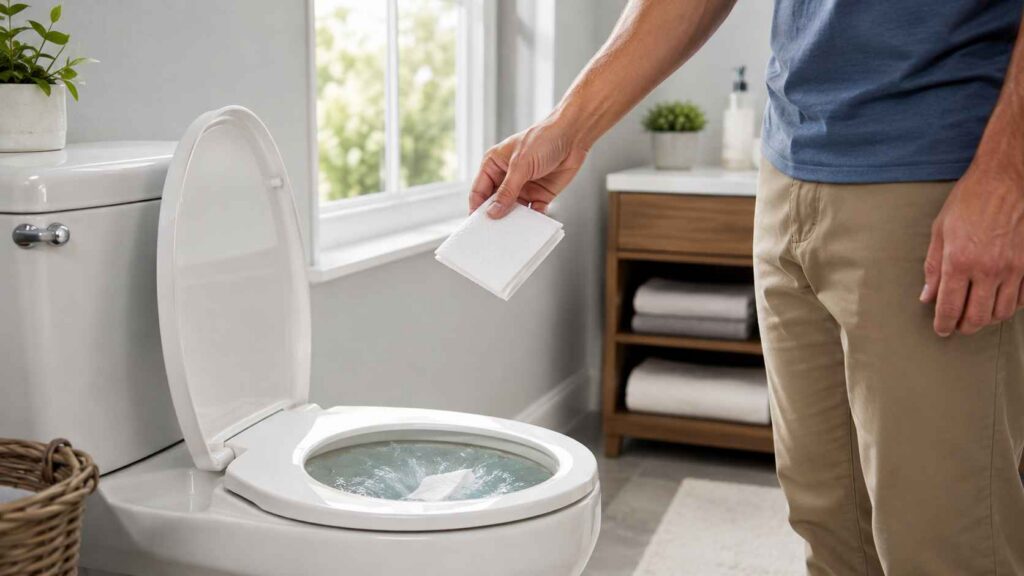
You can dramatically reduce toilet-paper clogs by adjusting a few everyday habits and being more intentional about what goes down the toilet. Most blockages build up over time from oversized wads, slow-dissolving paper, or flushing the wrong items. A mix of smarter flushing, better paper choice, and simple maintenance goes a long way toward preventing repeat problems.
1. Use Less Paper and Flush Smart
Use only what you need, fold instead of crumple, and flush in smaller loads—especially after heavier use.
2. Choose Faster-Dissolving Toilet Paper
Avoid ultra-plush brands and look for septic-safe or fast-dissolving options that break apart quickly in water.
3. Control What Goes Into the Bowl
Only human waste and toilet paper should be flushed—never wipes, paper towels, or hygiene products. Sydney Water specifically asks households not to flush wipes, as they’re one of the leading causes of blockages in the local sewer network.
4. Match Habits to Your Toilet and Plumbing
Older or low-flow toilets need lighter paper loads and sometimes double-flushing to prevent overload.
5. Maintain and Be Prepared
Regular cleaning and keeping a proper flange plunger nearby help stop minor issues from becoming major clogs.
When these practices become routine, you’ll notice fewer slow drains and emergency plunging sessions. Small changes in daily habits prevent buildup inside the trap and pipes before it starts. And if clogs still happen regularly despite being careful, that’s usually a sign the issue is deeper in the plumbing and worth having inspected by a licensed Sydney plumber.
5 Effective Ways to Prevent Toilet Paper Clogs at Home
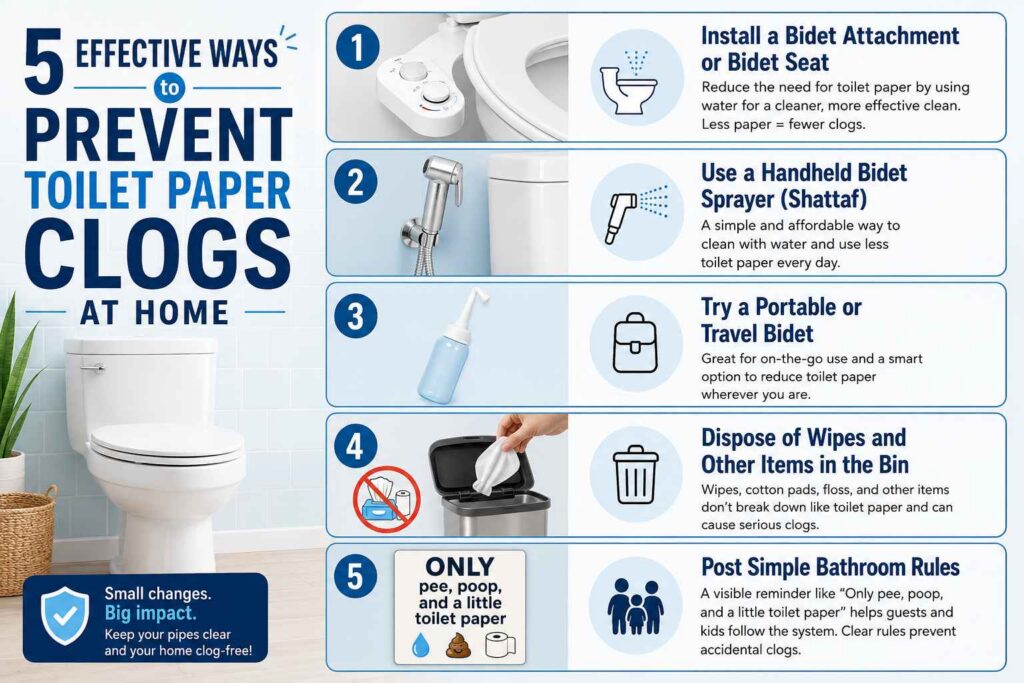
The best way to prevent clogs is to reduce how much toilet paper enters your plumbing and switch to water-based cleaning or proper bin disposal. Most serious blockages happen because bulky materials are flushed repeatedly over time. A few practical changes can dramatically lower your clog risk.
1. Install a Bidet Attachment or Bidet Seat
A bidet uses a targeted water spray so you need little or no toilet paper. This almost eliminates paper-related clog risk in one move.
2. Use a Handheld Bidet Sprayer (Shattaf)
Mounted beside the toilet, this works like a bidet seat but is often cheaper and easier to install. It significantly reduces the amount of paper entering your pipes.
3. Try a Portable or Travel Bidet
A small squeeze bottle with a nozzle can be used at home or while travelling. It’s gentle, effective, and reduces paper use to just a few squares for drying.
4. Dispose of Wipes and Other Items in the Bin
Baby wipes, “flushable” wipes, tissues, paper towels, sanitary products, and reusable cloths should never be flushed. Keep a small covered bin next to the toilet so there’s always an easy alternative.
5. Post Simple Bathroom Rules
A visible reminder like “Only pee, poop, and a little toilet paper” helps guests and kids follow the system. Clear rules prevent accidental clogs.
Once you shift from paper-heavy habits to water-based cleaning, most routine clogs disappear. The combination of reduced paper load and proper disposal keeps your trap and drain lines clear. If clogs still happen after making these changes, the issue may be deeper in the plumbing and worth inspecting—and that’s when it’s time to call a licensed Sydney plumber rather than keep plunging.
Need Fast, Professional Help for Toilet Paper Clogs in Sydney?
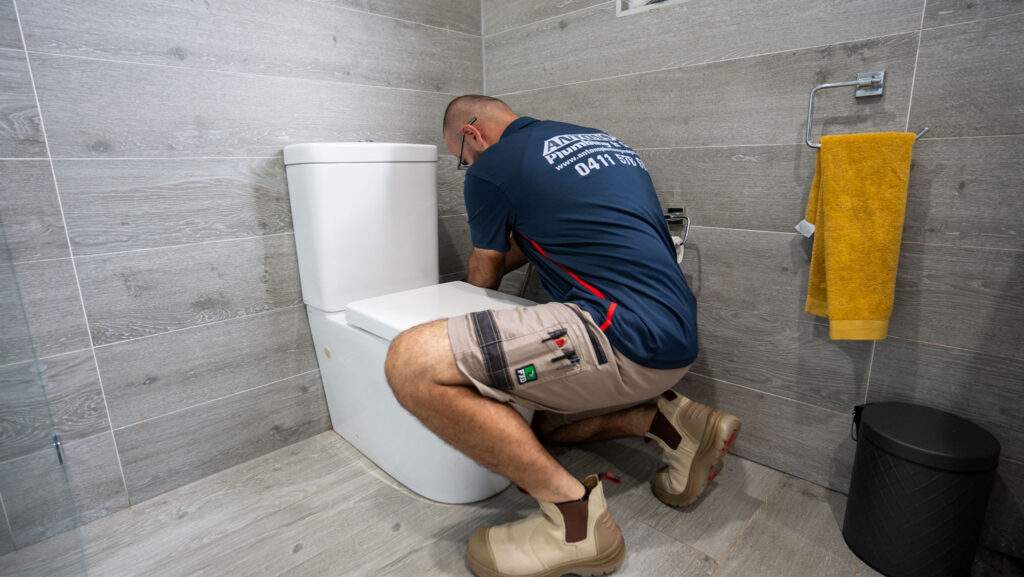
If your toilet keeps blocking despite being careful with paper use, the issue may be deeper than a simple overload. At Antons Plumbing & Gas, we don’t just plunge and hope for the best—we identify the exact cause using professional CCTV drain inspections to locate hidden blockages, root intrusion, pipe damage, or venting issues. Our licensed Sydney plumbers (NSW Lic. 210933C) provide same-day service, clear explanations, and long-term solutions so you’re not dealing with repeat clogs every few weeks.
With over 25 years of experience across Sydney and NSW, we’ve seen how small paper-related clogs can point to bigger drainage problems. Whether it’s a stubborn trap blockage, ageing clay pipes, or a partial sewer obstruction, our team resolves the issue properly the first time, in line with NSW plumbing regulations and Sydney Water requirements. If your toilet is backing up, gurgling, or rising after flushing, contact Antons Plumbing & Gas on +61 493 824 176 and get it fixed quickly—without mess, stress, or guesswork.
Conclusion
Toilet paper clogs might seem minor at first, but they often signal habits or plumbing conditions that need attention. Using too much paper, flushing the wrong items, or relying on older plumbing systems can gradually restrict flow and lead to messy backups. The good news is that small changes in daily habits, combined with proper maintenance, can prevent most toilet-related blockages before they turn into emergencies.
If your toilet keeps clogging despite being careful, it’s time to get professional help. The licensed team at Antons Plumbing & Gas (NSW Lic. 210933C) provides same-day service across Sydney, using CCTV drain inspections to pinpoint the exact cause and fix it properly. Contact us today on +61 493 824 176 to stop recurring blockages for good and restore your plumbing with confidence.
Related Articles
- 5 Proven Solutions for a Toilet Clogged with Toilet Paper
- 5 Common Clogged Toilet Fixes for Sydney Homeowners
- 5 Simple Ways to Unclog Toilet Without a Plunger
FAQs
What Happens If You Use Too Much Toilet Paper?
Using too much toilet paper can overwhelm the toilet’s flushing system, leading to blockages. If the paper accumulates in the trap or pipes, it can create a clog that prevents proper drainage, causing your toilet to back up and potentially overflow onto your bathroom floor.
How Do You Unclog A Toilet With Too Much Toilet Paper?
To unclog a toilet with too much toilet paper, try using a plunger to create suction and dislodge the blockage. If that doesn’t work, you can use a toilet auger to reach deeper clogs. If you’re still having trouble, it’s best to call a professional plumber from Antons Plumbing & Gas for expert assistance.
Can Too Much Toilet Paper Cause A Clog?
Yes, too much toilet paper can definitely cause a clog. Toilets are designed to handle a specific amount of waste and paper; exceeding this limit can lead to blockages in the toilet or plumbing system.
How Much Toilet Paper Is Too Much?
Generally, a few squares of toilet paper per use is sufficient. If you find yourself using more than 10-15 squares or feeling the need to flush multiple times, you may be using too much and risking a clog.
What Should I Do If My Toilet Is Clogged With Toilet Paper?
If your toilet is clogged with toilet paper, first try using a plunger to clear the blockage. If that fails, consider using a toilet auger. For persistent clogs or if you’re unsure, contact Antons Plumbing & Gas for professional help. Our team has over 25 years of experience in resolving plumbing issues efficiently across Sydney.
Is It Safe To Use Chemical Drain Cleaners On A Toilet Paper Clog?
We don’t recommend it. Chemical drain cleaners can damage older ceramic bowls, cast-iron pipes and rubber seals common in Sydney homes, and they rarely clear a dense paper clog properly. A plunger, auger, or a licensed plumber’s CCTV inspection is a safer and more reliable option.
Do I Need A Licensed Plumber For A Blocked Toilet In Sydney?
For a simple clog, a plunger is fine. But if blockages keep recurring, water is backing up into other fixtures, or you suspect a problem with the pipework, NSW regulations require licensed plumbers to carry out any repairs to internal water and sewer connections. Antons Plumbing & Gas holds NSW Lic. 210933C and can legally diagnose and fix these issues for you.
How Quickly Can Antons Plumbing & Gas Attend A Blocked Toilet In Sydney?
We offer same-day service across Sydney for blocked toilet call-outs. Call +61 493 824 176 and our team will arrange a suitable time to attend, with priority given to urgent overflow situations.
Is A Blocked Toilet Considered A Plumbing Emergency?
If your toilet is overflowing, the only toilet in the house is blocked, or water is backing up into showers or floor drains, it should be treated as an emergency. Call Antons Plumbing & Gas straight away so we can attend and stop further water damage to your home.
Who Is Responsible For Blockages – Me Or Sydney Water?
Generally, blockages within your property boundary, including the toilet, internal pipework and the boundary trap, are the homeowner’s responsibility. Once a blockage is past the boundary trap in the Sydney Water main, it becomes Sydney Water’s responsibility. Our team can help determine where the blockage sits and advise you accordingly.
Do You Offer Same-Day Blocked Toilet Repairs In Sydney?
Yes, same-day blocked toilet repairs are one of our most common call-outs. We aim to diagnose and resolve the issue in a single visit wherever possible, using CCTV inspection to confirm the cause before we start work.
What Areas Of Sydney Do You Service?
Antons Plumbing & Gas services homes and businesses across Sydney and greater NSW, including the Inner West, North Shore, Eastern Suburbs and surrounding suburbs. Contact us to confirm coverage for your specific address.
How Much Does It Cost To Clear A Blocked Toilet In Sydney?
Cost depends on the severity of the blockage, whether a simple plunge or auger is enough, or whether a CCTV inspection and pipe repair is required. Call us on +61 493 824 176 for an obligation-free quote based on your specific situation.
Can A CCTV Drain Inspection Find The Cause Of Repeat Toilet Clogs?
Yes. A CCTV drain inspection lets our licensed plumbers see directly inside your pipes to identify root intrusion, cracked or collapsed pipe sections, and other blockages that plunging alone won’t fix. It’s the most reliable way to stop repeat clogs in older Sydney homes.
What Should I Avoid Flushing To Prevent Blockages?
Avoid flushing wipes of any kind (including “flushable” wipes), paper towels, cotton buds, sanitary products, nappies, and excessive amounts of toilet paper. Only human waste and a reasonable amount of toilet paper should go down the toilet.
Will A Plunger Damage My Toilet?
A standard flange plunger used correctly is safe for most toilets. Avoid forcing it too hard or using metal tools that can scratch or crack the porcelain. If plunging doesn’t clear the blockage after a few attempts, stop and call a licensed plumber rather than risk damaging the bowl or trap.
How Do I Book A Plumber With Antons Plumbing & Gas?
You can book online through our booking page or call us directly on +61 493 824 176. Let us know if it’s an urgent blockage so we can prioritise your job.
Do You Provide Emergency After-Hours Plumbing In Sydney?
Yes, we understand blocked toilets don’t wait for business hours. Call +61 493 824 176 to discuss availability for urgent after-hours attendance across Sydney.
Are Your Plumbers Fully Licensed And Insured?
Yes. Antons Plumbing & Gas operates under NSW Lic. 210933C, and all work is carried out by qualified, licensed plumbers in compliance with NSW plumbing regulations and Sydney Water requirements.
What Should I Do If Water Is Overflowing From The Toilet?
Turn off the water supply at the isolation valve behind or beside the toilet, avoid flushing again, and mop up any water to prevent damage to flooring. Then call Antons Plumbing & Gas on +61 493 824 176 for prompt, same-day assistance.