

A foul smell coming from your shower drain can turn your relaxing bathroom into an unpleasant space. The odour might remind you of rotten eggs, mildew, or even sewage, and it often appears without warning. Most Sydney homeowners experience this problem at some point, and the good news is that it’s usually fixable once you understand the root cause.
This article walks you through the most common reasons why do shower drains smell and provides practical solutions you can try yourself. Because most Sydney homes are connected to the Sydney Water sewer network, some fixes (like venting or sewer line repairs) need to be carried out by a licensed plumber to stay compliant with NSW plumbing regulations and AS/NZS 3500. You’ll also learn when it’s time to call a licensed plumber to inspect your drainage system and restore fresh air to your bathroom.
Key Takeaways
- Shower drain odours typically stem from biofilm buildup, hair clogs, dry P-traps, or sewer line problems.
- Regular cleaning and flushing water through unused drains can prevent most smell issues.
- Persistent or strong sewage smells may indicate venting or sewer line faults that require professional diagnosis.
- CCTV drain inspections help identify blockages and structural damage without guesswork.
- Antons Plumbing & Gas (NSW Lic. 210933C) offers same-day drain inspections across Sydney with upfront, fixed-rate pricing in AUD, with no hidden call-out fee.
Why Does My Shower Drain Smell So Bad?

Shower drains collect everything that washes off your body: hair, dead skin cells, soap residue, body oils, and shampoo. Over time, these materials stick to the inside of your pipes and create a breeding ground for bacteria. When bacteria break down organic matter, they release gases that smell unpleasant, and those gases travel back up through your drain into the bathroom.
Understanding which type of smell you’re dealing with helps narrow down the cause. Let’s look at the most common culprits.
1. Biofilm Buildup
Biofilm is a slimy layer formed by bacteria, soap scum, hair, and body oils that cling to the walls of your drain pipes. Even if water flows freely, biofilm can coat the inside of the pipe and produce a foul smell. The bacteria feed on organic matter and release gases as a byproduct, which drift up through the drain opening.
You might notice the smell gets worse after a hot shower because heat activates the bacteria and speeds up decomposition. Biofilm is one of the most frequent reasons why your bathroom smells like drains, even when there’s no visible blockage.
2. Hair and Soap Scum Clogs
Hair is the biggest offender in shower drains. It tangles around soap scum and forms a sticky mass that traps more debris over time. This buildup slows down drainage and creates stagnant water pockets where bacteria thrive. The trapped water starts to rot, and the smell seeps back into your bathroom.
If your shower drains slowly or water pools around your feet, a hair clog is likely the cause. Removing the visible hair from the drain cover is a good start, but the real blockage often sits deeper in the pipe.
3. Dry P-Trap
Every shower drain has a P-trap, a curved section of pipe designed to hold a small amount of water. This water acts as a seal that blocks sewer gases from entering your home. If you don’t use a particular shower for a few weeks, the water in the P-trap can evaporate, leaving an open pathway for sewer odours.
A dry P-trap is common in guest bathrooms, ensuites, or holiday homes across Sydney. The fix is simple: run water down the drain for a minute to refill the trap and restore the seal.
4. Mould and Mildew
Bathrooms are naturally humid, and moisture can settle around the drain, grout, and under tiles. If mould or mildew grows in these areas, it produces a musty smell that seems to come from the drain. Mould doesn’t always mean a plumbing fault, but it does indicate poor ventilation or a persistent moisture problem — common in older Sydney terraces with limited airflow.
Check the area around your drain cover, tile edges, and caulking. Black or green spots are clear signs of mould. Cleaning these surfaces with a mould remover can eliminate the smell if it’s surface-level.
5. Sewer Line Issues
If the smell is strong, persistent, and resembles raw sewage, the problem may lie deeper in your plumbing system. A damaged sewer line, blocked vent pipe, or faulty P-trap connection can allow sewer gases to escape into your home. These gases contain methane and hydrogen sulphide, both of which are unpleasant and potentially harmful.
Sewer line issues are more common in older Sydney homes with clay or cast-iron pipes, particularly in suburbs with mature street trees. Tree roots, ground movement, and age-related corrosion can all compromise your drainage system. Where the fault involves the Sydney Water main or a shared connection point, only a licensed plumber can legally investigate and repair it. This type of problem requires professional diagnosis and repair.
6. Venting Problems
Your plumbing system relies on vent pipes to release sewer gases safely outside your home. These vents also allow air into the drainage system, which helps water flow smoothly. If a vent pipe becomes blocked by debris, bird nests, or leaves, negative pressure can build up in your drains and pull water out of the P-trap.
Once the P-trap seal is broken, sewer gases flow freely into your bathroom. Venting problems often affect multiple drains in your home, not just the shower. If you notice gurgling sounds or slow drainage in several fixtures, a blocked vent could be the cause.
How to Fix a Smelly Shower Drain

Many shower drain smells can be resolved with basic cleaning and maintenance. The steps below address the most common causes and help you restore a fresh-smelling bathroom. If these methods don’t work, or if the smell returns quickly, it’s time to call a licensed plumber for a thorough inspection.
Step 1: Remove Visible Debris
Start by taking off the drain cover and pulling out any hair, soap buildup, or gunk you can reach. Use a pair of gloves and a small tool like a bent wire hanger or a drain snake. This step clears surface-level blockages and allows water to flow more freely.
Step 2: Flush the Drain with Hot Water
Boil a kettle of water and pour it slowly down the drain in two or three stages. Hot water melts soap scum and loosens biofilm, helping to wash it down the pipe. Wait a few seconds between pours to let the heat work through the buildup.
Step 3: Use Bicarb Soda and Vinegar
Pour half a cup of bicarbonate of soda (bicarb soda) into the drain, followed by one cup of white vinegar. The mixture will fizz and bubble as it reacts. Let it sit for 15 to 30 minutes, then flush with hot water. This natural method breaks down organic matter and neutralises odours without harsh chemicals.
Step 4: Scrub the Drain Opening
Use an old toothbrush and some bathroom cleaner to scrub around the drain cover and the visible pipe opening. Biofilm and mould often cling to these areas, and a quick scrub removes the source of the smell. Rinse thoroughly with water.
Step 5: Check for a Dry P-Trap
If the shower hasn’t been used in a while, run water for one to two minutes to refill the P-trap. This restores the water seal that blocks sewer gases. For guest bathrooms or rarely used showers, make it a habit to flush the drain every few weeks.
Step 6: Inspect for Mould
Look around the drain, grout, and caulking for signs of mould or mildew. If you spot any, clean the area with a mould remover or a bleach solution. Improving bathroom ventilation by using an exhaust fan or opening a window can prevent future growth — a common issue in Sydney’s older, poorly ventilated bathrooms.
Step 7: Call a Professional if the Smell Persists
If you’ve tried all the steps above and the smell remains, the issue likely lies deeper in your plumbing system. A licensed plumber can perform a CCTV drain inspection to identify blockages, cracks, or venting problems. Our team at Antons Plumbing & Gas (NSW Lic. 210933C) uses camera technology to diagnose the root cause without guesswork, and we provide clear options for repair or replacement.
Common Mistakes That Make Shower Drain Smells Worse
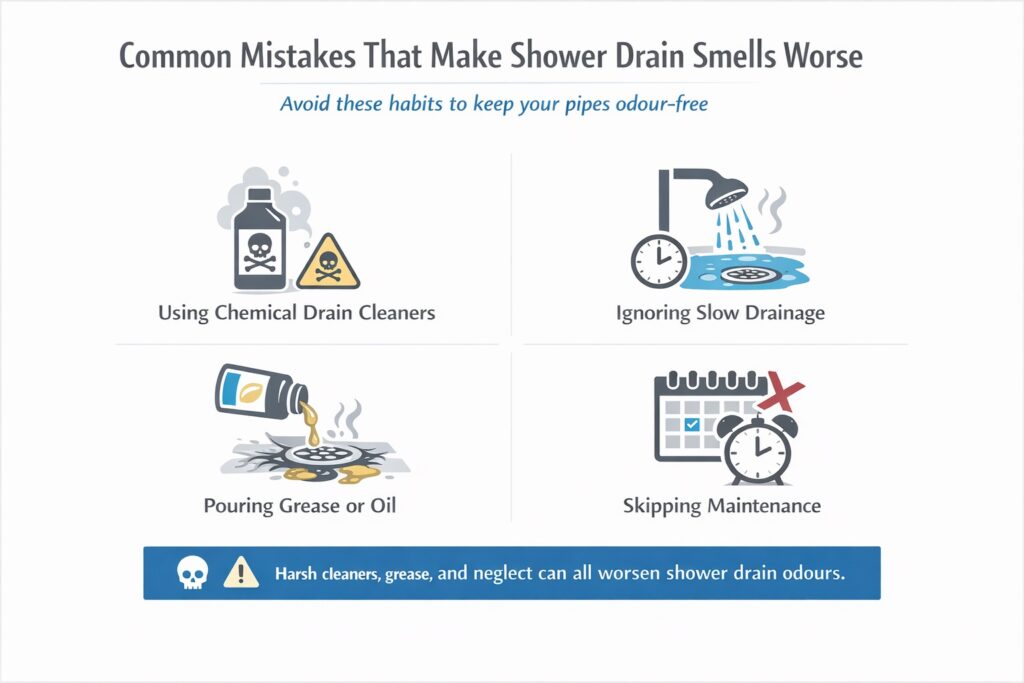
Homeowners often try quick fixes that seem logical but can actually worsen the problem or damage their plumbing. Knowing what to avoid helps you protect your pipes and resolve the smell more effectively. Here are the most common mistakes we see across Sydney homes.
Using Harsh Chemical Drain Cleaners
Supermarket and hardware-store drain cleaners contain strong acids or alkalis that can corrode metal pipes and damage PVC fittings over time. They may clear a minor clog, but they don’t remove biofilm or address the underlying cause of the smell. Repeated use weakens your plumbing and can lead to leaks or pipe failure. Natural methods or professional drain cleaning are safer and more effective in the long run.
Ignoring Slow Drainage
A slow-draining shower is an early warning sign of a developing blockage. If you ignore it, the clog grows larger and traps more organic matter, which worsens the smell. Addressing slow drainage early prevents full blockages and reduces the need for invasive repairs.
Pouring Grease or Oil Down the Drain
Some people rinse oily hair products or body oils down the shower drain without thinking. These substances cool and solidify inside the pipes, creating a sticky coating that traps hair and soap. Over time, this buildup narrows the pipe and produces a foul smell. Wipe excess oils off your skin or hair before showering, and dispose of them in the bin rather than the drain.
Skipping Regular Maintenance
Shower drains need periodic cleaning, just like any other part of your home. Waiting until a smell develops means the problem is already established. A quick monthly flush with hot water and bicarb soda keeps biofilm under control and prevents clogs from forming.
When to Call a Licensed Sydney Plumber for Drain Smells

Some drain smells clear up with basic cleaning, but persistent odours often point to deeper plumbing issues that DIY methods cannot resolve. Under NSW plumbing regulations, work on sewer connections and drainage that link to the Sydney Water network must be carried out by a licensed practitioner. Calling a licensed Sydney plumber early can prevent sewer gas exposure, recurring blockages, and avoidable water damage. If the smell is strong, keeps coming back, or affects more than one drain, it’s time for a professional diagnosis.
Slow Drainage Across Multiple Fixtures
When your shower, basin, and toilet all drain slowly, the blockage is usually in a shared line or the main sewer, not just the shower trap.
Gurgling Sounds from Drains
Gurgling indicates airflow problems caused by vent blockages or partial clogs, which can pull water out of the P-trap and let sewer gas escape.
Water Backing Up into Your Shower
Backflow from other fixtures into the shower signals a main line blockage and should be treated as a plumbing emergency.
Recurring Smells After Cleaning
If smells return days or weeks after cleaning, the cause is often biofilm, a hidden clog, or pipe/vent issues that require CCTV inspection and proper clearing.
Getting the issue checked early is usually cheaper than waiting for a full blockage or overflow. A licensed plumber can confirm whether it’s a P-trap seal problem, venting fault, buildup, or a main line issue and fix it safely to Australian Standards and Sydney Water requirements. If you’re noticing multiple symptoms at once, book an inspection before the odour turns into a major repair.
How Antons Plumbing & Gas Fixes Smelly Shower Drains

Antons Plumbing & Gas (NSW Lic. 210933C) fixes smelly shower drains by diagnosing the real cause first, then applying the right repair method instead of guessing. We use proven tools like CCTV cameras and high-pressure jetters to identify whether the issue is biofilm, a blockage, a damaged pipe, a venting fault, or a failed P-trap seal. You get clear options with upfront, fixed-rate pricing in AUD, and we complete all work to Australian Standards (AS/NZS 3500) and Sydney Water requirements, backed by a lifetime labour warranty.
- Same-day assessment and fixed-rate quote: Call 0493 824 176 or book online for a same-day visit across Sydney, including the Inner West, Eastern Suburbs, North Shore, Northern Beaches, Hills District, Western Sydney, South-Western Sydney, and Sutherland Shire.
- CCTV drain inspection: We feed a high-resolution camera into the line to locate buildup, blockages, cracks, or root intrusion, and we show you the footage so you understand the issue.
- Hydro jetting for deep cleaning: High-pressure water scours the pipe walls to remove biofilm, grease, soap scum, and debris that DIY methods can’t fully clear.
- Pipe relining for damaged drains: If pipes are cracked or root-damaged, we install a resin liner inside the existing pipe to restore integrity without digging up floors or yards.
- Vent pipe inspection and clearing: We check roof vents for nests, debris, or obstructions that disrupt airflow and push sewer gases back through your drains.
- P-trap repair or replacement: If the trap is dry, cracked, incorrectly installed, or missing, we restore the water seal barrier to stop sewer gas entering your bathroom.
Once the cause is fixed at the source, the smell stops—and you’re not stuck repeating the same DIY steps every few weeks. We document findings, use quality parts from trusted brands, and leave your bathroom clean and tidy after the job. With NSW licensing compliance (Lic. 210933C) and a lifetime labour warranty, you can feel confident the repair is done right the first time.
Conclusion
A smelly shower drain is usually caused by a manageable issue like biofilm, trapped hair and soap scum, a dry P-trap, or a venting problem that lets odours rise back into your bathroom. The key is tackling the source early with simple cleaning habits and regular flushing, before a minor smell turns into slow drainage or a full blockage. If the odour is persistent, smells like sewage, or affects multiple fixtures, a licensed Sydney plumber can pinpoint the cause with CCTV and fix it properly to Australian Standards and Sydney Water requirements.
If you want it solved fast, call Antons Plumbing & Gas (NSW Lic. 210933C) for same-day help across Sydney with upfront, fixed-rate pricing in AUD and no call-out fee. Phone 0493 824 176 to book an inspection, and we’ll diagnose the issue clearly—whether it needs jetting, P-trap repair, vent clearing, or pipe relining—and explain your options in plain English. We’ll complete the job, clean up properly, and back the workmanship with a lifetime labour warranty so you can enjoy a fresh, odour-free bathroom again.
Related Articles
- 5 Reasons for Sewage Smell from Shower Drain and Solutions
- Why a Foul Smell from Your Shower Drain Signals Urgent Action
- 5 Common Causes When Your Toilet Smells Like Sewage
FAQs
What Causes A Shower Drain To Smell?
A shower drain can smell due to a buildup of hair, soap scum, and other debris that creates stagnant water and bacteria growth. Additionally, a dry P-trap (the U-shaped pipe under the drain) can allow sewer gases to escape into your bathroom, causing unpleasant odours.
How Do You Get Rid Of A Smelly Shower Drain?
To eliminate odours, start by cleaning the drain with a mixture of bicarb soda and vinegar, followed by hot water to flush it out. Regular maintenance, such as removing hair and debris, can also help. If the smell persists, it may indicate a more serious issue that requires professional assistance from our experienced Sydney team.
Is A Smelly Shower Drain Dangerous?
While a smelly shower drain is generally not an immediate health hazard, it can indicate underlying plumbing issues, such as sewer gas leaks, which can be dangerous. If you notice persistent odours, it’s wise to contact a licensed Sydney plumber to assess the situation and ensure your home’s safety.
Can A Clogged Shower Drain Cause A Smell?
Yes, a clogged shower drain can trap water and debris, leading to foul odours. The buildup of hair, soap, and other materials can create an environment for bacteria, which contributes to the smell. Regular cleaning and prompt attention to clogs can help prevent this issue.
How Often Should You Clean Your Shower Drain To Prevent Odours?
To prevent odours, it’s recommended to clean your shower drain at least once a month. Regular maintenance, including removing hair and debris, can help keep the drain clear and reduce the risk of unpleasant smells. If you encounter persistent issues, don’t hesitate to reach out to our expert Sydney team for a thorough inspection and solution.
Are You a Licensed Plumber in Sydney?
Yes, Antons Plumbing & Gas holds NSW Lic. 210933C, so all drain and sewer work is carried out to Australian Standards and Sydney Water requirements. Ask for our licence details when you book if you’d like to confirm before we arrive.
Do You Offer Same-Day Drain Smell Inspections in Sydney?
Yes, we offer same-day assessments across most of Sydney, including the Inner West, Eastern Suburbs, North Shore, Northern Beaches, Hills District, Western Sydney, and Sutherland Shire. Call 0493 824 176 to check availability in your suburb.
How Much Does A CCTV Drain Inspection Cost?
Pricing depends on access, drain length, and the suspected issue, so we confirm a fixed-rate quote in AUD before any work begins — no surprises on the invoice. Call 0493 824 176 and we’ll talk you through the cost for your specific job.
Is There A Call-Out Fee?
We provide upfront, fixed-rate pricing with no hidden call-out fee for standard bookings across Sydney. You’ll always know the cost before we start work.
What If The Smell Is Coming From The Sewer Main, Not Just My Shower?
If several fixtures are affected or you suspect the smell is coming from the shared sewer connection, this is a job for a licensed plumber, not a DIY fix. We run a CCTV inspection to confirm whether the fault is on your property or the Sydney Water main, and advise you accordingly.
Do I Need Sydney Water Approval For Drain Repairs?
Most internal repairs, like P-trap replacement or pipe relining, don’t require separate Sydney Water approval when carried out by a licensed plumber, but any work affecting the sewer connection point may need notification. We handle the compliance side so you don’t have to worry about it.
Is Hydro Jetting Safe For Older Sydney Homes?
Hydro jetting is safe for most pipe materials, but we always run a CCTV camera first to check pipe condition, especially in older Sydney homes with clay or cast-iron pipework. This ensures we use the right pressure and technique instead of risking further damage.
Is Pipe Relining Covered By Warranty?
Yes, our pipe relining and drain repairs are backed by a lifetime labour warranty, giving you peace of mind that the fix is permanent, not a temporary patch.
Can A Blocked Vent Affect My Whole House, Not Just The Shower?
Yes, a blocked roof vent can disrupt airflow throughout your entire drainage system, causing gurgling, slow drainage, and odours in multiple bathrooms. We inspect and clear roof vents as part of a full diagnosis.
How Do I Book An Inspection With Antons Plumbing & Gas?
You can call us on 0493 824 176 or book online through our website for a same-day visit across Sydney. We’ll confirm a fixed-rate quote before starting any work.
What Areas Of Sydney Do You Cover For Drain Smell Repairs?
We service the Inner West, Eastern Suburbs, North Shore, Northern Beaches, Hills District, Western Sydney, South-Western Sydney, and Sutherland Shire. If you’re unsure whether we cover your suburb, just give us a call on 0493 824 176.