

A shower drain that smells like sewage may have a dry water trap, hair and soap buildup, a partial blockage, damaged pipework or a ventilation fault. Smell alone cannot identify the cause. Start with the drainage symptoms and whether one or several fixtures are affected before choosing the next step.
This guide explains five possible causes of a sewage smell from a shower drain, safe surface-cleaning steps and when to arrange a professional drain assessment. Persistent odours need investigation rather than repeated cleaning or an assumed diagnosis.
Quick answer: If an infrequently used shower drains freely, run ordinary tap water to restore its trap seal and check whether the odour clears. Remove only accessible hair and residue using the fitting manufacturer’s instructions. Do not add boiling water or mix cleaning products. Stop using fixtures that back up with wastewater, keep people away from sewage, and arrange help for recurring smells, gurgling, damp patches or several affected drains.
Suspected gas leak: Do not assume a strong rotten-egg smell is only a drain problem, especially near gas appliances. Leave the affected area, avoid flames and electrical switches, and call Jemena on 131 909 from a safe location for a suspected natural-gas leak; call 000 for immediate danger. Follow Jemena’s gas safety guidance.
What to Check Before Cleaning a Smelly Shower Drain
Unused shower with normal flow: replenish the water seal with ordinary tap water and check whether the smell clears. Normal flow but persistent odour: clean accessible residue according to the fitting instructions, then seek help if it remains. Slow flow or gurgling: note nearby affected fixtures and arrange assessment if basic accessible cleaning does not help. Several affected drains, damp patches or sewage backup: stop DIY treatments and arrange prompt help; keep clear of wastewater.
Why Does My Shower Drain Smell Like Sewage?

A water seal in a plumbing trap helps prevent sewer gas entering through the shower waste. Odours may also come from residue around the grate, trapped hair or moisture near the shower. A rotten-egg smell does not establish the gas involved or prove that a pipe has failed. A plumber can distinguish a private drainage fault from an issue that needs reporting to the network operator.
Check whether the shower drains normally, drains slowly, gurgles or backs up, and note any smells from nearby fixtures. This information helps a plumber choose suitable checks instead of assuming that every odour needs CCTV inspection, jetting or pipe replacement.
5 Reasons for Sewage Smell from Shower Drain
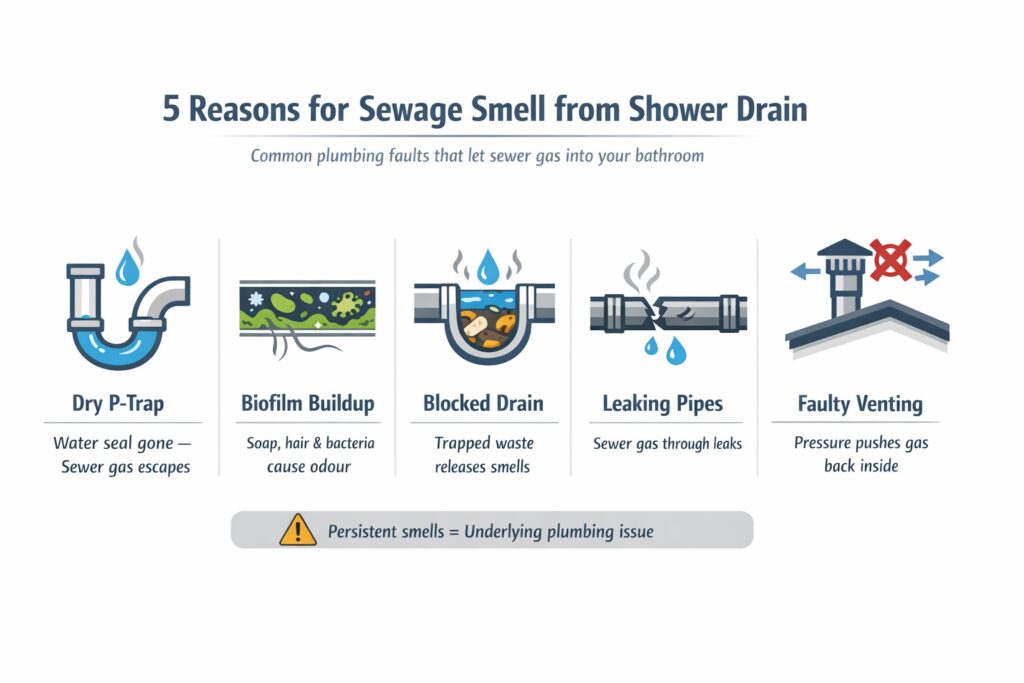
Sewage smells from a shower drain usually happen when sewer gas escapes through a failed water seal, trapped organic buildup, pipe damage, or poor ventilation in the plumbing system. While the odour might seem like “just a smell,” it often points to a specific fault that can worsen over time if ignored. Identifying the most likely cause is the fastest way to choose the right fix and restore a fresh-smelling bathroom.
1. Dry P-Trap Causing Sewer Gas to Escape
The water seal in the P-trap evaporates in rarely used bathrooms, allowing sewer gas to rise through the drain until the trap is refilled or repaired.
2. Biofilm Buildup Inside Drain Pipes
Soap scum, body oils and hair form a sticky layer where bacteria thrive, creating persistent rotten odours even when the drain isn’t fully blocked.
3. Blocked or Slow Drains Trapping Organic Matter
Partial blockages hold decomposing debris in the line, releasing sewage-like gases and often causing slow drainage, pooling water, or gurgling sounds.
4. Leaking Pipes Allowing Sewer Gas Into Your Home
Cracked pipes or failed joints, often hidden behind walls or under floors, can vent sewer gas into the home and may also lead to mould or structural damage.
5. Faulty or Missing Vent Pipes Disrupting Airflow
Blocked or damaged vents create pressure problems that siphon traps dry or force sewer gas back through drains, often affecting multiple fixtures at once.
If the smell disappears after running water briefly, a dry trap is likely the culprit, but recurring odours usually indicate buildup, a blockage, a leak, or venting problems. The sooner you pinpoint the cause, the easier and cheaper it is to fix before it turns into a larger drainage or moisture issue. When in doubt, professional diagnosis (especially with CCTV inspection and leak detection) ensures the problem is solved at the source, not masked temporarily.
How We Fix Sewage Smells from Shower Drains

Sewage smells coming from shower drains usually mean there’s a seal failure, a buildup issue, a leak, or a ventilation problem allowing sewer gases to escape. Once we diagnose the true cause, we apply the correct repair method to stop the odour at the source, not just cover it up with temporary fixes. Our approach is focused on safety, compliance with NSW plumbing regulations, and long-term prevention.
- Fix dry or faulty P-traps. We refill the trap, test the seal, and replace the trap if it’s cracked, leaking, or non-compliant.
- Remove biofilm and blockages. We use high-pressure water jetting to scour the pipe walls and clear hair, soap residue, and organic buildup that causes odours.
- Locate and repair leaks accurately. We pinpoint leaks using acoustic or thermal detection, then repair or replace the damaged pipe section.
- Offer no-dig pipe relining where suitable. If excavation is disruptive, we install an epoxy liner inside the existing pipe to seal cracks and restore function.
- Correct ventilation and vent stack issues. We inspect the vent stack, clear obstructions, and ensure the system meets Australian Standards and Sydney Water’s sewerage requirements, with any alterations selected for the actual installation.
- Document everything and back it with warranty. We provide photos, compliance records where applicable, and repair details that may help when asking your insurer, does home insurance cover plumbing damage from leaks or drainage faults.
The repair should follow the findings. Surface cleaning, restoring a trap seal, clearing a confirmed blockage and repairing damaged drainage are different tasks. Ask what was identified, what the quoted work covers and which warranty terms apply; a repair warranty does not guarantee that an odour can never return.
When to Call a Professional Plumber for Drain Smells

Basic cleaning may help accessible residue, and running water may restore an unused trap seal. Arrange a licensed plumber if the smell keeps returning or accompanies slow drainage, gurgling, dampness or wastewater backup. Leave alterations to traps, pipework and vents to a licensed practitioner rather than dismantling concealed drainage yourself.
Here are the key situations where professional help is needed:
- The smell returns within days of cleaning the drain. This suggests a deeper blockage, biofilm buildup, or a faulty trap that needs mechanical cleaning or replacement.
- Multiple drains in your home smell or drain slowly. This points to a shared blockage in your main sewer line or a venting issue that affects the entire system. If the fault lies beyond your property boundary it may fall under Sydney Water’s responsibility, but a licensed plumber can confirm exactly where the problem sits.
- You notice water stains, damp patches, or mould near the shower. These are signs of a hidden pipe leak that requires detection and repair.
- A persistent smell remains when the shower is not in use. A dry trap is one possibility, but smell alone cannot identify a pipe or vent fault.
- You’ve tried DIY fixes and the problem hasn’t improved. Persistent odours often have a root cause that requires diagnostic equipment and professional expertise.
To arrange a drain-odour assessment, book a plumber or call 0493 824 176. Describe the symptoms and ask about current availability, any attendance or diagnostic charges, and the likely inspection process. Equipment and repairs should be chosen after the initial assessment.
DIY Solutions vs Professional Repairs: A Quick Comparison

DIY fixes can work for minor causes of shower drain odours, especially when the issue is close to the surface or related to simple maintenance. However, sewage smells often return when the underlying cause is structural, deeper in the line, or linked to ventilation or leaks. This quick comparison helps you decide when a safe DIY step is enough and when it’s smarter to call a licensed plumber.
| Issue | DIY Solution | When to Call a Plumber |
|---|---|---|
| Dry P-trap | Run water for 1–2 minutes to refill the trap | Smell returns quickly or trap is cracked |
| Light biofilm buildup | Remove accessible residue according to the fixture manufacturer’s instructions; avoid boiling water | Smell persists or drain is slow |
| Visible hair or soap near drain | Remove accessible hair safely; do not plunge when drain-cleaning chemicals may be present | Blockage is deep or recurring |
| Slow drainage | Check only accessible debris; stop if water backs up and arrange assessment | Water backs up or multiple drains affected |
| Hidden leak or vent issue | Not suitable for DIY | Always—requires detection and repair |
If odours return after a basic trap refill or cleaning, it usually means the problem is deeper than a surface-level buildup. Recurring smells, slow drainage, or backup across multiple fixtures are strong signs you need professional diagnosis and clearing. A licensed plumber can confirm the cause, fix it safely to Australian Standards, and prevent the issue from coming back.
Preventing Shower Drain Smells in the Future

Shower drain smells usually come back when biofilm rebuilds, hair and soap collect in the trap, or a P-trap dries out and allows sewer gas to escape. The best prevention is a simple routine that keeps water moving, keeps organic buildup from sticking to pipe walls, and catches early warning signs before they become blockages. These habits take minutes but can save you from recurring odours and emergency callouts.
- Run water through rarely used drains weekly. This keeps the P-trap filled and blocks sewer gas from entering the bathroom.
- Clear the drain grate after every shower. Remove visible hair and soap residue so it doesn’t travel deeper into the trap or waste line.
- Clean accessible grate and waste surfaces as directed by the fitting manufacturer. Do not use routine kettle-water treatments.
- If using a cleaning product, check that it is suitable for the fixture and pipework and follow its label. Never mix products or add homemade mixtures to a drain containing chemicals.
- Report recurring scale or flow problems rather than assuming a water softener is needed. The cause and installation should be assessed first.
- Report recurring blockages or known pipe defects. Ask whether CCTV investigation is justified by the symptoms and previous findings.
Regularly removing accessible hair and residue and keeping unused traps supplied with water can help reduce odours. If the smell returns quickly, arrange an assessment of the trap, drainage and ventilation rather than repeating cleaning treatments.
Why Choose Antons Plumbing & Gas for Drain Odour Issues

Call Antons Plumbing & Gas on 0493 824 176 to discuss a shower-drain odour in Sydney. Explain how long it has occurred, whether water drains normally and whether other fixtures are affected. Ask about the next available visit and any attendance or diagnostic fees before booking.
Where the findings justify it, inspection or leak detection can help investigate concealed faults, and drain clearing may be appropriate for a confirmed blockage. Request the proposed scope, price and relevant labour and product warranty terms before approving repairs.
Conclusion
A sewage smell from a shower drain needs a cause-based response. An unused trap, accessible residue, a blockage and damaged drainage require different action. Use the symptoms to decide whether a simple maintenance step is appropriate or whether to stop using affected fixtures and arrange a licensed assessment.
For persistent smells, arrange a plumbing assessment and describe any slow drainage, gurgling or dampness. Same-day attendance is subject to availability; confirm timing and fees when booking.
Get a Free Estimate for Your Smelly Shower Drain
A sewage smell from your shower drain may indicate a dry or damaged P-trap, trapped organic buildup, a partial blockage, leaking pipework or a ventilation fault that requires proper diagnosis. Use Anton’s free plumbing quote estimator to describe the odour, drainage symptoms, property type and urgency, then receive an initial estimate range in AUD for the recommended inspection or repair. If the smell keeps returning, multiple drains are affected or you notice gurgling, damp patches or wastewater backup, call Anton’s Plumbing & Gas on 0493 824 176 for prompt assistance.
Related Articles
- How to Prevent Soap Scum in Shower Drain Before It Builds Up
- 5 Proven Tips on How to Dissolve Hair and Soap Scum in Pipes
- 5 Common Causes When Your Toilet Smells Like Sewage
Shower Drain Smell FAQs
Why does my shower drain smell even though it drains normally?
Accessible residue, a dry trap or another drainage fault may create odours before flow becomes restricted. Clean only reachable surfaces and refill an unused trap with tap water. If the smell remains, do not assume a blockage or keep adding products; arrange assessment.
Why does the shower smell after it has not been used?
Water in a rarely used trap may evaporate, allowing sewer gas past the seal. Running the shower can replenish the water. If the smell or loss of seal returns quickly, a plumber should check for leakage or drainage pressure problems.
Why does the smell get worse after running water?
Water may disturb trapped residue, while a blockage or pressure problem may also affect drainage. Note whether water pools or fixtures gurgle. These observations help guide inspection; the smell by itself does not identify the fault.
Can a blocked shower drain cause a sewage smell?
A partial blockage can hold hair, soap and other residue and may accompany slow flow or pooling. See our blocked shower-drain guide for basic checks. Stop if wastewater backs up or the problem recurs.
What if several drains smell or gurgle?
Several affected fixtures can indicate a shared drainage or ventilation problem rather than residue in one shower. Avoid adding cleaning products to each drain. Arrange an assessment and report a suspected public-network overflow through Sydney Water’s faults service.
Should I use boiling water or chemical drain cleaner?
Do not assume boiling water is suitable for the pipework, seals or shower finish. Follow the fixture manufacturer’s instructions. If using a drain product, follow its suitability and safety label, never mix products, and tell the plumber what has been used. Do not plunge a drain containing chemicals.
Why does the shower smell after rain or a renovation?
Wet-weather odours or smells that begin after building work should be investigated in context. Tell the plumber when the problem started, what work was done and whether other fixtures are affected. Avoid assuming the cause is normal rainfall or surface dirt.
When should I call a plumber about a sewage smell?
Call for recurring odours, slow drainage, gurgling, damp patches, suspected leaking seals or multiple affected fixtures. For wastewater backup, stop using the affected fixtures and keep people away. For a suspected gas leak, follow the safety guidance near the beginning of this guide.
How can I book a shower-drain assessment in Sydney?
Call 0493 824 176 or book online. Explain the symptoms, property access and urgency. Confirm availability, attendance or diagnostic fees, and the quoted scope before approving work.