

Choosing the right shower drain is one of those renovation decisions that seems small until you get it wrong. A poorly matched drain can lead to pooling water, slow drainage, and even long-term damage to your bathroom floor structure. Whether you’re renovating an ensuite in the Inner West or upgrading a wet room in the Eastern Suburbs, understanding the different kinds of shower drains helps you make a confident, informed choice that suits your layout, budget, and style.
This guide walks you through five practical tips for selecting a shower drain that performs reliably, complies with Australian plumbing standards and Sydney Water requirements, and complements your bathroom design. You’ll learn how drain type, material, installation requirements, and maintenance needs all play a role in long-term performance for Sydney homes.
Key Takeaways
- Different kinds of shower drains include linear, point, tile-insert, and perimeter styles, each suited to specific layouts and design goals.
- Linear drains work best for large wet rooms and barrier-free showers, while point drains are cost-effective for smaller spaces.
- Material choice affects durability, with stainless steel and brass offering superior corrosion resistance over plastic.
- Proper installation to AS/NZS 3500 standards (and Sydney Water requirements) prevents leaks, slow drainage, and structural damage.
- Regular cleaning and professional inspections extend drain life and help avoid costly repairs.
Understand the Main Types of Shower Drains Available
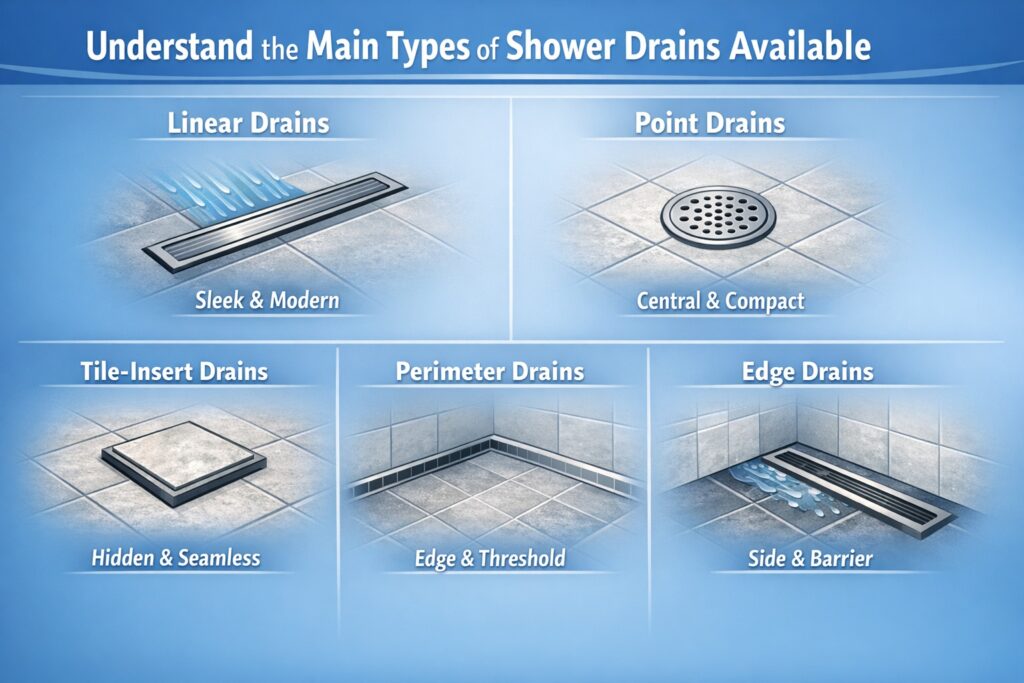
Before you pick a finish or measure your shower base, you need to know what drain styles are on the market. The two most common categories are linear drains and point drains, but within those groups you’ll find variations in shape, size, and installation method. Each type has strengths and trade-offs that matter when you’re planning a bathroom renovation or fixing a shower leak.
Linear Drains
Linear drains are sleek and modern. They’re ideal for large wet rooms or barrier-free showers where you want a clean, minimalist look. Because they handle high water flow, they work well in showers with multiple shower heads or high-pressure systems. Installation requires careful slope work, but the result is a floor that drains fast with minimal standing water.
Point Drains
Point drains are the traditional choice. They’re round or square, typically 100 to 150 mm across, and sit in the centre of the shower base. They cost less than linear drains and are easier to retrofit into existing bathrooms. If you’re working with a smaller shower or a tight budget, a point drain offers reliable performance without the complexity of custom slope work.
Tile-Insert Drains
Tile-insert drains blend into your floor. The grate holds a tile that matches your shower floor, so the drain becomes almost invisible. This option is popular in high-end Sydney renovations where you want a seamless aesthetic. Just keep in mind that tile-insert drains need regular cleaning to prevent grout buildup around the grate.
Perimeter and Edge Drains
Perimeter drains run along the entrance of the shower, creating a threshold drain that catches water before it escapes the wet area. They’re less common in residential work but can be useful in wet rooms or accessible bathrooms where you want to avoid a raised kerb.
Our team at Antons Plumbing & Gas installs all types of shower drains across Sydney, and we help homeowners match the right style to their layout, water pressure, and design goals. If you’re unsure which drain suits your bathroom, we’ll assess your space and present clear options with fixed-rate pricing in AUD—no surprises, no guesswork.
Match Drain Style to Your Shower Layout and Size

Not every drain suits every shower, and choosing the wrong style can create slow drainage, pooling water, and long-term leak risks. Your shower size, layout, and floor structure all affect how well a drain performs, especially when slope and water volume are involved. Matching the drain to the space early makes tiling easier, improves water flow, and helps prevent waterproofing problems later—an important consideration given Sydney’s older housing stock and varied slab depths.
- Large walk-in showers and wet rooms – A linear drain is usually best because it handles higher water volume and supports a single-slope floor that’s simpler to tile and less prone to low spots.
- Compact corner showers or pre-formed bases – A central point drain often works best because it’s simpler to install, cost-effective, and designed for standard shower tray layouts.
- Barrier-free and accessibility showers – A linear drain near the entrance supports a smoother transition and helps reduce trip hazards while supporting accessible design goals.
- Older homes with limited floor depth – A low-profile point drain may be the only practical option where structural depth is tight, especially in heritage-style Sydney properties.
- High-flow rain heads or multiple body jets – Higher water output needs higher capacity drainage, and linear drains typically cope better than standard point drains in “power shower” setups.
- Custom tiling and shower niches – Drain location should be planned early so the floor falls and niche placement work together without creating water traps or awkward tile cuts.
- Preventing future leaks – The right drain style supports proper slope and waterproofing, reducing the risk of persistent dampness and hidden damage over time.
A drain choice isn’t just about looks—it’s a performance decision that affects waterproofing, fall angles, and daily comfort under the National Construction Code. When the drain matches the layout, water clears faster and the shower stays cleaner with fewer puddles and grime lines. If you want it done right the first time, our team can measure your space, check floor depth, and recommend a drain option that fits your shower and complies with Australian Standards and Sydney Water plumbing requirements.
Consider Material Quality and Corrosion Resistance for Long-Term Performance

Shower drains live in a constantly wet, soapy environment, so the material you choose directly affects how long the drain lasts and how well it resists rust, staining, and wear. While cheap plastic drains can look like a quick win, they often discolour, become brittle, or crack sooner—raising leak risk over time. For bathrooms you plan to use for years (especially high-traffic family bathrooms or strata properties across Sydney), material quality is one of the smartest long-term decisions you can make.
| Material | Durability | Corrosion Resistance | Cost | Best Use |
|---|---|---|---|---|
| Stainless Steel (304) | High | Excellent | Moderate | Most residential showers |
| Stainless Steel (316) | Very High | Superior | Higher | Coastal areas, hard water |
| Brass/Bronze | High | Good | Moderate to High | Traditional or heritage styles |
| Plastic (ABS/PVC) | Low to Moderate | Fair | Low | Budget or temporary installs |
Beyond the base material, the grate finish also matters—brushed finishes typically hide water spots and soap scum better than polished ones, while coated colours like matte black need a durable finish that won’t chip or fade. If you’re choosing tile-insert styles, watch for plastic frames paired with metal grates, because the plastic can become the weak point under load. For coastal Sydney suburbs with salt-laden air, 316-grade stainless steel is often worth the extra spend. When installed properly with compliant waterproofing and quality components, a corrosion-resistant drain reduces maintenance hassles and helps protect your bathroom for the long haul.
Plan for Proper Installation to Prevent Leaks and Drainage Issues

Even the best shower drain can fail if the installation is wrong, because performance depends on slope, sealing, and a leak-free pipe connection. DIY installs often miss one of these details, which leads to slow drainage, pooling water, or hidden leaks that soak the subfloor and trigger mould. Planning the installation properly from the start is the easiest way to avoid expensive rework later, and non-compliant work can also cause issues if you ever sell or need to satisfy a Sydney Water or council inspection.
AS/NZS 3500 sets the baseline requirements for plumbing and drainage in NSW, including minimum falls and waterproofing integration. Shower floors generally need at least a 1:100 fall toward the drain, and many installers use 1:80 or steeper to help water clear quickly and reduce low spots. If the slope is too shallow or uneven, water sits on the tiles, soap scum builds up faster, and the risk of moisture tracking into joints and corners increases.
The drain body must also be sealed correctly to the waterproof membrane using the manufacturer’s bonding flange or a compatible sealing method so water can’t migrate under the tiles. Pipe alignment matters too—sharp bends, poor levelling, or misaligned waste connections slow the flow and encourage debris to catch, which eventually causes blockages and backups. If you’re dealing with a heritage home or limited floor depth, we can recommend low-profile drains and custom slope solutions, and coordinate the sequencing with your tiler or builder so the drain, membrane, and tiling all lock together properly without delaying your renovation.
Work With Licensed Plumbers for Compliant, Leak-Free Installation

Working with licensed plumbers is the safest way to ensure your shower drain is installed properly and won’t leak later. Shower drain installation isn’t just “connect a pipe”—it involves slope calculation, waterproof membrane integration, correct sealing, and compliance with AS/NZS 3500 standards and Sydney Water requirements. When any of these steps are rushed or done incorrectly, you can end up with slow drainage, pooling water, or hidden leaks that lead to expensive repairs and structural damage.
Licensed plumbers understand how different drain styles interact with floor structures, waste pipes, and waterproofing systems. We set the correct fall, seal the drain body using the right flange or compatible system, and pressure-test or flow-test the setup before tiles go down. We also coordinate with tilers, builders, and waterproofers so each trade completes their part in the correct sequence—preventing gaps, miscommunication, and the rework that blows out renovation timelines.
In NSW, plumbing work must be completed by a licensed tradesperson and meet NSW Fair Trading and Sydney Water requirements. Antons Plumbing & Gas holds current licensing (NSW Lic. 210933C) and insurance for plumbing and gasfitting work. We document every job, provide clear fixed-rate quotes in AUD, and back our workmanship with a lifetime labour warranty, so you’re protected long after the renovation is finished. As a rule of thumb, if your shower drain is leaking into the subfloor, pooling water despite cleaning, or you’re renovating and need compliant waterproofing sign-off, it’s time to call a licensed Sydney plumber rather than DIY it. If you’re planning a bathroom renovation, replacing an old shower base, or fixing a shower leak, call 0493 824 176 for same-day service across Sydney Metro—including the Inner West, Eastern Suburbs, North Shore, Northern Beaches, Hills District, Western Sydney, South-Western Sydney, and Sutherland Shire.
Conclusion
Choosing the right shower drain protects your bathroom from leaks, drainage problems, and costly repairs. Match the drain type to your layout, select durable materials, and work with licensed plumbers for compliant installation. Our team is ready to help you make a confident, informed decision that suits your Sydney home and budget.
Antons Plumbing & Gas brings over 25 years of expertise in bathroom renovations and drainage solutions across Sydney. Our licensed team (NSW Lic. 210933C) ensures compliant, quality installations tailored to your home. Contact us today to get started.
Related Articles
- 5 Common Mistakes When Learning How to Fix Dripping Shower
- Why Your Shower Head Has No Pressure and How to Fix It
- Simple Steps for Homeowners on How to Unclog Shower Drains Fast
FAQs
What Are The Main Types Of Shower Drains I Can Choose From?
The main types of shower drains include round drains, square drains, tile insert drains, and linear shower drains. Each option works differently depending on the shower layout, floor fall, tile choice, and the look you want for the bathroom. Antons Plumbing & Gas can help you choose a drain that suits your shower design while still allowing water to flow away properly.
How Do I Choose The Right Shower Drain For My Bathroom?
To choose a shower drain, think about your shower size, tile type, floor slope, plumbing position, and whether you want a standard or more modern look. A drain that looks good still needs to match the plumbing layout and be installed correctly to avoid pooling water or leaks. Antons Plumbing & Gas can check the setup and recommend a practical option for your bathroom.
What Is The Best Type Of Shower Drain For Everyday Use?
The best type of shower drain depends on your bathroom design, budget, and how the shower floor is built. Round and square drains are common for standard showers, while linear drains are popular for walk-in showers and modern bathroom renovations. A licensed Sydney plumber can help confirm which option will drain well and work with your existing pipework.
Are There Shower Drains That Work Better For Tile Floors?
Yes, tile floors can use standard drains, square drains, tile insert drains, or linear drains depending on the layout and tile size. Tile insert drains are popular because they blend into the floor, while linear drains can make it easier to create a clean, open shower design. The key is making sure the floor fall directs water toward the drain properly.
What Is A Linear Shower Drain And Is It Worth It?
A linear shower drain is a long, narrow drain usually installed along one wall or shower edge. Many Sydney homeowners choose it for walk-in showers because it gives a cleaner look and can work well with large-format tiles. Antons Plumbing & Gas can advise whether a linear drain suits your shower layout, waterproofing, and existing plumbing.
How Much Does It Cost To Install A Shower Drain In Sydney?
Cost depends on the drain type, floor depth, waterproofing requirements, and whether it’s a new install or a retrofit. We provide fixed-rate quotes in AUD after assessing your bathroom in person or via photos, so there are no surprise charges. Call 0493 824 176 to arrange an obligation-free quote.
Do You Offer Same-Day Shower Drain Repairs In Sydney?
Yes, Antons Plumbing & Gas offers same-day service across Sydney Metro for leaking, blocked, or slow-draining shower drains. Book online or call 0493 824 176 and we’ll aim to have a licensed plumber to you quickly.
Is A Licensed Plumber Required To Replace A Shower Drain In NSW?
Yes. Under NSW Fair Trading regulations, plumbing work including shower drain replacement must be carried out by a licensed plumber. Antons Plumbing & Gas holds NSW Lic. 210933C, so all work is compliant, insured, and inspection-ready.
How Do I Book Antons Plumbing & Gas For A Shower Drain Installation?
You can book by calling 0493 824 176 or filling out our online booking form. We’ll ask a few questions about your shower and layout, then arrange a suitable time for an assessment and fixed-rate quote.
Do You Provide A Warranty On Shower Drain Installations?
Yes, our plumbing work is backed by a lifetime labour warranty, giving you peace of mind that the installation is done to Australian Standards and will be looked after if any issues arise.
Can You Convert My Old Point Drain To A Linear Drain?
In many cases, yes. Converting to a linear drain usually involves adjusting the floor fall, waterproofing, and sometimes the waste pipe run. We can assess your existing shower and advise whether a conversion is practical for your renovation and budget.
Do I Need Council Or Sydney Water Approval To Replace A Shower Drain?
Straightforward like-for-like drain replacements typically don’t need council approval, but the work still must meet Sydney Water and AS/NZS 3500 requirements. If your renovation involves relocating waste pipes or altering the drainage layout, we’ll advise if any notifications are needed.
What Suburbs Across Sydney Do You Service For Shower Drain Work?
We service Sydney Metro including the Inner West, Eastern Suburbs, North Shore, Northern Beaches, Hills District, Western Sydney, South-Western Sydney, and Sutherland Shire. Call 0493 824 176 to confirm availability in your area.
Can You Fix A Leaking Shower Drain Without Retiling The Whole Bathroom?
Sometimes, depending on where the leak originates. If it’s a sealing or flange issue at the drain body, we may be able to repair it without lifting all the tiles. If the waterproof membrane has failed more broadly, a larger repair may be needed—we’ll always explain your options before starting work.
How Quickly Can A Leaking Shower Drain Cause Water Damage?
Water can track into the subfloor and wall cavities within days of a leak starting, especially in daily-use bathrooms. If you notice pooling water, damp smells, or soft tiles, it’s best to call a licensed Sydney plumber promptly rather than wait.
Do You Provide Fixed-Rate Quotes Before Starting Shower Drain Work?
Yes, we provide clear, fixed-rate quotes in AUD before any work begins, so you know the cost upfront with no hidden extras.
What Happens If My Shower Drain Doesn’t Meet Sydney Water Requirements?
Non-compliant drainage can fail inspections, void insurance claims, and cause ongoing leaks or disputes if you sell the property. We install and repair to AS/NZS 3500 and Sydney Water standards so your bathroom stays compliant and protected.
Can I Get An Obligation-Free Quote For My Bathroom Renovation?
Yes, we’re happy to assess your shower and bathroom layout and provide an obligation-free, fixed-rate quote for drain installation, replacement, or repair. Call 0493 824 176 or use our online booking form to get started.
Do You Handle Both Plumbing And Waterproofing Coordination For Shower Drains?
We handle the plumbing and drain installation, and we coordinate closely with your waterproofer and tiler so the membrane, drain, and tiling sequence correctly and comply with the National Construction Code’s wet area requirements.
What’s The Best Way To Get Emergency Plumbing Help For A Blocked Shower Drain?
Call 0493 824 176 for same-day emergency service. Our licensed team can clear blockages, diagnose the cause, and advise if the drain itself needs repair or replacement.
How Do I Know If My Shower Drain Needs Replacing Vs Repairing?
Signs it needs replacing include persistent leaks despite resealing, cracked or corroded plastic components, or a drain that’s undersized for your water flow. Minor issues like a loose flange or grout buildup can often be repaired. A licensed plumber can inspect and give you an honest recommendation rather than an unnecessary full replacement.