
Toilet paper is designed to dissolve quickly in water, but when it doesn’t, you’re left with a frustrating blockage that disrupts your day. Water loosens the cellulose bonds that hold toilet paper together, allowing the fibers to separate and flow through your pipes. When those bonds don’t break down fast enough—or when too much paper overwhelms your system—clogs form, and you need a solution that works.
This guide explains exactly what breaks down toilet paper, and the proven methods Sydney homeowners use to fix them. You’ll also learn when it’s time to call a licensed plumber and how our team can help with same-day service across the Sydney Metro.
Key Takeaways
- Water and gentle agitation from flushing break down cellulose bonds in toilet paper.
- Thicker multi-ply papers and excessive use slow breakdown and increase clog risk.
- Hot water, plungers, and enzyme cleaners are effective first-line solutions for minor blockages.
- Recurring clogs often signal deeper drain issues that require CCTV inspection and professional repair.
- Our licensed Sydney plumbers offer same-day blocked drain service with upfront fixed-rate pricing and no call-out fee.
What actually breaks down Toilet Paper?
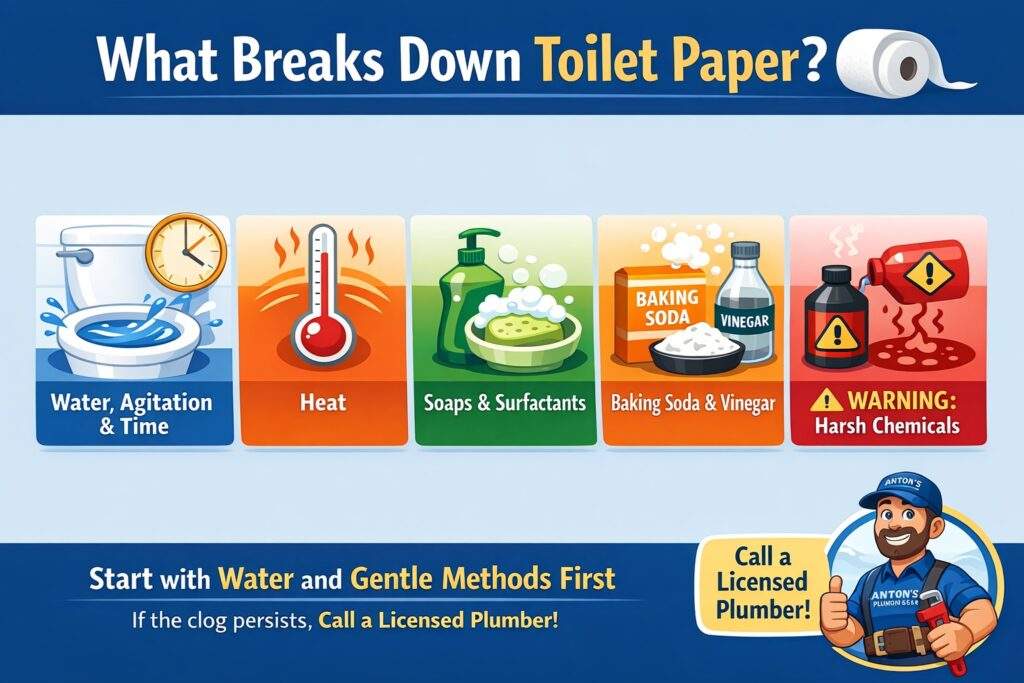
Toilet paper clogs are common, but not everything people pour down the toilet actually helps solve the problem. In most cases, toilet paper starts to break down through a combination of water, movement, and time, especially when the plumbing has strong flow and enough flushing pressure. Some household remedies may help loosen paper buildup, while harsher chemicals can create bigger risks than benefits.
Water and Agitation
Water is the main reason toilet paper begins to soften and separate. As it absorbs moisture and moves through the pipes, the fibers start to loosen, making it easier for the paper to break apart over time.
Heat
Hot water can help soften toilet paper fibers faster than cold water. This added warmth may make the paper mass easier to loosen and move through the drain, especially in minor clogs.
Soaps and Surfactants
Dish soap or liquid detergent can help by lubricating the paper buildup. Rather than fully dissolving the clog, these products often make it easier for the softened material to slide through the pipe.
Mild Chemical Reactions
Some mild combinations can help loosen compacted toilet paper and organic debris. Baking soda and vinegar create a fizzy reaction that may disturb the blockage, while Epsom salt mixed with hot water can help soften paper and other waste materials.
Stronger Chemicals
Stronger products such as caustic soda, industrial drain cleaners, or acidic solutions can break down organic matter more aggressively. However, these chemicals can also damage pipes, irritate skin, and release harmful fumes, which is why they should be approached with extreme caution.
The safest approach is usually to start with simple methods before turning to harsh chemical treatments. Water, heat, and gentle household products are often enough for minor toilet paper clogs without putting your plumbing at risk. When the blockage does not clear or keeps coming back, it is best to call a licensed plumber for a proper solution.
How to Fix a Clogged Toilet Caused by Toilet Paper
A toilet clogged with toilet paper can often be cleared using simple methods that are safe for your pipes and easy to try at home. The key is to begin with the least aggressive option and move to stronger tools only when needed. Each method works differently, so choosing the right approach can help you clear the blockage more effectively.
1. Use Hot Water to Soften the Toilet Paper
Pour a bucket of hot—not boiling—water into the toilet bowl from about waist height. The warmth helps soften the compacted toilet paper, while the added force can help move the blockage through the trap. Wait around ten minutes before attempting a gentle flush.
2. Unclog the Toilet with a Plunger
A flange plunger is one of the most effective tools for toilet paper clogs. Place it over the drain opening, push down slowly to remove trapped air, then pull up sharply to create suction. Repeat this motion several times while keeping a tight seal until the water begins to drain properly.
3. Apply an Enzyme-Based Drain Cleaner
Enzyme-based drain cleaners are a safer alternative to harsh chemical products. They work by breaking down organic matter gradually, which makes them useful for partial blockages caused by toilet paper. Follow the product instructions, leave it overnight, and flush the toilet the next morning.
4. Remove the Blockage with a Wet-Dry Vacuum
A wet-dry vacuum can help remove stubborn paper buildup that will not shift with plunging alone. Set the vacuum to liquids mode and position the hose firmly into the drain opening to create strong suction. Once the blockage is pulled out, empty and clean the vacuum immediately.
5. Clear the Trap with a Toilet Auger
A toilet auger is designed to reach deeper into the toilet trap and break up compacted paper safely. Insert the cable slowly, turn the handle carefully, and pull it back out without scraping the porcelain. This method is useful when the clog is too deep for a plunger to clear.
Trying these methods in the right order can often save you time, money, and unnecessary stress. Starting with gentler solutions helps protect your toilet and plumbing system while still giving you a good chance of clearing the clog yourself. If the toilet remains blocked or keeps clogging repeatedly, it is best to contact a licensed plumber for a more thorough inspection.
When DIY Methods Don’t Clear the Blockage
If you’ve tried hot water, a plunger, and an auger without success, the obstruction is likely beyond the toilet trap or involves a more serious pipe issue. Forcing the problem with repeated attempts can crack porcelain, damage seals, or push the blockage deeper into your main drain. At that point, professional diagnosis is the safest and fastest path forward.
Our licensed Sydney plumbers use CCTV drain cameras to pinpoint the exact location and cause of the blockage. We can see root intrusion, collapsed sections, or foreign objects lodged in the line, and we’ll show you the footage so you understand what’s happening. Same-day service means we can often clear the drain and complete any necessary repairs during the first visit.
We charge a fixed rate for blocked drain work, so you’ll know the cost upfront before we start. There’s no call-out fee, and our team arrives with all the tools needed to handle paper clogs, tree roots, and structural defects in one trip.
Real-World Example: A Recurring Clog in an Inner West Terrace
Last month, we were called to a Federation-era terrace in the Inner West where the downstairs toilet had blocked three times in six weeks. The homeowner had tried a plunger and enzyme cleaner, but the problem kept coming back. Our CCTV inspection revealed a section of original clay pipe with a hairline crack and light root intrusion about four meters from the toilet.
We explained two options: excavate and replace the damaged section, or install a trenchless liner to seal the crack and block future root entry. The homeowner chose pipe relining because it avoided digging up the courtyard and took half a day instead of three. We jetted the line, inserted the resin liner, and cured it in place. The toilet has flushed perfectly ever since, and the lifetime labour warranty gives them peace of mind.
What Antons Plumbing & Gas Does Differently for Blocked Drains
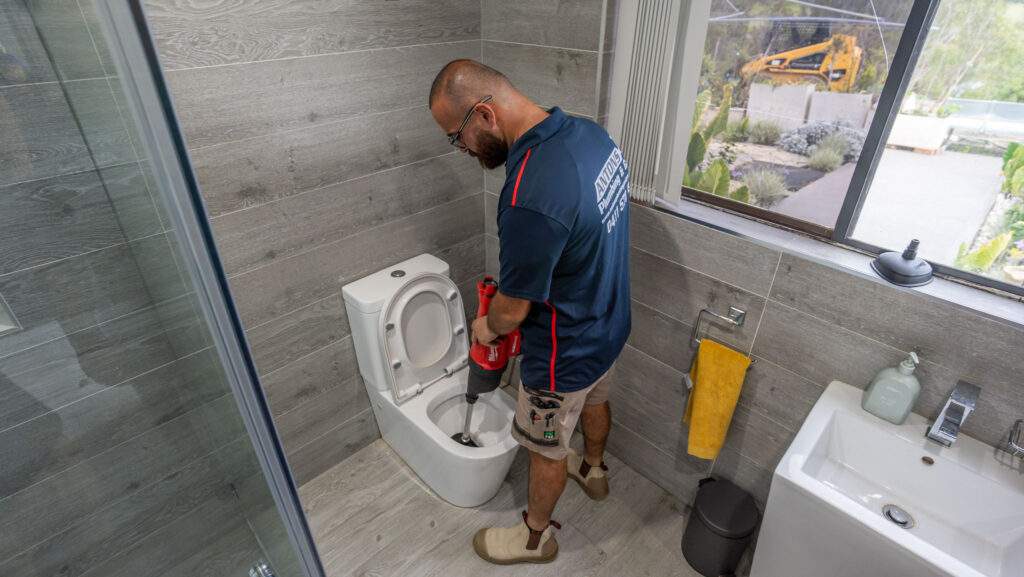
We don’t just clear the blockage and leave. Our approach starts with understanding why the clog happened, so we can prevent it from coming back. Every blocked drain job includes a brief inspection of your toilet, trap, and visible pipework, and we’ll recommend a CCTV check if we suspect a deeper issue.
Our plumbers carry high-pressure water jetters, electric eels, and camera equipment on every van. That means we can diagnose and fix most blockages in a single visit, without waiting for parts or scheduling a follow-up. You’ll receive a fixed-rate quote before we begin, and our lifetime labour warranty covers the workmanship for as long as you own your home.
We serve the entire Sydney Metro—Inner West, Eastern Suburbs, North Shore, Northern Beaches, Hills District, Western and South-Western Sydney, and Sutherland Shire. Same-day response is standard, and our 24/7 emergency line at 0493 824 176 means help is always available when a clog can’t wait.
Conclusion
Water and mechanical action break down toilet paper by loosening cellulose bonds, but thick paper, excessive use, and weak flushes can overwhelm your drain. Hot water, a quality plunger, and enzyme cleaners solve most clogs, while recurring blockages need professional CCTV inspection and repair. Our licensed Sydney plumbers deliver same-day service, fixed-rate quotes, and lifetime labour warranty—call 0493 824 176 or book online for fast, compliant drain solutions.
Antons Plumbing & Gas clears stubborn toilet clogs with expert blocked drain services across Sydney Metro. Our licensed team diagnoses the root cause and restores flow fast. Get started with same-day service today.
Related Articles
- What You Need to Know: Will Vinegar Dissolve Toilet Paper?
- What You Need to Know: Does Drano Dissolve Toilet Paper?
- How to Unclog a Toilet with a Wire Hanger Safely and Effectively
FAQs
What Chemicals Break Down Toilet Paper?
Common household chemicals like bleach can break down toilet paper, but they may not be safe for your plumbing system. It’s best to rely on natural methods or enzymatic cleaners specifically designed for toilets and plumbing systems to avoid potential damage.
How Long Does It Take For Toilet Paper To Break Down?
Toilet paper typically takes about 2 to 4 minutes to start breaking down in water, although complete decomposition can take longer depending on water temperature and flow. Regular maintenance and prompt attention to clogs can help prevent issues.
Can Toilet Paper Dissolve In Water?
Yes, toilet paper is designed to dissolve in water, making it safe for plumbing systems when used correctly. However, excessive amounts or non-flushable items can lead to clogs, which our experienced team can quickly resolve.
What Is The Best Way To Break Down Toilet Paper?
The best way to break down toilet paper is to ensure proper flushing with plenty of water. If clogs occur, using a plunger or an enzymatic drain cleaner can help. For persistent issues, our expert plumbers can provide tailored solutions to keep your plumbing flowing smoothly.
Does Toilet Paper Break Down In Septic Systems?
Yes, toilet paper does break down in septic systems, but it’s essential to use septic-safe products and avoid flushing excessive amounts. Regular septic tank maintenance can also ensure optimal performance, and our team can assist with all your plumbing and septic needs.