


A blocked floor drain can turn your laundry, bathroom, or garage into a puddle zone faster than you’d expect. Water pools around your feet, refuses to disappear, and leaves behind an unpleasant smell that lingers for days. Most Sydney homeowners face this issue at least once, and the good news is that many clogs respond well to simple household tools and a bit of patience.
This guide walks you through practical, step-by-step methods on how to unclog a floor drain without calling a professional straight away. You’ll also learn when DIY stops being effective and why reaching out to a licensed Sydney plumber saves you time, mess, and potential damage to your pipes.
Key Takeaways
- Floor drain clogs often result from hair, soap residue, dirt, and debris that accumulate over time in the trap.
- Bicarbonate soda (baking soda) and vinegar create a fizzing reaction that can loosen light blockages when followed by hot water.
- An accordion-style plunger or drain snake can dislodge stubborn obstructions without harsh chemicals.
- Removing the drain cover and clearing visible debris is the first step before attempting any other method.
- Persistent clogs, foul odours, or water backing up in multiple drains signal a deeper issue that requires professional diagnosis and may need to be reported in line with Sydney Water requirements.
- Our team at Antons Plumbing & Gas (NSW Lic. 210933C) provides same-day service across Sydney with no call-out fee from 7 am to 3 pm on weekdays.
Understanding Why Floor Drains Get Blocked
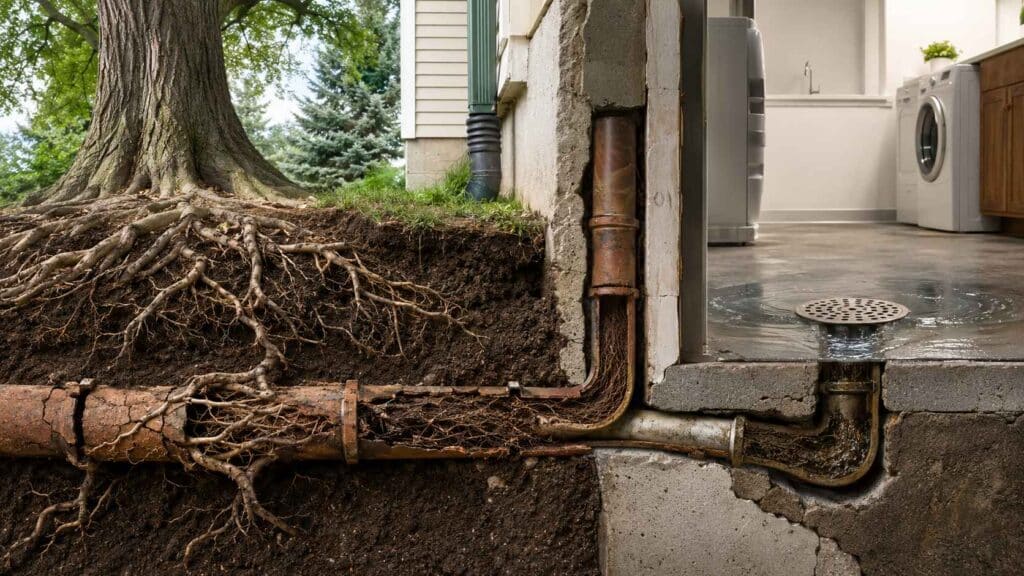
Floor drains sit at the lowest point in rooms like bathrooms, laundries, and garages, collecting water from showers, washing machines, and general floor wash-downs. Over time, hair, soap scum, dirt, grease, and small objects wash into the drain and settle in the trap—a curved section of pipe designed to hold water and block sewer gases. When enough material builds up, water flow slows or stops completely.
Tree roots can also invade older clay pipes through tiny cracks, especially in Sydney’s Inner West and North Shore where mature trees grow close to homes. Grease and oil solidify inside pipes, narrowing the passage until even a small clump of hair triggers a full blockage. In many older NSW homes, ageing earthenware pipes connected to the Sydney Water network make this worse.
Recognising the cause helps you choose the right tool. Light clogs near the surface respond to plungers and homemade solutions, while deeper obstructions or root intrusion need professional equipment like a CCTV drain inspection camera or high-pressure water jetting.
How to Unclog a Floor Drain: Effective DIY Techniques to Try First
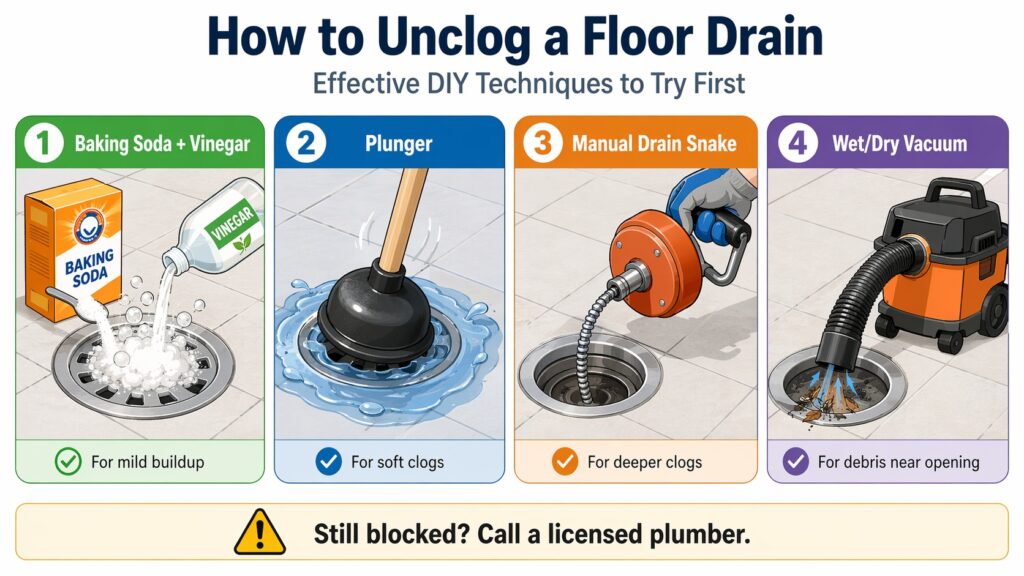
Knowing how to unclog a floor drain can save you time, reduce mess, and help prevent minor drainage issues from becoming costly plumbing problems. Floor drains often collect hair, dirt, soap residue, grease, and other debris that gradually slow water flow or cause full blockages. Using the right unclogging technique for the type of blockage can make the process safer, easier, and more effective.
Unclogging a Floor Drain with Bicarbonate Soda and Vinegar
This method works best for mild blockages caused by soap residue, grease, or organic matter inside the drain. Start by removing the drain cover and clearing any visible debris such as hair, leaves, or dirt from the opening. Pour one cup of bicarbonate soda (baking soda) into the drain, add one cup of white vinegar, wait ten to fifteen minutes, then flush with hot water to help wash away the loosened buildup.
Unclogging a Floor Drain with a Plunger
Using a plunger is a practical option when the clog is near the surface and made up of soft material like hair or soap scum. Add enough water to cover the plunger cup, position it directly over the drain, and push and pull firmly several times to create pressure and suction. Once the water begins draining better, flush the drain with hot water to clear out any remaining debris.
Unclogging a Floor Drain with a Manual Drain Snake
A manual drain snake is useful for deeper clogs that cannot be removed with simple surface-level methods. Feed the cable into the drain until you feel resistance, then crank the handle while applying steady pressure to break up or grab the blockage. After retrieving the cable, flush the drain with hot water to remove any leftover fragments and confirm that water is flowing properly.
Unclogging a Floor Drain with a Wet/Dry Vacuum
A wet/dry vacuum can help remove stubborn debris or solid obstructions located close to the drain opening. Set the vacuum to wet mode, place the hose tightly over the drain, and run it for thirty to sixty seconds while maintaining a good seal. This method can be effective for pulling out clumps of hair, leaves, or small objects that other tools may not remove easily.
Trying these methods in the right order can make unclogging a floor drain more manageable and less stressful. Mild blockages may clear with a simple bicarbonate soda and vinegar treatment, while more stubborn clogs may require a plunger, drain snake, or wet/dry vacuum. If the drain still backs up after these attempts, the problem may be deeper in the system and best handled by a licensed plumber.
When to Call a Licensed Plumber for Blocked Drains
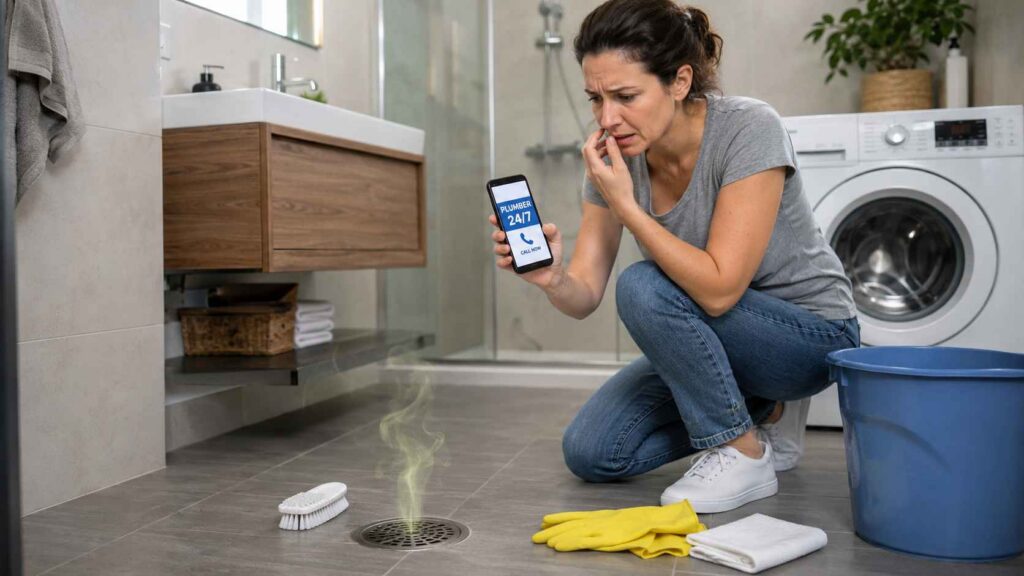
DIY methods handle many common clogs, but some situations call for professional diagnosis and equipment. Knowing when to stop and call a licensed plumber saves you from worsening the problem or causing pipe damage that costs more to repair. As a fully licensed plumbing and gas fitting business (NSW Lic. 210933C), we’re qualified to work on the private drainage that connects your home to the Sydney Water network.
If water backs up in multiple drains at once—say, your floor drain and toilet both gurgle when you run the washing machine—the blockage likely sits in the main sewer line rather than a single branch pipe. Tree roots, collapsed pipes, or a full septic system can cause this symptom, and clearing it requires high-pressure water jetting or pipe relining.
Foul smells that persist even after you’ve cleaned the drain suggest a broken trap or venting issue that lets sewer gases escape. A licensed plumber can inspect the system with a CCTV camera to pinpoint the fault and recommend a compliant repair under NSW plumbing regulations.
| Symptom | Likely Cause | Recommended Action |
|---|---|---|
| Water drains slowly after DIY attempts | Partial blockage deeper in the pipe | CCTV inspection and hydro jetting |
| Multiple drains backing up together | Main sewer line obstruction or root intrusion | Professional diagnosis and pipe relining if needed |
| Persistent foul odour from drain | Broken trap seal or venting problem | Plumbing inspection and trap replacement |
| Water pooling around drain after heavy rain | Stormwater pipe blockage or poor drainage design | Stormwater assessment and compliance check |
Our team at Antons Plumbing & Gas responds to blocked drain calls across Sydney on the same day, with no call-out fee from 7 am to 3 pm on weekdays. We use CCTV cameras to diagnose the root cause, explain your options in plain English, and complete repairs to Australian Standards. Every job is backed by our lifetime labour warranty, so you can trust the fix will last.
How Professional Drain Cleaning Differs from DIY
A licensed plumber brings tools and expertise that go beyond what’s available at the hardware store. High-pressure water jetting clears grease, scale, and tree roots by blasting them with water at up to 5,000 psi, restoring full flow without damaging pipe walls. Electric drain snakes reach further and apply more torque than hand-crank models, making short work of compacted debris.
CCTV drain inspection reveals exactly what’s blocking the pipe and where it’s located. The camera feed shows cracks, root intrusion, or misaligned joints that DIY methods can’t address. If the pipe is damaged, we present options like spot repair, pipe relining, or replacement, along with realistic timelines and upfront pricing in AUD.
We also check compliance with the AS/NZS 3500 plumbing standards, the same national standards enforced in New South Wales by NSW Fair Trading and referenced in Sydney Water’s plumbing requirements. This is especially important for strata properties and commercial sites where backflow prevention and proper venting are mandatory. Our qualified team documents findings, provides clear reports, and leaves your space clean after every job.
Why Choose Antons Plumbing & Gas for Floor Drain Cleaning

Choosing a licensed, family-owned Sydney plumber means you get honest advice, transparent pricing in AUD, and work that complies with New South Wales regulations. We’ve been protecting Sydney homes and businesses for more than 25 years, and we approach every blocked drain as an opportunity to diagnose the root cause—not just mask the symptoms.
Our fixed-rate pricing means you know the cost before we start, with no hidden fees or surprises. We arrive on time, respect your property, and clean up thoroughly before we leave. Same-day service and 24/7 emergency response ensure you’re never stuck waiting when water starts pooling or backing up.
We hold current licensing and insurance for plumbing and gas fitting (NSW Lic: 210933C), and every repair meets Australian Standards. From CCTV inspections and hydro jetting to pipe relining and backflow testing, we offer end-to-end solutions tailored to your Sydney home, timeline, and budget.
Conclusion
Most floor drain clogs respond to bicarbonate soda and vinegar, a good plunger, or a manual drain snake when you follow the steps carefully and give each method time to work. Regular maintenance and simple prevention habits keep drains flowing freely and reduce the need for emergency fixes. When DIY reaches its limit—or you’d rather skip the mess and get it done right the first time—call our licensed Sydney plumbers on 0493 824 176 (+61 493 824 176) or book online for same-day service across Sydney.
Antons Plumbing & Gas offers expert blocked drain solutions across Sydney with 25 years of experience. Our licensed team (NSW Lic. 210933C) provides same-day service and upfront pricing in AUD. Learn more today.
Related Articles
- 5 Common Reasons Your Floor Drain Is Not Draining Properly
- How to Fix a Floor Drain Clogged With Debris, Hair, or Grease
- How to Clear a Floor Drain Using Natural Cleaning Solutions
FAQs
What Are Common Causes Of A Clogged Floor Drain?
Common causes of a clogged floor drain include the accumulation of hair, soap scum, grease, food particles, and foreign objects that obstruct the drainage path. Over time, these materials can create blockages, leading to slow drainage or complete stoppage. If you’re experiencing persistent issues, our experienced team at Antons Plumbing & Gas can quickly diagnose and resolve the problem.
How Do You Unclog A Floor Drain Without A Snake?
To unclog a floor drain without a snake, you can try using a plunger to create suction, or pour hot water down the drain to help dissolve the blockage. For smaller clogs, a mixture of vinegar and bicarbonate soda can also be effective. If these methods don’t work, it’s best to contact our knowledgeable team for professional assistance.
Can You Use Vinegar And Bicarbonate Soda To Unclog A Floor Drain?
Yes, vinegar and bicarbonate soda (baking soda) can be used to unclog a floor drain. Pour half a cup of bicarbonate soda followed by half a cup of vinegar down the drain. Allow the mixture to fizz for about 30 minutes, then flush with hot water. This natural method can help break down minor clogs. For more stubborn issues, don’t hesitate to reach out to Antons Plumbing & Gas for expert help.
How Do You Know If Your Floor Drain Is Clogged?
You may notice signs that your floor drain is clogged, such as slow drainage, unpleasant odours, or standing water in the area. If you experience these symptoms, it’s important to address the issue promptly. Our experienced technicians at Antons Plumbing & Gas can conduct a thorough inspection to determine the cause and provide effective solutions.
What Tools Do I Need To Unclog A Floor Drain?
To unclog a floor drain, you may need a plunger, a bucket for water, a wrench for removing the drain cover, and possibly a mixture of vinegar and bicarbonate soda. However, if the clog persists or if you’re unsure how to proceed, our skilled team at Antons Plumbing & Gas is ready to assist you with professional tools and expertise.
Do You Charge A Call-Out Fee For Blocked Drain Jobs In Sydney?
We don’t charge a call-out fee for blocked drain jobs booked between 7 am and 3 pm on weekdays anywhere in our Sydney service area. Call our team or book online and we’ll confirm the details before we arrive.
How Quickly Can You Get A Plumber To My House In Sydney?
We offer same-day service across Sydney for most blocked drain callouts, plus 24/7 emergency response if your floor drain is overflowing or backing up. Call 0493 824 176 and we’ll organise the next available licensed plumber.
Are You A Licensed Plumber In NSW?
Yes, Antons Plumbing & Gas is fully licensed and insured for plumbing and gas fitting work in New South Wales under NSW Lic. 210933C. Every drain repair we carry out is completed to AS/NZS 3500 and NSW Fair Trading requirements.
How Much Does It Cost To Unclog A Floor Drain?
Pricing depends on the cause and severity of the blockage, whether it’s a simple surface clog or a deeper issue needing CCTV inspection or jetting. We provide fixed-rate, obligation-free pricing in AUD before we start any work, so call us for an accurate quote for your property.
Do You Offer Emergency Plumbing Services After Hours?
Yes, we provide 24/7 emergency plumbing response across Sydney for urgent issues like overflowing floor drains, burst pipes, or sewer backups. Call 0493 824 176 any time, day or night.
What Areas Of Sydney Do You Service?
We service homes and businesses across greater Sydney, including the Inner West, North Shore, and surrounding suburbs. If you’re unsure whether we cover your area, give our team a call and we’ll confirm.
Do You Provide A Warranty On Blocked Drain Repairs?
Yes, every repair we carry out is backed by our lifetime labour warranty, giving you confidence the fix will last. Ask our team for full warranty details when you book your job.
How Do I Book A Plumber Online?
You can book a licensed Sydney plumber directly through our online booking page, or call 0493 824 176 to arrange a same-day appointment.
Can You Fix A Blocked Floor Drain On The Same Day?
In most cases, yes. We offer same-day service across Sydney for blocked floor drains, and our technicians carry the tools needed to diagnose and clear most blockages during the first visit.
Do I Need Council Or Sydney Water Approval For Drain Repairs?
Most household floor drain clearing doesn’t require separate approval, but certain sewer or stormwater works may need to meet Sydney Water and local council requirements. As a licensed plumber, we handle any necessary compliance so you don’t have to.
What Payment Methods Do You Accept?
We keep payment simple and transparent with fixed-rate pricing agreed upfront in AUD. Ask our team about accepted payment methods when you book your job.
Will You Provide An Upfront Price Before Starting Work?
Yes, we always provide a fixed-rate, upfront price in AUD before any work begins, so there are no surprises on your invoice.
Can You Inspect My Drains With A Camera Before Quoting?
Yes, we use CCTV drain inspection cameras to see exactly what’s causing the blockage before recommending a repair, so you know precisely what you’re paying for.
Do You Handle Both Residential And Strata Properties?
Yes, our licensed team services residential homes as well as strata and commercial properties across Sydney, including backflow testing and compliance checks required for larger sites.
What Should I Do If My Floor Drain Overflows During Heavy Rain?
Turn off any appliances draining into the affected area, avoid using taps or the washing machine until the water clears, and call our 24/7 emergency line so a licensed plumber can assess whether it’s a blockage or a stormwater compliance issue.