


Identifying the correct faucet cartridge extension can feel overwhelming when you are dealing with a leaking tap or a shower that will not shut off properly. Many Sydney homeowners remove the old cartridge only to realise they have no idea which replacement to buy, leading to multiple trips to the hardware store and wasted time. Proper faucet cartridge extension identification involves carefully measuring the part, taking clear photographs and comparing its shape, spline count and dimensions with compatible replacements. Understanding these steps can save frustration and help restore your plumbing more quickly.
This guide walks you through the entire faucet cartridge extension identification process, from shutting off your water supply to matching brand-specific parts. You’ll learn what measurements matter, which markings to look for, and when to call a licensed plumber for same-day assistance across Sydney.
Key Takeaways
- Always turn off your water supply before removing any faucet cartridge to prevent flooding.
- Measure stem length, spline count, and diameter to identify the correct replacement cartridge.
- Brand markings on the cartridge body provide the fastest path to finding an exact match.
- Photographing your cartridge from multiple angles helps suppliers identify obscure or older models.
- Professional plumbers can diagnose cartridge issues and source hard-to-find parts on the same day.
Understanding Faucet Cartridge Extensions and Their Role in Plumbing Repairs
A tap cartridge is the internal valve mechanism that controls water flow and temperature in your tap or shower mixer. When you turn the handle, the cartridge moves to open or close water passages inside the tap body. Over time, mineral deposits, worn seals, and general wear cause cartridges to leak, drip, or fail to shut off completely. Replacing a faulty cartridge restores proper function without needing to replace the entire tap.
Cartridge extensions are longer stems used in bath filler taps, wall-mounted shower mixers, and other installations where the valve sits deeper inside the wall. These extensions bridge the gap between the valve body and the handle, ensuring smooth operation even when plumbing is recessed. Identifying the right extension length and type prevents leaks at the connection point and ensures your handle operates smoothly.
Most Sydney homes built in the last 30 years use cartridge-style taps from brands like Delta, Moen, Kohler, and Caroma. Each manufacturer designs cartridges with unique dimensions, spline patterns, and mounting systems. Mixing brands or using the wrong model leads to poor sealing, continued leaks, and potential water damage. Correct identification is the foundation of a successful repair.
How to Safely Remove Your Faucet Cartridge for Identification
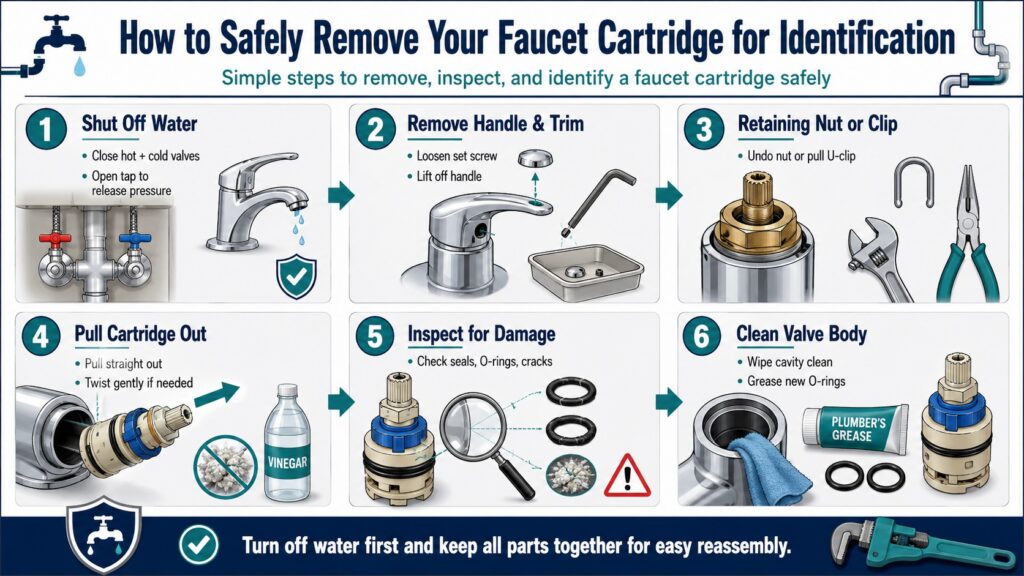
Before you begin any tap cartridge removal, locate your water shut-off valves under the sink or at the main supply. Turn both hot and cold valves clockwise until they stop, then open the tap to release residual pressure. Skipping this step can result in a sudden spray of water when you remove the cartridge, damaging cabinetry and creating a mess.
Once water is off, remove the tap handle by loosening the set screw—usually hidden under a decorative cap or located on the underside of the handle. Use an Allen key or small screwdriver to back out the screw, then lift the handle straight up. Some handles thread onto the cartridge stem and require a gentle twist to release. Keep all screws and caps in a small container so nothing gets lost during the process.
1. Remove the Handle and Decorative Trim
Pry off any decorative caps using a flat-head screwdriver wrapped in a cloth to avoid scratching the finish. Unscrew the handle set screw and pull the handle away from the wall or sink. If the handle feels stuck, apply a small amount of penetrating oil around the base and wait a few minutes before trying again.
2. Unscrew the Retaining Nut or Clip
Most cartridges are held in place by a brass retaining nut or a metal U-clip at the top of the valve body. Use an adjustable wrench or pliers to turn the nut counter-clockwise, or pull the clip straight out with needle-nose pliers. Keep the retaining hardware with your other parts for reassembly.
3. Pull the Cartridge Straight Out
Grip the cartridge stem firmly and pull straight out with steady pressure. Some cartridges require a twisting motion to disengage internal tabs. If the cartridge won’t budge, mineral buildup may be locking it in place—apply vinegar around the edges and wait 10 minutes before trying again.
4. Inspect the Cartridge for Damage
Check the rubber seals, O-rings, and cartridge body for cracks, wear, or mineral deposits. Even if you plan to replace the cartridge, understanding the failure mode helps prevent future issues. Worn seals indicate hard water problems that may benefit from a water softener or filter.
5. Clean the Valve Body Before Installing a New Cartridge
Wipe out the valve cavity with a damp cloth to remove sediment and old grease. Apply a thin layer of plumber’s grease to the new cartridge’s O-rings before insertion. This lubrication ensures a watertight seal and makes future removal easier.
Key Measurements for Faucet Cartridge Extension Identification
Accurate measurements are the backbone of tap cartridge identification. Most cartridges are identified by three critical dimensions: overall stem length, spline count, and base diameter. Measuring each dimension carefully ensures you order the correct replacement and avoid compatibility issues.
Use a digital caliper or a ruler marked in millimetres for the most accurate readings. Measure from the very bottom of the cartridge base to the tip of the stem for overall length. Count the number of teeth or splines on the stem where the handle attaches—common counts include 17, 20, and 24 splines. Measure the widest point of the cartridge body to determine base diameter, which typically ranges from 15 mm to 35 mm.
| Measurement | What to Record | Common Values |
|---|---|---|
| Stem Length | Base to tip in mm | 50 mm – 100 mm |
| Spline Count | Number of teeth on stem | 17, 20, 24 |
| Base Diameter | Widest point of cartridge body | 15 mm – 35 mm |
| Stem Diameter | Width of the stem shaft | 6 mm – 12 mm |
Write down all measurements and take clear photos of the cartridge from the top, side, and bottom. These images capture details that measurements alone might miss, such as the shape of the splines, the position of O-rings, and any unique features. When you contact a plumbing supplier or our team, having both measurements and photos speeds up identification.
Delta Faucet Cartridge Identification and Common Models
Delta taps are among the most popular in homes across Sydney and NSW, known for their Monitor and MultiChoice valve systems. Delta cartridges often feature a distinctive red and blue temperature indicator on the top of the stem. If you see the Delta logo stamped on the cartridge body or a model number printed on the side, note it down—this is the fastest way to find an exact replacement.
The Delta RP46074 and RP50587 are two of the most common shower cartridges in Sydney installations. The RP46074 is a 17-series cartridge used in older Monitor showers, while the RP50587 is found in newer MultiChoice systems. Both have different spline counts and stem lengths, so measuring carefully prevents ordering the wrong part. Delta also produces specialised cartridges for bath filler taps and wall-mounted bath fillers, which require longer extension stems.
If you’re unsure which Delta cartridge you have, visit Delta’s official website and use their parts finder tool. Enter your tap model number (usually found on the installation manual or stamped under the spout) to see exploded diagrams and part numbers. Alternatively, our licensed plumbers carry common Delta cartridges on their service vehicles and can identify and replace your cartridge during a same-day visit across Sydney.
Identifying Moen, Kohler, and Other Brand-Specific Cartridges
Moen cartridges are recognisable by their brass construction and the Moen logo stamped on the top. The Moen 1225 is the most widely used single-handle cartridge in kitchen and bathroom taps. It features a unique brass body with a plastic top cap and measures approximately 100 mm (4 inches) in length. Moen also produces the 1222 and 1248 cartridges for specific tap lines, each with slight dimensional differences.
Kohler cartridges vary widely depending on the tap series. The Kohler GP77005-RP and GP1016515 are common in modern kitchen taps, while the GP30420 appears in many bathroom sink models. Kohler often uses a ceramic disc cartridge design, which provides long-lasting, drip-free performance. These ceramic cartridges have a different feel when you turn the handle—smooth and precise rather than the looser action of compression-style cartridges.
For less common brands or older installations, taking your cartridge to a plumbing supply specialist is often the best approach. Many Sydney suppliers keep reference libraries of discontinued and specialty cartridges. If you’d rather not make the trip, send photos and measurements to our team—we can cross-reference your cartridge against manufacturer databases and source the correct part for you.
Common Issues That Indicate Faucet Cartridge Replacement Is Needed
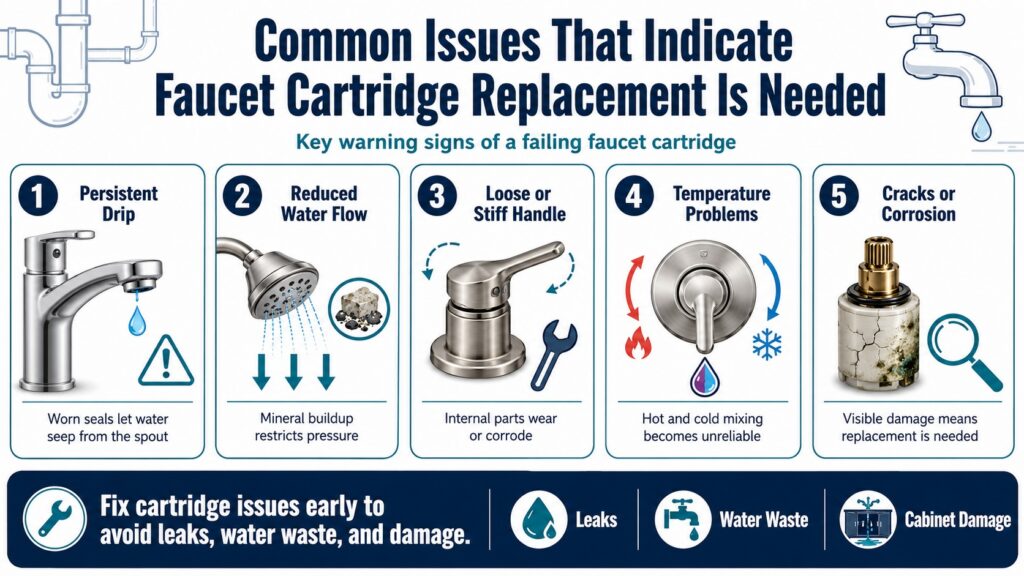
Recognising the signs of a failing cartridge helps you address problems before they escalate into water damage or higher utility bills. A dripping tap is the most obvious symptom—if water continues to seep from the spout even when the handle is fully closed, the cartridge seals have likely worn out. Even a slow drip can waste hundreds of litres per month and increase your Sydney Water bill.
Difficulty turning the tap handle or a loose, wobbly feel when you operate it also points to cartridge wear. Mineral buildup inside the cartridge can cause stiffness, while worn internal components create excessive play. If you notice temperature fluctuations during a shower—sudden bursts of hot or cold water—the cartridge’s mixing mechanism is failing and needs replacement.
- Persistent dripping from the spout: indicates worn seals or damaged cartridge seats that no longer form a watertight seal.
- Reduced water flow: mineral deposits or debris inside the cartridge restrict water passages and reduce pressure.
- Handle feels loose or requires excessive force: internal cartridge components have worn down or corroded, affecting smooth operation.
- Temperature control problems: the cartridge’s hot and cold mixing valves are damaged, causing unpredictable water temperature.
- Visible corrosion or cracks on the cartridge body: physical damage compromises the cartridge’s ability to seal and control flow.
Addressing these issues promptly prevents water damage to cabinetry, walls, and flooring. Our team responds to leaking tap and shower mixer repairs across Sydney the same day you call, diagnosing the root cause and presenting clear options for repair or replacement. We carry a range of cartridges for common brands and can source specialty parts quickly when needed.
Using Manufacturer Resources and Online Tools for Cartridge Identification
Most major tap manufacturers provide online parts finders and identification guides on their websites. Delta’s parts finder allows you to search by tap model number or upload a photo of your tap for visual matching. Moen offers a similar tool, along with downloadable installation guides that include exploded diagrams showing every component. These resources are free and often provide part numbers, pricing, and links to authorised retailers.
Instructional videos from suppliers like FaucetPartsPlus demonstrate how to measure stem length, count splines, and identify cartridge types. Watching a short video before you start your repair can clarify confusing steps and show you exactly where to find hidden set screws or retaining clips. Many videos also cover troubleshooting tips for stubborn cartridges that won’t come out.
If online tools don’t yield a match, contact the manufacturer’s customer service team with your measurements and photos. Most brands have dedicated support lines for parts identification and can email you the correct part number within a business day. When time is critical or you’d prefer professional help, our licensed plumbers have access to trade-only parts databases and supplier networks, ensuring we find the right cartridge even for discontinued models.
When to Call a Licensed Plumber for Tap Cartridge Replacement
While many homeowners successfully replace tap cartridges themselves, some situations call for professional assistance. If your tap is a high-end or imported model, sourcing the correct cartridge can be difficult—our trade accounts give us access to parts that aren’t available at retail stores. We also handle installations where the valve body is damaged or corroded, requiring more extensive repair or replacement.
Wall-mounted shower mixers and bath filler taps often involve working inside the wall cavity, which carries a risk of damaging hidden pipes or waterproofing membranes. Our plumbers are trained to access recessed valves safely, replace cartridges and extensions, and test for leaks before closing up the wall. A simple cartridge swap on an existing tap doesn’t usually need council or Sydney Water approval, but if the job involves altering pipework, notifiable plumbing work rules under NSW regulations may apply. As a licensed business (NSW Lic. 210933C), we ensure all work complies with NSW Fair Trading licensing requirements and AS/NZS 3500 plumbing standards, and we handle any Sydney Water compliance requirements on your behalf, protecting your home and your insurance coverage.
If you’re facing a persistent leak, low water pressure, or temperature control issues that a new cartridge doesn’t fix, the problem may lie elsewhere in your plumbing system. We use diagnostic tools to check for sediment buildup, faulty mixing valves, or pressure imbalances. Our same-day service across Sydney means you won’t wait long for answers—call 0493 824 176 and we’ll have a licensed plumber (NSW Lic. 210933C) on-site to assess your tap and provide a clear, upfront quote in AUD.
Comparing Faucet Cartridge Types and Their Applications
Tap cartridges come in several designs, each suited to different applications and performance requirements. Compression cartridges are the oldest type, using rubber washers that compress against a valve seat to stop water flow. These are common in older homes and require periodic washer replacement as they wear out. They’re simple and inexpensive but tend to drip more frequently than modern designs.
Ball cartridges use a rotating ball with chambers and springs to control water flow and temperature. They’re found in single-handle kitchen taps and are known for smooth operation. Ceramic disc cartridges feature two ceramic plates that slide against each other to regulate flow—this design is highly durable and provides drip-free performance for many years. Most modern taps from Delta, Moen, and Kohler use ceramic disc technology.
| Cartridge Type | Best For | Lifespan |
|---|---|---|
| Compression | Older two-handle taps | 3–5 years |
| Ball | Single-handle kitchen taps | 5–8 years |
| Ceramic Disc | Modern bathroom and kitchen taps | 10–20 years |
| Cartridge (Brass) | Single or dual-handle models | 8–12 years |
Choosing the right cartridge type depends on your tap model and your performance expectations. If you’re renovating or upgrading fixtures, selecting a tap with a ceramic disc cartridge minimises future maintenance. Our team can recommend tap models that balance upfront cost with long-term reliability, and we install them to manufacturer specifications with a lifetime labour warranty on our workmanship.
Tips for Extending the Life of Your Tap Cartridge
Regular maintenance keeps your tap cartridge functioning smoothly and delays the need for replacement. Flushing your hot water system annually reduces sediment buildup that can clog cartridge passages. If you have hard water, consider installing a water softener or a whole-house filter—mineral deposits are the leading cause of premature cartridge wear in Sydney homes.
Avoid forcing your tap handle when it feels stiff. Excessive force can crack the cartridge body or strip internal components. Instead, remove the cartridge and clean it with vinegar to dissolve mineral buildup. Apply plumber’s grease to the O-rings and moving parts before reinstalling. This simple cleaning can restore smooth operation and extend the cartridge’s life by several years.
When you’re away from home for extended periods, shut off the water supply to your taps. This reduces constant pressure on the cartridge seals and prevents slow leaks from developing. If you notice any dripping or unusual sounds from your taps, address the issue promptly—small leaks worsen over time and can lead to water damage. Our team offers preventive plumbing inspections that check all your taps, cartridges, and supply lines, catching problems before they become emergencies.
How Antons Plumbing & Gas Supports Sydney Homeowners with Faucet Repairs
We understand that plumbing problems don’t wait for convenient times. That’s why we offer 24/7 emergency service across the Sydney Metro, from the Inner West to the Northern Beaches and everywhere in between. When you call 0493 824 176, you’ll speak with a real person who can dispatch a licensed plumber (NSW Lic. 210933C) to your home the same day—no call-out fee from 7 am to 3 pm on weekdays.
Our plumbers carry a wide range of tap cartridges, O-rings, and repair parts on their service vehicles. In most cases, we can identify your cartridge, source the correct replacement, and complete the repair in a single visit. If your cartridge is a specialty or discontinued model, we tap into our trade supplier network to locate the part and return promptly. Every repair is backed by our lifetime labour warranty, so you can trust the work will last.
We also handle complete tap upgrades, bathroom renovations, and leak detection services. If your tap is beyond economical repair, we’ll present clear options for replacement—comparing features, finishes, and price points in AUD so you can make an informed decision. As a licensed business (NSW Lic. 210933C), all our work complies with NSW Fair Trading licensing requirements and AS/NZS plumbing standards, protecting your home and ensuring your insurance remains valid. From minor tap repairs to full bathroom fit-outs, we’re here to help Sydney homeowners with honest advice, skilled workmanship, and respect for your property.
Conclusion
Identifying the right tap cartridge extension doesn’t have to be a guessing game when you know what to measure and where to look. Armed with accurate dimensions, clear photos, and brand information, you can source the correct replacement and restore your tap to reliable operation. When the job feels too complex or you’d rather leave it to the professionals, our licensed team (NSW Lic. 210933C) is ready to help with same-day service across Sydney, upfront pricing, and a commitment to getting it right the first time.
Antons Plumbing & Gas specialises in tap repairs and cartridge replacements across Sydney Metro homes. Our licensed plumbers (NSW Lic. 210933C) identify and install the right tap cartridge for lasting results. Contact us today to get started
Related Articles
- Shower Supply Rough-In Guide for Bathroom Renovation Projects
- Unknown Plumbing Part Identification for Homeowners and DIY Beginners
- How to Fix a Leaking Shower Elbow Before It Damages Your Wall
FAQs
What Is A Tap Cartridge Extension?
A tap cartridge extension is a component used to increase the height of a tap cartridge, allowing it to fit properly in taps with varying designs or to accommodate specific installation needs. At Antons Plumbing & Gas, we ensure that any extensions used are compatible with your tap, providing safe and reliable solutions.
How Do I Identify A Tap Cartridge?
To identify a tap cartridge, first turn off the water supply and remove the handle. Then take out the cartridge and check for identifying marks, shapes, or sizes. If you’re unsure, our experienced team can assist you in identifying the correct cartridge for your tap during a service call.
What Are The Different Types Of Tap Cartridges?
There are three main types of tap cartridges: compression cartridges, ball cartridges, and ceramic disc cartridges. Each type functions differently and is suited for specific tap designs. Our 25 years of experience allows us to recommend the best option for your needs and ensure proper installation.
How Do I Measure A Tap Cartridge For Replacement?
To measure a tap cartridge for replacement, you should remove the cartridge and measure its height and diameter. Additionally, note the shape and any unique features. If this process seems daunting, our team at Antons Plumbing & Gas can handle the measurements and replacements efficiently.
Can I Use A Tap Cartridge Extension On Any Tap?
No, a tap cartridge extension is not universally compatible with all taps. It is essential to match the extension with the specific cartridge type and tap model. Our qualified plumbers can help determine the right fit for your tap to ensure optimal performance.
Do You Offer Same-Day Tap Cartridge Replacement In Sydney?
Yes. Anton’s Plumbing & Gas provides same-day tap and cartridge repairs across the Sydney Metro area, from the Inner West to the Northern Beaches. Call 0493 824 176 and we’ll dispatch a licensed plumber (NSW Lic. 210933C) to your home.
Is Antons Plumbing & Gas Licensed To Carry Out Tap And Cartridge Repairs In NSW?
Yes. We operate under NSW Lic. 210933C and every repair is carried out to AS/NZS 3500 plumbing standards and NSW Fair Trading licensing requirements, so your home and insurance stay protected.
How Much Does It Cost To Replace A Tap Cartridge?
Costs depend on the tap brand, cartridge type, and whether the part needs to be sourced specially. We provide an obligation-free, upfront quote in AUD before any work begins, so there are no surprises on your invoice.
Do You Charge A Call-Out Fee?
There’s no call-out fee for bookings between 7 am and 3 pm on weekdays. Call 0493 824 176 to ask about after-hours and emergency rates.
Which Sydney Suburbs Do You Service?
We service homes right across Sydney Metro, including areas like Cranebrook, Bligh Park, Winston Hills and Sylvania Waters, plus everywhere from the Inner West to the Northern Beaches.
Can I Get A Quote Before Booking A Plumber?
Yes. Send us photos and measurements of your tap cartridge, as outlined above, and we can often give you an indicative quote over the phone before confirming a same-day visit.
What If My Tap Brand Is Discontinued Or Hard To Find?
We tap into our trade supplier network to track down obsolete or imported cartridges that aren’t available at a hardware store, so you’re not stuck with a leaking tap while you wait.
Do You Guarantee Your Tap Repairs?
Yes. Every repair completed by our licensed plumbers is backed by a lifetime labour warranty on workmanship.
Can You Fix A Leaking Tap The Same Day I Call?
In most cases, yes. Our plumbers carry common cartridges, O-rings and repair parts on their vehicles, so we can diagnose and fix a leaking tap in a single visit.
Do I Need Sydney Water Or Council Approval To Replace A Tap Cartridge?
A straightforward cartridge swap on an existing tap doesn’t normally require approval. However, if the repair involves altering pipework, notifiable plumbing work under NSW regulations may apply—our licensed plumbers handle any Sydney Water compliance requirements on your behalf.
What If My DIY Tap Cartridge Replacement Goes Wrong?
If a DIY repair leads to a bigger leak, a stripped valve body, or damage inside the wall, call us on 0493 824 176. Our licensed plumbers can assess the damage, stop the leak, and complete a proper repair, protecting your home from water damage.
Do You Work Weekends And After Hours?
Yes, we offer 24/7 emergency plumbing service across Sydney Metro, including weekends and after hours, for urgent leaking taps and cartridge failures.
What Information Should I Have Ready When I Call For A Tap Cartridge Quote?
Have your tap brand and any model numbers ready, along with stem length, spline count and diameter measurements if you’ve taken them. Photos from multiple angles also help us quote accurately over the phone.
Can You Source Imported Or European Tap Cartridges?
Yes. Through our trade accounts we can access cartridges that aren’t stocked at retail stores, including many imported and high-end European tapware brands.
How Do I Book A Licensed Sydney Plumber For A Tap Cartridge Repair?
Call 0493 824 176 or use our online booking form. We’ll confirm a same-day appointment window and send a licensed plumber (NSW Lic. 210933C) with the parts and tools needed to fix your tap cartridge on the spot.
Do You Provide Fixed-Price Quotes For Tap Cartridge Replacement?
Yes. We confirm pricing in AUD upfront, before any work starts, so you know exactly what you’re paying for the tap cartridge replacement.