

StStorm drain blockages can turn a simple downpour into a real headache for your property. Water pools across the driveway, floods garden beds, and seeps toward the foundations — all because leaves, silt, and debris have choked the grate or pipe. For Sydney homeowners and commercial property managers, understanding how to clear a storm drain safely and knowing when to call a licensed professional can save thousands of dollars in flood damage and erosion repair.
This guide walks you through practical storm drain unclogging techniques, the limits of DIY methods, and the professional tools that tackle deep blockages for good. You’ll learn what causes recurring clogs, how to inspect your gully drain and storm drain channel, and why compliance with the national AS/NZS 3500 plumbing standards matters for stormwater systems across the Inner West, Eastern Suburbs, and beyond Sydney.
Key Takeaways
- Remove surface debris from grates and test with a hose before attempting deeper work.
- DIY methods work for light clogs but persistent pooling signals a problem only hydro-jetting can fix.
- High-pressure water jetting clears tree roots and silt without excavation, extending pipe life.
- Flat grades and low-flow areas need professional assessment to prevent recurring blockages.
- Licensed plumbers diagnose root causes with CCTV and deliver compliant, lasting repairs under NSW regulations.
Blocked storm drains don’t wait for a convenient time. Let’s break down the steps, tools, and safety checks that keep your Sydney property dry.
Understanding Storm Drain Blockages and Their Impact
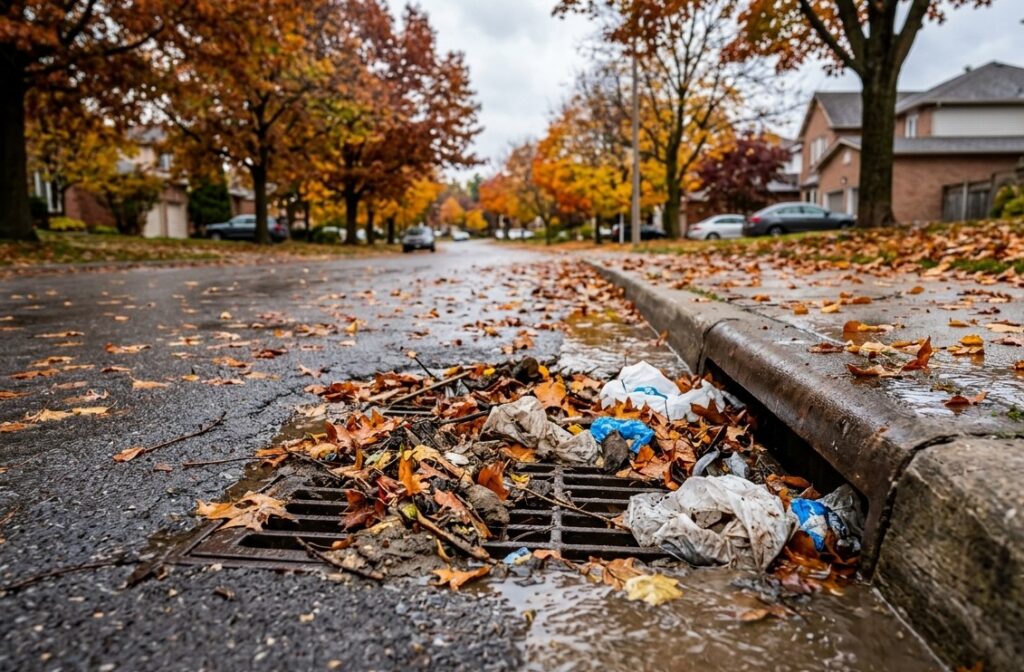
Storm drains collect rainwater from roofs, driveways, and paved areas, channelling it away from buildings and into street drainage, council stormwater infrastructure, or natural waterways. When a grate or pipe becomes clogged, water has nowhere to go. It backs up onto your property, pooling around foundations and eroding soil. Over time, standing water can crack concrete, drown landscaping, and even seep into basements or under-house areas.
Common culprits include autumn leaves, twigs, plastic bags, and sediment washed down from gutters. In Sydney’s older suburbs, tree roots invade clay pipes through hairline cracks, forming dense mats that trap debris. Flat or poorly graded sections of pipe don’t self-flush, so silt settles and hardens. The result is a slow drain that eventually stops altogether.
Ignoring a blocked storm drain can lead to costly repairs. Water damage to brickwork, timber framing, and electrical systems often exceeds the price of professional drain cleaning by a wide margin. That’s why early action matters — and why persistent or deep blockages should go to a licensed Sydney plumber rather than a DIY fix.
DIY Storm Drain Unclogging Steps for Homeowners
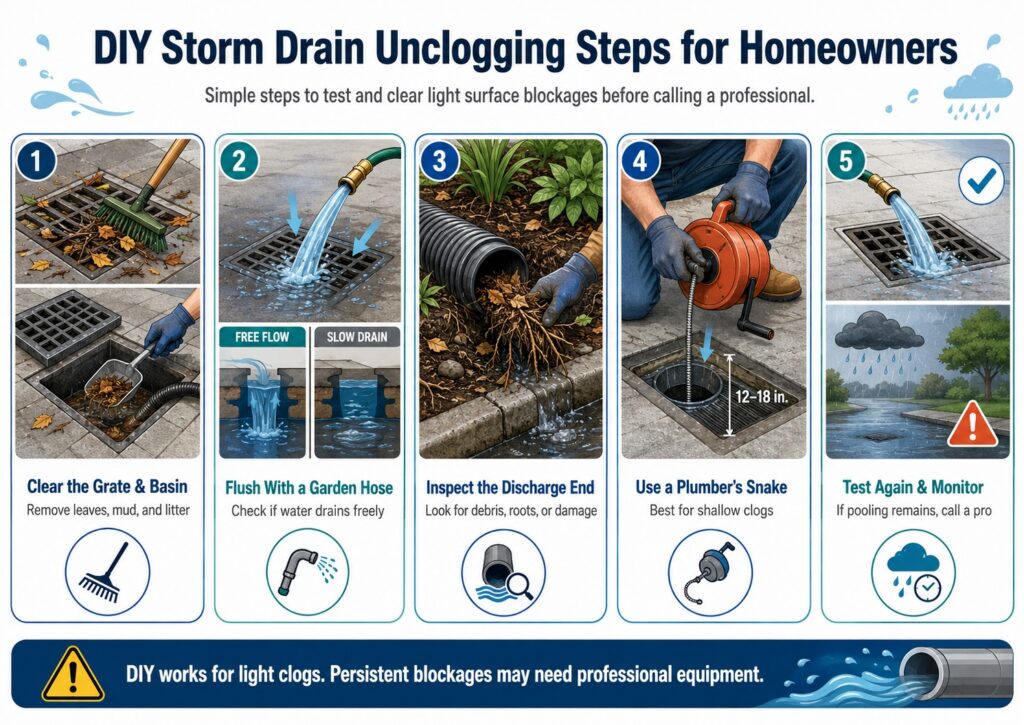
Many residential storm drain clogs sit at or near the surface, making them accessible with basic tools and a little effort. Before you call for help, try these straightforward steps to restore flow and test whether the blockage is shallow or deep.
1. Clear the Grate and Surrounding Area
Start by removing leaves, twigs, and litter from the drain grate using a garden rake or stiff broom. Lift the grate if it’s removable and scoop out any debris sitting in the catch basin. A wet-dry vacuum can pull out mud and small stones without the mess of hand removal.
2. Flush With a Garden Hose
Once the grate and basin are clear, run water from a garden hose into the drain for several minutes. Watch how quickly the water drains. If it flows freely, the blockage was superficial. If water pools or drains slowly, the clog sits further down the pipe.
3. Inspect the Discharge End
Walk to where your storm drain pipe exits — usually at the kerb, a garden bed, or a rear boundary. Check for visible debris, plant roots, or collapsed sections. Sometimes a simple hand-pull of matted leaves at the outlet is all it takes to restore flow.
4. Use a Plumber’s Snake for Shallow Clogs
For blockages within a metre or two of the grate, a hand-crank drain snake can break up compacted leaves or dislodge small root intrusions. Feed the cable slowly, rotating as you push. Avoid forcing it, as older pipes can crack under pressure.
5. Test Again and Monitor
After clearing and flushing, test the drain during the next rain event. If water still pools or drains slowly, the blockage is deeper or the pipe has structural damage. At that point, DIY methods won’t solve the problem, and it’s time to call a licensed Sydney plumber.
These steps work well for light, accessible clogs. But when the issue persists or you can’t reach the blockage, it’s time to bring in professional equipment.
When to Call a Licensed Plumber for Storm Drain Clearing
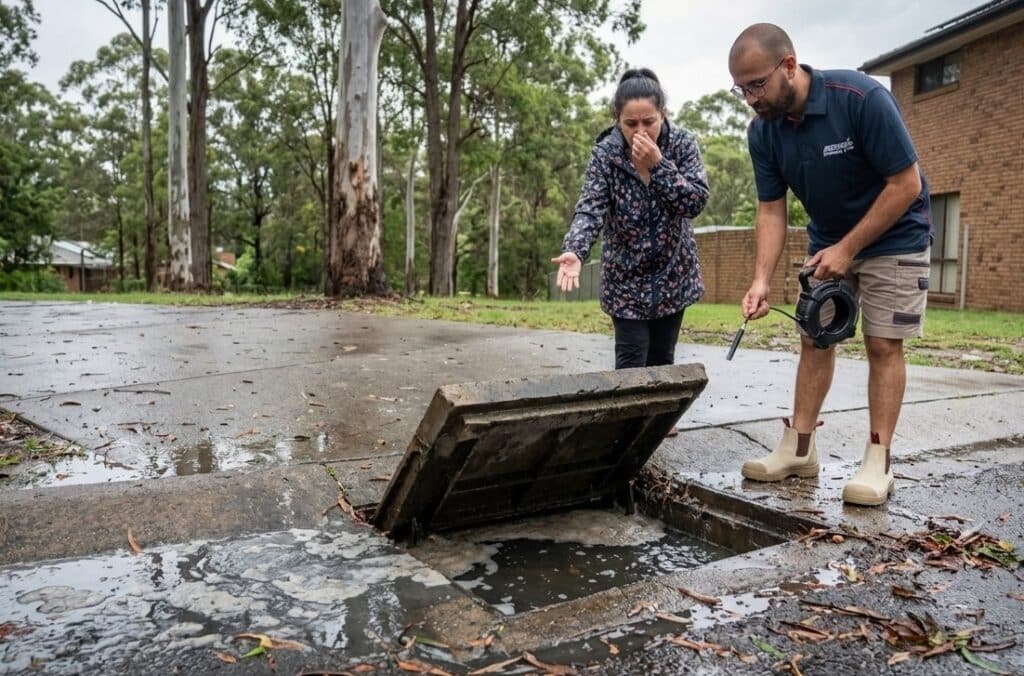
Some blockages lie too deep, involve structural damage, or require equipment that only licensed professionals can operate safely. Knowing when to stop DIY attempts protects your property and avoids wasted effort. Here are the clear signals that you need expert help from a licensed Sydney plumber.
- Persistent pooling after surface clearing: Water that refuses to drain even after you’ve removed grate debris and flushed with a hose indicates a blockage deep in the pipe or a collapsed section.
- Foul odours or sewage backup: If your storm drain smells like sewage or wastewater backs up when it rains, the stormwater and sewer lines may be cross-connected or damaged. This is a health hazard that requires immediate professional assessment.
- Visible cracks or subsidence around the drain: Sunken paving, cracks in concrete, or soft ground near the grate suggest the pipe has collapsed or shifted. Excavation and repair are the only safe fixes.
- Recurring clogs in the same spot: If you clear the drain every few months only to see the same problem return, tree roots or a structural defect are likely to blame. CCTV inspection pinpoints the cause.
- Inaccessible or underground blockages: Drains that run under driveways, gardens, or buildings can’t be reached with hand tools. High-pressure water jetting is the standard solution.
At Antons Plumbing & Gas, we respond same-day across Sydney — Inner West, Eastern Suburbs, North Shore, and beyond. Our licensed team (NSW Lic. 210933C) uses CCTV drain cameras to locate blockages and assess pipe condition before recommending hydro-jetting, pipe relining, or excavation. You get clear options, upfront pricing in AUD, and work that complies with Australian Standards and NSW regulations. Call 0493 824 176 or book online for a fast quote.
Professional Storm Drain Unclogging Methods
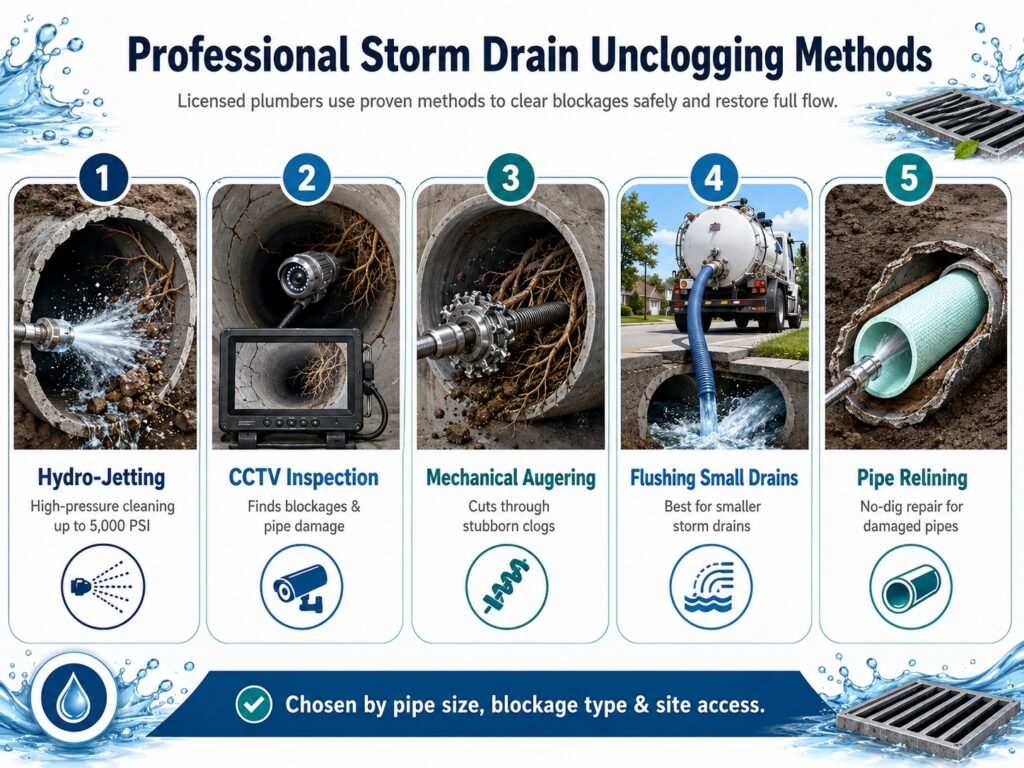
Licensed plumbers rely on proven techniques that clear blockages without damaging pipes. These methods handle everything from compacted silt to invasive tree roots, restoring full flow and extending the life of your stormwater system.
High-Pressure Water Jetting (Hydro-Jetting)
Hydro-jetting uses a specialised nozzle that blasts water at pressures up to 5,000 PSI (roughly 345 bar) through the drain. The jet scours pipe walls, cutting through tree roots, dissolving grease, and flushing out sediment. Because it’s all water, there’s no chemical residue or risk of pipe abrasion when operated by a trained technician. Hydro-jetting works on pipes from 50 mm to over 300 mm in diameter and can clear blockages up to 100 metres from the access point.
CCTV Drain Inspection
Before jetting, we insert a waterproof camera into the drain to identify the blockage type, location, and any structural issues like cracks or root intrusion. The footage shows exactly what’s happening inside your pipe, so you’re not guessing. CCTV inspection also documents the condition before and after cleaning, providing a compliance record for strata managers and insurance claims.
Mechanical Augering
For dense root masses or compacted debris, a power auger with a cutting head can bore through the blockage. The rotating blades slice roots and break up hardened material, allowing water to flow again. Augering is often paired with hydro-jetting for a complete clean.
Flushing for Smaller Drains
Drains smaller than 900 mm can be flushed with high-volume water flow from a tanker truck or hydrant connection. Flushing works best on pipes with a decent fall. Flat or low-flow sections need extra attention, as they don’t self-clean and can re-clog quickly.
Pipe Relining for Structural Repairs
When CCTV reveals cracks, collapsed sections, or severe root intrusion, pipe relining offers a no-dig repair. We insert a resin-coated liner into the damaged pipe, inflate it, and cure it in place. The result is a smooth, seamless pipe within the old one, with a 50-year design life. Relining avoids excavation, preserves landscaping, and costs less than traditional dig-and-replace.
Each method is chosen based on pipe size, blockage type, and site access. We explain your options in plain English, show you the camera footage, and provide a fixed-rate quote in AUD before starting work.
Comparing DIY and Professional Storm Drain Clearing
Storm drain blockages can range from simple surface debris to deeper problems involving roots, compacted sediment, or damaged pipework. While some homeowners can handle minor clogs with basic tools, more serious drainage issues often require specialised equipment and professional diagnosis. Comparing DIY and professional storm drain clearing helps clarify which approach suits the problem, the budget, and the level of risk involved.
| Aspect | DIY Methods | Professional Service |
|---|---|---|
| Cost | Low, mainly tools and your time | Varies, usually based on a fixed-rate quote in AUD |
| Effectiveness | Best for surface clogs and light blockages | Better for deep blockages, tree roots, and structural issues |
| Equipment | Rake, hose, and hand snake | Hydro-jetter, CCTV camera, and power auger |
| Safety | Minimal risk if handled carefully | Licensed operators using compliant methods |
| Diagnosis | Often based on visible symptoms and guesswork | Camera inspection and root-cause analysis |
| Warranty | None | Lifetime labour warranty |
DIY storm drain clearing can work well when the blockage is shallow and easy to reach, especially if the issue is caused by leaves, loose debris, or surface buildup. Professional service becomes more valuable when water still will not drain, when the blockage keeps returning, or when the cause is deeper than basic tools can reach. Understanding the differences between these options helps Sydney homeowners respond more effectively and avoid wasting time on methods that may not solve the real drainage problem.
Common Causes of Recurring Storm Drain Blockages
Understanding why your storm drain clogs repeatedly helps you prevent future issues and decide whether a one-off clean or a permanent repair is needed. Here are the most common culprits we encounter across Sydney properties.
Tree Root Intrusion
Roots seek moisture and nutrients, and storm drains provide both. Once a root finds a crack or joint, it grows into a dense mat that traps debris and restricts flow. Clay pipes in older suburbs are especially vulnerable. CCTV inspection reveals the extent of intrusion, and hydro-jetting or relining provides a lasting fix.
Flat or Poorly Graded Pipes
Stormwater pipes need a minimum fall to self-clean. When a section is laid flat or has settled over time, silt and debris accumulate instead of washing through. These low spots require regular flushing or, in some cases, re-grading during a renovation.
Leaf Litter and Organic Debris
Autumn leaves, twigs, and blossoms wash off roofs and into downpipes, then into the storm drain. Properties with large trees or poor gutter maintenance see this problem every season. Installing gutter guards and clearing grates before heavy rain reduces the load on your drain.
Sediment and Silt Buildup
Construction sites, exposed soil, and eroded garden beds send fine sediment into storm drains. Over time, it settles and hardens, narrowing the pipe. Hydro-jetting scours it away, but controlling sediment at the source prevents recurrence.
Foreign Objects
Plastic bags, bottles, and building materials can enter storm drains during construction or windy weather. These items lodge in bends or joints, creating a snag point for other debris. Regular inspection and site management keep foreign objects out.
If your storm drain clogs more than once a year, the root cause needs addressing. We use CCTV to diagnose the issue and recommend solutions — from gutter guards and grate covers to pipe relining and re-grading — that stop the cycle.
Storm Drain Maintenance Tips for Sydney Properties
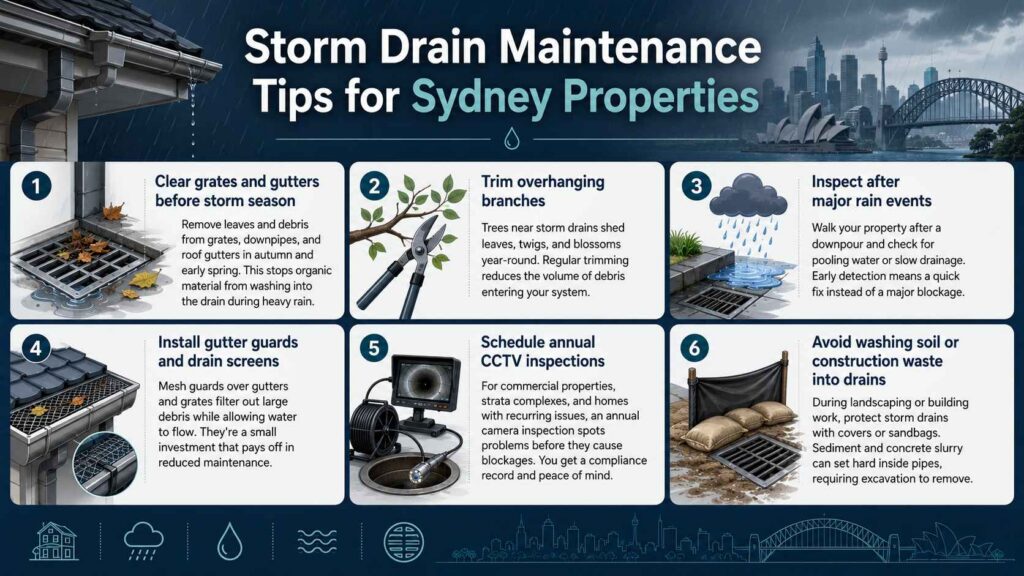
Proactive maintenance reduces the risk of blockages and extends the life of your stormwater system. These simple habits take minutes but prevent hours of cleanup and costly repairs.
- Clear grates and gutters before storm season: Remove leaves and debris from grates, downpipes, and roof gutters in autumn and early spring. This stops organic material from washing into the drain during heavy rain.
- Trim overhanging branches: Trees near storm drains shed leaves, twigs, and blossoms year-round. Regular trimming reduces the volume of debris entering your system.
- Inspect after major rain events: Walk your property after a downpour and check for pooling water or slow drainage. Early detection means a quick fix instead of a major blockage.
- Install gutter guards and drain screens: Mesh guards over gutters and grates filter out large debris while allowing water to flow. They’re a small investment that pays off in reduced maintenance.
- Schedule annual CCTV inspections: For commercial properties, strata complexes, and homes with recurring issues, an annual camera inspection spots problems before they cause blockages. You get a compliance record and peace of mind.
- Avoid washing soil or construction waste into drains: During landscaping or building work, protect storm drains with covers or sandbags. Sediment and concrete slurry can set hard inside pipes, requiring excavation to remove.
We offer scheduled maintenance plans for strata managers and commercial clients across Sydney. Same-day service, clear reporting, and compliance with Australian Standards mean your drainage system stays ready for whatever the Sydney weather brings.
Why Compliance and Licensing Matter for Storm Drain Work
Storm drains are part of your property’s plumbing system and must meet Australian Standards for installation, repair, and maintenance. Using unlicensed operators or DIY methods that damage pipes can void insurance, breach strata bylaws, and create liability if flooding affects neighbouring properties.
In Sydney, private stormwater drainage also connects into the local council network and, in some areas, Sydney Water infrastructure. Getting this connection point wrong, or disturbing it without approval, can breach council stormwater regulations and cause disputes with neighbours or strata. A licensed Sydney plumber knows how to work within these NSW rules.
Antons Plumbing & Gas holds full NSW licensing (Lic: 210933C) for plumbing and gasfitting. Our work complies with AS/NZS 3500 and local council stormwater regulations. We document every job with photos, CCTV footage, and compliance certificates, so you have a clear record for insurance, strata audits, or property sales.
Licensed professionals also carry public liability insurance and workers’ compensation, protecting you if an accident occurs on-site. When you choose a qualified team, you’re choosing accountability, safety, and work that lasts.
Real-World Example: Clearing a Recurring Gully Drain Blockage
A café owner in the Eastern Suburbs called us after his rear gully drain flooded the courtyard during a storm, sending water into the kitchen. He’d cleared the grate himself twice, but the problem kept returning. We arrived same-day, inserted a CCTV camera, and found a dense root mass 8 metres down the pipe, just before the connection to the street drain.
Hydro-jetting cleared the roots in under an hour, restoring full flow. We recommended pipe relining for the affected section to prevent future intrusion. The café owner chose relining, and we completed the job the next day with minimal disruption. No excavation, no downtime, and a 50-year warranty on the liner. He hasn’t had a blockage since.
That’s the difference professional diagnosis and the right tools make. You get a permanent fix, not a temporary patch.
How Antons Plumbing & Gas Delivers Fast, Compliant Storm Drain Solutions

We’ve spent over 25 years diagnosing and clearing blocked drains across Sydney. Our process is simple: arrive on time, inspect with a camera, explain what we find, provide a fixed-rate quote in AUD, and complete the work to Australian Standards. No hidden fees, no mess left behind, and a lifetime labour warranty on our workmanship.
Same-day service means you’re not waiting days for a callback. Call 0493 824 176 from 7 am to 3 pm weekdays for zero call-out fees, or book online anytime. We serve the Inner West, Eastern Suburbs, North Shore, Northern Beaches, Hills District, Western and South-Western Sydney, Sutherland Shire, and beyond. Whether it’s a residential gully drain, a commercial storm drain channel, or a street drain connection, we have the tools and training to clear it safely under our NSW licence (210933C).
Our hydro-jetting equipment handles pipes from 50 mm to 300 mm, and our CCTV systems reach over 100 metres. We carry spare parts, relining kits, and backup equipment on every truck, so most jobs finish in a single visit. You get upfront pricing in AUD, clear communication, and a tidy worksite when we leave.
Choosing the Right Storm Drain Unclogging Service
Not all drain cleaners are equal. When comparing quotes, look beyond price and consider licensing, equipment, warranty, and response time. A cheap quote from an unlicensed operator can cost more in the long run if the work fails or damages your pipes.
Ask these questions before hiring:
- Are you licensed and insured in NSW?
- Do you use CCTV to diagnose blockages?
- What equipment will you use (hydro-jetter, auger, or hand tools)?
- Do you provide a warranty on labour and parts?
- Can you supply compliance certificates and before-after footage?
- What’s your typical response time for emergency calls?
At Antons Plumbing & Gas, the answers are yes, camera inspection on every job, professional hydro-jetting and augering, lifetime labour warranty, full documentation, and same-day service across Sydney. We’re a family-owned business that treats your property like our own, and we stand behind every job with our NSW Lic: 210933C and 25 years of hands-on experience.
Conclusion
Blocked storm drains don’t fix themselves, and waiting for the next downpour risks serious water damage. Call Antons Plumbing & Gas on 0493 824 176 or book online for same-day service, upfront pricing in AUD, and work backed by a lifetime labour warranty across all Sydney regions.
Antons Plumbing & Gas clears blocked storm drains fast with CCTV inspections and professional drain cleaning across Sydney. Our licensed team (NSW Lic. 210933C) restores proper drainage to protect your property from water damage. Contact us today to get started.
Related Articles
- Blocked Stormwater Pipe Solutions for Better Home Drainage
- 5 Common Signs You Have a Blocked Stormwater Drain
- How to Clear a Blocked Gutter Downpipe Without Damaging Pipes
FAQs
What Is The Best Way To Unclog A Storm Drain?
The best way to unclog a storm drain is to start by removing any visible debris, such as leaves or rubbish. If the blockage persists, using a high-pressure water jet or a professional plumbing service, like Antons Plumbing & Gas, can efficiently clear the drain without causing damage.
How Do You Clear A Clogged Storm Drain?
To clear a clogged storm drain, begin by inspecting the area for obstructions. Use a shovel to remove surface debris, then pour water down the drain to see if it flows freely. If not, a plumbing snake or hydro-jetting service may be necessary to remove deeper blockages. Our experienced team can handle this safely and effectively.
Can You Use A Snake To Unclog A Storm Drain?
Yes, a plumbing snake can be used to unclog a storm drain, especially for blockages that are further down the pipe. However, for best results and to avoid damaging the drain, it’s recommended to enlist the help of professionals like Antons Plumbing & Gas who have the right tools and expertise.
What Causes Storm Drains To Clog?
Storm drains often clog due to the accumulation of leaves, debris, sediment, and even tree roots. Heavy rainfall can exacerbate these issues, leading to overflows. Regular maintenance and inspections by a qualified plumbing service can help prevent clogs and ensure effective drainage.
How Much Does It Cost To Unclog A Storm Drain?
The cost to unclog a storm drain can vary based on the severity of the blockage and the methods used. At Antons Plumbing & Gas, we provide upfront pricing in AUD and tailored solutions to meet your specific needs without any hidden fees.
Do You Offer Emergency Storm Drain Clearing In Sydney?
Yes. We provide same-day storm drain and blocked drain response across Sydney, including the Inner West, Eastern Suburbs, North Shore, Northern Beaches, and Western Sydney. Call 0493 824 176 to check availability for your suburb today.
Is There A Call-Out Fee For Storm Drain Unblocking In Sydney?
We offer zero call-out fees for bookings between 7 am and 3 pm on weekdays. Call us or book online and we’ll confirm any fees upfront before we arrive, so there are no surprises on your invoice.
Do You Provide An Upfront Quote Before Starting Work?
Yes, every job starts with a CCTV inspection where needed and a fixed-rate quote in AUD. You’ll know the full cost before we begin any hydro-jetting, augering, or relining, with no hidden fees.
Are Your Plumbers Licensed To Work On Stormwater Systems In NSW?
Yes. Antons Plumbing & Gas holds full NSW plumbing and gasfitting licensing (Lic: 210933C), and all storm drain work is carried out to AS/NZS 3500 standards and local council stormwater requirements.
Can You Clear Storm Drains For Strata Properties In Sydney?
Yes, we regularly work with strata managers across Sydney on shared stormwater lines, gully drains, and common-area drainage. We provide CCTV footage and compliance documentation for strata records and insurance purposes.
Do You Provide CCTV Drain Inspections As Part Of The Quote?
We use CCTV cameras to diagnose the blockage before recommending a fix, so you can see exactly what’s happening in your pipe and understand why a particular method — hydro-jetting, augering, or relining — is being recommended.
What Suburbs In Sydney Do You Service For Storm Drain Unclogging?
We service the Inner West, Eastern Suburbs, North Shore, Northern Beaches, Hills District, Western and South-Western Sydney, Sutherland Shire, and surrounding areas. Call us or check our suburb pages to confirm coverage for your address.
Do You Provide A Warranty On Storm Drain Clearing Work?
Yes, all our workmanship is backed by a lifetime labour warranty, and pipe relining carries a 50-year design life on the liner itself. We’ll explain exactly what’s covered before we start.
Can I Book A Same-Day Appointment For A Blocked Storm Drain?
In most cases, yes. Call 0493 824 176 or book online and we’ll do our best to get a licensed technician to your Sydney property the same day, particularly for active flooding or pooling issues.
What Payment Methods Do You Accept For Plumbing Services?
We accept standard payment methods for our storm drain and plumbing services, all quoted and invoiced in AUD. Ask our team about current payment options when you book.
Do You Handle Both Residential And Commercial Storm Drain Blockages?
Yes, we clear storm drains for homes, cafés, retail properties, and strata buildings across Sydney, using the same licensed process of CCTV diagnosis, hydro-jetting, and fixed-rate quoting.
How Do I Book An Inspection With Antons Plumbing & Gas?
Call 0493 824 176 during business hours or use our online booking form. Tell us what you’re seeing — pooling water, slow drainage, or odours — and we’ll organise a same-day or next-available appointment.
What Happens If The Storm Drain Blockage Is On Council Property?
If our CCTV inspection shows the blockage sits within the council or Sydney Water section of the network rather than your private line, we’ll let you know so you can lodge the correct report with council, and we’ll advise on any work still needed on your side of the boundary.
Do You Offer After-Hours Emergency Plumbing In Sydney?
For urgent flooding or sewage backup situations, call 0493 824 176 to discuss your options. Our licensed team prioritises urgent stormwater and drainage issues across our Sydney service area.