

A clogged floor drain can turn a tidy laundry, garage, or bathroom into a frustrating mess. Water pools around your feet, unpleasant odours rise from the grate, and you worry about overflow damage — a common headache in Sydney homes, particularly older properties across the Inner West and North Shore with ageing clay stormwater and sewer connections. The good news is that many minor blockages respond well to natural cleaning solutions you already have at home — bicarb soda, white vinegar, and hot water — before you need to call in professional help.
This guide walks you through proven DIY methods for how to clear a floor drain safely and effectively. You will learn when a simple flush works, how to apply natural drain cleaners correctly, and when it’s time to hand the job to a licensed Sydney plumber who can diagnose root causes and restore proper flow in line with NSW plumbing rules.
Key Takeaways
- Baking soda and vinegar create a fizzing action that breaks down organic buildup and neutralises odours in floor drains.
- Hot water flushes loosened debris and grease, but boiling water may crack older PVC traps or fittings common in Sydney’s older housing stock.
- Plunging and wet-dry vacuums remove stubborn clogs that natural cleaners cannot shift on their own.
- Quarterly maintenance with natural solutions helps prevent blockages before they cause backups or sewer gas smells.
- Persistent or recurring clogs signal deeper issues — tree roots, collapsed pipes, or sewer line problems — that require CCTV inspection and professional repair from a licensed Sydney plumber.
Why Floor Drains Block and When Natural Solutions Work
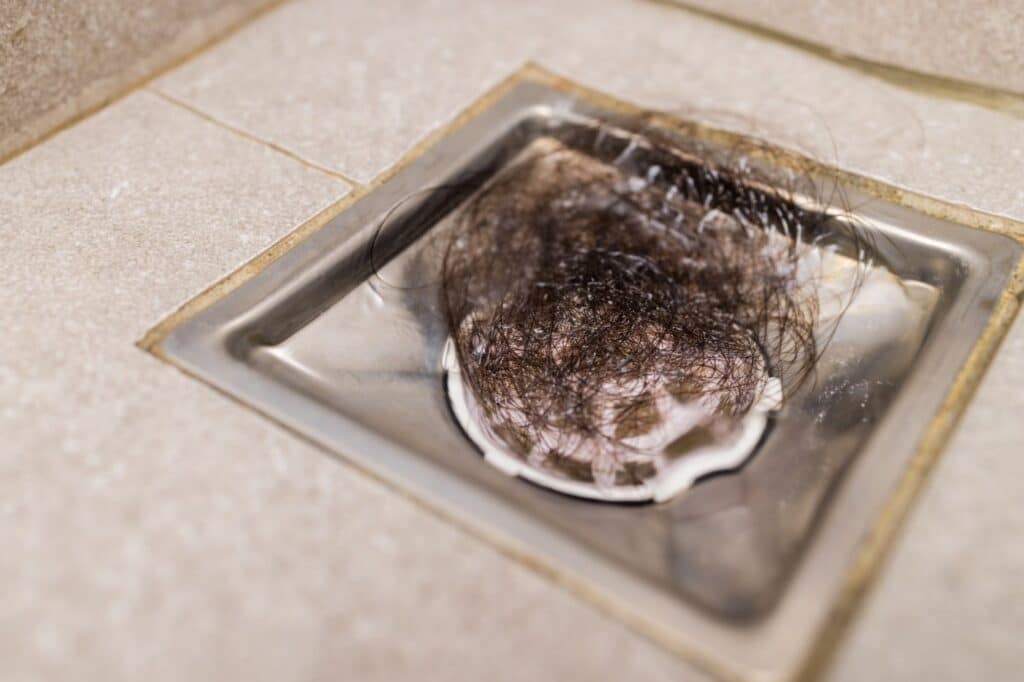
Floor drains collect runoff from washing machines, showers, and garage floors. Over time, soap scum, hair, lint, dirt, and grease accumulate inside the trap and pipe. In Sydney homes with older clay or cast-iron drains, tree roots can infiltrate joints and catch debris. When the buildup narrows the pipe enough, water slows or stops altogether.
Natural cleaning solutions excel at dissolving organic matter — soap residue, body oils, and light grease — that clings to pipe walls. They also neutralise the hydrogen sulfide gas responsible for that rotten-egg smell. If your drain is slow but not completely blocked, and you have not noticed gurgling from other fixtures, a bicarb-and-vinegar treatment is a safe first step.
For heavy blockages caused by tree roots, collapsed sections, or foreign objects, natural cleaners will not cut through. That is when our team uses CCTV drain inspection to pinpoint the exact location and cause, then applies high-pressure water jetting or pipe relining to restore full flow without digging up your garden.
How to Clear a Floor Drain With Baking Soda and Vinegar
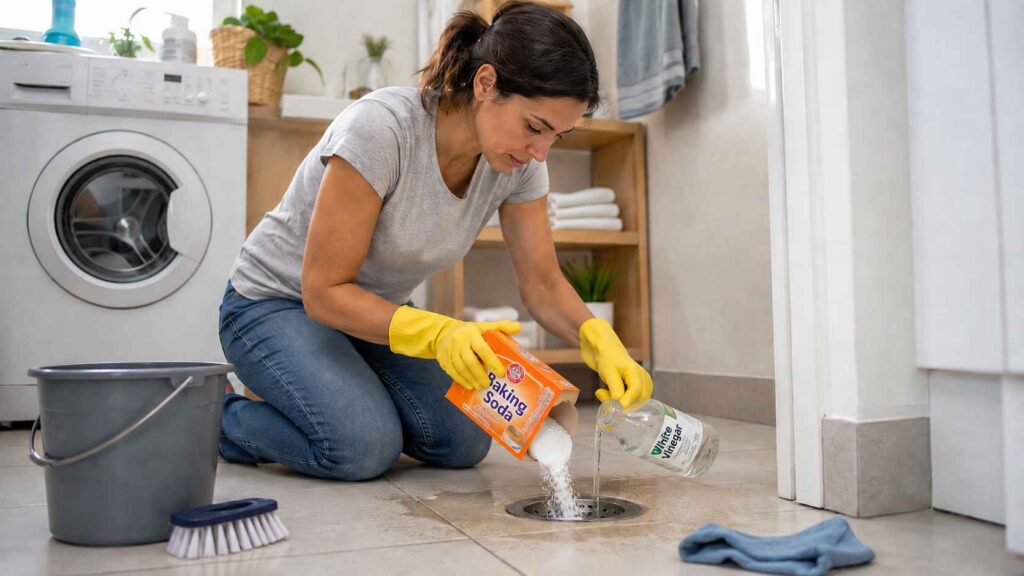
This method leverages the chemical reaction between an alkali (bicarb soda) and an acid (vinegar) to create carbon dioxide bubbles that lift grime and push debris downstream. It is gentle on pipes, non-toxic, and costs less than a couple of dollars (AUD) in pantry ingredients you likely already have at home. Follow these steps to get the best results and avoid common mistakes that waste time.
1. Remove the Drain Cover and Clear Surface Debris
Lift the grate or screw-on cover and pull out any visible hair, leaves, or lint by hand or with needle-nose pliers. Wipe the rim clean so debris does not fall back in during treatment. This step alone can improve flow if the blockage is shallow.
2. Pour One Litre of Hot Water Down the Drain
Heat a kettle of water until it steams but does not boil. Pour it slowly into the drain and let it sit for ten minutes. Hot water softens grease and soap scum, making them easier to dislodge. Avoid boiling water if you have PVC pipework or older rubber seals, as extreme heat can warp fittings.
3. Add a Full Box of Bicarb Soda
Tip an entire box — about 450 grams — of bicarb (baking) soda directly into the drain opening. Spread it evenly so it coats the trap and pipe walls. The alkaline powder begins to absorb odours immediately and prepares the surface for the acid reaction.
4. Follow With One Litre of White Vinegar
Pour roughly one litre of white vinegar into the drain. You will hear fizzing and see foam rising as carbon dioxide bubbles form. Let the mixture work for ten minutes without adding water. The agitation helps lift sticky residue and push small clogs toward the main line.
5. Flush With Another Litre of Hot Water
After the fizzing subsides, pour a second kettle of hot water down the drain to rinse away loosened debris. Run a tap or hose for a few minutes to confirm that water drains freely. If the flow is still slow, repeat the cycle once more or move to mechanical methods.
6. Test the Drain and Monitor for Odours
Fill a bucket and pour it quickly into the drain to simulate heavy runoff. Watch for pooling or gurgling sounds from nearby fixtures, which can indicate a partial blockage further down the line. If the smell returns within a day, the problem may lie in the sewer vent or trap seal.
7. Schedule a Professional Inspection if the Issue Persists
When natural treatments fail to restore normal flow, the blockage is likely beyond the trap — in the branch line, main sewer, or even the street connection maintained by Sydney Water. Our licensed plumbers arrive the same day with a CCTV camera to locate the obstruction, then explain your options: hydro-jetting for grease and scale, or pipe relining for cracks and root intrusion. We provide upfront pricing in AUD so you can choose the solution that fits your budget and timeline.
Alternative Natural Drain Cleaning Techniques
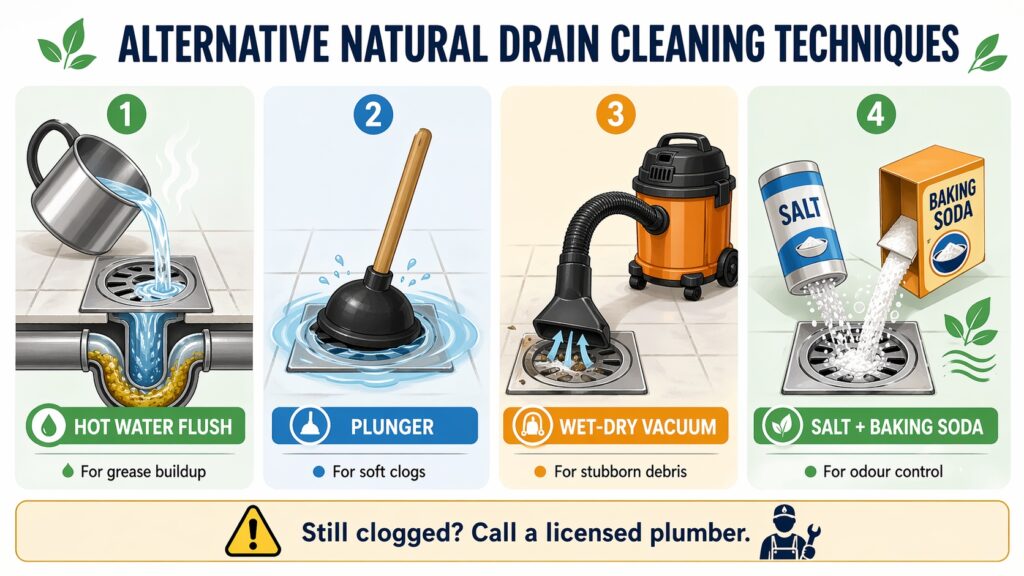
If bicarb soda and vinegar do not clear the blockage, you can try a few other low-cost, eco-friendly methods before reaching for chemical cleaners. Each technique targets a different type of obstruction, so match the tool to the symptom. Combining methods often yields better results than relying on one alone.
Hot Water Flush for Grease Buildup
Grease solidifies as it cools, coating pipe walls and trapping food particles or hair. A sustained flush of hot water can re-melt the fat and carry it downstream. Boil a large stockpot of water and pour it in a steady stream, not all at once, to maintain heat without shocking the pipe. Repeat every few weeks to prevent buildup in kitchen or laundry floor drains.
Plunger for Soft Clogs in the Trap
A standard cup plunger creates suction that dislodges hair balls and soap wads lodged in the U-bend. Remove the grate, add enough water to cover the plunger cup, and pump vigorously ten to fifteen times. If you hear a sucking sound and water drains quickly, the clog has moved. This method works best when the blockage is within arm’s reach of the opening.
Wet-Dry Vacuum for Stubborn Debris
A shop vacuum set to liquid mode can pull out objects that resist plunging — coins, bottle caps, clumps of lint. Remove the grate, seal the hose opening against the drain with a damp towel for suction, and run the vacuum on high for thirty seconds. Empty the canister and check for the obstruction. This technique is particularly useful in garage drains, where hardware and dirt accumulate.
Salt and Bicarb Soda Scrub for Odour Control
Mix half a cup of coarse salt with half a cup of bicarb soda and pour it into the drain. Let it sit overnight without adding water. The abrasive crystals scour pipe walls while the soda neutralises sulfur compounds. In the morning, flush with hot water. This method refreshes drains that smell but still flow normally, a sign that biofilm is building up in the trap.
When these natural techniques fail to restore full flow or the drain clogs again within days, the problem is deeper than surface buildup. Our team uses high-pressure water jetting to scour pipe interiors and CCTV cameras to identify cracks, root intrusion, or bellied sections. We explain what we find in plain English and provide clear options — repair, reline, or replace — so you can make an informed choice.
Comparing Natural Floor Cleaners and Professional Drain Solutions
Natural floor cleaners and professional drain solutions are very different in both purpose and results. Natural options are usually better for mild blockages and routine maintenance, while professional services are designed for serious, recurring, or deep pipe problems typical in older Sydney suburbs. Understanding the difference helps you choose the right solution without risking damage to your plumbing.
| Factor | Natural Floor Cleaners / DIY Solutions | Professional Drain Solutions |
|---|---|---|
| Main Purpose | Best for light buildup, routine maintenance, and minor drain slowdowns. | Best for stubborn clogs, recurring drainage issues, and deeper plumbing problems. |
| How They Work | Baking soda and vinegar use a mild reaction to loosen organic residue and surface-level buildup. | Hydro-jetting, CCTV inspection, and relining address the blockage directly and identify underlying pipe issues. |
| Effectiveness | Works well for mild clogs caused by soap scum, grease, or debris near the drain opening. | Much more effective for heavy blockages, tree roots, structural damage, or debris deeper in the pipe. |
| Pipe Safety | Generally safe for most household pipes when used correctly. | Safe when performed by licensed professionals using the right equipment and methods for the pipe condition. |
| Risk Level | Low risk compared to harsh chemical drain cleaners, but results are limited. | Low risk in expert hands and more reliable for older or damaged plumbing systems. |
| Cost | Very affordable and suitable for homeowners who want a simple first step. | Higher upfront cost, but often more cost-effective for long-term results and fewer repeat issues. |
| Long-Term Value | Good for maintenance, but may not solve the root cause of repeated blockages. | Better long-term value because professionals can diagnose, clear, and help prevent future problems. |
| Best Use Case | Mild blockages, preventive care, and first-attempt drain cleaning. | Severe clogs, recurring drain issues, heritage plumbing, and situations where DIY methods fail. |
Natural solutions are a good starting point when the blockage is minor and the drain is only slowing down. Professional drain solutions are the better choice when the problem keeps coming back, affects deeper parts of the system, or may involve pipe damage. Comparing the two shows that DIY methods are helpful for simple maintenance, while a licensed plumber delivers stronger and longer-lasting results.
When to Call a Licensed Plumber for Floor Drain Issues

Natural cleaning solutions and basic tools handle most minor clogs, but some symptoms point to problems that require professional diagnosis and repair under NSW plumbing regulations. Ignoring these warning signs can lead to sewage backups, structural damage, or health hazards from prolonged exposure to sewer gas. Anton’s Plumbing & Gas (NSW Lic. 210933C) is available 24/7 for emergencies, with same-day service across Sydney Metro and no call-out fee during weekday business hours.
Call us immediately if water backs up into multiple drains when you flush a toilet or run the washing machine. This indicates a main sewer line blockage that natural cleaners cannot reach. We use high-pressure hydro-jetting to clear tree roots, grease, and scale from shared pipes, restoring flow to all fixtures at once.
Persistent foul odours even after cleaning suggest a broken trap seal, cracked vent pipe, or biofilm deep in the line. Our CCTV cameras pinpoint the source so we can replace the faulty component or apply enzyme treatments that digest organic buildup without harsh chemicals.
Slow drainage that returns within days of treatment means the blockage is reforming or located beyond the trap. We inspect the branch line and main sewer to identify root intrusion, bellied sections, or collapsed clay pipes. Pipe relining creates a smooth, root-proof lining inside the old pipe, eliminating the need to dig up your driveway or garden.
Gurgling sounds from floor drains or toilets signal air trapped in the system, often caused by a blocked vent or partial sewer obstruction. Venting issues require roof access and compliance with AS/NZS 3500 plumbing standards, the same national code that applies here in NSW. Our licensed plumbers assess the entire drainage system, not just the visible symptoms, to deliver a lasting fix.
If you notice cracks in the concrete around the drain or damp patches on nearby walls, the pipe may be leaking underground. We use acoustic leak detection to locate the exact break point, then recommend repair or replacement based on the pipe material and extent of damage. In NSW, plumbing work must be carried out by a licensed practitioner — every job we complete is done to Australian Standards under Lic. 210933C, with clear documentation and upfront AUD pricing so you know what to expect. If in doubt, don’t keep pouring product down the drain — call a licensed Sydney plumber on 0493 824 176.
Real-World Example: Clearing a Garage Floor Drain in Sydney’s Inner West
A homeowner in the Inner West called us after their garage floor drain overflowed during a storm. They had tried pouring a Bunnings floor cleaner and then a supermarket drain gel down the grate, but water still pooled around the washing machine. The smell of sewer gas was noticeable even with the roller door open.
Our plumber arrived the same morning and ran a CCTV camera into the drain. The footage showed a dense mat of tree roots 12 metres downstream, where an old clay pipe had cracked under the driveway. The roots had caught lint, leaves, and soap scum, forming a solid plug. No amount of bicarb soda or chemical cleaner would dissolve that obstruction.
We explained two options: excavate the driveway to replace the cracked section, or reline the pipe without digging. The homeowner chose relining to avoid the cost and disruption of concrete removal. We jetted the line to clear roots and debris, then inserted a resin liner and cured it in place. The entire job took four hours, and the drain has flowed freely ever since. We backed the work with our lifetime labour warranty, giving the homeowner confidence that the repair will outlast the property.
This case illustrates why persistent clogs need professional diagnosis. DIY methods work for surface buildup, but structural damage and root intrusion require equipment and expertise that only a licensed plumber can provide.
How Antons Plumbing & Gas Solves Persistent Floor Drain Problems

When DIY methods fall short, our licensed team (NSW Lic. 210933C) brings more than 25 years of experience and advanced equipment to diagnose and fix the root cause. We do not guess or apply one-size-fits-all solutions. Instead, we inspect, explain, and offer tailored options that match your property, budget, and timeline.
Our CCTV drain cameras travel through your pipes to reveal cracks, root masses, and scale buildup in real time. You watch the footage with us and see exactly what is blocking flow. We record the inspection and provide a digital report for strata managers, insurance claims, or future reference.
High-pressure water jetting cuts through grease, concrete slurry, and tree roots without damaging pipe walls. The adjustable nozzle reaches up to 100 metres into the line, clearing blockages that manual snakes cannot touch. We flush debris to the main sewer and test flow before we leave, so you know the job is done right.
Pipe relining is a no-dig alternative to excavation when pipes are cracked or root-damaged. We insert a resin-coated liner into the old pipe, inflate it to fit snugly, and cure it in place with UV light or hot water. The result is a seamless, corrosion-resistant pipe inside the old one, backed by our lifetime labour warranty. This method saves your landscaping, driveways, and weeks of disruption.
We also test and certify backflow prevention devices to comply with Sydney Water regulations. Floor drains in commercial kitchens, medical centres, and strata buildings require annual testing to prevent contaminated water from flowing back into the mains. Our licensed plumbers complete the test, tag the device, and lodge compliance certificates with Sydney Water.
Every repair is completed to AS/NZS 3500 standards, with quality parts from trusted brands and a clean workspace when we finish. We turn up on time, communicate in plain English, and respect your home or business. If you need urgent help, call 0493 824 176 (+61 493 824 176) any time — day or night — for 24/7 emergency response across the Inner West, Eastern Suburbs, North Shore, Northern Beaches, Hills District, Western Sydney, South-Western Sydney, and Sutherland Shire.
Conclusion
Natural cleaning solutions keep floor drains clear when used correctly and regularly. Bicarb soda, vinegar, and hot water dissolve organic buildup, neutralise odours, and cost only a few dollars (AUD). For deeper blockages or recurring issues, our licensed team (NSW Lic. 210933C) delivers same-day CCTV inspections, hydro-jetting, and pipe relining across Sydney — backed by upfront AUD pricing, a lifetime labour warranty, and a commitment to workmanship you can trust.
Antons Plumbing & Gas offers expert blocked drain solutions backed by 25 years of experience. Our licensed team provides same-day service across Sydney with upfront pricing. Learn more about our comprehensive drain services today.
Related Articles
- How to Unclog a Floor Drain Using Simple Household Tools
- 5 Common Reasons Your Floor Drain Is Not Draining Properly
- How to Clear a Floor Drain With Standing Water Quickly and Safely
FAQs
What Are Natural Cleaning Solutions For Floor Drains?
Natural cleaning solutions for floor drains typically include ingredients like bicarb soda, vinegar, and salt. These substances can help break down clogs and eliminate odours without the use of harsh chemicals.
How Do You Clear A Floor Drain With Bicarb Soda And Vinegar?
To clear a floor drain using bicarb soda and vinegar, first pour about half a cup of bicarb soda down the drain. Follow it with half a cup of vinegar. Allow the mixture to fizz and sit for about 30 minutes, then flush the drain with hot water to clear any debris. For persistent issues, consider calling our experienced team at Antons Plumbing & Gas.
Can You Use Salt To Clean A Floor Drain?
Yes, salt can be effective in cleaning a floor drain. Mixing salt with hot water can help break down grease and grime. Pour the solution down the drain and let it sit for a few hours before rinsing with hot water. If you encounter recurring problems, our expert, licensed plumbers can provide thorough inspections and professional solutions.
How Often Should You Clean Floor Drains?
It’s recommended to clean floor drains at least once a month to prevent clogs and odours. Regular maintenance can save you from costly repairs down the line. If you need assistance or advice, our qualified team at Antons Plumbing & Gas is here to help.
What If Natural Solutions Don’t Work?
If natural cleaning solutions don’t resolve the issue, it may indicate a more serious blockage or plumbing problem. In such cases, it’s best to consult a professional. Antons Plumbing & Gas offers comprehensive services, including CCTV inspections and drain clearing, ensuring your plumbing issues are addressed effectively.
Is Antons Plumbing & Gas Licensed To Work In Sydney and NSW?
Yes. Antons Plumbing & Gas holds NSW Lic. 210933C and every drain repair, from a simple floor drain clear to full pipe relining, is carried out to AS/NZS 3500 standards and NSW regulations. Ask for our licence number when you book if you’d like it confirmed.
How Much Does It Cost To Have A Sydney Plumber Clear A Floor Drain?
Costs depend on the cause and severity of the blockage, which is why we provide upfront pricing in AUD before any work begins — no surprises on the invoice. Call 0493 824 176 or book online and we’ll quote you on the spot after inspection.
Do You Offer Same-Day Floor Drain Service In Sydney?
Yes, we offer same-day service across Sydney Metro, including the Inner West, Eastern Suburbs, North Shore, Northern Beaches, Hills District, Western Sydney, South-Western Sydney, and Sutherland Shire. Call 0493 824 176 to check availability in your suburb today.
Can You Fix A Floor Drain That Keeps Blocking After I’ve Tried Bicarb And Vinegar?
Yes. Recurring blockages after DIY treatment usually point to tree roots, a cracked pipe, or a deeper sewer issue. We run a CCTV inspection to find the exact cause and recommend hydro-jetting or pipe relining as needed. Contact us to book an inspection.
Do You Provide 24/7 Emergency Plumbing For Overflowing Floor Drains?
Yes, Antons Plumbing & Gas offers 24/7 emergency response across Sydney. If your floor drain is overflowing or backing up right now, call 0493 824 176 immediately rather than waiting.
What Happens During A CCTV Drain Inspection?
We feed a waterproof camera into the drain to locate blockages, cracks, or root intrusion in real time. You can view the footage with us, and we provide a digital report — useful for strata managers or insurance claims. Learn more about our CCTV inspections or book one directly.
How Do I Book A Plumber For A Blocked Floor Drain In Sydney?
You can book online or call 0493 824 176 directly. We’ll ask a few quick questions about the symptoms so we can bring the right equipment on the first visit.
Do You Provide Upfront Pricing Before Starting Work?
Yes, every job comes with clear, upfront pricing in AUD once we’ve inspected the drain, so you can approve the cost before any work begins — no hidden fees.
Can A Blocked Floor Drain Affect My Sydney Water Compliance?
It can, particularly for commercial kitchens, medical centres, and strata properties that require backflow prevention devices tested annually. We test, tag, and lodge compliance certificates with Sydney Water on your behalf — ask us about backflow testing.
What If My Floor Drain Is In A Strata Building?
We regularly work with strata managers and owners’ corporations across Sydney. We provide CCTV footage and written reports that strata committees can use for approvals or insurance purposes. Contact us to arrange an inspection for your building.
Do You Offer Pipe Relining Instead Of Digging Up My Driveway Or Garden?
Yes, pipe relining is a no-dig option for cracked or root-damaged pipes, backed by our lifetime labour warranty. It’s often cheaper and faster than excavation. Ask us to assess whether your pipe is a suitable candidate.
How Quickly Can A Plumber Attend To An Overflowing Floor Drain?
We offer same-day service across Sydney Metro and 24/7 emergency callouts for urgent issues like overflowing drains or sewage backup. Call 0493 824 176 now for the fastest response.
Is DIY Drain Cleaning Safe For Older Sydney Homes With Heritage Plumbing?
Bicarb soda and vinegar are generally safe, but boiling water and harsh chemical cleaners can damage older clay, cast-iron, or ageing PVC pipework common in heritage Sydney homes. If you’re unsure, it’s safer to have a licensed plumber assess the pipe material first.
What Areas Of Sydney Do You Cover For Floor Drain Repairs?
We service the Inner West, Eastern Suburbs, North Shore, Northern Beaches, Hills District, Western Sydney, South-Western Sydney, and Sutherland Shire. Check our suburb pages or call 0493 824 176 to confirm coverage for your address.
Do You Provide Warranties On Floor Drain Repairs?
Yes, our pipe relining and major repair work is backed by a lifetime labour warranty, and every job is completed to AS/NZS 3500 standards under NSW Lic. 210933C. Ask us for the details relevant to your job when you book.