

Knowing how to clear a floor drain with standing water is important when water starts pooling in your laundry, basement, garage or bathroom. Standing water can indicate a blockage caused by debris, grease or tree roots and may lead to flooding, structural damage and mould growth if left untreated. Address the problem promptly to prevent water from backing up into your home.
This guide walks you through safe, practical steps to clear a floor drain with standing water. You’ll learn what causes these blockages, how to tackle them yourself, and when to call in licensed professionals for root-cause diagnosis and lasting repairs.
Key Takeaways
- Standing water in floor drains often results from sediment buildup, grease, hair, or external tree-root intrusion, which is common in older Sydney homes with clay or cast-iron pipework.
- Remove excess water first to prevent mould and make access safer.
- Boiling water, bicarb soda, vinegar, plungers, and manual augers can clear minor clogs.
- Persistent blockages or foul odours may indicate deeper pipe damage requiring CCTV inspection.
- Licensed plumbers use high-pressure hydro jetting and pipe relining to restore flow without excavation.
- Same-day emergency service is available across Sydney Metro with no call-out fee from 7 a.m. to 3 p.m. weekdays.
- If DIY steps don’t work, or you notice sewage smells or repeated backups, call a licensed Sydney plumber — Anton’s Plumbing & Gas holds NSW Lic. 210933C and is on call 24/7.
Quick Answers: To clear a floor drain with standing water, first remove as much water as possible, take off the drain cover and remove visible debris. Then use a plunger, wet-and-dry vacuum or drain snake to break up the blockage. Flush the drain with hot water and stop if the water backs up again or sewage is present — that’s the point to call a licensed Sydney plumber (NSW Lic. 210933C) on +61 493 824 176.
How to Clear a Floor Drain With Standing Water: Step-by-Step
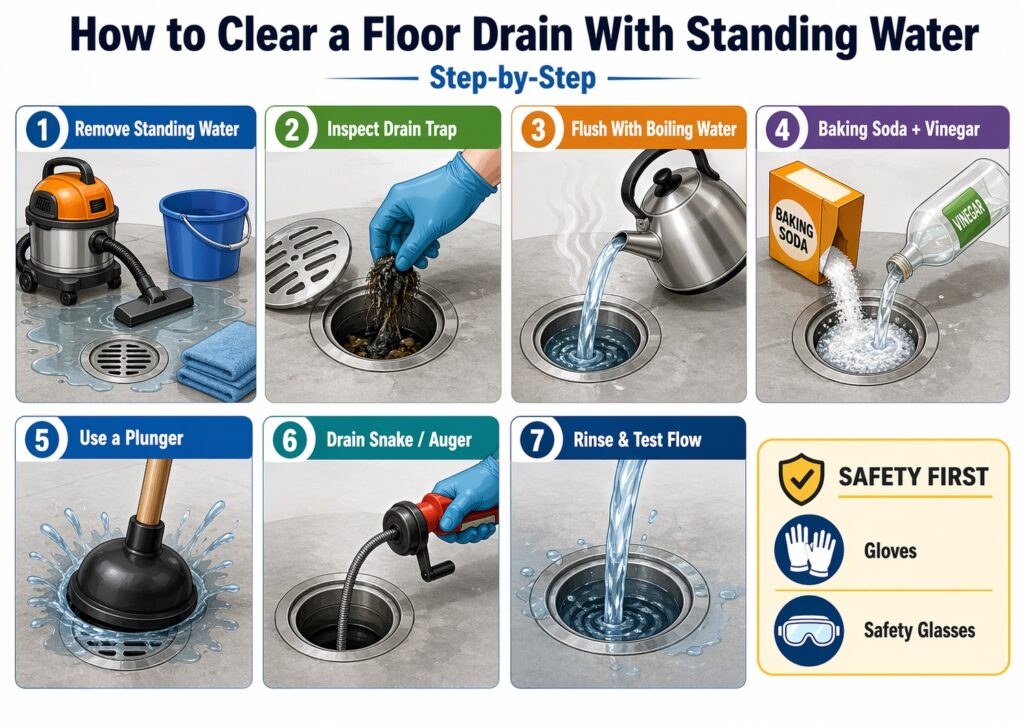
Tackling a blocked floor drain starts with safety and preparation. Before you begin, put on rubber gloves and safety glasses. Clear the area of stored items and lay down old towels to catch splashes.
Follow these steps to restore flow and eliminate standing water safely.
1. Remove Excess Standing Water
Use a wet-and-dry vacuum, bucket, or absorbent towels to extract as much water as possible. This reduces mess, prevents mould spores from spreading, and gives you clear access to the drain grate and trap.
2. Lift the Drain Grate and Inspect the Trap
Unscrew or pry up the metal or plastic grate covering the drain. Check the visible trap for hair, debris, or sediment. Scoop out any solid material by hand or with a small scoop, then wipe the grate and trap edges clean.
3. Flush With Boiling Water
Boil a kettle and pour the hot water slowly down the drain in two or three stages. The heat helps dissolve soap scum, grease, and organic buildup clinging to pipe walls. Wait a few minutes between pours to let the water work through the system.
4. Apply Bicarb Soda and Vinegar
Pour half a cup of bicarbonate of soda into the drain, followed by one cup of white vinegar. The fizzing reaction breaks down light blockages and deodorises the pipe. Let it sit for 10 to 15 minutes, then flush again with boiling water.
5. Use a Plunger to Dislodge the Clog
Coat the rim of a cup plunger with petroleum jelly to create an airtight seal. Fill the drain with a few centimetres of water, position the plunger over the opening, and pump vigorously for 20 to 30 seconds. The pressure and suction can shift stubborn debris deeper in the line.
6. Feed a Manual Drain Snake or Auger
If plunging fails, insert a hand-crank auger or electric drain snake into the pipe. Turn the handle clockwise as you push the cable forward, breaking up or hooking the blockage. Retract the snake slowly, flush with water, and repeat if needed.
7. Rinse and Test the Flow
Once the water drains freely, run a steady stream from a hose or tap for several minutes. Watch for slow drainage or gurgling, which may indicate a partial obstruction further down the line.
Why Floor Drains Develop Standing Water
Floor drains are designed to carry wastewater away from wet areas and prevent flooding. When water sits instead of draining, something is blocking the pipe or trap. Understanding the root cause helps you choose the right clearing method and avoid repeat blockages.
Common culprits include soap scum, hair, lint, grease, sand, and organic debris that accumulate over time. In older Sydney homes with clay or cast-iron pipes, tree roots can infiltrate cracks and form dense obstructions.
Heavy rain can also overwhelm stormwater drains, causing backflow into floor drains if the system is undersized or poorly installed. Poor fall or incorrect trap installation may leave water sitting even when the pipe is clear. Any work connecting to or altering a sewer or stormwater line in NSW should meet Sydney Water requirements and be carried out by a licensed plumber.
Common Causes of Floor Drain Blockages in Sydney Homes
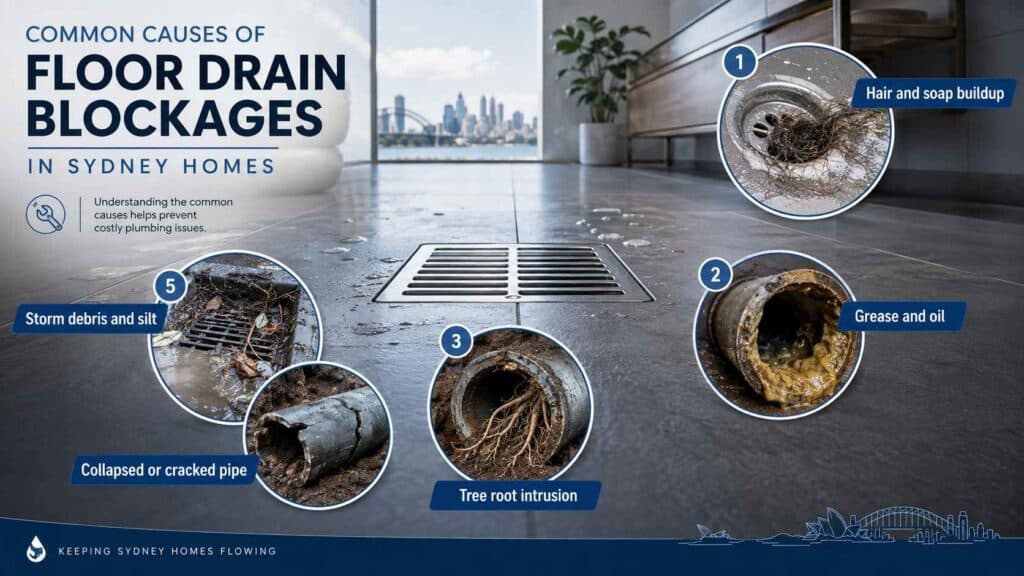
Sydney’s mix of heritage homes, modern developments, and coastal soil creates unique plumbing challenges. Clay pipes installed decades ago are prone to root intrusion, especially from large gum trees and figs. Coastal sand and silt can wash into stormwater drains during heavy rain, forming hard clogs.
| Cause | Symptoms | Best Solution |
|---|---|---|
| Hair and soap buildup | Slow drainage, standing water | Manual snake, boiling water, regular cleaning |
| Grease and oil | Foul odor, thick residue | Hydro jetting, enzyme treatment |
| Tree root intrusion | Recurring blockages, gurgling | CCTV inspection, pipe relining |
| Collapsed or cracked pipe | Persistent pooling, wet patches | Camera diagnosis, excavation or relining |
| Storm debris and silt | Sudden blockage after rain | High-pressure jetting, stormwater audit |
Grease from laundry detergents, cooking oil, and soap combines with lint and hair to coat pipe walls. Over time, this layer narrows the pipe diameter and traps debris. Homes with combined sewer and stormwater systems are at higher risk of backflow during storm events.
Poor installation or DIY repairs can leave traps without proper venting, causing slow drainage and foul smells. If your floor drain gurgles when you flush a toilet or run a washing machine, the system may be undersized or incorrectly plumbed against Australian Standards.
When DIY Methods Aren’t Enough
Home remedies work well for surface-level clogs caused by hair, soap, or light sediment. But some blockages lie beyond the reach of plungers and hand augers. If water continues to pool, drains slowly, or smells foul, the problem may be deeper in your sewer or stormwater line.
Tree roots, collapsed pipes, or heavy grease buildup require professional-grade equipment. Forcing a snake too far or using harsh chemicals can damage old pipes and void insurance claims.
Our team uses CCTV drain cameras to pinpoint the exact location and nature of the blockage. We then clear the line with high-pressure hydro jetting or recommend pipe relining if the pipe is cracked or root-damaged. Every job is backed by a lifetime labour warranty, so you can trust the repair will last.
Professional Drain Clearing: What to Expect
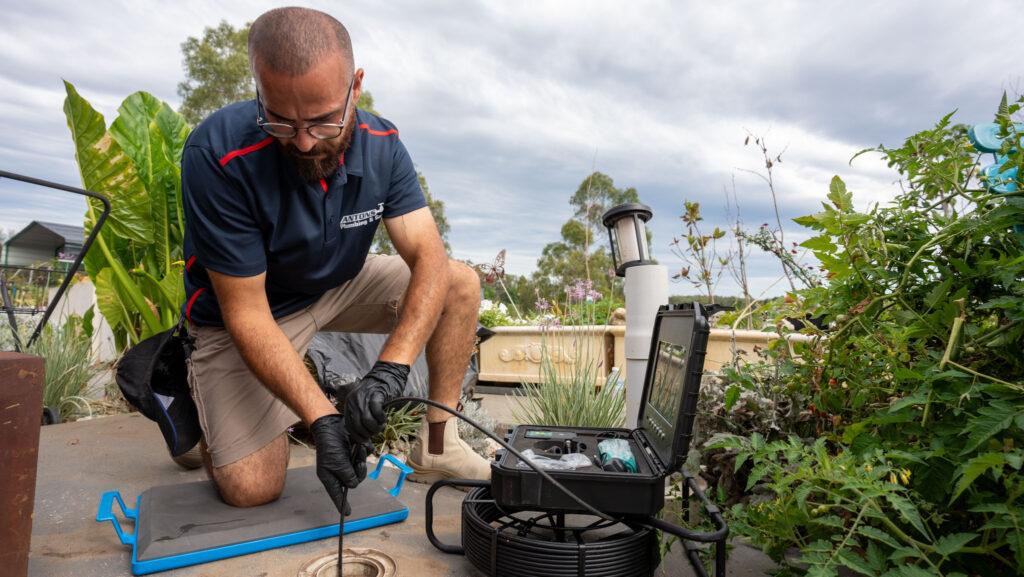
When you call our team for a blocked floor drain, we arrive the same day across Sydney Metro. There’s no call-out fee from 7 a.m. to 3 p.m. on weekdays, and our 24/7 emergency service means help is available any time you need it.
Our process starts with a clear diagnosis, not guesswork. We inspect the drain, ask about recent symptoms, and use a CCTV camera to view the inside of your pipes in real time.
CCTV Drain Inspection
A small waterproof camera on a flexible cable travels through your drain line, transmitting live video to a monitor. We can see cracks, root masses, grease buildup, and collapsed sections without digging. The footage is recorded and shared with you, so you understand exactly what’s wrong and why.
High-Pressure Hydro Jetting
For heavy blockages, we use a high-pressure water jet that scours pipe walls clean. The force cuts through grease, roots, and scale, restoring full flow without damaging the pipe. Hydro jetting is safe for PVC, clay, and cast-iron lines when performed by licensed professionals.
Pipe Relining for Permanent Repairs
If the camera reveals cracks, root damage, or corrosion, we may recommend pipe relining. A resin-soaked liner is inserted into the existing pipe and inflated to form a new, seamless inner surface. Once cured, the liner is stronger than the original pipe and stops root intrusion for decades. No excavation, no lawn damage, and no extended downtime.
Upfront Pricing and Compliance
Before we start any work, you receive a clear quote with fixed pricing in AUD. We explain your options, outline the pros and cons, and let you decide. Every repair meets AS/NZS 3500 plumbing standards and Sydney Water requirements for sewer and stormwater connections, and we document our findings for strata managers, insurers, or future buyers.
Preventing Future Floor Drain Blockages
Once your floor drain is flowing freely, a few simple habits can keep it that way. Regular maintenance costs less than emergency call-outs and protects your home from water damage.
- Flush drains monthly with boiling water to dissolve soap and grease before they harden.
- Install drain strainers in laundry, bathroom, and garage floor drains to catch hair, lint, and debris.
- Avoid pouring oil or grease down any drain; let it cool and dispose of it in the bin.
- Trim tree roots near sewer and stormwater lines, especially large natives that seek moisture.
- Schedule annual CCTV inspections if your home has clay pipes, a history of blockages, or mature trees.
- Check stormwater grates after heavy rain and clear leaves, sand, and debris to prevent backflow, especially important given Sydney’s storm season.
For strata properties, backflow prevention devices and regular drain audits are essential to protect multiple units and meet NSW compliance requirements. We provide clear reports, test tags, and scheduled maintenance plans tailored to your building.
Why Choose Licensed Plumbers for Drain Blockages

DIY clearing works for minor clogs, but persistent or recurring blockages need professional diagnosis. Unlicensed operators may clear the symptom without addressing the root cause, leaving you with repeat call-outs and mounting costs.
Our plumbers hold full NSW licensing (Lic: 210933C) and carry current insurance for plumbing and gas fitting. We comply with NSW Fair Trading regulations and Australian Standards, so your work is legal, safe, and warrantied. Every repair is documented, and we leave your property clean and tidy.
We don’t use scare tactics or push unnecessary services. If a simple flush will do the job, we’ll tell you. If you need pipe relining or replacement, we’ll explain why, show you the camera footage, and give you time to decide. If you’re ever unsure whether a job is DIY-safe, call a licensed Sydney plumber before you start — it’s the safest way to avoid making a small blockage into an expensive repair.
Signs You Need Emergency Drain Service
Some drain problems can wait until morning. Others demand immediate action to prevent flooding, sewage backup, or structural damage. Call for emergency service if you notice any of these warning signs.
- Water rising in multiple drains when you flush a toilet or run a tap, indicating a main-line blockage.
- Sewage odour inside your home, suggesting a blocked vent or broken sewer pipe.
- Wet patches or subsidence in your garden, pointing to a collapsed or leaking underground line.
- Gurgling sounds from floor drains, toilets, or sinks, caused by trapped air from a partial blockage.
- Overflowing floor drains during rain, which may indicate stormwater system failure.
Our 24/7 emergency team responds across Sydney with fully equipped vans, CCTV cameras, and hydro jetters. We diagnose the issue on-site, provide a clear quote in AUD, and restore flow fast. Same-day service is standard, and we back every job with a lifetime labour warranty.
Conclusion
Clearing a floor drain with standing water starts with simple steps like removing debris, flushing with boiling water, and using a plunger or snake. When DIY methods fail, professional CCTV inspection, hydro jetting, and pipe relining deliver lasting results. Call 0493 824 176 for same-day service across Sydney, backed by licensed expertise (NSW Lic. 210933C) and a lifetime labour warranty.
Antons Plumbing & Gas specialises in blocked drains and CCTV inspections across Sydney Metro. Our licensed team provides same-day service with upfront pricing and no call-out fee. Get started today at 0493 824 176.
Related Articles
- How to Clear a Floor Drain Using Natural Cleaning Solutions
- How to Unclog a Floor Drain Using Simple Household Tools
- How to Clean Floor Drain: A Simple Guide for Homeowners
FAQs
How do you unclog a floor drain with standing water?
Remove as much standing water as possible, then take off the drain cover and clear away visible hair, dirt or debris. Use a plunger, wet-and-dry vacuum or drain snake to loosen the blockage, then flush the drain with hot tap water. If the water rises again, several fixtures are blocked or sewage is present, contact Antons Plumbing & Gas for professional drain clearing.
Why is there standing water in my basement floor drain?
Standing water in a basement floor drain may be caused by a local blockage, a partially blocked sewer line or poor drainage around the property. A small amount of water may also remain inside the drain trap to stop sewer gases entering the building. If the water sits above the normal trap level, smells unpleasant or appears alongside slow drains, Antons Plumbing & Gas can inspect the drainage system and identify the cause.
Can I plunge a floor drain?
Yes. Plunging can help when the blockage is close to the floor drain opening. Remove the grate, place the plunger firmly over the drain and use several controlled plunges to create suction. If the blockage does not clear or the drain quickly backs up again, contact Antons Plumbing & Gas rather than repeatedly forcing the obstruction farther into the pipe.
Can I pour boiling water down a floor drain?
Avoid pouring boiling water directly into a floor drain, especially if the drainage system contains PVC or older pipework. Extreme heat may damage pipes, seals or joints. Use hot tap water instead. Hot water may loosen light soap or grease buildup, but solid objects, tree roots and major blockages may require professional clearing by Antons Plumbing & Gas.
Why does my floor drain keep backing up?
A floor drain may keep backing up because of a recurring blockage, damaged pipework, tree-root intrusion or a restriction in the main sewer line. If the drain backs up when a toilet, shower or washing machine is used, the problem is likely farther along the drainage system. Antons Plumbing & Gas can inspect the pipework and recommend a longer-lasting solution instead of another temporary fix.
When does standing water indicate a sewer blockage?
Standing water may indicate a sewer blockage when several drains are slow, toilets gurgle, wastewater returns through the floor drain or there is a strong sewage smell. The risk is higher when the water level rises as other fixtures are used. Stop using water in the property and contact Antons Plumbing & Gas promptly if sewage is backing up indoors.
How much does it cost to clear a blocked floor drain in Sydney?
Cost depends on the location and severity of the blockage, and whether hydro jetting, CCTV inspection or pipe relining is needed. We provide a clear, fixed-price quote in AUD before any work begins, with no obligation to proceed. Call 0493 824 176 for an on-the-spot quote.
Do you charge a call-out fee?
There’s no call-out fee for jobs booked between 7 a.m. and 3 p.m. on weekdays. Ask our team about after-hours and weekend rates when you book your appointment.
Is Antons Plumbing & Gas licensed to work in NSW?
Yes. We hold full NSW plumbing and gas fitting licensing (Lic: 210933C) and current insurance, and every job complies with AS/NZS 3500 standards and NSW Fair Trading requirements. Ask to see our licence details before work begins if you’d like to check.
Do you offer emergency plumbing service outside business hours?
Yes, our emergency team is available 24/7 across Sydney Metro for urgent issues like sewage backup, overflowing floor drains or main-line blockages. Call 0493 824 176 any time and we’ll dispatch a licensed plumber.
Which Sydney suburbs do you service?
We service Sydney Metro and surrounding suburbs, including areas like Blacktown, Penrith, Cremorne, Seaforth, Hebersham and the Northern Beaches. Call us or check our suburb pages to confirm coverage for your address.
Do I need Sydney Water approval to repair a blocked floor drain?
Most floor drain clearing jobs don’t require separate Sydney Water approval, but any alterations to sewer or stormwater connections must comply with Sydney Water requirements and be carried out by a licensed plumber. We handle compliance as part of the job so you don’t have to navigate it yourself.
Will you provide a written quote before starting work?
Yes. We always provide a clear, fixed-price quote before starting any work, so you know the cost upfront with no surprises. You decide whether to proceed once you’ve seen the diagnosis and price.
Do you offer a warranty on drain clearing and pipe relining?
Yes, every job we complete, including drain clearing and pipe relining, is backed by a lifetime labour warranty, giving you confidence the repair will last.
How do I book a plumber for a blocked floor drain?
You can book online through our contact page or call 0493 824 176 directly. Same-day appointments are available across Sydney Metro, and our team will confirm arrival time and next steps when you call.
What can I expect during a CCTV drain inspection visit?
A licensed plumber will feed a waterproof camera through your drain line, showing live footage of any cracks, root intrusion or blockages on a monitor. You’ll receive a recording and a clear explanation of the issue and recommended fix, with pricing before we proceed.
Is hydro jetting safe for older Sydney homes with clay or cast-iron pipes?
Yes, when performed by a licensed plumber, hydro jetting is safe for PVC, clay and cast-iron pipework. We assess your pipe condition via CCTV first to confirm jetting is appropriate before starting, protecting older Sydney plumbing from unnecessary damage.
Can a blocked floor drain affect my strata building’s compliance?
Yes, recurring blockages or backflow in shared drainage can create compliance issues for strata buildings. We provide inspection reports, test tags and maintenance schedules that strata managers can use to demonstrate compliance and protect residents.
How quickly can you respond to a plumbing emergency in Sydney?
Our 24/7 emergency team aims to respond the same day across Sydney Metro, with fully equipped vans carrying CCTV cameras and hydro jetting equipment ready to diagnose and fix the issue on the first visit.
What should I do while waiting for the plumber to arrive?
Stop using water in fixtures connected to the affected drain, mop up standing water to reduce damage, and avoid pouring any more chemicals or hot water into the drain. If sewage is present, keep children and pets away from the area until our licensed plumber arrives.