

If you need to know how to get oil out of a sink drain, start with safe methods that break down grease without damaging your plumbing. Warm water, dish soap, bicarb soda (baking soda), vinegar and gentle plunging can help loosen fresh oil build-up before it hardens deeper in the pipe.
Avoid pouring boiling water or harsh chemical drain cleaners into the sink, especially if you have PVC pipes or an older Sydney home. Under Sydney Water’s trade waste rules, cooking oil and fats should never go down the sink or into stormwater drains — it’s one of the leading causes of blocked sewer mains across NSW. This guide explains what to do after oil goes down the drain, which methods are safest, and when to call Anton’s Plumbing & Gas (NSW Lic. 210933C) for professional blocked drain service.
Key Takeaways
- Hot water alone may melt grease temporarily but often causes it to harden further down the pipe.
- Bicarb soda and vinegar create a fizzing reaction that helps break down light oil build-up without harsh chemicals.
- Dish soap acts as a surfactant to emulsify grease, making it easier to flush away with warm water.
- Plungers and drain snakes provide mechanical force to dislodge stubborn clogs when home remedies fall short.
- Avoid chemical drain cleaners on oil blockages — they generate heat that can warp pipes and rarely dissolve solidified fats, and many older Sydney homes still have earthenware or ageing PVC pipework that’s sensitive to both heat and caustic chemicals.
- Professional CCTV drain inspection identifies the exact location and severity of grease build-up for targeted treatment.
How to Get Oil Out of Sink Drain Using Safe Household Methods
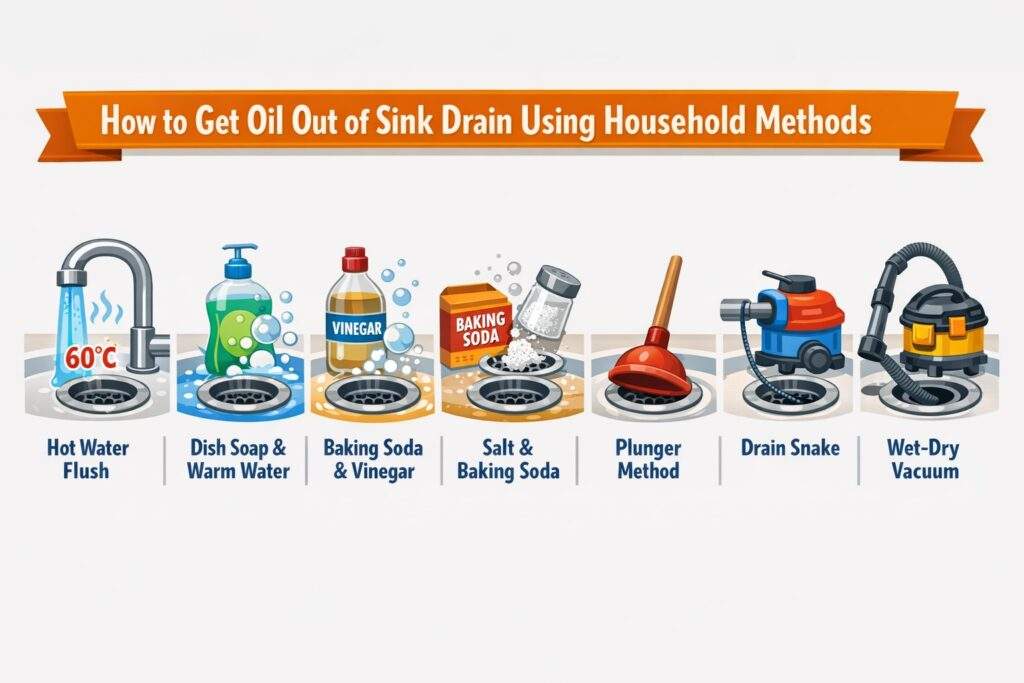
Most oil-related clogs start in the kitchen sink, where cooking fats, butter and salad dressings wash down during dishwashing. The first sign is usually slow drainage — water pools in the basin and takes minutes to disappear. Before you reach for commercial drain cleaners, try these safer, pipe-friendly techniques that work with the chemistry of grease and oil.
To get oil out of a sink drain, pour liquid dish soap into the drain, wait a few minutes, then flush it with warm water. For light grease build-up, bicarb soda and vinegar may help loosen residue, but avoid boiling water and chemical drain cleaners because they can damage pipes or push the oil clog deeper into the plumbing system.
1. Hot (Not Boiling) Water Flush
Pour hot tap water — around 60°C — down the drain for two to three minutes. This temperature softens grease without risking thermal shock to PVC pipes, which can warp or crack above 80°C. Let the water run steadily to create continuous flow that carries softened oil toward the main sewer line.
2. Dish Soap and Warm Water
Squirt a generous amount of liquid dish soap directly into the drain, then follow with a slow stream of warm water. Dish soap contains surfactants that break oil into tiny droplets, allowing water to wash them away. Repeat this process two or three times, waiting five minutes between flushes to let the soap penetrate the grease layer.
3. Bicarb Soda and Vinegar Reaction
Pour one cup of bicarb soda down the drain, followed by one cup of white vinegar. The fizzing reaction helps lift grease from pipe walls and creates mild pressure that can dislodge light clogs. Wait fifteen minutes, then flush with hot tap water for several minutes to clear loosened debris.
4. Salt and Bicarb Soda Scrub
Mix half a cup of table salt with half a cup of bicarb soda and pour it into the drain. Let it sit for at least four hours or overnight — the abrasive texture helps scrub pipe walls while the alkaline bicarb breaks down acidic food residues. Flush with hot water in the morning.
5. Plunger for Mechanical Pressure
Fill the sink with enough water to cover the plunger cup, then place the plunger over the drain opening. Push down firmly and pull up sharply ten to fifteen times to create suction and pressure waves that can break up soft grease clogs. This works best when combined with dish soap or bicarb soda treatments.
6. Drain Snake for Deep Clogs
If water still drains slowly after trying the above methods, insert a hand-crank drain snake into the opening. Push it gently until you feel resistance, then rotate the handle to hook or break apart the clog. Pull the snake out slowly — you’ll often retrieve a dark, greasy mass mixed with food particles and hair.
7. Wet-Dry Vacuum Extraction
Set a wet-dry vacuum to liquid mode and create a tight seal over the drain opening using a damp cloth or rubber adapter. Turn the vacuum to maximum suction for twenty to thirty seconds. This method can pull loose clogs up and out, especially when the blockage sits close to the drain opening.
Each method targets a different stage of the blockage. Some dissolve the oil, others emulsify it, and a few rely on mechanical action to break it free. If none of these clear the sink, it’s time to call a licensed Sydney plumber rather than risk your pipework.
What Not to Do When Getting Oil Out of a Sink Drain
Some widely shared remedies do more harm than good. Understanding why certain methods fail helps you avoid expensive pipe repairs and protects your plumbing system from long-term damage. Sydney homes often have a mix of old earthenware pipes and modern PVC, so aggressive treatments can cause leaks or joint failures.
Here are the most common mistakes we see as a licensed NSW plumbing team responding to blocked drain emergencies across the Inner West, Eastern Suburbs, and North Shore.
- Pouring boiling water into PVC pipes: Water above 80°C can soften PVC joints and cause them to warp or separate. While metal pipes tolerate higher temperatures, most kitchen sinks connect to PVC drainage lines within a metre of the trap.
- Using chemical drain cleaners on grease clogs: These products generate intense heat through chemical reactions, but they rarely dissolve solidified fats. Instead, they can melt pipe glue, corrode metal fittings, and create toxic fumes when mixed with standing water.
- Ignoring slow drainage: A partially blocked drain will worsen over time as more oil, soap scum and debris accumulate. What starts as a minor inconvenience often becomes a complete blockage that backs up into your sink or dishwasher.
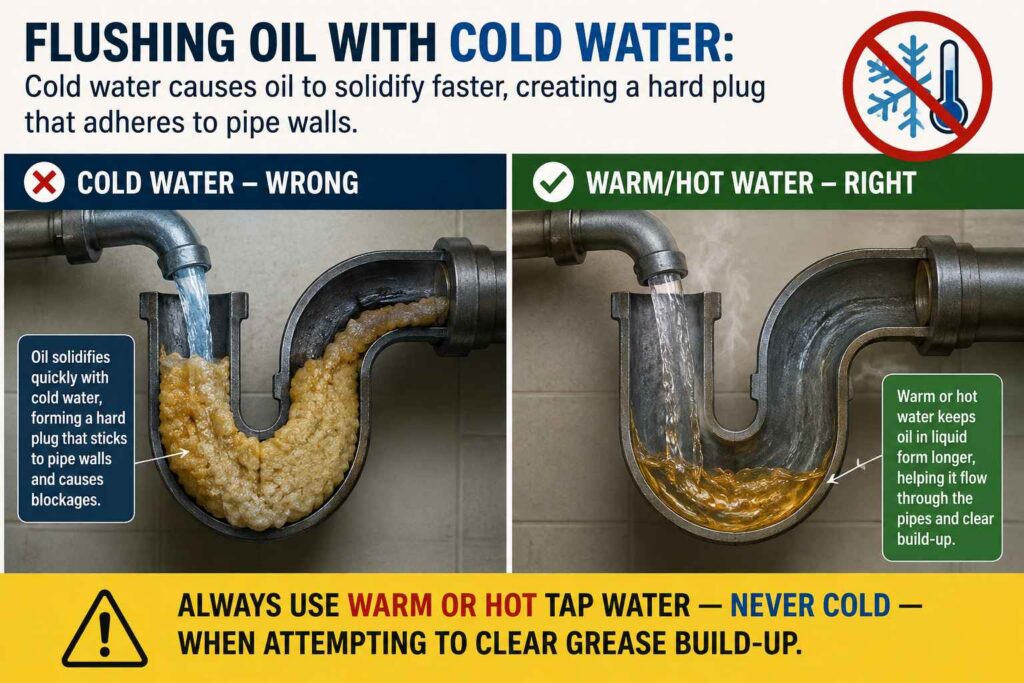
- Flushing oil with cold water: Cold water causes oil to solidify faster, creating a hard plug that adheres to pipe walls. Always use warm or hot tap water — never cold — when attempting to clear grease build-up.
- Over-relying on home remedies for recurring clogs: If your sink blocks repeatedly despite regular cleaning, the problem likely sits deeper in your drainage system. Tree roots, collapsed pipes, or incorrect fall can trap grease in low spots where home treatments can’t reach.
We respond to dozens of drain emergencies each week across Sydney where homeowners have unknowingly worsened a simple grease clog by using harsh chemicals or boiling water. Same-day service means we can assess the damage, clear the blockage safely, and advise on prevention before the problem spreads to other fixtures — all in line with NSW plumbing regulations and Sydney Water requirements.
How Plumbers Clear Oil From a Sink Drain Fast
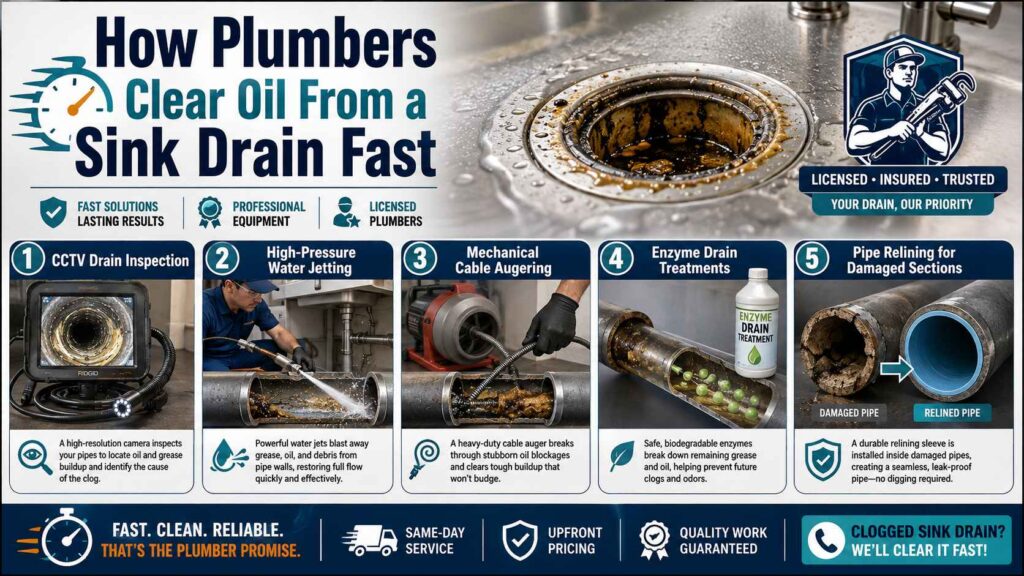
When home methods fail or you need immediate results, professional drain cleaning tools provide faster, more thorough solutions. Our licensed team uses equipment designed specifically for grease clogs, ensuring we clear the blockage without damaging your pipes or leaving residue that will cause future problems. Each tool serves a different purpose depending on the clog’s location, severity, and the type of piping in your home.
Here’s what we bring to every blocked drain job across Sydney and how each method protects your plumbing while solving the problem.
1. CCTV Drain Inspection
Before we start any clearing work, we insert a high-resolution camera into your drain to see exactly what we’re dealing with. This shows us whether the blockage is pure grease, mixed with tree roots, or caused by a broken pipe. CCTV inspection eliminates guesswork and prevents unnecessary digging or pipe damage from blind clearing attempts.
2. High-Pressure Water Jetting
Our hydro-jetting equipment sends a focused stream of water at up to 5,000 psi (roughly 345 bar) through your pipes, cutting through grease, scale and debris. The rotating nozzle scours pipe walls clean, restoring full flow and removing the sticky film that traps future build-up. We adjust pressure based on pipe material and age — lower for old earthenware common in older Sydney terraces, higher for modern PVC.
3. Mechanical Cable Augering
For clogs close to the fixture, we use a professional-grade drain snake with interchangeable heads. Cutting blades break through hardened grease, while retrieval heads pull out solid obstructions. This method works well when the blockage is localised and the pipes are too fragile for high-pressure jetting.
4. Enzyme Drain Treatments
After clearing the main blockage, we sometimes apply bio-enzymatic cleaners that digest residual fats and oils over several days. These products are safe for all pipe materials and help prevent re-clogging by breaking down the organic film left behind. They’re particularly useful in commercial kitchens and cafés around Sydney, where grease build-up is constant and trade waste compliance matters.
5. Pipe Relining for Damaged Sections
If CCTV inspection reveals cracks, root intrusion, or severe corrosion, we may recommend pipe relining instead of excavation. We insert a resin-coated liner into the damaged section, inflate it, and let it cure to form a new, smooth pipe inside the old one. This eliminates grease-trapping rough spots and extends pipe life by decades without digging up your garden.
You might be wondering how long these professional methods take. Most single-fixture blockages are cleared within one to two hours, including inspection and clean-up. For deeper clogs or multiple affected drains, we provide a clear timeline and fixed-rate quote in AUD before starting work — no surprises, no hidden fees.
Best Methods for Getting Oil Out of a Sink Drain
When a drain starts slowing down, it is important to understand that not every method offers the same level of results. Some home remedies are useful for light grease build-up and basic maintenance, while professional drain cleaning methods are designed for more stubborn or recurring blockages. Comparing these options helps Sydney homeowners choose the safest and most effective approach for their situation.
| Method | Best For | Time Required | Pipe Safety | Effectiveness |
|---|---|---|---|---|
| Warm water flush | Fresh or light oil buildup | 10–15 minutes | Safe if not boiling | Low to moderate |
| Dish soap and warm water | Fresh oil in the drain | 15–20 minutes | Safe and gentle | Moderate |
| Baking soda and vinegar | Mild grease residue | 20–30 minutes | Safe and non-corrosive | Moderate |
| Plunger | Localised clogs near the sink | 5–10 minutes | Safe with gentle use | Moderate |
| Drain snake | Deeper soft clogs | 20–40 minutes | Can scratch pipes if misused | Moderate to high |
| CCTV inspection | Recurring or hidden clogs | 30–60 minutes | Non-invasive | Diagnostic |
| Hydro jetting | Heavy grease buildup | 1–2 hours | Safe when pressure is adjusted | High |
This comparison shows that home remedies are generally best for prevention and minor blockages close to the surface. Professional solutions become more valuable when clogs are severe, recurring, or linked to pipe damage deeper in the system. Choosing the right method early can help you avoid wasted effort, reduce the risk of pipe damage, and restore proper drainage more effectively.
When Oil in a Sink Drain Needs a Licensed Plumber

Some situations require professional diagnosis and equipment from the start. Attempting repeated home remedies on a serious blockage wastes time, risks pipe damage, and can turn a simple clearing job into a costly repair. Knowing when to call a licensed Sydney plumber saves you frustration and protects your plumbing investment — and keeps the work compliant with NSW plumbing regulations.
Here are the clear signs that your oil clog needs expert attention.
- Multiple fixtures draining slowly: If your kitchen sink, bathroom basin and shower all drain poorly, the blockage sits in your main sewer line — beyond the reach of home methods.
- Water backing up into other drains: When flushing the toilet causes water to rise in the shower or sink, you have a shared drainage blockage that requires CCTV inspection and professional clearing.
- Foul odours from drains: Rotting food trapped in grease clogs produces a sour, rancid smell that intensifies over time. This indicates a large accumulation that home remedies won’t fully remove.
- Gurgling sounds when water drains: Air trapped behind a blockage creates bubbling or gurgling noises as water forces its way past. This means the clog is substantial and may be affecting pipe ventilation.
- Recurring clogs in the same fixture: If your sink blocks every few weeks despite regular cleaning, the problem is deeper in the line or caused by pipe damage that traps debris.
- Visible water damage or leaks: Slow drainage can cause water to seep through pipe joints or overflow from fixtures. Any sign of water staining, mould, or damp smells warrants immediate inspection.
We offer 24/7 emergency response across Sydney with no call-out fee from 7am to 3pm on weekdays. Our fully licensed team (NSW Lic. 210933C) arrives with a fully equipped van, diagnoses the problem on-site, and provides a fixed-rate quote in AUD before starting work. Same-day service means you’re not left waiting with a blocked sink and standing water.
Conclusion
Oil clogs are preventable, treatable and solvable with the right approach. Start with safe home methods, know when to call for professional help, and adopt daily habits that keep grease out of your pipes. Our licensed Sydney team is ready to assist with same-day service, clear pricing in AUD, and workmanship you can trust for years to come.
Anton’s Plumbing & Gas (NSW Lic. 210933C) offers expert blocked drain solutions to safely clear oil build-up without harming your pipes. Our licensed team uses proven methods and quality products for lasting results across Sydney and greater NSW. Contact us today to learn more. Gas offers expert blocked drain solutions to safely clear oil buildup without harming your pipes. Our licensed team uses proven methods and quality products for lasting results. Contact us today to learn more.
Related Articles
- 5 Common Mistakes When Dealing with Oil in Sink Drains
- Can Oil Clog a Sink? What Plumbers Wish You Knew
- Top Tips for How to Unclog Coconut Oil from Your Drain
FAQs
What Should I Do If I Accidentally Poured Oil Down The Sink?
If you’ve accidentally poured oil down the sink, the first step is to stop any further flow of water to prevent the oil from travelling further into the plumbing system. Next, try to absorb as much of the oil as possible using paper towels or rags. Avoid flushing it with water, as this can worsen the clog. If the oil has already caused a blockage, it’s best to contact a licensed plumber like Anton’s Plumbing & Gas, who can safely and effectively clear the drain without damaging your pipes.
How Can I Unclog A Sink Drain With Oil In It?
To unclog a sink drain with oil in it, you can try using a combination of bicarb soda and vinegar. Pour about half a cup of bicarb soda down the drain, followed by half a cup of vinegar. Allow the mixture to fizz for about 15–20 minutes, then flush with hot water. If this doesn’t work, it’s advisable to call a skilled plumber to assess and resolve the blockage effectively, ensuring your plumbing remains intact.
Is It Safe To Use Hot Water To Remove Oil From A Drain?
Using hot water can help to break down the oil and may assist in clearing a minor clog. However, it’s crucial to be cautious, as boiling water can sometimes cause older pipes to warp or crack — a real risk in many older Sydney homes. For best results and to avoid potential damage, contacting a licensed plumber like Anton’s Plumbing & Gas is recommended, as we use methods that are safe for your plumbing system.
What Household Items Can Help Remove Oil From A Sink Drain?
Common household items such as bicarb soda, vinegar and dish soap can help remove oil from a sink drain. Bicarb soda and vinegar create a natural reaction that can break down grease, while dish soap can help emulsify the oil. However, if the blockage persists, it’s wise to reach out to a licensed plumbing expert who can provide a thorough cleanout without risking damage to your pipes.
How Can I Prevent Oil From Clogging My Sink In The Future?
To prevent oil from clogging your sink in the future, avoid pouring any cooking oils or fats down the drain — this is also required under Sydney Water trade waste guidelines for commercial kitchens. Instead, collect used oils in a container and dispose of them in the rubbish bin or at a local council collection point. Using a sink strainer to catch food scraps also helps reduce build-up over time.
How do you get oil out of a sink drain?
Pour liquid dish soap into the drain, let it sit for a few minutes, then flush with warm water to help break up the oil. If the sink still drains slowly, try bicarb soda and vinegar or call a plumber for professional drain clearing.
Can oil clog a sink drain?
Yes, oil can clog a sink drain because it cools, thickens, and sticks to the inside of pipes. Over time, it traps food scraps and debris until water starts draining slowly or backing up.
Should I use boiling water to get oil out of a sink drain?
Boiling water is not recommended for many household sink drains because it may soften PVC pipes or loosen joints. Warm water with dish soap is usually safer for breaking down fresh oil build-up.
What should I do if I poured cooking oil down the sink?
Stop pouring more water or oil into the drain, then use dish soap and warm water to help loosen the grease. If the sink is already slow, blocked, or smells bad, the oil may have hardened deeper in the pipe.
When should I call a plumber for oil in a sink drain?
Call a plumber if the sink keeps draining slowly, smells bad, gurgles, backs up, or blocks again after home cleaning. These signs can mean the oil clog is deeper in the drainage line and needs professional equipment.
Is Anton’s Plumbing & Gas licensed to work in Sydney and NSW?
Yes. Anton’s Plumbing & Gas holds NSW Lic. 210933C and our plumbers are fully licensed and insured to carry out blocked drain, gas and general plumbing work anywhere in Sydney and across NSW.
What suburbs in Sydney do you service for blocked drains?
We service the Inner West, Eastern Suburbs, North Shore, Mosman, Ryde and surrounding Sydney suburbs. If you’re unsure whether we cover your area, give us a call on +61 4 9382 4176 and we’ll confirm straight away.
Do you provide a fixed quote before starting the job?
Yes. After our licensed plumber inspects the blockage — including CCTV inspection if needed — we provide a fixed-rate quote in AUD before any work begins, so there are no surprises on the invoice.
Do you charge a call-out fee for blocked drain jobs?
We offer no call-out fee from 7am to 3pm on weekdays for blocked drain jobs across Sydney. Call us to confirm current call-out arrangements for after-hours or emergency callouts.
Can you come out the same day for a blocked kitchen sink?
Yes, we offer same-day service across Sydney for blocked kitchen sinks and grease-related clogs, with a fully equipped van ready to diagnose and clear the blockage on the spot.
Do you offer 24/7 emergency plumbing in Sydney?
Yes, Anton’s Plumbing & Gas provides 24/7 emergency response across Sydney for blocked drains, burst pipes and gas issues. Call +61 4 9382 4176 any time you need urgent help.
How do I book a licensed plumber for a blocked drain in Sydney?
You can book online through our booking page, contact us via our contact page, or simply call +61 4 9382 4176 to arrange a same-day visit.
Will using a plumber void my home insurance or Sydney Water compliance?
No — the opposite is true. Using a licensed NSW plumber (Lic. 210933C) for blocked drain work helps ensure the job meets Sydney Water and NSW Fair Trading plumbing standards, which can matter for insurance and future property sales.
What happens if the blockage turns out to be a broken pipe, not just oil?
If our CCTV inspection reveals a cracked or damaged pipe rather than a simple grease clog, we’ll explain the issue on-site, provide a fixed-rate quote for repair or pipe relining, and only proceed once you approve the work.
Do you service both residential and commercial kitchens in Sydney?
Yes, we clear grease and oil blockages for homes, cafés, and commercial kitchens across Sydney, including enzyme treatments and trade waste-compliant solutions for businesses with ongoing grease trap needs.
How quickly can a licensed plumber reach my Sydney home for an urgent blocked drain?
Response times vary by suburb and time of day, but our team prioritises urgent blocked drain calls across Sydney and aims to reach you as quickly as possible — call +61 4 9382 4176 and we’ll give you a realistic arrival estimate.