

Sewage odour in the bathroom can turn your home into an uncomfortable environment. The smell often signals a plumbing issue that needs attention before it escalates into a bigger problem for your Sydney home. Understanding the root causes and taking preventative action can save you time, money, and stress.
This guide walks you through practical steps to prevent sewage odour in your bathroom before it begins. You’ll learn what triggers these smells, how to maintain your plumbing system under NSW regulations, and when to call a licensed Sydney plumber for help.
Key Takeaways
- Dry P-traps are a common cause of sewage odour in bathroom fixtures and can be prevented with regular water use.
- Blocked or damaged vent pipes allow sewer gases to enter your home instead of venting outdoors, particularly during Sydney’s wetter months.
- Cracked seals around toilets and worn sealing rings (often called wax rings) let hydrogen sulfide gas escape into living spaces.
- Regular CCTV drain inspections help identify blockages, tree root intrusion, and pipe damage early—especially in older Sydney suburbs with ageing clay pipes.
- Licensed Sydney plumbers can diagnose venting problems, repair faulty traps, and ensure compliance with AS/NZS 3500 and NSW Fair Trading requirements.
How to Prevent Sewage Odor in Bathroom: Practical Steps
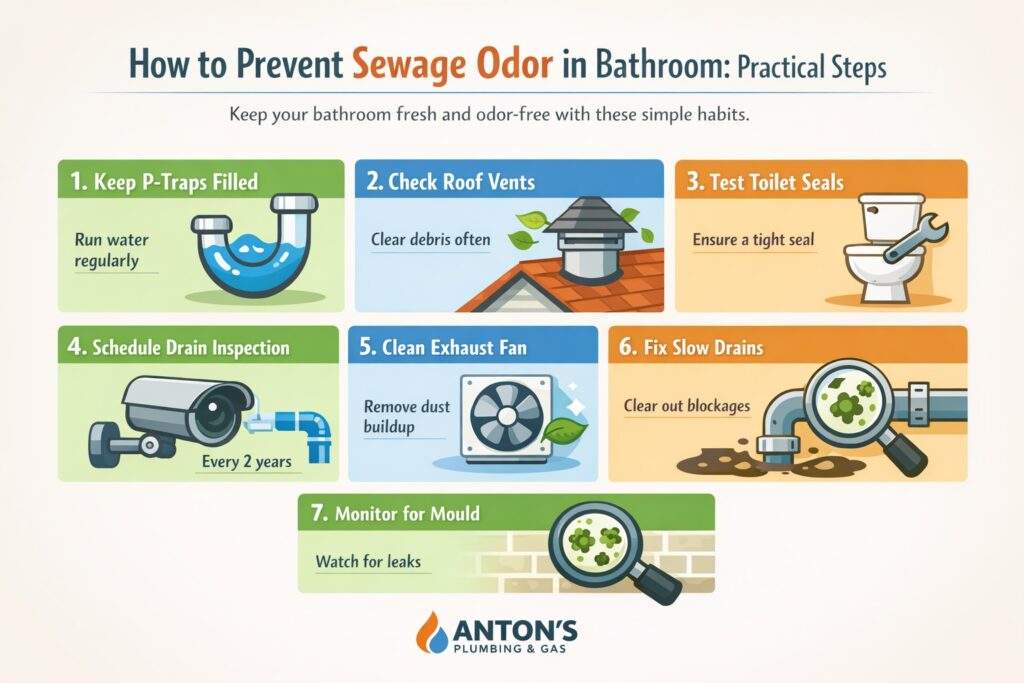
Preventing bathroom odours starts with simple habits and regular attention to the condition of your plumbing system. Most sewage smells develop gradually, which means early action can stop minor issues from turning into persistent and unpleasant problems. With consistent maintenance, you can keep your bathroom fresh, hygienic, and free from recurring drain-related odours.
1. Keep All P-Traps Filled With Water
Run water in every bathroom fixture at least once a week, including showers, bathtubs, floor drains, and hand basins. Even a quick 30-second flush helps refill the trap and restore the water seal that blocks sewer gases from entering your home. For fixtures that are rarely used—such as a spare bathroom, laundry, or granny flat—adding a tablespoon of mineral oil after running water can slow evaporation and help the seal last much longer.
2. Inspect and Clear Roof Vents Regularly
Roof vents should be visually checked every six months for leaves, bird nests, or other debris that may block airflow—a common issue in leafy Sydney suburbs. A blocked vent can interfere with pressure balance in your plumbing system and allow unpleasant smells to build up inside the bathroom. If accessing the roof is unsafe or inconvenient, Anton’s Plumbing & Gas can inspect your vents during a routine maintenance visit and recommend upgrades such as mesh vent caps for added protection.
3. Test Toilet Seals and Tighten Mounting Bolts
A toilet that rocks or shifts slightly may indicate loose mounting bolts or a failing sealing ring. Tightening the bolts can sometimes resolve the issue, but persistent movement usually means the seal needs to be replaced. Water stains or discolouration around the base are also warning signs that should be addressed quickly to prevent both odour problems and water damage.
4. Schedule CCTV Drain Inspections Every Two Years
CCTV drain inspections help identify hidden issues such as tree root intrusion, pipe cracks, and developing blockages before they create serious odour or drainage problems. This service provides a clear internal view of your pipework and allows targeted recommendations based on the actual condition of the drains. It is especially valuable for older Sydney homes—think Inner West and Eastern Suburbs terraces—where ageing clay or cast-iron pipes are more vulnerable to deterioration.
5. Clean Bathroom Exhaust Fans and Ducting
Bathroom exhaust fans play an important role in removing moisture and stale air, but they need regular cleaning to work effectively. Dust build-up on grilles, filters, and ducting can reduce airflow and cause humidity and odours to linger longer than they should. If sewage smells seem to come from the vent itself, it may point to disconnected or damaged ducting that should be checked by a licensed plumber.
6. Address Slow Drains Immediately
Slow drains are often an early sign of build-up inside the pipes, and they should never be ignored. Hair, soap scum, grease, and other debris can collect over time and create the ideal environment for odour-causing bacteria. Using drain strainers and arranging prompt mechanical clearing or hydro-jetting is a safer long-term solution than relying on harsh chemical cleaners, which can also damage older Sydney sewer pipes.
7. Monitor for Mould and Moisture Issues
When sewage odours are accompanied by a musty smell, hidden leaks or poor ventilation may also be contributing to the problem. Damp areas under sinks, behind toilets, and around shower enclosures should be checked regularly because mould can develop quickly in Sydney’s humid climate. Anton’s Plumbing & Gas can use acoustic leak detection to locate concealed leaks accurately and recommend the right repairs to stop the issue from returning.
Staying ahead of these issues is the best way to prevent bathroom odours from becoming an ongoing problem. Small maintenance tasks done consistently can protect your plumbing system, improve indoor hygiene, and reduce the risk of costly repairs later on. When signs of sewage odour persist, professional inspection from Anton’s Plumbing & Gas can help identify the source and restore your bathroom to a clean, fresh condition.
Why Sewage Odor in Bathroom Happens in the First Place
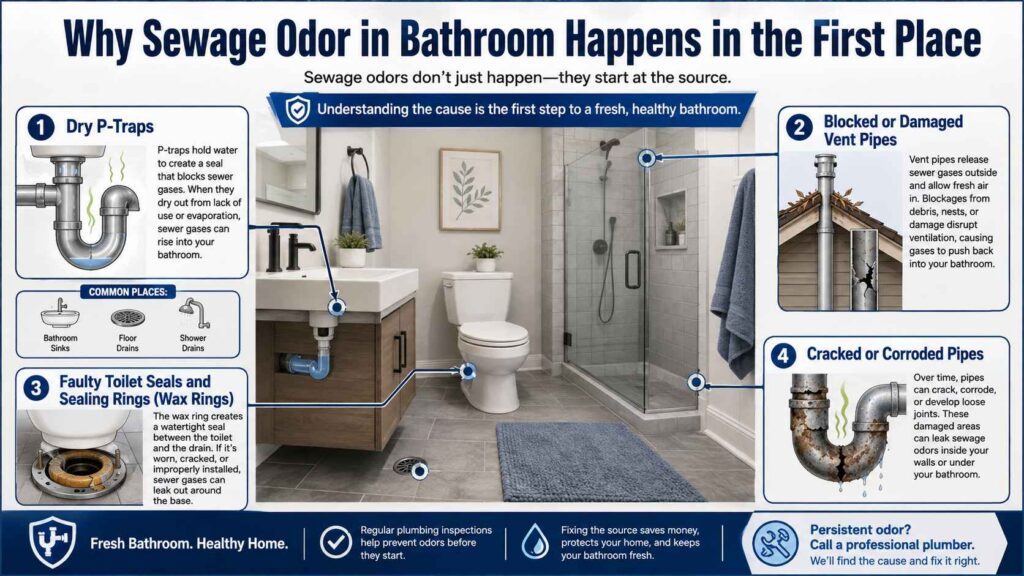
Why sewage odour in the bathroom happens in the first place often comes down to a failure in the plumbing system’s built-in barriers. Your drains and vents are designed to keep sewer gases moving safely out of the home while water seals prevent those gases from rising back through fixtures. When one of these components stops working properly, unpleasant odours can appear near toilets, showers, floor drains, or other bathroom fixtures.
Dry P-Traps
Every bathroom fixture is connected to a P-trap, which is the curved section of pipe that holds a small amount of water. This water acts as a seal that blocks sewer gases from travelling back into the room. When a fixture is not used regularly—especially in guest bathrooms, laundries, or granny flat bathrooms—the water can evaporate and leave the drain open to odour.
Blocked or Damaged Vent Pipes
Vent pipes carry sewer gases safely out through the roof and help maintain proper air pressure inside the drainage system. If these vents become blocked by debris, bird nests, or structural damage, gases may be forced back into the home instead of escaping outdoors. This is one reason some Sydney homeowners notice sewage smell coming from vents, bathroom exhaust areas, or during periods of heavy rain.
Faulty Toilet Seals and Sealing Rings (Wax Rings)
A toilet relies on a sealing ring (often called a wax ring) to seal the connection between the pan and the drain pipe below. Over time, this ring can crack, compress, or fail, allowing sewer gas to escape around the base of the toilet. Loose mounting bolts or a rocking toilet often speed up this process and usually signal that the seal needs attention.
Cracked or Corroded Pipes
In older homes, especially those with ageing clay or cast-iron sewer lines common across Sydney’s older suburbs, cracks and corrosion can develop over time. These openings allow sewer gases to leak into wall cavities, subfloors, or other concealed areas before the smell reaches the bathroom. In some cases, moisture from the damaged pipe can also encourage mould growth, which makes the odour problem even worse.
These issues often start subtly, which is why sewage odours may seem to come and go depending on weather, water use, or time of day. What appears to be a minor smell can point to a larger plumbing problem that may worsen if left untreated. In Sydney, Sydney Water maintains the sewer main beyond your property’s boundary trap, while everything on the house side—including P-traps, vent pipes, and toilet seals—is the homeowner’s responsibility under NSW plumbing regulations (AS/NZS 3500). A professional inspection from Anton’s Plumbing & Gas can identify the source quickly, confirm which side of the boundary the fault sits on, and help restore a clean, healthy bathroom environment.
What Can Cause Sewage Smell in House During Specific Conditions
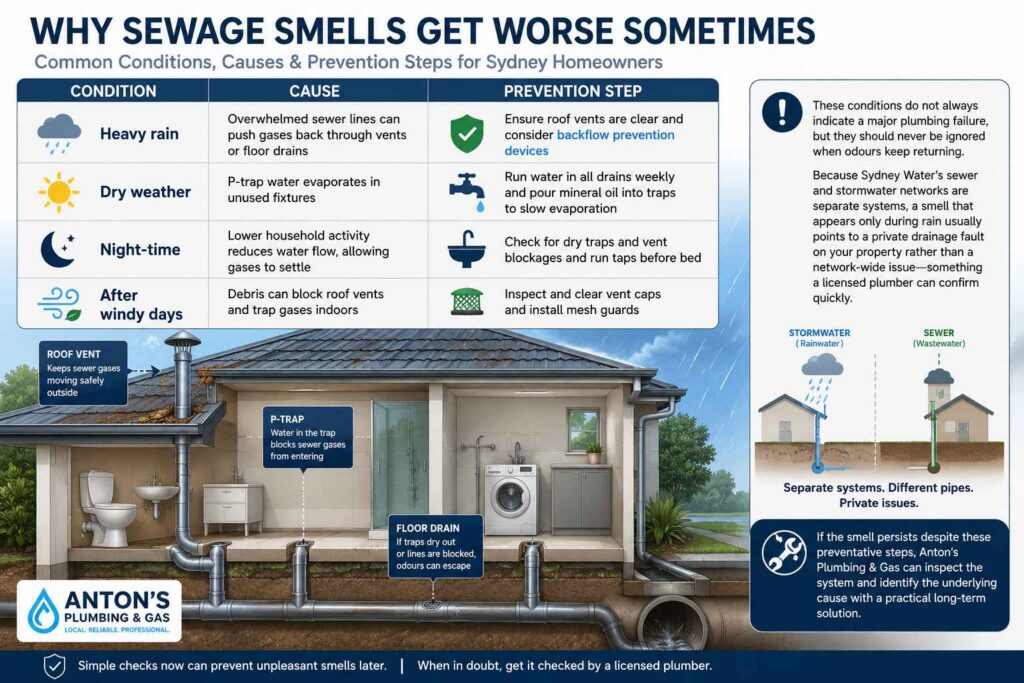
Certain conditions can make a sewage smell in the house more noticeable, even when the plumbing system seems to be working normally. Changes in weather, drainage patterns, and fixture use can all affect how sewer gases move through pipes, vents, and drains. Understanding these triggers helps Sydney homeowners respond early and reduce the chance of odours building up indoors.
| Condition | Cause | Prevention Step |
|---|---|---|
| Heavy rain | Overwhelmed sewer lines can push gases back through vents or floor drains | Ensure roof vents are clear and consider backflow prevention devices |
| Dry weather | P-trap water evaporates in unused fixtures | Run water in all drains weekly and pour mineral oil into traps to slow evaporation |
| Night-time | Lower household activity reduces water flow, allowing gases to settle | Check for dry traps and vent blockages and run taps before bed |
| After windy days | Debris can block roof vents and trap gases indoors | Inspect and clear vent caps and install mesh guards |
These conditions do not always indicate a major plumbing failure, but they should never be ignored when odours keep returning. Because Sydney Water’s sewer and stormwater networks are separate systems, a smell that appears only during rain usually points to a private drainage fault on your property rather than a network-wide issue—something a licensed plumber can confirm quickly. If the smell persists despite these preventative steps, Anton’s Plumbing & Gas can inspect the system and identify the underlying cause with a practical long-term solution.
Seasonal Considerations for Sydney Homeowners
Seasonal changes can affect how your plumbing system performs and how easily odours develop inside the home. Sydney’s mix of heat, rain, wind, and falling debris can all influence trap seals, vent function, and drain performance throughout the year. Adjusting your maintenance routine by season helps reduce the risk of unpleasant bathroom odours and prevents small issues from becoming larger plumbing problems.
Summer
High temperatures can cause water in P-traps to evaporate more quickly, especially in bathrooms with poor airflow or in fixtures that are not used often over the Christmas break. This can leave drains vulnerable to sewer gases rising back into the home. Running water in all drains weekly, adding mineral oil to rarely used traps, and checking exhaust fans for proper performance can help maintain protection during hotter months.
Autumn
Autumn often brings falling leaves and debris that can collect in roof vents and stormwater grates across leafy Sydney streets. When these openings become blocked, airflow is restricted and plumbing odours may start to build indoors. This season is also an ideal time to arrange a CCTV drain inspection so potential issues can be identified before the wetter months arrive.
Winter
Heavy rain during winter can place extra pressure on sewer systems and may force gases back through vents or floor drains. Homes that already have weak seals, blocked vents, or drainage issues are more likely to notice odours during this period. Checking that backflow prevention devices are in place and working properly is an important step, and any recurring sewage smell in the house when it rains should be inspected promptly.
Spring
Spring is a practical time to carry out a broader plumbing check while doing general household maintenance. Testing fixtures, tightening toilet bolts, and cleaning exhaust fans can improve both drainage performance and bathroom ventilation. For older Sydney properties, spring is also a smart time to inspect for tree root intrusion, especially where clay pipes may already be vulnerable.
A season-based plumbing routine makes it easier to stay ahead of odour issues before they become disruptive or costly. Small preventative checks done at the right time of year can protect your bathroom, improve hygiene, and support the long-term health of your drainage system. When seasonal changes begin affecting your plumbing, Anton’s Plumbing & Gas can provide expert inspection and practical solutions tailored to your Sydney home.
When DIY Prevention Isn’t Enough: Recognizing the Need for Professional Help
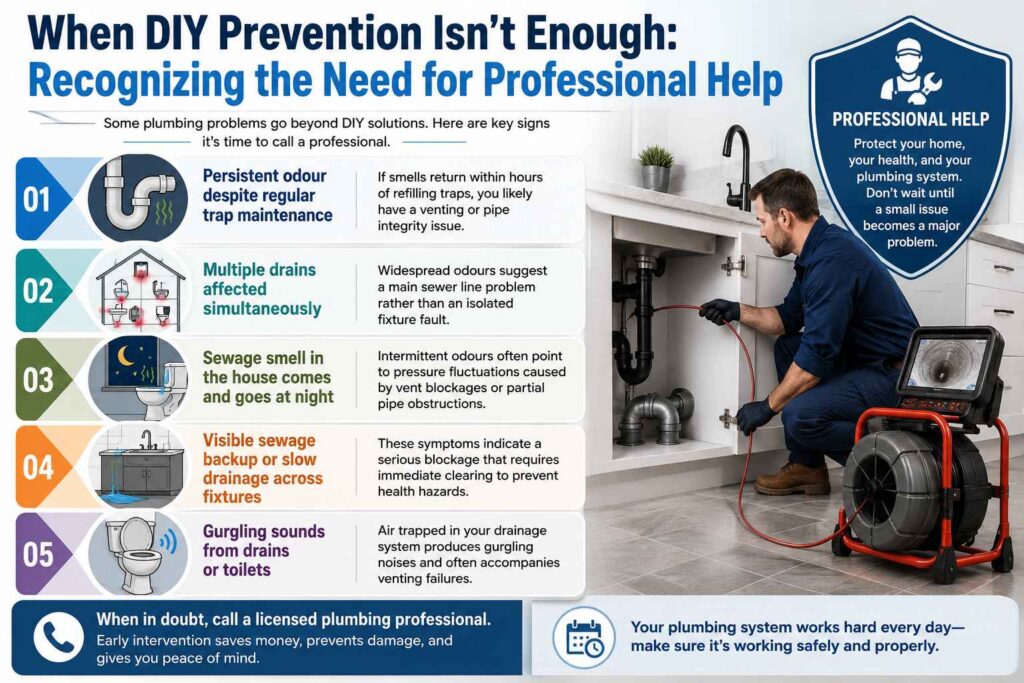
Some odor problems require diagnostic tools and expertise beyond typical homeowner maintenance. Knowing wSome odour problems require diagnostic tools and expertise beyond typical homeowner maintenance. Knowing when to call a licensed Sydney plumber saves you from worsening damage and costly repairs. The following signs indicate it’s time to seek professional assistance.
- Persistent odour despite regular trap maintenance: If smells return within hours of refilling traps, you likely have a venting or pipe integrity issue.
- Multiple drains affected simultaneously: Widespread odours suggest a main sewer line problem rather than an isolated fixture fault.
- Sewage smell in the house comes and goes at night: Intermittent odours often point to pressure fluctuations caused by vent blockages or partial pipe obstructions.
- Visible sewage backup or slow drainage across fixtures: These symptoms indicate a serious blockage that requires immediate clearing to prevent health hazards.
- Gurgling sounds from drains or toilets: Air trapped in your drainage system produces gurgling noises and often accompanies venting failures.
At Anton’s Plumbing & Gas, we diagnose root causes using CCTV drain inspections, smoke testing for vents, and pressure diagnostics. Our fully licensed plumbers (NSW Lic. 210933C) provide clear options—repair, reline, or replace—with upfront pricing and same-day service across Sydney. We operate 24/7 with no call-out fee, so you can address urgent odour problems without delay.
How Anton’s Plumbing & Gas Supports Odor-Free Bathrooms Across Sydney

We’ve spent over 25 years helping Sydney homeowners maintain safe, compliant, and comfortable plumbing systems. Our approach combines diagnostic precision with transparent communication, so you understand exactly what’s needed and why. Every job is completed to Australian Standards, backed by a lifetime labour warranty, and delivered with respect for your property.
Our licensed team provides end-to-end services including CCTV drain inspections, pipe relining, vent repairs, backflow testing, toilet and tap repairs, and full bathroom renovations. Whether you’re dealing with a persistent sewage odour in bathroom fixtures or planning a preventative maintenance schedule, we tailor our work to your home, timeline, and budget.
We serve the entire Sydney Metro—Inner West, Eastern Suburbs, North Shore, Northern Beaches, Hills District, Western and South-Western Sydney, and Sutherland Shire. Same-day service and 24/7 emergency response mean help is always available on 0493 824 176. We charge a fixed rate for our services, so you know the cost before we start work—no surprises.
Your safety comes first. Our work complies with NSW Fair Trading licensing requirements (Lic: 210933C) and relevant Australian Standards, including AS/NZS 3500 for plumbing and drainage. We use quality parts, document our findings, and leave your space clean and compliant. If you need a dependable, licensed Sydney plumber to prevent or eliminate bathroom odours, we’re ready to help—call 0493 824 176.
Conclusion
Preventing sewage odour in the bathroom starts with understanding your plumbing system and maintaining its protective barriers. Regular trap checks, vent inspections, and professional diagnostics keep sewer gases where they belong. When issues arise, licensed expertise ensures safe, compliant, and lasting solutions for your Sydney home.
Anton’s Plumbing & Gas stops sewage odours at the source with expert drain cleaning and CCTV inspections. Our licensed team (NSW Lic. 210933C) identifies blockages before they cause problems. Get started with same-day service today.
Related Articles
- How to Get Rid of Sewage Smell from Bathroom Drains and Fixtures
- How to Empty a Toilet Bowl Before Repairs or Cleaning
- How to Snake a Bathroom Sink Like a Pro (Easy DIY Guide)
FAQs
Why Does My Bathroom Smell Like Sewage All of a Sudden?
A sudden sewage smell in the bathroom can come from a dry P-trap, blocked drain, loose toilet seal, venting issue, or sewer line problem. Many Sydney homeowners notice the smell first near the toilet, shower drain, basin, or floor waste, which can help narrow down the source. Anton’s Plumbing & Gas can inspect the bathroom plumbing and find out whether the odour is caused by a simple drain issue or a deeper sewer problem.
How Do I Get Rid of Sewage Smell in My Bathroom?
Start by running water through unused drains to refill dry traps, then check for slow drains, visible build-up, or smells around the toilet base. Bicarbonate of soda and vinegar may help with minor drain odours, but they will not fix broken seals, blocked vents, or sewer line issues. If the smell keeps returning, Anton’s Plumbing & Gas can trace the cause and recommend the right repair.
Should I Be Worried About Sewage Smell in the Bathroom?
Yes, a sewage smell should be checked if it is strong, keeps coming back, or comes with gurgling drains, slow flushing, or water backing up. Sewer odours may indicate gases escaping through a dry trap, faulty seal, blocked drain, or venting issue. A licensed plumber can inspect it safely and stop the smell before it turns into a bigger plumbing problem.
Can a Clogged Toilet Make the Bathroom Smell Like Sewage?
Yes, a clogged or partly blocked toilet can cause sewage smells if waste and water are not moving through the drain properly. You may also notice slow flushing, rising bowl water, gurgling sounds, or smells coming from nearby drains. Anton’s Plumbing & Gas can clear the blockage and check whether the issue is limited to the toilet or connected to the wider sewer line.
How Can I Stop Sewage Smell from Coming Back in the Bathroom?
To help prevent sewage smells, keep drains clean, run water through rarely used fixtures, avoid flushing wipes or sanitary products, and deal with slow drains early. It also helps to check the toilet seal and book an inspection if odours keep returning after cleaning. Anton’s Plumbing & Gas can identify recurring causes such as blocked drains, dry traps, faulty seals, or venting problems.
Do I Need a Licensed Plumber to Fix a Sewage Smell in My Sydney Home?
Yes. Under NSW law, plumbing repairs involving drainage, venting, and sewer connections must be carried out by a licensed plumber. Anton’s Plumbing & Gas holds NSW Lic. 210933C and can legally diagnose and repair the fault, rather than just masking the smell. Call 0493 824 176 to book an inspection.
How Much Does It Cost to Fix a Sewage Smell in Sydney?
Cost depends on the cause—whether it’s a dry trap, a failed toilet seal, a blocked drain, or a damaged vent or sewer pipe. Rather than guess, Anton’s Plumbing & Gas inspects the issue first and provides a fixed, upfront quote in AUD before any work begins, so there are no surprises on the invoice.
Do You Offer Same-Day Service for Sewage Odour Problems in Sydney?
Yes, Anton’s Plumbing & Gas offers same-day appointments and 24/7 emergency response across the Sydney Metro area, with no call-out fee. If you’re dealing with a persistent or worsening sewage smell, call 0493 824 176 and we’ll arrange a technician as soon as possible.
Which Sydney Suburbs Do You Service for Bathroom Odour and Drainage Issues?
We service the entire Sydney Metro, including the Inner West, Eastern Suburbs, North Shore, Northern Beaches, Hills District, Western and South-Western Sydney, and Sutherland Shire. If you’re unsure whether we cover your suburb, call 0493 824 176 and our team can confirm straight away.
Can a Blocked Drain in My Street Cause Sewage Smell Inside My House?
It’s possible, but Sydney Water manages the sewer main beyond your property’s boundary trap, while the plumbing inside your property is your responsibility. Anton’s Plumbing & Gas can run a CCTV drain inspection to confirm whether the fault is on your side of the boundary or a matter to report to Sydney Water.
Do You Provide CCTV Drain Inspections in Sydney?
Yes, CCTV drain inspections are one of our core services. We use them to locate tree root intrusion, cracked pipes, and blockages without digging up your yard, giving you a clear, evidence-based repair plan. Book an inspection online or call 0493 824 176.
What Happens During a Plumbing Inspection for Sewage Odour?
Our licensed plumber checks P-traps, toilet seals, vent pipes, and drains, and may use CCTV cameras, smoke testing, or pressure diagnostics to pinpoint the source. You’ll get a clear explanation of the cause and a fixed-price option to fix it—no pressure, no guesswork.
Is Sewage Gas Dangerous to Breathe in My Home?
Sewer gas can contain methane and hydrogen sulfide, and prolonged exposure is a genuine health concern, particularly for children, the elderly, and people with respiratory conditions. If you notice a persistent sewage smell, don’t wait—contact Anton’s Plumbing & Gas for a prompt inspection.
Can I Get Emergency Plumbing Help at Night for Sewage Smell in Sydney?
Yes, Anton’s Plumbing & Gas operates 24/7 across Sydney, including after-hours and weekends, with no call-out fee. If a sewage smell suddenly gets worse or is accompanied by backing up drains, call 0493 824 176 immediately.
How Do I Book Anton’s Plumbing & Gas for a Bathroom Odour Inspection?
You can book online through our booking page or call 0493 824 176 directly. Let us know the symptoms—where the smell is strongest and when it occurs—so we can send the right technician with the right equipment.
Do You Provide Upfront Pricing Before Starting Repairs?
Yes, we always inspect first and provide a fixed-rate quote before any work begins, so you know the cost upfront and can approve the job with confidence before we touch a single fitting.
Are Your Plumbers Licensed and Insured in NSW?
Yes, Anton’s Plumbing & Gas operates under NSW Fair Trading Licence 210933C, and all work is carried out to Australian Standards, including AS/NZS 3500. This means repairs are compliant, insured, and backed by a lifetime labour warranty.
Which Sydney Suburbs Have Older Clay Pipes Prone to Sewage Smell?
Older housing stock in suburbs such as those in the Inner West and Eastern Suburbs often still has ageing clay or cast-iron sewer lines, which are more prone to cracking, root intrusion, and odour issues. If your home was built decades ago and you’re noticing recurring smells, a CCTV inspection is a smart first step.
How Quickly Can a Licensed Plumber Attend a Sewage Odour Emergency in Sydney?
Anton’s Plumbing & Gas offers same-day and 24/7 emergency response across the Sydney Metro area. Call 0493 824 176 and we’ll aim to get a licensed plumber to you as quickly as possible to assess and resolve the issue.