

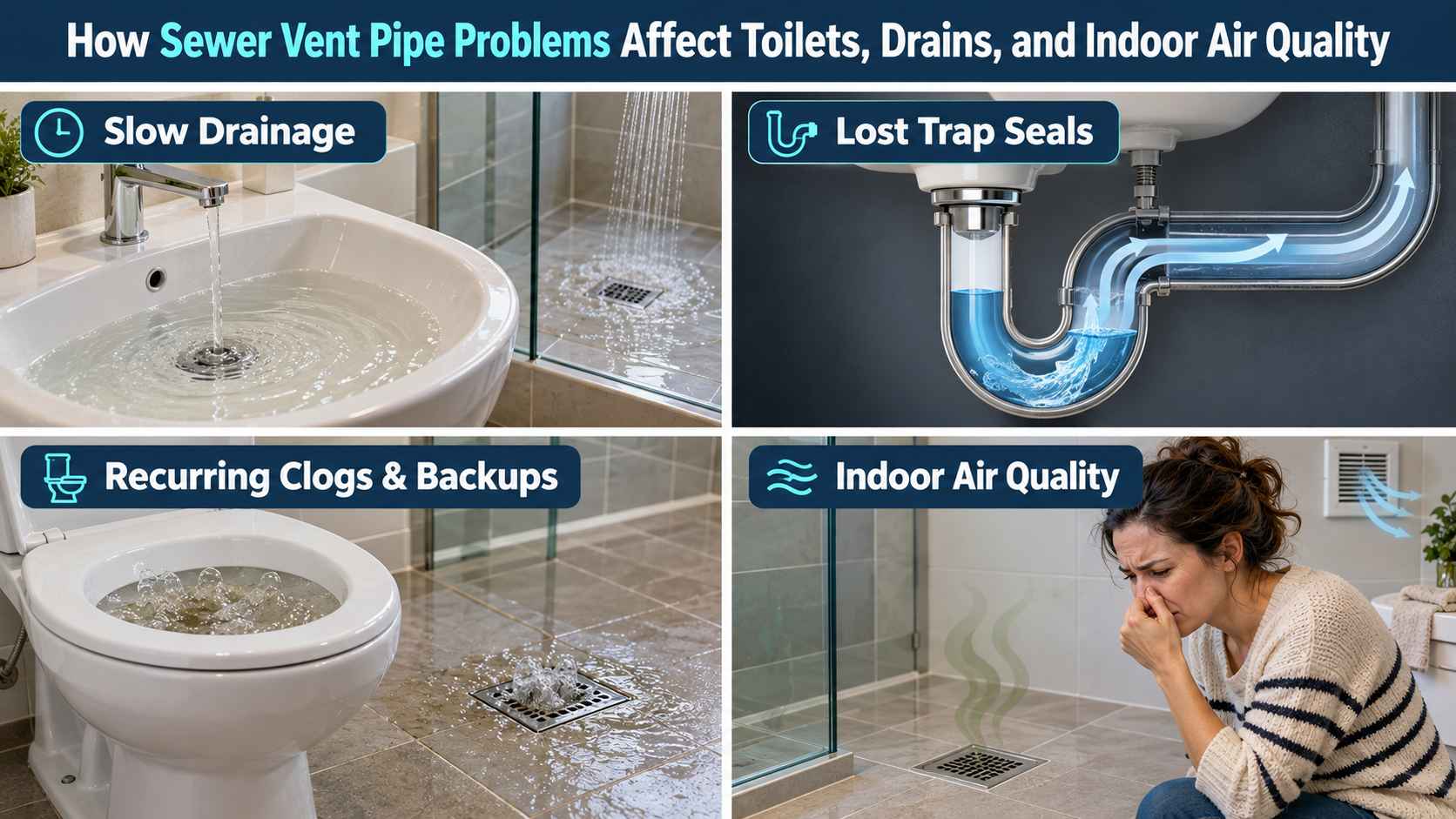
A sewer vent helps the drainage system manage air pressure. Gurgling, odours or slow discharge may involve ventilation, but a blocked waste pipe or a dry trap can create similar symptoms. Diagnose the system before replacing a vent or repeatedly treating the drain.
Read the pattern of symptoms
Note which fixtures are affected, whether a toilet flush triggers noise elsewhere and whether the problem began after renovations. One rarely used floor waste may have a different cause from several fixtures backing up together.
Avoid roof and sewer access hazards
Do not climb onto a roof or push objects into a vent to investigate a smell. Report visible damage from ground level and let the plumber assess safe access and the drainage arrangement.
Match the repair to the confirmed fault
Inspection may identify a drainage obstruction, damaged vent, trap issue or unsuitable alteration. Camera inspection is useful for some drain faults but is not a universal test for every ventilation problem. Ask what evidence supports the proposed repair.
Related services and practical guides
Further guidance: Sydney Water wastewater blockage guidance; Sydney Water service responsibilities.


Frequently asked questions
What does a sewer vent pipe do?
It helps manage air movement and pressure in the drainage system so wastewater can discharge appropriately. Learn more about blocked drain assessment.
Does gurgling prove the vent is blocked?
No. Drain obstructions and other system issues can also cause gurgling.
Why does my sink gurgle when the toilet flushes?
The fixtures may interact through shared drainage. A plumber should assess blockage and ventilation possibilities.
Can a dry trap cause sewer smells?
Yes. An infrequently used fixture may lose its water seal; persistent smells still need investigation. Learn more about blocked drain assessment.
Should I climb onto the roof to inspect a vent?
No. Arrange safe professional access rather than risking a fall.
Can leaves obstruct a vent opening?
Debris may obstruct an opening, but the cause should be confirmed before work is undertaken.
Can I cap a vent to stop smells?
Do not cap or alter drainage ventilation. This can create or worsen system problems.
Are slow drains always a vent issue?
No. Accumulated waste or a damaged drain is another common possibility. Learn more about blocked drain assessment.
What if multiple fixtures back up together?
Stop adding wastewater and arrange prompt assessment of the shared drainage.
Can renovations affect ventilation?
Yes. Altered layouts or connections may change drainage performance and should be assessed by a licensed plumber.
Does a camera inspection check every vent problem?
No. It can assess accessible drain interiors, but ventilation faults may require other checks.
Can wind change when an odour appears?
It can influence where smells are noticed. Record the pattern without assuming it identifies the fault.
Should I pour drain cleaner into a suspected vent problem?
No. Chemicals do not correct ventilation design or damage and can complicate later work.
What information should I give the plumber?
List affected fixtures, noises, odour timing, recent works and any sewage backup.
Could a cracked waste pipe cause a similar smell?
Yes. A leak or defective connection is another reason to investigate rather than assume a vent blockage.
Is a vent the same as a stormwater downpipe?
No. They serve different systems and must not be treated as interchangeable.
Who handles a vent issue in a strata building?
Notify the strata manager because shared drainage or roof access may be involved.
Will clearing a drain solve the smell permanently?
Only if the blockage was the cause and no other defect remains.
What should the repair quote explain?
The diagnosed fault, access needs, proposed work, testing and any exclusions should be clear.
When should I seek urgent help?
Arrange urgent assistance for sewage overflow, unsafe conditions or wastewater entering occupied areas.
Need help with your property? Contact Anton’s Plumbing & Gas to discuss a booking or call 0493 824 176.