


A sewage smell coming from your toilet usually means sewer gas is escaping through a faulty seal, dry plumbing trap, blocked vent or drainage problem. This is a call-out we see often across Sydney and NSW, from older Federation homes in the Inner West to newer builds in the Hills District. While some causes are simple to resolve, persistent odours can indicate damaged pipework or a sewer-line blockage that requires professional attention.
This article walks you through the five most frequent reasons your toilet smells like sewage, explains what each issue looks like, and outlines practical steps to resolve it. You’ll also learn when a licensed Sydney plumber should take over the diagnosis and repair.
Key Takeaways
- A dry P-trap allows sewer gas to escape into your bathroom and can be fixed by running water regularly.
- A damaged pan connector (often called a “wax ring” overseas) beneath the toilet lets odours leak from the waste pipe and requires replacement by a licensed plumber.
- Blocked vent pipes prevent proper air circulation in your drainage system, trapping gases indoors.
- Clogged toilet drains or sewer lines create pressure that pushes sewer smells back into your home.
- Cracked pipes or loose fittings leak sewage gas and need professional inspection and repair to protect your health.
Quick Answer: Your toilet may smell like sewage because of a dry P-trap, a failed pan connector (seal), a blocked vent pipe, a clogged drain or a cracked waste pipe. Running water into nearby drains and checking for leaks, slow flushing, gurgling or movement around the toilet base may help identify the cause. If the smell persists, several drains are affected, or you notice leaking wastewater or sewage backing up, contact a licensed Sydney plumber — always check they hold a current NSW Fair Trading plumbing licence before work begins.oilet base may help identify the cause. Contact a licensed plumber if the smell persists, several drains are affected or you notice leaking wastewater or sewage backing up.
Why Your Toilet Smells Like Sewage: The Root Causes
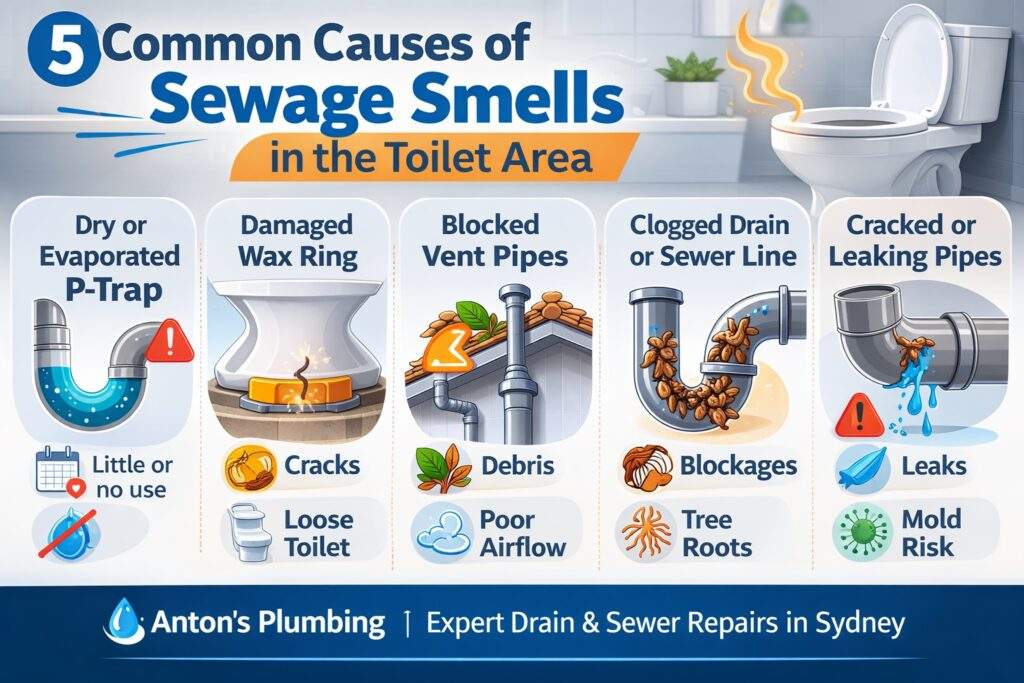
Sewer gas is a mix of hydrogen sulfide, ammonia and methane produced by decomposing waste in your drainage system. Normally, your plumbing keeps these gases contained and vented safely outdoors. When something breaks down — a seal, a trap, a pipe — the gas finds its way into your living space.
Most sewage smells in the bathroom trace back to one of five issues. Each has distinct symptoms and solutions, and some are straightforward enough for a homeowner to address, while others demand the tools and expertise of a licensed plumber. Recognising the difference saves time, money and unnecessary frustration.
1. Dry or Evaporated P-Trap
Every toilet, sink and floor drain has a P-trap — a curved section of pipe designed to hold a small pool of water. That water acts as a barrier, sealing off sewer gas so it can’t rise up through the drain. If the trap dries out, the seal disappears and gas flows freely into your bathroom.
This is common in guest bathrooms, ensuites, or floor drains that see little use — something to watch for in larger Sydney homes with a rarely-used second bathroom. A trap can dry out in as little as a few weeks if no water runs through it. You’ll notice the smell is strongest near the drain itself, and it may come and go depending on air movement and humidity.
2. Damaged or Failing Pan Connector (Wax Ring)
Your toilet sits on a pan connector (called a “wax ring” in the US — most Australian toilets use a rubber or plastic seal instead) that joins the base to the waste pipe below. This connector compresses under the weight of the toilet, forming an airtight and watertight seal. Over time, the seal can crack, shift or degrade — especially if the toilet rocks or was installed incorrectly.
When the pan connector fails, sewer gas leaks from the gap between the toilet base and the floor. You might also see water pooling around the base after flushing, or notice the toilet feels loose when you sit on it. This is one of the most common hidden causes of a sewage smell in the toilet area, and it won’t resolve on its own — it needs a licensed plumber to replace the seal correctly.
3. Blocked or Damaged Vent Pipes
Your drainage system relies on vent pipes that run from your waste lines up through the roof. These vents allow air into the system, so water flows smoothly and sewer gas is expelled safely outdoors. If a vent becomes blocked — by leaves, bird nests, or debris — or if it cracks, the system can’t breathe properly.
Without adequate venting, negative pressure builds in your pipes. That pressure can suck water out of P-traps, allowing gas to enter your home. You might hear gurgling sounds from drains, notice slow drainage, or smell sewage throughout the bathroom.
Vent issues are harder to diagnose from ground level, and they often require roof access or a camera inspection to pinpoint.
4. Clogged Toilet Drain or Main Sewer Line
A partial blockage in your toilet drain or the main sewer line creates back-pressure that forces sewer gas up through your fixtures. The blockage might be caused by flushed items that shouldn’t go down the toilet — wipes, sanitary products, cotton buds — or by a buildup of waste, paper and mineral deposits over time.
In older Sydney homes, tree roots are a common culprit. Roots infiltrate clay or concrete pipes through tiny cracks, then expand and trap debris, forming a solid obstruction.
You’ll notice slow flushing, water that rises in the bowl before draining, or sewage smells that worsen after you use the toilet. If multiple drains are affected — shower, sink, toilet — the blockage is likely in the main line, which may extend past your property boundary. In NSW, Sydney Water generally owns and maintains the sewer main beyond your boundary trap, while the plumbing on your property is your responsibility. A licensed plumber can pinpoint where the fault sits and, if it involves Sydney Water infrastructure, advise on next steps or lodge a report on your behalf.
5. Cracked or Leaking Pipes
Cracks in your waste pipes allow sewer gas to escape into the walls, floor cavity or bathroom itself. These cracks can develop from ground movement, corrosion, poor installation or impact damage. In Sydney, older homes with cast iron or clay pipes are particularly vulnerable.
A cracked pipe may also leak wastewater, leading to damp patches, stains on ceilings below, or mould growth. The sewage smell from the toilet area may be constant rather than intermittent, and it often spreads beyond the bathroom.
Leaking pipes are a health and safety issue — they expose your home to bacteria, mould spores and structural damage. They also waste water and can push up your water bills.
When to Call a Licensed Plumber for Sewage Smells

Some sewage odours are easy to fix — run water, clean the toilet, check for obvious blockages. But if the smell persists after you’ve tried the basics, or if you notice water leaks, gurgling drains, or structural damage, it’s time to call a licensed plumber. In NSW this means someone holding a current NSW Fair Trading plumbing licence — ask to see it before any work starts.
Sewer gas contains hydrogen sulfide, which is toxic in high concentrations and can cause headaches, nausea, dizziness and respiratory irritation. Methane is flammable. Prolonged exposure to sewer gas is a health risk, and the underlying plumbing issue will only worsen if left untreated.
Our team responds same-day across Sydney — Inner West, Eastern Suburbs, North Shore, Northern Beaches, Hills District, Western and South-Western Sydney, and Sutherland Shire. We hold NSW plumbing licence 210933C, arrive with the tools to diagnose root causes rather than mask symptoms, and provide clear options with fixed-rate pricing before we start any work.
How Antons Plumbing & Gas Diagnoses and Fixes Sewage Odors
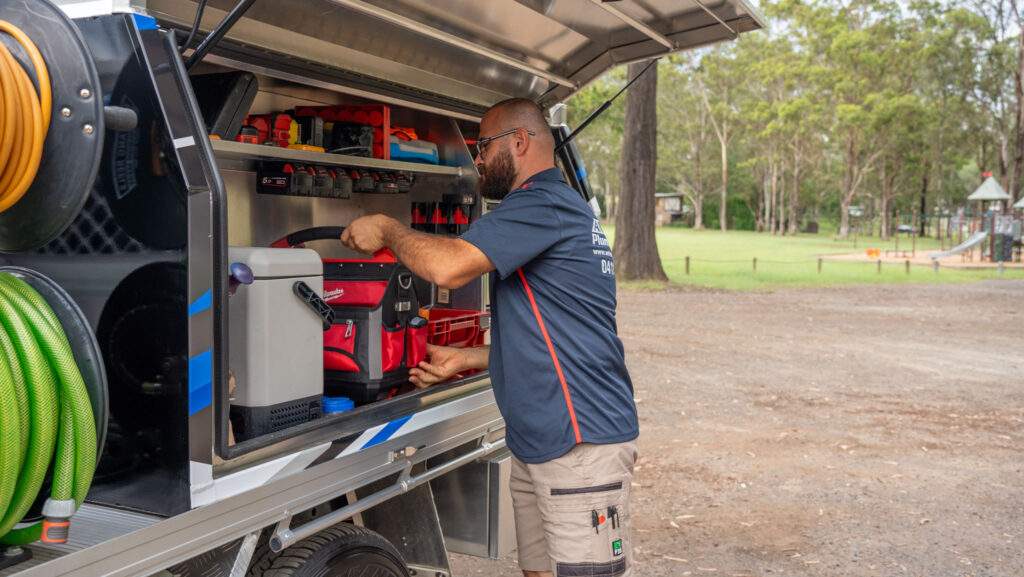
We don’t guess. We use proven diagnostic tools — CCTV cameras, acoustic leak detectors, smoke testing — to identify the exact source of the sewage smell in your toilet or bathroom. Once we know what’s wrong, we explain it in plain English and provide clear, upfront pricing for the repair.
Our work is licensed under NSW Fair Trading (Lic: 210933C) and complies with AS/NZS 3500 plumbing standards, plus any relevant Sydney Water plumbing and drainage requirements. We use quality parts, document our findings, and back every job with a lifetime labour warranty. Whether it’s replacing a pan connector, clearing a blocked vent, or relining a cracked sewer pipe, we complete the work safely, cleanly and on time.
We serve the entire Sydney Metro — from the Inner West to the Northern Beaches, from the Hills District to Sutherland Shire — with same-day service and 24/7 emergency response. There’s no call-out fee, and we charge a fixed rate, so you know what you’re paying before we start.
If your bathroom smells like sewer gas and you’ve ruled out the simple fixes, call us on 0493 824 176 or book online. We’ll diagnose the root cause, present your options, and restore your bathroom to a safe, comfortable space.
Preventing Sewage Smells in Your Bathroom

Once you’ve resolved the immediate cause of the sewage smell, a few simple habits can help prevent it from returning. Regular maintenance and mindful use of your plumbing system go a long way toward keeping your bathroom fresh and your drains flowing smoothly.
Routine Maintenance Tips
- Schedule a CCTV drain inspection every few years, particularly if you live in an older home or have mature trees near your sewer line.
- Check your toilet for signs of movement or water at the base — tighten bolts or call a licensed plumber if it feels loose.
- Keep vent pipes clear by trimming overhanging branches and installing a vent cap to block debris and pests.
- Address slow drains promptly — they’re often the first sign of a developing blockage.
- Avoid chemical drain cleaners, which can corrode pipes and worsen long-term problems.
- If a blockage or odour turns out to involve the Sydney Water main beyond your boundary, your plumber can advise whether it needs to be reported to Sydney Water directly.
If you’re planning a bathroom renovation or replacing old fixtures, it’s a good time to inspect the waste pipes, vent stack and drainage system. We can assess the condition of your plumbing and recommend upgrades or repairs that will prevent future issues.
Conclusion
A sewage smell from your toilet points to a breakdown in your plumbing’s gas barrier — whether it’s a dry trap, a failed seal, or a blocked vent. Identifying the cause quickly protects your health and prevents further damage. When DIY fixes don’t resolve the issue, a licensed Sydney plumber can diagnose and repair the problem safely and permanently.
Antons Plumbing & Gas specialises in blocked drains and CCTV inspections to eliminate sewage odours fast. Our licensed team (NSW Lic. 210933C) serves Sydney Metro with same-day service. Call 0493 824 176 to get started.
Get a Free Estimate for Your Toilet Sewage Smell
A persistent sewage smell near your toilet may indicate a failed pan connector, blocked vent, cracked pipe or deeper sewer-line problem that needs professional diagnosis. Use Anton’s free plumbing quote estimator to select the relevant toilet or blocked-drain issue, describe the odour and any symptoms such as gurgling, slow flushing or leaks, and receive an initial price range in AUD based on the property and urgency. If the smell is strong, wastewater is backing up or several drains are affected, call Anton’s Plumbing & Gas on 0493 824 176 for prompt assistance.
Related Articles
- 5 Reasons for Sewage Smell from Shower Drain and Solutions
- Why Do Shower Drains Smell? Common Causes and Solutions
- What to Do If Your Toilet Doesn’t Flush: Simple Solutions
FAQs
Why Does My Toilet Smell Like Sewage Even After Cleaning?
If your toilet still smells like sewage after cleaning, the smell is likely coming from a plumbing issue rather than the toilet bowl itself. Common causes include a damaged pan connector (sometimes called a wax seal), blocked vent pipe, dry trap, loose toilet connection, or sewer line problem. Antons Plumbing & Gas can inspect the toilet and drainage system to find where the smell is coming from and fix it properly.
How Do I Get Rid Of Sewage Smell Coming From My Toilet?
Start by checking whether the toilet is flushing properly, the bowl has enough water, and there are no obvious leaks around the base. You can also run water into nearby drains to make sure dry traps are not letting sewer gases escape. If the smell keeps coming back, Antons Plumbing & Gas can check the toilet seal, venting and drain line for the real cause.
Should I Be Worried About A Sewage Smell In My Bathroom Toilet?
Yes, you should take a sewage smell seriously, especially if it is strong, keeps returning, or comes with slow drains or gurgling sounds. Sewer smells may point to drainage problems, venting issues, or a broken seal that can let unpleasant gases into the bathroom. A licensed plumber can inspect the issue safely and help prevent it from getting worse.
Can A Blocked Toilet Make The Bathroom Smell Like Sewage?
Yes, a blocked or partly blocked toilet can cause sewage smells, especially if waste is not moving through the drain properly. You may also notice slow flushing, water rising in the bowl, gurgling, or smells from nearby floor drains. Antons Plumbing & Gas can clear the blockage and check whether the problem is isolated to the toilet or part of a larger drain issue.
Who Should I Call If My Toilet Smells Like Sewage?
You should call a licensed plumber if the sewage smell does not go away after cleaning, flushing, or checking nearby drains. The cause may be hidden under the toilet, inside the pipework, or further along the sewer line. Antons Plumbing & Gas (NSW Lic. 210933C) can diagnose the source of the odour and provide the right repair to restore your bathroom safely — call 0493 824 176 to book a same-day visit.
Why Does the Sewage Smell Get Worse After Flushing?
A stronger smell after flushing can indicate that pressure inside the drainage system is forcing sewer gas through a damaged seal, blocked vent or partially clogged pipe. You may also hear gurgling or notice the bowl water level changing. If these symptoms are occurring at a property in Mulgrave, local plumbing services in Mulgrave can help identify whether the problem involves the toilet seal, ventilation or drainage pipework.
Can a Loose Toilet Cause a Sewage Smell?
Yes. A toilet that rocks or moves can damage the seal between the toilet and the waste pipe. Once that seal is compromised, sewer gas and wastewater may escape around the base. Avoid repeatedly tightening the bolts yourself, as overtightening can crack the toilet pan. For a loose or leaking toilet at a property in Gladesville, a trusted Gladesville plumber can inspect the seal and secure the toilet safely.
Why Does My Toilet Smell Like Sewage Only at Night?
Changes in airflow, temperature and water use can make sewer odours more noticeable at certain times. A partially dry trap, ventilation problem or small leak may release gas intermittently. Recurring night-time smells still indicate that the drainage system or toilet connection should be inspected.
Why Is the Sewage Smell Strongest Around the Toilet Base?
An odour concentrated around the base commonly points to a failed toilet seal, loose connection or crack in the waste fitting below the pan. Look for moisture, staining or movement when the toilet is used. The toilet may need to be removed so the seal and flange can be inspected.
Can a Low Water Level in the Toilet Bowl Cause Sewer Smells?
Yes. The water held inside the toilet’s internal trap creates a barrier against sewer gas. If the bowl water level becomes unusually low because of evaporation, siphoning, a blocked vent or a crack in the toilet, that protective seal may be weakened.
Why Does My Toilet Gurgle and Smell Like Sewage?
Gurgling and sewage odours often occur when air cannot move freely through the drainage system. A blocked vent or partial sewer-line obstruction may create pressure changes that disturb the water seal inside the toilet. The problem may worsen until the blockage or ventilation fault is repaired.
Can a Blocked Vent Pipe Make Only One Toilet Smell?
Yes. A blockage may affect one branch of the plumbing system more than others, particularly if that toilet is closest to the restricted vent connection. However, you may eventually notice symptoms in nearby sinks, showers or floor drains as pressure problems spread through the system.
Can Tree Roots Cause Sewage Smells From a Toilet?
Yes. Tree roots can enter cracked or poorly joined underground sewer pipes and trap waste, toilet paper and debris. The resulting partial blockage may cause slow flushing, gurgling, backups and sewer odours. If root intrusion is suspected at a property in Hornsby, a professional plumber in Hornsby can use a CCTV drain camera to inspect the sewer line and confirm the cause.
Can a Cracked Toilet Bowl Release Sewer Gas?
A crack in the toilet’s internal trap or base may allow water to leak out and weaken the barrier that blocks sewer gas. Some cracks are difficult to see because they are underneath or inside the toilet. A damaged toilet generally needs replacement rather than patching.
Why Does My Toilet Smell After Heavy Rain?
Heavy rain can overload drainage infrastructure or raise groundwater around damaged sewer pipes. Existing cracks, root intrusion or drainage defects may then become more noticeable. If the smell repeatedly appears during wet weather at a property in Kellyville, a licensed plumber in Kellyville can inspect the sewer line and external drainage for underlying faults.
Can Sewer Gas From a Toilet Make You Sick?
Exposure may cause headaches, nausea, dizziness or irritation, particularly when the smell is strong or the room has poor ventilation. Sewer gas can also contain methane, which is flammable. Ventilate the bathroom, avoid prolonged exposure and arrange an inspection if the odour persists.
Should I Use Bleach to Remove a Sewage Smell From the Toilet?
Bleach may disinfect the bowl and temporarily mask surface odours, but it will not repair a failed seal, blocked vent, cracked pipe or sewer obstruction. Do not mix bleach with other cleaners, as dangerous fumes can form. Persistent smells require diagnosis of the plumbing system.
Why Does the Bathroom Smell Like Sewage When the Toilet Is Not Used?
The smell may be coming from a nearby floor drain, basin, shower trap, damaged waste pipe or shared vent rather than the toilet itself. Run water into rarely used drains and check where the odour is strongest. A smoke test or CCTV inspection may be needed when the source is hidden.
Can a CCTV Drain Inspection Find the Source of the Smell?
A CCTV inspection can identify blockages, cracked pipes, displaced joints and root intrusion inside accessible drainage lines. It may be combined with smoke testing or leak detection when the problem involves a failed seal or hidden gas leak that cannot be seen directly with the camera.
How Can I Prevent Sewer Smells From Returning?
Use rarely used fixtures regularly, address slow drains promptly and have loose toilets or water leaks repaired before they worsen. Avoid flushing wipes, sanitary products and other unsuitable items. Older homes or properties with recurring drainage problems may benefit from periodic CCTV inspections. Homeowners in Hebersham can ask a local plumber in Hebersham to inspect the drainage system and recommend suitable preventive maintenance.
How Much Does It Cost to Fix a Sewage Smell From a Toilet in Sydney?
Cost depends on the cause — a pan connector replacement, vent clear or a full CCTV drain inspection all differ in scope. Antons Plumbing & Gas charges a fixed rate with no call-out fee, so you’ll know the price in AUD before any work starts. Use the free quote estimator or call 0493 824 176 for an obligation-free assessment.
Do You Offer Same-Day Plumbers for Sewage Smells in Sydney?
Yes. Antons Plumbing & Gas offers same-day and 24/7 emergency response across Sydney Metro, including the Inner West, North Shore, Northern Beaches, Hills District, Western and South-Western Sydney, and Sutherland Shire. Call 0493 824 176 to arrange a visit today.
Is Antons Plumbing & Gas Licensed to Work on Sewage and Drainage Issues in NSW?
Yes. Antons Plumbing & Gas holds NSW Fair Trading plumbing licence 210933C and works to AS/NZS 3500 plumbing standards. Ask to see our licence details before any job begins, and feel free to check them against the NSW Fair Trading public register.
What Should I Have Ready Before Booking a Sewage Smell Inspection?
It helps to note when the smell started, which fixtures are affected, whether you’ve noticed gurgling, slow drains or leaks, and your suburb. This lets our team bring the right equipment — CCTV camera, smoke tester or leak detector — on the first visit. Book online or call 0493 824 176 to get started.