


A foul smell from shower drain is more than an unpleasant surprise during your morning routine. It often points to underlying plumbing problems that can worsen if left unaddressed. Many Sydney homeowners dismiss the odour as a minor annoyance, but ignoring it may lead to health risks, structural damage, and expensive repairs down the line.
This article explains the common causes of shower drain odours, why they demand prompt attention, and how professional diagnosis and repair can protect your home. You’ll also learn what to expect when you call a licensed Sydney plumber and how to prevent the problem from returning.
Key Takeaways
- A dry P-trap allows sewer gases to rise into your bathroom, creating a sewage smell that signals immediate action.
- Biofilm, hair clogs, and corroded pipes can trap bacteria and release foul odours that worsen over time.
- Faulty drainage pipes or broken seals may leak sewer gases, posing health risks and requiring professional inspection.
- DIY remedies like baking soda and vinegar offer temporary relief but do not address root causes.
- CCTV drain inspections and licensed repairs ensure compliance with Australian Standards, NSW plumbing regulations and Sydney Water requirements.
What Causes a Foul Smell from Shower Drain

Several factors contribute to unpleasant odours rising from your shower. Understanding the root cause is the first step toward a lasting solution. Most smells stem from trapped organic matter, bacterial growth, or plumbing defects that allow sewer gases to escape.
Below are the most common culprits behind a rotten egg smell in the bathroom after a shower, or a persistent drain pipe smell like rotten eggs.
1. Dried-Out P-Trap
The P-trap is the U-shaped pipe beneath your shower drain designed to hold a small amount of water. This water acts as a barrier, blocking sewer gases from rising into your home. When the trap dries out—often in guest bathrooms or after a Sydney summer holiday away—those gases seep upward, and you notice a strong sewage smell in the bathroom.
2. Biofilm and Bacterial Growth
Soap scum, body oils, and hair accumulate inside drain pipes over time. Bacteria feed on this organic matter and form a sticky layer called biofilm. As the biofilm thickens, it releases a musty or sulphurous odour. You might wonder if this is the same smell you notice after a hot shower when steam amplifies the scent.
3. Hair and Soap Clogs
Hair combines with soap residue to create stubborn blockages. These clogs trap water and debris, creating an ideal environment for bacteria. The longer the blockage sits, the stronger the smell becomes. A slow-draining shower is often the first sign that a clog is forming.
4. Corroded or Damaged Pipes
Older Sydney homes—especially those with original clay or galvanised steel pipes—are prone to corrosion and cracks. Punctured or loose pipes allow sewer gases to leak into wall cavities and floor spaces. This type of damage requires immediate professional attention because it can compromise indoor air quality and structural integrity.
5. Faulty Vent Stack
Your plumbing system relies on a vent stack to release sewer gases safely above the roofline. If the vent becomes blocked by debris, bird nests, or leaves, gases back up into your drains. This issue is less common but can cause floor drain smells in the bathroom or a persistent P-trap smell throughout the home.
6. Mould and Mildew in Drain Lines
Moisture and darkness make drain pipes a perfect breeding ground for mould. While mould itself may not always produce a strong smell, its presence signals excess moisture and poor ventilation. If you notice a mildewy odour alongside the sewer smell, mould may be contributing to the problem.
Each of these causes requires a different approach. A licensed plumber can diagnose the issue accurately and recommend the right fix—whether that’s clearing a blockage, resealing a pipe joint, or replacing a damaged section of drain line.
Why a Foul Smell from Your Shower Drain Demands Urgent Action
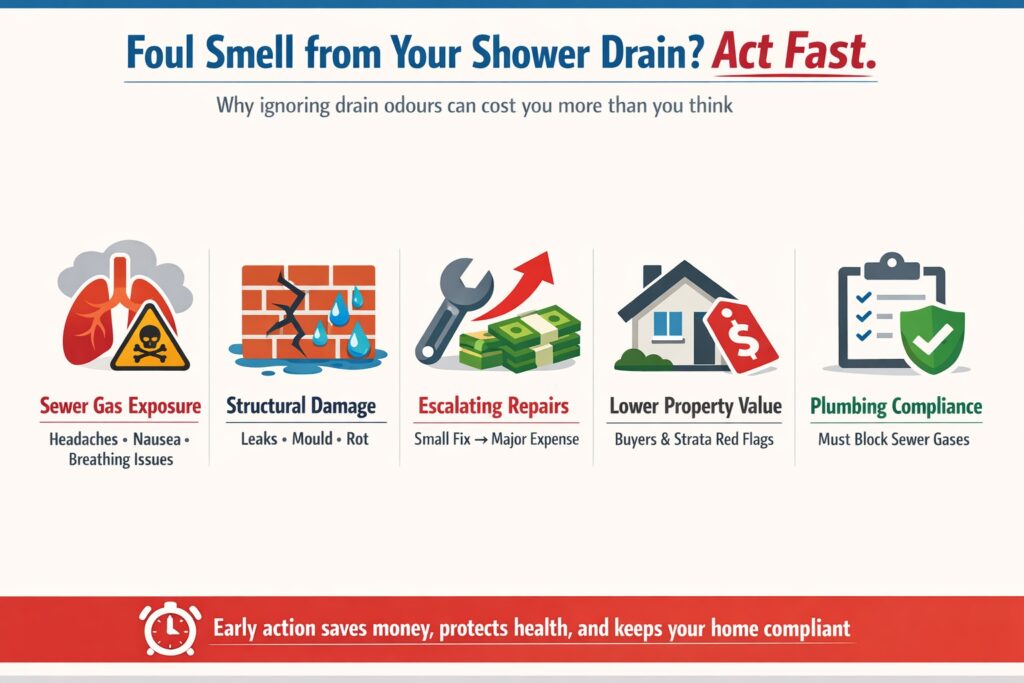
You might be tempted to mask the odour with air fresheners or simply avoid using that bathroom. But delaying action can lead to more serious consequences. Here’s why a foul smell from your shower drain should never be ignored.
| Issue | Short-Term Risk | Long-Term Risk |
|---|---|---|
| Dry P-trap | Sewer gas odour | Chronic exposure, respiratory irritation |
| Biofilm buildup | Unpleasant smell | Persistent clogs, pipe corrosion |
| Cracked pipe | Gas leak, minor water seepage | Structural damage, mould growth |
| Blocked vent | Slow drains, odour backup | System-wide drainage failure |
Health Risks from Sewer Gas Exposure
Sewer gas contains hydrogen sulphide, methane, ammonia, and other compounds. Short-term exposure can cause headaches, nausea, dizziness, and respiratory irritation. Prolonged exposure—especially in poorly ventilated bathrooms—may lead to more severe health effects. If you smell rotten eggs or sulphur, you’re inhaling gases that should remain sealed inside your pipes.
Structural Damage and Water Leaks
Corroded pipes and faulty seals don’t just release gas—they can also leak wastewater. Even a small leak behind a wall or under a floor slab can cause timber rot, concrete spalling, and mould growth. By the time you notice visible damage, the repair bill has often multiplied.
Escalating Repair Costs
A simple drain cleaning or P-trap refill costs far less than excavating a collapsed sewer line or replacing water-damaged flooring. Early diagnosis helps you avoid emergency call-outs and major construction work. We’ve seen minor clogs turn into full pipe failures simply because the warning signs were ignored.
Impact on Property Value
Persistent odours and visible plumbing defects can deter buyers and reduce your home’s market value. Strata managers also know that unresolved drainage issues in one unit can affect neighbouring properties and trigger complaints. Addressing the problem promptly protects your investment and maintains good relationships with neighbours.
Compliance and Safety Standards
Australian plumbing regulations require that all drainage systems prevent the escape of sewer gases. If your shower drain smells, your system may not comply with AS/NZS 3500 standards. In Sydney, properties connected to the sewer mains also need to meet Sydney Water’s servicing requirements, and unlicensed work on regulated plumbing can breach NSW Fair Trading rules. A licensed plumber will ensure repairs meet current codes, giving you peace of mind and protecting you from liability.
Taking action as soon as you notice a smell can save you time, money, and stress. It also ensures your family breathes clean air and your home remains safe and compliant.
DIY Fixes vs Professional Diagnosis: What Works and What Doesn’t

Many homeowners try quick fixes before calling a plumber. Some remedies offer temporary relief, but they rarely address the underlying cause. Here’s a realistic look at common DIY methods and when it’s time to bring in a professional.
Baking Soda and Vinegar
Pouring a cup of baking soda followed by a cup of vinegar down the drain creates a fizzing reaction that can loosen light biofilm and soap scum. Flush with hot water after 15 minutes. This method is safe and inexpensive, but it won’t clear serious clogs or fix structural problems.
Boiling Water Flush
Boiling water can dissolve soap buildup and flush away loose debris. It’s a good maintenance habit but won’t remove hair clogs or repair cracked pipes. Be cautious with older PVC fittings, as extreme heat can soften or warp plastic.
Chemical Drain Cleaners
Supermarket drain cleaners use strong acids or alkalis to dissolve organic matter. They can provide quick results but also corrode pipes, harm the environment, and pose safety risks if mishandled. We don’t recommend them for regular use, especially in older Sydney homes with ageing drainage systems.
Manual Drain Snake
A hand-operated drain snake can pull out hair and small blockages near the surface. It’s effective for minor clogs but won’t reach deep obstructions or diagnose pipe damage. If you’re not comfortable using a snake, you risk pushing the blockage further down or damaging the trap.
When to Call a Licensed Sydney Plumber
If the smell persists after trying these methods, or if you notice slow drainage, gurgling sounds, or water backing up, it’s time for professional help. A licensed plumber can perform a CCTV drain inspection—inserting a camera into your pipes to locate blockages, cracks, and tree root intrusion. This diagnostic tool provides a clear picture of what’s happening inside your drainage system. Anton’s Plumbing & Gas holds NSW Lic. 210933C, so any diagnosis or repair to your drainage system is carried out to code, fully insured, and compliant with Sydney Water and AS/NZS 3500 requirements.
At Antons Plumbing & Gas, we use CCTV inspections to diagnose root causes, not just symptoms. Our team provides upfront pricing in AUD and clear options—whether that’s a simple drain clean, a trap replacement, or pipe relining to avoid excavation. We operate across the Sydney Metro, from the Inner West to the Northern Beaches, and offer same-day service for urgent issues.
Preventing Future Odours: Simple Maintenance Tips for Sydney Homeowners

Once your shower drain is repaired, a few simple habits can keep it fresh and functional. Prevention is always easier and cheaper than emergency repairs.
Run Water Regularly
If you have a guest bathroom or ensuite that sees infrequent use, run the shower for a minute every few weeks. This keeps the P-trap filled and prevents sewer gases from escaping.
Use a Drain Strainer
A mesh or silicone strainer catches hair and soap chunks before they enter the drain. Empty the strainer after each shower. This small step can dramatically reduce clog formation.
Flush with Hot Water Weekly
Pour a kettle of hot water down the drain once a week to dissolve soap scum and flush away biofilm. This habit is especially useful in hard-water areas across Sydney.
Avoid Harsh Chemicals
Chemical drain cleaners can corrode pipes and harm the environment. Stick to natural methods like baking soda and vinegar, or call a plumber for professional cleaning.
Schedule Annual CCTV Inspections
For older homes or properties with a history of drainage issues, an annual CCTV inspection can catch problems before they cause odours or blockages. It’s a proactive step that saves money in the long run.
Check Your Vent Stack
If you notice recurring smells despite regular maintenance, ask your plumber to inspect the vent stack. Clearing debris from the vent can restore proper airflow and eliminate odour backups.
These simple practices help you avoid the stress and expense of emergency repairs. They also protect your family’s health and maintain your home’s value.
Why Choose Antons Plumbing & Gas for Shower Drain Repairs in Sydney

When a foul smell from your shower drain signals urgent action, you need a plumber you can trust to find the real cause and fix it properly. Antons Plumbing & Gas is a licensed, family-owned company with more than 25 years of hands-on experience across the Sydney Metro, and we treat drain odours as a warning sign—not something to mask with quick tricks. We diagnose root causes, not just symptoms, and complete every repair to Australian Standards for safe, lasting results.
We provide end-to-end services that cover both immediate fixes and long-term prevention, including blocked drains and CCTV inspections, leak detection, burst pipe repairs, hot water system supply and installation, gas fitting and appliance connections, backflow testing, pipe relining, toilet and tap repairs, and bathroom renovations. Our team services the Inner West, Eastern Suburbs, North Shore, Northern Beaches, Hills District, Western and South-Western Sydney, Sutherland Shire, and surrounding areas. No matter the property type—home, strata, or business—we tailor the solution to your timeline, budget, and compliance needs.
You get same-day service and 24/7 emergency response with no call-out fee, plus upfront, fixed-rate pricing in AUD before work begins. We operate under NSW Fair Trading licensing requirements (Lic: 210933C), use quality parts from trusted brands, document findings clearly, and back our workmanship with a lifetime labour warranty. If you want reliable shower drain repairs from a Sydney plumber who turns up on time, respects your home, and explains everything in plain English, call +61 493 824 176 or book online for a fast quote.
Conclusion
A foul smell from your shower drain is a clear signal that something needs attention. Whether it’s a dry P-trap, a hidden clog, or a cracked pipe, ignoring the odour can lead to health risks, structural damage, and costly repairs. Professional diagnosis and timely action protect your home, your family, and your budget—giving you peace of mind and a fresh, comfortable bathroom once again.
Antons Plumbing & Gas specialises in blocked drains and CCTV inspections to identify foul odours fast. Our licensed team serves all Sydney Metro with same-day service. Get started today.
Related Articles
- How to Prevent Soap Scum in Shower Drain Before It Builds Up
- 5 Proven Tips on How to Dissolve Hair and Soap Scum in Pipes
FAQs
What Causes A Foul Smell From The Shower Drain?
A foul smell from your shower drain is often caused by a buildup of hair, soap scum, and grime, which can lead to bacteria growth. Trapped water or sewer gases can also escape through the drain, creating unpleasant odours. At Antons Plumbing & Gas, we have over 25 years of experience diagnosing and resolving such issues effectively across Sydney.
How Do I Get Rid Of The Smell In My Shower Drain?
To eliminate the smell in your shower drain, start by cleaning the drain cover and removing any visible debris. You can also use a mixture of baking soda and vinegar to help break down buildup. If the odour persists, it may indicate a deeper plumbing issue, and our team at Antons Plumbing & Gas is here to provide professional assistance.
Is A Smelly Shower Drain A Sign Of A Plumbing Problem?
Yes, a smelly shower drain can indicate a plumbing problem, such as a blockage or a broken trap that allows sewer gases to escape. If you’re experiencing this issue, it’s best to consult with our qualified, licensed technicians who can assess and resolve the problem promptly and safely.
Can A Clogged Shower Drain Cause A Bad Odour?
Absolutely, a clogged shower drain can lead to stagnant water, which can produce a bad odour as organic matter decomposes. Regular maintenance and timely interventions by our experienced team at Antons Plumbing & Gas can prevent such clogs and keep your plumbing system odour-free.
How Often Should I Clean My Shower Drain To Prevent Odours?
To prevent odours, it’s advisable to clean your shower drain at least once a month. Regular cleaning helps remove buildup and keeps water flowing smoothly. If you’re unsure or need assistance, our team is available for comprehensive drain cleaning services across the Sydney Metro.
Do You Offer Same-Day Shower Drain Repairs In Sydney?
Yes, Antons Plumbing & Gas offers same-day service and 24/7 emergency response across the Sydney Metro, with no call-out fee. Call +61 493 824 176 to check availability for your suburb today.
Is Antons Plumbing & Gas Licensed To Work In NSW?
Yes, we are a fully licensed and insured plumbing business holding NSW Lic. 210933C. All drain and pipe repairs are carried out in line with NSW Fair Trading requirements, AS/NZS 3500, and Sydney Water servicing standards.
Do You Charge A Call-Out Fee For Drain Smell Inspections?
No, we don’t charge a call-out fee. We provide upfront, fixed-rate pricing in AUD before any work begins, so you know exactly what you’re paying for before we start the job.
Which Sydney Suburbs Do You Service?
We service the Inner West, Eastern Suburbs, North Shore, Northern Beaches, Hills District, Western and South-Western Sydney, Sutherland Shire, and surrounding areas across the Sydney Metro.
How Much Does It Cost To Fix A Smelly Shower Drain?
The cost depends on the root cause found during inspection—whether it’s a simple drain clean, a trap reseal, or pipe relining. We always provide an obligation-free, fixed quote in AUD before starting any work, so there are no surprises on your invoice.
Do You Provide A CCTV Drain Inspection Before Quoting?
Yes, our licensed plumbers use CCTV drain cameras to locate blockages, cracks, and tree root intrusion so we can diagnose the real cause of the smell and give you an accurate, fixed-price quote before any repair work starts.
Can You Fix A Smelly Shower Drain On The Same Visit I Call?
In many cases, yes. Straightforward causes like hair clogs, dried-out traps, or biofilm buildup can often be resolved during the same visit, once our plumber has confirmed the cause on-site.
Do You Offer After-Hours Or Emergency Plumbing In Sydney?
Yes, Antons Plumbing & Gas provides 24/7 emergency plumbing across Sydney, including after-hours and weekend call-outs for urgent drain and sewer gas issues.
Do You Work On Strata Properties Or Rentals?
Yes, we regularly work with homeowners, tenants, landlords, and strata managers across Sydney, and can liaise directly with agents or committees to schedule inspections and repairs.
Will Repairs Comply With Sydney Water And AS/NZS 3500 Requirements?
Yes. As a licensed NSW plumbing business (Lic. 210933C), we carry out all drainage repairs to meet AS/NZS 3500 plumbing standards and relevant Sydney Water requirements for properties connected to the sewer mains.
Do I Need To Be Home For The Inspection Or Repair?
Generally yes, so our plumber can access the bathroom and discuss findings with you directly. If you’re a landlord or managing agent, we can arrange access with your tenant and keep you updated by phone.
What Payment Methods Do You Accept?
We accept standard payment methods and provide a clear, itemised invoice in AUD once the fixed-price quote has been agreed and the work is complete.
How Do I Book A Sydney Plumber For A Smelly Shower Drain?
You can call +61 493 824 176 to speak with our team directly, or book online through our website for a fast quote and available appointment times across the Sydney Metro.
What Information Should I Have Ready When I Call?
It helps to have your suburb, a description of the smell and any other symptoms (slow drainage, gurgling, visible leaks), and your preferred appointment times ready when you call, so we can dispatch the right plumber quickly.
Do You Offer A Warranty On Drain And Pipe Repairs?
Yes, we back all of our workmanship with a lifetime labour warranty, so you have long-term peace of mind after any drain, trap, or pipe repair.
Can You Also Fix Other Blocked Drains While You’re There?
Yes, while diagnosing a smelly shower drain, our licensed plumbers can also inspect and clear other blocked drains in the property, such as bathroom floor wastes, laundry drains, or kitchen sinks, during the same visit.