
A shower drain stopped up is one of the most frustrating plumbing problems Sydney homeowners face. Water pooling around your feet during a morning rinse, slow drainage after every wash, or a complete standstill that forces you to bail out water with a bucket—these are all signs that something beneath the grate needs attention. The good news is that most shower blockages stem from a handful of common causes, and many can be tackled with simple tools and a bit of know-how.
In this guide, we’ll walk you through the top five reasons your shower drain stopped up, explain straightforward DIY fixes you can try today, and outline when it’s time to call in a licensed plumber. By the end, you’ll know exactly what’s happening under your bathroom floor and how to keep water flowing freely—whether you’re dealing with a rain shower head in the Inner West or an outdoor shower setup in the Eastern Suburbs.
Key Takeaways
- Hair mixed with soap residue is the leading cause of shower drain blockages in Sydney homes.
- Soap scum from shampoo and conditioner creates sticky buildup that traps debris over time.
- Hard water deposits, improper pipe slope, and foreign objects can all contribute to a stopped-up drain.
- DIY methods like baking soda and vinegar, plungers, and drain snakes work for minor clogs.
- Professional CCTV drain inspection and hydro-jetting are the safest options for recurring or deep blockages.
- Prevention—drain covers, monthly cleanings, and regular maintenance—saves time and money in the long run.
Why Your Shower Drain Stopped Up: The Top 5 Causes
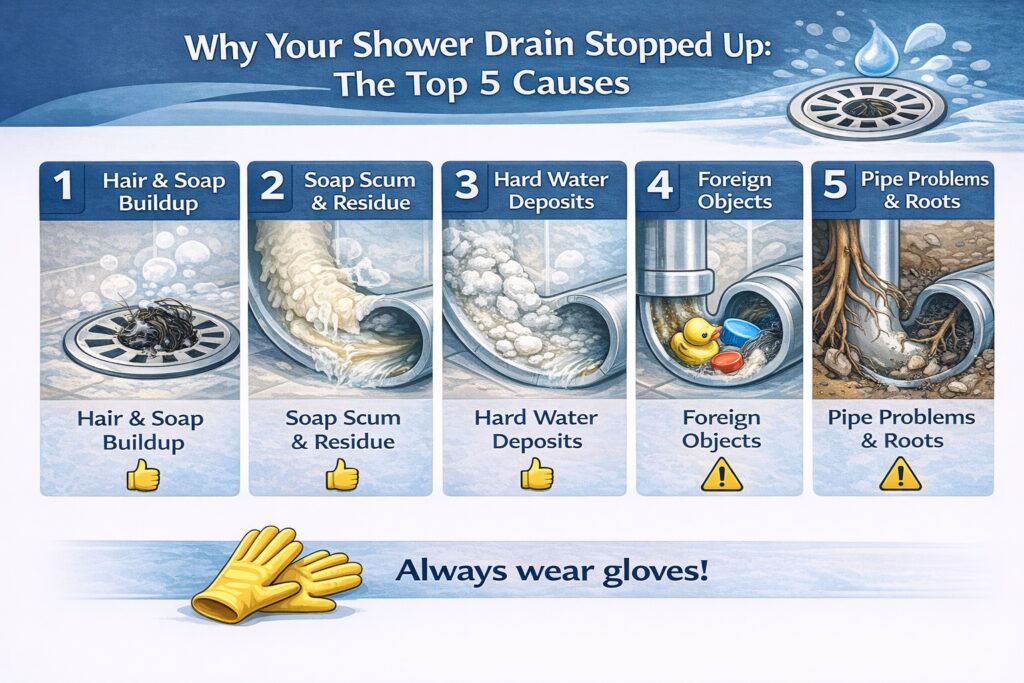
Understanding what’s blocking your drain is the first step toward a lasting fix. Most shower clogs don’t appear overnight—they build up gradually as hair, soap, and other materials accumulate inside the pipe. Let’s break down the five most common culprits we see across Sydney, from Sutherland Shire to the Northern Beaches.
1. Hair Buildup Mixed With Soap Residue
Hair is the number one offender when it comes to shower drain stoppages. Every time you wash your hair, loose strands slip through the grate and cling to the inside walls of the pipe. On its own, hair can create a small snag, but when it mixes with soap residue from shampoo, conditioner, and body wash, it forms thick, sticky clumps that catch even more debris.
Over weeks and months, this tangled mass grows larger until water can barely squeeze past. If you share a bathroom with family members—especially those with long hair—the rate of buildup accelerates. Even a crystal shower falls or rain shower system with a wide spray pattern won’t prevent hair from entering the drain.
2. Soap Scum and Product Residue
Modern shampoos, conditioners, and body washes contain oils, silicones, and thickening agents that don’t fully dissolve in water. These ingredients leave behind a waxy film known as soap scum, which coats the inside of your pipes. Over time, the scum hardens and narrows the pipe diameter, slowing drainage and creating a sticky surface that traps hair and other particles.
Soap scum is especially problematic in homes with a shower over bath setup, where product usage tends to be higher. The residue can also combine with minerals in Sydney’s water supply, forming a cement-like layer that’s difficult to remove without professional tools.
3. Hard Water Deposits and Mineral Buildup
Sydney’s water supply varies in hardness depending on your suburb, but many areas deal with elevated levels of calcium and magnesium. When hard water flows through your pipes, these minerals precipitate out and stick to the pipe walls, gradually building up a chalky, rock-hard deposit. This process is called scaling.
Scaling reduces the effective diameter of your drain pipe, much like soap scum, and it can eventually lead to a complete blockage. If you notice white or grey crust around your shower drain grate or taps, hard water is likely contributing to your drainage issues. An outdoor shower exposed to Sydney’s weather may also accumulate mineral deposits faster due to temperature fluctuations.
4. Foreign Objects and Accidental Debris
Small items can slip through the drain grate and lodge in the trap or pipe bend below. Common culprits include shower caps, razor covers, bottle caps, children’s bath toys, and even jewellery. Once wedged in place, these objects act as a dam, catching hair and soap until the drain stops flowing altogether.
In some cases, construction debris—grout, tile fragments, or plaster—can enter the drain during a bathroom renovation. If you’ve recently updated your bathroom or installed a new rain shower system, it’s worth checking whether any foreign material made its way into the pipe.
5. Improper Pipe Slope and Tree Root Intrusion
Not all blockages are caused by what goes down the drain. Sometimes the problem lies in the pipe itself. If your shower drain was installed with insufficient slope—less than the required 1:60 or 1:80 gradient specified in AS/NZS 3500—water won’t flow fast enough to carry debris away, and solids will settle and accumulate over time.
Tree root intrusion is another hidden issue, especially in older Sydney homes with clay or earthenware pipes. Roots seek out moisture and can crack or penetrate the pipe, creating a blockage point and allowing soil to enter. If your shower drain stopped up repeatedly despite regular cleaning, roots or poor pipe slope may be to blame.
How to Fix a Shower Drain Stopped Up: DIY Methods
Before calling a plumber, you can try a few safe, straightforward fixes at home. These methods work best for fresh or minor clogs caused by hair and soap buildup. Always wear gloves and eye protection when working with drains, and never mix chemical cleaners with other substances.
Remove Visible Debris by Hand
Start by lifting the drain cover or grate. Use a pair of needle-nose pliers or a bent wire coat hanger to pull out any hair, soap clumps, or foreign objects you can see. This simple step often restores partial flow and makes follow-up treatments more effective.
If the blockage is within arm’s reach, you may clear it entirely without any chemicals or tools. Rinse the area with hot water to flush away loosened debris.
Baking Soda and Vinegar Flush
Pour half a cup of baking soda directly into the drain, followed by half a cup of white vinegar. The mixture will fizz and bubble as it breaks down organic material and soap scum. Let it sit for 15 minutes, then flush with a kettle of hot water.
This method is safe for all pipe types and won’t damage your plumbing. Repeat monthly as a preventive measure to keep your shower over bath or rain shower drain flowing smoothly.
Use a Plunger
Block the overflow opening with a wet cloth to create a seal, then place a cup plunger over the drain. Push down firmly and pull up rapidly several times to create suction. The pressure change can dislodge hair clumps and soap buildup lodged in the trap.
Plungers work best when there’s enough standing water to cover the cup. If your shower drain is completely dry, add a few litres of water before plunging.
Boiling Water Flush (Metal Pipes Only)
Boil one to two litres of water in a kettle, then pour it slowly down the drain in stages. The heat can melt soap scum and grease, allowing the blockage to break apart and wash away. This method is safe for metal pipes but should never be used on PVC or plastic fittings, as boiling water can soften or warp them.
If you’re unsure what type of pipes you have, skip this step or use hot tap water instead.
Plastic Drain Snake or Zip-It Tool
A plastic drain snake—also called a zip-it tool—is a long, flexible strip with barbed edges designed to hook and pull out hair. Insert the tool into the drain as far as it will go, twist it gently, then pull it back out along with any trapped debris.
This tool is inexpensive, reusable, and highly effective for hair-related clogs. It’s a must-have for any Sydney household with a shower drain that stops up regularly.
Avoid Harsh Chemical Cleaners
While supermarket drain cleaners promise fast results, they often contain caustic chemicals that can corrode pipes, damage seals, and harm the environment. They’re also dangerous to handle and can cause burns if splashed on skin. If DIY methods don’t work, it’s safer and more effective to call a licensed plumber than to pour chemicals down the drain.
When to Call a Professional Plumber for a Shower Drain Stopped Up
Some shower drain blockages are too deep, stubborn, or complex for DIY methods to solve safely. If you’ve tried basic clearing steps and the drain is still slow or completely blocked, it’s time to call a professional plumber. At Anton’s Plumbing & Gas, we can assess the issue quickly and clear it properly without guesswork or damage to your pipes.
If water backs up into other fixtures like the toilet or basin when the shower runs, the blockage is likely in the main sewer line, not the shower trap. This typically requires CCTV drain inspection to pinpoint the exact location and cause before we clear it with the right method, such as hydro-jetting or targeted repairs. Main line issues are serious because delays can lead to overflows, property damage, and bigger repair costs.
Recurring blockages, foul odours, or older clay and cast-iron pipes are strong signs there’s an underlying problem like tree roots, pipe collapse, scaling, or ventilation faults. These situations won’t be solved long-term with plungers or snakes, and DIY attempts can sometimes make damage worse. Our licensed team can diagnose the root cause and recommend a lasting solution—often the same day—including options like pipe relining to avoid excavation.
How Antons Plumbing & Gas Can Help With Your Shower Drain Stopped Up

At Antons Plumbing & Gas, we’ve spent more than 25 years clearing blocked drains across Sydney. We know that a shower drain stopped up isn’t just an inconvenience—it disrupts your morning routine, creates hygiene concerns, and can signal bigger plumbing issues. That’s why we offer same-day service, 24/7 emergency response, and a fixed-rate pricing model with no call-out fee.
Our team arrives with CCTV drain cameras, hydro-jetting equipment, and pipe relining technology to diagnose and fix the problem on the spot. We don’t just clear the blockage—we identify the root cause, whether that’s hair buildup, tree roots, or a collapsed pipe, and present clear options for repair or replacement. Every job is completed to AS/NZS 3500 standards, backed by our lifetime labour warranty, and documented with before-and-after photos so you can see exactly what we’ve done.
We serve the entire Sydney Metro—Inner West, Eastern Suburbs, North Shore, Northern Beaches, Hills District, Western and South-Western Sydney, Sutherland Shire, and beyond. Whether you need a quick drain snake for a hair clog or a full pipe reline for tree root damage, we’ll tailor our work to your home, timeline, and budget. Call us or book online to request a fast quote and get your shower drain flowing again.
Conclusion
A shower drain stopped up is a common problem with clear solutions. Hair, soap scum, hard water deposits, foreign objects, and pipe issues are the usual suspects, and most can be tackled with simple DIY methods or a quick call to a licensed plumber. Prevention—drain covers, monthly cleanings, and regular inspections—keeps water flowing and saves you time and money.
Antons Plumbing & Gas offers expert blocked drain solutions backed by 25 years of experience. We diagnose the root cause and fix it right the first time. Call us to get started today.
Related Articles
- 5 Proven Tips for Your DIY Clogged Shower Drain Fix
- 5 Proven Ways How to Clear a Clogged Shower Drain Fast
FAQs
What Causes A Shower Drain To Get Clogged?
Shower drains often become clogged due to a buildup of hair, soap scum, and other debris. Over time, these materials can accumulate and restrict water flow. Additionally, mineral deposits from hard water can contribute to blockages. Regular maintenance and prompt attention to any slow drainage can help prevent severe clogs.
How Do You Unclog A Shower Drain?
To unclog a shower drain, start by removing any visible debris from the drain cover. You can also use a drain snake or a plumbing auger to dislodge deeper blockages. For minor clogs, pouring a mixture of baking soda and vinegar down the drain can help break down buildup. If these methods don’t work, it may be time to call a professional plumber for assistance.
Can I Use A Plunger On A Shower Drain?
While a plunger can be effective on some drain types, it’s typically not recommended for shower drains. The design of shower drains can make it difficult to create the necessary seal for effective plunging. If you’re experiencing a clog, it’s better to try other methods or consult with a plumbing expert to avoid causing damage.
What Is The Best Way To Clean A Shower Drain?
The best way to clean a shower drain involves regularly removing the drain cover and clearing out any hair and debris. You can also use a mixture of vinegar and baking soda to help break down soap scum and buildup. For thorough cleaning, consider scheduling a professional drain cleaning service, which can ensure your system is clear and functioning well.
How Do You Prevent Shower Drains From Clogging?
To prevent shower drains from clogging, install a drain cover to catch hair and debris before they enter the drain. Regularly clean the drain and remove hair after each use. Additionally, flushing the drain with hot water and vinegar once a month can help dissolve buildup. If you notice slow drainage, contact a plumbing professional to address potential issues before they worsen.