
You finish cooking dinner, and there’s a pan full of leftover oil sitting on the stovetop. The sink is right there, and pouring it down seems like the easiest option. But does oil actually clog drains, or is that just something plumbers say to drum up business? The short answer is yes—oil absolutely clogs drains, and it does so in ways that can damage your home plumbing and even your neighbourhood’s sewer system. What starts as a quick rinse can turn into a slow-draining sink, foul odours, or a complete blockage that requires professional intervention.
In this article, we’ll walk you through exactly how oil causes blockages, what happens when it enters your pipes, and the practical steps you can take to protect your drains. You’ll also learn about related questions like does bath oil clog drains, whether vinegar really unclogs drains, and how our team at Antons Plumbing & Gas can help when prevention isn’t enough.
Key Takeaways
- Cooking oil cools and solidifies inside pipes, narrowing the diameter and trapping debris until a full blockage forms.
- Oils bind with calcium and other fats in sewer lines, creating hard masses known as fatbergs that can affect entire neighbourhoods.
- Even small amounts of oil accumulate over time, clinging to pipe walls and mixing with soap scum and food particles.
- Alternative disposal methods—like wiping pans with paper towel or using a sealed container—prevent most oil-related blockages.
- Professional CCTV drain inspections and high-pressure water jetting can diagnose and clear oil build-up before it causes a burst or overflow.
Does Oil Clog Drains? Understanding the Science Behind Blockages
When you pour hot cooking oil down the sink, it flows freely at first. But as it travels through your pipes, it cools rapidly. Most cooking oils—whether vegetable, canola, or animal fats like bacon grease—solidify at room temperature or below. Once they harden, they stick to the inside of your pipes, forming a sticky coating that narrows the passage. Over days and weeks, that coating thickens as more oil, soap residue, and food particles get trapped in the layer.
This build-up doesn’t happen overnight. You might not notice any change for a few weeks, but eventually the water drains slower. You might hear gurgling sounds or smell a faint odour rising from the plughole. By the time you see standing water in the sink, the blockage is often severe enough to require professional clearing. The real problem is that oil doesn’t just affect your home—it travels into the public sewer, where it combines with other fats and calcium to form rock-hard masses that can block entire street mains.
The science is simple: oil and water don’t mix. When oil enters a drain, it separates from water and clings to any rough surface it encounters. Even if you run hot water after pouring oil, the water only pushes the oil further down the line—it doesn’t dissolve it. Once the oil reaches a cooler section of pipe, it solidifies again. This cycle repeats every time someone in your household rinses a greasy pan or plate, and the cumulative effect is a narrowed, sluggish drain that’s primed for a full blockage.
Why Cooking Oil Turns Solid in Your Pipes
Most cooking oils have a melting point between 10°C and 25°C. Sydney’s underground pipes sit at a relatively stable temperature, often cooler than your kitchen. When hot oil hits that environment, it transitions from liquid to semi-solid or solid within minutes. Animal fats like lard or butter solidify even faster because they have higher melting points. Once solidified, the oil acts like glue, capturing hair, soap scum, coffee grounds, and other debris that would normally flow through.
How Oil Mixes with Soap and Calcium
In your sewer line, oil doesn’t stay pure. It reacts with soap residues and minerals in the water—especially calcium. This chemical reaction creates a waxy, soap-like substance that’s much harder than the original oil. Over time, these deposits can calcify, forming a crust that’s difficult to remove without mechanical intervention. This is the same process that creates fatbergs in city sewers, some of which weigh several tonnes and require excavation to clear.
The Role of Pipe Material and Age
Older homes in Sydney often have clay or cast-iron pipes, which have rougher interior surfaces than modern PVC. Rough surfaces give oil more places to grip, speeding up the accumulation. Even newer plastic pipes aren’t immune—any bend, joint, or imperfection in the pipe can trap a small amount of oil, which then grows into a larger blockage. Tree roots that infiltrate clay pipes create additional rough spots where oil and debris collect.
Understanding these mechanisms helps explain why even occasional oil disposal can lead to serious problems. It’s not just about one pan of oil—it’s the cumulative effect of every rinse, every greasy plate, and every time someone in your home sends fat down the drain.
How to Prevent Oil From Clogging Your Drains
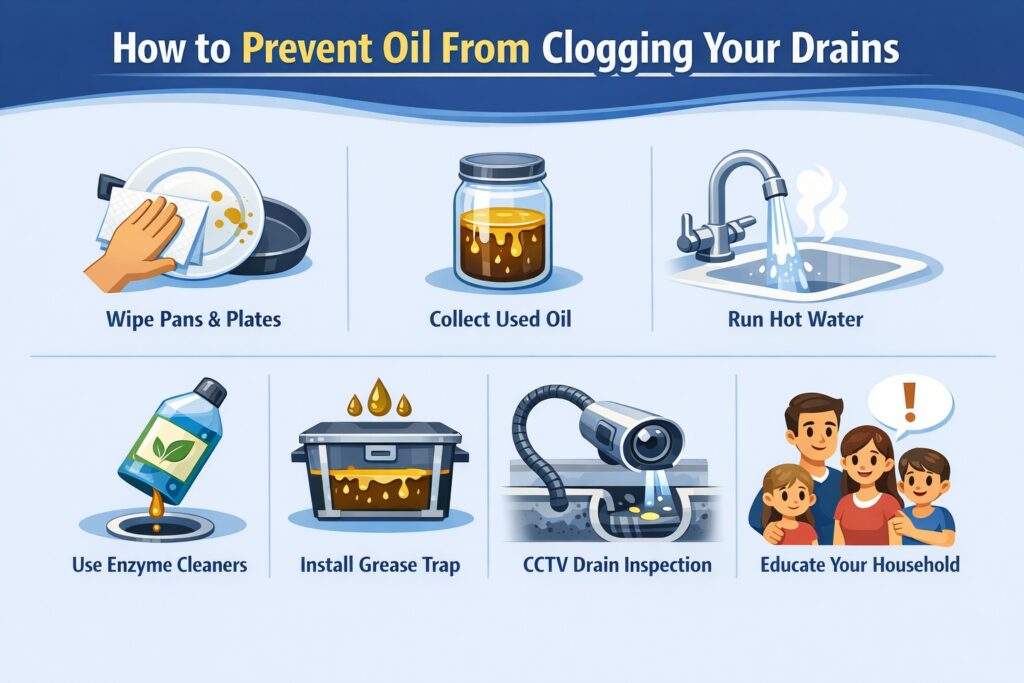
Prevention starts with changing a few simple habits in your kitchen and bathroom. The goal is to keep oil out of your pipes entirely, rather than trying to manage it once it’s inside. Here are the most effective strategies we recommend to Sydney homeowners.
1. Wipe Pans and Plates Before Washing
Use a paper towel or old rag to wipe excess oil and grease from pans, plates, and utensils before rinsing them in the sink. This removes the bulk of the oil and prevents it from entering your drain in the first place. Dispose of the paper towel in your general waste bin—it’s a small step that makes a big difference over time.
2. Collect Used Cooking Oil in a Sealed Container
Keep an old jar or metal tin near your stove. Once cooking oil has cooled, pour it into the container and seal it. When the container is full, dispose of it in your regular rubbish or check if your local council offers a cooking oil recycling program. Some Sydney councils accept cooking oil for conversion into biodiesel, which is a more sustainable option.
3. Run Hot Water After Every Wash
After washing dishes, run hot water down the sink for 20 to 30 seconds. This helps flush any residual oil further down the line before it has a chance to cool and solidify. While this isn’t a complete solution on its own, it reduces the amount of oil that clings to your pipes.
4. Use Enzymatic Drain Cleaners Monthly
Enzymatic cleaners contain bacteria and enzymes that digest fats, oils, and organic matter. Pour the recommended amount down your kitchen and bathroom drains once a month, then let it sit overnight. This breaks down any light build-up before it becomes a problem. Avoid harsh chemical drain cleaners, which can damage pipes and aren’t effective against hardened oil.
5. Install a Grease Trap for Commercial Kitchens
If you run a café, restaurant, or any food business, a grease trap is a legal requirement in many Sydney council areas. Grease traps capture fats and oils before they enter the sewer system, and they must be cleaned regularly to remain effective. Our team installs, services, and tests grease traps to keep your business compliant with local regulations.
6. Schedule Regular CCTV Drain Inspections
Even with good habits, some oil will inevitably make its way into your pipes. A CCTV drain inspection every few years lets you see the inside of your pipes and catch build-up early. We insert a high-definition camera into your drain and record the footage, so you can see exactly where oil, roots, or other debris are accumulating. Early detection means simpler, less expensive clearing.
7. Educate Your Household or Staff
Make sure everyone in your home or business understands why oil shouldn’t go down the drain. Put a small bin or container near the sink for oil disposal, and post a reminder if needed. Consistent habits across your household prevent the gradual build-up that leads to blockages.
These steps won’t just protect your drains—they’ll also extend the life of your plumbing system and reduce the risk of emergency call-outs. If you’re unsure whether your drains are already affected, our team can perform a same-day inspection and provide clear options for clearing or preventive maintenance.
Why Professional Clearing Beats DIY Methods for Oil Clogs

There’s no shortage of DIY drain-clearing advice online, but when it comes to oil blockages, most home remedies fall short. Boiling water can soften surface oil, but it won’t clear a blockage that’s several metres down your pipe. Plungers and hand augers work for hair and solid debris, but they can’t remove the sticky, hardened layer of oil that coats your pipe walls. Chemical drain cleaners are harsh, dangerous, and ineffective against fats.
Professional clearing offers three key advantages. First, we diagnose the root cause with CCTV inspection, so we’re not guessing. Second, we use high-pressure water jetting equipment that’s powerful enough to remove even calcified oil deposits without damaging your pipes. Third, we back our work with a lifetime labour warranty, so if the same blockage recurs due to a fault in our workmanship, we’ll fix it at no extra charge.
Time is another factor. A DIY attempt can take hours and still leave you with a partially blocked drain. Our team typically clears most blockages within one to two hours, including diagnosis and clean-up. We also dispose of any waste material safely and leave your property tidy. If you’re a busy homeowner, strata manager, or business owner, professional clearing is the most efficient and stress-free option.
We serve the entire Sydney metro—Inner West, Eastern Suburbs, North Shore, Northern Beaches, Hills District, Western and South-Western Sydney, Sutherland Shire, and beyond. Our 24/7 emergency response means you’re never left waiting overnight with a blocked drain. We charge a fixed rate, so you know the cost before we start work, and there’s no call-out fee from 7am to 3pm weekdays excluding public holidays.
Conclusion
Oil clogs drains—there’s no debate about that. Every time you pour oil down the sink, you’re adding to a build-up that will eventually cause a blockage, foul smells, or even a sewage overflow. The good news is that prevention is simple: wipe your pans, collect used oil in a sealed container, and run hot water after every wash. When prevention isn’t enough, professional CCTV inspection and high-pressure water jetting restore your drains quickly and safely.
Antons Plumbing & Gas clears oil-damaged pipes with expert blocked drain solutions across Sydney. Our licensed team diagnoses the root cause and restores flow fast. Learn more today.
Related Articles
- How to Prevent a Fat Clogged Sink in Your Kitchen
- Understanding Why Your Sink Is Not Draining Well
- Can Oil Clog a Sink? What Plumbers Wish You Knew
FAQs
What Happens If You Pour Oil Down The Drain?
Pouring oil down the drain can lead to serious plumbing issues. As the oil cools, it can solidify and cling to the walls of your pipes, creating blockages over time. This can result in slow drainage or complete clogs, requiring professional intervention to resolve.
Can Cooking Oil Clog A Drain?
Yes, cooking oil can clog a drain. When poured down the sink, it can mix with grease and food particles, forming a thick sludge that obstructs proper drainage. Regularly disposing of cooking oil in this manner can lead to costly plumbing repairs.
How Do You Unclog A Drain With Oil?
To unclog a drain with oil, start by using a plunger to create suction and dislodge the blockage. If that doesn’t work, consider using a mixture of baking soda and vinegar to break down the grease. For stubborn clogs, it’s best to contact a licensed plumber like Antons Plumbing & Gas for expert assistance.
Is It Safe To Pour Oil Down The Sink?
No, it is not safe to pour oil down the sink. Doing so can lead to significant plumbing issues, environmental hazards, and costly repairs. It’s recommended to dispose of oil responsibly, such as taking it to a recycling center.
What Should You Do If Oil Clogs Your Drain?
If oil clogs your drain, avoid using chemical drain cleaners as they can damage your pipes. Instead, try using a plunger or a natural remedy like baking soda and vinegar. If the clog persists, contact Antons Plumbing & Gas for professional help to safely clear the blockage and restore your plumbing.