
A toilet sewer smell is more than just unpleasant—it signals a plumbing issue that needs attention. Whether the odor comes from a dried-out trap, a faulty seal, or a blocked vent, identifying the root cause helps you take the right action. Some fixes are simple and quick, while others require professional diagnosis and repair.
This guide walks you through the most common reasons your toilet smells like sewer, what you can check yourself, and when to call a licensed plumber. You’ll also learn how our team at Antons Plumbing & Gas can help Sydney homeowners tackle persistent bathroom drain smells with same-day service and upfront pricing.
Key Takeaways
- Dried P-traps are the easiest cause of sewer smell and can be fixed by running water to refill the trap.
- Worn wax rings around the toilet base allow sewer gases to escape into your bathroom.
- Blocked or incorrectly installed vent pipes push odors back into your home instead of outside.
- Clogged drains in showers or sinks can create stagnant water and bacterial growth, mimicking sewer odor.
- Professional CCTV drain inspections reveal hidden blockages, cracks, or tree root intrusion.
- Same-day service and fixed-rate pricing mean you know the cost before work begins.
Why Your Toilet Smells Like Sewer: Common Causes
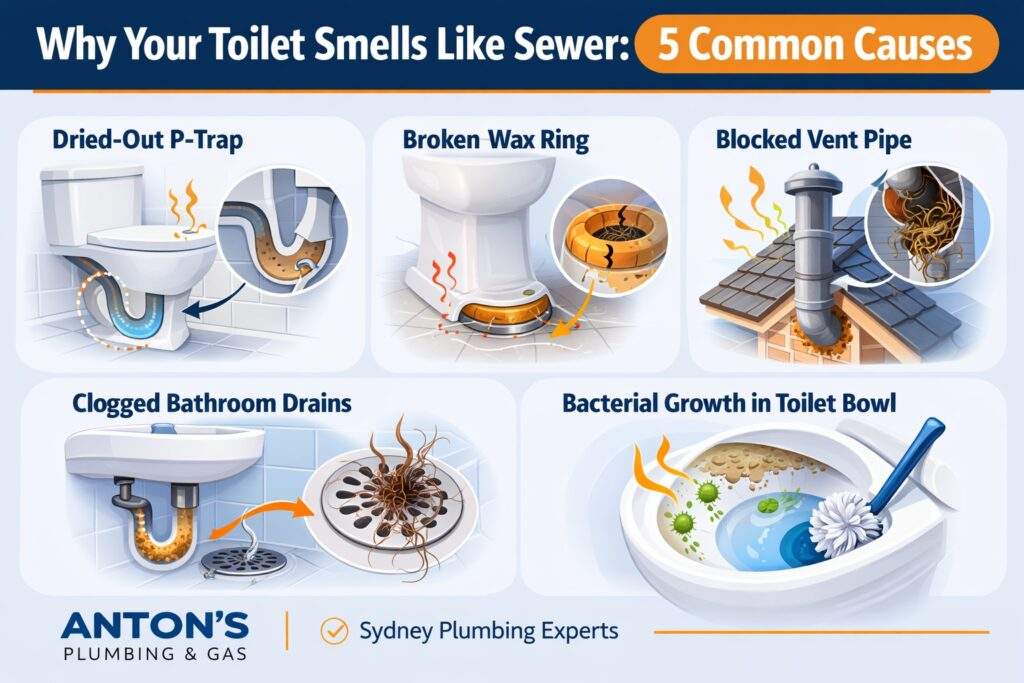
Sewer odors from your toilet usually point to a breakdown in the plumbing system that normally keeps gases out of your home. The most frequent culprits include dried-out traps, damaged seals, and ventilation problems. Understanding these issues helps you decide whether a quick DIY fix will work or if you need a licensed plumber to inspect the system.
In Sydney homes, especially older properties with clay pipes, tree roots and aging infrastructure can also contribute to persistent smells. Let’s look at the specific causes you’re likely to encounter.
Dried-Out P-Trap
Every toilet has a built-in water trap that holds a small amount of water to block sewer gases from rising through the bowl. If the toilet isn’t used for several weeks—common in guest bathrooms or holiday homes—the water in the trap evaporates. Once that seal disappears, sewer smell flows straight into the room.
Running the toilet or flushing it once refills the trap and stops the odor immediately. If you have a rarely used bathroom, flush the toilet every few weeks to maintain the water seal.
Worn or Broken Wax Ring
The wax ring sits between the base of your toilet and the floor flange, creating an airtight seal. Over time, this ring can dry out, crack, or shift, especially if the toilet wobbles or was installed incorrectly. When the seal fails, sewer gases leak around the base of the toilet and into your bathroom.
You might notice the smell is stronger near the floor or that the toilet rocks slightly when you sit on it. Replacing a wax ring requires lifting the toilet, cleaning the flange, and installing a new seal—a job best handled by a qualified plumber to ensure a proper, compliant fit.
Faulty or Blocked Vent Pipe
Your plumbing system relies on vent pipes to release sewer gases safely outside, usually through the roof. If a vent pipe is blocked by debris, bird nests, or leaves, or if it was cut too short or installed incorrectly, gases can’t escape. Instead, they’re pushed back down into your bathroom, creating a persistent toilet sewer smell.
Vent issues are harder to diagnose without professional tools. Our team uses CCTV drain inspection cameras to check vent lines and identify blockages or damage. Clearing or repairing a vent pipe restores proper airflow and eliminates odors at the source.
Clogged Drains in the Bathroom
Sometimes the smell isn’t coming from the toilet itself but from a nearby shower or sink drain. Hair, soap scum, and organic debris can build up inside drain pipes, trapping water and creating an environment for bacteria to thrive. As bacteria break down the organic matter, they release foul-smelling gases that can be mistaken for sewer smell from the toilet.
A thorough drain cleaning removes the buildup and restores proper flow. For recurring clogs, a CCTV inspection can reveal whether there’s a deeper issue, such as a cracked pipe or tree root intrusion.
Bacterial Growth in the Toilet Bowl
If your toilet isn’t cleaned regularly, bacteria and organic matter accumulate in the bowl and under the rim. As these microorganisms multiply, they produce gases that smell similar to sewage. This issue is more common in toilets that see light use or in homes with hard water, which can leave mineral deposits that harbor bacteria.
A good scrub with a toilet brush and cleaner usually solves the problem. For persistent odors, check under the rim and around the siphon jets where bacteria can hide. If cleaning doesn’t help, the smell may be coming from a plumbing issue rather than the bowl itself.
What You Can Check Yourself Before Calling a Plumber
Before you pick up the phone, there are a few simple checks you can do to narrow down the source of the sewer smell. These steps won’t replace a professional inspection, but they can help you rule out easy fixes and provide useful information when you do call for help.
1. Run Water in All Fixtures
Start by flushing the toilet and running water in every sink, shower, and floor drain in the bathroom. This refills any dried-out P-traps and re-establishes the water seal that blocks sewer gases. If the smell goes away after a few minutes, you’ve found the cause.
If the odor persists, the problem is likely deeper in the plumbing system.
2. Inspect the Toilet Base for Leaks
Look closely at the base of the toilet where it meets the floor. Check for water pooling, discoloration, or a soft, spongy feeling in the flooring. These signs suggest the wax ring has failed and sewage is leaking out.
If you see any of these indicators, avoid using the toilet and call a plumber. A leaking wax ring can damage your subfloor and create health hazards.
3. Check for Wobbling or Movement
Sit on the toilet and shift your weight gently from side to side. If the toilet rocks or feels unstable, the wax ring may have compressed unevenly or the flange bolts may be loose. This movement can break the seal and allow sewer gases to escape.
Tightening the bolts may help temporarily, but if the wax ring is already damaged, you’ll need a replacement to fully resolve the issue.
4. Look for Visible Cracks in the Toilet
Examine the porcelain bowl and tank for hairline cracks or chips. Even small cracks can leak water and sewer gases. Cracks in the bowl are especially problematic because they can’t be repaired—you’ll need to replace the entire toilet.
If you spot a crack, stop using the toilet and contact a licensed plumber to assess the damage and recommend a replacement.
5. Listen for Gurgling Sounds
When you flush the toilet or run water in the sink, listen for gurgling or bubbling noises coming from the drains. These sounds indicate air is trapped in the pipes, often due to a blocked vent or a partial clog. Gurgling is a warning sign that your plumbing system isn’t venting properly.
A plumber can use diagnostic tools to locate the blockage and clear it before it causes a backup or persistent odor.
How Antons Plumbing & Gas Diagnoses and Fixes Toilet Sewer Smell
When DIY checks don’t solve the problem, it’s time to bring in a professional. Our team at Antons Plumbing & Gas uses a systematic approach to identify the root cause of sewer odors and provide a lasting fix. We don’t just mask the smell—we diagnose the underlying issue and repair it to Australian Standards.
Here’s how we work through a typical toilet sewer smell call-out in Sydney.
Step 1: On-Site Inspection and Odor Tracing
Our plumber arrives on-site and conducts a thorough visual inspection of your toilet, surrounding fixtures, and visible plumbing. We check the wax ring, flange, and base for leaks or movement. We also run water through all drains to see if the smell intensifies or if gurgling sounds appear.
This initial inspection often reveals obvious issues like a dried trap or a loose toilet. If the cause isn’t immediately clear, we move to more advanced diagnostics.
Step 2: CCTV Drain Inspection
If surface-level checks don’t pinpoint the problem, we use a CCTV drain inspection camera to look inside your pipes. This camera travels through your drains and vent lines, sending live video back to our technician. We can see blockages, cracks, tree root intrusion, and even misaligned pipe joints that might be letting sewer gases escape.
CCTV inspection is especially useful in older Sydney homes with clay pipes, where tree roots are a common issue. The footage also helps us show you exactly what’s wrong and explain your repair options.
Step 3: Pressure Testing and Vent Checks
To confirm that your vent system is working correctly, we may perform a pressure test or smoke test. A smoke test involves pumping non-toxic smoke into your drain system—if smoke escapes anywhere it shouldn’t, we know there’s a leak or vent blockage. This method is fast and accurate, and it helps us locate hidden faults without invasive work.
Once we identify the issue, we provide a clear, fixed-rate quote before starting any repairs.
Step 4: Repair or Replacement
Depending on what we find, the fix might involve replacing the wax ring, clearing a blocked vent, repairing a cracked pipe, or even relining a damaged section of drain. We explain each option, including pros, cons, and typical timelines, so you can make an informed decision.
All work is completed to AS/NZS 3500 plumbing standards, and we clean up thoroughly before we leave. You’ll also receive documentation of the work and a lifetime labour warranty for peace of mind.
Step 5: Follow-Up and Prevention Advice
After the repair, we test the toilet and drains to confirm the smell is gone and the system is venting correctly. We also provide practical advice on preventing future issues—such as regular drain maintenance, flushing unused toilets, and scheduling periodic CCTV inspections if you have older pipes.
If you experience any further problems, you can call us anytime. Our 24/7 emergency service means we’re available when you need us, with same-day response across the Sydney Metro.
Common Mistakes to Avoid When Dealing with Toilet Sewer Smell
When faced with a foul odor, it’s tempting to try quick fixes or ignore the problem altogether. But some common mistakes can make the situation worse or mask a serious plumbing fault. Here’s what to avoid.
1. Using Air Fresheners to Mask the Smell
Spraying air freshener or lighting candles might cover the odor temporarily, but it doesn’t fix the underlying issue. Sewer gases contain harmful compounds like hydrogen sulfide and methane, which can be hazardous in high concentrations. Masking the smell also delays diagnosis and repair, allowing the problem to worsen.
Focus on finding and fixing the source, not just hiding the symptom.
2. Pouring Chemicals Down the Drain
Store-bought drain cleaners can damage pipes, especially older clay or PVC lines. They also don’t address the root cause of sewer smells—they just clear surface clogs. If the problem is a blocked vent, cracked pipe, or failed seal, chemicals won’t help.
Professional drain cleaning with water jetting or mechanical tools is safer and more effective.
3. Ignoring Small Leaks or Wobbles
A toilet that rocks slightly or a small puddle around the base might seem minor, but these signs often indicate a failing wax ring or loose flange. Ignoring them allows sewer gases to escape and can lead to water damage and mold growth.
If you notice any movement or moisture, call a plumber to inspect and reseal the toilet.
4. Attempting Complex Repairs Without Licensing
Replacing a wax ring or clearing a vent pipe might look straightforward in a video tutorial, but these jobs require knowledge of Australian plumbing standards and proper sealing techniques. Incorrect installation can cause leaks, non-compliance, and even void your home insurance.
Our licensed plumbers complete every job to code, with documentation and a lifetime labour warranty. You can trust the work will last.
5. Delaying Professional Help
Sewer smells don’t go away on their own. Waiting too long to call a plumber can turn a simple seal replacement into a major drain repair or even a health hazard. Early intervention saves time, money, and stress.
We offer same-day service across Sydney, so you don’t have to live with the smell while waiting for an appointment.
Preventive Maintenance to Keep Your Toilet Smelling Fresh
Once the sewer smell is gone, a few simple habits can help prevent it from coming back. Regular maintenance keeps your plumbing system in good shape and catches small issues before they become big problems.
- Flush unused toilets weekly: If you have a guest bathroom or ensuite that doesn’t get used often, flush the toilet once a week to keep the P-trap filled and prevent evaporation.
- Clean drains regularly: Remove hair and debris from shower and sink drains every month. Use a drain strainer to catch buildup before it enters the pipes.
- Schedule annual CCTV inspections: For older homes or properties with known drainage issues, a yearly camera inspection can spot cracks, root intrusion, or blockages early.
- Check toilet stability: Every few months, sit on the toilet and check for rocking or movement. Tighten the flange bolts if needed, or call a plumber if the toilet feels loose.
- Keep vent pipes clear: Trim tree branches away from roof vents and check for debris or bird nests. If you can’t safely access your roof, ask a plumber to inspect the vents during routine service.
- Use quality parts: When replacing seals, flappers, or fill valves, choose trusted brands and materials. Cheap parts wear out faster and can cause leaks or odors.
Our team can set up a maintenance schedule tailored to your home’s age, pipe material, and usage patterns. Regular check-ups help you avoid emergency call-outs and keep your plumbing compliant.
Conclusion
A toilet that smells like sewer is a clear signal that something in your plumbing system needs attention. Whether it’s a dried trap, a worn seal, or a blocked vent, the right diagnosis leads to a lasting fix. Our team at Antons Plumbing & Gas brings 25+ years of experience, Australian Standards compliance, and same-day service to every job—so you can breathe easy again.
Antons Plumbing & Gas specializes in blocked drain repairs that eliminate sewer odors at the source. Our licensed team provides same-day service across Sydney with upfront pricing. Contact us today to get started.
Related Articles
- Sydney Water Blocked Sewer Near Your Property: Health Risks, Smells and How to Stay Safe
- Plumber Near to Me: Sewer Smells & Gurgling—Vents, Traps & Fixes
FAQs
What Causes A Toilet To Smell Like Sewer?
A toilet may smell like sewer due to a variety of reasons, including a broken or dried-out wax seal, clogged vents, or a buildup of waste in the pipes. These issues can prevent proper drainage and ventilation, leading to unpleasant odors. At Antons Plumbing & Gas, we can diagnose the root cause of your toilet’s smell and provide reliable solutions.
How Do You Get Rid Of Sewer Smell In Toilet?
To eliminate sewer smells, start by checking for leaks, cleaning the toilet thoroughly, and using a mixture of baking soda and vinegar to freshen the pipes. However, persistent odors may indicate a more serious issue. Our experienced team can perform a thorough inspection and recommend the best course of action to restore freshness to your bathroom.
Is A Sewer Smell In The Toilet Dangerous?
Yes, a sewer smell can indicate potential health hazards, including exposure to harmful gases like methane. It may also suggest plumbing issues that need immediate attention. If you notice a sewer odor, contacting professionals like Antons Plumbing & Gas ensures that your plumbing is safe and compliant with standards.
Can A Clogged Toilet Cause A Sewer Smell?
Absolutely. A clogged toilet can trap waste and prevent proper drainage, leading to a buildup of sewage gases that cause unpleasant odors. If you’re facing a persistent clog, our expert team can provide prompt and effective solutions to resolve the issue and restore your toilet’s functionality.
How Do You Fix A Toilet That Smells Like Sewage?
Fixing a smelly toilet involves identifying the underlying issue, such as a faulty wax seal or blocked vents. Simple cleaning may help, but for more complex problems, it’s best to consult professionals. Antons Plumbing & Gas has the expertise to identify and address the root cause of the smell, ensuring your toilet operates properly and safely.