Stepping into the shower only to be greeted by a weak trickle instead of a strong, steady stream is frustrating. Low water pressure in your shower can turn a quick rinse into a long, drawn-out ordeal, and it often signals an underlying problem that needs attention. Whether it is a blocked shower head, a faulty valve, or a hidden leak, the sudden drop in pressure is rarely something you should ignore.
This guide walks you through the five most common reasons your shower water pressure suddenly low. You will learn what causes each issue, how to spot the warning signs, and when to call in a licensed plumber to diagnose and fix the problem properly.
Key Takeaways
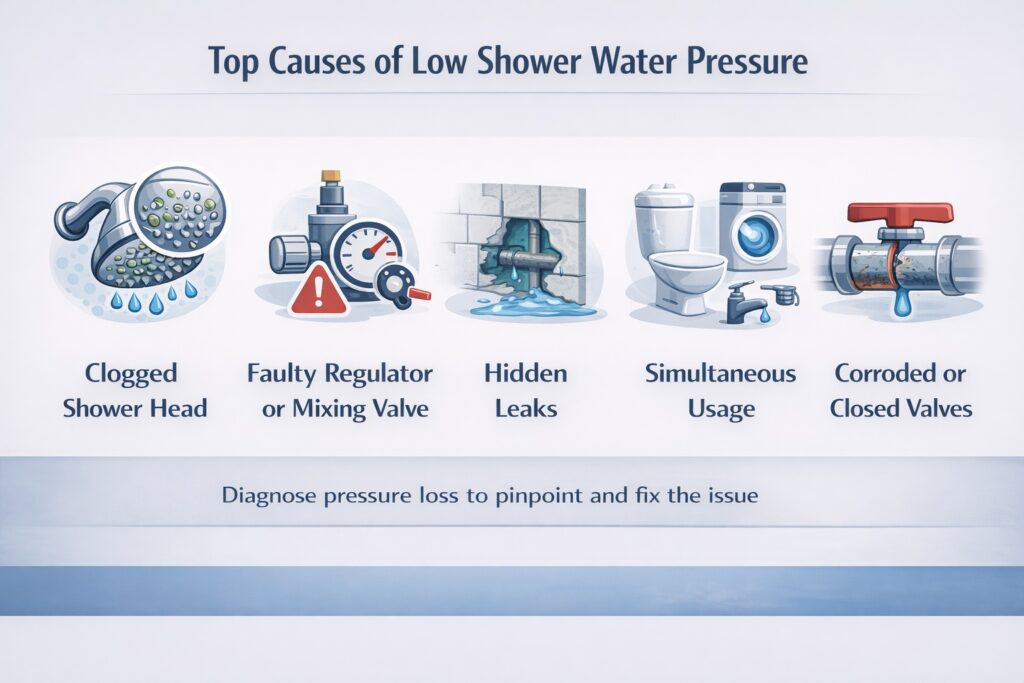
- Blocked shower heads from limescale and debris are the most common cause of low water pressure in showers.
- Faulty mixing valves or pressure regulators can restrict flow and require professional replacement.
- Hidden leaks in your plumbing system divert water away from your shower, reducing pressure noticeably.
- Simultaneous water use in multiple fixtures can temporarily lower shower pressure, especially in older homes.
- Corroded or partially closed isolation valves restrict water flow and often go unnoticed until pressure drops.
Why Shower Water Pressure Suddenly Drops
Water pressure issues rarely appear without a reason. Most sudden drops in shower pressure point to a blockage, a mechanical fault, or a leak somewhere in your plumbing system. Understanding the root cause helps you decide whether a quick clean will solve the problem or whether you need a licensed plumber to inspect your pipes and valves.
Sydney homes, especially older properties with clay pipes or galvanised steel, face unique challenges. Tree roots, sediment buildup, and aging infrastructure all contribute to pressure loss. If you notice the problem affecting only one shower, the issue is likely isolated to that fixture or its supply line.
If every tap and shower in your home is running weak, the problem may lie with your main water supply, pressure regulator, or a leak in your mains. Either way, a proper diagnosis saves time and money in the long run.
1. Blocked or Clogged Shower Head
A blocked shower head is the most common reason for low shower pressure because limescale, mineral deposits, and debris gradually clog the spray nozzles. You’ll often notice uneven spray patterns or white/green crust around the holes, which signals the head needs a deep clean. Remove the shower head and soak it in white vinegar overnight, then rinse and test—if pressure still doesn’t return, the internal filter or flow restrictor may be blocked or damaged.
2. Faulty Pressure Regulator or Mixing Valve
A failing pressure regulator can reduce water pressure across your entire home because it controls the pressure coming in from the mains. Mixing valves can also restrict flow when internal parts wear out or collect sediment, which is especially common in thermostatic or electric shower systems. Because testing and replacement require specialised tools and compliance knowledge, a licensed plumber should inspect and service these components to restore safe, consistent pressure.
3. Hidden Leaks in Your Plumbing System
Hidden leaks lower shower pressure by diverting water before it reaches the fixture, and even small leaks can waste hundreds of litres daily. Common signs include damp patches, unexpected water bill spikes, or hearing water movement when everything is turned off. Proper diagnosis usually requires acoustic leak detection or thermal imaging so the leak can be located and repaired without unnecessary wall damage.
4. Simultaneous Water Use in Multiple Fixtures
If pressure drops only when another tap runs, the toilet flushes, or appliances draw water, the issue is likely simultaneous demand on the same supply line. Older homes with smaller pipes or shared supply layouts often can’t maintain strong pressure when multiple fixtures are used at once. A plumber can assess whether larger pipes, separate supply lines, or valve adjustments will resolve the issue based on your home’s layout and usage patterns.
5. Corroded or Partially Closed Isolation Valves
Isolation valves control water flow to individual fixtures, and when they corrode, seize, or remain partially closed, shower pressure can drop noticeably. This is common after plumbing work if a valve wasn’t fully reopened, or in older systems where internal corrosion restricts flow. If the valve is stiff or stuck, don’t force it—replacement by a licensed plumber prevents breakage, leaks, and ensures full, compliant flow is restored.
When to Call a Licensed Plumber for Low Shower Water Pressure
Some pressure issues can be solved with a quick clean or a simple valve adjustment. Others require professional diagnosis and repair. If you have tried cleaning the shower head and checking the isolation valves but the pressure remains low, it is time to call a licensed plumber.
You should also call a plumber if you notice any of the following:
- Low pressure in multiple showers or taps throughout your home
- Damp patches, mould, or water stains on walls or ceilings
- Unexplained increases in your water bill
- Noisy pipes or banging sounds when you turn on the shower
- Fluctuating water temperature or pressure during use
Our team provides same-day service across Sydney, with no call-out fee and upfront pricing. We diagnose the root cause using CCTV drain inspection, acoustic leak detection, and pressure testing, then present clear options for repair or replacement. Every job is completed to Australian Standards, and we leave your home clean and tidy.
How We Diagnose and Fix Low Shower Water Pressure
When you call Antons Plumbing & Gas about low shower water pressure, we start by gathering the right details to pinpoint the cause faster. We ask when the pressure dropped, whether it affects one shower or multiple fixtures, and if you’ve noticed symptoms like leaks, stains, or unusual noises. This helps us arrive prepared with the right diagnostic tools and common replacement parts for a same-day solution where possible.
| Issue | Typical Cause | Our Solution |
|---|---|---|
| Blocked shower head | Limescale and debris buildup | Clean or replace the shower head |
| Faulty mixing valve | Worn components or sediment | Replace valve with a quality part |
| Hidden leak | Corroded or damaged pipe | Acoustic detection, repair or reline |
| Low mains pressure | Faulty pressure regulator | Test and replace regulator |
| Corroded valve | Age and mineral buildup | Replace isolation valve |
Once the cause is confirmed, we explain what we found in plain English and outline the best repair path for your budget and timeframe. You’ll receive a fixed-rate quote before work begins, so there are no hidden fees or unpleasant surprises. Every repair is completed with compliant workmanship and backed by our lifetime labour warranty for long-term peace of mind.
Preventing Future Shower Water Pressure Problems
Regular maintenance helps prevent many common pressure issues. Cleaning your shower head every few months removes limescale before it becomes a problem. Checking your isolation valves once or twice a year ensures they remain fully open and free from corrosion.
If you live in an area with hard water, consider installing a water softener or filter. These devices reduce mineral buildup in your pipes and fixtures, extending their lifespan and maintaining consistent pressure. Our team can recommend and install the right system for your home.
Scheduling a routine plumbing inspection every few years can catch small issues before they turn into expensive repairs. We inspect your pipes, valves, and fixtures, test your water pressure, and provide a clear report on the condition of your plumbing system. It is a small investment that can save you time, money, and frustration down the track.
Why Sydney Homeowners Trust Antons Plumbing & Gas

We have been serving Sydney homeowners for more than 25 years, and we understand the unique challenges of the local plumbing landscape. From tree roots in clay pipes to aging infrastructure in heritage homes, we have seen it all and know how to fix it properly.
Every member of our team is fully licensed and insured. We comply with NSW Fair Trading licensing requirements and follow Australian Standards for all plumbing and gasfitting work. We use quality parts from trusted brands, document our findings, and back our workmanship with a lifetime labour warranty.
We believe great plumbing is about more than pipes and parts. It is about clear communication, respect for your home, and delivering solutions that last. When you call us at 0493 824 176, you can expect same-day service, upfront pricing, and a team that listens to your concerns and answers your questions in plain English.
Conclusion
Low shower water pressure is more than an inconvenience. It signals an underlying problem that needs attention, whether that is a blocked head, a faulty valve, or a hidden leak. Identifying the cause early saves water, prevents damage, and restores comfort to your daily routine. Our licensed team diagnoses the root cause and delivers lasting solutions backed by Australian Standards and a lifetime labour warranty.
Antons Plumbing & Gas diagnoses and fixes low shower pressure with expert leak detection and pipe repairs across Sydney. Our licensed team solves the root cause fast, with same-day service available. Call 0493 824 176 to get started.
Related Articles
- 5 Common Mistakes When Learning How to Fix Dripping Shower
- Why Your Shower Head Has No Pressure and How to Fix It
FAQs
What Causes Low Water Pressure In The Shower?
Low water pressure in the shower can be caused by several factors, including clogged showerheads, mineral buildup, pipe leaks, or issues with the municipal water supply. Over time, debris and minerals can accumulate in pipes or fixtures, leading to reduced flow. If you’re experiencing persistent low pressure, it may be beneficial to consult with a licensed plumber like Antons Plumbing & Gas, who can identify and address the underlying issue.
How Can I Increase Water Pressure In My Shower?
To increase water pressure in your shower, you can start by cleaning or replacing the showerhead, checking for any leaks in the plumbing, or adjusting the pressure-reducing valve if your home has one. In some cases, installing a shower pump may be necessary. Our experienced team at Antons Plumbing & Gas can provide tailored solutions to improve your water pressure safely and effectively.
Is Low Water Pressure In The Shower A Sign Of A Plumbing Problem?
Yes, low water pressure in the shower can indicate a plumbing problem, such as pipe leaks, blockages, or issues with your home’s water supply. If the problem persists after trying simple fixes, it’s wise to contact a professional plumber. At Antons Plumbing & Gas, we specialize in diagnosing plumbing issues and providing reliable solutions to restore your water pressure.
Can A Showerhead Cause Low Water Pressure?
Absolutely, a showerhead can cause low water pressure if it becomes clogged with mineral deposits or debris. This restricts water flow and can lead to a disappointing shower experience. Cleaning or replacing the showerhead can often resolve the issue, and our team at Antons Plumbing & Gas can assist with this and ensure your shower is functioning properly.
How Do I Fix Low Water Pressure In My Home?
To fix low water pressure in your home, first check for any obvious leaks in your plumbing and ensure that all valves are fully open. If the issue persists, it may be due to pipe corrosion, clogs, or pressure regulator problems. Consulting with a qualified plumber like Antons Plumbing & Gas can help you identify the root cause and implement effective solutions to restore proper water pressure throughout your home.
 February 2026