Standing in front of a blocked toilet or slow-draining sink can feel frustrating—especially when you’re not sure which tool will actually fix the problem. A toilet snake and a drain snake might look similar at first glance, but they’re built for different jobs, and using the wrong one can waste time, damage your fixtures, or leave the blockage exactly where it started. Understanding the difference between these two tools helps you make the right call when a clog strikes.
This guide walks you through with toilet snake vs drain snake comparison, when to reach for each tool, and how professional plumbers in Sydney approach stubborn blockages with the right equipment and know-how. You’ll also learn when a DIY attempt makes sense and when it’s smarter to call in licensed help.
Key Takeaways
- A toilet snake (closet auger) is designed specifically for toilet traps, with a stiffer cable and protective housing to prevent porcelain damage.
- A drain snake (plumbing snake) works best for sinks, showers, and tubs, using a flexible cable to pull out hair, soap, and debris from smaller pipes.
- Toilet snakes push blockages through the trap bend, while drain snakes hook and extract clogs from waste outlets.
- Using the wrong tool can scratch porcelain, fail to clear the clog, or push the blockage deeper into your plumbing system.
- Professional plumbers use CCTV drain inspection and longer, motorised augers to diagnose root causes and clear deep or recurring blockages safely.
What Is a Toilet Snake and How Does It Work?
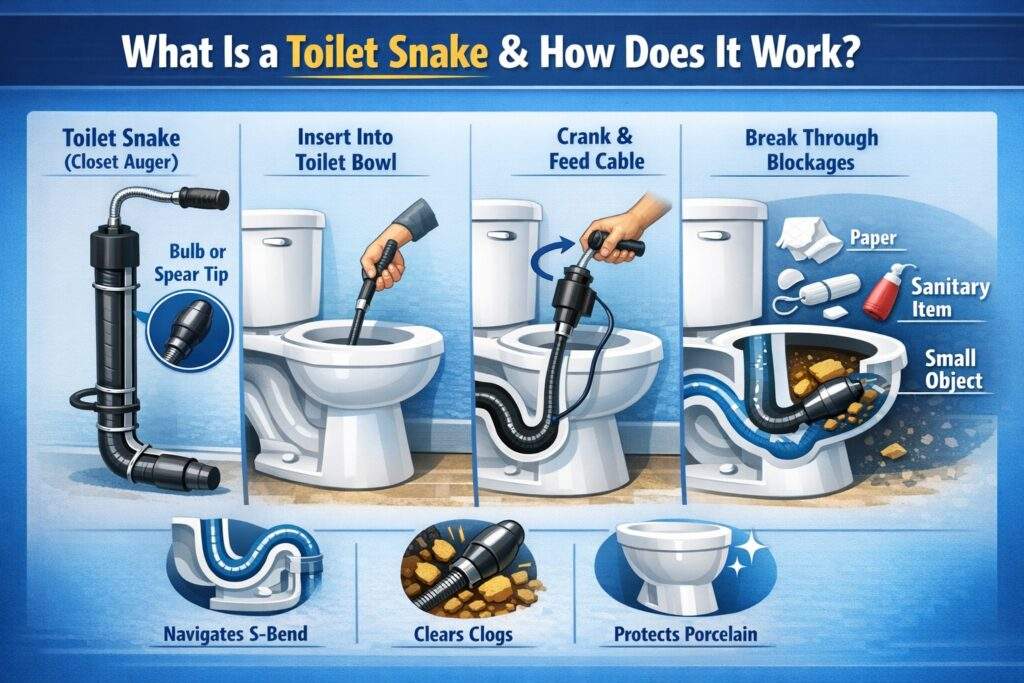
A toilet snake—often called a closet auger—is a short, stiff cable (usually 6 to 10 feet long) housed inside a protective tube. The tube sits against the toilet bowl while you crank the handle, feeding the cable through the trap bend without scratching the porcelain. The tip is typically a closed spear or bulb shape, designed to break up or push through blockages like toilet paper, sanitary products, or small objects lodged in the trap.
You insert the auger into the toilet bowl, guide the cable into the drain opening, and rotate the handle clockwise. The stiff cable navigates the tight S-bend inside the toilet, applying pressure to force the obstruction past the trap and into the main waste line. Because the cable is rigid enough to handle the bend but protected by the housing, it’s less likely to chip or crack the ceramic surface than a standard drain snake.
Toilet snakes are sold at most hardware stores, including Bunnings, and range from basic hand-crank models to battery-powered versions like the Ryobi P4001. They’re built for one job: clearing toilet traps. If the blockage sits deeper in your waste pipe or involves tree roots, a toilet snake won’t reach far enough to help.
What Is a Drain Snake and When Should You Use It?
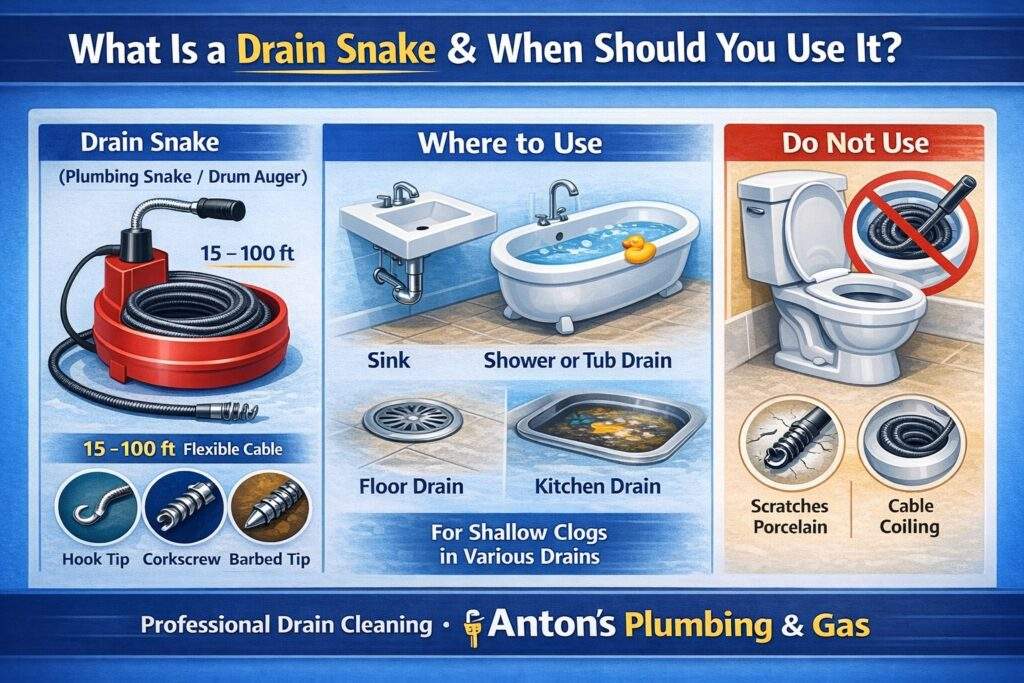
A drain snake—also called a plumbing snake or drum auger—is a longer, more flexible tool designed for sinks, showers, floor drains, and bathtub waste lines. The cable can range from 15 to 100 feet, depending on the model, and the tip usually features a hook, corkscrew, or barbed end that grabs onto hair, soap scum, food debris, and other soft clogs. You feed the cable into the drain opening, rotate the handle, and pull the blockage back out through the pipe.
Drain snakes work well for clogs near the waste outlet or within the first few metres of pipe. They’re flexible enough to navigate bends in sink traps and shower drains but lack the rigidity needed to push through a toilet’s tight S-bend. If you try to use a standard drain snake in a toilet, the cable may coil inside the bowl, fail to engage the blockage, or scratch the porcelain because there’s no protective housing.
You’ll find drain snakes at Bunnings and other hardware retailers in manual and electric versions. A DIY drain snake can handle shallow clogs, but if the blockage sits deep in your main line or keeps coming back, you’re dealing with a bigger issue that needs professional diagnosis.
Toilet Snake vs Drain Snake: Key Differences Explained
The main difference between a toilet snake and a drain snake comes down to design, cable stiffness, and intended use. A toilet snake has a shorter, stiffer cable housed in a protective tube, built to navigate the toilet trap without damaging porcelain. A drain snake has a longer, more flexible cable with a hook or corkscrew tip, designed to pull clogs from sinks, tubs, and floor drains.
Here’s a side-by-side comparison to help you see which tool fits which job:
| Feature | Toilet Snake (Closet Auger) | Drain Snake (Plumbing Snake) |
|---|---|---|
| Cable Length | 6–10 feet | 15–100+ feet |
| Cable Stiffness | Stiff, semi-rigid | Flexible |
| Tip Design | Closed spear or bulb | Hook, corkscrew, or barb |
| Protective Housing | Yes | No |
| Best For | Toilet traps and S-bends | Sinks, showers, tubs, floor drains |
| Action | Pushes or breaks up blockage | Pulls blockage out |
| Common Use | Toilet paper, sanitary items | Hair, soap, food debris |
Using the right tool matters. A drain snake in a toilet won’t engage the trap properly, and a toilet snake in a sink drain won’t reach far enough to clear the blockage. If you’re unsure which tool you need, or if the clog keeps returning, our team at Antons Plumbing & Gas can diagnose the issue with CCTV drain inspection and clear it with the right equipment—same day, across Sydney.
When to Use a Toilet Snake for Blocked Toilets
Reach for a toilet snake when your toilet won’t flush properly, water drains slowly, or you hear gurgling sounds after flushing. These symptoms usually mean something is stuck in the trap bend—the curved section of pipe built into the toilet bowl. Common culprits include excess toilet paper, sanitary products, wet wipes, cotton buds, or small toys dropped by kids.
A toilet snake is your best DIY option if the blockage sits within the first 6 to 10 feet of the toilet drain. Insert the auger into the bowl, crank the handle, and let the cable work through the trap. If the water starts draining or the obstruction feels like it’s giving way, you’ve likely cleared the clog. Flush a few times to confirm the blockage is gone.
If the toilet still won’t drain after using the auger, the blockage may sit deeper in your waste line, or you could be dealing with a vent issue, tree root intrusion, or collapsed pipe. At that point, a longer motorised auger or CCTV camera inspection is needed to pinpoint the cause. Our plumbers carry professional-grade equipment and can clear deep blockages without guesswork, often on the same day you call.
When to Use a Drain Snake for Sinks, Showers, and Tubs
A drain snake works best when your kitchen sink, bathroom basin, shower, or bathtub drains slowly or backs up completely. These clogs are usually caused by hair, soap scum, grease, food scraps, or a build-up of toothpaste and shaving cream inside the trap or waste pipe. Because the blockage sits close to the drain opening, a flexible cable can hook onto the debris and pull it out.
Feed the cable into the drain until you feel resistance, then rotate the handle to engage the clog. Pull the cable back slowly to extract the blockage. You may need to repeat the process a few times to clear all the debris. Rinse the drain with hot water to flush away any remaining residue.
A DIY drain snake from Bunnings can handle shallow clogs in small pipes (1¼ to 2 inches in diameter), but if the blockage sits further down the line or keeps coming back, you’re likely dealing with a bigger issue—grease build-up in the main waste line, tree roots invading old clay pipes, or a damaged pipe that’s trapping debris. We use high-pressure water jetting and CCTV inspection to clear and diagnose recurring blockages, so the problem doesn’t return the following week.
Common Mistakes When Using a Toilet Drain Snake or Plumbing Snake
One of the most common mistakes is forcing the cable too hard. If the auger won’t advance, don’t keep cranking—you could scratch the porcelain, kink the cable, or push the blockage deeper into the pipe. Instead, pull the cable back slightly, adjust the angle, and try again. Gentle, steady pressure works better than brute force.
Another mistake is using a standard drain snake in a toilet. Without a protective housing, the cable can scratch the bowl or fail to navigate the trap bend. You might end up with a damaged toilet and the blockage still in place. Always match the tool to the fixture.
Some people also stop too soon. Clearing the initial blockage doesn’t always mean the drain is fully open. Flush or run water to confirm the clog is gone, and watch for slow drainage or gurgling sounds that suggest a partial obstruction further down the line.
If you’ve tried snaking the drain and the problem persists, it’s time to call a licensed plumber. Repeated DIY attempts can damage your pipes or push the blockage into a spot that’s harder to reach. Our team uses CCTV cameras to see exactly what’s blocking your drain and clear it with the right tool—no guesswork, no mess.
How Professional Plumbers Clear Blocked Drains and Toilets
When you call Antons Plumbing & Gas for a blocked drain or toilet, we don’t just snake the pipe and hope for the best. We start with a clear diagnosis. Our plumbers ask about the symptoms—slow drainage, gurgling, backups—and inspect the affected fixture and surrounding plumbing. For recurring or deep blockages, we use CCTV drain inspection to see inside your pipes and identify the exact cause: tree roots, collapsed sections, grease build-up, or foreign objects.
Once we know what’s blocking the drain, we choose the right tool. For toilet traps, we use a professional closet auger with a longer, stronger cable than the DIY versions sold at Bunnings. For main waste lines, we bring in motorised drain snakes (up to 100 feet or more) or high-pressure water jetters that cut through grease, roots, and scale. If your pipes are old or damaged, we’ll discuss options like pipe relining—a trenchless repair that lines the inside of your existing pipe with a durable resin, fixing cracks and root intrusion without digging up your yard.
We clear the blockage, test the drain to confirm it’s flowing properly, and clean up before we leave. You’ll get a fixed-price quote before we start, so there are no surprises. If the blockage revealed a bigger issue—like tree roots or a broken pipe—we’ll explain your options and help you decide on the best long-term solution.
How Antons Plumbing & Gas Helps Sydney Homeowners Clear Stubborn Blockages
We’ve been clearing blocked drains and toilets across Sydney for more than 25 years, and we know that not every clog is the same. Some blockages sit in the toilet trap and clear with a quick auger. Others hide deep in your waste line, caused by tree roots, grease build-up, or old clay pipes that have cracked and shifted over time. That’s why we don’t rely on one-size-fits-all solutions.
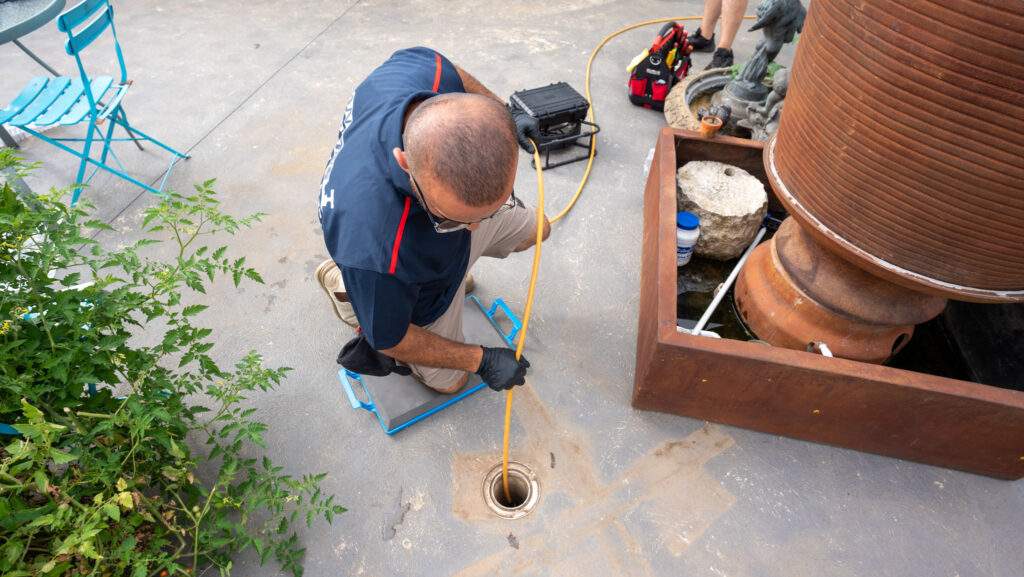
When you call us for a blocked drain, we start with a thorough inspection. Our plumbers ask about the symptoms, check the affected fixtures, and use CCTV drain inspection when needed to see exactly what’s blocking your pipe. Once we know the cause, we choose the right tool—whether that’s a professional closet auger, a motorised drain snake, high-pressure water jetting, or pipe relining to fix the underlying damage.
We work across the greater Sydney region, including the Inner West, Eastern Suburbs, North Shore, Northern Beaches, Hills District, Western and South-Western Sydney, and Sutherland Shire. Same-day service means you don’t have to wait days for help, and our 24/7 emergency response means we’re available when you need us most—even on weekends and public holidays.
All our work complies with NSW Fair Trading licensing requirements and relevant Australian Standards. We use quality parts, document our findings, and back our workmanship with a lifetime labour warranty. If you’re tired of dealing with slow drains, recurring blockages, or DIY tools that don’t work, give us a call at 0493 824 176 or book online for a fixed-price quote and same-day service.
Conclusion
A toilet snake and a drain snake are not interchangeable tools—each one is built for a specific job, and using the wrong one can waste time or damage your fixtures. If you’re dealing with a simple, shallow clog and you’re confident using the right tool, a DIY attempt might save you a call-out. But if the blockage keeps coming back, sits deep in your pipes, or affects multiple drains, it’s time to call a licensed plumber who can diagnose the root cause and fix it properly. We’re here to help Sydney homeowners clear stubborn blockages fast, with the right equipment and upfront pricing you can trust.
Antons Plumbing & Gas offers expert blocked drain solutions across Sydney with 25 years of experience. Our licensed team uses professional-grade tools to clear any blockage safely and effectively. Contact us today to get started.
Related Articles
- Toilet Drain Cleaning Services: What’s Included & Why It Matters
- Toilet Auger vs Plunger: Which Tool Saves You Time and Money?
- How to Snake a Toilet with a Hanger Effectively
FAQs
What Is The Difference Between A Toilet Snake And A Drain Snake?
A toilet snake, also known as a toilet auger, is specifically designed to navigate the curves of a toilet’s trap, allowing it to effectively clear clogs within the toilet bowl and drain. A drain snake, or plumber’s snake, is more versatile and can be used in various types of drains, including sinks and floor drains, thanks to its longer reach and flexibility. At Antons Plumbing & Gas, we have the right tools for the job, ensuring effective solutions for all your plumbing needs.
Can A Toilet Snake Be Used For Drains?
While a toilet snake can be used for drains, it is not the ideal tool for all situations. It is specifically designed for toilets and may struggle with larger clogs in drains. A drain snake is generally more suitable for clearing blockages in other plumbing fixtures. Our experienced team can assess the situation and choose the best equipment for the job, ensuring efficient and effective results.
Which Is Better For Unclogging Toilets: A Toilet Snake Or A Drain Snake?
A toilet snake is typically better for unclogging toilets due to its design, which allows it to navigate the toilet’s trap and effectively break up clogs. However, if the blockage is severe or located further down the line, a drain snake may be needed. Our skilled plumbers at Antons Plumbing & Gas can determine the best solution based on the specific clog and plumbing configuration.
How Do You Use A Toilet Snake?
To use a toilet snake, first, insert the end of the auger into the toilet bowl and push it gently into the drain until you feel resistance. Then, crank the handle to break up or retrieve the clog. Always use caution and wear protective gear. If you’re unsure or uncomfortable, our expert team is just a call away to assist with any toilet issues you may have.
Are Toilet Snakes Effective For Tough Clogs?
Toilet snakes can be effective for tough clogs that are located within the toilet itself or just beyond its trap. However, if the clog is further down the plumbing line, a drain snake or professional plumbing service may be required. At Antons Plumbing & Gas, we have the expertise to tackle even the toughest clogs, ensuring your plumbing