

Roof plumbing directs rainwater off the roof and into the property’s stormwater system. Gutters collect runoff, downpipes carry it down, and flashings direct water away from openings and joints. An overflow, a ceiling stain and a flooded stormwater pit each give the contractor a different place to start.
If water spills over the gutter, note whether it happens at one corner, near a downpipe or along the whole run. If water appears indoors, record which room gets wet first and whether it happens during steady rain, a short downpour or rain driven from a particular direction. These details can help a Sydney roof plumbing contractor decide where to look for the source and whether the investigation should include the connected stormwater drain.
Key Takeaways
- Identify whether water escapes at a gutter, roof junction, downpipe or ground-level drain.
- Stay on the ground when observing faults; leave roof access and heavy drain covers to appropriately equipped professionals.
- Stormwater and wastewater are separate systems. Roof water must not discharge into the wastewater system.
- Check the contractor’s licence category for the actual work and confirm access, approvals and warranty terms in writing.
Where Is the Roof Drainage Problem Starting?
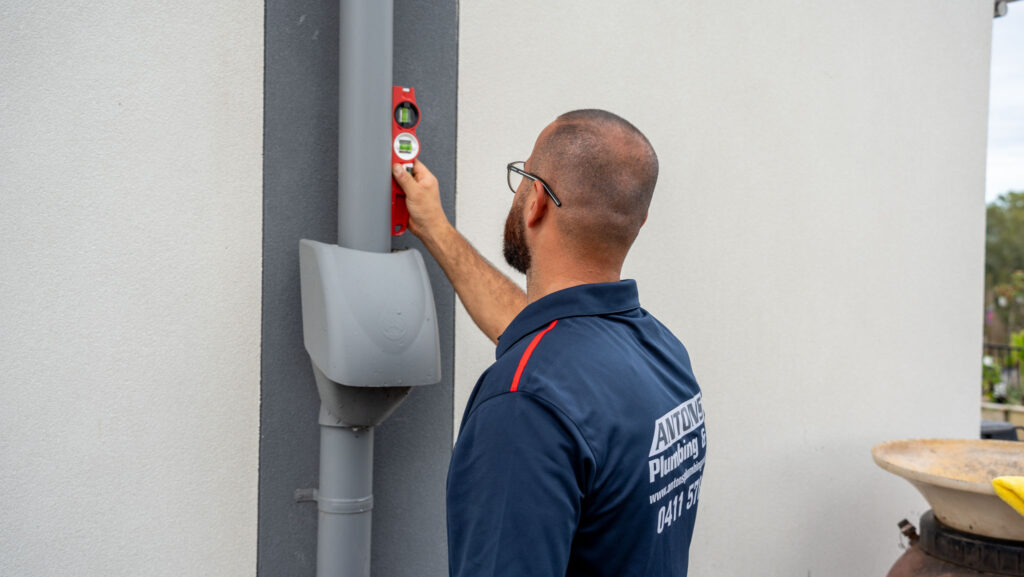
Identify whether the problem starts at the gutters, downpipes, roof flashings or connected stormwater drains so the investigation targets the affected area.
Gutters and Downpipes
Water dripping from a single gutter joint can point to a local defect. Water spilling over the top near a downpipe may call for checks of the gutter outlet, the downpipe and the stormwater pipe below it. If water spills along a longer stretch during heavy rain, ask the contractor to check how the gutter slopes towards its outlets, how much roof area feeds it and where excess water can escape.
Tell the contractor if the overflow began after reroofing, a gutter replacement or a new extension. These changes can alter where runoff enters the gutter or how much water reaches a particular outlet. If the gutter has already been cleared and the same corner still overflows, the previous visit gives the contractor a starting point for checking the outlet and connected pipework.
Flashings and Roof Junctions
Flashings guide water around chimneys, skylights and places where the roof meets a wall. When a ceiling stain appears after wind-driven rain, the contractor may need to check the wall junction or roof opening above and to the side of the stain. Water can travel along roof framing before it drips through the ceiling.
Mention if the leak began after work near a skylight, vent or other roof penetration. If a flashing has already been sealed, share photographs or invoices so the contractor can check which joint was treated and where water might still enter.
Underground Stormwater Drains
If a downpipe backs up at its base or water rises through a stormwater pit, ask the contractor to trace the connected pipe towards its discharge point. Debris and root intrusion can restrict a line, while damaged pipes or a restricted outlet may require a different repair. A pit that floods after paving or landscaping changes can also be receiving extra surface runoff.
Where the line has an accessible entry point, a camera may help locate a restriction or show visible pipe damage. Ask which section can be inspected and whether clearing is needed first to give the camera a usable view.
What to Record Before a Roof Plumbing Assessment
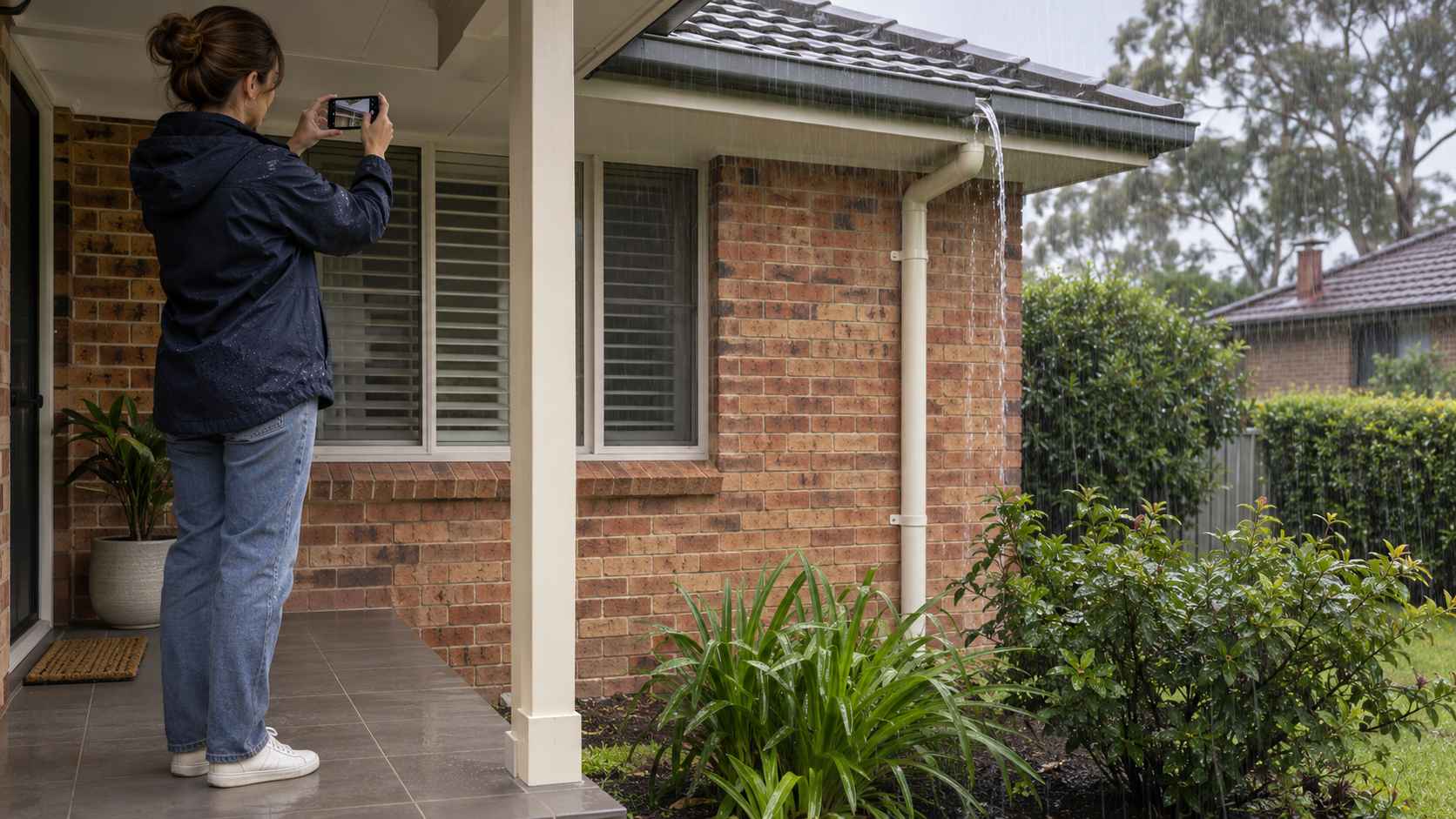
From a safe, dry position, note when the rain started, when water became visible and where it appeared first. Photograph the affected gutter, downpipe or ceiling from ground level or a safe indoor area. Include a wide photo to show the location and a closer view only if you can take it safely.
Stay off the roof and keep clear of flooded pits, wet electrical fittings and sagging ceilings. Tell the contractor about access constraints such as a narrow side passage, a locked service area or a roof above an adjoining property. That information can affect the equipment and people needed for the visit.
Call Antons Plumbing & Gas on 0493 824 176 with your address, the first place you saw water and whether it is still entering the building. Confirm the available assessment, the trade scope and whether any temporary work can be carried out safely before a permanent repair is quoted.
Where Should Roof Runoff Go, and Who Can Alter the System?
Roof runoff belongs in the property’s approved stormwater arrangement. Sydney Water prohibits discharge of roof water into its wastewater system. Before moving a downpipe, rerouting an underground line or changing an outlet, confirm where the existing system discharges and ask the relevant council or authority what applies to the proposed work.
In NSW, guttering, downpipes and roof flashings fall within the roof plumbing work category. The NSW Government specifies that a contractor licence is required for residential building or trade work, including roof plumbing, valued above $5,000 including labour, materials and GST. Check the contractor’s current record against the proposed work, and confirm which licence or qualification applies to any other trade work in the quote.
If a quote proposes larger gutters, more downpipes or a new connection to an on-site detention system, ask which site details informed the design. The proposal should explain the roof area being drained, where water will go during an overflow and how the work affects the existing discharge arrangement.
What Should a Roof Plumbing Quote Include?

A useful quote connects the proposed work to the symptom you reported. If it recommends replacing a gutter section, ask what the contractor found there and how the replacement will address the overflow. For an underground repair, ask which length of pipe is affected and how the repair location was identified.
Check the written scope for:
- Findings and inspection limits. Which components were checked, what was found and which sections still need investigation?
- Itemised work. Does the price cover clearing, a local repair, replacement or further investigation?
- Access and reinstatement. Is equipment included, and who will reinstate any paving, garden bed or other surface opened during the work?
- Approvals and documentation. Who will arrange any required approval, and what records will you receive?
- Temporary and permanent work. What can be done on the first visit, and is a return visit priced separately?
- Completion checks and warranties. How will the contractor check the work, and what labour and material terms apply?
For an underground restriction or recurring drain overflow, review Antons’ blocked drain assessment and clearing service. For symptoms involving indoor fixtures or other pipework, check the Sydney plumbing services page and describe the timing when booking.
What Records Help When a Roof Leak or Overflow Returns?
Keep the contractor’s photos, findings and invoices together, along with any plans that show where the downpipes connect and where stormwater leaves the property. Ask the contractor to mark the repaired section or point it out in a photo. If the symptom returns a few months later, that record helps the next contractor see whether water is appearing at the same joint, outlet or section of pipe.
Base maintenance on what the property needs. A roof under trees may need closer attention during periods of heavy leaf drop, while an older line with a history of blockages may need follow-up at the affected section. After each visit, record what was cleared or repaired, any areas the contractor could not access and any checks still outstanding.
Conclusion
Tracing a roof leak or overflow starts with noting where water first appears and when it happens. A ceiling stain after wind-driven rain may prompt a check of the flashings around a skylight or roof junction, while water backing up at a downpipe may lead the contractor to the connected stormwater drain. Share photos taken from a safe spot and point out any recent changes to the roof, gutters or paving.
Before approving roof plumbing work, ask the contractor to explain how the proposed repair addresses the symptoms and how they’ll check it once the work is complete. Keep a copy of the findings and repair photos so you can identify the affected section if the leak or overflow returns. For a roof plumbing assessment in Sydney, call Antons Plumbing & Gas on 0493 824 176.
Related Articles
- How to Unblock a Downpipe Before Sydney Storms Cause Damage
- 5 Common Signs You Have a Blocked Stormwater Drain
- Blocked Stormwater Pipe Solutions for Better Home Drainage
FAQS
Why does my gutter overflow from the back edge?
A blocked outlet, poor gutter fall or a high volume of runoff can cause water to rise and spill towards the fascia. Tell the contractor exactly where it spills so they can check whether water is reaching the eaves or wall.
Could an overflowing gutter be fixed without replacing it?
Clearing a blocked outlet, repairing a leaking joint or correcting the gutter fall may resolve a local fault. Ask which finding supports the proposed repair, especially if the gutter has already been cleared and still overflows.
Why does a downpipe back up when the gutter looks clear?
The restriction may be in a downpipe bend, at the base connection or farther along the underground stormwater line. Report whether water appears around the base or rises through a nearby pit so the contractor can decide where to begin the blocked drain assessment.
Can a drain camera find a blockage beneath a driveway?
A camera can help locate an obstruction or visible pipe damage if the line has a usable entry point and the camera can reach the affected section. Ask whether the contractor can mark the location above ground as part of the drain camera inspection.
What does a ceiling stain near an external wall suggest?
A leak near the roof-to-wall junction, flashing or gutter edge may be worth investigating. Record whether the stain grows during wind-driven rain because water can travel along framing before appearing indoors.
When should I consider plumbing leak detection for a ceiling stain?
If the stain grows during dry weather or after someone uses an upstairs shower, toilet or other fixture, mention that when booking. The timing can help determine whether a plumbing leak detection assessment is appropriate.
Is water pooling near a stormwater pit a sign the pipe is blocked?
Water can collect around a pit because of a downstream restriction, an affected outlet or surface runoff entering faster than the system can carry it away. Note where the water appears first and whether the problem began after paving or landscaping changes.
Can gutter guards stop heavy-rain overflow?
Gutter guards can reduce the amount of larger debris entering the gutter, while outlets and screens still need inspection and maintenance. If overflow started after installation, ask the contractor to check how runoff from roof valleys reaches the gutter and whether it passes through the guard as intended.
Could a new extension overload an existing downpipe?
An extension can increase the roof area draining into an existing gutter or downpipe if the new roof connects to the same line. Ask the designer or contractor to show where the additional runoff will go and how they assessed the capacity of the existing system.
Where should a rainwater tank overflow discharge?
The overflow should connect to the approved stormwater arrangement for the property. Check the drainage plans or ask the relevant council or authority where it can discharge before altering the connection.
Can roof water be sent into Sydney Water’s sewer?
Sydney Water prohibits discharge of roof water into its wastewater system. If you are unsure where a downpipe ends, ask the contractor to trace the connection before making changes.
Does moving a downpipe require council approval in Sydney?
Approval requirements depend on the property and whether the work changes the drainage connection or discharge arrangement. Give the relevant council or authority the address and proposed scope, then ask the contractor to record who is responsible for any required approval.
How can I check a roof plumber’s licence in NSW?
Ask for the contractor’s licence details and look up the current record to see which categories it covers. Compare those categories with the written scope, particularly if the quote includes both roof work and other plumbing or drainage work.
How much does roof plumbing repair cost in Sydney?
The price depends on the fault, roof access, materials and whether the contractor needs to investigate underground pipework. Ask for an itemised quote showing the charges for inspection, temporary measures and permanent repairs where each applies.
Which photos are most useful before a roof leak assessment?
Take a wide photo showing which room or side of the house is affected, followed by a closer photo of the visible stain or overflow if you can take it safely. Add the date and note whether water appeared during the rain or after it stopped.
What should I do if rainwater is coming through a light fitting?
Keep clear of the wet area and avoid touching the fitting or operating nearby switches. For an immediate threat to life, call Triple Zero, or arrange urgent assessment by a licensed electrician if the situation is safe to leave undisturbed.
Who should a tenant contact about a serious roof leak?
Notify the landlord or managing agent promptly and use the urgent repair contact listed in the tenancy agreement if applicable. NSW classifies a serious roof leak as an urgent repair, and its rental guidance explains what tenants can do if they cannot reach the landlord or agent.
What should a strata manager prepare for a roof drainage visit?
Gather available drainage plans, previous repair reports and access details for affected lots or common areas. Confirm who can authorise the inspection and ask the contractor to document any areas they could not reach.
Should the quote include a warranty on a temporary roof repair?
Ask for the written terms that apply to any temporary work and clarify how long the contractor expects it to serve its purpose. Request the permanent repair warranty separately so you can see which parts and labour it covers.
How can I tell whether a repair addressed the original overflow?
Ask the contractor what they checked after the repair, such as whether water flowed through the outlet during a controlled test. During the next comparable rain event, observe from a safe location and report whether water appears at the same point.