
A sewage smell from bathroom drains or fixtures signals something wrong in your plumbing system. That foul odour can come from dried-out traps, blocked vents, cracked pipes, or bacterial buildup. It disrupts your comfort and may point to health or structural risks you need to address quickly.
This guide explains how to troubleshoot sewage smells from bathroom drains and fixtures using practical step-by-step checks. It also outlines the warning signs that suggest a more serious issue, what professional diagnosis involves, and the maintenance habits that can help prevent future odours. For Sydney homeowners, the goal is to help you respond early, protect indoor air quality, and know when licensed plumbing help is the better option.
Key Takeaways
- Bathroom sewage smells often come from dry P-traps, dirty drains, loose toilet seals, damaged pipes, or blocked vents.
- Simple steps such as running water, cleaning drain covers, and flushing drains can resolve minor odour issues.
- Recurring smells, multiple affected fixtures, gurgling drains, or visible dampness usually point to a larger plumbing problem.
- Professional diagnosis may involve CCTV drain inspection, smoke or dye testing, and targeted repair options.
- Preventive habits such as weekly water runs, drain screens, and routine inspections help stop odours from returning.
Step-by-Step Guide to Eliminate Sewage Smell from Bathroom Drains
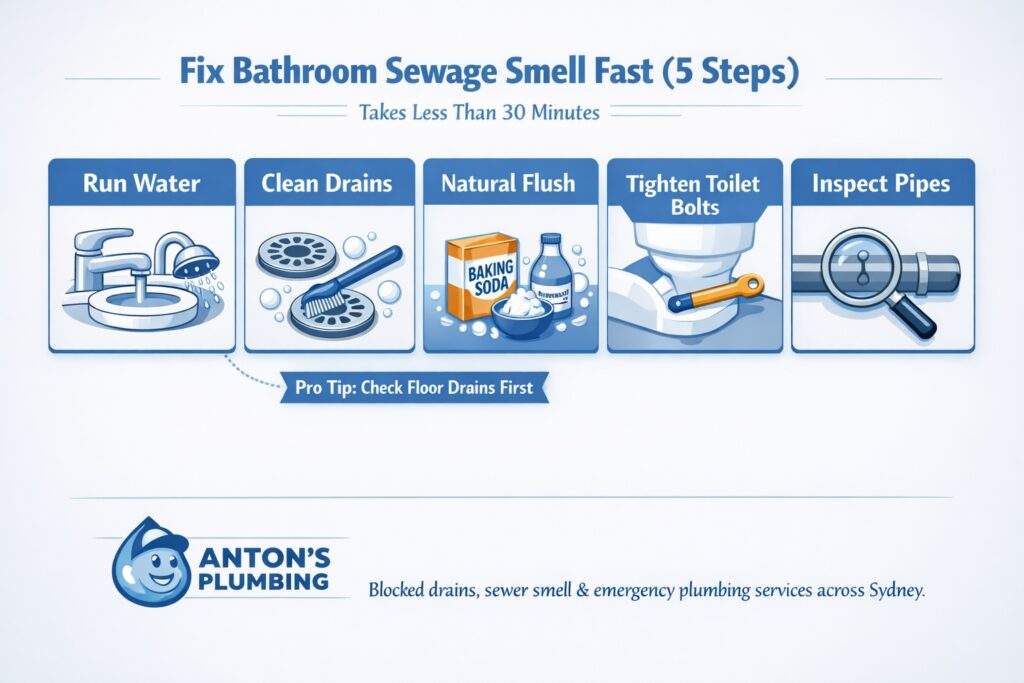
You can tackle many odour problems with basic tools and household supplies. Follow these steps in order, checking after each one to see if the smell clears. If the issue persists after step five, professional diagnosis is the next move.
1. Run Water Through All Fixtures
Turn on every tap, flush every toilet, and run the shower for at least thirty seconds. This refills P-traps and restores the water seal that blocks sewer gas. Pay special attention to floor drains in laundries, garages, and basement bathrooms, which often sit unused for long periods.
2. Clean Overflow Holes and Drain Covers
Basin overflow holes and shower grates trap hair, soap, and grime that harbour bacteria. Remove drain covers and scrub them with an old toothbrush and hot soapy water. Use a small bottle brush or pipe cleaner to reach inside overflow openings. Rinse everything thoroughly before reassembling.
3. Flush Drains with Baking Soda and Vinegar
Pour half a cup of baking soda down the drain, followed by one cup of white vinegar. Let the mixture fizz for fifteen minutes, then flush with boiling water. This natural method breaks down light organic buildup and neutralises odour without harsh chemicals that can damage older pipes.
4. Inspect and Tighten Toilet Pan Bolts
Check the bolts at the base of your toilet for looseness. A rocking pan can break the wax seal and let gas escape. Tighten the bolts gently in a cross pattern, but avoid over-tightening, which can crack the porcelain. If you see water or discolouration around the base, the seal likely needs replacement.
5. Check for Visible Pipe Damage
Look under sinks and around exposed pipework for cracks, corrosion, or loose fittings. Even a hairline crack in a P-trap can release sewer gas. If you spot damage, replace the affected section or call our team for a same-day repair with compliant parts and a lifetime labour warranty.
Following these steps gives you a practical way to address common drain odours before they become more serious. In many cases, the smell improves once the trap is refilled, the drain is cleaned, or a minor issue is corrected. If the odour remains after these checks, a professional inspection is usually the best way to find the exact cause and fix it properly.
When to Call a Licensed Plumber for Sewage Smell in Bathroom
Some odour sources sit hidden inside walls, under slabs, or above ceilings. DIY methods can mask the smell temporarily but won’t fix structural or code-compliance issues. Below are five signs that professional assessment will save you time, money, and potential health risks.
- Smell returns within 48 hours: Persistent odour points to a chronic leak, vent blockage, or pipe defect that needs camera inspection and targeted repair.
- Multiple drains affected: When sinks, showers, and toilets all smell bad, the problem often lies in a shared vent or main sewer line rather than individual traps.
- Gurgling or slow drainage: These symptoms suggest negative pressure from a blocked vent or partial sewer blockage. Left unchecked, you risk a full backup and water damage.
- Sewage smell in house comes and goes at night: Fluctuating odour can indicate intermittent vent issues, temperature-related expansion in pipes, or a failing seal that only leaks under certain conditions.
- Visible mould or damp patches: A sewage leak inside a wall or under a floor creates moisture that feeds mould growth. You might smell mould alongside the sewer gas, signalling a combined plumbing and building issue.
Our licensed plumbers use CCTV drain cameras, acoustic leak detection, and smoke testing to pinpoint the exact source. We then present clear options—repair, reline, or replace—with upfront fixed-rate pricing and same-day service across the Sydney Metro. Every job is completed to AS/NZS 3500 standards, documented with photos, and backed by our lifetime labour warranty.
How Professional Diagnosis Works for Sewage Smell from Bathroom
When you call our team on 0493 824 176, we arrive with the tools and experience to diagnose root causes, not just symptoms. Here’s what to expect from arrival to resolution.
| Step | What We Do | Typical Timeline |
|---|---|---|
| Initial Assessment | Interview you about when the smell started, which fixtures are affected, and any recent plumbing work. Inspect visible pipes, traps, and vents. | 15–20 minutes |
| CCTV Drain Inspection | Insert a waterproof camera into drains to view pipe condition, blockages, cracks, and root intrusion in real time. | 30–45 minutes |
| Smoke or Dye Testing | Introduce non-toxic smoke or coloured dye into the system to reveal hidden leaks in vents, traps, or sewer lines. | 20–30 minutes |
| Diagnosis & Options | Explain findings in plain English, show you camera footage, and present repair or replacement options with pros, cons, and fixed pricing. | 10–15 minutes |
| Repair or Reline | Perform the agreed work using quality parts, Australian-Standard methods, and respectful site practices. Clean up and test the system. | 1–4 hours depending on scope |
| Compliance & Warranty | Provide a written report, compliance certificate (if gas or backflow work), and lifetime labour warranty documentation. | Immediate handover |
We charge a fixed rate for the entire job, so you know the cost before we start. There are no hidden fees, no call-out charges, and no surprises. If the issue requires excavation or relining, we explain the process, obtain any necessary council permits, and restore your property to its original condition.
Preventing Future Sewage Smell in Your Bathroom
Once the odour is gone, a few simple habits keep it from returning. Prevention costs far less than emergency repairs and protects your home’s air quality year-round.
- Run water weekly in all fixtures: Even a quick flush or thirty-second tap run keeps P-traps full and seals intact.
- Schedule annual CCTV drain inspections: Early detection of tree roots, corrosion, or biofilm buildup lets you address problems before they cause blockages or leaks.
- Install drain screens: Mesh covers catch hair, soap chunks, and debris before they enter pipes and form clogs.
- Avoid pouring grease or harsh chemicals: Fats solidify in pipes and trap organic matter, while strong acids can corrode older fittings and worsen leaks.
- Check roof vents after storms: Leaves, twigs, and bird nests can block vent terminations. A quick visual check from ground level or a safe ladder position can save a call-out.
- Test backflow devices annually: Sydney Water and strata regulations require yearly testing of backflow prevention valves. Our certified technicians perform tests, issue compliance tags, and lodge reports with the relevant authority.
If you manage a strata property or own a heritage home with clay pipes, ask about our preventive maintenance plans. Regular CCTV sweeps and high-pressure cleaning extend pipe life, reduce emergency call-outs, and keep insurance claims to a minimum.
Why Choose Our Team for Sewage Smell Repairs in Sydney

We’ve spent more than 25 years diagnosing and fixing plumbing issues across the Inner West, Eastern Suburbs, North Shore, Northern Beaches, Hills District, and South-Western Sydney. Our approach combines certified workmanship with transparent communication, so you understand what’s happening and why.
Every plumber on our team holds current NSW Fair Trading licensing (Lic: 210933C) and works to AS/NZS 3500 plumbing standards. We use quality parts from trusted brands, document every step with photos, and back our labour with a lifetime warranty. Whether you need a simple trap replacement or complex pipe relining, we diagnose the root cause, present clear options, and complete the job with minimal disruption.
Same-day service and 24/7 emergency response mean you don’t have to live with sewage smell while waiting for an appointment. Call 0493 824 176 or book online for a fast quote and upfront fixed-rate pricing. We arrive on time, respect your home, and leave the site cleaner than we found it.
Conclusion
A sewage smell from bathroom fixtures is more than a nuisance. It signals a breakdown in your plumbing system that can affect health, property value, and daily comfort. Addressing the root cause with compliant repairs protects your home and gives you lasting peace of mind.
Antons Plumbing & Gas specialises in blocked drains and CCTV inspections to eliminate stubborn sewage odours. Our licensed team diagnoses the root cause and fixes it right the first time. Get started with a same-day service call today.
Related Articles
- 5 Common Causes When Your Toilet Smells Like Sewage
- 5 Reasons for Sewage Smell from Shower Drain and Solutions
FAQs
What Causes Sewage Smell In Bathroom?
Sewage smell in the bathroom can be caused by various issues, including dry P-traps, clogged drains, broken sewer lines, or inadequate ventilation. It’s important to identify the source quickly to prevent further complications.
How Do I Get Rid Of Sewage Smell In Bathroom?
To eliminate sewage smell, first check and refill the P-traps with water, clean out any clogged drains, and ensure proper ventilation. For persistent odors, professional assistance may be necessary to diagnose and resolve underlying issues effectively.
Is Sewage Smell In Bathroom Dangerous?
Yes, sewage smell can be dangerous as it may indicate the presence of harmful gases such as hydrogen sulfide, which can be hazardous to health. It’s essential to address the problem promptly to ensure safety.
Can A Clogged Toilet Cause Sewage Smell?
Absolutely, a clogged toilet can lead to sewage smells as it prevents waste from properly flowing through the plumbing system. If you notice a foul odor, it’s best to consult a professional plumber to address the blockage.
How Do I Prevent Sewage Smell In Bathroom?
To prevent sewage smells in the bathroom, regularly clean drains, ensure P-traps are filled with water, and maintain proper ventilation. Scheduling routine plumbing inspections with a qualified professional can also help identify potential issues before they escalate.