24 Hour Plumber Castle Hill for Home Emergencies
When water is tracking through a large home, a hot water unit is releasing or a gas appliance is unsafe, the first job is to isolate the correct service without causing more damage. Anton’s Plumbing & Gas provides 24/7 triage and licensed emergency attendance across Castle Hill.

Contain a Castle Hill Plumbing Fault Without Guesswork
Large homes can hide the source of a leak. Work from the service inward: protect people, isolate only what you can identify, and note which rooms or levels are affected.
- Stop using bathrooms, laundries or appliances directly above the affected area.
- Keep clear of wet lights, power points and sagging plaster.
- Close fixture valves first; use the property meter if the source remains active.
- Place containers only where it is safe and do not puncture a ceiling.
- Record the first visible location and any rooms used before the leak appeared.
- Keep people away from hot discharge water and the relief pipe.
- Close the cold-water isolation valve to the unit when it is clearly labelled and safe.
- Do not cap a relief valve or restart a faulting gas or electrical unit.
- Protect nearby stored items without touching wet electrical components.
- Tell us the system type, leak location and whether hot water is still available.
- Move outside and leave doors open only as you exit.
- Avoid flames, switches, garage doors and vehicles near the suspected leak.
- Turn off the outdoor gas supply only if it can be reached safely.
- Call 000 for a strong smell, illness, fire or immediate threat.
- Do not use appliances again until a licensed gas fitter has tested the installation.
If a Castle Hill property has several bathrooms or extended plumbing zones, tell us which fixtures were operating. That sequence often helps narrow the failed branch before invasive access is considered.
Should Your Castle Hill Plumbing Problem Wait?
A fault becomes an emergency when it threatens safety, hygiene, essential services or the building—not merely because it appeared after hours.
- Water escaping that you can't stop
- Any smell of gas
- Sewage backing up inside the house
- No water at all to the property
- Water near electrics, downlights or the switchboard
- A hot water system leaking heavily or venting steam
- The only toilet in the house blocked
- A leak affecting a neighbour or common property
- A business that can't safely trade until it's fixed
- A dripping tap
- One slow drain, everything else normal
- A running toilet cistern
- Hot water that's cooler than usual but still working
- Low pressure at a single fixture
- A hot water system leaking heavily or venting steam
- A toilet you can stop by turning off its isolation tap
- A leak you've successfully isolated and contained
- Noisy pipes or water hammer
If you are uncertain, explain the extent of the home, the affected level and whether isolation has stopped the problem. We will help classify the call rather than automatically treating every fault as an emergency.
Emergency Repairs for Castle Hill Houses and Apartments
Castle Hill’s housing profile includes many larger detached homes as well as townhouses and apartments. In a multi-bathroom property, the visible leak can be several metres from the failed connection; in an apartment, a common riser or basement service may require building access. Anton’s 24-hour emergency plumbing team plans the first visit around isolation, safe diagnosis and the least disruptive practical access path.

Castle Hill Faults That Need Licensed Diagnosis
Large homes and finished areas benefit from a measured diagnostic plan before repair access is chosen.
01
Concealed Leaks in Walls or Ceilings
Moisture location, fixture use and meter movement guide targeted diagnosis before finishes are opened.

02
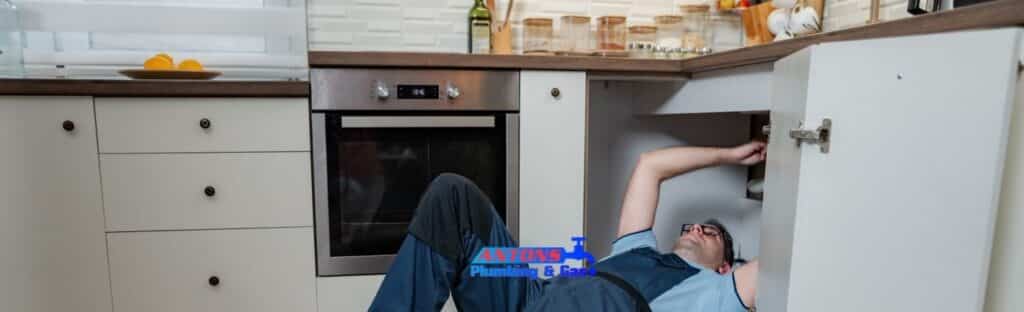
Burst Connections in Kitchens and Ensuites
The affected branch is isolated and the adjoining cabinetry, flooring or ceiling area is checked for active spread.
![Blocked Drain & Toilet Services in [sububrb]](https://antonsplumbingandgas.com.au/wp-content/uploads/2026/02/When-to-Call-a-Professional-Plumber-1024x583.jpg)
03
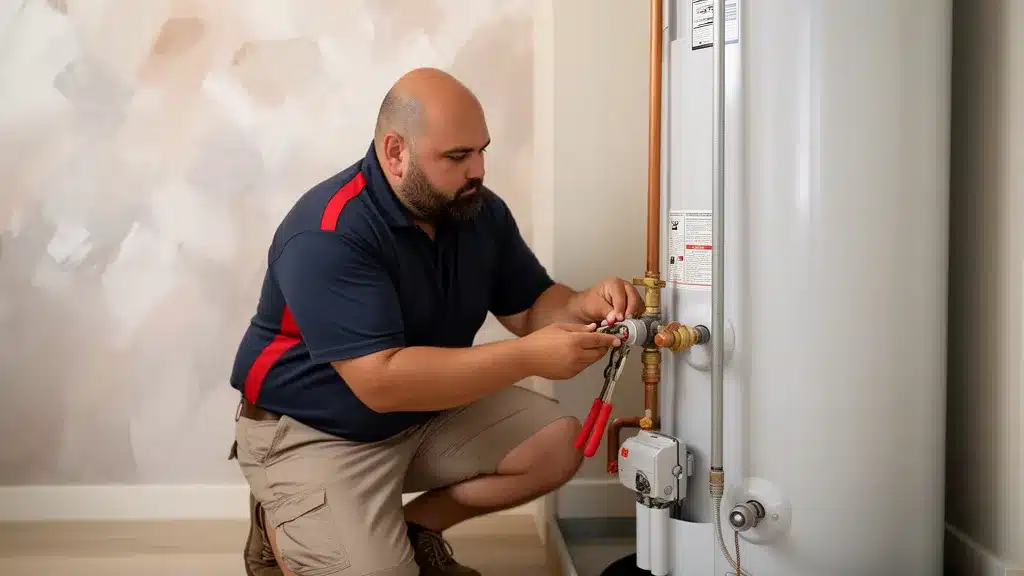
Hot Water Cylinder and Valve Failures
We assess tank, valve, supply and energy-source risks before discussing repair or replacement.
04
Gas Appliance and Supply Faults
Licensed testing follows safe evacuation and isolation; appliances remain off until the source is confirmed.

05
Private Drain Blockages
The pattern across bathrooms, kitchens and outdoor points helps identify where clearing should begin.
06
Low Pressure Across a Large Home
We compare fixtures and levels to separate a local restriction from a supply, valve or pressure-control issue.
Castle Hill Isolation Points Worth Knowing
A larger property may have a boundary meter plus local valves for wings, fixtures, irrigation or hot water. Labelled controls prevent an emergency shutdown from becoming a whole-house search.
- Locate it before an emergency and keep landscaping clear.
- Confirm the customer shut-off moves without forcing it.
- Photograph the meter number for your property records.
- After closing, test a low cold tap to confirm isolation.
- Identify the cold inlet to the hot water unit.
- Check accessible isolation valves below sinks, basins and toilets.
- Use a local valve when it fully stops the fault.
- Do not operate corroded or unlabelled controls with tools.
- Keep the outdoor access path unobstructed.
- Know the difference between appliance and main isolation.
- Never search for a leak with a flame.
- Leave the supply off until licensed testing is complete.
Add isolation locations to household handover notes so another occupant can act safely when the usual decision-maker is away.
How a Castle Hill Emergency Visit Is Planned
We reduce unnecessary disruption by gathering the building and service information before diagnosis begins.
We ask which level, room and fixture showed the first symptom.
Meter, hot water, gas and local valve locations are confirmed.
Driveway, side path, basement, ceiling or landscaped access is considered.
The smallest practical section is shut down while the source is assessed.
You receive the findings, repair choices and any effect on finishes or other services.
The service is tested where appropriate and you are told what to watch after the visit.
Castle Hill Emergency Plumbing Cost Factors
Property size alone does not set the price. Diagnosis, access, service type and the extent of damage determine the labour and equipment required.
Long branches may require more testing to locate where pressure or water is being lost.
Tiled bathrooms, cabinetry and renovated walls call for a planned access decision.
System type and safe shutdown requirements affect testing and parts.
A fixture trap, private branch and buried main demand different equipment.
Vehicle position, clearances and safe equipment movement are considered.
Containment may be possible first when a larger approved repair needs parts or access planning.
The affected floor and room narrow which plumbing zone is checked first.
Local shutdown can preserve other bathrooms or services when suitable.
Ceiling, basement, side or landscaped access is considered before work starts.
You understand the effect on finishes and services before approving the scope.
Testing and monitoring instructions complete the technical handover.
ABS 2021 figures show that 73.7% of occupied Castle Hill dwellings are separate houses and 59.9% have four or more bedrooms. More rooms and plumbing zones can make a symptom misleading: water from an upstairs connection may appear downstairs or along a distant wall. We therefore ask about levels, recent fixture use and meter movement rather than assuming the nearest fitting is the cause.
- Locate your water meter isolation tap and check it actually turns.
- Replace braided flexi hoses on a sensible cycle rather than waiting for one to burst.
- Have mains pressure checked — high pressure wears every joint and seal in the house.
- Act on small leaks, weeping joints and damp patches early.
- Have an ageing hot water system assessed before it fails, not after.
- Get recurring blockages diagnosed with a camera rather than cleared over and over.
- Clear gutters, downpipes and stormwater pits before storm season.
- In a rental, make sure whoever lives there knows how to isolate the water.
- Turn the water off at the meter if the property will be empty for a long stretch.
Careful Diagnosis for Castle Hill Properties
We use the symptom pattern to reduce unnecessary opening of finishes.
Gas faults are handled by an appropriately licensed fitter.
Tank, valve, gas and electrical risks are separated before recommendations.
Levels, wet areas and service branches are mapped during the call.
Basement, riser, lift and building-manager details are collected.
Access implications are explained before non-emergency opening work.
You can compare containment, local repair and broader replacement where relevant.
The queue and site requirements are reviewed before a window is given.
Testing results and monitoring points are explained before handover.
Castle Hill Plumbing Questions, Answered
Straight answers on pricing, response times and what to expect.
How can you trace water appearing far from a Castle Hill bathroom?
How can you trace water appearing far from a Castle Hill bathroom?
We compare recent fixture use, meter movement and moisture locations across levels. Targeted testing helps narrow the branch before finishes are opened.
Can you attend a large home with several bathrooms?
Can you attend a large home with several bathrooms?
Yes. Tell us which rooms are affected and which fixtures were used first so the plumbing zones can be prioritised.
Is a leaking hot water relief pipe always an emergency?
Is a leaking hot water relief pipe always an emergency?
Occasional discharge and continuous heavy flow are different. Keep clear of hot water, do not cap the valve and call with the system behaviour.
What should I do if an upstairs leak reaches a light fitting?
What should I do if an upstairs leak reaches a light fitting?
Stop using plumbing above, keep clear of the wet electrical area and do not touch switches. Call 000 for immediate electrical danger.
Can you isolate only one bathroom?
Can you isolate only one bathroom?
Sometimes accessible local valves or branch controls allow partial isolation. The plumber must confirm that the control is suitable and fully stops the leak.
Do sloping driveways change the callout?
Do sloping driveways change the callout?
They can affect vehicle and equipment access. Tell us about steep, narrow or gated access before attendance.
Can you diagnose low pressure across two levels?
Can you diagnose low pressure across two levels?
Yes. We compare fixtures by level and check supply, valves and pressure controls before assuming pipe replacement is needed.
What if my Castle Hill gas appliance will not ignite?
What if my Castle Hill gas appliance will not ignite?
Turn the appliance off and do not repeatedly attempt ignition if gas is suspected. A licensed gas fitter can test the appliance and supply safely.
Can you help with a blocked private sewer line?
Can you help with a blocked private sewer line?
Yes. The affected fixtures and outside overflow point guide where clearing and camera inspection should begin.
Will tree roots always require a drain replacement?
Will tree roots always require a drain replacement?
No. Roots can indicate a pipe entry point, but the line condition must be inspected before repair options are recommended.
Can you attend a Castle Hill apartment basement leak?
Can you attend a Castle Hill apartment basement leak?
Yes, provided safe access is arranged. Give us the building contact, bay or plant-room location and any clearance restrictions.
How quickly can a plumber reach Castle Hill?
How quickly can a plumber reach Castle Hill?
We give a realistic window after checking the emergency queue, exact address, access and required trade. We do not promise an unchecked fixed time.
Can a contained ensuite leak wait until daytime?
Can a contained ensuite leak wait until daytime?
If the local valve stops it and no water, sewage or electrical risk remains, it may suit a standard booking. Describe the situation so we can help classify it.
Do you repair gas hot water systems?
Do you repair gas hot water systems?
Licensed gas and plumbing work is available. The fault is assessed before repair, replacement or another specialist requirement is discussed.
Will you open a tiled wall immediately?
Will you open a tiled wall immediately?
Not automatically. We use accessible checks and targeted diagnosis first, then explain why access may be required and what area is involved.
Can you check a meter that moves when every tap is off?
Can you check a meter that moves when every tap is off?
Yes. Continuous movement can support a leak investigation, but appliances, irrigation and filling cisterns must also be ruled out.
What photos help before a Castle Hill callout?
What photos help before a Castle Hill callout?
Send the leak source, affected finish, meter, hot water label and access route where safe. Avoid entering wet electrical or gas-risk areas.
Can you work with my builder after an emergency repair?
Can you work with my builder after an emergency repair?
Yes. We can document the plumbing findings and completed containment so follow-up access or restoration can be coordinated.
What if I cannot shut the boundary meter?
What if I cannot shut the boundary meter?
Do not use excessive force or improvised tools. Call with a photo and the current flow so the safest next step can be discussed.
How should I prepare a large home for attendance?
How should I prepare a large home for attendance?
Clear safe access to the meter, plant and affected rooms, secure pets, and list which bathrooms or appliances were used before the fault.
PROTECT YOUR HOME NOW
Call a 24 Hour Plumber in Castle Hill
Plumbing emergency in Castle Hill?
Don’t wait on a form, call now for 24/7 priority response.
- Fully Stocked Vehicles
- Your local Castle Hill experts
- Same day service where available
- Upfront fixed pricing
- Licensed & insured. Lic: 210933C