

You’ve just had copper pipework installed or repaired using ProPress fittings, and you’ve noticed that a ProPress fitting has play or can twist slightly on the pipe. This small amount of movement—often called rotational play—can be unsettling if you’re unfamiliar with how press fittings work. Many Sydney homeowners and property managers wonder whether the movement indicates poor installation, a potential future leak or simply how the fitting is designed to function.
This article explains what causes play in ProPress fittings, when it’s considered normal, what installation mistakes to watch for, and when you should call a licensed plumber for inspection. You’ll also learn how to spot the difference between safe, properly pressed joints and fittings that pose a real risk to your property in Sydney and across NSW.
Key Takeaways
- Slight rotational play in a correctly pressed ProPress fitting is generally normal because the seal relies on an internal O-ring, not a rigid metal-to-metal lock.
- Most ProPress leaks stem from installation errors such as incomplete pressing, damaged O-rings, insufficient pipe insertion, or use of incompatible copper.
- Excessive movement, visible gaps, or fittings that spin freely may indicate improper installation and require immediate professional inspection.
- Manufacturers specify strict installation steps—square cuts, deburring, full insertion, correct jaw alignment, and pressure testing—to ensure leak-free joints even with minor play.
- ProPress may not be suitable for underground or high-movement locations where thermal cycling or ground shift can distort fittings over time, which is a real consideration in Sydney’s reactive clay soils.
Understanding How ProPress Fittings Seal
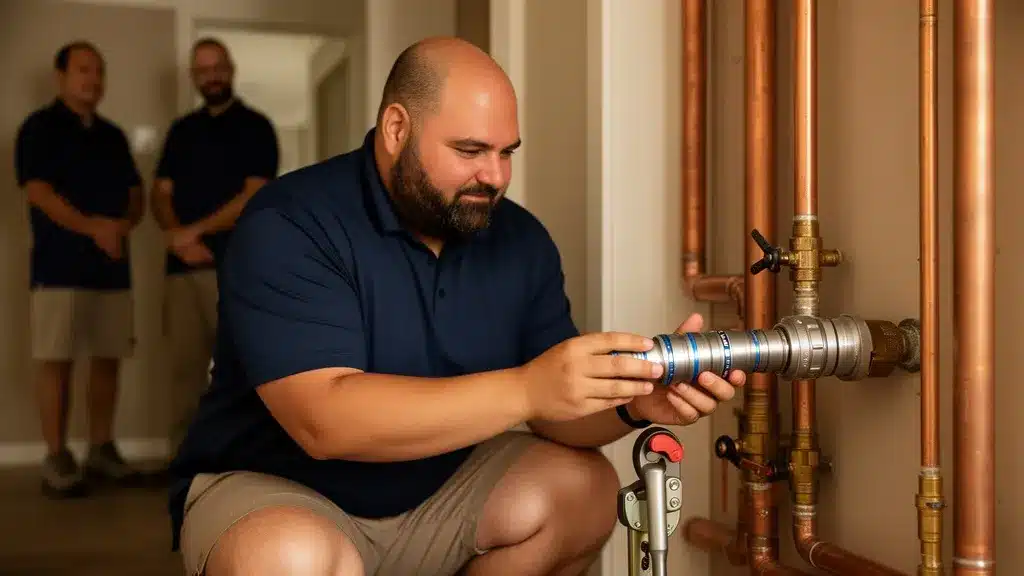
ProPress is a mechanical press-fitting system that joins copper pipe without soldering, flame, or flux. Instead of relying on heat to fuse metal, the fitting uses a stainless-steel housing, a rubber O-ring, and a hydraulic press tool to create a permanent, watertight seal. When the press tool clamps the fitting, it deforms the outer sleeve and compresses the O-ring against the pipe wall. That compression is what stops water from leaking—not the rigidity of the fitting itself.
Because the seal is created by the O-ring rather than a brazed or soldered bond, the fitting is not locked in place the same way a traditional joint would be. A small amount of rotational movement is inherent to the design. The fitting can turn slightly on the pipe without compromising the seal, as long as the press was completed correctly and the O-ring remains intact and properly compressed.
This is an important distinction. Many people expect ProPress fittings to feel as solid as a soldered joint, but the two systems work differently. A properly pressed fitting can have minor play and still be completely leak-free and compliant with the AS/NZS 3500 plumbing standards used across NSW.
Ready to have your fittings checked properly? Book the best plumbing service in Sydney now.
When Play in a ProPress Fitting Is Considered Normal
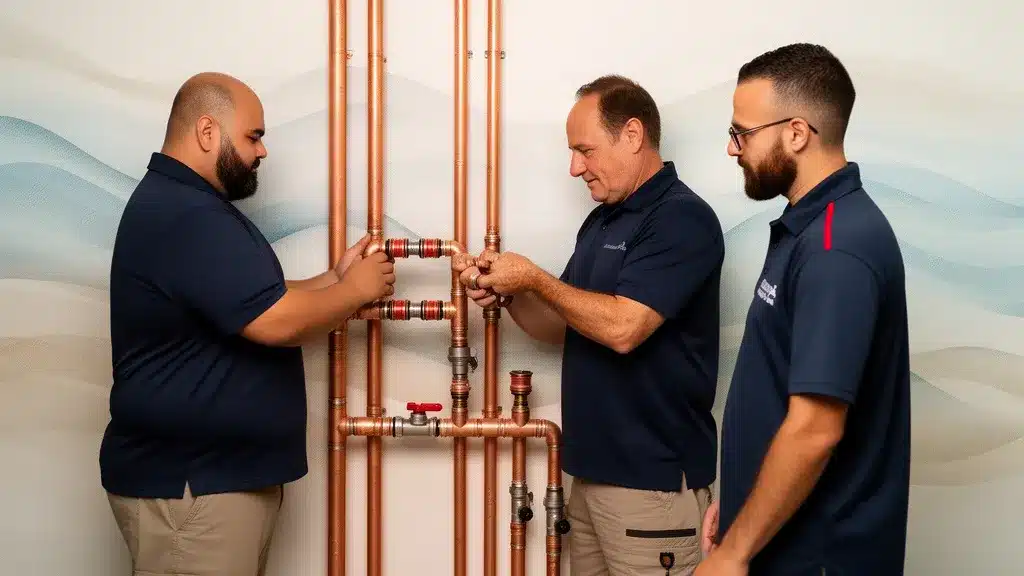
Slight turning or rotational movement in a pressed fitting is generally considered acceptable by installers and manufacturers. The sealing mechanism does not depend on the fitting being rigidly fixed to the pipe. As long as the press tool was applied correctly, the jaws aligned, and the fitting was pressed to the manufacturer’s specification, a small amount of cooperative play does not indicate a problem.
You might be wondering how much movement is too much. A fitting that can rotate a few degrees but still feels snug and shows no gap between the fitting body and the pipe is typically fine. If you can spin the fitting freely with your hand, or if you see a visible gap where the pipe enters the fitting, that is a red flag. Those symptoms suggest the fitting was not pressed properly, the O-ring is missing or damaged, or the pipe was not fully inserted to the stop inside the fitting.
In practice, many licensed plumbers across Sydney see fittings with minor play that have been in service for years without any leaks. The key is that the fitting was installed according to the manufacturer’s instructions and pressure-tested before the system was put into use. If you’re concerned about movement in a newly installed fitting, ask your plumber to pressure-test the line and confirm the joint is sealed.
Common Installation Mistakes That Cause ProPress Leaks
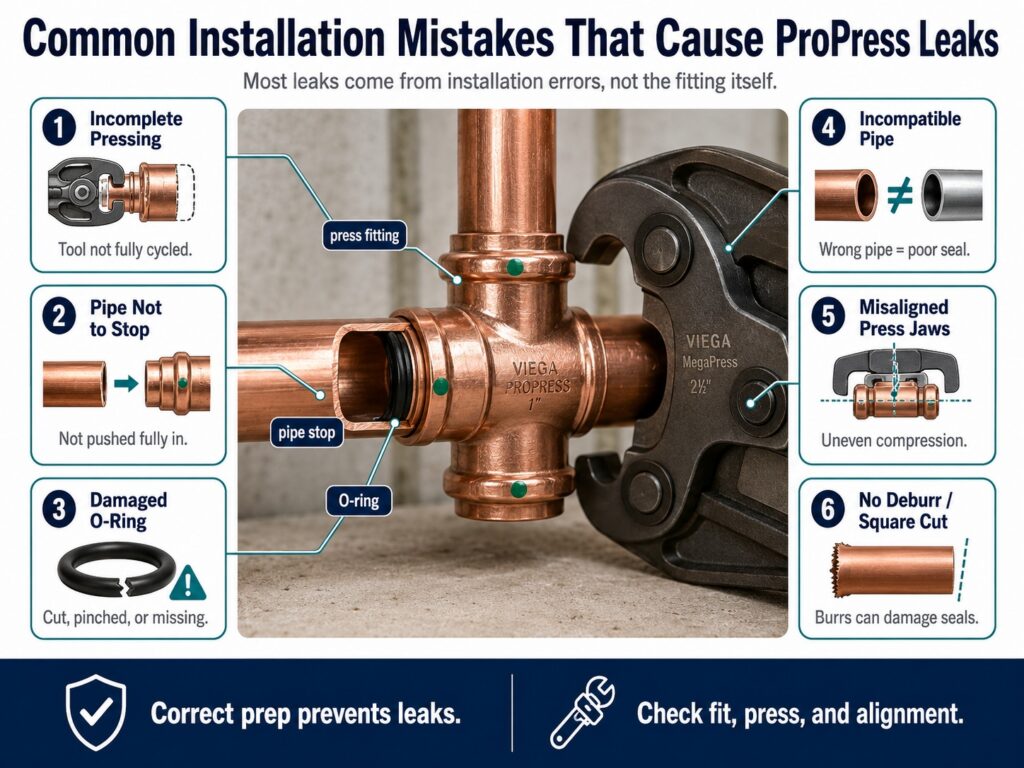
Most ProPress leaks are not caused by the fittings themselves, but by installation errors. Understanding these mistakes can help you identify whether the play you’re seeing is harmless or a sign of a bigger issue. Below are the most common problems our team encounters when inspecting press-fitted copper pipe in Sydney homes and commercial properties.
1. Incomplete Pressing
If the press tool is not fully cycled, the fitting sleeve will not be compressed enough to seal the O-ring. The fitting may look pressed but will leak under pressure. Incomplete pressing can also leave the fitting loose enough to spin freely on the pipe.
2. Pipe Not Inserted to the Stop
Every ProPress fitting has an internal stop that the pipe must reach before pressing. If the pipe is not pushed all the way in, the O-ring will not align correctly, and the seal will fail. This is one of the most common causes of leaks and excessive play.
3. Damaged or Missing O-Ring
The O-ring can be cut, pinched, or dislodged during installation. If the O-ring is damaged or missing entirely, the fitting will not seal, no matter how well it is pressed. Always inspect the O-ring before pressing, and replace it if there is any visible damage.
4. Use of Incompatible Pipe
ProPress fittings are designed for Type L copper pipe in most residential and light commercial applications. Using thin-wall Type M copper or other non-approved materials can result in poor compression, leaks, and excessive movement. Always check the manufacturer’s specifications for compatible pipe types.
5. Misaligned Press Jaws
If the press tool jaws are not centred on the fitting, the compression will be uneven. This can leave part of the fitting under-pressed and cause leaks or allow the fitting to twist more than it should. Proper jaw alignment is critical for a secure, leak-free joint.
6. Failure to Deburr and Square-Cut the Pipe
Burrs left on the pipe end can cut the O-ring during insertion. A pipe that is not cut square can prevent full insertion to the stop. Both issues lead to leaks and fittings that feel loose or wobbly.
How to Tell If Your ProPress Fitting Was Installed Correctly
If you’re concerned about play in a ProPress fitting, there are a few simple checks you can perform yourself before calling a plumber. Start by looking at the fitting closely. The pipe should be fully inserted into the fitting with no visible gap between the pipe end and the fitting body. The press mark—an indentation left by the press tool—should be clear and even all the way around the fitting.
Next, try to rotate the fitting gently by hand. A small amount of movement is normal, but the fitting should not spin freely. If you can turn it more than a few degrees with light pressure, or if it feels loose, that suggests the fitting was not pressed correctly or the pipe was not inserted fully.
Finally, check for any signs of moisture, corrosion, or water stains around the fitting. Even a slow leak can leave telltale marks. If you see any dampness, discolouration, or mineral deposits, the fitting is leaking and needs to be inspected and re-pressed or replaced by a licensed plumber.
Any alteration or repair to water supply pipework connected to the Sydney Water network may be classed as notifiable work under NSW plumbing regulations, meaning it must be carried out by a licensed plumber and, in some cases, lodged with Sydney Water via a Certificate of Compliance. At Antons Plumbing & Gas, we use pressure testing and visual inspection to confirm every press fitting is sealed and compliant. If you’re not confident in the installation, or if you notice any of the warning signs above, our team can inspect the fitting, test the line, and re-press or replace the joint if needed. We serve the entire Sydney Metro—Inner West, Eastern Suburbs, North Shore, Northern Beaches, Hills District, and beyond—with same-day service and no call-out fee from 7am to 3pm on weekdays.
Can a ProPress Fitting Be Re-Pressed?
Yes, in many cases a ProPress fitting that has lost resistance to rotational movement can be re-pressed to restore the seal. Viega’s technical literature notes that fittings showing excessive play can often be re-pressed if the O-ring is intact and the pipe is correctly inserted. Re-pressing compresses the sleeve further and tightens the seal around the O-ring.
Re-pressing is not always a guaranteed fix. If the O-ring was damaged during the original installation, or if the pipe was not inserted to the stop, re-pressing will not solve the problem. In those cases, the fitting must be cut out and replaced with a new one. Forcing excessive movement or attempting to re-press a fitting outside of manufacturer guidelines can void the warranty and create a bigger problem.
Our plumbers assess each fitting individually. If re-pressing is appropriate and the fitting can be salvaged, we’ll do that. If the fitting is damaged or the installation was incorrect, we’ll replace it with a new fitting and ensure the pipe is prepared and pressed correctly the second time. We document the work, pressure-test the line, and back our installation with a lifetime labour warranty.
Situations Where ProPress May Not Be the Best Choice
ProPress fittings are fast, reliable, and widely used in residential and commercial plumbing across Sydney. They are not suitable for every application. Some installers caution against using ProPress in underground locations or in areas subject to ground movement, thermal cycling, or high mechanical stress. In those environments, movement and stress can distort the fitting over time, and the small amount of play that is normal in a new fitting can become a problem as the system ages.
For underground pipe runs, especially in areas of Sydney with reactive clay soils or established tree roots, soldered or brazed copper joints are sometimes preferred because they create a rigid, monolithic connection that is less vulnerable to ground shift. Similarly, in commercial or industrial settings where pipe is exposed to frequent temperature changes or vibration, a brazed joint may offer better long-term durability.
If you’re planning a renovation, hot water system upgrade, or new plumbing installation, talk to your plumber about the best joining method for your specific situation. We evaluate the location, pipe material, water pressure, and environmental conditions before recommending ProPress, soldering, or other methods. Our goal is to give you a solution that meets Australian Standards, fits your budget, and lasts for decades.
What to Do If You Suspect a Problem with Your ProPress Fitting
If you notice excessive play, visible gaps, moisture, or any other sign that a ProPress fitting may not be sealed correctly, the safest course of action is to call a licensed Sydney plumber for inspection. Do not attempt to re-press the fitting yourself unless you have the correct press tool, training, and manufacturer’s specifications. Incorrect re-pressing can damage the O-ring, deform the fitting, or create a leak that floods your property.
A professional inspection typically includes visual examination of the fitting, checking for proper insertion and press marks, and pressure-testing the line to confirm there are no leaks. If the fitting is found to be defective or improperly installed, we can re-press or replace it on the spot. If the fitting is fine and the play is within normal limits, we’ll document that and give you peace of mind.
Antons Plumbing & Gas operates under a current NSW Fair Trading plumbing licence (Lic. 210933C) and complies with the AS/NZS 3500 plumbing standards required across NSW. We carry the correct press tools for Viega, Conex, and other major brands, and our plumbers are trained in the manufacturer’s installation procedures. Whether you need a single fitting inspected or a full system pressure test, we respond the same day across Sydney Metro and provide clear, upfront pricing in AUD with no hidden fees.
How ProPress Compares to Traditional Soldered Joints
ProPress fittings offer several advantages over soldered copper joints. They eliminate the need for open flame, which is safer in occupied buildings, near flammable materials, or in tight spaces. Installation is faster, which reduces labour costs and downtime. ProPress also produces a consistent, repeatable seal that is less dependent on the skill of the individual plumber.
Soldered joints create a rigid, fused connection with no play at all. Some plumbers and engineers prefer soldered joints for underground work, high-pressure systems, or applications where any movement is unacceptable. Soldering requires more time, skill, and care to avoid overheating the pipe or creating weak joints.
Both methods are compliant with Australian Standards when installed correctly. The choice between ProPress and soldering depends on the application, the environment, the timeline, and the preferences of the property owner. We offer both options and explain the pros and cons so you can make an informed decision.
Conclusion
Slight play in a ProPress fitting is generally normal and does not indicate a leak if the fitting was pressed correctly and the O-ring is intact. Excessive movement, visible gaps, or moisture around the joint are warning signs that require professional inspection. Our team at Antons Plumbing & Gas is ready to inspect, test, and repair any press-fitted copper pipe across Sydney Metro with same-day service, upfront pricing, and a lifetime labour warranty. Call us on 0493 824 176 or book online for fast, reliable plumbing help.
Antons Plumbing & Gas specialises in leak detection and pipe repairs across Sydney Metro for residential and commercial properties. Our licensed team diagnoses ProPress fitting issues with precision and provides same-day solutions. Call 0493 824 176 to get started.
Related Articles
- Household Plumbing Pipe Identification: What Each Pipe Type Means
- Under Sink Sump Pump Head Height: What It Means and Why It Matters
- Toilet Flapper Bolt Stuck? Here’s What Homeowners Should Know
FAQs
What Does It Mean If A ProPress Fitting Has Play?
If a ProPress fitting has play, it indicates that the fitting is not securely connected to the pipe, which can lead to potential leaks or failures. This movement may be due to improper installation or wear over time. It’s essential to address this issue promptly to ensure the integrity of your plumbing system.
Is It Normal For ProPress Fittings To Have Some Movement?
It is not typical for ProPress fittings to have noticeable movement. While some minor tolerances may exist, any significant play suggests a problem that needs attention. At Antons Plumbing & Gas, we recommend having a qualified plumber assess any fittings that appear loose to prevent future complications.
How Do You Fix A Loose ProPress Fitting?
To fix a loose ProPress fitting, a qualified plumber will typically need to re-evaluate the installation. This may involve disassembling the fitting, cleaning the pipes, and reapplying the ProPress connection to ensure a secure fit. If you’re experiencing this issue, our experienced team in Oxley Park at Antons Plumbing & Gas can provide a thorough inspection and effective repair.
What Are The Signs Of A Bad ProPress Fitting?
Signs of a bad ProPress fitting include visible leaks, corrosion around the fitting, water stains, or unexplained drops in water pressure. If you notice any of these symptoms, it’s crucial to contact a professional plumber like those at Antons Plumbing & Gas to assess and resolve the issue before it escalates.
Can A ProPress Fitting Leak If It Has Play?
Yes, a ProPress fitting that has play can potentially leak. The movement can compromise the seal and lead to water escaping from the connection. If you suspect any issues with your ProPress fittings, our team is available to provide a thorough inspection and necessary repairs to ensure your plumbing remains leak-free.
How Much Does It Cost To Inspect Or Re-Press A ProPress Fitting In Sydney?
Costs depend on access, the number of fittings involved, and whether a re-press or full replacement is needed. We provide upfront, obligation-free pricing in AUD before any work begins, with no surprises on the invoice. Call 0493 824 176 for a quote specific to your property.
Do I Need A Licensed Plumber To Work On ProPress Fittings In NSW?
Yes. Under NSW law, plumbing work must be carried out by a licensed plumber. Antons Plumbing & Gas holds NSW Lic. 210933C and our team is trained in manufacturer-specific ProPress installation and repair procedures, so your work is compliant and insurable.
Can I Re-Press A ProPress Fitting Myself?
We don’t recommend it. Re-pressing requires the correct hydraulic tool, jaw size, and manufacturer specifications. Getting it wrong can damage the O-ring or deform the fitting and cause a burst pipe. It’s safer and more cost-effective to have a licensed Sydney plumber do it properly the first time.
Is ProPress Compliant With Sydney Water And AS/NZS 3500 Standards?
Yes, when installed correctly by a licensed plumber, ProPress fittings meet AS/NZS 3500 requirements and are accepted for use on water supply pipework connected to the Sydney Water network. Our team ensures all work is documented and, where required, notified correctly.
How Quickly Can Antons Plumbing & Gas Attend A ProPress Leak In Sydney?
We offer same-day service across Sydney Metro, including the Inner West, Eastern Suburbs, North Shore, Northern Beaches, and Hills District. If you’ve spotted play, moisture, or a leak, call us now and we’ll get someone out to inspect it.
Do You Charge A Call-Out Fee For ProPress Inspections?
No. We don’t charge a call-out fee for bookings between 7am and 3pm on weekdays, so there’s no cost to simply have a fitting checked out.
What Suburbs Do You Service For ProPress Fitting Repairs?
We service the whole of Sydney Metro, including Prospect, Plumpton, Seven Hills, North Kellyville, Oxley Park, Glenhaven, Shalvey, and surrounding suburbs. If you’re unsure whether we cover your area, call us to check.
Is ProPress Fitting Repair Covered By Warranty?
Yes. All ProPress repairs and installations carried out by Antons Plumbing & Gas are backed by a lifetime labour warranty, giving you long-term confidence in the workmanship.
Can A ProPress Fitting Cause A Burst Pipe?
A fitting that hasn’t been pressed correctly can fail under pressure and cause a sudden leak or burst, particularly if the O-ring is damaged. Having any suspect fitting inspected early significantly reduces the risk of water damage to your Sydney home.
Should I Get My ProPress Fittings Checked Before Selling My Property?
It’s a smart move. A pre-sale plumbing check can identify loose or leaking fittings before they show up in a building inspection report, giving buyers confidence and avoiding last-minute negotiations. Ask us about a pre-sale plumbing inspection.
What Happens During A ProPress Fitting Inspection?
Our licensed plumbers visually check the fitting for correct insertion and an even press mark, then pressure-test the line to confirm there are no leaks. If a problem is found, we can usually re-press or replace the fitting during the same visit.
Can ProPress Fittings Be Used Underground In Sydney’s Clay Soils?
Generally, ProPress is not the preferred method for underground runs in Sydney’s reactive clay soil areas, where ground movement can put extra stress on the joint over time. We’ll advise you on the best jointing method for your specific site conditions.
How Do I Book A ProPress Inspection With Antons Plumbing & Gas?
Simply book online or call 0493 824 176. We offer same-day appointments across Sydney Metro with transparent, upfront pricing.
Do You Offer Emergency Plumbing For Leaking ProPress Fittings?
Yes. If a fitting is actively leaking, call us straight away on 0493 824 176. Our licensed plumbers can respond quickly to limit water damage and carry out a permanent repair.
What Should I Do If I See Water Stains Near A ProPress Fitting?
Water stains, corrosion, or dampness near a fitting mean it’s already leaking, even if only slowly. Turn off the water supply if possible and call a licensed Sydney plumber immediately for inspection and repair before the damage spreads.