


A toilet seat that slides backward or sits too far from the front of the bowl can create discomfort and frustration every time you use the bathroom. Many Sydney homeowners look for ways to move toilet seat forward when the position feels awkward, elderly family members struggle to sit safely, or a grab rail does not align correctly with the seat. Most toilet seat alignment issues can be resolved by adjusting the hinges, bolts, or mounting hardware, although some situations may require professional inspection or replacement.
This guide explains why toilet seat positioning matters, walks you through simple DIY adjustments, and outlines when it makes sense to call a licensed plumber. You will learn how to tighten loose bolts, reposition adjustable hinges, and recognize the signs that your toilet seat needs replacing rather than adjusting.
Key Takeaways
- Adjustable hinges allow you to move the toilet seat forward by loosening screws and rotating the mounting base.
- Tightening the seat bolts prevents the seat from sliding backward when you sit down or stand up.
- Worn hinges and stripped bolts often require replacement rather than adjustment.
- Proper alignment improves comfort, safety and accessibility for all household members.
- Professional plumbers can inspect mounting hardware, replace damaged components, and ensure a secure installation that meets NSW plumbing rules.
Why Toilet Seat Position Affects Comfort and Safety
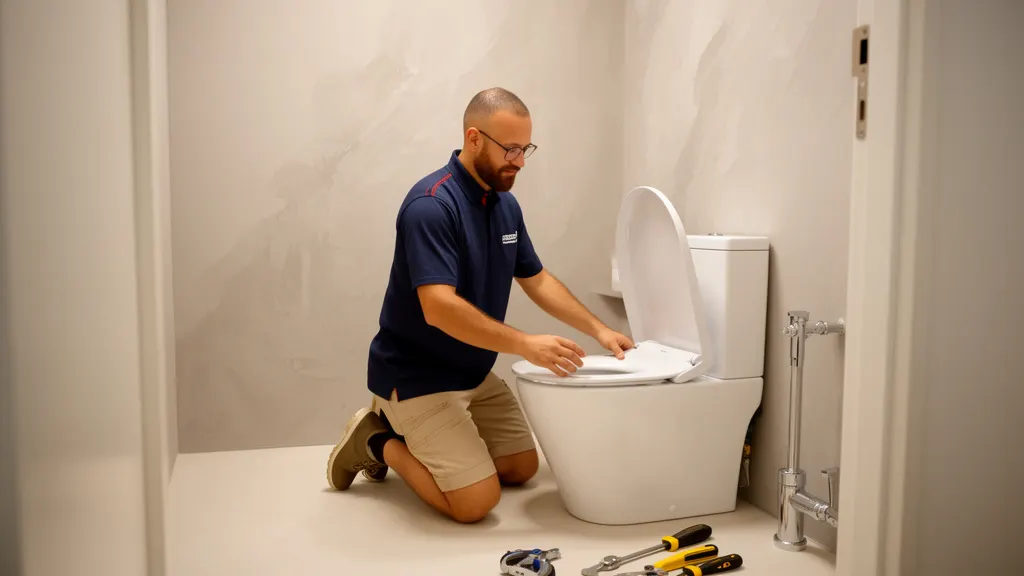
The position of your toilet seat determines how comfortably you can sit and how easily you can stand up afterward. When the seat sits too far back on the bowl, you may feel unbalanced or need to lean forward awkwardly. This becomes a bigger issue for older adults, people with mobility challenges, or anyone who has installed a grab rail for toilet support and expects the seat to align with the rail placement.
A misaligned seat also increases wear on the hinges and bolts because uneven weight distribution stresses the mounting points. Over time, this leads to cracks in the seat, loose hardware, and the need for frequent retightening.
Proper seat alignment supports good posture and reduces strain on your knees and hips. It also makes it easier to lift the toilet seat up or put the toilet seat up without the seat shifting or wobbling.
How to Move Your Toilet Seat Forward Using Adjustable Hinges
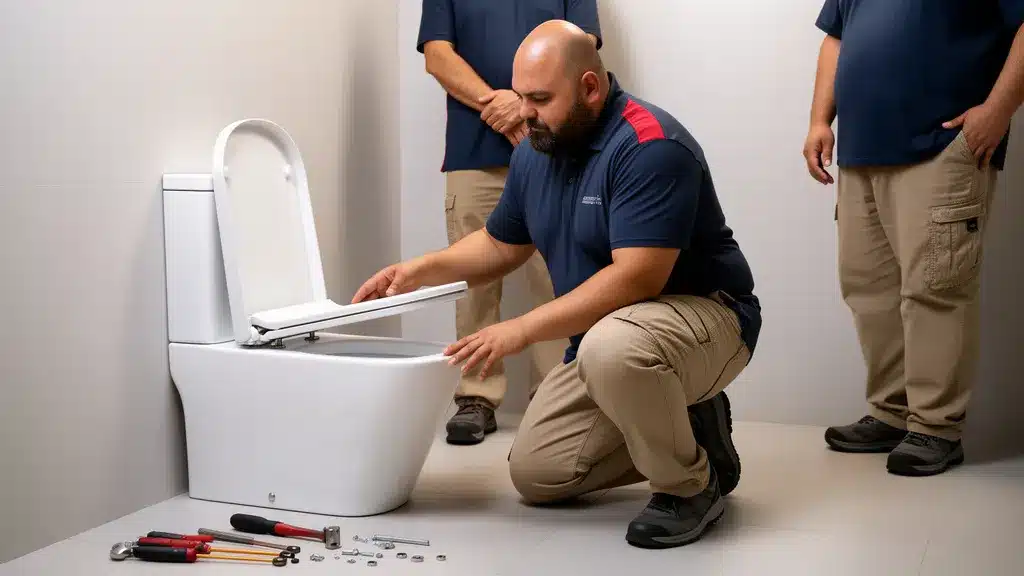
Many modern toilet seats feature adjustable hinges that let you shift the seat position without removing the entire assembly. This adjustment works by loosening the hinge screws, rotating the mounting base, and retightening the screws once the seat sits in the desired position. The process takes only a few minutes and requires basic tools.
Before you begin, lift the toilet seat up and inspect the hinge area at the back of the bowl. Look for small screws or caps that cover the hinge bolts.
1. Locate the Hinge Adjustment Screws
Most adjustable hinges have a screw on each side that holds the mounting base in place. You may need to flip up a plastic cap or cover to access the screw head. Use a Phillips or flat-head screwdriver depending on the screw type.
2. Loosen the Screws Slightly
Turn each screw anticlockwise just enough to allow the hinge base to rotate. Do not remove the screws completely—loosening them by a few turns is usually sufficient. This lets you move the seat forward without losing the hardware inside the bowl cavity.
3. Rotate the Hinge Base Forward
Gently push or pull the hinge base toward the front of the toilet bowl. You should feel the base pivot around the bolt. Move both sides evenly to keep the seat centred.
4. Tighten the Screws Securely
Once the seat sits in the forward position you want, turn the screws clockwise to lock the hinge base in place. Check that both sides are equally tight so the seat does not wobble or shift when you sit down.
5. Test the Seat Alignment
Lower the seat and sit on it briefly to confirm the new position feels comfortable. Try to push the seat backward with your hand—if it moves, the screws need further tightening. Repeat the adjustment if the seat still feels too far back.
6. Check for Wobble or Movement
Stand up and gently rock the seat from side to side. Any wobble indicates loose bolts or worn hinge components. If tightening does not eliminate the movement, the hinges may need replacement.
7. Inspect the Seat Regularly
Toilet seats shift over time due to daily use and the natural loosening of hardware. Check the hinge screws every few months and retighten them as needed to maintain proper alignment and prevent the seat from sliding backward.
Tightening Loose Bolts to Stop Your Seat From Sliding
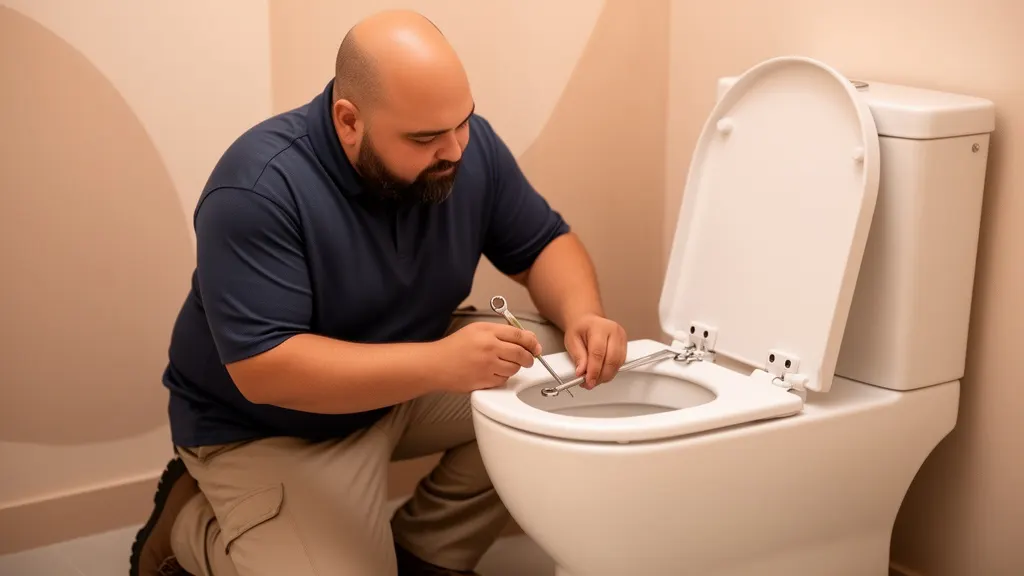
Even seats without adjustable hinges can shift forward or backward if the mounting bolts work loose. This happens when people sit down heavily, when children swing on the seat, or simply through repeated use over months and years. Tightening the bolts restores stability and keeps the seat centred on the bowl.
The bolts that hold your toilet seat pass through holes at the back of the bowl and secure with nuts underneath. You access these nuts from below the toilet rim, often in a tight space that requires patience and a small tool.
Lift the Seat and Locate the Bolt Covers
Most toilet seats have small plastic caps or covers at the base of each hinge. Flip these covers up or prise them off gently with a flat-head screwdriver to reveal the bolt heads underneath.
Hold the Bolt From Above
Insert your screwdriver into the bolt head from the top side of the seat hinge. Hold the screwdriver steady to prevent the bolt from spinning while you tighten the nut below.
Tighten the Nut From Below
Reach under the back of the toilet bowl and locate the nut on the underside of each bolt. Use an adjustable spanner or pliers to turn the nut clockwise. You should feel resistance as the nut pulls the seat down firmly against the bowl.
Avoid Over-Tightening
Tighten the nut until the seat feels secure, but do not crank it down with excessive force. Over-tightening can crack the porcelain bowl or strip the plastic threads in the seat hinge, creating a bigger problem than a loose seat.
Test the Seat Stability
Once both nuts are snug, lower the seat and try to move it side to side and front to back. The seat should stay firmly in place without any wobble or shift. If movement persists, check whether the bolt holes in the bowl have worn or enlarged over time.
When to Replace Rather Than Adjust Your Toilet Seat
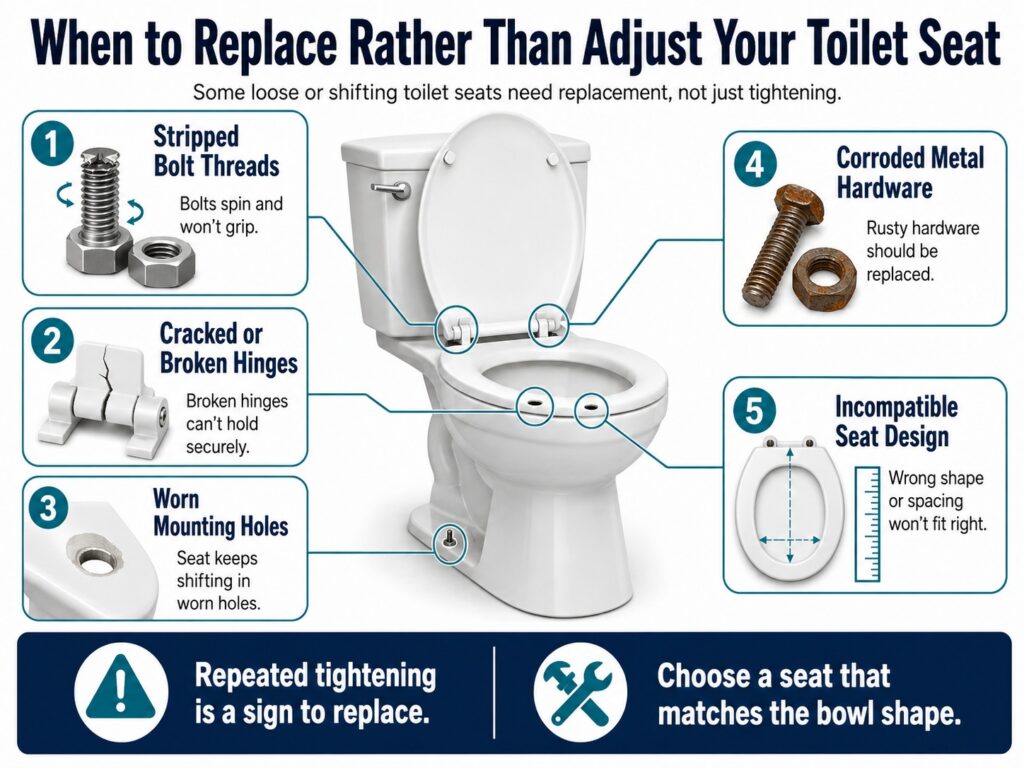
Adjusting hinges and tightening bolts work well when the hardware remains in good condition. Some situations call for a full seat replacement because the components have worn beyond the point where adjustments provide a lasting fix. Recognising these signs saves you time and prevents repeated trips to retighten the same bolts.
- Stripped bolt threads: If the nut spins freely without tightening, the bolt threads have stripped and no longer grip. Replacement bolts or a new seat assembly will be needed.
- Cracked or broken hinges: Plastic hinges crack from age, UV exposure, or stress. A cracked hinge cannot hold the seat securely no matter how much you tighten the bolts.
- Worn mounting holes: The bolt holes in the seat or bowl can enlarge over time, allowing the bolts to move and the seat to shift. This requires a new seat with fresh mounting points.
- Corroded metal hardware: Metal bolts and nuts rust in humid Sydney bathrooms, especially near the coast. Corroded hardware breaks during removal and should be replaced along with the seat.
- Incompatible seat design: If your toilet bowl has non-standard mounting hole spacing or an unusual shape, a generic replacement seat may not fit properly. Measure the bowl dimensions before purchasing a new seat.
Our team at Antons Plumbing & Gas inspects toilet seats during routine bathroom repairs and can recommend whether adjustment or replacement makes the most sense for your situation. We supply and install quality seats that match your bowl shape and provide secure, long-lasting performance across Sydney and NSW.
Choosing the Right Replacement Seat for Your Toilet Bowl
When adjustment no longer solves the problem, selecting the correct replacement seat ensures a proper fit and comfortable use. Toilet bowls come in round and elongated shapes, and seats must match the bowl profile to sit correctly. Measuring your bowl and checking the mounting hole spacing before you shop prevents returns and frustration.
Most seats mount with two bolts spaced approximately 140 to 150 millimetres apart, measured from the centre of one hole to the centre of the other. Measure from the front edge of the mounting holes to the front rim of the bowl to determine whether you need a round or elongated seat.
| Bowl Shape | Length (Holes to Front) | Best Seat Type |
|---|---|---|
| Round | 420–440 mm | Round seat |
| Elongated | 470–490 mm | Elongated seat |
| D-shape | Varies by brand | Manufacturer-specific |
Look for seats with adjustable hinges if you want the flexibility to move the seat forward or backward in the future. Soft-close hinges reduce noise and prevent the seat from slamming down, which extends the life of the hardware and improves comfort for everyone in the household.
Consider seats with built-in features such as quick-release buttons for easy cleaning or antimicrobial coatings that resist bacteria and odours. These features add convenience and hygiene without complicating the installation process. If you are replacing the whole toilet suite rather than just the seat, remember that under Sydney Water and NSW plumbing rules the new fixture must carry WaterMark certification and be fitted by a licensed plumber.
Installing a New Toilet Seat Correctly to Prevent Future Shifting
Proper installation keeps your new toilet seat aligned and secure from the first use. The process involves threading the bolts through the mounting holes, tightening the nuts evenly, and checking that the seat sits level and centred on the bowl. Taking your time during installation prevents the need for adjustments later.
Start by placing the new seat on the bowl with the hinges aligned over the mounting holes. Insert the bolts from above and thread the nuts onto the bolts from below. Tighten each nut gradually, alternating between the two sides to keep the seat level as you work.
Once the nuts feel snug, lower the seat and check the alignment. The seat should sit parallel to the bowl with equal spacing on both sides. If the seat tilts or sits off-centre, loosen the nuts slightly and reposition the seat before retightening.
Test the seat by sitting on it and shifting your weight from side to side. The seat should remain stable without any movement or creaking sounds. If you notice any wobble, check that the bolts pass through the mounting holes cleanly and that the nuts sit flat against the underside of the bowl.
Common Mistakes to Avoid When Adjusting Toilet Seats
Even straightforward adjustments can go wrong if you rush or use the wrong approach. Understanding common mistakes helps you avoid damaging your toilet seat or bowl and ensures your adjustments last.
- Over-tightening bolts: Excessive force cracks porcelain bowls and strips plastic threads in the seat hinges. Tighten until snug, then stop.
- Skipping the test step: Always sit on the seat and check for wobble after tightening. Skipping this step means you may discover the problem only after the seat shifts during use.
- Using the wrong screwdriver: Mismatched screwdriver heads strip screw slots and make future adjustments difficult. Use the correct size and type for your hinge screws.
- Ignoring worn hardware: If the bolts or nuts show rust, cracks, or stripped threads, replace them rather than trying to tighten them further. Worn hardware will not hold securely no matter how much you adjust it.
- Forgetting to centre the seat: Tightening one side more than the other causes the seat to sit crooked on the bowl. Alternate between sides as you tighten to keep the seat level.
If you encounter resistance, rust, or stripped threads during your adjustment, stop and call a professional. Forcing damaged hardware can crack the bowl or break the seat, turning a simple fix into an expensive repair.
When to Call a Licensed Plumber for Toilet Seat Issues
Most toilet seat adjustments fall within the DIY category, but some situations benefit from professional help. Licensed plumbers bring the right tools, replacement parts, and experience to handle problems that go beyond simple tightening or hinge adjustment, and any work that touches the water connection to your toilet must legally be carried out by a licensed plumber under NSW plumbing regulations.
Call a plumber if the bolts break off inside the bowl during removal. Extracting broken bolts without damaging the porcelain requires specialised tools and techniques. Attempting to drill them out yourself risks cracking the bowl and creating a much larger repair bill.
Contact a professional if the toilet bowl itself shows cracks, chips, or instability. A wobbly bowl indicates problems with the wax ring seal or floor flange, which must be addressed before any seat adjustment will hold securely.
Reach out to a licensed plumber if you need to install a grab rail for toilet support and want to ensure the rail mounts securely to wall studs or blocking. Proper rail installation prevents accidents and meets accessibility standards.
Our team at Antons Plumbing & Gas (NSW Lic. 210933C) handles toilet seat replacements, grab rail installations, and full toilet repairs across Sydney. We arrive with the parts and tools needed to complete the job on the same day, and we back our work with a lifetime labour warranty. Call us on +61 493 824 176 for same-day service with no call-out fee from 7am to 3pm on weekdays.
Maintaining Your Toilet Seat to Prevent Future Alignment Problems
Regular maintenance keeps your toilet seat aligned and reduces the frequency of adjustments. Simple habits and periodic checks prevent bolts from loosening and hinges from wearing prematurely.
Check the hinge screws and mounting bolts every three to six months. Tighten any that feel loose before they allow the seat to shift. This takes only a minute or two and prevents the seat from moving out of position during use.
Clean the hinge area regularly to remove soap scum, hair, and debris that can interfere with the hinge mechanism. Wipe the hinges with a damp cloth and mild cleaner, avoiding harsh chemicals that degrade plastic components.
Teach household members to lower the seat gently rather than letting it drop. Slamming the seat stresses the hinges and loosens the bolts over time. Soft-close hinges eliminate this problem by controlling the descent automatically.
Inspect the seat for cracks, discolouration, or rough edges that indicate wear. Replacing a worn seat before it breaks prevents the inconvenience of a sudden failure and ensures your toilet remains comfortable and hygienic.
How Antons Plumbing & Gas Supports Sydney Homeowners With Toilet Repairs
We understand that toilet issues disrupt your daily routine and affect your comfort at home. Our licensed plumbers (NSW Lic. 210933C) bring more than 25 years of experience to every job, diagnosing the root cause of seat alignment problems and providing clear options for repair or replacement.
When you call us for a toilet seat issue, we inspect the seat, hinges, bolts, and bowl mounting to identify any underlying problems. We carry a range of replacement seats and hardware on our service vehicles, allowing us to complete most repairs on the spot without a return visit.
Our work complies with NSW Fair Trading licensing requirements, relevant Australian Standards, and Sydney Water’s plumbing and drainage rules, ensuring your toilet meets safety and performance expectations. We document our findings, explain your options in plain English, and provide upfront pricing in AUD before we start any work.
Whether you need a simple bolt tightening, a full seat replacement, or a grab rail installation to improve bathroom safety, our team delivers clean, professional workmanship backed by our lifetime labour warranty. We serve the Inner West, Eastern Suburbs, North Shore, Northern Beaches, Hills District, Western Sydney, South-Western Sydney, Sutherland Shire, and surrounding NSW areas with same-day service and 24/7 emergency response.
Conclusion
Moving your toilet seat forward improves comfort, safety, and accessibility for everyone in your household. Simple adjustments to hinges and bolts solve most alignment issues, while worn or damaged components require professional replacement. Regular maintenance and proper installation keep your seat secure and centred for years to come.
Antons Plumbing & Gas provides expert toilet repairs and installations across Sydney Metro for residential comfort upgrades. Our licensed team (NSW Lic. 210933C) adjusts, replaces, or repositions toilet seats and fixtures with precision and upfront pricing. Contact us today to learn more.
Related Articles
- How to Empty a Toilet Bowl Before Repairs or Cleaning
- Why Your Toilet Won’t Flush But Isn’t Clogged: Quick Fixes
- Shower Leaks When Switching to Handheld Wand: Causes and Fixes
FAQs
How Do You Move A Toilet Seat Forward?
To move a toilet seat forward, first locate the hinges at the back of the seat. Unscrew the bolts securing the seat to the toilet bowl, then reposition the seat closer to the front and reattach the bolts. If you’re unsure about the process, our experienced team at Antons Plumbing & Gas can assist you with this adjustment, ensuring it’s done correctly and safely.
Why Would You Want To Move A Toilet Seat Forward?
Moving a toilet seat forward can enhance comfort, especially for individuals who feel cramped or uncomfortable with the existing position. Adjusting the seat can also accommodate different user preferences or improve accessibility. If you’re considering this change, our qualified plumbers can provide tailored advice based on your specific needs.
Is It Possible To Adjust The Position Of A Toilet Seat?
Yes, it is possible to adjust the position of a toilet seat. Most toilet seats can be repositioned by loosening the hinges and moving the seat to a more comfortable location. If you need assistance with the adjustment, our team at Antons Plumbing & Gas is here to help with our expertise and experience.
What Tools Do I Need To Move A Toilet Seat?
To move a toilet seat, you typically need a spanner or screwdriver to loosen the bolts at the hinges. If you’re not comfortable doing this yourself, our skilled plumbing professionals can handle the task efficiently and ensure everything is securely reinstalled.
Can I Move A Toilet Seat Without Replacing It?
Yes, you can move a toilet seat without replacing it, as long as the hinges are adjustable. Simply reposition the seat at the desired location and secure it back in place. If you’re looking for a hassle-free solution, Antons Plumbing & Gas can assist you with this adjustment and ensure it’s done properly.
Do You Offer Same-Day Toilet Seat Repairs In Sydney?
Yes. Antons Plumbing & Gas provides same-day toilet seat and toilet repair appointments across the Sydney metro area, with no call-out fee for bookings between 7am and 3pm on weekdays. Call +61 493 824 176 to check availability in your suburb.
Is Antons Plumbing & Gas Licensed To Work On Toilets In NSW?
Yes. We hold NSW Lic. 210933C, so any toilet seat replacement, cistern work, or grab rail installation we carry out meets NSW Fair Trading and Sydney Water compliance requirements.
How Much Does It Cost To Replace A Toilet Seat In Sydney?
Costs vary depending on the seat type, hinge condition, and whether the bowl or mounting hardware also needs attention. We provide upfront pricing in AUD before starting any work, so call us for an obligation-free quote for your specific bathroom.
Do You Provide A Warranty On Toilet Seat Installations?
Yes. All toilet seat replacements and repairs completed by our licensed plumbers are backed by our lifetime labour warranty, giving you peace of mind long after the job is done.
Which Sydney Suburbs Do You Service For Toilet Repairs?
We service the Inner West, Eastern Suburbs, North Shore, Northern Beaches, Hills District, Western Sydney, South-Western Sydney, Sutherland Shire, and surrounding NSW areas, with same-day appointments and 24/7 emergency response.
Can You Install A Grab Rail For Toilet Safety In My Sydney Home?
Yes. Our licensed plumbers install grab rails that mount securely to wall studs or blocking, aligning them with your toilet seat position to improve accessibility and safety for elderly or mobility-impaired household members.
Do You Comply With Sydney Water Regulations When Installing Toilet Fixtures?
Yes. Any work involving the water supply or drainage connection to your toilet, including full fixture replacements, is carried out in line with Sydney Water’s plumbing and drainage requirements and relevant Australian Standards, using WaterMark-certified products where applicable.
What If My Toilet Bowl Cracks While I’m Trying To Adjust The Seat Myself?
Stop immediately and call a licensed plumber. A cracked bowl can leak or fail suddenly, and only a licensed plumber can safely assess whether the bowl needs replacing and reconnect the water supply to code. We offer 24/7 emergency response across Sydney for exactly this situation.
Do You Supply Quality Replacement Toilet Seats, Or Do I Need To Buy My Own?
Our service vehicles carry a range of replacement seats and hardware, so in most cases we can supply and fit a seat that matches your bowl shape on the same visit, without you needing to source one yourself.
How Quickly Can A Licensed Plumber Get To My Home?
We offer same-day appointments across Sydney metro for toilet seat and toilet repair jobs, plus 24/7 emergency response if your issue can’t wait, such as a cracked bowl or a seat that’s become a safety hazard.
Can I Book A Plumber Online For A Toilet Seat Replacement?
Yes. You can request a booking through our online booking page and one of our licensed plumbers will confirm a same-day or next-available appointment for your Sydney address.
Will Your Plumbers Check The Flange And Wax Seal As Well As The Seat?
Yes. When we attend for a seat issue, we also check the surrounding mounting, the wax ring seal, and the floor flange, since a wobbly bowl or leak in this area needs to be fixed before any seat adjustment will hold securely.
Do You Handle Both Small Adjustments And Full Toilet Replacements?
Yes. Our licensed team handles everything from a simple bolt tightening or hinge adjustment through to full toilet suite replacements, grab rail installs, and broader bathroom plumbing work.
How Do I Know If I Should Call A Plumber Instead Of Doing It Myself?
If bolts have snapped, hardware is rusted or stripped, the bowl is cracked or wobbly, or you need a grab rail fitted to a specific safety standard, it’s time to call a licensed Sydney plumber rather than continue DIY. Antons Plumbing & Gas (NSW Lic. 210933C) is available on +61 493 824 176 for a same-day assessment.