


Sydney Water treats drinking water across the Sydney metropolitan area with chlorine or chloramine to protect against bacteria and other pathogens. For homeowners concerned about chlorinated water and copper PEX pipes, these disinfectants can interact differently with each plumbing material over time. Chlorine and chloramine may contribute to corrosion in copper pipes or degrade the antioxidant additives in PEX piping, potentially leading to leaks, reduced water quality, or premature pipe failure.
This article explains how chlorinated water affects copper and PEX pipes, what warning signs to watch for, and when it’s time to call a licensed Sydney plumber to prevent costly damage. You’ll also learn how Antons Plumbing & Gas (NSW Lic. 210933C) can assess your system, diagnose the root cause, and recommend safe, compliant solutions tailored to your Sydney home.
Key Takeaways
- Chlorinated water can accelerate corrosion in copper pipes, especially when pH is low or chlorine levels are elevated.
- PEX pipes rely on sacrificial antioxidants that chlorine slowly consumes, increasing the risk of cracking after years of exposure.
- Early signs include blue-green stains, pinhole leaks, reduced water pressure, or visible pipe discolouration.
- Professional CCTV inspection and water testing help identify pipe condition and water chemistry issues before major failures occur.
- Antons Plumbing & Gas offers same-day service, upfront pricing in AUD, and a lifetime labour warranty on all plumbing work across Sydney. We are fully licensed (NSW Lic. 210933C) to carry out this work.
How Chlorinated Water Interacts With Copper and PEX Pipes
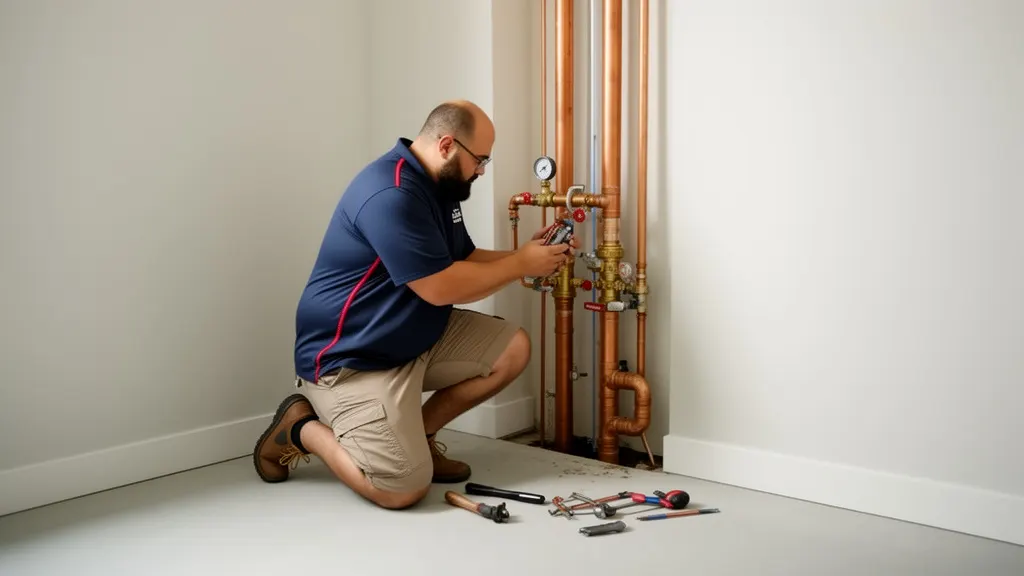
Sydney Water treats municipal supply with chlorine or chloramine to eliminate harmful microorganisms. These disinfectants remain in the water as it travels through your home’s pipe network. The concentration is carefully regulated under NSW health and water quality rules to protect public health, but even low levels can trigger chemical reactions with pipe materials over months and years.
Copper pipes are prone to corrosion when chlorine combines with other factors such as low pH, high water hardness, or elevated temperature. Chlorine can form copper chloride compounds on the interior surface of the pipe, which then dissolve into the water and weaken the pipe wall. This process is accelerated in hot water systems, where higher temperatures increase reaction rates.
PEX pipes are manufactured with antioxidant additives designed to neutralise chlorine and prevent polymer breakdown. These additives are sacrificial, meaning they are gradually consumed as they neutralise chlorine. Once depleted, the PEX material becomes vulnerable to oxidative stress, especially under high temperature, pressure, or in water with high oxidation-reduction potential (ORP). Technical standards require PEX to withstand chlorinated potable water for a minimum of 50 years under tested conditions, but real-world performance depends on water chemistry, temperature, and installation quality.
Signs of Chlorine-Related Damage in Copper Pipes
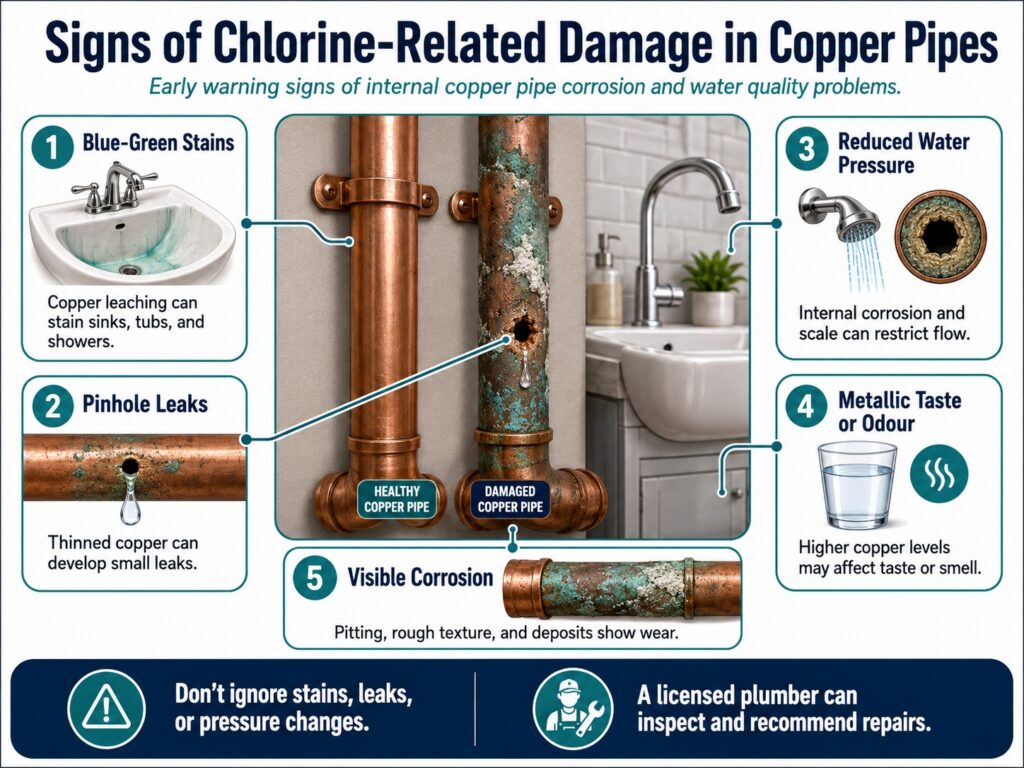
Chlorine-related damage in copper pipes can develop slowly, making early warning signs easy to miss. Over time, chlorinated water may contribute to corrosion, pipe thinning, staining, and changes in water quality. Recognising these signs early can help Sydney homeowners arrange a plumbing inspection before minor corrosion turns into leaks or wider pipe damage.
1. Blue-Green Stains on Fixtures
Copper corrosion releases dissolved copper ions into the water, which can leave blue-green stains on sinks, baths, and shower trays. This discolouration indicates that copper is actively leaching from your pipes, often due to acidic or chlorinated water.
2. Pinhole Leaks
Chlorine-accelerated corrosion can thin the pipe wall from the inside, eventually creating small perforations called pinhole leaks. These leaks may appear as damp patches on walls or ceilings, or as dripping water under sinks and behind hot water units.
3. Reduced Water Pressure
Internal corrosion and scale build-up can narrow the effective diameter of copper pipes, reducing flow and pressure throughout your home. If taps and showers deliver less water than they used to, corrosion may be restricting the water pipe.
4. Metallic Taste or Odour
Elevated copper levels in drinking water can produce a metallic taste or smell. While small amounts of copper are not immediately harmful, high concentrations may indicate advanced corrosion and should be investigated.
5. Visible Corrosion on Exposed Pipes
Exposed copper pipes in subfloor areas, garages, or under sinks may show green or white deposits, pitting, or a rough texture. These are clear signs that the pipe material is reacting with water chemistry or environmental conditions.
Chlorine-related copper pipe damage can affect both water quality and the condition of your plumbing system. Stains, leaks, pressure changes, metallic tastes, and visible corrosion are all signs that should not be ignored. If these symptoms appear, it’s time to call a licensed plumber — Antons Plumbing & Gas (NSW Lic. 210933C) can inspect the pipes, identify the cause, and recommend the safest repair or replacement option.
How Chlorine Affects PEX Piping Systems
PEX has become popular in Sydney homes for its flexibility, ease of installation, and resistance to freezing. The material itself is a durable polymer, but its long-term performance depends on the stability of antioxidant additives blended during manufacturing. Chlorine in potable water gradually consumes these additives, and once they are exhausted, the polymer matrix becomes susceptible to cracking and embrittlement.
Higher water temperatures accelerate antioxidant depletion. Hot water systems operating at or above 60 degrees Celsius place greater oxidative stress on PEX, particularly at connection points and near the hot water unit’s pump or pressure pump supplying the system. Water with high ORP, often found in areas with chloramine disinfection or elevated mineral content, can further shorten the effective life of PEX pipes.
| Pipe Material | Primary Chlorine Risk | Common Failure Mode | Typical Lifespan |
|---|---|---|---|
| Copper | Corrosion and pinhole leaks | Wall thinning, perforations | 20–50 years (variable) |
| PEX (Class 1) | Antioxidant depletion | Cracking, embrittlement | 50+ years (cold water) |
| PEX (Class 5) | Antioxidant depletion | Cracking at high temp/pressure | 50+ years (hot water) |
Technical standards classify PEX into chlorine-resistance classes (1, 3, and 5) based on extrapolated time-to-failure under controlled chlorinated water conditions. Class 5 PEX is rated for the most demanding hot water applications, while Class 1 is suitable for cold water or lower-temperature uses. Sydney homeowners should verify the class rating of any PEX installed in their property, especially in hot water circuits, and ensure it complies with AS/NZS 3500.
Factors That Increase Chlorine Damage Risk
Not all homes experience the same rate of chlorine-related pipe degradation. Several factors influence how quickly copper or PEX pipes may deteriorate, and understanding these can help you assess your own risk and take preventive action.
- Low pH water: Acidic water (pH below 7) accelerates copper corrosion and can strip protective oxide layers from pipe interiors. Low pH is more damaging to copper than typical chlorine concentrations alone.
- High chlorine or chloramine levels: Sydney Water adjusts disinfectant dosing based on seasonal demand and source water quality. Homes near the end of a distribution network or supplied from certain reservoirs may receive higher chlorine or chloramine levels.
- Hard water: High mineral content can interact with chlorine to form scale and corrosive compounds on copper surfaces, increasing the risk of pitting and pinhole leaks.
- Elevated temperature: Hot water systems operating above 60 degrees Celsius place greater stress on both copper and PEX. Higher temperatures accelerate chemical reactions and antioxidant consumption.
- High oxidation-reduction potential (ORP): Water with high ORP is more aggressive toward pipe materials. This condition is common in chloraminated supplies or where water has high dissolved oxygen.
- Poor installation practices: Improper support, over-tightening fittings, or using incompatible materials can create stress points where chlorine-related damage initiates more quickly.
Chlorine-related pipe damage is usually influenced by several conditions working together rather than one single cause. Water chemistry, temperature, pipe age, material type, and installation quality all play a role in how long your plumbing system lasts. If you notice staining, leaks, pressure changes, or visible corrosion, a licensed Sydney plumber can inspect the system and recommend the right repair or prevention strategy.
When to Inspect Your Copper or PEX Pipes
Regular inspection helps catch chlorine-related damage before it leads to flooding, structural damage, or costly emergency repairs. Homeowners should consider a professional assessment if they notice any of the warning signs listed above, or if their property meets certain risk criteria.
Homes built before 2000 often have copper piping that has been exposed to decades of chlorinated water. If you live in an older property in the Inner West, Eastern Suburbs, or North Shore, a CCTV drain inspection and visual pipe assessment can reveal internal corrosion, scale build-up, or thinning walls. Our team uses camera equipment to inspect accessible sections of your water pipe network and identify areas requiring repair or replacement.
Properties with PEX installed in hot water circuits should verify the chlorine-resistance class of the material. If the original plumber used Class 1 PEX in a hot water application, or if you notice reduced pressure, discolouration, or leaks near fittings, an inspection is warranted. We can test water chemistry, measure temperature and pressure, and assess whether your PEX system meets Australian Standards (AS/NZS 3500) for long-term performance.
Homes supplied by rainwater tanks with chlorine dosing, or properties using a pressure pump to boost water pressure, may experience different chlorine exposure patterns. We can evaluate your entire system, including the pump circuit, storage tanks, and distribution lines, to ensure safe and compliant operation.
Testing and Diagnosis Methods for Chlorine-Related Issues
Testing for chlorine-related plumbing issues helps identify whether water chemistry is affecting your copper or PEX pipes. Since corrosion, leaks, and pipe weakening can happen gradually, proper diagnosis is important before choosing repairs or replacement. A licensed plumber can use water testing, inspections, and leak detection tools to understand the cause and extent of the problem.
1. Water Quality Testing
Laboratory analysis measures pH, chlorine or chloramine concentration, hardness, dissolved copper, and ORP. These results help identify whether your water chemistry is contributing to pipe degradation and guide treatment or replacement decisions.
2. Visual Inspection of Exposed Pipes
Our plumbers examine accessible copper and PEX sections for corrosion, staining, deformation, or leaks. We check joints, fittings, and areas near hot water units where stress is highest.
3. CCTV Drain and Pipe Inspection
A camera inserted into your drain or water pipe network provides real-time video of internal conditions. This non-invasive method reveals scale, corrosion, cracks, or blockages without excavation.
4. Pressure Testing
We isolate sections of your plumbing and apply controlled pressure to detect leaks or weak points. Pressure testing is especially useful for PEX systems, where small cracks may not be immediately visible.
5. Thermal Imaging
Infrared cameras detect temperature differences that indicate hidden leaks or moisture behind walls and under floors. This technology helps locate slow leaks caused by chlorine-related corrosion before they cause major damage.
Proper testing and diagnosis can help confirm whether chlorine, water chemistry, pipe age, or installation issues are contributing to plumbing damage. Using the right methods also prevents unnecessary guesswork and helps homeowners choose the most effective repair solution. If you notice staining, pressure changes, metallic tastes, damp areas, or visible corrosion, a licensed plumber can inspect the system and recommend the next step.
Repair and Replacement Options for Damaged Pipes
Once chlorine-related damage is confirmed, you have several options depending on the extent of the problem, your budget, and your long-term plans for the property. We present clear choices with pros and cons so you can make an informed decision, with upfront pricing quoted in AUD before any work begins.
For isolated pinhole leaks in copper pipes, spot repair or replacement of the affected section may be sufficient. We cut out the damaged length and install new copper or transition to PEX, ensuring all joints are soldered or crimped to Australian Standards. This approach is cost-effective when corrosion is localised and the rest of the system remains sound.
| Solution | Best For | Typical Scope | Longevity |
|---|---|---|---|
| Spot repair | Single pinhole leak, localised corrosion | Replace short section of pipe | 10–20 years (depends on water quality) |
| Partial re-pipe | Multiple leaks in one area or circuit | Replace affected zone (e.g., hot water lines) | 30–50 years |
| Full re-pipe | Widespread corrosion, old copper throughout | Replace entire water pipe network | 50+ years |
| Water filtration | High chlorine, low pH, or hard water | Install whole-house carbon filter | Extends pipe life, ongoing filter replacement |
If multiple leaks or widespread corrosion are present, partial or full re-piping may be the best long-term solution. We can replace copper with Class 5 PEX in hot water circuits, or install corrosion-resistant materials such as stainless steel or polymer-lined copper. Full re-piping is typically recommended for older homes where the entire network is approaching end-of-life.
For PEX systems with antioxidant depletion, replacement is the only reliable option once cracking or embrittlement has begun. We remove the affected sections and install new PEX rated for your water chemistry and temperature conditions. In some cases, we may recommend alternative materials if chlorine levels or ORP are unusually high.
Water treatment can reduce chlorine exposure and slow future degradation. Whole-house carbon filters remove chlorine and chloramine before water enters your pipe network, protecting both copper and PEX. We can supply and install filtration systems sized for your household demand, and provide ongoing maintenance to ensure consistent performance.
Preventing Chlorine Damage in New Installations
If you are building a new home, renovating a bathroom, or upgrading your hot water system anywhere in Sydney, you can take steps to minimise chlorine-related risks from the outset. Selecting the right materials and ensuring proper installation will protect your investment for decades.
- Choose Class 5 PEX for hot water: Verify that any PEX used in hot water circuits is rated for high chlorine resistance and elevated temperatures. This classification meets the most demanding Australian Standards for potable water systems.
- Install corrosion-resistant copper alloys: Some copper pipe formulations include additives that improve resistance to chlorine and acidic water. Discuss material options with your plumber during the design phase.
- Use quality fittings and joints: Brass or stainless steel fittings are less prone to corrosion than standard brass alloys containing high zinc content. Proper soldering, crimping, or press-fitting ensures leak-free connections.
- Incorporate water treatment: A whole-house carbon filter or pH adjustment system can neutralise chlorine and stabilise water chemistry before it reaches your pipes. This is especially valuable in areas with known water quality issues.
- Follow manufacturer installation guidelines: PEX and copper both have specific requirements for support spacing, bend radius, and exposure to UV light. Compliance with these guidelines prevents stress points where chlorine damage can initiate.
- Document your system: Keep records of pipe material, class ratings, installation dates, and water test results. This information helps future plumbers diagnose issues and plan maintenance or upgrades.
Preventing chlorine damage starts with selecting suitable materials and installing them correctly from the beginning. Water treatment, quality fittings, proper pipe support, and clear documentation can all help extend the life of your plumbing system. If you are planning a renovation, new installation, or hot water upgrade, working with a licensed plumber can help ensure your pipework is built for long-term reliability and complies with NSW plumbing regulations.
How Antons Plumbing & Gas Can Help Protect Your Sydney Home
Antons Plumbing & Gas has served Sydney homeowners for more than 25 years, delivering safe, compliant plumbing solutions backed by a lifetime labour warranty. We hold NSW Lic. 210933C, and our licensed team diagnoses root causes, not just symptoms, providing clear options with upfront pricing in AUD so you can make confident decisions about your property.
If you suspect chlorine-related damage, we offer same-day service across the Inner West, Eastern Suburbs, North Shore, Northern Beaches, Hills District, Western and South-Western Sydney, and Sutherland Shire. Our plumbers arrive equipped with CCTV inspection cameras, water testing kits, thermal imaging, and pressure testing equipment to assess your copper or PEX pipes quickly and accurately.
We present repair and replacement options tailored to your home, budget, and timeline. Whether you need a spot repair, partial re-pipe, full system upgrade, or water filtration, we explain the pros and cons of each approach and complete the work to Australian Standards (AS/NZS 3500) and NSW plumbing regulations. Our team uses quality parts from trusted brands, documents all findings, and leaves your space clean and compliant.
For properties with complex plumbing, heritage constraints, or strata requirements, we provide detailed reports, compliance certificates, and clear communication with building managers and owners. We understand Sydney’s unique challenges, from clay pipe networks with tree roots to high-rise pump systems, and we tailor our approach to suit your property type and regulatory obligations, including Sydney Water requirements.
Emergency response is available 24/7 with no call-out fee. If a pinhole leak or burst pipe threatens your home, call 0493 824 176 for immediate assistance from a licensed Sydney plumber. Our rapid response team can isolate the affected section, stop the leak, and arrange permanent repairs the same day.
Comparing Copper and PEX for Sydney Conditions
Choosing between copper and PEX depends on your water quality, budget, installation constraints, and long-term maintenance preferences. Both materials have proven track records in Australian homes, but each responds differently to chlorinated water and local conditions.
Copper offers excellent durability, heat resistance, and compatibility with existing systems. It is the traditional choice for hot and cold water lines, and many Sydney homes built before 2000 have copper throughout. Copper can withstand high temperatures and pressure, making it suitable for solar hot water systems and high-demand applications. The main drawback is susceptibility to corrosion in acidic or chlorinated water, especially when pH is low or chlorine levels are elevated.
PEX is flexible, lightweight, and faster to install than copper. It resists freezing, does not corrode, and can be routed through walls and ceilings with fewer fittings. PEX is ideal for renovations, tight spaces, and properties where minimising labour cost is a priority. The key limitation is antioxidant depletion under prolonged chlorine exposure, particularly in hot water circuits. Selecting the correct chlorine-resistance class and ensuring proper installation are critical for long-term performance.
In practice, many modern Sydney homes use a combination of both materials. Copper may be preferred for main risers, exposed sections, and connections to hot water units, while PEX is used for branch lines, under-floor heating, and areas where flexibility is advantageous. Our team can assess your property and recommend the best material mix for your water chemistry, usage patterns, and NSW compliance requirements.
Real-World Scenarios: When Homeowners Call Us
A common situation arises when a homeowner in the Inner West notices blue-green stains in their shower and reduced water pressure at the kitchen tap. After a visual inspection and water test, we discover low pH and elevated copper levels, indicating active corrosion in the copper hot water lines. We replace the affected sections with Class 5 PEX and install a whole-house pH adjustment filter to prevent future damage.
Another scenario involves a property in the Hills District where the owner reports intermittent leaks near the hot water unit. CCTV inspection reveals cracking in PEX pipes installed ten years earlier with Class 1 material in a hot water circuit. We remove the degraded PEX, install a Class 5 replacement, and verify that the pressure pump and pressure settings are within safe limits.
Strata managers on the North Shore sometimes request backflow testing and pipe inspections for multi-unit buildings with mixed copper and PEX systems. We conduct comprehensive assessments, document findings for each unit, and provide clear reports with repair priorities and cost estimates in AUD. This approach helps strata committees plan maintenance budgets and avoid emergency call-outs.
Maintaining Your Plumbing System After Repair or Replacement
Once your copper or PEX pipes are repaired or replaced, ongoing maintenance helps maximise their lifespan and prevent future issues. Simple practices and periodic checks can catch problems early and protect your investment.
- Monitor water quality: Test pH, chlorine, and hardness annually, especially if you notice changes in taste, odour, or staining. Water chemistry can shift due to source changes, seasonal variations, or treatment adjustments by Sydney Water.
- Replace filter cartridges on schedule: If you have a whole-house carbon filter or water treatment system, follow the manufacturer’s replacement intervals. Clogged or exhausted filters lose effectiveness and may allow chlorine to reach your pipes.
- Inspect exposed pipes: Check accessible copper and PEX sections for discolouration, corrosion, moisture, or deformation. Early detection of small leaks prevents major water damage.
- Service your hot water system: Flush sediment from your hot water system annually and check the temperature setting. Excessive heat accelerates antioxidant depletion in PEX and increases corrosion risk in copper.
- Address leaks promptly: Even minor drips can indicate underlying issues. Call a licensed Sydney plumber to diagnose and repair leaks before they worsen.
- Keep installation records: Document pipe materials, class ratings, installation dates, and any repairs. This history helps future plumbers assess your system and plan upgrades.
Maintaining your plumbing system after repair or replacement helps protect both your pipes and your home. Regular inspections, water quality testing, filter changes, and hot water servicing can reduce the risk of chlorine-related damage returning. If you notice stains, pressure changes, leaks, or unusual water quality, a licensed plumber can assess the system and recommend the right next step.
Taking Action to Protect Your Home
Chlorinated water is essential for a safe drinking supply, but it can degrade copper and PEX pipes over time if water chemistry, temperature, or installation quality are not managed properly. Early detection through regular inspection, water testing, and professional assessment helps prevent costly leaks, water damage, and system failures. By choosing the right materials, maintaining water quality, and working with a licensed Sydney plumber, you can ensure your plumbing performs safely and reliably for decades. Antons Plumbing & Gas (NSW Lic. 210933C) is ready to help Sydney homeowners protect their properties with expert diagnosis, clear options, and workmanship you can trust.
Antons Plumbing & Gas provides expert pipe relining and repiping services across Sydney Metro to protect homes from chlorine-damaged copper pipes. Our licensed team assesses corrosion risks and installs compliant, long-lasting solutions with upfront pricing in AUD. Contact us on 0493 824 176 to learn more.
Related Articles
- What Is a Water Heater Service Valve and When Should It Be Replaced?
- How to Remove a Stuck Kitchen Tap Hose Attachment Safely
- Shower Leaks When Switching to Handheld Wand: Causes and Fixes
FAQs
Can Chlorinated Water Damage My Copper Pipes?
Chlorinated water can potentially cause corrosion in copper pipes over time, especially if the water is highly chlorinated. While many Sydney homes have copper plumbing that functions well with chlorinated water, it’s essential to monitor for any signs of wear or damage. At Antons Plumbing & Gas, we recommend regular inspections to ensure your plumbing system remains in top condition.
Is It Safe To Use Copper Pipes With Chlorinated Water?
Yes, it is generally safe to use copper pipes with the chlorinated water supplied by Sydney Water. However, prolonged exposure to high levels of chlorine can lead to corrosion. Our experienced, licensed team (NSW Lic. 210933C) can assess your plumbing system and advise on the best materials and maintenance practices to ensure longevity and safety.
What Are The Effects Of Chlorinated Water On PEX Pipes?
PEX pipes are designed to be resistant to chlorine and can handle chlorinated water without significant degradation when the correct class is used. This makes them a popular choice for many Sydney homeowners. If you have concerns about your plumbing materials, our experts at Antons Plumbing & Gas are here to help you make informed decisions.
How Does Chlorinated Water Affect Plumbing Materials?
Chlorinated water can affect various plumbing materials differently. It may cause corrosion in metals like copper while being safe for plastic materials like PEX. Understanding how your plumbing materials interact with chlorinated water is crucial for maintaining a healthy plumbing system, and our team can provide tailored advice for your Sydney home.
Are PEX Pipes Resistant To Chlorine In Water?
Yes, PEX pipes are resistant to chlorine in water and are widely used in Sydney plumbing systems where chlorinated water is present. Their durability and flexibility make them an excellent choice for modern installations. At Antons Plumbing & Gas, we ensure that your plumbing system uses the best materials for your specific needs.
Do I need a licensed plumber to fix chlorine-damaged pipes in Sydney?
Yes. Any repair, re-pipe, or alteration to your home’s water or gas plumbing in NSW must be carried out by a licensed plumber. Antons Plumbing & Gas holds NSW Lic. 210933C, so you can be confident the work is compliant and covered by our lifetime labour warranty. Call 0493 824 176 to book an assessment.
How much does copper pipe repair or re-piping cost in Sydney?
Cost depends on the extent of corrosion, the length of pipe affected, and whether a spot repair, partial re-pipe, or full re-pipe is needed. We provide an upfront, obligation-free quote in AUD before any work starts, so there are no surprises on the invoice.
Do you offer same-day plumbing service across Sydney?
Yes, Antons Plumbing & Gas offers same-day service across the Inner West, Eastern Suburbs, North Shore, Northern Beaches, Hills District, Western and South-Western Sydney, and Sutherland Shire. Call 0493 824 176 to check availability in your suburb today.
Is chlorine-related pipe damage covered by home insurance?
Cover varies by policy and insurer, and we recommend checking directly with your insurer. What we can do is provide a detailed inspection report and photographic evidence of corrosion or leaks, which many Sydney homeowners use to support an insurance claim.
How do I know if the PEX in my hot water system needs replacing?
Warning signs include reduced pressure, discolouration, leaks near fittings, or a hot water system older than the PEX chlorine-resistance rating installed. A licensed plumber can check the class rating and test your water chemistry to confirm whether replacement is needed.
Can I test my own water chemistry, or do I need a plumber?
Basic home test kits can give a rough indication of pH and chlorine, but confirming whether your copper or PEX pipes are at risk requires professional testing, visual inspection, and often CCTV or pressure testing. Our licensed team can carry out a full assessment in one visit.
Does Sydney Water’s chlorination level vary between suburbs?
Yes, disinfectant dosing can vary depending on your distance from treatment plants, local reservoirs, and seasonal demand. Homes at the end of a distribution network may receive higher chlorine or chloramine levels, which can increase the risk of pipe corrosion over time.
What suburbs and areas of Sydney do you service?
We service the Inner West, Eastern Suburbs, North Shore, Northern Beaches, Hills District, Western and South-Western Sydney, and Sutherland Shire. If you’re unsure whether we cover your suburb, call 0493 824 176 and our team will confirm.
Do you provide a warranty on pipe repairs and re-piping work?
Yes, all plumbing work carried out by Antons Plumbing & Gas is backed by a lifetime labour warranty and completed to Australian Standards (AS/NZS 3500) and NSW plumbing regulations.
How quickly can a plumber attend an emergency pinhole leak or burst pipe?
We offer 24/7 emergency response with no call-out fee. For an active leak or burst pipe, call 0493 824 176 immediately and our rapid response team will aim to attend as soon as possible to isolate the water and stop further damage.
Is copper or PEX better for my Sydney home?
It depends on your water chemistry, budget, and how the pipework is used. Many Sydney homes use a mix of both. Book an inspection and we’ll recommend the right material for your hot and cold water circuits based on what we find on site.
Do I need council or Sydney Water approval for re-piping work?
Most internal re-piping is carried out under your plumber’s licence with the appropriate compliance certificate lodged as required under NSW regulations; some external or metered connection work may need separate notification to Sydney Water. We handle the compliance paperwork as part of the job.
What happens during a plumbing inspection for chlorine damage?
Our licensed plumbers carry out a visual inspection of exposed pipework, water quality testing, and where needed, CCTV, pressure testing, or thermal imaging. You’ll receive a clear explanation of findings and an upfront quote in AUD for any recommended repairs.
Can chlorine damage cause a burst pipe emergency?
Yes. Left unchecked, chlorine-related corrosion or PEX embrittlement can progress to a sudden leak or burst, especially in older copper or ageing hot water circuits. If you notice early warning signs, booking an inspection now can prevent an emergency call-out later.
How do I book an inspection with Antons Plumbing & Gas?
You can call us on 0493 824 176 or use our online booking form to arrange a same-day or scheduled inspection anywhere across our Sydney service area.
Are your plumbers licensed and insured?
Yes, Antons Plumbing & Gas operates under NSW Lic. 210933C and our team is fully licensed and insured to carry out water, gas, and drainage work across Sydney in accordance with NSW regulations.
What is included in an upfront quote?
Our quotes, provided in AUD before work begins, outline the diagnosis, recommended repair or replacement option, materials, labour, and any relevant compliance certificates, so you know exactly what you’re paying for with no hidden costs.